
Loves: history, science, art, design, health, longevity; Thankful for my family and friends, my wonderful husband, my safety and my country ✌🏻❤️ 🇺🇸
- Tweets 199
- Following 208
- Followers 50
- Likes 2,517







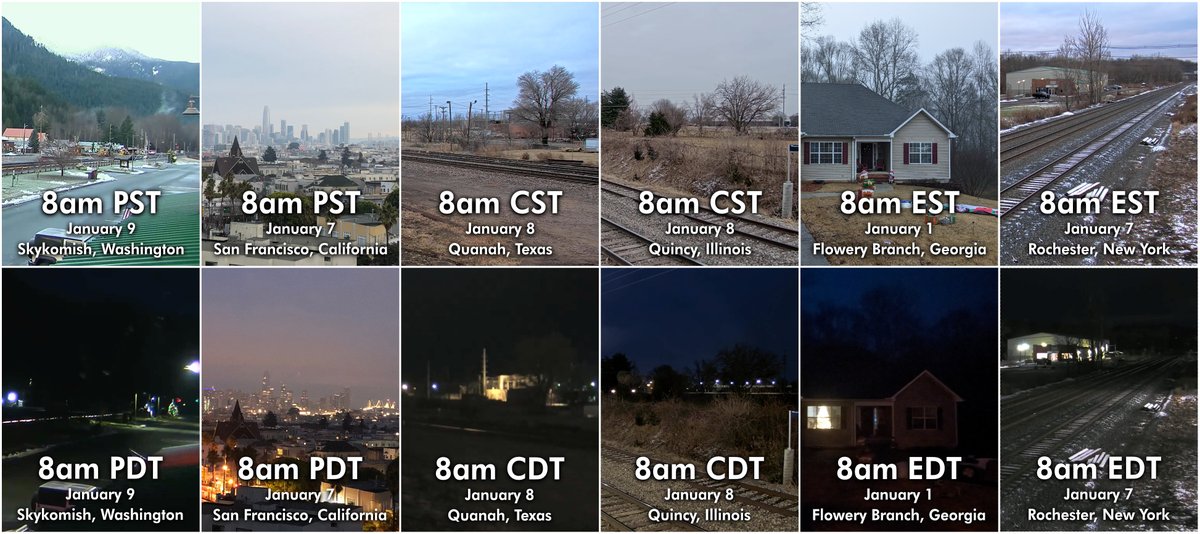
ALT Comparison photographs of winter mornings at 8am local Standard Time (with sunlit skies) versus 8am local Daylight Saving Time (with dark skies) from six locations in three time zones across the United States. Americans currently experience only the top row of photos during winter. Proposals for permanent DST (also called “Sunshine Protection”) would force most Americans to experience the bottom row of photos instead.
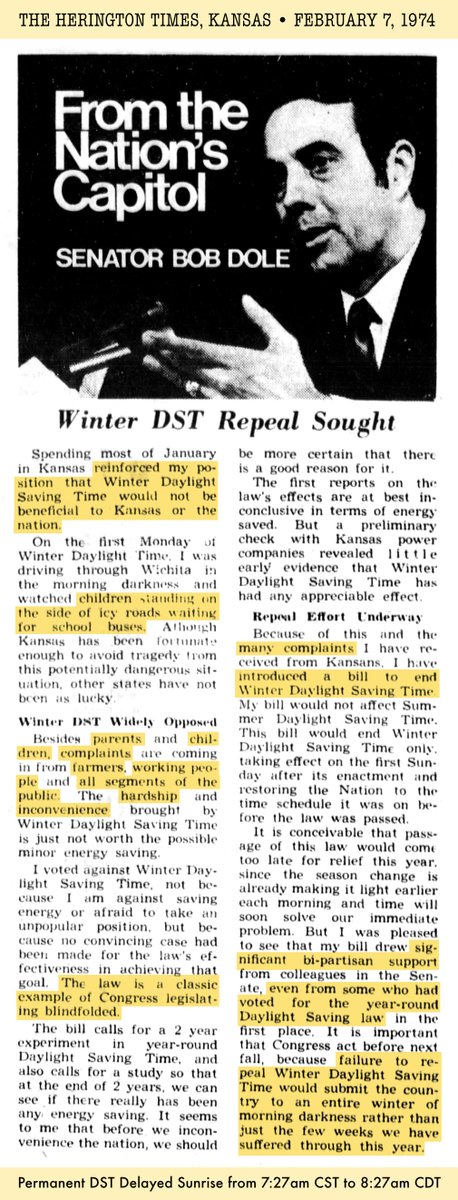
ALT Newspaper clipping from 1974 February 7. Published in “The Herington Times” of Kansas. Article is topped with a photograph of Senator Bob Dole. Headline reads “From the Nation’s Capitol, Senator Bob Dole: Winter DST Repeal Sought”.


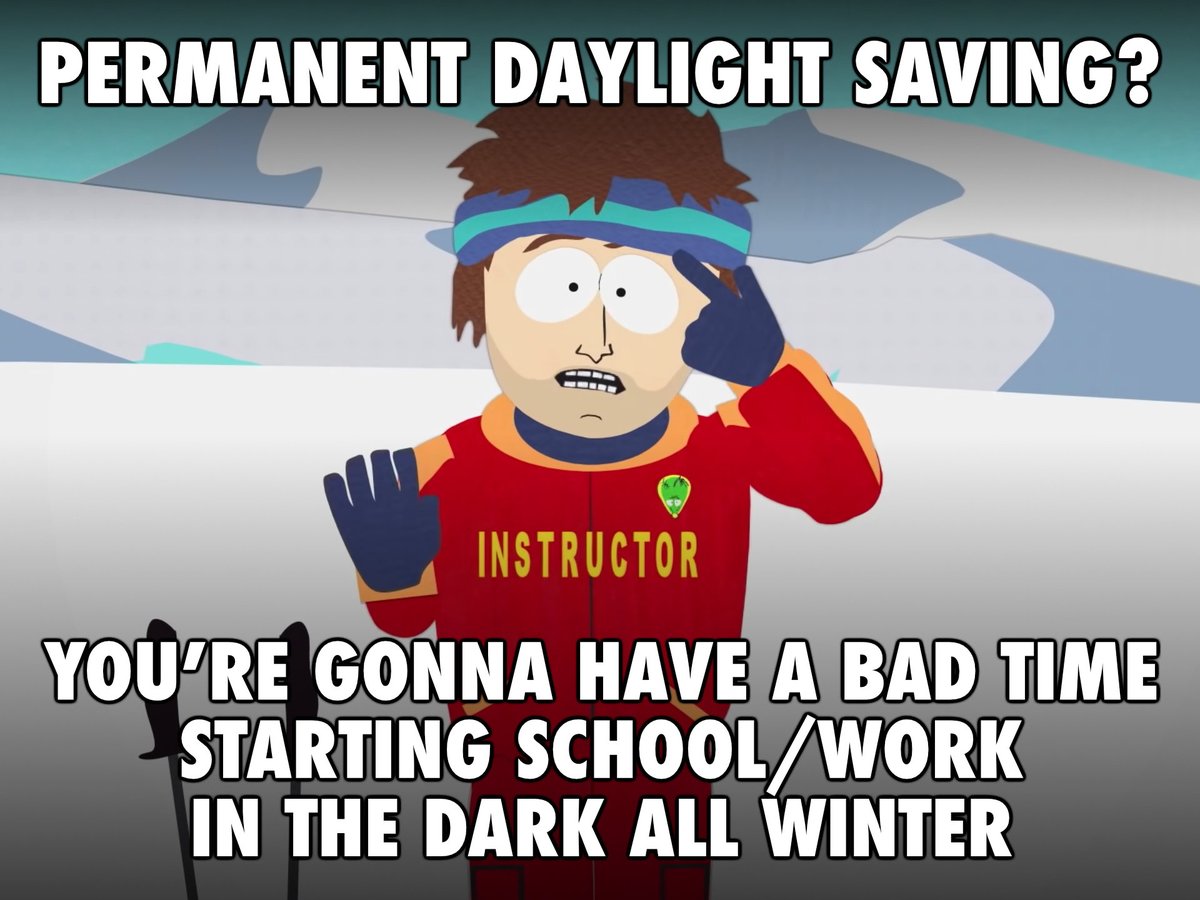
ALT Meme South Park - Permanent Daylight Saving? You're gonna have a bad time starting school/work in the dark all winter


