
Joined April 2011
- Tweets 2,139
- Following 548
- Followers 2,103
- Likes 247
883 Photos and videos





Apr 28
#prizor
🔥Prizor viztech 4x and counting🔥
Also now export push coming
Prizor partners with OZONE for distribution and sales in GCC.
Focus on UAE🇦🇪 & OMAN🇴🇲 👌
Cmp 654
#sme #microcaps #stocks #stocktowatch #StockMarket #manufacturing #MakeInIndia
3 Sep 2025

Prizor Viztech
How far we've come from those levels 💥💥💥
#prizor no stopping for this 💎
Biased and invested
#DYODD
Cmp 325
#investments #StockMarket #stocktowatch #sme #microcaps
1
12
1,045
Apr 22
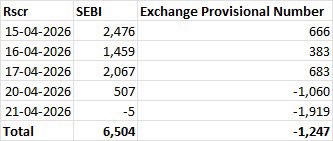
To people looking only at FII DII provisional data and forming strategies...
Apr 22

Undue weight is being given to provisional FII data.
Over the last 5 days, the gap between exchange-reported numbers and SEBI final data has been wide.
And this is only secondary market data—include primary, and the divergence becomes sharper.
2
464
Apr 13
Prizor viztech
#prizor
One of the only #sme hitting life highs in this tumultuous market 🙏
Results on 22nd april.
#cctv #stocktowatch #microcaps #StockMarket
Apr 13

Replacing them with Indian ones is the only option. Crazy to have Chinese cctv cameras near the broader or any sensitive location
thehindubusinessline.com/new…
8
737
So far so good...
🤞🤞🤞
Are we at the bottom?
Nifty low today 22182.55
The recovery today is outstanding 🔥⚡🔥⚡
Mind you, bottoms are often made when the newsflow is worst.
Hope for good times ahead 🤞🙏
1
272
The selloff was also ferocious and so will be the bounce...
2026-2027 will be the year for microcaps🤞💰💲💰
Part of market cycles 🙏
#sme #microcaps

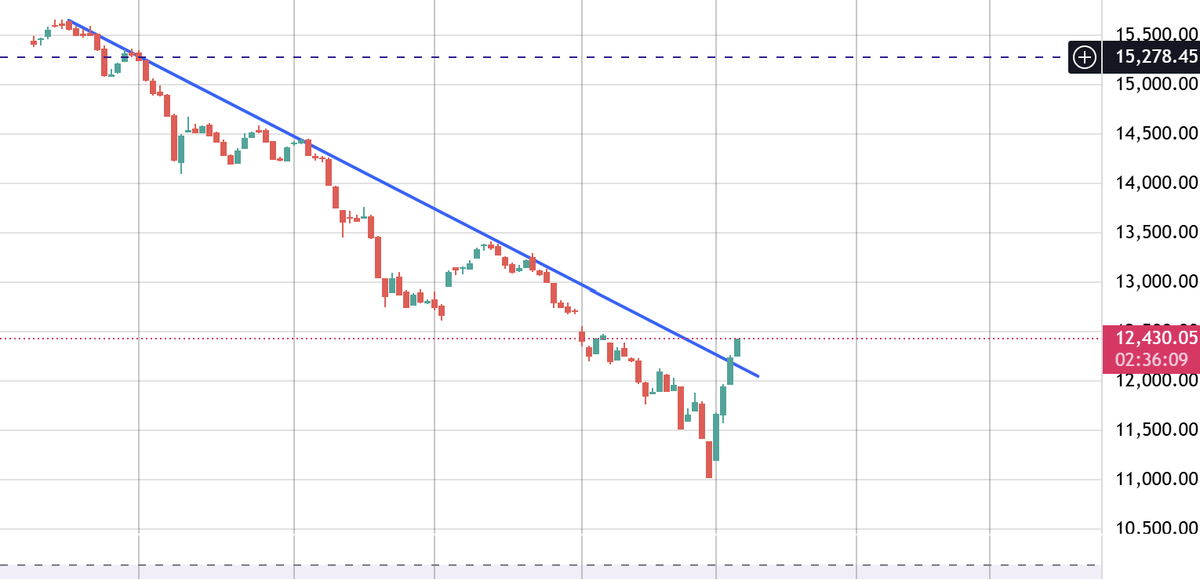
NIFTY SME EMERGE
the index which has recovered the most from the recent lows compared to any other index
1
6
569
👌👌 by Mr. PRASOON CHAUDHARY (Director INVERGY)
Alot of products in R&D stage.
Working on hydrogen fuelcell ecosystem. Looking at 3-4 continents soon
1.3-1.5 GWh in the commissioning to execution stage by Fy'27 end
#GPECO #GPESSOLAR
G.P. Eco
Must watch
youtu.be/_rzle9WQdak?si=quk8…
7
1,610
Are we at the bottom?
Nifty low today 22182.55
The recovery today is outstanding 🔥⚡🔥⚡
Mind you, bottoms are often made when the newsflow is worst.
Hope for good times ahead 🤞🙏
2
957
Always love the analysis 👌
Apr 2

Nifty50 - Triple Positive RSI Divergence. Major Bottoms.
In simple terms, a RSI Positive Divergence is New lows on Nifty but higher bottoms on Daily RSI.
This setup has worked brilliantly to spot Risk-Reward Entry Points near Bottoms in the last 10 years.
Examples below
2
274
Mar 12
If not now then when???
This cannot continue forever..
War will end, Uncertainty will end, supply chain bottlenecks will normalise
&
So will the discount sale...
Bulls will be back soon 💲💰🐂
3
346
Abhishek Agrawal retweeted

Mar 11
Every Empire Dies the Same Way
They miss the next technology.
Most civilizations do not disappear because they are weak.
They disappear because the technology that once made them powerful becomes obsolete.
History is filled with empires that looked permanent—until the rules of power changed. When those rules changed, their decline was often swift and irreversible.
Egypt ruled the ancient world for nearly two thousand years. Long before Greece rose or Rome existed, Egypt possessed the most advanced state in the Mediterranean world. Its bureaucracy, agriculture, and armies were unmatched. During the Bronze Age, bronze weapons and chariots defined military power, and Egypt mastered both.
But bronze had a hidden weakness. It required copper and tin—metals that had to be imported through fragile trade networks.
Then came iron.
Iron weapons were not just stronger; they were dramatically cheaper and far more abundant. But iron required extremely high temperatures to smelt, which meant vast quantities of charcoal. Charcoal meant forests. Forests meant geography.
Egypt was a river civilization surrounded by desert. It simply did not have the forests needed to produce iron at scale. Assyria did. Situated near the wooded hills of Anatolia and the Levant, Assyria mastered iron metallurgy and equipped its armies accordingly.
Within a few centuries Assyria dominated the Near East with iron-equipped forces. Egypt survived, but it never again returned to the center of global power.
A civilization that had ruled for millennia missed the next technological age.
The pattern would repeat across centuries.
In medieval Europe the armored knight was the ultimate weapon of war. A knight was a walking fortress—encased in steel, mounted on a powerful warhorse, and supported by an entire feudal economy. Training one took decades. Equipping one cost enormous wealth. Society itself was organized around sustaining this elite warrior class.
Then came a weapon made largely from wood.
The English longbow could be wielded by commoners. A skilled archer could release ten arrows in the time it took a knight to cross the battlefield. At battles such as Agincourt in 1415, thousands of English archers faced a much larger French army filled with heavily armored nobles.
The result was devastating.
The economics of war had changed. A weapon that cost almost nothing could neutralize a system that required immense wealth to maintain. The knight did not vanish overnight, but its dominance ended.
Technology had quietly rewritten the cost structure of power.
The same dynamic unfolded in South Asia.
For centuries Indian armies relied on war elephants as their ultimate battlefield weapon. Elephants towered over infantry formations, crushed cavalry charges, and carried commanders above the battlefield. They were symbols of royal authority and instruments of shock warfare.
But elephants belonged to an older military age.
In 1526 at the First Battle of Panipat, the Central Asian warlord Babur faced the much larger army of the Delhi Sultan Ibrahim Lodi. Lodi possessed tens of thousands of troops and hundreds of war elephants. Babur’s force was far smaller.
But Babur brought gunpowder artillery.
When the cannons fired, the explosions terrified the elephants. The animals turned and stampeded through their own ranks. Within hours the Delhi Sultanate collapsed and the Mughal Empire was born.
A military system that had dominated the subcontinent for centuries was undone in a single afternoon.
Numbers had not changed. Technology had.
Even more dramatic was the rise of the Mongols.
To the sophisticated civilizations of the thirteenth century, the Mongols appeared primitive. China had cities and advanced engineering. Persia had wealth and scholarship. Europe had castles and armored knights.
The Mongols had horses.
But their system of warfare was revolutionary. Each warrior rode multiple ponies, allowing Mongol armies to travel extraordinary distances without exhausting their mounts. Their composite bows could penetrate armor at long range, and their decentralized command structure allowed rapid maneuver warfare that stunned slower armies.
Mobility became the decisive advantage.
Within a few decades the Mongols built the largest contiguous empire in human history, stretching from Korea to Eastern Europe.
Civilization had been defeated by adaptation.
Modern history offers an even clearer example.
At the beginning of the Second World War the most powerful warships ever built were battleships—massive floating fortresses armed with gigantic guns capable of firing shells across vast distances. Nations poured immense resources into these symbols of naval supremacy.
Then aircraft carriers arrived.
Aircraft launched from carriers could strike ships from hundreds of kilometers away—far beyond the range of battleship guns. In the Pacific War carriers destroyed battleships without ever entering their range.
Within a few years the battleship became obsolete.
Aircraft had replaced armor.
Every military revolution follows the same pattern. A cheaper or more effective technology suddenly destroys the expensive system that once defined power.
Iron replaced bronze.
Longbows humbled knights.
Cannons broke elephant armies.
Aircraft replaced battleships.
Each time the global balance of power shifted.
Today we may be entering another such moment.
For five centuries global dominance belonged to maritime powers that controlled the oceans. The Portuguese began the era of oceanic empires. The Spanish expanded it. The Dutch perfected global trade networks. Britain built a navy so powerful that at one point it exceeded the combined fleets of its rivals.
In the twentieth century the United States inherited this system. Aircraft carriers became the ultimate instruments of global power projection.
Control of the sea meant control of trade. Control of trade meant control of wealth.
But the technologies shaping warfare are changing again.
Drones, artificial intelligence, autonomous systems, and precision missiles are altering the economics of conflict. In modern battlefields inexpensive drones have destroyed tanks worth millions of dollars. A device costing a few hundred dollars can destroy equipment thousands of times more expensive.
When such asymmetries scale, entire military doctrines become unstable.
Even the aircraft carrier—the crown jewel of naval power—faces new vulnerabilities. A single carrier costs more than thirteen billion dollars, yet missiles capable of threatening such ships may cost a tiny fraction of that.
But the deeper shift may not be destruction.
It may be denial.
In the twentieth century dominance meant the ability to project power anywhere in the world. In the twenty-first century victory may simply mean preventing your rival from reaching you.
Access denial can be as powerful as conquest.
Consider the Strait of Hormuz, through which roughly a fifth of the world’s oil supply flows. If even a regional power could credibly deny access to that narrow corridor using missiles, drones, mines, and autonomous systems, the consequences for global trade would be immense.
To challenge a superpower no longer requires conquering its cities. It may only require making key strategic routes too dangerous to enter.
If a navy cannot guarantee safe passage through critical chokepoints, its ability to operate near heavily defended regions becomes far more uncertain.
And that raises an uncomfortable question. If access to a narrow waterway like Hormuz can be contested, what does that imply about operating near Taiwan—surrounded by dense missile networks and advanced defenses?
The balance between offense and defense may be shifting again.
Whenever that happens, the global hierarchy begins to move.
China appears determined not to miss this moment. It is investing heavily in artificial intelligence, robotics, autonomous systems, and advanced manufacturing. It already produces a dominant share of the world’s industrial robots and graduates enormous numbers of engineers every year.
The United States still possesses immense advantages—its universities, capital markets, and technological ecosystem remain powerful. Old powers rarely fade quietly.
But technological transitions are rarely gentle.
Which brings us to India.
Every technological shift divides nations into two groups: those who build the future and those who live inside it.
Egypt missed iron.
Knights missed the longbow.
Elephant armies missed gunpowder.
Battleships missed aircraft.
The twenty-first century will be defined by artificial intelligence, robotics, autonomous warfare, and advanced manufacturing.
The question is simple: who will build it?
India has the population, the talent, and the intellectual capacity to be one of the defining powers of this age. But technological leadership demands long-term focus—investment in science, engineering, industry, and strategic capability.
Yet too often the national conversation revolves around something else entirely.
Instead of debating how to dominate artificial intelligence or robotics, political energy is consumed by the next election cycle and the next round of handouts. Welfare schemes designed to win votes—cash transfers, subsidies, and programs such as “Ladli Behna”—may bring short-term political victories. But they do little to build the scientific, technological, and industrial foundations that determine long-term power.
History offers a harsh lesson: civilizations that focus on distributing wealth before creating it eventually fall behind those that invest relentlessly in capability.
Empires are not lost only on battlefields. Sometimes they are lost in budgets.
A society obsessed with the next election rarely prepares for the next technological revolution.
The countries that dominate the coming century will be those that build laboratories, factories, engineers, and machines—not just welfare rolls.
India therefore faces a choice that will define its future.
It can commit to the hard path of technological leadership—massive investment in research, robotics, AI, manufacturing, and military innovation.
Or it can remain trapped in a narrow cycle of electoral politics and populist giveaways, slowly drifting toward the margins of global power.
Egypt missed iron.
Others missed gunpowder.
Still others missed aircraft.
The question of this century is simple.
Will India seize the age of AI and robotics—or miss it?
Because every empire that misses the next technology eventually learns the same lesson.
It becomes a spectator in a world shaped by others.
(Written by Vikas Sehgal. He is an investor with @PineTreeMacro )
78
293
1,182
86,033
Feb 21
#TAC
#TACSECURITY #tacinfosec
Watch this video from a few days back where Trishneet Arora explains how prepared they are wrt to fears emanating from #AI
Hope this alleviates some of the fears bothering ppl.
youtu.be/RrCQDq5_7hU?feature…
2
6
1,312
Feb 22
Feb 22

TAC Security launched AI-led vulnerability discovery through ESOF back in 2018 — long before this became a trend. Our AI engine has been live and evolving since 2022 at scale, and today ESOF serves 6,000 B2B clients globally.
In fact, most of the products people use every day have been directly or indirectly secured through ESOF.
We don’t just “find vulnerabilities.”
We operationalize AI across vulnerability discovery, prioritization, risk quantification, and compliance mapping — at enterprise scale.
And unlike experimental research previews, our AppSec outcomes are:
•Accredited by CERT-In
•CREST recognized
•Authorized under Google’s App Defense Alliance (CASA / MASA)
•Approved under ioXt Certification Program
•Supporting global regulatory compliance use cases
Our pricing is fully transparent and public:
•casa.tacsecurity.com
•aasa.tacsecurity.com
Also important — the “find patch” model being discussed?
TAC Security introduced AI-augmented remediation workflows years ago.
And yes, you are absolutely right— we are continuing to innovate.
Socify.ai, our AI-driven SOC 2 compliance automation platform, is positioned to be a true category disruptor in compliance intelligence.
We respect innovation in the space.
But let’s be clear — TAC Security didn’t enter this wave.
We built it. 🚀
645
Feb 20
There is certainly some intense selling going on in TAC INFOSEC #TACSECURITY
Let's see if it gets absorbed today.
Bought some 🤞
Cmp 505
3
6
1,126
Jan 20
Prizor Viztech
#prizor
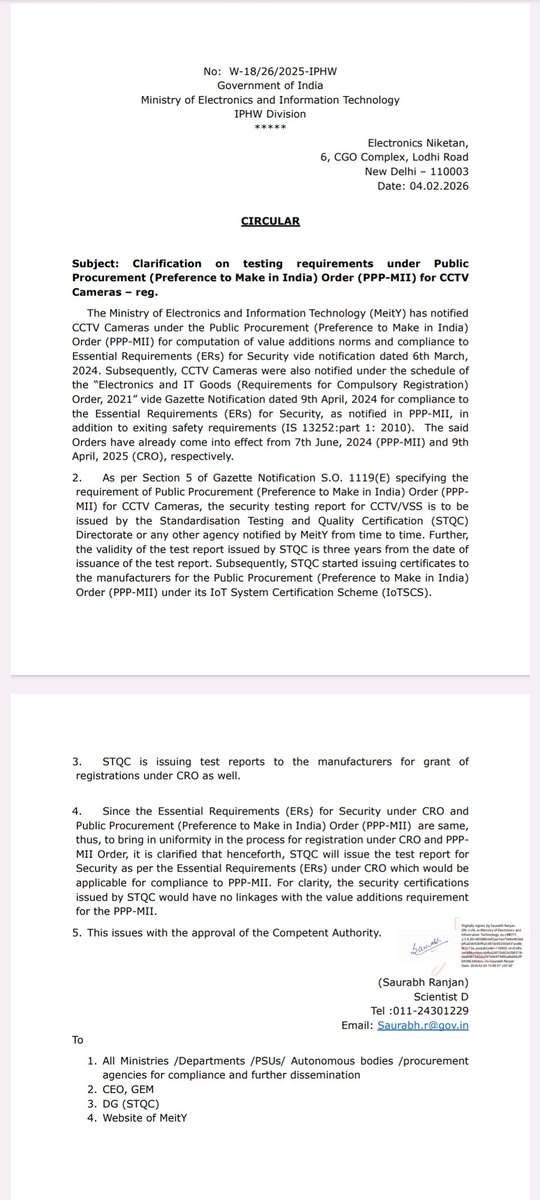
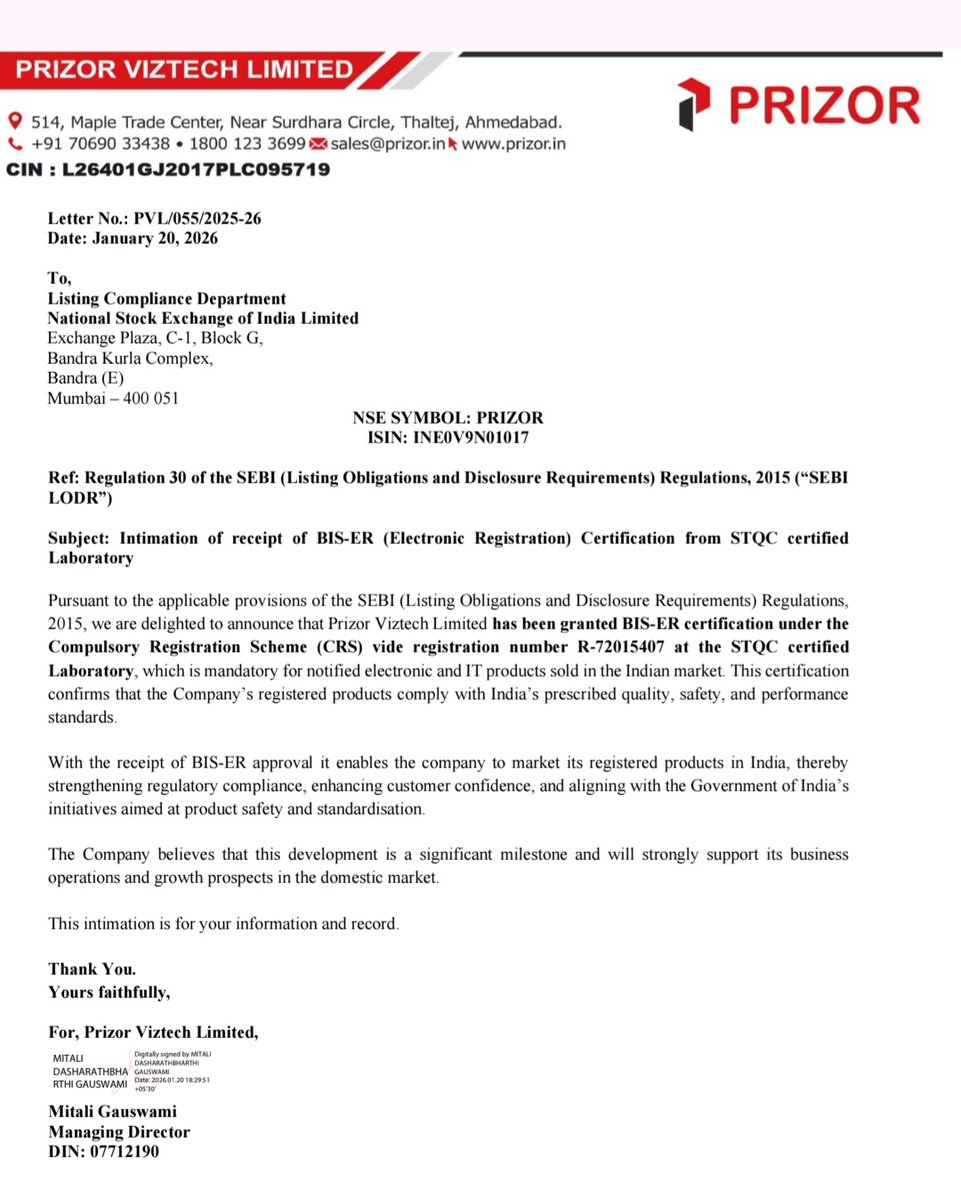
The much much awaited STQC is finally here 💰💰💰
#sme #microcaps #stocks #stocktowatch #StockMarket #STQC
1
1
16
1,416
Jan 17
I know him personally and fully verify this post 🙏🙏🙏
A very good person from heart but what can one do when life presents you with such hardships..
A small help, small gesture can mean the world.
Do contribute in whatever ways possible 🙏🙏🙏
God bless those who help others
Jan 15

Hey everyone,
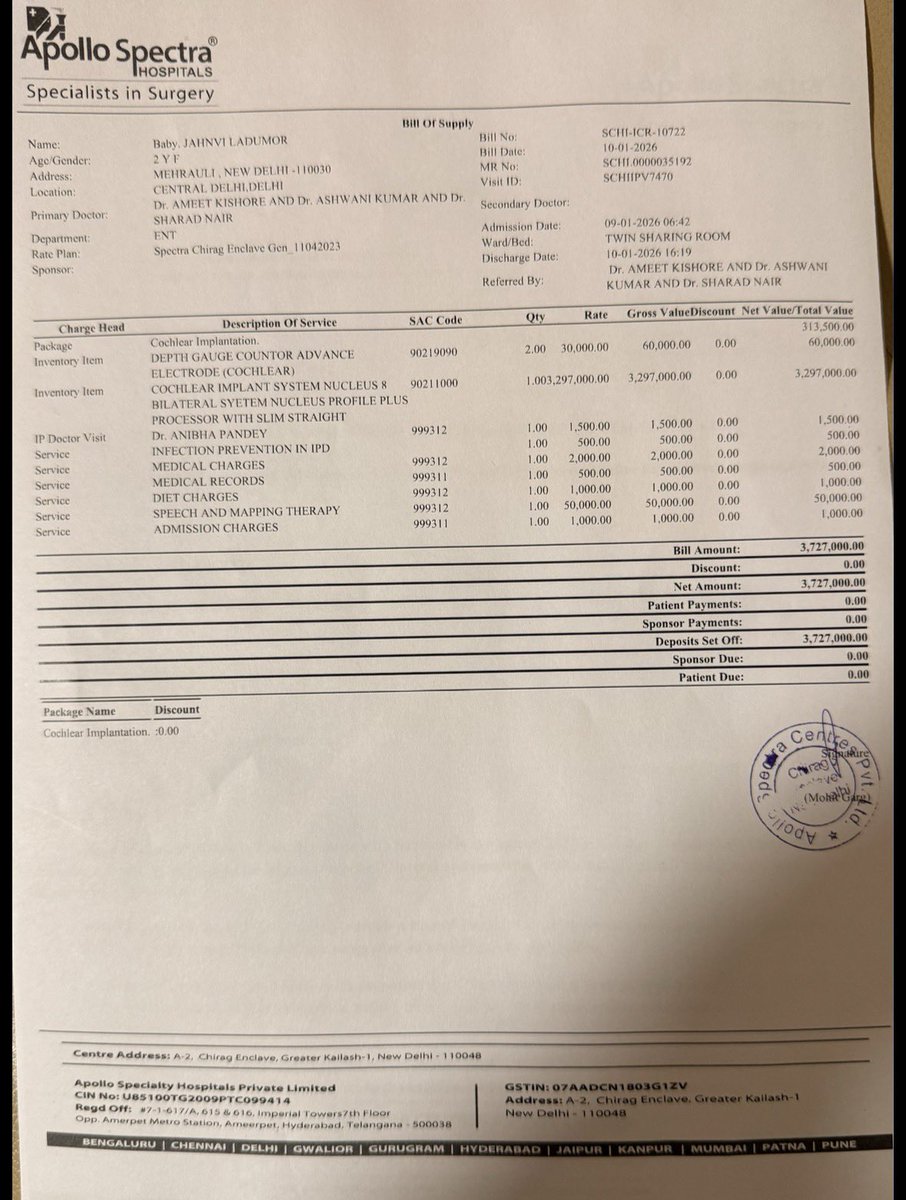
One of my close friend’s 2-year-old daughter, Janvi, has been facing something no child should ever have to endure.
A couple of months ago, she was diagnosed with meningitis, which caused severe to profound hearing loss in both ears. After multiple tests, hospital visits, and specialist consultations, doctors confirmed that bilateral cochlear implantation was the only option to give her a chance at hearing and normal development.
After exhausting all options and arranging funds through savings, borrowings, and debts, her parents proceeded with the surgery as they could not wait any longer.
The bilateral cochlear implant surgery was successfully performed on 9th January 2026.
The family had already spent several lakhs on prior treatment, investigations, and hospitalisation.
The surgery alone cost ₹38 lakhs—an overwhelming amount for any middle-class family.
They have exhausted nearly all their resources and taken on significant debt, with ₹14–15 lakhs still pending.
We are reaching out with folded hands for your help.
Any contribution, big or small, can make a real difference for this little child and her family during this extremely difficult time.
Medical reports and bank details are attached below for reference.

2
457
Jan 13
When this happens,
You know the bottom is near 😉
Jan 13

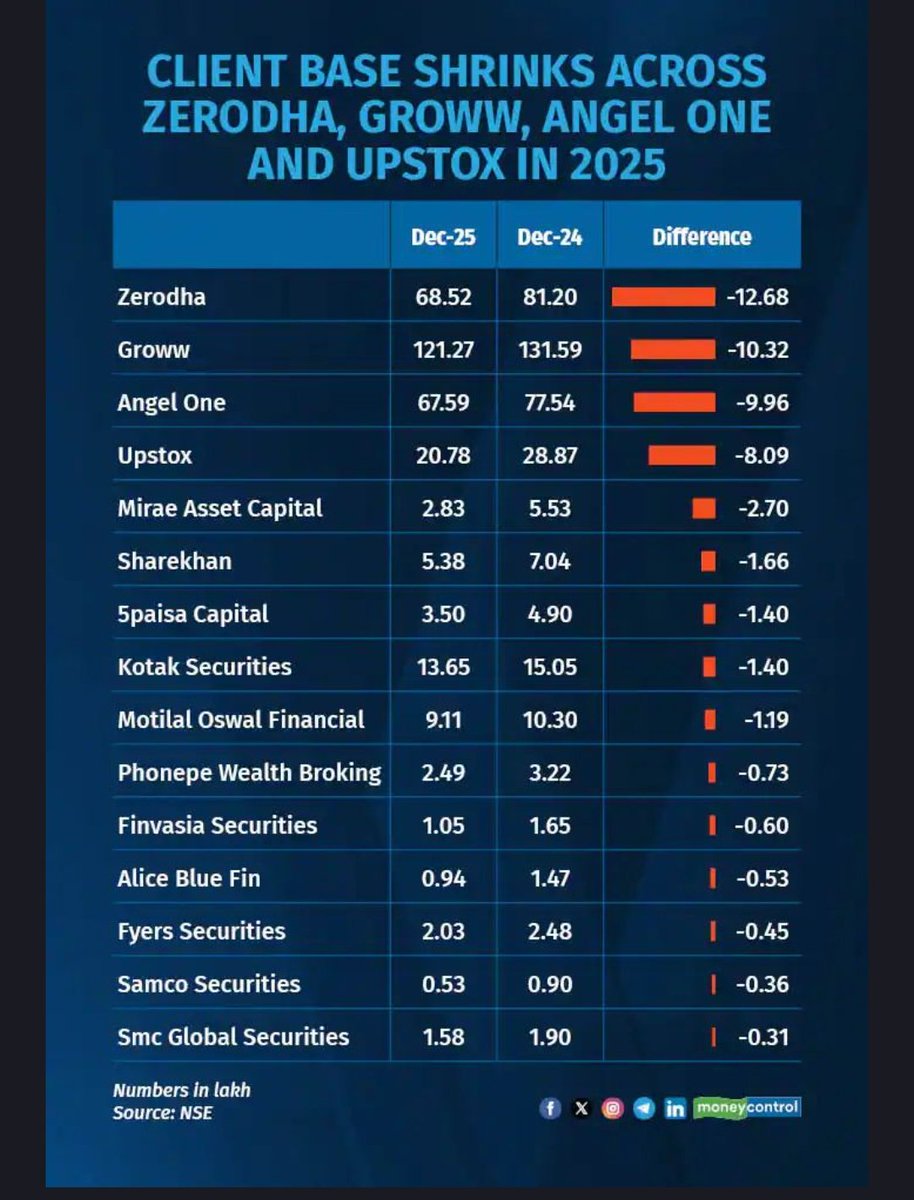
Overall trading activity has dropped sharply as more than 50L active traders have exited the market.
The worst impact is seen at Mirae Asset, where active clients are down nearly 50%, followed by Upstox, Finvasia, and Alice Blue, each seeing a decline of around 30%
1
4
337
CUPID
Parabolic moves seldom sustain ❌❌❌
Trick is to get out before the party ends (You don't want to be doing the dishes 😅)
Lucky are the ones who made money
3
552
16 Dec 2025
So much to learn from CHINA.
Its just not luck, it's sheer planning and hard labour done over the years.
14 Dec 2025

China’s industry is a different beast 🤯
Every product and its supply chain are tied to one huge city the size of a nation, Eric explains.
This is why other nations can’t compete with China.
3
413
13 Dec 2025
"UNCERTAINTY" is not Risk
Silmilarly
"VOLATILITY" is not Risk
IYKYK ✌️
3
335