
1,930 Photos and videos


G̷⟁₿ retweeted

Jun 4
Why Was CAW Built as If It Was Meant to Be Used From the Beginning?
The more you study meme coins, the stranger CAW starts to look.
Most projects follow a very predictable pattern.
First, they launch a token.
Then they build a community.
Price goes up.
Only after that do they begin talking about “utility.”
In other words:
Price comes first. Utility comes later.
That is how most meme coins operate.
But CAW looked different from the beginning.
Why Build So Much Before Anyone Even Uses It?
This is where the biggest inconsistency appears.
From its earliest stages, CAW already showed signs of:
* LayerZero integration
* OFT architecture
* Cross-chain infrastructure
* Username-based systems
* Gasless direction
* Social architecture
* Validator structures
* NFT identity layers
* Decentralized social infrastructure
And the important part is this:
None of this looked like it was added later.
It looked intentional from day one.
The strange part is obvious:
There was never any guarantee people would actually use it.
Normally, nobody spends this much time and effort building infrastructure without proven adoption.
Because infrastructure is expensive.
Most Meme Coins Are Built Very Differently
If you look honestly at the market, most meme coins focus almost entirely on:
* Liquidity pools
* DEX listings
* Social hype
* Influencer marketing
* CEX speculation
Because those things impact price immediately.
Meanwhile, things like:
* Validator systems
* Cross-chain architecture
* Username layers
* Social protocols
* ZK-related systems
* Wallet abstraction
do not instantly pump the chart.
Which is why most projects delay them until later — if they ever build them at all.
But CAW appears unusually focused on infrastructure first.
That is what makes it stand out.
CAW Looks Less Like a Meme Coin — and More Like Infrastructure
The deeper you go into the CAW ecosystem, the more a strange question starts to emerge:
Was this ever really just a meme coin?
Because increasingly, it resembles something closer to:
* A protocol
* An experimental network
* Decentralized social infrastructure
* An identity layer
* AI-era infrastructure
And perhaps the most important part is this:
CAW appears to move toward a future where users no longer need to think about wallets.
That matters because wallet complexity is still one of the biggest barriers in Web3.
Most normal users do not want to deal with:
* Seed phrases
* Gas fees
* Chain switching
* Bridges
* RPC settings
Which means the systems that truly scale in the future will likely move toward:
“Blockchain without feeling like blockchain.”
And strangely enough, CAW’s architecture seems increasingly aligned with that direction.
What Would a Blockchain-Based Global Social Platform Actually Need?

10
26
119
3,748

Read the review. Most UNPROVEN items are verifiable now: independent validators are live on testnet (3 wallets, 3 RPCs, no allowlist), full source on GitHub, PathwayExpander has no setPeer / setDelegate. V2 contracts on testnet will ship with Etherscan verification, renounce txs, and a one-command chain rebuild. When it's live, run it.
6
39
168
15,240
G̷⟁₿ retweeted

Jun 3
CAWノードのソースコード約1万行を全部読んだ🐱
V2リリース待ちの暇つぶしのつもりが本格的な解読になってしまった
📖 読んだもの
ValidatorService(4613行) / ActionProcessor(2403行) / DataCleaner(1204行) / ChainSyncService / RawEventsGatherer / DmRelayService / MarketplaceIndexer / NftTransferWatcher / DepositWatcher / ScheduledPostProcessor / StakeLedger / server.ts … 全13サービス制覇
🔍 V2の設計が判明
・mintAndDeposit = NFTミント+L2残高チャージが1Tx完結
・registerSession = EIP-712署名でセッションキー委譲(QuickSign)
・scopeBitmap 0xBF = bit6(WITHDRAW)だけ除外して資金保護
・spendLimit $10相当でセッションキー漏洩時のリスクを限定
🐛 ずっと悩んでたQuickSignバグの原因も特定
セッションがCAW_NAMES_L2に登録されるのにバリデーターはCAW_ACTIONSを参照してた
コントラクトが別々だから見つからない → V2で統合されて解決される
コード読むと設計の意図がよくわかる
ギルガメッシュ早くV2出してくれ🙏🔥 #CAW
📷📷 📷
#THE_CROW_WILL_FLY #CAW #Gilgamesh #testnet #CawProtocol #TehFuturelsHere #IAmRyoshi #DecentralizedFreedom #Validator #SourceCode👀
5
17
109
7,679
G̷⟁₿ retweeted
May 27
な!な!なんと!!!!!
@zinsanjp さんから凄い情報を頂きました!!🔥❤️🔥🔥🔥
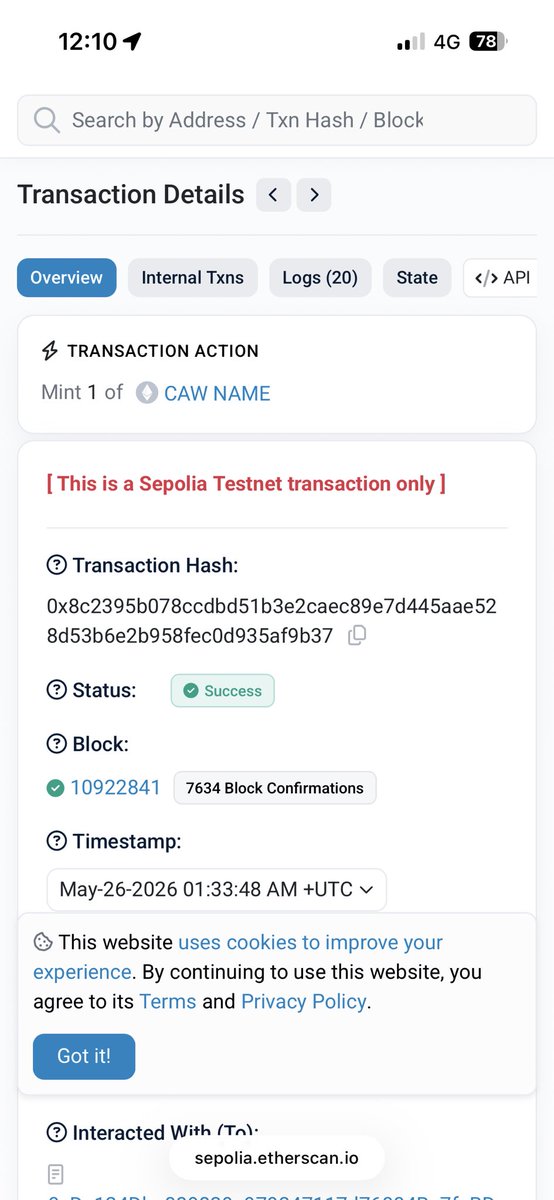
🚨 CAW V2、いよいよ本当に近い。
今日Etherscanで確認できた内容が鳥肌もんでした。
ギルガメッシュが昨夜(05/26 01:33 UTC)実行したトランザクション、ログを追って解析してみたら…
✅ V2新コントラクトでCAW NAME NFTをミント
✅ CAWトークンで手数料を自動スワップ&支払い
✅ LayerZero経由でL1→L2へクロスチェーン連携
✅ QuickSign設定まで**1トランザクションで全部完了**
今まで複数ステップ必要だった作業が、1クリックで終わる時代へ。
しかもLayerZeroというプロダクション級のインフラの上に乗っている本格設計。
これはメインネット展開も見据えた作りだと思う。
「最終テストだった」というコミュニティ情報もあり、今はエラー確認と調整フェーズの模様。
バリデーターノードを走らせながらずっと待ってきたけど、これは本物だ。
#CAW #Web3 #Validator #LayerZero
🐦⬛🌹🐦⬛🌹 🐦⬛🌹
@caw_dev
#THE_CROW_WILL_FLY
#CAW
#Gilgamesh
#testnet
#CawProtocol
#TehFuturelsHere
#IAmRyoshi
#DecentralizedFreedom
10
59
209
18,652
G̷⟁₿ retweeted

May 22
SECOND RELEASE OF UNIDENTIFIED ANOMALOUS PHENOMENA FILES 🛸⬇️
WAR.GOV/UFO
3,378
6,217
23,696
3,570,556


May 13
7
33
814