
CTO. NED @FlagstoneGroup. Chair @TheLeadDev 🎤 Advisor @Kindred_VC, @SkillerWhale1. Wife to @ellywilliams. #ND #EhlersDanlos 🏳️🌈
Joined October 2011
- Tweets 47,021
- Following 4,248
- Followers 12,699
- Likes 63,534
3,601 Photos and videos


Pinned Tweet

Incredibly honoured to feature on this year's Pride Power List. Honestly taken aback by being included amongst such illustrious and impactful company -- thank you! #PPL2024
28 Jun 2024

At 91 is the amazing CTO of @Pleo, @geek_manager. Keep up the great work! pridepowerlist.com #PPL2024
1
1
10
3,113
Meri 8x💉“Exiled for Good of the Realm” Williams retweeted

May 18
You probably don't need me to explain this, but when Musk cut funding for health projects in Africa, the affected countries could not simply fill the gap. Funding, staffing, logistics and coordination cannot be replaced instantly.
That is why the outbreakss now are *so* serious.
22
557
1,748
17,693
Meri 8x💉“Exiled for Good of the Realm” Williams retweeted

May 18
Brendan Hopper, Matt Beane and I have a thesis, one that I've been sharing around lately, and we want CEOs and boards to hear it.
Before I get to the thesis, let's revisit Clayton Christensen's Innovator's Dilemma (ID), the theory he developed at HBS to explain why big companies often get eaten by upstarts during technology shifts.
In short, the ID says incumbents serve their best customers so well, and tune themselves so ruthlessly for doing exactly what they do today, that they can't chase the disruptor tech coming up from below until it's too late.
The classic solution to the Innovator's Dilemma is to create a "bubble" in your company. You carve out an innovation team with a budget and mandate, as unfettered as practical by the parent organization. This is to combat the 2-level trap presented by the dilemma.
The economic trap is Christensen's original point: a disruptive technology can't justify itself under your existing P&L, because it serves smaller or weirder customers at margins your real business would never accept.
The governance trap is what gets piled on top once you're big: SOC2, FedRAMP, etc. mean every new idea has to clear a lot of process before it can move. The bubble is intended to escape both at once, with its own economics and permission slips.
The standard innovation "bubble" solution famously doesn't work very well. You may solve the problem inside your bubble, but you often can't roll it out to the rest of your company for the original reasons. Everyone is focused on doing their current stuff, and nobody has time for a major change.
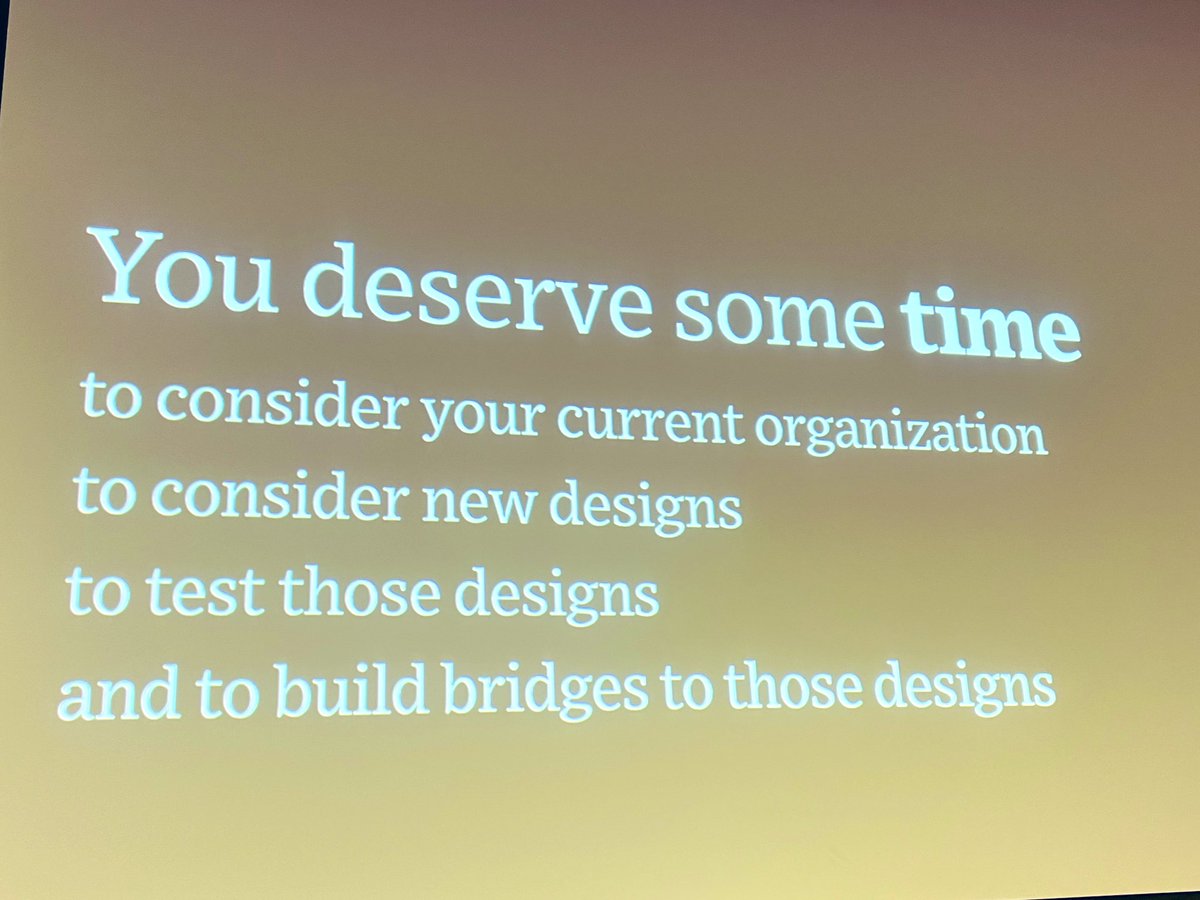
Our thesis is that there is an entirely different way out of the dilemma this time around. No bubble needed, as long as you follow a simple rule. That rule is, let your people play. Give them back any time they earn from automating their jobs with AI. Then incentivize them to use that time to improve the company's processes.
When you see an engineering team announce a 40% productivity boost from adopting AI — a number that's been showing up in plenty of LinkedIn posts lately — your first reaction as a CEO or manager is probably to say, that's awesome, we can do more work now! Or you might simply expect to see 40% more output from the team.
Either way, you have just asked them to spend their extra time building faster horses (your current business) instead of letting them go figure out what a car would look like for your company. They gained some productivity from AI, which could have been your ticket out of the Dilemma, and you immediately slurped it back for your existing business.
This will get your company killed in the medium to long haul, because your company tomorrow will look almost nothing like it does today. Conway's Law says your software and your org chart mirror each other; as AI rewrites how you build software, the org has to shift to match. But if you're stealing the hours back saved by your employees, then you're not letting your org pivot naturally in the direction it needs to shift.
@RealGeneKim and I saw this in person at @arkanalabs a few weeks back. As long as your people know they'll be recognized and rewarded if they improve the company's processes — public credit for cross-team workflow wins, promotion criteria that actually count process improvements, managers who treat freed-up hours as a feature rather than a budget line — then they will use their "play time" to seek out other teams, and start pivoting you to becoming AI-native. This way it can unfold in whatever bespoke way is most natural to your company, rather than in some ivory-tower research bubble. For every company, the way it unfolds will be a bit different.
I think of this approach, of giving the time back to the humans who automate parts of their jobs with AI, as the new solution to the Innovator's Dilemma. The old bubble solution was to separate a bunch of people from their regular jobs, and try to give them the freedom to solve the problem in isolation.
In contrast, by giving your regular employees their hours back, the innovation bubble is still there, but it's now dispersed across the company, as lots of very tiny bubbles: one bubble per person who has liberated some hours.
If you've ever read Slack by DeMarco and Lister, a great book from back in the 90s, then our thesis should resonate. What companies need is to empower their own employees, the ones who actually work together (even across departments)--the ones who know how the business works--to shift the company in the new directions together. Gradually, but with intentionality.
You still have the frankly awful problem of token budgets. For every employee you upskill into baseline AI literacy (which I'd define loosely as using coding agents throughout the workday), you've added a non-trivial opex spend — for the heaviest agentic users it can run into five figures a year. I won't sugar-coat it; you need to find that money somehow. I don't have a magic solution, but I'm very happy that other models are catching up to Claude, because they're becoming good enough for real work now.
But token budgets alone aren't enough. To live through the Innovator's Dilemma this time around, your employees need a time budget, too. Give it to the ones who earn it using AI, then incentivize them properly, and I think you're headed in roughly the right direction.
Thank you for coming to my TED tweet.
30
61
331
44,002
Meri 8x💉“Exiled for Good of the Realm” Williams retweeted

May 10
Shopify's River agent system lives in Slack and can only be used in public so that other employees can learn from what you do with it
Reminds me of how Midjourney's Discord-only launch helped people figure out the weird & complex craft of image prompting by watching each other

71
60
1,049
154,588
Meri 8x💉“Exiled for Good of the Realm” Williams retweeted
May 9
Here in England *three times as many people* are dying from infections as were seven years ago, as a proportion of all deaths, based on the 'main underlying cause of death' data from the ONS.
3
75
394
12,237
Meri 8x💉“Exiled for Good of the Realm” Williams retweeted

May 6
This is a worthwhile read from Meta engineer @championswimmer (who I met last time I was in London - great guy)
His point is that a lot of these “AI layoffs” could well be backwards: they are prob happening because more AI spend doesn’t correlate with better business results…

38
121
1,624
295,648
Meri 8x💉“Exiled for Good of the Realm” Williams retweeted
Apr 15
So if you're either *trying to be* a good person or *trying to look like* a good person, it's easier just to pretend that your actions don't have repercussions
See also:
Climate change
Non-sustainable farming
Fossil fuel use
Working conditions
Environmental harm
Over consumption
2
18
102
1,529
Meri 8x💉“Exiled for Good of the Realm” Williams retweeted
Apr 15
Look:
There is no such thing as overdiagnosis.
There is just diagnosis (correct) or misdiagnosis (wrong).
If a diagnosis is correct, then you can't have too much of it.
25
524
2,686
33,930
Meri 8x💉“Exiled for Good of the Realm” Williams retweeted
Apr 5
Hey UK government, I get the impression that you don't listen or actually care about us, but when eligible people don't take up the nuvoxavid doses in the spring covid boosters, can you make them available for people who actually want them?
Rather than just chucking them in the effing bin?
@wesstreeting @UKLabour @UKHSA
19
191
674
12,991
Meri 8x💉“Exiled for Good of the Realm” Williams retweeted
Mar 20
And every covid infection *adds* to the risk.
So the more covid infections people have, the more vulnerable our population will be to these outbreaks.
3
14
125
1,277
Meri 8x💉“Exiled for Good of the Realm” Williams retweeted
Mar 20
Don't you get it?
If lots of people in your population have lower ability to fight infection, it doesn't just mean those people are more likely to *catch* infections.
It means they are more likely to *spread* them too.
Let me explain.
This is important.
10
415
1,510
21,279
Meri 8x💉“Exiled for Good of the Realm” Williams retweeted
Mar 14
Healthy life expectancy here is now 61 years and falling.
Retirement age is up to 68 and rising.
Do the maths.
40
408
1,786
30,421
Meri 8x💉“Exiled for Good of the Realm” Williams retweeted

Mar 14
At the beginning of the pandemic disabled people felt hope
We saw inclusion & accessibility improve overnight
We saw accommodations put in place that we spent years begging for
We saw the world adapt
That hope was ripped away during the rush back to normal
It still hurts
20
182
796
9,230
Meri 8x💉“Exiled for Good of the Realm” Williams retweeted
Mar 13
The central difficulty with getting your head round it is that there are *two* scandals detailed here:
👉The first is that key advice by experts was ignored in 2020.
👉The second is that a huge amount of money seems to have been spent covering that up.
7
157
681
14,881
Meri 8x💉“Exiled for Good of the Realm” Williams retweeted
Mar 13
When you become disabled and unable to work, you mourn your independence.
Most disabled people want to work.
They don’t want to beg for meagre handouts that keep them in legislated poverty.
They don’t want to be sick.
It’s not a choice & better social supports are needed.
8
109
479
9,882

Meri 8x💉“Exiled for Good of the Realm” Williams retweeted
Mar 12
Are people 'sicker' now than in 2019?
In the most recent year for which we have data here, 2024, infections were the main underlying cause of nearly *THREE TIMES* the share of deaths that they caused before the pandemic.
Yes.
By every objective measure, we are sicker.
5
212
765
8,505
Meri 8x💉“Exiled for Good of the Realm” Williams retweeted
Mar 12
Anyone can become disabled at any time.
Your life can change in an instant, no matter how strong and healthy you think you are.
People will leave you. Funds will dry up. Life will get tougher.
It’s not a moral failing.
Very few people are the “exception”
40
534
2,010
24,963
Meri 8x💉“Exiled for Good of the Realm” Williams retweeted
Mar 13
People are afraid of disability
They can’t comprehend getting sick and never getting better
They tell us to try harder
They blame it on lifestyle choices.
They label us expendable and tell themselves they’ll be the exception
No one is the exception. It can happen to anyone.
24
410
1,312
14,221

In a meeting at the office one time, this dude fully repeated something I had said almost word for word, just slightly changed. After he finished, my coworker raised her hand and said, “I don’t have anything to add, but I just wanted to point out he basically repeated exactly what Natalie said like it was his own idea.” Happy Women’s History Month to her.
171
2,154
56,417
865,399
Meri 8x💉“Exiled for Good of the Realm” Williams retweeted
Mar 10
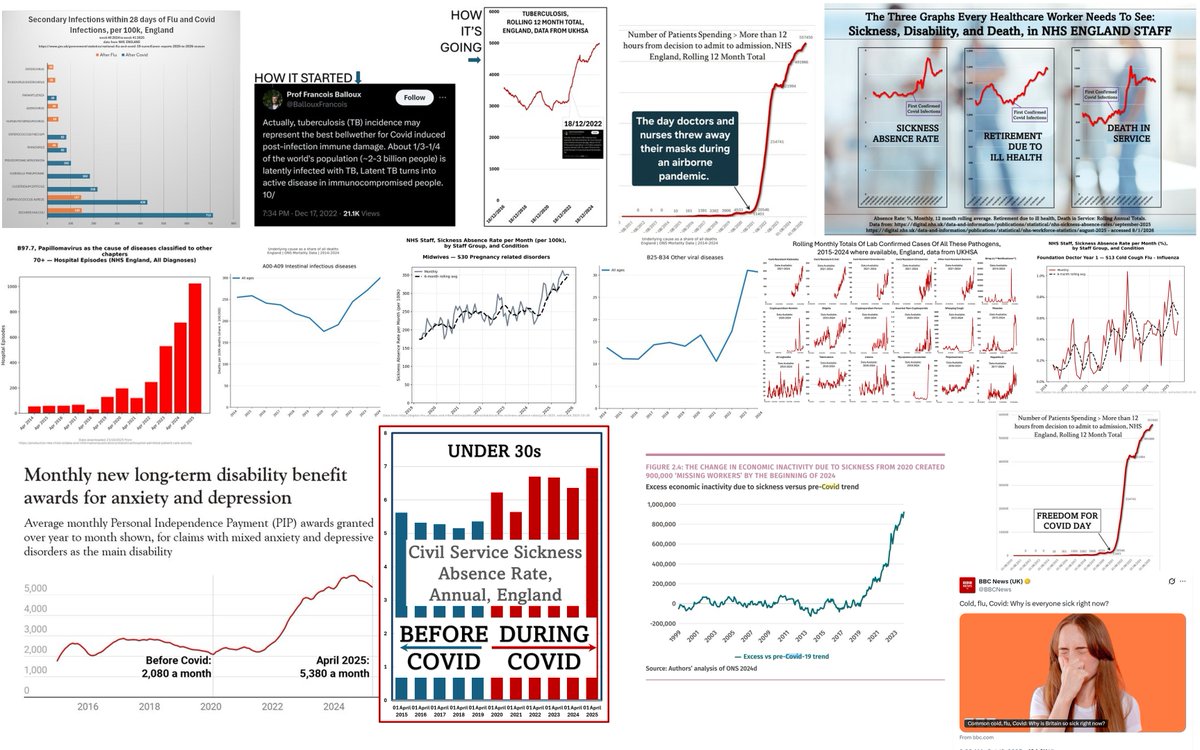
Them: Anyone who thinks that Covid infections made us all more ill is a scaremongering conspiracy nut. Is anyone even more ill? Are there really more disabled people?? Where's their evidence?? Where's the proof??!
Me:
The rise in deaths as a result of infections, as published by the ONS.
The rise in the number of infections, as published by the UKHSA.
The rise in sickness absence of *young* doctors, as published by the NHS.
The rise in sickness absence of *young* civil servants, as published by the Civil Service.
The millions of 'why is everyone sick right now' posts on social media, published everywhere.
The rise in the number of deaths while working, as published by the NHS.
The rise in the number of people retiring from healthcare due to ill health, as published by the NHS.
The huge number of infections that follow covid infections as opposed to the number of infections that follow flu infections, as published by the UKHSA.
The rise in economic inactivity due to sickness, as published by the ONS.
The rise in infections that exploit immune deficiency, as published by the UKHSA and NHS.
The rise in the number of secondary conditions like psychiatric and cardiovascular disorders that Covid infection can cause, as published by the ONS, NHS, and UKHSA.
The increase in delays to healthcare, as published by the NHS.
The drop in healthy life expectancy, as published by the ONS.
The excess death burden, as published by the ONS.
But other than that, yeah, everything's fine. All fine.
20
347
1,034
15,433