Gene-Wei Li's lab @MITBiology, studying the quantitative biology of gene expression. Account run by lab members.
Joined February 2022
- Tweets 48
- Following 47
- Followers 715
- Likes 59
Photos and videos
Pinned Tweet

Jun 10
Thrilled to announce our latest work, from postdoctoral fellow Bob Battaglia @RNABob in the lab! Transcription termination is a key determinant of gene expression. However, the sequence grammar defining transcription termination has long been elusive. (1/2)
1
1
13
2,262
Gene-Wei Li Lab retweeted

Jun 10
Check out this fantastic new paper spearheaded by my postdoc colleague Bob Battaglia @RNABob! With Ebru Ermis and Expery Omollo @expery_.
This work reveals a previously hidden element defining the core regulatory grammar of transcription termination.
Jun 10

Thrilled to announce our latest work, from postdoctoral fellow Bob Battaglia @RNABob in the lab! Transcription termination is a key determinant of gene expression. However, the sequence grammar defining transcription termination has long been elusive. (1/2)
1
3
377
Jun 10
Thrilled to announce our latest work, from postdoctoral fellow Bob Battaglia @RNABob in the lab! Transcription termination is a key determinant of gene expression. However, the sequence grammar defining transcription termination has long been elusive. (1/2)
1
1
13
2,262
Jun 10
Here, we employ precise termination site mapping on a massively parallel scale to reveal the HUB (hairpin, U-tract, & bubble-edge sequences) as the defining element of intrinsic terminators, across diverse bacterial phyla.
@MITBiology @hhmi_science (2/2)
biorxiv.org/content/10.64898…
4
9
547
Excited to share our recent work expanding our understanding of transcription termination, from Jenny Cascino in the lab! Here we show that transcription termination in cyanobacteria proceeds largely outside of known, canonical mechanisms.
journals.asm.org/doi/10.1128…
(1/2)
1
5
20
2,461
Great to collaborate with @BabitzkePaul and Katsuhiko Murakami on this work.
@MITBiology @ScienceMIT @MIT @hhmi_science (2/2)
1
193
May 13
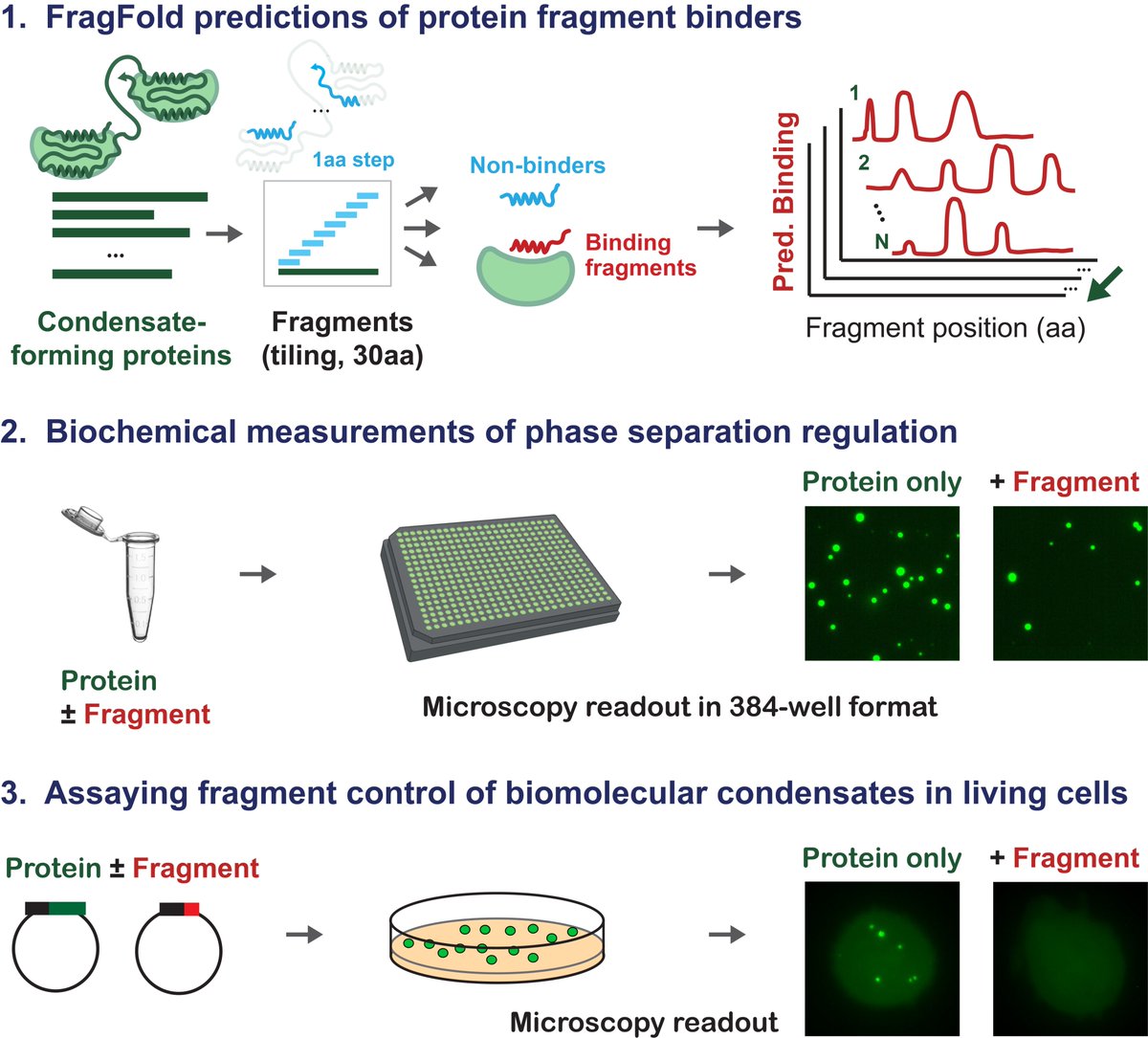
Thrilled to share the latest from @bioSavinov, K99 fellow in the lab & corresponding on this work together w/ @LinsdayCase19. Andrew & @jibin_sadasivan show that protein fragments discovered with our FragFold AI method act as generalizable regulators of biomolecular condensates!
May 13

Interested in genetically encodable inhibitors of your favorite biomolecular condensate? Excited to announce our latest work, w/ @jibin_sadasivan, @GeneWeiLiLab, & @LindsayCase19, on protein fragments as generalizable regulators of phase separation. (1/n)
biorxiv.org/content/10.64898…
3
6
48
10,069
Gene-Wei Li Lab retweeted
Feb 11
What a fantastic visit. Thanks to @omenndarlingbio and @PrincetonMolBio for hosting!

Today we and @PrincetonMolBio welcome Andrew Savinov (@bioSavinov) from @MIT for a special seminar on “Massively parallel discovery of peptides to control cellular protein interactions”
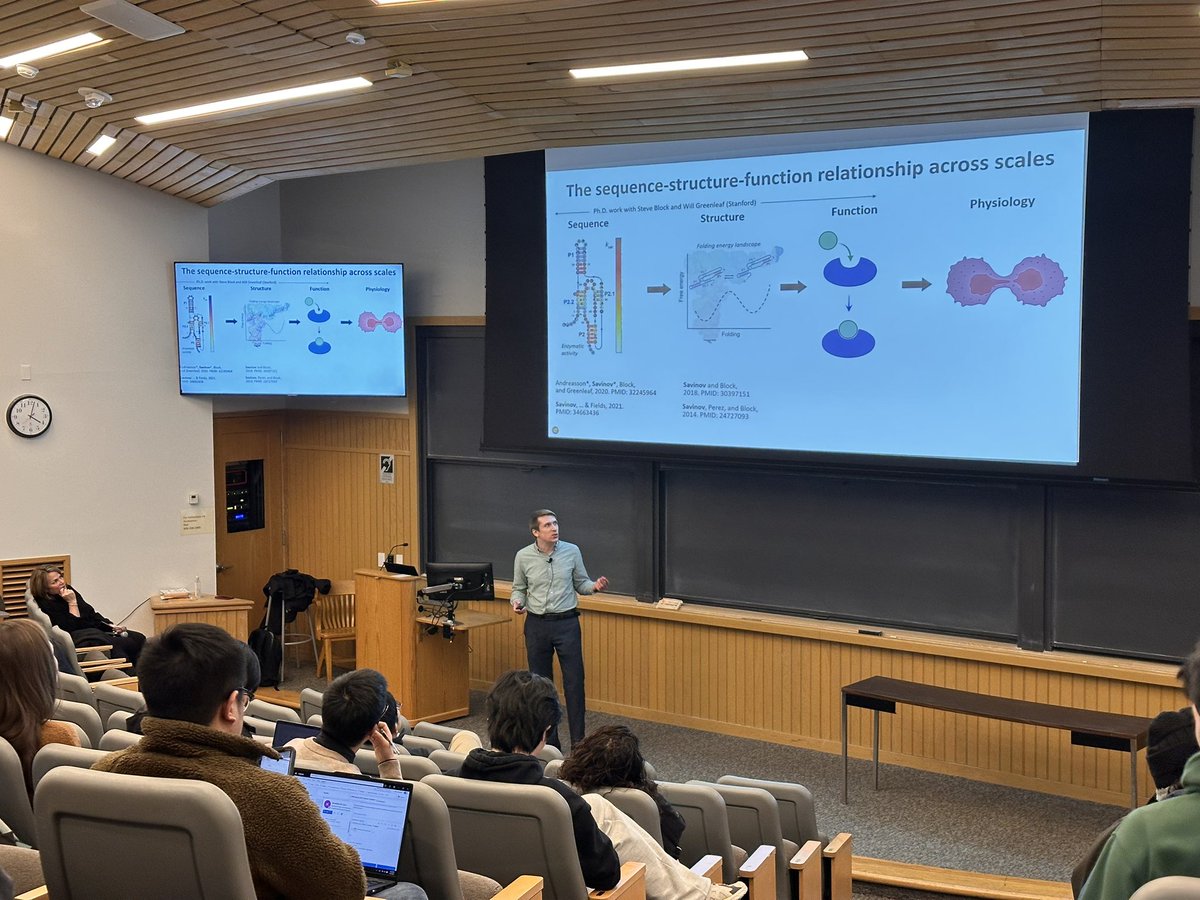
ALT Andrew Savinov at front of lecture hall
1
1
14
633
Gene-Wei Li Lab retweeted
27 Oct 2025
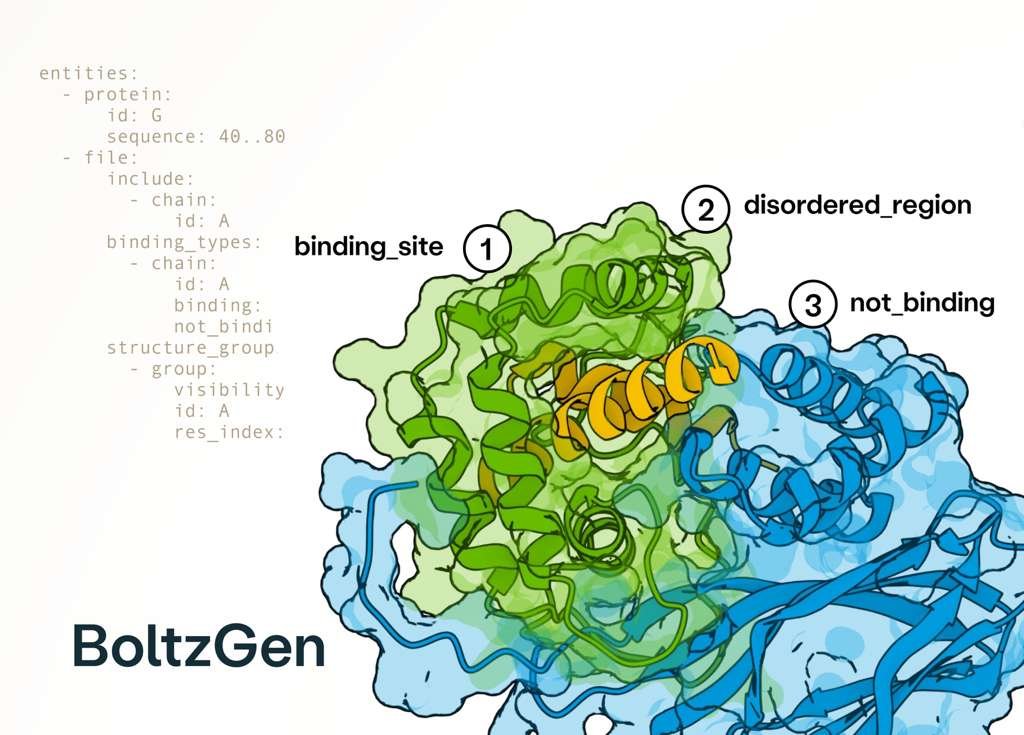
Thrilled to contribute to this exciting work on protein binder design together w/ @HannesStaerk, @felix_faltings, @BarzilayRegina, Tommi Jaakkola, and co. We applied BoltzGen to design novel antimicrobial peptides targeting DNA gyrase based on inhibitory protein fragments. (1/n)
26 Oct 2025

Excited to release BoltzGen which brings SOTA folding performance to binder design! The best part of this project has been collaborating with many leading biologists who tested BoltzGen at an unprecedented scale, showing success on many novel targets and pushing its limits! 🧵..
1
7
15
3,460
Gene-Wei Li Lab retweeted
11 Jun 2025
Agreed, Yunha. Fantastic to discuss the interplay of AI & biology with you, Teja, & great attendees @BostonBacteria. Many thanks to David for moderating.
Opportunities for new discoveries are vast, esp. if we keep pushing systematic experimental measurements alongside AI models!
11 Jun 2025

Grateful for the opportunity to speak at the @BostonBacterial Meeting yesterday on a panel about how we can best apply AI to microbiology research!
Much of the discussion was focused on how existing AI tools can help researchers. But perhaps the more important question we should be asking ourselves as researchers is how the data that we generate in our labs can improve the very AI tools we use.
Building a living infrastructure of biological data that evolves real-time with scientific progress is more critical than ever. Stay tuned for updates on what we are building next at @tatta_bio : tattabio.substack.com/p/toda…
Big thanks to David Giacalone, @bioSavinov & Teja Jammalamadaka for keeping the conversation engaging!
1
1
6
610
4 Apr 2025
An exciting step towards connecting proteomes with one of the most basic phenotypes of a cell! Work led by @scottmccain5 w/ @GeneWeiLiLab @gregorybritten Sean Hackett and Mick Follows. @MIT @MITBiology @HHMINEWS
2 Apr 2025

What are cells doing?? Here we showed that proteomic composition encodes information about cellular reaction rates. This is a step forward to reconstructing these important activities using protein-based observations.
academic.oup.com/ismej/advan…
3
14
1,916
Gene-Wei Li Lab retweeted
6 Mar 2025
Hot on the heels of excellent work from @SvenssonLab, more evidence of large-scale generation of functional protein fragments by proteolysis nature.com/articles/s41586-0…
Very exciting to see this convergence with our work showing pervasive function of protein fragments in vivo! (1/2)
1
2
12
1,325
Gene-Wei Li Lab retweeted
6 Mar 2025
Fantastic to see these physiologically functional protein fragments, congrats all!
This aligns with our work demonstrating pervasive functionality of protein fragments in living cells (& ability to predict their binding partners): pnas.org/doi/10.1073/pnas.23… pnas.org/doi/10.1073/pnas.22…
5 Mar 2025

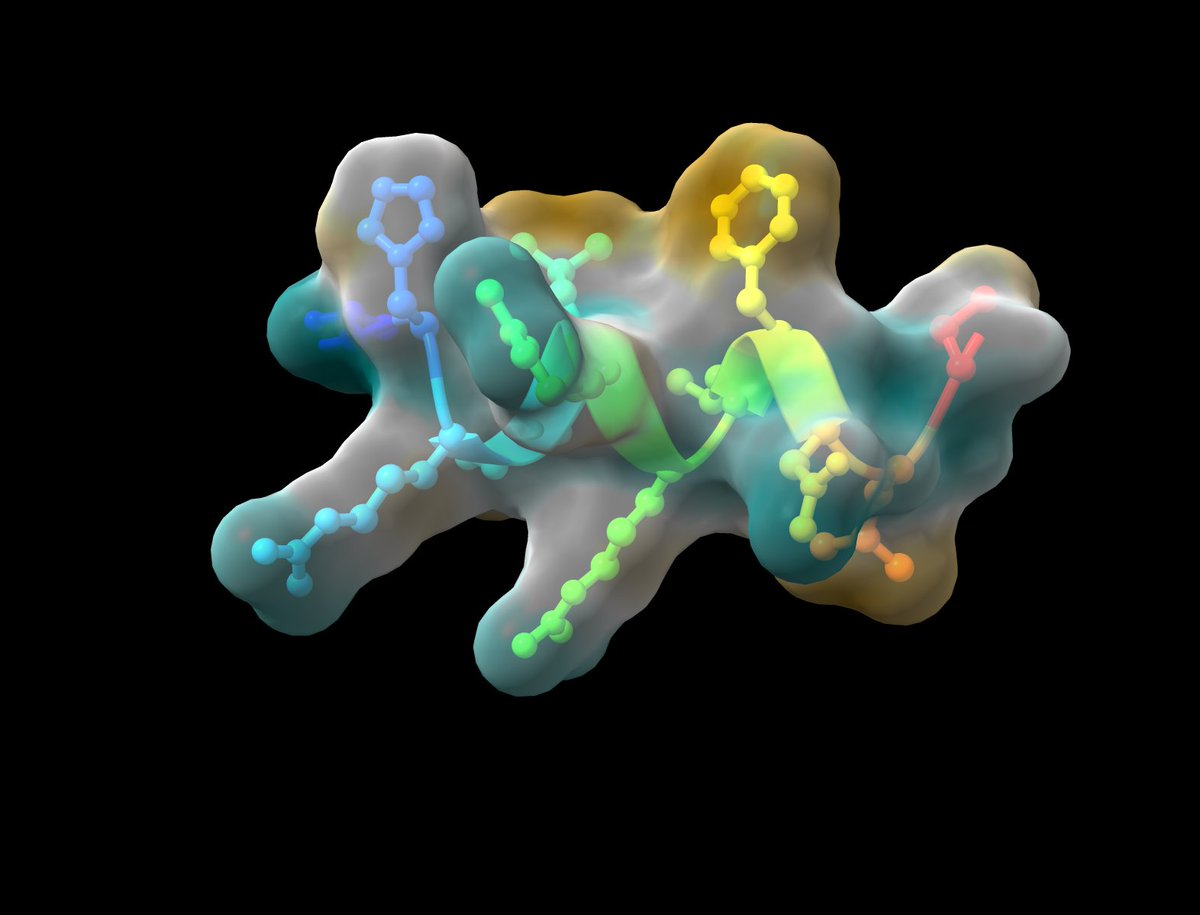
Today in @Nature, we share our latest paper. We developed an algorithm to predict novel peptides cleaved by proconvertases across all human tissues. Using this method, we identified BRP, a brain-derived anti-obesity peptide.
nature.com/articles/s41586-0…
2
8
752
Gene-Wei Li Lab retweeted

24 Feb 2025
A new method developed in @MITBiology builds on existing artificial intelligence models to computationally predict protein fragments that can bind to and inhibit full-length proteins in E. coli buff.ly/4k1Ga4N
5
26
111
7,831
Gene-Wei Li Lab retweeted
7 Feb 2025
Great to see this piece from @MITBiology highlighting our work on discovering protein fragments to inhibit protein interactions in cells! Thanks @LillianWEden for the write-up.
6 Feb 2025

Researchers in the Department of Biology use an AI-driven approach to computationally predict short amino acid sequences that can bind to or inhibit a target, with a potential for great impact on fundamental biological research and therapeutic applications. 🧵1/5
2
11
1,345
Gene-Wei Li Lab retweeted

6 Feb 2025
Story coming soon from @LillianWEden
5 Feb 2025
Thrilled to announce the final version of our paper on computational discovery of protein fragments that can inhibit cellular protein interactions, led by Andrew Savinov (@bioSavinov), now published in @PNASNews.
@MITBiology @ScienceMIT @HHMINews
2
6
1,354
5 Feb 2025
Thrilled to announce the final version of our paper on computational discovery of protein fragments that can inhibit cellular protein interactions, led by Andrew Savinov (@bioSavinov), now published in @PNASNews.
@MITBiology @ScienceMIT @HHMINews
5 Feb 2025
Happy to announce that our paper on systematically discovering peptides to inhibit protein-protein interactions in living cells is out now @PNASNews: pnas.org/doi/10.1073/pnas.23….
@MITBiology @ScienceMIT @HHMINews
See quoted thread on the updated preprint for details:
1
5
37
5,342
Gene-Wei Li Lab retweeted

for the folks who missed @bioSavinov's fantastic seminar this week, you can check out the recording 👇
youtu.be/s31yC7nQqDs
and thanks again to @pillar_vc for hosting!
5
12
1,789
27 Sep 2024
Check out Li lab postdoc Andrew Savinov's (@bioSavinov) updated manuscript on our computational approach to predict inhibitory protein fragments at scale -- now complemented by extensive new deep mutational scanning experiments. @MITBiology @ScienceMIT @HHMINews
27 Sep 2024
Excited to share our updated manuscript on FragFold, the massively parallel AlphaFold-based approach we’ve developed to discover protein fragment inhibitors at scale -- w/ @SassSeabass, @keating_lab, and @GeneWeiLiLab. biorxiv.org/content/10.1101/… (1/n)
1
9
1,548
29 Aug 2024
Excited to share a new preprint from the lab, 'Microbial reaction rate estimation using proteins and proteomes'!
20 Aug 2024
Excited to share some work from my postdoc! In our recent preprint (w/ @gregorybritten @GeneWeiLiLab Sean Hackett and Mick Follows), we ask how to use proteomic data to estimate in vivo reaction rates? (1/n)
15
1,388
1 Aug 2024
Truly excited to join this awesome community and make new breakthroughs! @MITBiology @HHMINEWS
3
2
56
4,892