We use computational and experimental methods to study protein structure, function, and interactions at @MITBiology @MITBE

Joined April 2021
Photos and videos
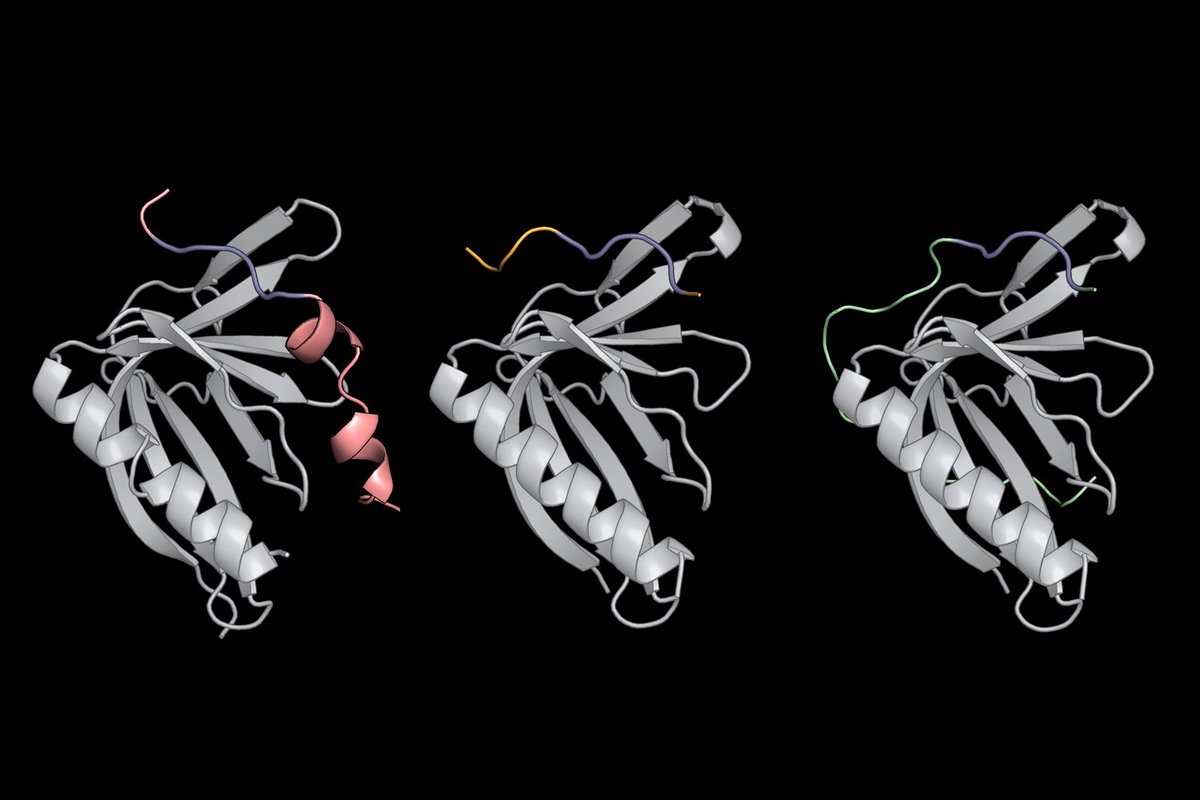
Here’s a new preprint from the Keating Lab: biorxiv.org/content/10.64898… Foster Birnbaum and Amy E. Keating demonstrate that sequence design models, such as ProteinMPNN, are limited because they were trained only on native sequences. (1/2) #ProteinDesign #StructuralBiology

1
2
143
To solve this, Birnbaum and Keating present PottsMPNN, a sequence design model that learns a sequence-energy landscape from MSAs. PottsMPNN outperforms other sequence design models and is a drop-in alternative to ProteinMPNN. Code: github.com/KeatingLab/PottsM… (2/2)
1
91
We’re expanding our digital footprint! To keep up with the latest protein design research, lab news, and updates from the Keating Lab, follow us over on Bluesky: bsky.app/profile/keatinglab.…. See you there! #ProteinDesign #StructuralBiology

3
177
Keating Lab retweeted
19 Nov 2024
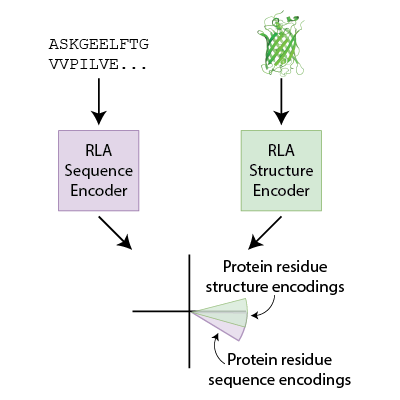
A self-supervised approach aligning protein sequence and structure spaces enables efficient binder screening with only backbone structural information — a powerful asset for early-stage protein binder design. 🔗 go.aps.org/3UY7OVe
1
1
2
534
New work from the lab! Check out RLA (journals.aps.org/prxlife/abs…), a contrastive-learning approach that assesses sequence-structure compatibility by aligning sequence and structure machine learning representations! RLA can successfully filter protein binder designs. 1/3 🧶
1
5
16
873
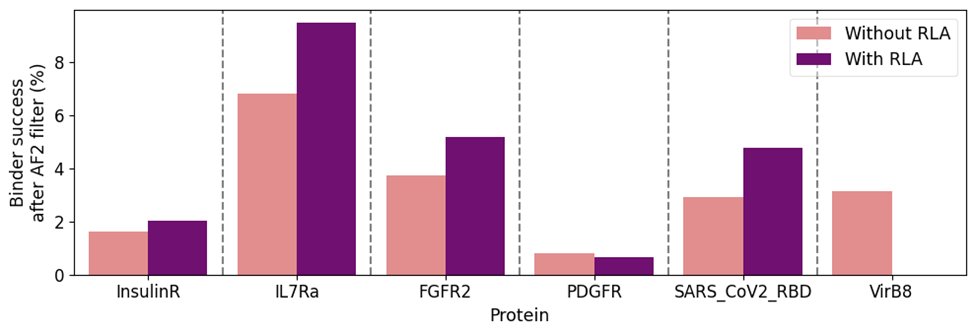
RLA has been tested on several benchmark sets, including several design libraries of miniprotein designs for a variety of protein targets. For all but two targets, filtering with RLA results in a higher success rate after subsequent AF2-based filtering. 2/3
1
141
To learn more, read out the publication in PRX Life and use the publicly available code (github.com/MadryLab/rla). Thanks to Foster Birnbaum, Saachi Jain, Aleksander Madry, and Amy E. Keating for this work! 3/3
1
124
Keating Lab retweeted
22 Aug 2022
First twitter thread🧵and also my first BioRxiv preprint! I’m excited to finally release my undergrad work into the world: combining GNNs, Potts models, and Tertiary Motifs (TERMs) for protein design! See the preprint here: biorxiv.org/content/10.1101/… 1/

2
14
67
Keating Lab retweeted
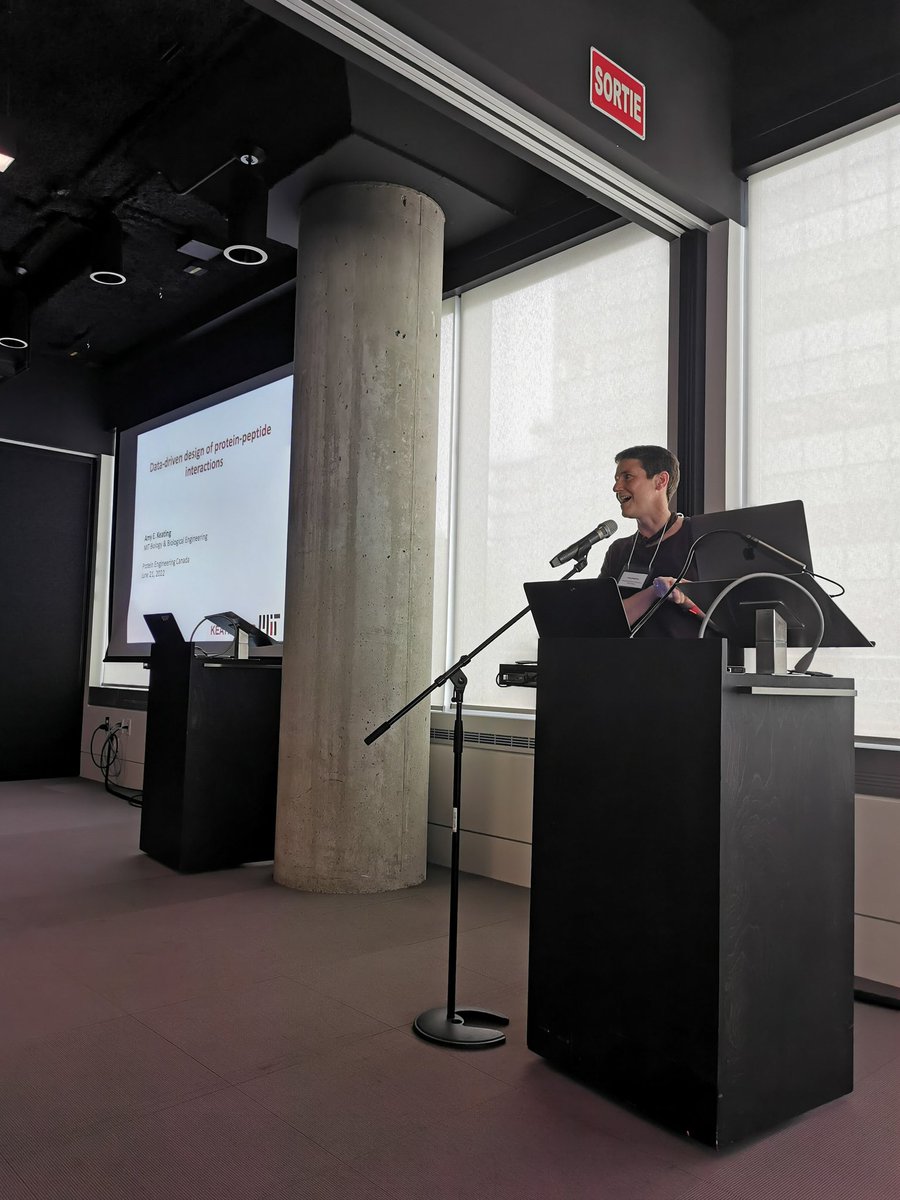
Our first keynote speaker: Dr. Amy Keating (@keating_lab). Interested in protein interaction specificity, Dr. Keating highlights the power of data-driven computational exploration of protein interactions. Dr. Keating was our student choice of #PEC2022 and we are ecstatc to host!
3
7
Keating Lab retweeted
26 May 2022
Fast, reliable, computational methods for designing protein-binding peptides would be immensely useful. As a first step, we show that tertiary structural motifs from the PDB can be used to reconstruct known peptide structures and generate new ones. doi.org/10.1002/pro.4322 (1/9)
6
18
105
Keating Lab retweeted
Scientists in @keating_lab designed a screening method to probe how short stretches of amino acids called SLiMs selectively bind to certain proteins, and distinguish between binding partners with similar structures. I covered this recent work for MIT News: bit.ly/3B4piEb
9
37
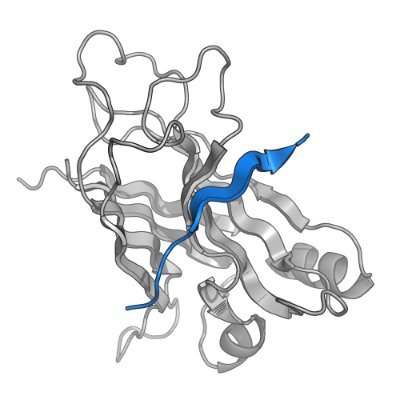
Excited to share our newest work! We describe a surprising mechanism behind how a short linear motif binding domain achieves interaction specificity. elifesciences.org/articles/7…

ALT PCARE peptide binding the EVH1 interaction domain

8
48
335
Keating Lab retweeted
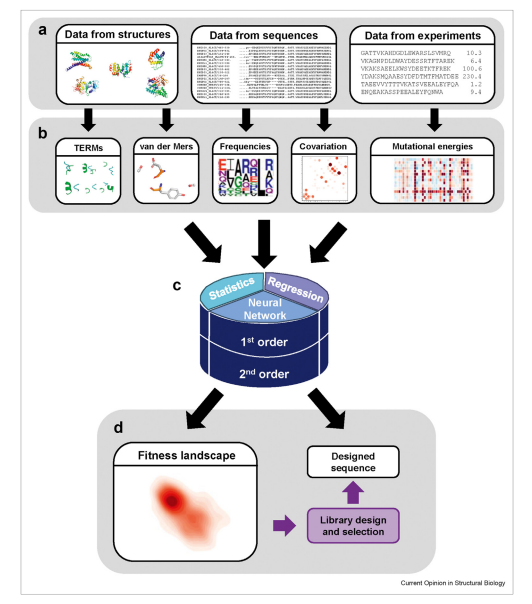
Review of data-driven protein design, including structure, sequences, and high-throughput functional datasets. Vincent Frappier @KeatingLab sciencedirect.com/science/ar…
1
11
51
Our COSB mini-review on data-driven protein design is now available here: authors.elsevier.com/a/1czDI…

1
1
Keating Lab retweeted
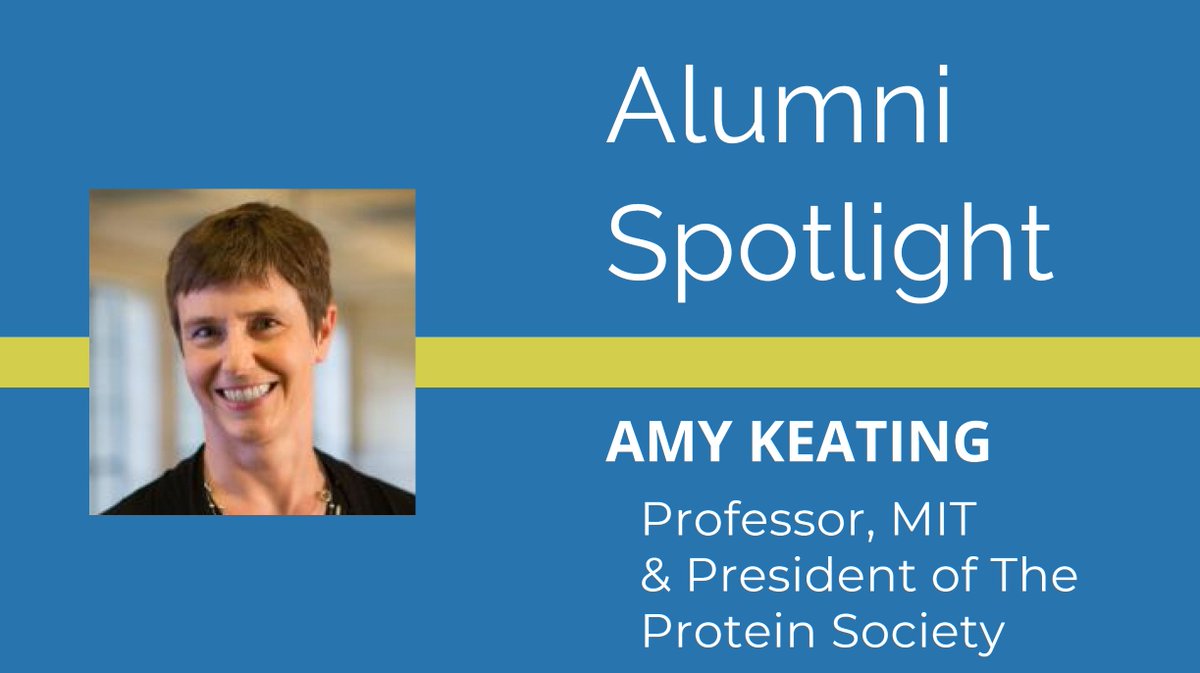
Read about the amazing accomplishments of alum MIT biologist and president of The Protein Society, Prof. Amy Keating (PhD ’98 Houk/García-Garibay groups) bit.ly/3w0kA7O @houk1000 @GaribayLab @MITBiology @ProteinSociety
9
18