
Joined December 2022
- Tweets 24,201
- Following 439
- Followers 364
- Likes 37,163
940 Photos and videos






Jay retweeted

Jun 10
WATCH: Alex Jones Channels His Inner Jasmine Crockett, Hillary Clinton, Kamala Harris and AOC 😂
🔴TUNE IN LIVE👇
x.com/i/broadcasts/1rGmqqbkp…
Jun 10

VIDEO: JASMINE CROCKETT Implies Austin Metcalf Deserved to be Stabbed to Death by Karmelo Anthony — PLUS Watch Her Get Caught RED HANDED Doing a FAKE, Black Fat Albert Accent!
🔴TUNE IN LIVE👇
x.com/i/broadcasts/1rGmqqbkp…
19
42
167
57,057
Jay retweeted

1
6
825
Jay retweeted

Jun 10
Daniel Jackson Swing Breakdown
One of the best bats to watch at the CWS this year
31 HR and 25 SB as a catcher, he is built different
1
11
144
22,781
Jay retweeted

Jun 9
A lot of good hitters have good swings.
But they're not ALL IN.
Their decision making is MAYBE... MAYBE... OH DANG IT.
Instead of YES YES ABSOLUTELY.
(Or YES YES NO when they take a pitch)
Here's something I've told guys when they need it:
"Treat every pitch like it's a hit and run. You HAVE to get the barrel on it. (within reason)
But don't just hit it, DRIVE it. Hit and run, but make it a DRIVE and run."
It's worked great.
If you're good in the cage but underwhelming in the game, this is usually why.
You're not being aggressive enough. You're not all in when you're between the lines.
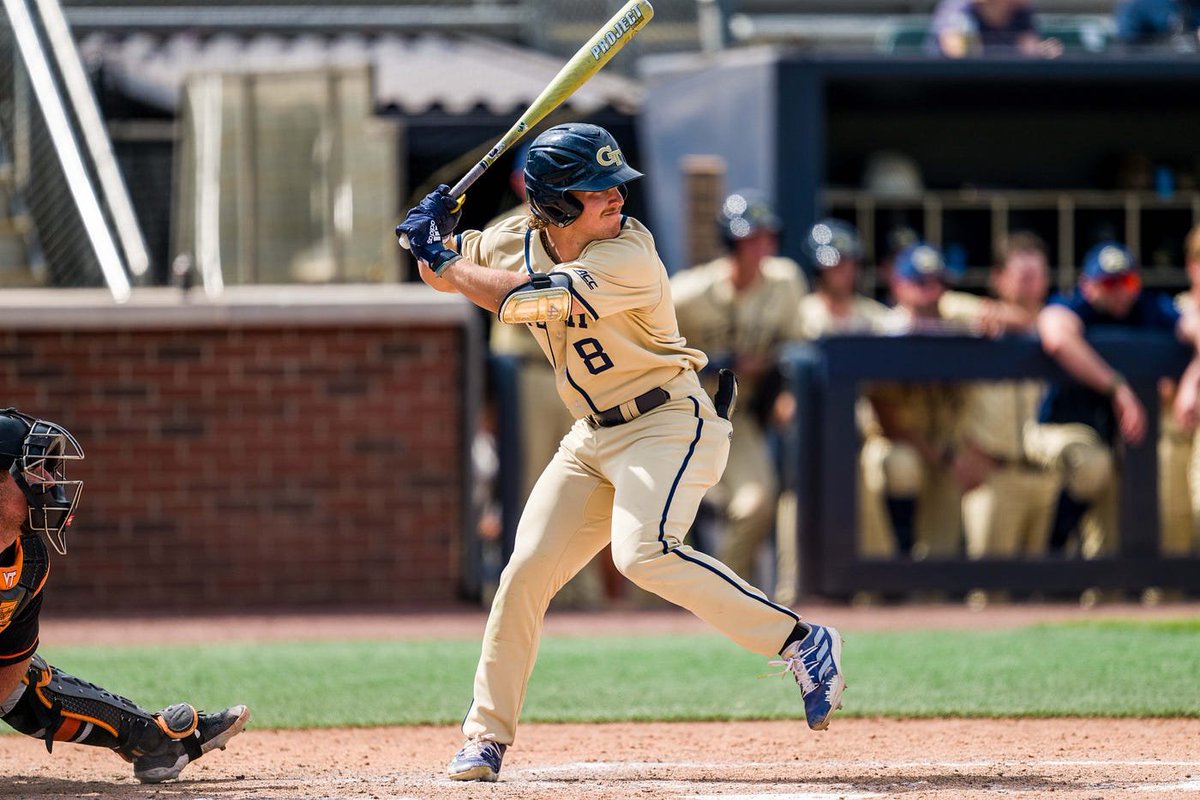
4
28
345
51,555
Jay retweeted

Nu’u Contrades - Arizona St
2025 (right) - .304, 6 HR, .519 SLG, 16.5% k rate
2026 (left) - .370, 21 HR, .770 SLG, 13.5% k rate
#hittingtalk
11
19
352
117,754
Jay retweeted

Almost every catcher I coach struggles with this👆
Would be curious what pitching coaches think about this too!
I see it as a huge issue and once we solve it their whole world changes with their throw. 💪
#baseball #softball #catchingmadesimple
1
3
501

Jay retweeted
Coming from under the drop ball.
Coming from under the rise ball.
Both come ‘around’ their rear shoulder.
Never from over the top of the rear shoulder.
1
3
40
5,411
Jay retweeted

May 31
Pete-Crow Armstrong shares Miguel Cabrera's "sync-up" method.
Pay attention to the front foot. As Craig Hyatt said in his original post, Cabrera syncs up the barrel and the front foot heel peel. PCA generally appears to do the same.

3
14
207
52,383

Incentives explain outcomes.
Milton Friedman observed that you cannot simultaneously have free immigration and a welfare state.
America’s earlier waves of immigration succeeded so well because, prior to 1914, the country maintained open borders without a welfare system.
Immigrants arrived to work, support themselves and their families, and build new lives.
Those who couldn’t succeed typically returned home.
This environment naturally selected for self-reliant individuals and fueled tremendous economic growth.
In contrast, today’s expansive welfare state, offering healthcare, education, housing assistance, and cash transfers, fundamentally alters the incentives.
When immigrants, whether legal or illegal, can immediately access these benefits, it becomes possible for some to arrive and function as net fiscal drains rather than contributors.
Friedman therefore opposed the unsustainable pairing of open borders with generous entitlements.
So it’s not paradoxical why one would support pre-1914 immigration but oppose its later version.
They are very different phenomena.
Either can work on its own, but together they generate higher taxes, social friction, and long-term strain.
34
502
1,443
28,331
Jay retweeted

May 28
2
3
63
17,613
Jay retweeted
May 28
Turn the backside into the front side
Can be a good cue for hitters who miss underneath and lift the ball too much
Comment “BONDS” if you would like a drill sent to you to work on this feeling
27
7
89
12,039
Jay retweeted

May 27
I would absolutely get arrested if my kid was in that dugout 🤬🤬🤬
125
229
2,893
276,256
Jay retweeted

May 26
I asked Wayne to give me a short list of things he wanted to work on.
One of those things, in his words, was “lift.”
“When I miss, it’s short.”
So we set out to find a feeling.
I used the tee earlier in the week with another player for different reasons, but it felt like a simple way to help Wayne experience getting under the ball differently.
It also became a reference point.
Something we could keep returning to as we explored other movements.
Sometimes that’s all it takes.
I love the simplicity of something like a tee.
Beginner’s mind.
Something kids use that we can return to.
I make shooting simple. Follow me.
45
348
10,896
317,251
Jay retweeted

May 23
🚨 Holliday’s Hitting Advice
• “Hit the pitcher in the face”
• Approach > Mechanics
• Be on time for the fastball
⭐️ Overthinking is your biggest enemy on the field. Simplify the game down to 1 thought & commit to your approach.
30
314
60,326
Jay retweeted
May 23
Ketel Marte Recoil Homer
If you’re a hitter who struggles with your body opening up too much try this feel out
This can help clean up your connection between your barrel and body
1
19
3,025
Jay retweeted

This is why women are the most violent protesters.
173
1,520
6,830
164,991
Jay retweeted

Movement 101 📚
The back hip escorts the shoulders!
One seamless athletic movement flow from start to finish!
Better Movement = Better Player.
3
11
77
6,513
Jay retweeted

May 19
Old school hitters were feeling things science is still catching up to. But wisdom needs context. Different hitters need different feels at different times. The goal isn’t to copy every cue. It’s to understand why it worked, when it worked, and who it worked for.
3
10
131
12,407
Jay retweeted

May 15
High School players will have higher bat speeds than some MLB Players but don’t nearly have the same Exit Velos??
Listen to @nheadley14 explain why and the reason that selling out for bat speed may not help you produce better
🎥: @xavierscruggs
3
3
21
7,421