
IT engineer of some sorts. Healthcare IT Manager. Former army officer. Interested in all things interesting
Joined May 2011
- Tweets 6,319
- Following 340
- Followers 99
- Likes 528
165 Photos and videos




Kurt Gielen retweeted

Apr 5
Right then.
Let me explain something very slowly, because it appears some basic logic has gone missing somewhere over the Atlantic.
No serious nation in the history of warfare has spent fourteen months insulting its allies, threatening to annex their territory, siding with their common enemy, and then knocked on their door expecting them to come running to rescue a catastrophe of its own making. That is not how alliances work. That is not how anything works.
You abused the UK. You threatened Canada. You tried to grab Greenland. You called the EU an adversary. You praised Putin, the one man every serious NATO ally has spent decades preparing to fight. You hosted Kremlin officials in the Capitol. You undermined European elections. You abandoned Ukraine. You imposed tariffs on your closest partners. You did all of this loudly, proudly, and on camera.
And now you are surprised that nobody is returning your calls.
Here is a question worth sitting with. Why do you think that is? Is it possible, just possible, that when you treat your allies like enemies for over a year while cuddling up to their actual enemy, those allies might update their opinion of you? Is that concept too complicated? Does that require more working memory than is currently available?
You did not plan this war with your allies. You did not consult them. You did not build a coalition. You started a conflict, watched it go sideways, and then got on your knees asking for help from people you spent fourteen months calling weak, corrupt and irrelevant.
NATO is not what it was. Not because Europe changed. Because Washington made crystal clear which side it is on. And it is not ours.
You want European boots on the ground? Start by explaining why America is more aligned with Moscow than with Brussels. Take your time. We will wait.
Gandalv / @Microinteracti1
642
6,030
21,773
412,983

Jan 7
Beste @bpost_nl
Als jullie voor de levering van een pakje voorstellen deze te laten afleveren in een pakjesautomaat wil ik niet vervolgens horen dat het retour is gestuurd omdat het adres (dat van jullie komt) onvolledig is en ik niet kan aanpassen. Altijdwat
61
29 Dec 2025
Hey @bpost_nl , toffe chatbot hebben jullie daar. Spijtig dat hij niks kan. Ook spijtig dat jullie invoerrechten claimen voor een pakje, maar als ik wil betalen ik een fout krijg dat dat niet kan omdat het al betaald is.
60
13 Dec 2025
Hey @TomVandendriese, niet proper om zomaar achterlijke commentaar in de lucht te smijten om die dan vervolgens in het geniep proberen te verwijderen. Is dat het niveau van de VB parlementair?
12 Dec 2025

Je moet echt niet en plein public tonen hoe lomp je wel bent. De meeste mensen hoeden zich daarvoor.
49
Kurt Gielen retweeted

4 Dec 2025
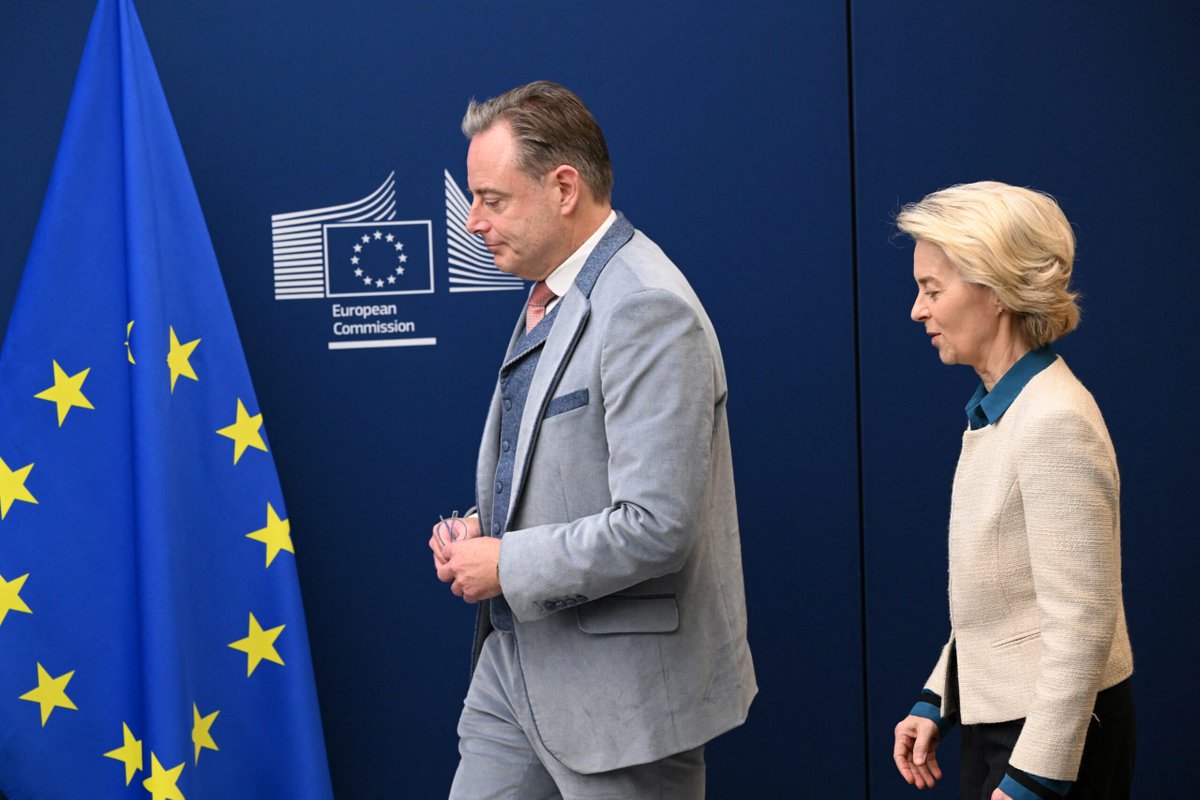
The #Euroclear issue needs some extra explaining for our non-Belgian friends I think. Here are my five cents👇👇👇
I've been advocating since years during interviews in different media outlets to have a structural financial support for #Ukraine . Such a multi-annual financial guarantee is essential to uphold the will to fight of the Ukrainian people and is the only real proof that Europeans (and once upon a time also Americans) are ready and serious about the issue. Unfortunately, such a guarantee has never come.
The idea of seizing #Euroclear assets is already on the table since the end of 2022. So it is nothing new. And the fact that such an action is a "bad good idea" is not new either. I explained why this is a "bad good idea" on this medium a couple of weeks ago: x.com/general_marcT/status/1…
The "cavalier seul" initiative from the Commission and the lack of coordination with member states, and especially Belgium, has brought us into the position that we know today. A stalemate and a divided EU and NATO. It has become a shitshow were we Europeans, whatever the outcome, will loose.
If in the end the assets will be used, it is a clear sign that EU/European countries are not ready to go all the way in supporting Ukraine. Using the assets is therefore also a sign of weakness and lack of unity. It also symbolises the non-comprehension of the situation where we, whether we like it or not, are at war with Russia. And war is like being pregnant, you cannot be a little bit pregnant. Once at war, you must go all out. But most Europeans are not ready for that. It also explains the much commented declaration of the French Chief of Defence two weeks ago.
What most people also do not understand is that using the seized assets is also the most expensive solution, especially if you pretend to protect the rule of law. Russia will not disappear from the map. Fines will come, as is already the case for Luxembourg for example. Experts familiar with the subject talk about a fine as big as the seized assets which would bring us up to a cost of € 300 billion. Even spread among EU members, this is still a whole lot of money (1,5% of EU GDP if everybody pays!), that can better be used to support Ukraine or later support the reconstruction.
An EU loan would be the ideal solution and a strong message to Russia. But that is politically impossible which also sends an image of weakness, ready to be exploited by our adversaries. It would however be the real sign of solidarity with Ukraine and less costly than seizing Russian Euroclear assets. But EU nor NATO will bring such a solution. The lack of unanimity makes it impossible. And this lack of unanimity is exploited to the fullest by our adversaries.
The next best thing are therefore loans given by the individual states of the "Coalition of the Willing", if they are still willing! It was at a certain moment on the list, but it disappeared apparently. It will also be less costly than seizing assets in the end. And whether we like it or not, when using the Euroclear assets, the questions for new loans will be again on the table within a year.
The Belgian Prime Ministers position is therefore a correct one that I fully support. Using these Euroclear assets will weaken Europe in the end structurally which will make support to Ukraine for European countries even more difficult.
18 Nov 2025

I am flabbergasted by the fact that the Euroclear discussion does not get more attention in the Belgian (@destandaard @hln @demorgen @sudinfo_be ...) and European (@politico ) Press.
The discussion stands for the half-hearted EU(ropean) support for #Ukraine on one side and the geopolitical blindness of a European political class of the consequences of such an action on the other side.
The fact that you "piss-of" Russia is not a sufficient reason to do it. (National) interests are not served by such type of emotions.
In summary:
-There are legal obligations. You cannot preach the "Rule of Law" by breaking the law
-Consequences are potentially devastating:
1. Potentially 300 billion € liabilities (>50% GDP of Belgium or the budget to finance two years of national social security). This is even a heavy burden when shared among all member states.
2. It undermines € and EU's financial credibility in the long run
-It is only kicking the can down the road. Ukraine needs structural help with a long term vision. The discussion will be back on the table within a year if these assets are transferred. EU (and others) only prove to the world that they are fundamentally unwilling or unable to help #Ukraine end (and hopefully) win this war.
For more details (with thanks to #ChatGPT )👇👇👇
EU Use of Frozen Russian Assets: Legal Basis, Alternatives, and Financial Consequences
The debate over using Russia’s frozen sovereign assets to support Ukraine sits at the intersection of international law, financial stability, and geopolitical strategy. The European Commission views these assets—amounting to roughly €150–€200 billion immobilised primarily at Euroclear in Belgium—as an essential resource to sustain Ukraine’s defence and reconstruction. Yet the legal, economic and systemic risks are significant, especially due to the 1989 Bilateral Investment Treaty (BIT) between Belgium–Luxembourg and the USSR/Russia, and the implications for global trust in the euro.
1. Legal Context: The Belgium–Luxembourg–Russia BIT and Euroclear
The 1989 Belgium–Luxembourg Economic Union (BLEU) BIT with the USSR, now applied to Russia as successor state, provides extensive protections to investors, including protection against expropriation, fair and equitable treatment, and free transfer of funds. Crucially, it allows investors (including potentially Russian institutions and individuals) to initiate arbitration against Belgium for measures equivalent to expropriation.
Although the treaty does not mention Euroclear, Russian claimants argue that frozen securities, cash balances and other financial instruments held through Euroclear qualify as “investments” under the BIT’s broad definition. Freezing is legally easier to justify than confiscation; the latter could constitute expropriation and give rise to large compensation claims. Because most Russian sovereign assets are custodised through Euroclear (a Belgian jurisdiction), Belgium is the state most exposed to arbitration.
If the EU confiscated €150 billion of Russian sovereign assets, Russia or Russian investors could potentially claim the full value plus years of compound interest and damages—resulting in exposure of €170–€230 billion, and in maximalist scenarios even €250–300 billion. Belgium therefore insists on EU-wide guarantees before it agrees to any scheme involving the principal.
2. Ukraine’s Funding Needs
Ukraine’s defence and essential-state functions currently cost around €50–70 billion per year. Excluding reconstruction, a €150 billion injection could fund Ukraine for roughly 2–3 years, depending on the intensity of the war and inflation in military procurement. If reconstruction is included, the duration shrinks significantly. The scale of this funding requirement is why the Commission seeks solutions beyond traditional grants and national budgets, which many member states consider politically or fiscally unsustainable.
3. Alternative Options Considered by the European Commission
Besides outright confiscation, the Commission is evaluating three main pathways to support Ukraine:
Direct national grants from EU member states.This is legally clean but politically difficult, as many governments face budget constraints and domestic resistance to increasing aid commitments.
EU-level borrowing on financial markets.The EU could issue joint debt and use the proceeds to assist Ukraine. This spreads the burden but requires unanimous approval and raises concerns in fiscally conservative countries wary of expanding common debt.
A “reparations loan” model, where frozen Russian assets are used as collateral rather than seized.The EU would raise funds on markets secured against the frozen assets, and lend these funds to Ukraine. The assets themselves remain technically owned by Russia until future reparations negotiations. This is the Commission’s preferred approach because it mobilises the scale of available funds while attempting to reduce legal exposure.
These options are not mutually exclusive; the Commission envisions a blended model. The decision remains politically sensitive because confiscating sovereign assets historically breaks with long-standing principles of state immunity.
4. Why Using Frozen Assets Is the Commission’s Preferred Option
The Commission favours using Russian assets for several interconnected reasons:
Scale: Only these assets are large enough to cover Ukraine’s needs for several years. Grants or new EU borrowing cannot easily reach this magnitude without severe political resistance.
Burden-sharing: Mobilising frozen assets reduces the fiscal load on national budgets at a time when many member states face high debt.
Political narrative: There is strong political support across the EU for the principle that “Russia should pay for the damage it caused,” which is perceived as fairer than asking European taxpayers to finance Ukraine indefinitely. However, it would be very difficult to find unanimity in the Council among 27 member states for common funding. The political narrative therefore does not necessarily reflect the reality.
Existing precedent: The EU has already begun transferring the profits (interest) generated by these frozen assets to Ukraine. Extending this to the principal is seen as a logical—if legally challenging—next step.
Nevertheless, this preference clashes with warnings from central bankers, economists, and legal experts who argue that the long-term consequences may outweigh the short-term gains.
5. Consequences for the EU and the Euro: Financial and Economic Credibility
Confiscating sovereign assets—especially those belonging to a major power’s central bank—would have profound implications for the EU’s reputation as a financial safe haven.
a. Erosion of trust in the euro as a reserve currency
The euro depends on global perceptions of legal predictability, neutrality, and respect for property rights. If the EU seizes central-bank reserves, many non-Western countries (China, Gulf states, India, ASEAN nations) may diversify away from euro-denominated assets. Even small shifts could reduce the euro’s share in global reserves, weaken its international role, and slightly raise borrowing costs across the eurozone.
b. Potential capital flight
Sovereign wealth funds and central banks may relocate assets away from Euroclear and European custodians to jurisdictions perceived as politically neutral, such as Singapore or Hong Kong. This undermines Europe’s financial infrastructure.
c. Undermining Euroclear and the EU’s financial plumbing
Euroclear and Clearstream are cornerstones of global securities settlement. Perceived politicisation of central-bank reserves could lead to reduced use by foreign institutions, shrinking Europe’s influence in global markets.
d. Legal precedent and future risk premiums
If assets can be confiscated for geopolitical reasons, markets will price in higher risk for holding funds in Europe. This means higher yields on government bonds and more expensive financing for banks and corporations.
e. Retaliatory or emulative actions
Other states may respond by seizing Western assets or by reinterpreting sovereign immunity more aggressively. This contributes to long-term fragmentation of the global financial system.
f. Internal EU tensions
Differing legal interpretations and financial exposures (notably Belgium’s) could deepen divisions within the EU, damaging the perception of unity and stability.
Conclusion
Using frozen Russian assets is attractive to the European Commission because it provides an unprecedented financing source for Ukraine without burdening national budgets and it steers away from the discord within the Council of the EU on the support for #Ukraine . However, the legal risks under the 1989 BIT and the broader dangers to the euro’s credibility and Europe’s financial reputation are substantial. Confiscation could generate hundreds of billions in potential liabilities and diminish global trust in the euro as a secure reserve currency. The EU therefore faces a difficult trade-off: mobilise these assets to sustain Ukraine’s defence in the short term, or preserve the integrity and stability of Europe’s long-term financial architecture.

32
66
244
36,810
24 Nov 2025
Hey @proximus
Is het mogelijk om een eSIM terug om te zetten in een fysieke sim kaart? Blijkbaar ondersteunen niet alle toestellen dual eSIM gebruik
1
76
20 Sep 2025
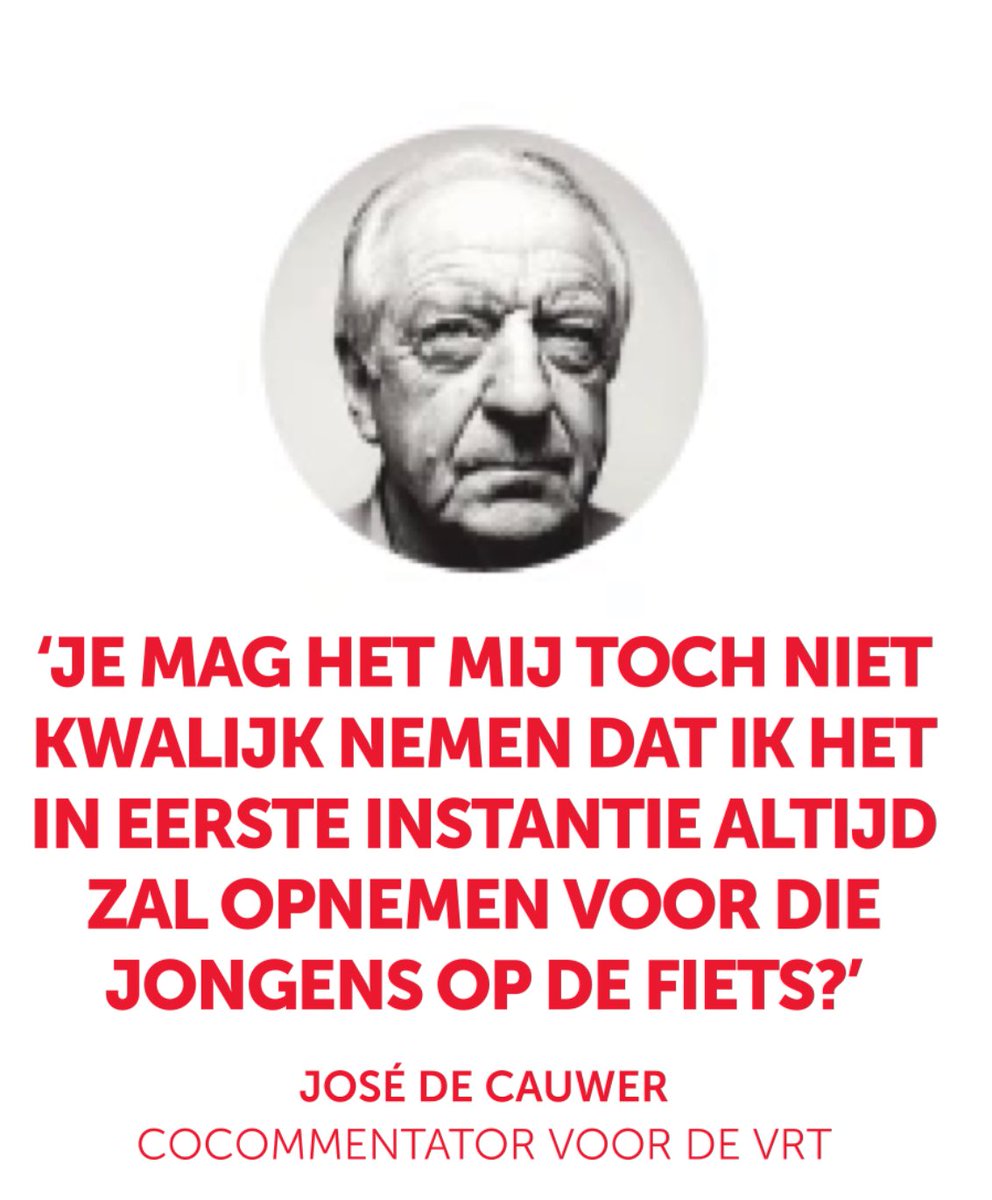
Wij intellectuelen zullen het eens zeggen.
20 Sep 2025

Natuurlijk niet. Omgekeerd, wordt het anderen hopelijk ook niet kwalijk genomen dat ze in hun analytisch en denkvermogen net iets verder zijn geraakt dan de derailleur en en passant het zeemvel voor hun ogen hebben weggehaald.
1
116
13 Sep 2025
Today I left a bucket full of fentanyl at my front door. After a full day, it was still there. Didn't move an inch and nobody got killed.
12 Sep 2025

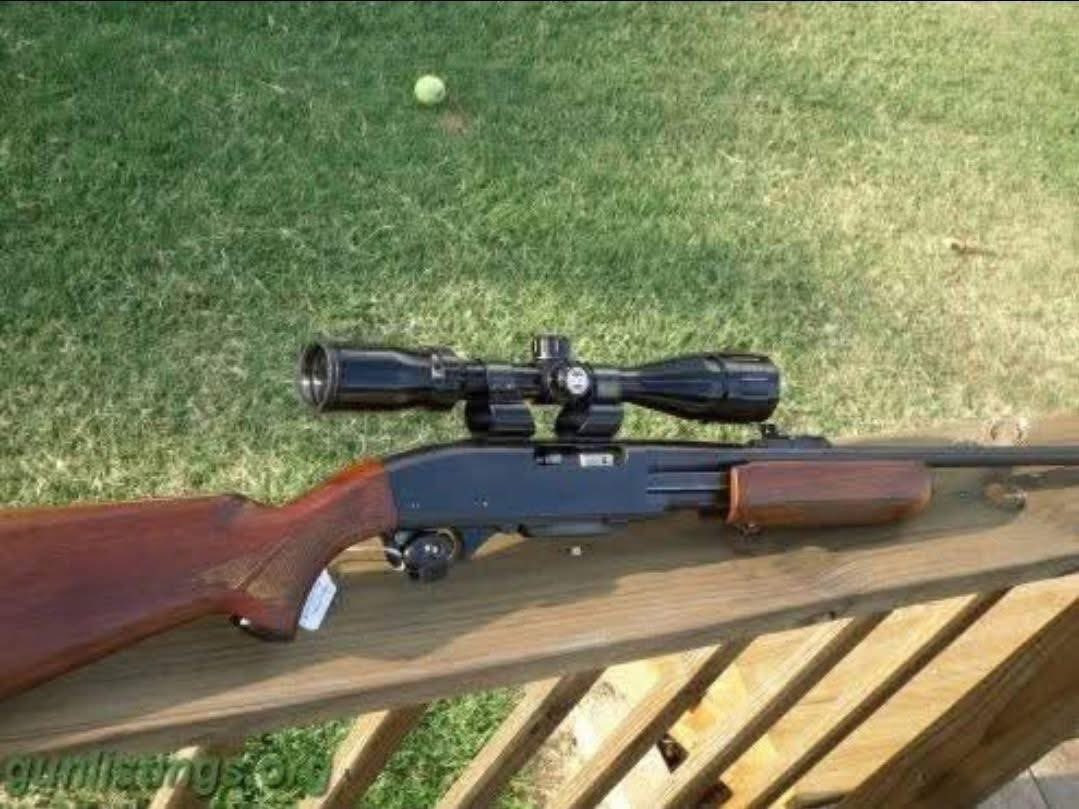
Today I swung my front door wide open and placed my Remington 30.06 on the deck rail. I left six cartridges beside it, then left it alone and went about my business.
While I was gone, the mailman delivered my mail, my neighbor across the street mowed his lawn, a girl walked her dog down the street, and quite a few cars stopped at the stop sign near the front of my house.
After about an hour, I checked on the gun. It was still sitting there, right where I had left it. It hadn't moved itself off the deck rail. It hadn't killed anyone, even with the numerous opportunities it had presented to do so.
In fact, it hadn't even loaded itself. You can imagine my surprise, with all the hype by the Left and the Media about how dangerous guns are and how they kill people.
Either the media is wrong or I'm in possession of the laziest gun in the world.
The United States is third in murders throughout the World. But if you take out just four cities: Chicago , Detroit , Washington DC and New Orleans , the United States is fourth from the bottom, in the entire world, for murders.
These four Cities also have the toughest Gun Control Laws in the U.S. All four of these cities are CONTROLLED BY DEMOCRATS. It would be absurd to draw any conclusions from this data - correct?
Well, I'm off to check on my spoons. I hear they're making people fat .
56
28 Jun 2025
Who says you need a big, clear sky for your @Starlink to work?
Enjoying live streaming in the middle of the woods
1
133
Kurt Gielen retweeted

12 May 2025
ZOL zoekt (Sr.) IT Engineer!
zoljobs.be/vacatures/senior-…

1
2
123
11 May 2025
Hey @proximus,
ik krijg al sinds een jaar briefwisseling van jullie bedoeld voor een andere klant. Ontelbare telefoontjes en vragen naar jullie, de Post en postbode later stoppen we hiermee en gaan de brieven rechtstreeks de vuilbak in.
1
92
16 Apr 2025
15 Apr 2025

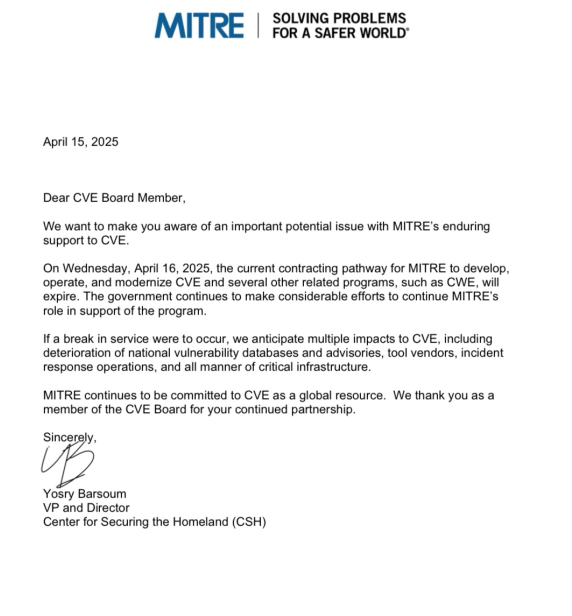
This random document fell off the back of a bus. Weird.
This random document which randomly fell off the back of a bus (randomly) says MITRE is no longer supporting the CVE program as of April 16th, 2025. Which is crazy, because this random document is dated April 15th, 2025.
70

25 Feb 2025
BREAKING: Rumors....
25 Feb 2025

BREAKING: Rumors now emerging that several Generals were caught shredding documents and the FBI raided the homes of several CIA officers.
2
103
13 Feb 2025
Iemand goede argumenten om aan te nemen dat deze dingen geen deel uitmaken van een grote witwas caroussel?

1
67
16 Dec 2024
Tyler Durden (Fight Club). Grok knows me better, than I do
16 Dec 2024

"Grok, what movie character am I and why?"
(Follow up with: "Make an image of me as that character!")
x.com/i/grok/share/c16iwwbXf…
1
172
11 Nov 2024
Robin laat echt geen gelegenheid onbenut om openlijk zijn lompe zelf te tonen. Een parlementair anno 2024
2
194