
Joined October 2018
- Tweets 8,132
- Following 984
- Followers 991
- Likes 14,586
1,037 Photos and videos










May 27
RT @NiftyBuckles: #FairyTaleTuesday 🌊🧜♀️
Morgens, the mysterious Welsh water beings, haunted rivers and seas without fish tails 🌫️ Unlike…
21
👻✍Alicia🕸👻 retweeted

Apr 4
“The naïve reader may imagine that when the dark aspects disappear they are no longer there in reality. But that is not the case at all, as experience shows. What actually happens is that the #conscious mind is then able to free itself from the fascination of evil and is no longer obliged to live it compulsively. The darkness and the evil have not gone up in smoke, they have merely withdrawn into the #unconscious owing to loss of energy, where they remain unconscious so long as all is well with the conscious. But if the conscious should find itself in a critical or doubtful situation, then it soon becomes apparent that the #shadow has not dissolved into nothing but is only waiting for a favourable opportunity to reappear as a #projection upon one’s neighbour. If this trick is successful, there is immediately created between them that world of primordial darkness where everything that is characteristic of the #trickster can happen—even on the highest plane of civilization. The best examples of these ‘monkey tricks,’ as popular speech aptly and truthfully sums up this state of affairs in which everything goes wrong and nothing intelligent happens except by mistake at the last moment, are naturally to be found in politics.
The so-called civilized man has forgotten the trickster. He remembers him only figuratively and metaphorically, when, irritated by his own ineptitude, he speaks of fate playing tricks on him or of things being bewitched. He never suspects that his own hidden and apparently harmless shadow has qualities whose dangerousness exceeds his wildest dreams. As soon as people get together in masses and submerge the individual, the shadow is mobilized, and, as history shows, may even be personified and incarnated.
The disastrous idea that everything comes to the human psyche from outside and that it is born a tabula rasa is responsible for the erroneous belief that under normal circumstances the individual is in perfect order. He then looks to the State for salvation, and makes society pay for his inefficiency. He thinks the meaning of existence would be discovered if food and clothing were delivered to him gratis on his own doorstep, or if everybody possessed an automobile. Such are the puerilities that rise up in place of an unconscious shadow and keep it unconscious. As a result of these prejudices, the individual feels totally dependent on his environment and loses all capacity for #introspection. In this way his code of ethics is replaced by a knowledge of what is permitted or forbidden or ordered. How, under these circumstances, can one expect a soldier to subject an order received from a superior to ethical scrutiny? He has not yet made the discovery that he might be capable of spontaneous ethical impulses, and of performing them—even when no one is looking.”
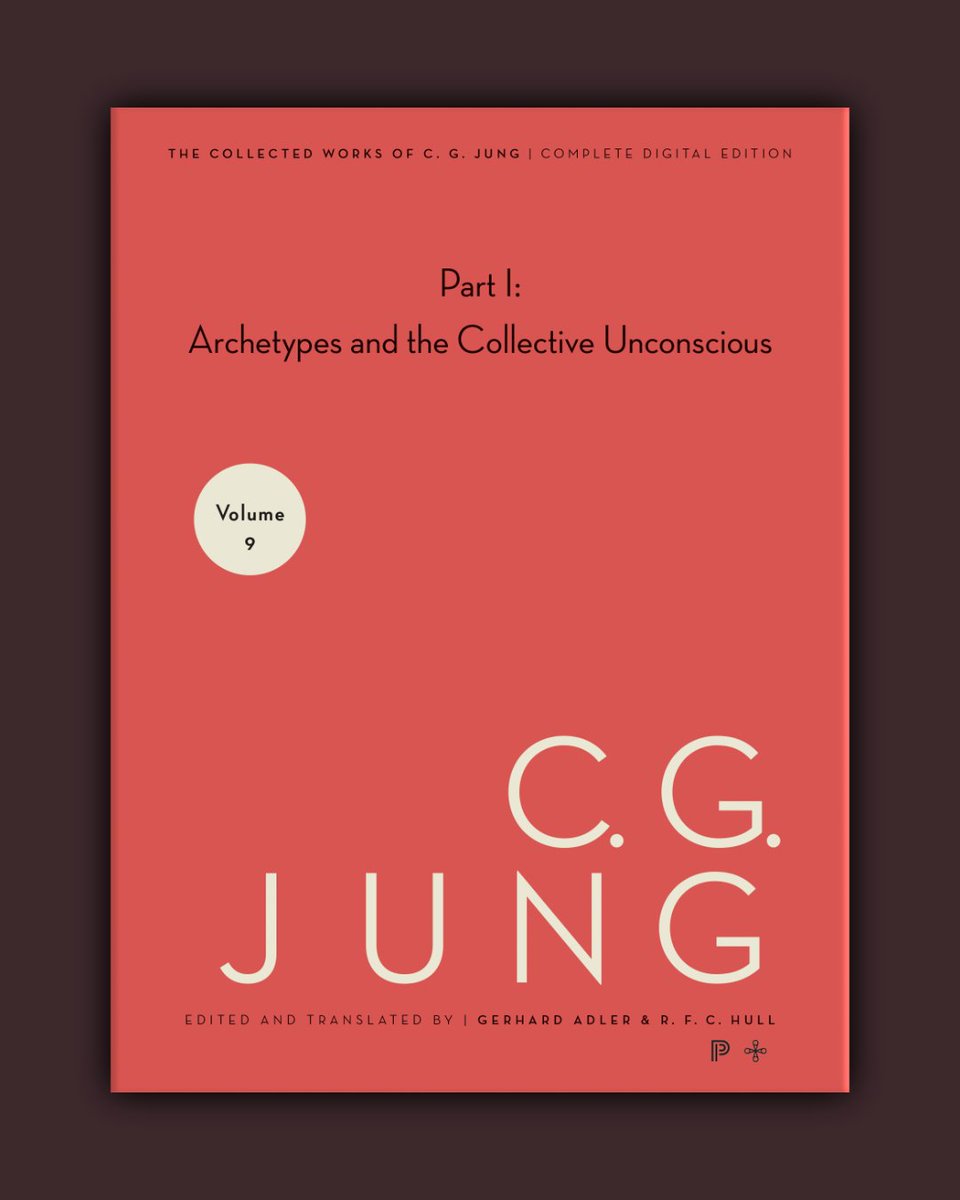
~C.G. Jung, “On the Psychology of the Trickster-Figure,” The Collected Works of C.G. Jung, Part I: Archetypes and the Collective Unconscious (CW 9i), para. 477-479
23
90
3,179
👻✍Alicia🕸👻 retweeted

Mar 29
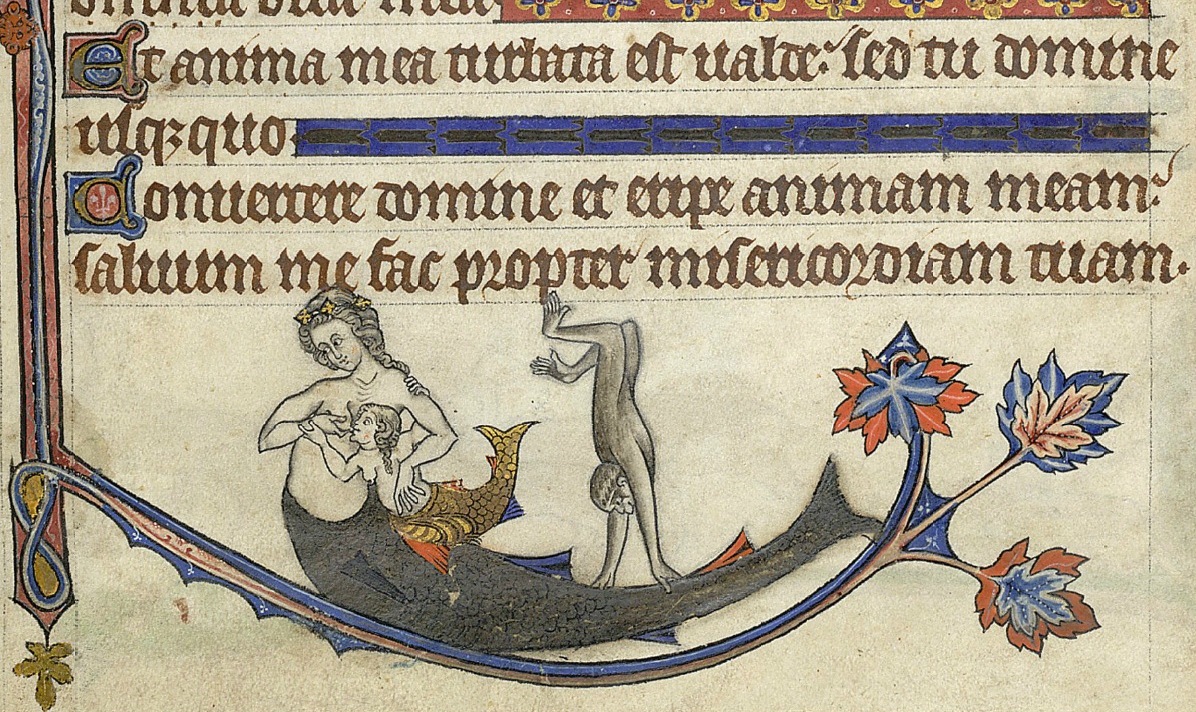
MERMAID MOTHER from The Alphonso Psalter 1284. This is unusual in showing a sympathetic and nurturing mermaid rather than a mermaid siren or seductress. She has no comb or mirror, the trappings of vanity, and is entirely at home in her ocean world #FolkloreSunday
2
39
160
2,999
Apr 1
RT @NiftyBuckles: #MythologyMonday ✨🐇 #Ostara
Eostre also known as Ostara, goddess of spring, walks the waking earth, as playful hares lea…
13
👻✍Alicia🕸👻 retweeted
Mar 29
“Narcissistic anxiety and apprehension of the ‘as-if’ person is covered by developing an idealised #persona to hide the fissures underneath, lying like a silent but deadly fault in the very ground of the personality. When self-esteem easily plummets, inadequacy and failure take over, and the ‘as-if’ person is fearful of the imperfect and needs to cover the shamed and vulnerable. This person is so intolerable to themself and so fragile they can hardly reveal themself in therapy, worried about being seen and falling apart and then perceived as helpless.
This is all perplexing when the person appears verbal and pleasant, enchanting and highly functioning, basking in the limelight. What is unnerving is the yet to be discovered layers behind the veils, mirrors and empty cheer. Like today’s diagnosed #narcissist, in the myth Narcissus sees an idealised likeness, one without warts and blemishes. Narcissus’s self-identity is inflated, unrealistic, incomplete and in denial of the #shadow. The modern narcissist in the ‘as-if’ person wants to keep it this way.
Given so much popular hype around the impossibility of #narcissism, we run the risk of obscuring the urge for transformation embedded in this personality type. Primary narcissism, as originally described by Sigmund #Freud, is constitutive of the human condition and the egoism within it is also an instinct for self-preservation. As subjects we are also objects to other subjects and thereby connected to each other. Self-consciousness is the #consciousness of the other’s consciousness of oneself. And this tension between self and other, between the moments of union between the self and the other is also the moment of difference when one is #conscious of otherness.
However, Narcissus gives in to loving only that which represents himself, and he is lost in his self-absorption. The ‘as-if’ person narcissistically struggles, suffering a lack of being real. It is as if the #soul is lost, compromised, stalked by isolative and defensive thoughts and feelings. Such people have difficulty being alone even though they are wrapped in singularity. ‘In the erosion of their identity by themselves, the narcissist is faced with their own emptiness, inflexible defensive system, unable to let go and enjoy’ (Hirigoyen, 2000, p. 130). The internal undermining narrative is critical and loaded with envy; they covet what others are assumed to have, whether they do or not. Inferiority lies at the base of it all, orchestrated by a darkened and limited vision of the self.
The ‘as-if’ person feels #anxiety and apprehension about life because of early narcissistic injuries – feeling slighted, ignored or treated without respect or empathy. As adults, this protective closing off and withdrawal response quickly arises in the face of even minor slights. ‘It often may take the form of a ruminatory retreat to a mental state of sado-masochistic self-flagellation, or to an equally ruminatory preoccupation with feelings of grudge and fantasies of revenge and triumph’ (Mollon, 1993, p. 66). This reflects the complex yet driven task of finding one’s truly original voice.
The melancholia of these people reveals a ‘marked “narcissistic intolerance”, a tendency to react strongly and depressively to relatively minor disappointments and insults, and also an inordinate need for “narcissistic supplies” of love and approval’ (Mollon, 1993, p. 66). That is why Freud (1917, p. 254) defined melancholic loss as ‘an object-loss which is withdrawn from consciousness’ or an ‘unknown loss’. Melancholic, without knowing what he is mourning for, he not only loses the capacity to love but also loses all his interest in the external world’ (Tuzun, 2002, p. 89).
Narcissus’s self-identity is unrealistic, incomplete and in denial of the shadow. To understand the underbelly of narcissism is not easy. There is a ‘complex web of fear and avoidance of hurt mixed with grandeur, the #narcissistic issues of esteem, idealization of the other and merger prompted by shame in the self’ (Homans, 1981, p. 84). Lacking real autonomy and self-cohesion, narcissism indicates a detoured search for self. The problem is in the singularity of being, the fear of intimacy, the inability to be known or real, the sneaking behaviours that hide the real self from others and mask basic, raw desires and needs.
The image portrayed to the world is meant to impress with daring, risk taking, boldness. This person appears confident while the foundational layers of the self are precarious. No one is to guess this or know the difficulty the ‘as-if’ person experiences to be present and seen. After all, this narcissistic part of the personality has to be a proficient performer, a star, driven and running on seemingly indomitable energy.”
~Susan E. Schwartz, Ph.D., Jungian psychoanalyst, “The Vagaries of Narcissism,” An Analytical Exploration of Love and Narcissism: The Tragedy of Isolation and Intimacy, Ch. 2
🗣️: Watch my interview with Dr. Schwartz about this book in Ep. 157 of Speaking of Jung: Interviews with Jungian Analysts.
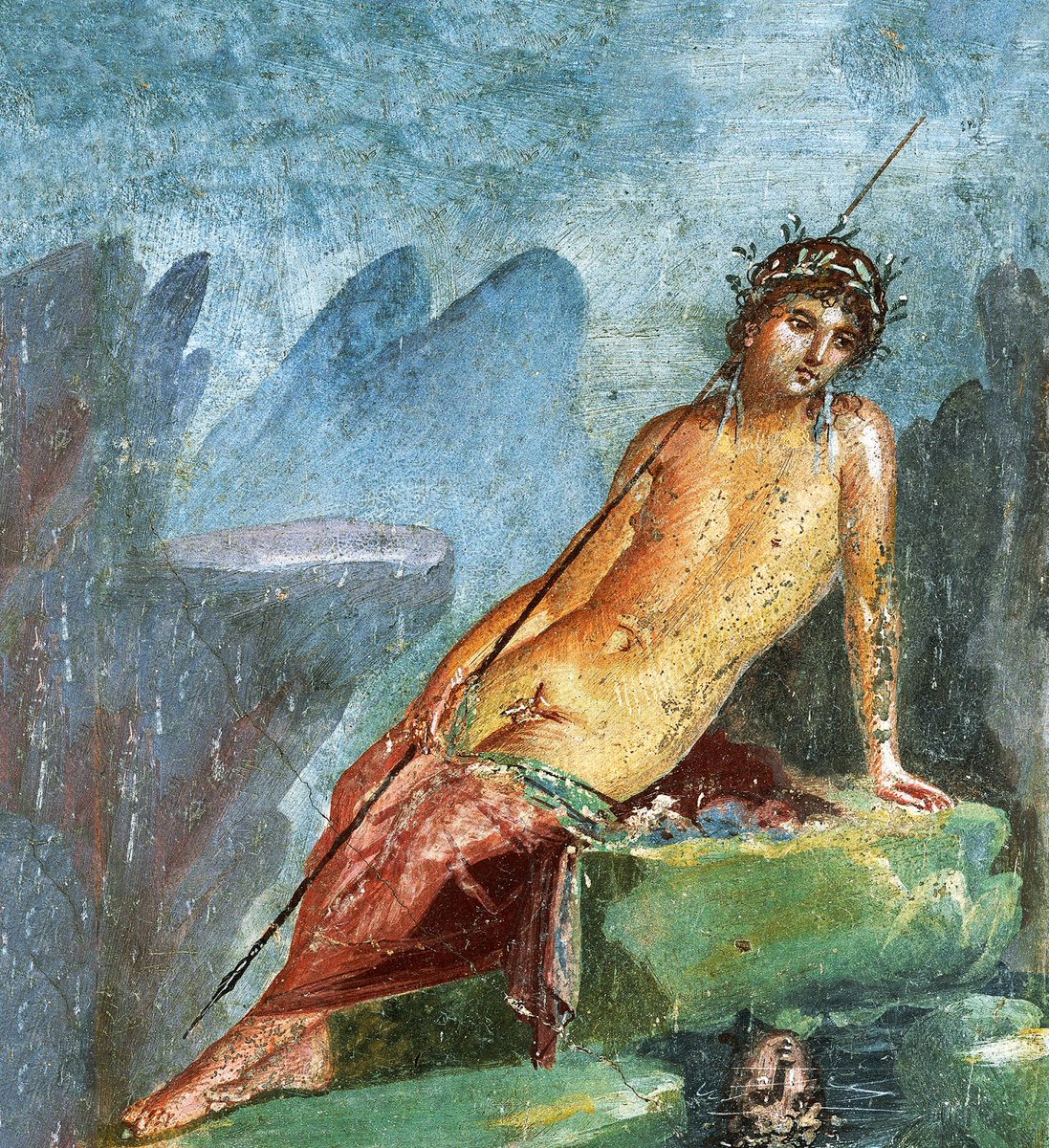
📸: Narcissus, Pompeii: The House of Marco Lucrecio Fronto
2
5
33
1,627
👻✍Alicia🕸👻 retweeted

ASLE Grants Open for Submissions (deadline: June 10, 2026)
ASLE is providing up to five grants, funded at a maximum of $1,000 each.
asle.org/stay-informed/asle-…

3
4
301
👻✍Alicia🕸👻 retweeted
Jan 16
“In my chosen field of depth #psychology, both a discipline and a way of seeing that seeks to engage with the unknown, to dialogue with the #unconscious, we view #psychopathology somewhat differently than other healing modalities. It is natural for the #ego-driven world, a world that offers much richness, to wish to rid itself of suffering as soon as possible, but from an analytic perspective we rather ask these heuristic questions: why has this come to me, what is its summons, how am I to reframe my understanding of self and world as a result? These questions are not easy, obviously, but they do lead us to a developmental dialogue with that other over which we may have no outer powers of resolution.
Analytic work is very humbling, for it repeatedly teaches us the impossibility of ego-sovereignty over our world. But, rather, the ongoing project is to bring the ego into a more harmonious relationship with the other energies of the psyche, lest we remain at odds with ourselves and further our uncivil war within. The psyche, like other elements of nature, is a constantly shifting cluster, so this work is life-long. One does not get ‘analyzed,’ as some have fancied, but one’s aroused awareness is summoned to an on-going state of vigilant attendance upon the passage of things.”
~James Hollis, Ph.D., Jungian psychoanalyst, Tending The Fire: Creativity, Purpose, and the Unfolding Self, pp. 21-22
This new book by Enrique Martínez Celaya and James Hollis drops February 1st by Chiron Publications.
They join me February 2nd on Speaking of Jung.
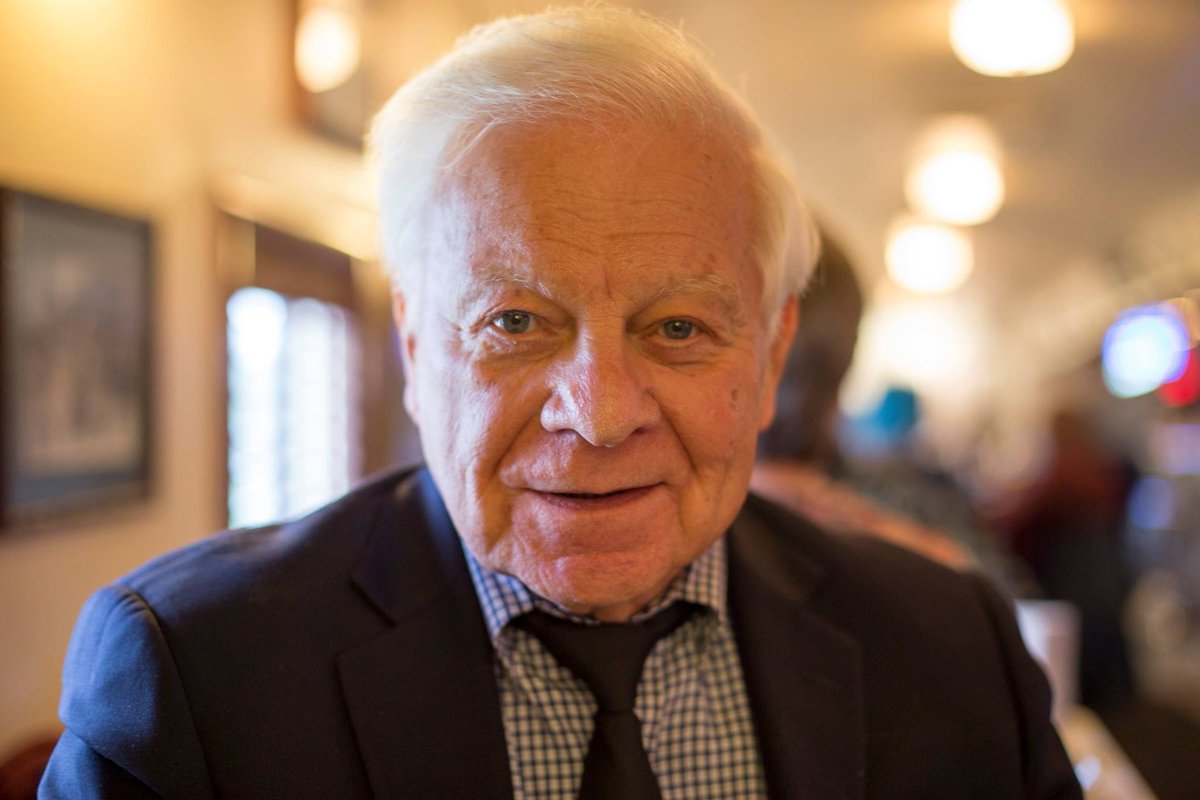
📷: James Hollis, The Jung Center of Houston Texas
4
17
58
2,297
10 Nov 2025
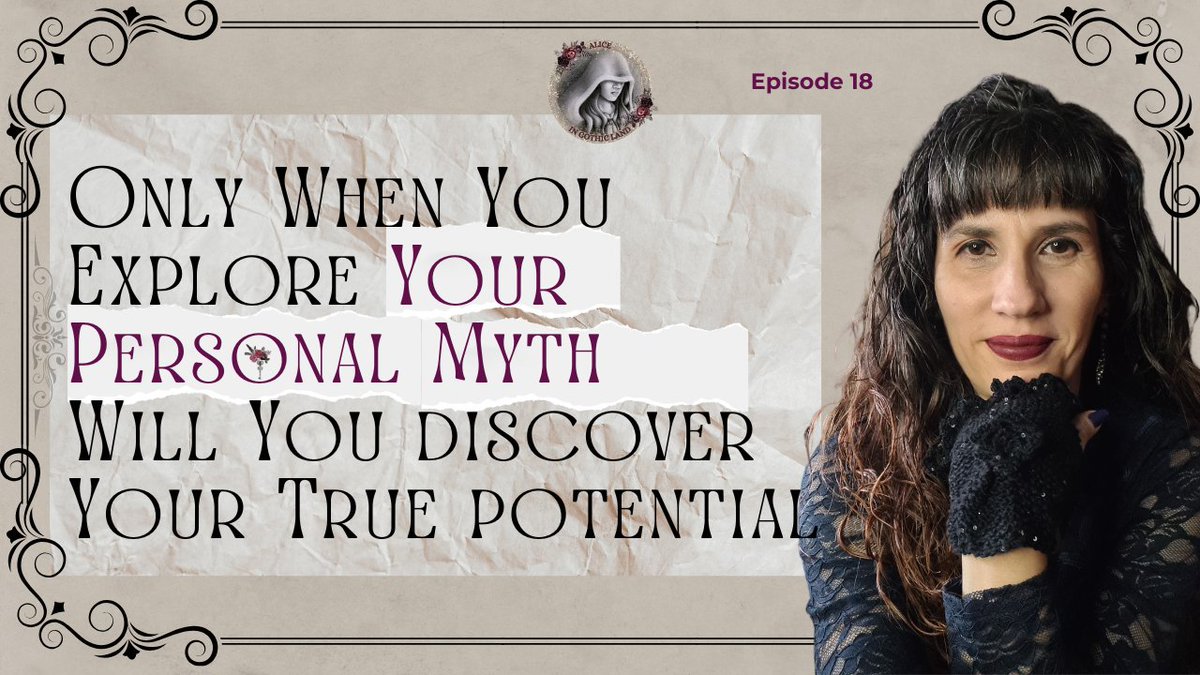
Happy Monday, gothic souls!
If you missed my last episode, "The Gothic as a Neurodivergent Refuge: Towards a Psychology That Doesn't Erase the Shadow," here's the link:
youtu.be/WsVcKhNWzJQ?si=VH3k…
If this resonates, schedule a free 45-minute session with me.
1
99
10 Nov 2025
🌒 ¡Feliz lunes, almas góticas!
Si el viernes te perdiste mi último episodio "Lo Gótico como Refugio Neurodivergente, aquí tienes el enlace":
youtu.be/4dVSxkIwPyk?si=tOM1…
Si resuena contigo y estás buscando conectar para conocerte mejor, agenda una sesión gratuita de 45 min.
96
6 Nov 2025
“Perhaps the universe doesn’t march through time — maybe it whispers it into existence, one quantum interaction at a time?” medium.com/@ratwolf/a-tiny-q…
30
👻✍Alicia🕸👻 retweeted

21 Oct 2025
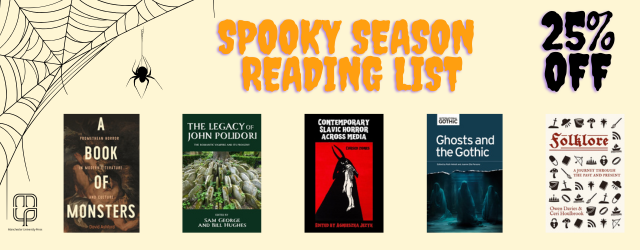
Sink your teeth into our #SpookySeason reading list!
From vampires and werewolves to haunted horrors, enjoy 25% OFF books by @CeriHoulbrook, @odavies9, @shewolfmanc, @OGOMProject, @BillBloodyHughe, @esmedunae, @LancasterGothic, and more!
manchesteruniversitypress.co…
8
21
784
👻✍Alicia🕸👻 retweeted

21 Oct 2025
I’ve been involved in earlier iterations of these books and they’re absolutely terrific. So if you want to help get the latest one on “Subversive Sci-fi: Evolution” out into the world (and on your book shelf) follow the link to their kickstarter page:
kickstarter.com/projects/gho…
2
5
242
18 Oct 2025
✨ Happy Friday, Gothic Souls!
This month, in my 21st newsletter, I'll be talking about the need for Gothic psychology, the cover of Women in Supernatural (McFarland), my new course "The Gothic Psyche," and my research on trauma and the Gothic.
👉 gothicalice.com/escuela-pens…
38
17 Oct 2025
✨ ¡Feliz viernes, almas góticas!
Este mes en mi boletín del 21 os hablaré de la necesidad de una psicología gótica, la portada de Women in Supernatural (McFarland), mi nuevo curso "La Psique Gótica", mi investigación sobre trauma y lo gótico.
👉 gothicalice.com/escuela-pens…
62
👻✍Alicia🕸👻 retweeted

8 Oct 2025
My Fashioning Gothic Bodies and Monstrous Media/Spectral Subjects are among the titles on offer.
6 Oct 2025

Spooky season is here! 👻
Check out our new reading list with 25% OFF these titles until the 3rd November - enter SPOOKY25 at checkout on our website: manchesteruniversitypress.co…
Perfect for foggy evenings, reading under a blanket with the lights low. #spookyseason #Halloween

4
18
580
👻✍Alicia🕸👻 retweeted
22 Sep 2025
A State of Division: A Cloven Man – The World’s Wound
“It might be thought that the powerful initial #dream would have ushered in considerable changes in Birkhäuser’s life, but this did not in fact happen. It took years for him to discover the right attitude needed to produce paintings of the contents of the #unconscious psyche, including those which provoked terror and incomprehension, with spontaneity. It was an inner obligation which was hard to discharge and required great sacrifices, as he later explained in his interview. Pictures like this are not what the public wants. They challenge people. Birkhäuser, too, had to challenge himself and #paint in a way incompatible with his aesthetic and technical ideals. The search for new means of expression and new techniques took a long time.
I shall skip over a period of about ten years to the point where he achieved his real breakthrough, releasing an uninterrupted stream of creativity and nourishing a completely new way of painting.
A number of disturbing #archetypal #dreams beset Peter Birkhäuser during 1949. It was as if he was being assaulted from within. A strange and powerful figure was constantly trying to gain admittance. This led up to the dream on 9 June 1949 of a man with a ‘cloven’ face, which struck him to the quick.
‘A man was chasing me down the street, always trying to get to me, but he filled me with dread and I tried to get away from him. He had a frightful face with a huge, scarcely healed wound in the middle of it. His skull had been split nearly from top to bottom, and it was as if the two halves of his face had been torn apart by the gap made by the wound. Apart from that he was a derelict, tattered and filthy. […] I saw him ask someone for my address before I got home and left instructions that the door was not to be opened under any circumstances if the doorbell rang.’
Birkhäuser spent the next three and a half years on the run from this terrifying inner image until he had no alternative but to paint it. As he explained later, he ‘smeared’ it in fury and despair on a canvas. As we shall see, however, this was a deliverance.
What can be the meaning of this weird ‘cloven’ man, so urgently seeking human contact? The English title of the painting is ‘The World’s Wound.’ In other words, the man represents the wounded and divided condition of humanity in general, or even a deep rift in creation. His is the suffering of the diverging opposites that are always present. #Consciousness in fact condemns human beings to lose their original identity with nature. Consciousness is their supreme gift, but also their greatest curse. Animals are not divided, at least not in their natural habitats. Their spirit, their ‘natural intelligence,’ which animals also possess, does not separate them from the pattern of their instincts. But human beings are full of conflicts; they can use reflection to overcome nature, work their way up out of #unconsciousness to pursue intellectual goals. This is the basis of all human civilization. On the other hand, reflective consciousness is itself a product of nature, having developed slowly in the course of evolution, as if nature were striving towards the light, towards spiritual meaning. But this involves the danger that human beings become so alienated from nature as to make them sick. If, for example, they abandon instinct completely and rely only on their intellect they become one-sided, or if they are no longer prepared to take the night side of the psyche, the unconscious, into account, they to some extent lose the roots connecting them to their inner nature. So creation itself, which has produced reflecting human consciousness, contains an intrinsic conflict from which we suffer.
Western Man in particular has lost touch with his wholeness, and this causes a deep suffering embodied by this ‘cloven’ man. There can be few civilizations characterized by such a rift as ours. The more brilliant the striving, the darker the unconscious #shadow, as the history of the Christian West demonstrates, and the more rational and further removed from feeling, the more unnatural Western Man becomes. We live in an artificial environment, for us nature has lost its #soul, and so within our own psyche we have become increasingly isolated from nature. We have suffered a loss of soul which becomes apparent as a severance from instinctual knowledge. …
Birkhäuser wrote a quote from #Jung on the back of the canvas of ‘The World’s Wound’: “It is not the bomb that is the danger, but the psychology of the men who control it.” …
When C.G. Jung saw ‘The World’s Wound’ for the first time at an exhibition in 1956 it made a deep impression on him, and he told Birkhäuser that it was arguably his most important work for our time. In considering the paintings that follow we must continually keep the ‘cloven man’ in mind as a psychological point of departure.”
~Eva Wertenschlag-Birkhäuser, Windows on Eternity: The Paintings of Peter Birkhäuser – An Interpretation Based on Depth Psychology, pp. 29, 31-32, 34
[Bold emphases mine.]
Eva Wertenschlag-Birkhäuser will join me to discuss this and more on the next episode of Speaking of Jung: Interviews with Jungian Analysts

2
10
22
1,367
👻✍Alicia🕸👻 retweeted

19 Sep 2025
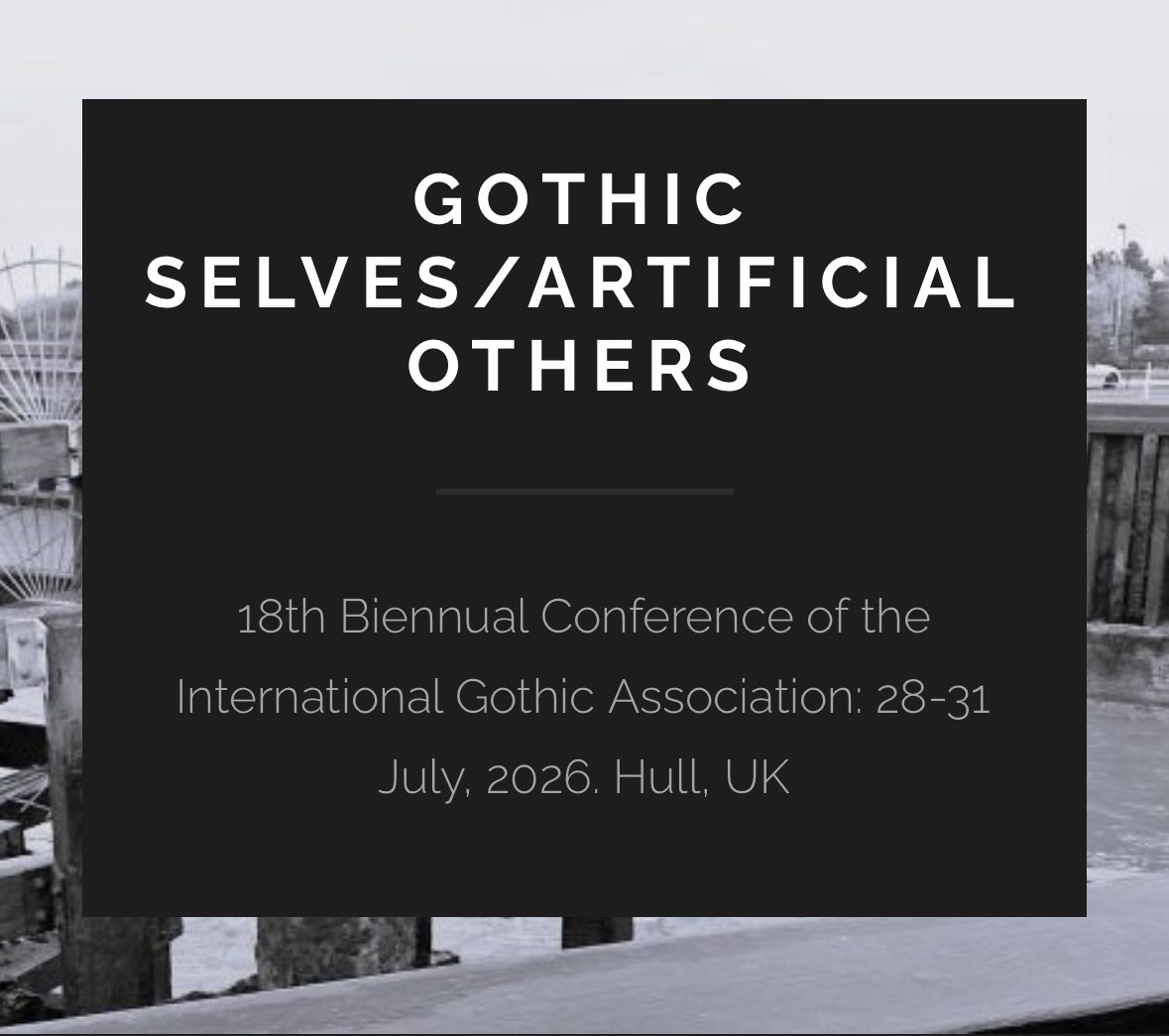
🚨 The CfP for the 18th Biennial Conference of the International Gothic Association has landed! Please help us spread the word, and hopefully see many of you in Hull next year. Link: hullgothic.wordpress.com/cfp… @IGA_Goths @HullGothic
30
49
2,439
17 Sep 2025
Your Gothic Descent doesn’t have to be solitary 🌌. Join my workshops and one-on-one journeys, and start with your free Gothic Descent Map: 3 steps to reclaim your story and explore your psyche.
gothicalice.com/
#gothicpsychology #thegothicdescent #aliceingothicland
1
45
16 Sep 2025
Gothic Psychology reveals the hidden language of the soul through shadows, symbols, and myths 🌙. Begin exploring with our free Gothic Descent Map — 3 steps to reclaim your story and illuminate your psyche 🖤
gothicalice.com/
#GothicPsychology #thegothicdescent
1
1
43