
Forage agronomist & ruminant nutritionist. Reversed pre-diabetes in '07. Advocating ASF for metabolic health & sustainable food systems. Ruminant Revolution!
Joined November 2010
- Tweets 23,633
- Following 3,132
- Followers 17,275
- Likes 45,761
6,734 Photos and videos












Pinned Tweet

10 Jul 2025
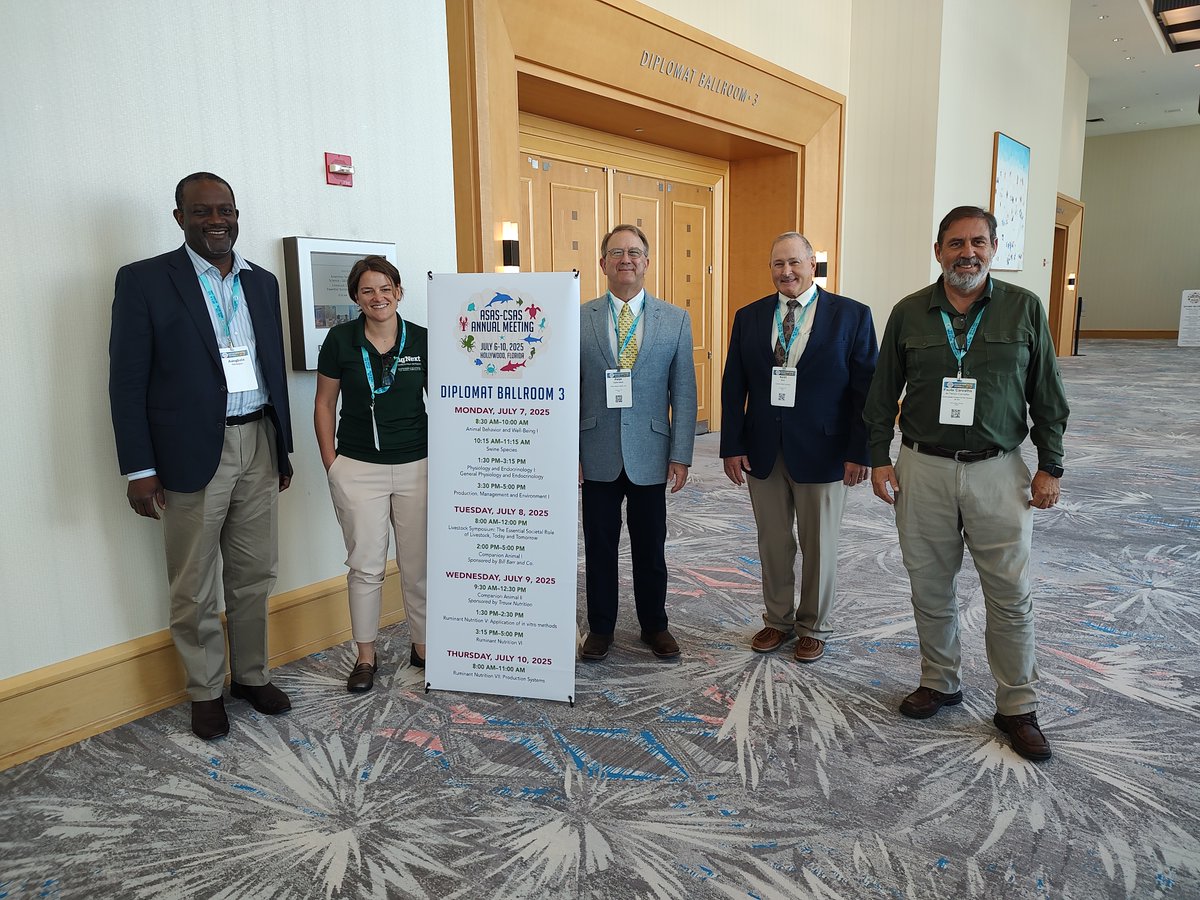
On July 8th my colleagues and I discussed “The Essential Societal Role of Livestock, Today and Tomorrow” for the Livestock Symposium at the 2025 Meeting of the American & Canadian Societies of Animal Science in Hollywood, FL.
The presentations were recorded and videos are now available.
3
9
39
4,984
Peter Ballerstedt retweeted

Jun 10
"IARC’s hazard assessments were inconsistent, not transparent, and not applicable to any real-world situations. In other words, its science was junk and any IARC findings should not be treated as “definitive” in the United States."
Jun 10

After the US government put a health warning on IARC's low quality research, @zaruk wonders what a post-IARC world will look like.
Less fear, ignorance or useless lawsuits
It will be better and no one will notice when the cancer agency crawls into oblivion
thefirebreak.org/p/welcoming…
1
5
12
1,392
Peter Ballerstedt retweeted

Jun 11
What Happened to the Other Humans? youtube.com/live/i0aFSv03XP8…
10
23
2,457
Peter Ballerstedt retweeted

Jun 12
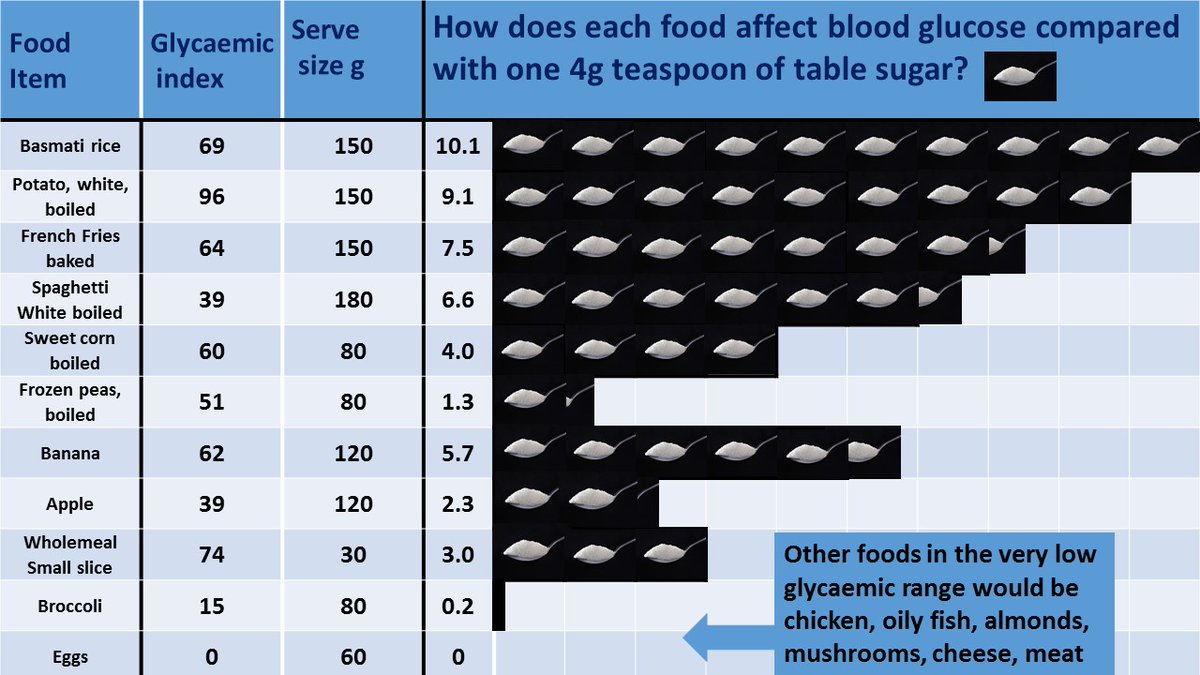
My sugar infographics in 39 languages now!! 3 new languages up on the @PHCukorg website (BHS, Hebrew and Mandarin). Link below
26 May 2021

1/7 My 7sugar infographics are back! They help people with T2D predict the glycaemic consequences of dietary choices. Carbs are the main drivers of blood sugar. Here I reinterpret the glycaemic load as approx. 4g teaspoons of table sugar. Freely available phcuk.org/sugar/
2
34
112
7,204
Peter Ballerstedt retweeted

🧐Be sure to join me June 12 at 1:30pm ET for the next talk in the NIH Scientific Freedom Lecture Series, titled “Energy Balance or Fuel Partitioning? A History Lesson in the Science of Obesity Pathogenesis, and Its Implications.”
I’ll be joined by Gary Taubes, a science journalist and historian, to discuss how nutrition, fitness, and other factors like genetics influence obesity risk.
NIH staff can attend in person in the Masur Auditorium of NIH’s Building 10.
The public is invited to attend virtually via webcast. ➡️ bit.ly/3S6bUfr

9
21
92
32,832
Jun 9
Thank you for a second chance and another enjoyable conversation @realDaveFeldman! I've provided references in this post ruminati.substack.com/p/a-co…
Jun 8

🚨 New #FeldmanProtocol Dropping
special guest Peter Ballerstedt (PhD) @GrassBased
🌾 Why can't a plant-only world work?
🧬 How do ruminants make all amino acids?
🔬 How does "crude protein" mislead us all?
🌿 What makes blue zone data unreliable?
Full episode next tweet 👇
1
4
23
2,443
Jun 6
My latest ruminations from the road...
Attractive terms create the illusion of consensus. When those terms become embedded in causal chains and policy metrics, undefined assumptions can shape food-system decisions. Nutrient density is an important example because it is often treated as a health metric when it is actually a policy-defined nutrient-profile metric.
ruminati.substack.com/p/it-s…
#FoodSystems #Nutrition #MetabolicHealth #PublicHealth #Agriculture
1
3
10
522
Peter Ballerstedt retweeted

For fifty years the world's obesity advice has come down to one phrase. Eat less. Move more.
A Harvard pediatric endocrinologist named David Ludwig spent twenty years showing it was the wrong answer.
Ludwig directs the New Balance Foundation Obesity Prevention Center at Boston Children's Hospital. He is a professor at both Harvard Medical School and the Harvard T.H. Chan School of Public Health. He has spent his career treating the most obese children in New England.
The standard playbook was not working. The kids cut calories. They tried harder. They came back heavier.
So Ludwig started asking a different question. What if the calorie was not the lever.
He built what he calls the carbohydrate-insulin model.
Refined carbs spike your insulin. Insulin tells your body to store fat. After the spike your blood sugar crashes. Your body interprets the crash as starvation. You get hungry again. You eat. You store more fat. You crash again.
It is a feedback loop. And the loop runs on the carbohydrate, not the calorie.
In November 2018 his team published the result in the British Medical Journal.
164 adults. 12 percent body-weight loss on a run-in diet. Then randomly assigned to high-carb, moderate-carb, or low-carb at calorie levels designed to maintain their new weight.
For twenty weeks straight.
The low-carb group burned over 200 extra calories per day at the same body weight as the high-carb group. The effect was larger in participants with the highest insulin secretion.
Read that again.
Same body weight. Same maintenance calories. The low-carb body was running 200 calories per day hotter.
That number ends every "a calorie is a calorie" debate the moment you read it.
Ludwig is not a fringe figure. He is the most credentialed voice in nutrition science quietly dismantling the orthodoxy from the inside.
His 2016 book Always Hungry has been on the New York Times bestseller list. His 2021 paper in the American Journal of Clinical Nutrition formalized the model into a unified theory of obesity.
The standard advice is not just wrong. It is the wrong question.
Eat less and move more is what you say when you do not understand the disease.
#NSNG #DavidLudwig #CarbInsulinModel #AlwaysHungry #LowCarb #Insulin #Obesity #HarvardMedicine
4
51
224
11,228
Jun 2
The Unsustainable Challenge
Sustainability discussions often focus on environmental, economic, and social impacts.
Yet one of the largest environmental, economic, and social burdens facing society receives surprisingly little attention:
Malnutrition-driven chronic disease.
The healthcare costs, productivity losses, disability burdens, societal impacts, and environmental footprint associated with chronic disease can be understood as footprints of malnutrition.
If sustainability is about long-term human flourishing, metabolic health belongs near the center of the conversation. A food system that produces widespread metabolic dysfunction leaves economic, social, and environmental footprints just as surely as it leaves carbon, water, or land-use footprints.
#Sustainability #MetabolicHealth #PublicHealth #FoodSystems #FoodSystems
3
5
28
1,172
Peter Ballerstedt retweeted
Nina Teicholz was a New York journalist on a strict low-fat vegetarian diet that was not really working.
Then a magazine sent her to review fancy restaurants in Manhattan. For the first time in her adult life she ate full-fat meat, butter, and cream. She felt better. Sharper. Steadier. And the weight she had been fighting for years started falling off.
So she did what a good journalist does. She started asking where the war on fat actually came from.
Nine years of research. Hundreds of interviews. Every major diet-heart study reread.
In 2014 she published The Big Fat Surprise. The conclusion was simple. The case against saturated fat had never actually been made. It had been assumed, then defended.
In September 2015 the BMJ ran her investigation of the US Dietary Guidelines Advisory Committee. Cherry-picked studies. Ignored randomized trials. Members with food and pharmaceutical funding. The committee had recommended a diet that no trial had ever shown to be safe or effective long-term.
The counterattack arrived in six weeks.
The Center for Science in the Public Interest organized a letter signed by more than 180 scientists demanding the BMJ retract her paper. The letter claimed eleven factual errors.
The BMJ did not retract.
They commissioned a year of external expert review. They corrected seven smaller technical points. They left her central thesis untouched. In December 2016 they confirmed the paper stands.
Teicholz pointed out something else in her response. Many of the 180 signatories had taken funding from the food and pharmaceutical industries she had criticized.
Since the book, study after study has confirmed her thesis. PURE. FASTER. The reanalyzed Minnesota Coronary Experiment. The official guidelines are quietly walking back their fat warnings without ever admitting why.
One reporter forced a peer-reviewed journal to publicly choose between her data and the establishment that funded the consensus.
When the establishment cannot refute you, they try to silence you.
It did not work.
#NSNG #NinaTeicholz #BigFatSurprise #BMJ #SaturatedFat #DietaryGuidelines #LowFat
24
409
1,436
61,466
Jun 1
June 1st is World Milk Day.
An appropriate day to learn about this Ruminant Revolution.
Operation Flood (1970–1996), led by the National Dairy Development Board under Dr. Verghese Kurien, organized millions of smallholder dairy farmers into cooperatives, linked them to urban markets through a national milk grid, and transformed India from a milk-deficient nation into the world's largest milk producer.
nddb.coop/about/genesis/floo…
worldfoodprize.org/en/laurea…
1
5
341
Peter Ballerstedt retweeted
May 17
✅ Poor diets are hidden carbon multipliers
▶️ Risking further erosion of public health?
▶️ Obesity inflates carbon footprints (higher food needs, mobility demands, medical interventions)
▶️ Pharma emits more than automotive sector
▶️ US healthcare: 10% of national emissions
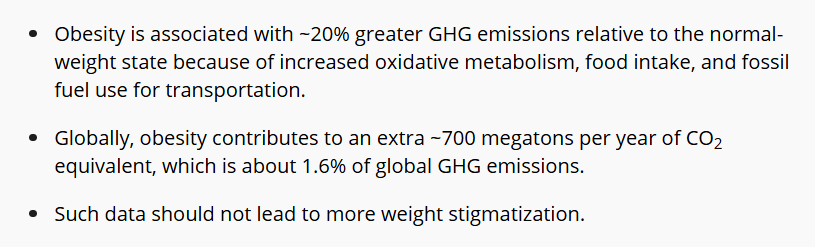
ALT Source: Magkos et al (2019) https://doi.org/10.1002/oby.22657
1
11
19
1,439
May 31
Before ruminants helped build human civilizations, their wild ancestors helped shape the grassland ecosystems in which humans evolved. The story of humanity is inseparable from the story of grasslands and the ruminants that shaped them. This was true throughout our evolutionary past, remains true today, and will remain true as we strive to nourish a world of nearly ten billion people by 2050.
4
22
72
3,431
May 27
My latest rumination...
Protein on paper vs. protein for people.
ruminati.substack.com/p/the-…
1
3
11
355
May 26
Yeah, ...
what HE said!
May 25

Thank goodness Gary Taubes @garytaubes chose physics over medicine and then came from there to science journalism. His latest book amazon.com/Rethinking-Diabet… is another masterpiece. His ability to research the history of the medical topics that interest him and to present the material with novelty, accuracy and clarity in a most engaging way, is of the highest quality.
I learned two crucial facts from his deep dive into the historical evolution of the management of diabetes of both types.
First, when insulin was discovered in 1921, it produced an instant miracle cure by saving the lives of those who were unable to produce any insulin, those with type 1 diabetes. But the honeymoon period lasted just 15-20 years after which insulin-treated diabetics began to present with premature atherosclerosis.
By which time, the prevailing opinion had become that this was caused by a diet too high in fat. For the life-saving insulin had to be innocent - Remember Semmelweis and the doctor-caused disease that he decribed.
Thus the prescribed treatment for diabetics of both types became a low-fat high-carbohydrate diet, just as was being prescribed to cardiac patients to prevent disease progression.
Second, Taubes made the telling point, overlooked by many, that one of two diets is prescribed to prevent atherosclerosis in normal persons and in those with diabetes. There are the fat substitution diet and the low-fat diet - and they act quite different especially in persons with insulin-resistance or type 2 diabetes.
In the fat substitution diet, saturated fats are replaced with polyunsaturated fats. There have been numerous long-term multi-million $ trials of this dietary intervention. They have all failed miserably to show benefit and some have caused harm openheart.bmj.com/content/8/….
Thus we know that the fat substitution diet is a complete failure and may even be harmful.
In the low-fat diet, a large portion of the fat in the diet is replaced with carbohydrate. Whilst this diet may be acceptable for those who are not insulin-resistant, for those who are diabetic, it has to be the worst possible choice. Because, with time as the patient becomes progressively more insulin resistant, he/she will require ever larger doses of insulin to maintain blood glucose concentrations in a reasonable range. And didn't the problem of atherosclerosis first appear in middle-aged type 1 diabetics who had been treated with insulin for some decades?
Importantly there has never been a major multi-million $ trial of the effects of a low-fat high-carbohydrate diet on the development of atherosclerosis in otherwise health individuals. But there has been one such trial on weight loss and cardiovascular outcomes in diabetic patients - The LookAhead trial. The study was terminated after 9.5 years because it was considered "futile" to continue as there was no evidence that the diet produced any protection from coronary heart disease.
The point is that if you have diabetes, you're probably not best advised to adopt either a fat-substitution diet or a low-fat high-carbohydrate diet, since neither is likely to produce any health benefits and both could be harmful.
@BenBikmanPhD @zoeharcombe @bigfatsurprise @AKoutnik @LoreofRunning1 @sweatscience @drericwestman @markkaplan20
1
10
660
Peter Ballerstedt retweeted

May 25
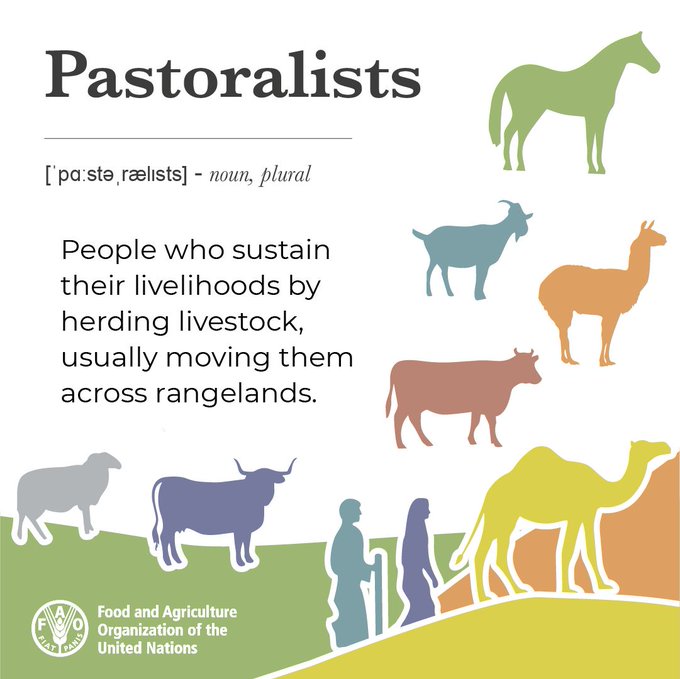
Pastoralists herd about 1 billion animals worldwide.
They support food security, safeguard biodiversity, strengthen climate resilience and preserve cultural heritage. 👩🌾🐂
Learn more: bit.ly/3KhtA48
#YearOfRangelandsAndPastoralists
#IYRP2026
1
22
54
1,537
Peter Ballerstedt retweeted

May 23
The Black Death arrived in England in 1348. Within two years, somewhere between a third and a half of the population was dead.
The peasants who survived noticed something within a generation.
There was nobody left to work the fields. The labour shortage was so severe that landlords, for the first time in English history, had to bid for workers. The peasants, suddenly possessed of leverage, demanded payment partly in meat. Beef, mutton, and bacon began appearing in the manorial accounts of agricultural labourers' wages.
Skeletal records from English burials in the late 1300s and 1400s, set against pre-plague remains, show measurable increases in average adult height. Bone density improves. Dental health improves. Iron-deficiency markers decline.
The peasants got taller. The peasants got stronger. The peasants started causing political problems on a scale they had previously been too undernourished to attempt.
In 1351 Parliament passed the Statute of Labourers, attempting to cap wages back at pre-plague levels. The peasants noticed. In 1381, well-fed, the same peasants marched on London in the largest popular uprising in medieval English history.
The nobility, in the centuries that followed, expanded the Forest Laws. Killing a deer in a royal forest was a capital offence. The Game Laws of the 1600s and 1700s extended the principle. Meat available to the peasant shrank back toward what it had been before the plague.
By 1850, the average British army recruit from the industrial slums was so short and so undernourished that the height minimum for enlistment had to be lowered repeatedly to keep the regiments staffed.
The single greatest improvement in working-class height and health in English history was caused by a plague that made meat affordable for two generations.
The single greatest decline was caused, in significant part, by a political decision to make it expensive again.
You can see the whole sequence in the skeletons.
The skeletons are in the museums. Go and look.

181
3,164
11,400
322,339
May 24
🇺🇸🇳🇱
Of the 10,011 Americans buried or commemorated at the American War Cemetery Margraten in the Netherlands, 109 enlisted in Oregon. The Fields of Honor site fieldsofhonor.com/ provides information on the 46,149 Americans honored at six American Military Cemeteries in western Europe (Margraten, Henri-Chappelle, Ardennes, Epinal, Luxembourg, and Lorraine).
The Dutch have adopted each grave in Margraten, agreeing to keep these individuals' memory alive, periodically visit their grave, and communicate with family members in the US. Roughly 70%–80% of American families are unaware of — or at least not connected to — the Dutch grave adoption effort at Margraten. Find more about this commitment of gratitude on the part of the Dutch at this foreverpromise.org/
The Faces of Margraten project have obtained pictures of all but 4!
fieldsofhonor.com/the-faces-…
They are:
John W. Adams, Klammath County
Fred C. Blodgett, Multnomah County
Evert Lindberg, Washington County
Robert E. Ryckman, Multnomah County
If anyone can help find images of these men, please contact them.
#MemorialDay #Oregon #margraten #RememberUs #rememberthefallen #Limburg
@projo
2
4
10
638
May 24
On some special occasions, volunteers place an image of the individual next to their marker, with the same precision of the markers themselves
1
3
199
May 24
Worth reading -
"Remember Us: American Sacrifice, Dutch Freedom, and A Forever Promise Forged in World War II," by Robert M. Edsel
a.co/d/01Ndmvy4
4
163