
Stockmarket Winners | Sustainability | E-Mobility | Critical Metals | We Help You Build Wealth | Not Financial Advice | High Risk High Reward |
Joined November 2024
- Tweets 12,807
- Following 197
- Followers 2,341
- Likes 68,383
872 Photos and videos











Pinned Tweet

9 Dec 2025
🔋🔋GLOBAL COPPER BOOM 💥
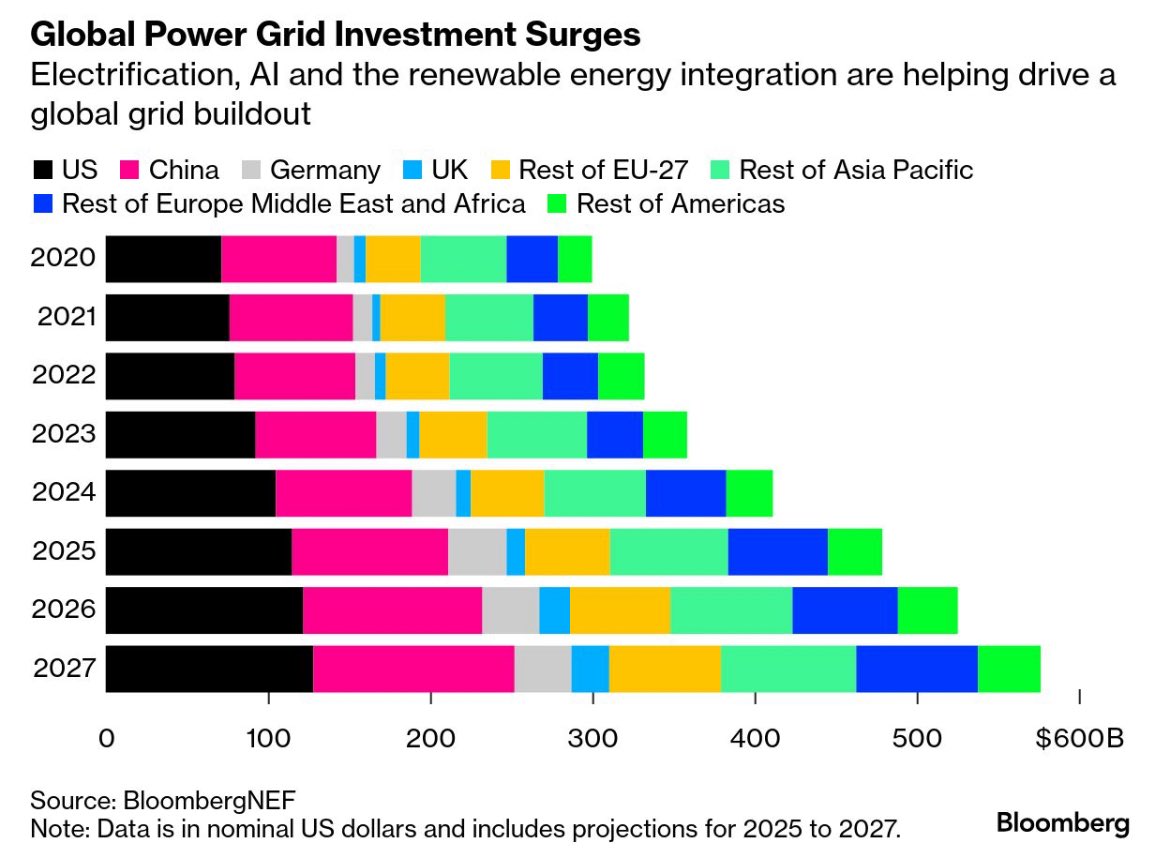
Alex Darden, who leads infrastructure investment in the Americas for global private-markets firm EQT Partners Inc., said that even if there were some hype around AI, the list of tailwinds combined with the fact that grid infrastructure is historically under-invested is creating “significant opportunities.”
And “it’s not just a 2026 opportunity,” Darden said. “This is a multi-year, probably multi-decade investment cycle that we’re entering now.”
$BHP $SURG.V $ESM.TO $CGNT.V $PEX.V $MMA.V $RIO $GLEN $VALE
4
6
29
7,316
🔋🔋BIG FOR LITHIUM & SILVER US🇺🇸
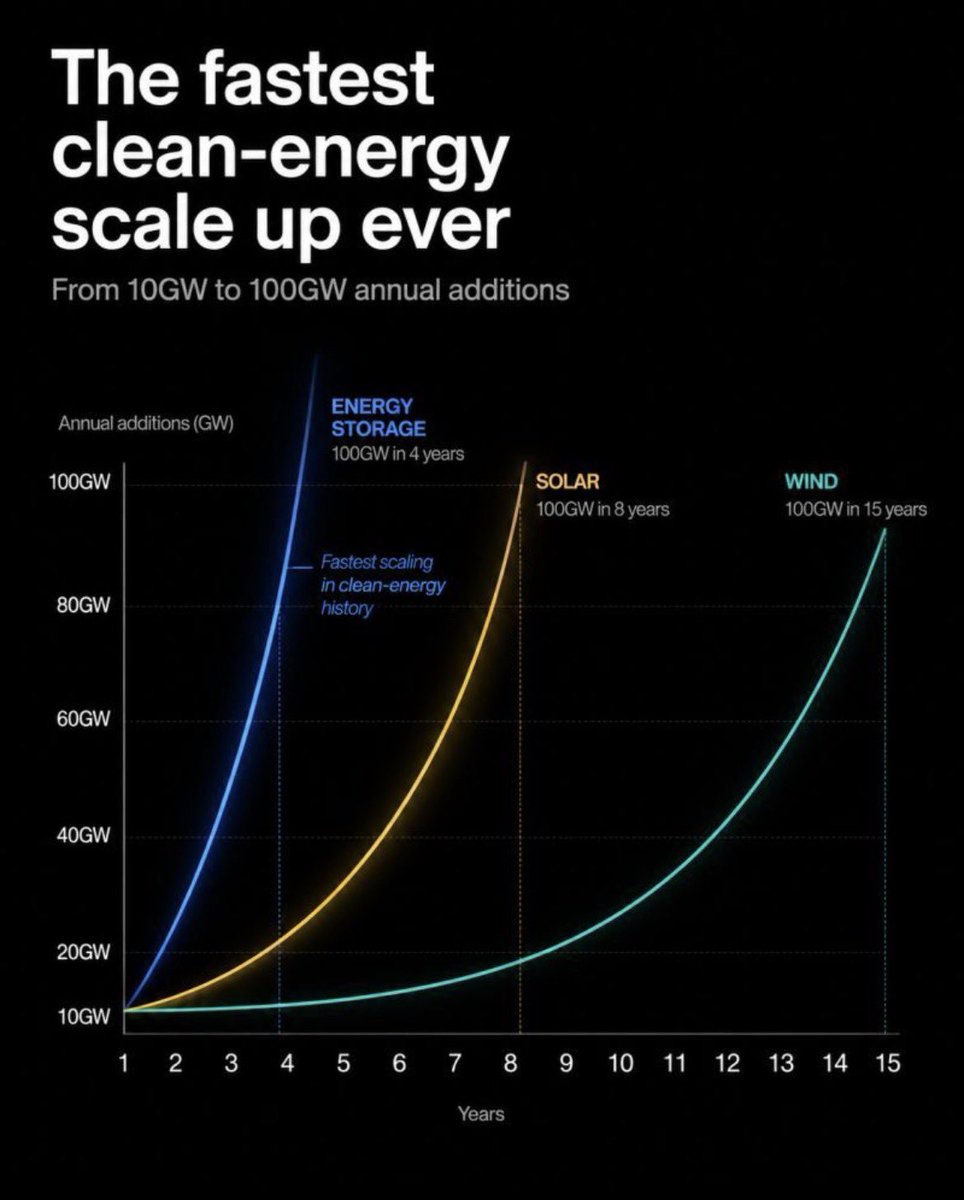
Solar & batteries booming in the USA. AI 🤖 is booming in the USA 🇺🇸 and even if there is a tick up in demand for gas fired CCGT for max efficiency the power system will install BESS to benefit from off-peak times. Bullish lithium & silver.
$LIT $LITP $LIB.V $NILI.V $SIL $SILJ $SLV $APGO.V $BKB.AX $AGMR.TO

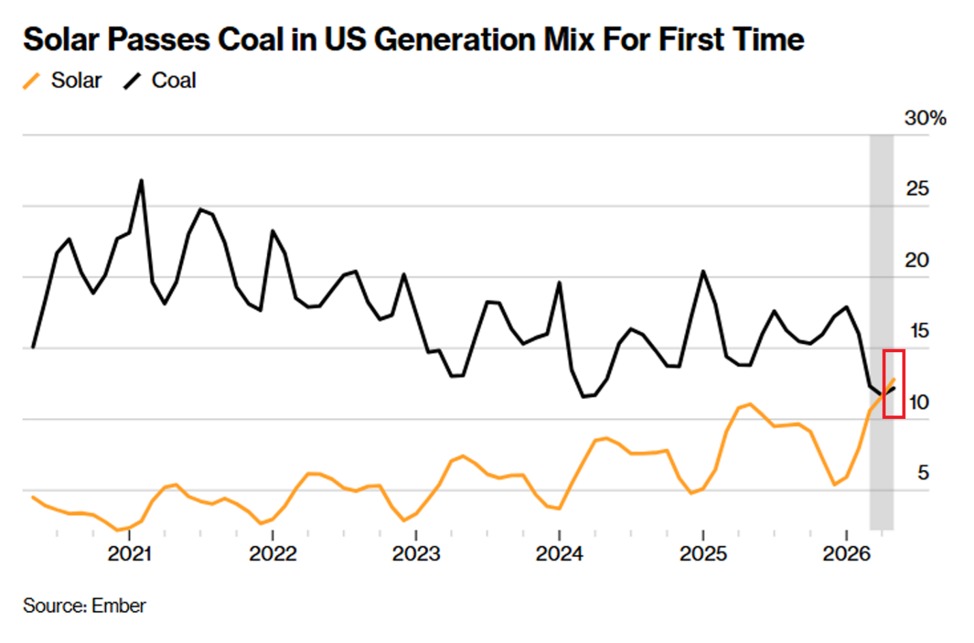
BREAKING: Solar energy accounted for 12.8% of US electricity production in May, surpassing coal at 12.2%, marking the first time this has occurred in a full calendar month.
Solar generation surged 17.0% YoY in May while coal output declined -11.0%, continuing a historic shift in the US power mix.
This shift has been supported by years of rapid solar deployment, while rising electricity demand from AI data centers further boosting investment in new generation capacity.
As a result, solar and battery storage together accounted for 91% of all new US power capacity installed in Q1 2026.
Meanwhile, natural gas remains the dominant source at 37% of the US electricity mix.
The AI revolution is accelerating America's energy transition.
80
🔋🔋LITHIUM DEMAND SHOCK
This trend is being replicated all over the world. The alternative to the petrol car is natural the EV based primarily on lithium-ion batteries.
June seems to be a gift for those who want to accumulate quality lithium companies still at an early stage.
Q2 Metals is long term quality - the most exciting hard rock resource around.
$LIT $LITP $AGY $GLN $DSM $FRB.AX $LTH.V $LIT.V $ATLX $LIB.V $NILI.V $KOD.L $QTWO.V $GRD.V $VUL
Jun 13

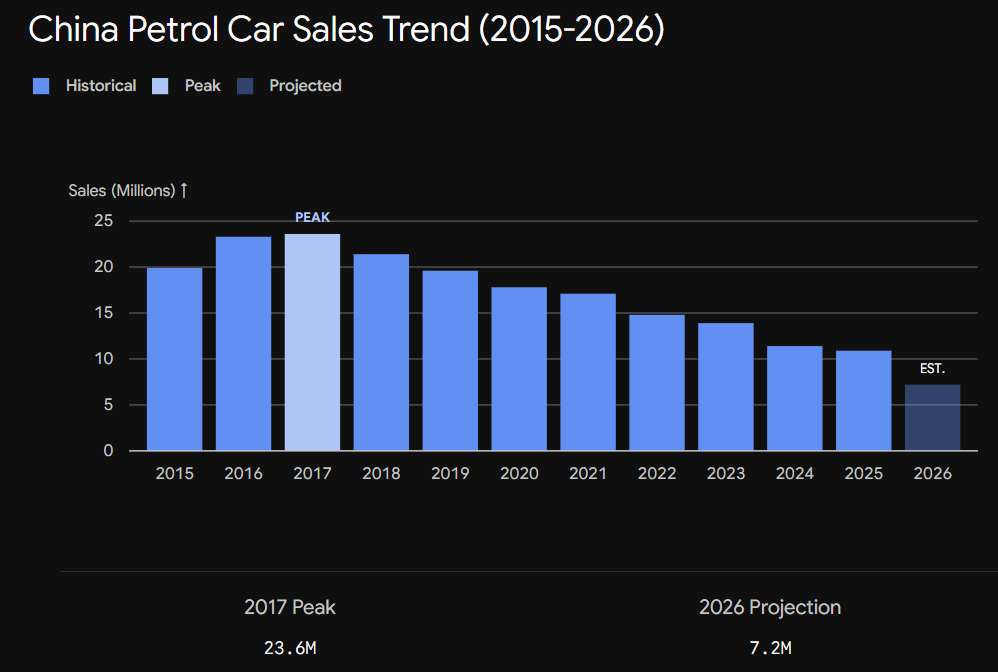
China Petrol Car Sales Trend:
2017: 23.6m (historical peak)
2018: 21.4
2019: 19.6
2020: 17.8
2021: 17.1
2022: 14.8
2023: 13.9
2024: 11.4
2025: 10.9
2026(e): 7.2
>16.4m annual loss since 2017 is larger than the annual passenger car markets of the US and Japan combined
2
6
16
1,437

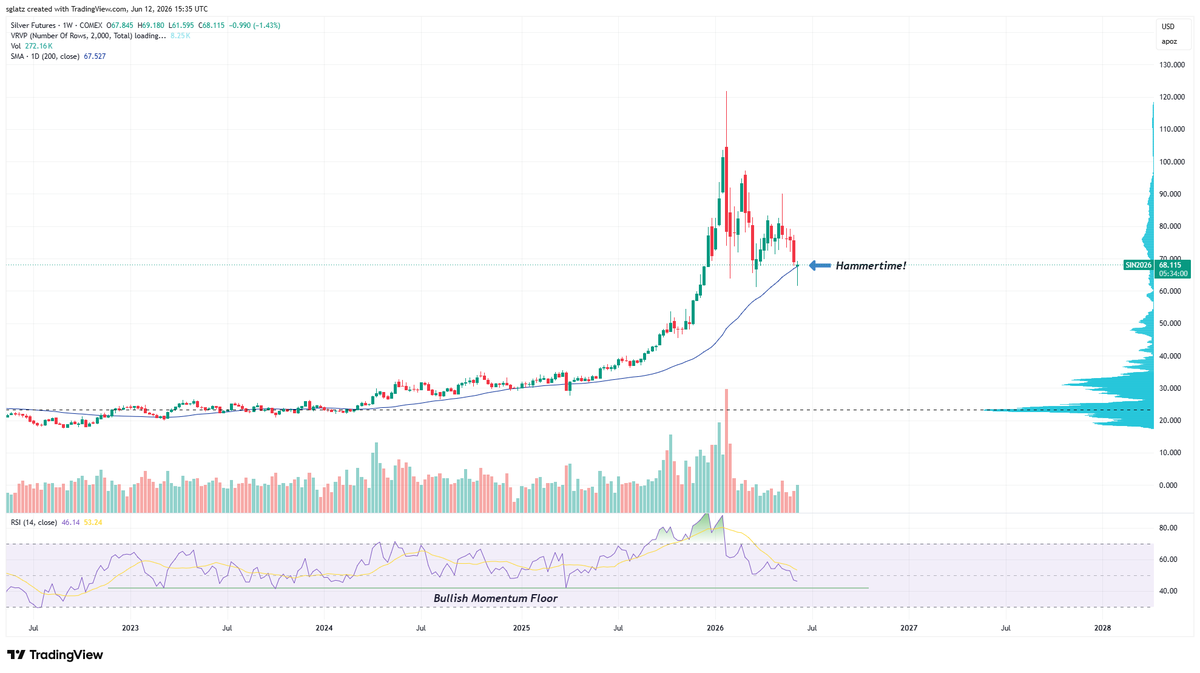
🔋🔋GOLD & SILVER PRICE BOOM 💥
Medium term the mine supply is just one reason to be long gold and silver. The structural set up for these metals is orgasmic - seriously. Kaiser Resources is one of my favorite underdogs - as long as production grade improves I expect a 3X by year end.
$GDX $GDXJ $GLD $GLDM $KAU.AX $BKB.AX $MMA.AX $AGD.AX $BML.AX

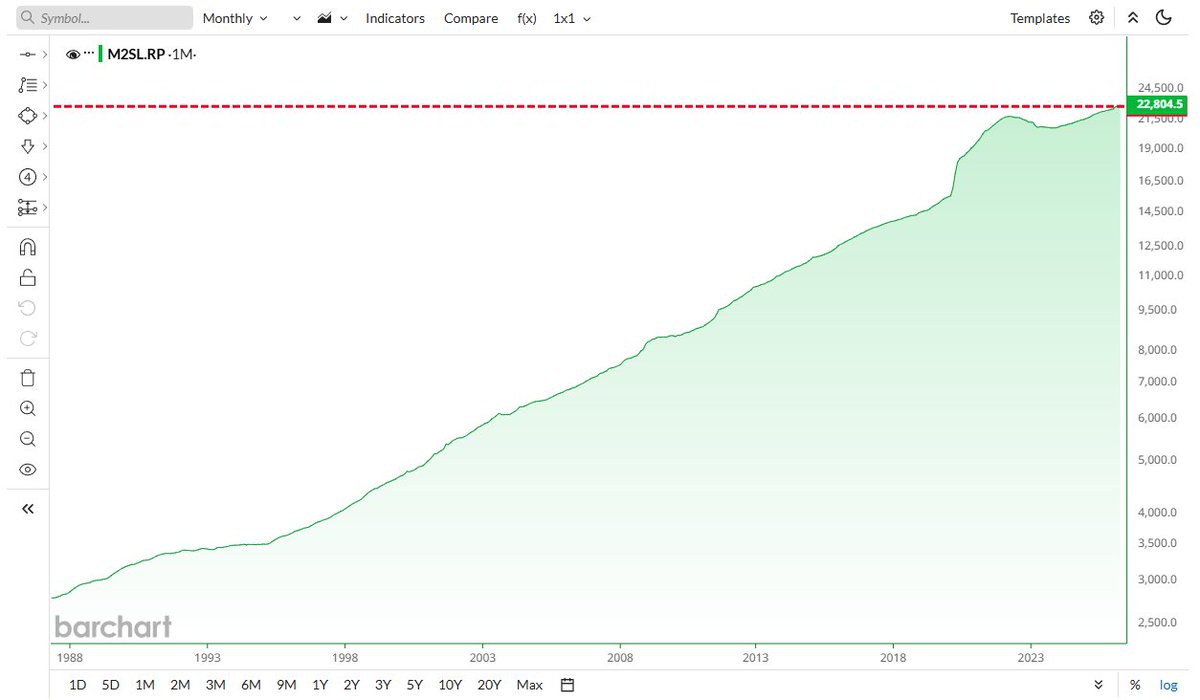
1
6
843
🔋🔋LITHIUM STRIKES BACK
Well done to all those with lots of dry powder - so many juicy lithium opportunities priced like lithium is a third of the current price.
Liquidity issues, geopolitics, tax loss selling - this is the month of gifts. 🎁
Long lithium and manganese - the Fire 🔥 Bird 🐦🔥
$LIT $LITP $GLN $AGY $DSM $ATLX $QTWO $LIT.V $GRD.V $KOD.L $LTH.V $LIB.V $FRB.AX $NILI

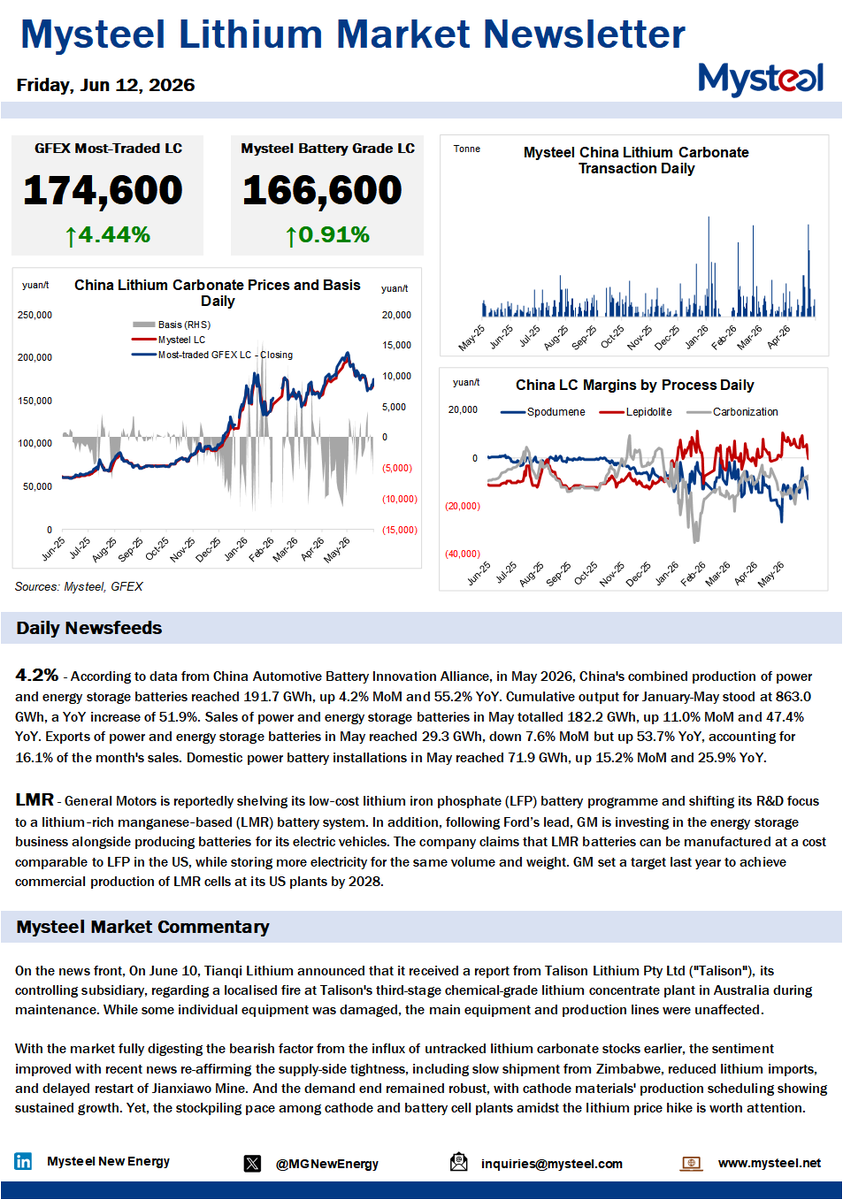
Mysteel daily reporting on China #lithium market 20260612👇
Please click the link below if you wish to know more information about China's lithium-ion #battery industry
mysteel.net/h/new-energy/
1
3
22
1,626
🔋🔋GOLD JUNKIES 😵💫
✅We are currently going through a short term liquidity event
✅Inflation running hot but 2Y yield stopped rising - SIGNAL
✅Policy is constrained
✅Short term - Iran relief will help
✅Medium term - stress signal will bring in gold buyers
✅Long term - Debt, Inflation, Central Bank buying
Bullish gold.
$GDX $GDXJ $GLD $GLDM $PGLD $FRED $ALTN $PER $SOMA
Jun 10

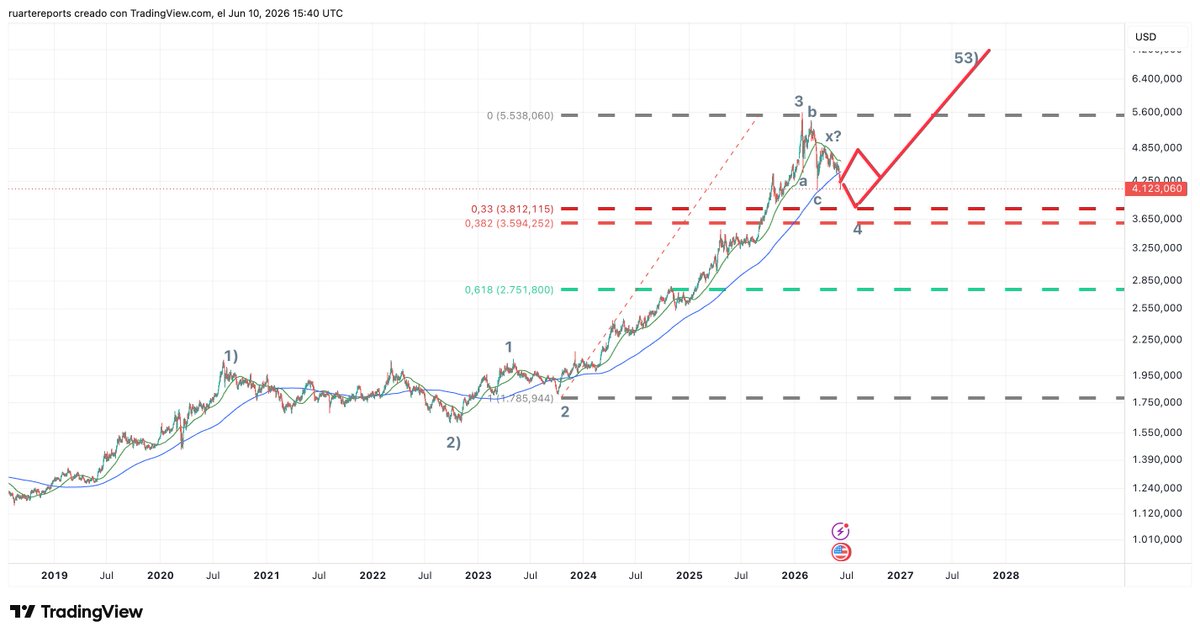
Ahora todos decepcionados con el #oro ahora resulta que no sirve para proteger el #oro de la inflación que pensában en el 2025, que pensaban en el 2006-2007 o en 2011, el #oro era útil como refugio contra #inflación contra caídas de #wallstreet. De hecho en la caída de 1929-1932 en donde cash is the king el oro logró mantenerse. Tranquilo el mercado es una clara onda 4 que recorta todo lo mucho que subió en donde todos creían que iba a 7000 directo, ahora corrige puede ser un triángulo desde soportes actuales o ir a la onda de menor grado y convertirse en doble zig-zag, aún así todavía no recorta ni el 33 % ni el 38.2% de sus perdidas paciencia. Luego que depure a todos los decepcionados, estará listo para el próximo movimiento a 7000 en donde nuevamente todos amarán al oro como ocurriera a fin del 2025 y comienzos del 2026.¡¡
1
3
637
🔋🔋LITHIUM DEFICIT INCOMING
I agree with this analytical and quantitative combined approach. I am in camp Deficit.
$LIT $LITP $ATLX $LTH $QTWO $LIB $NILI $GRD $KOD

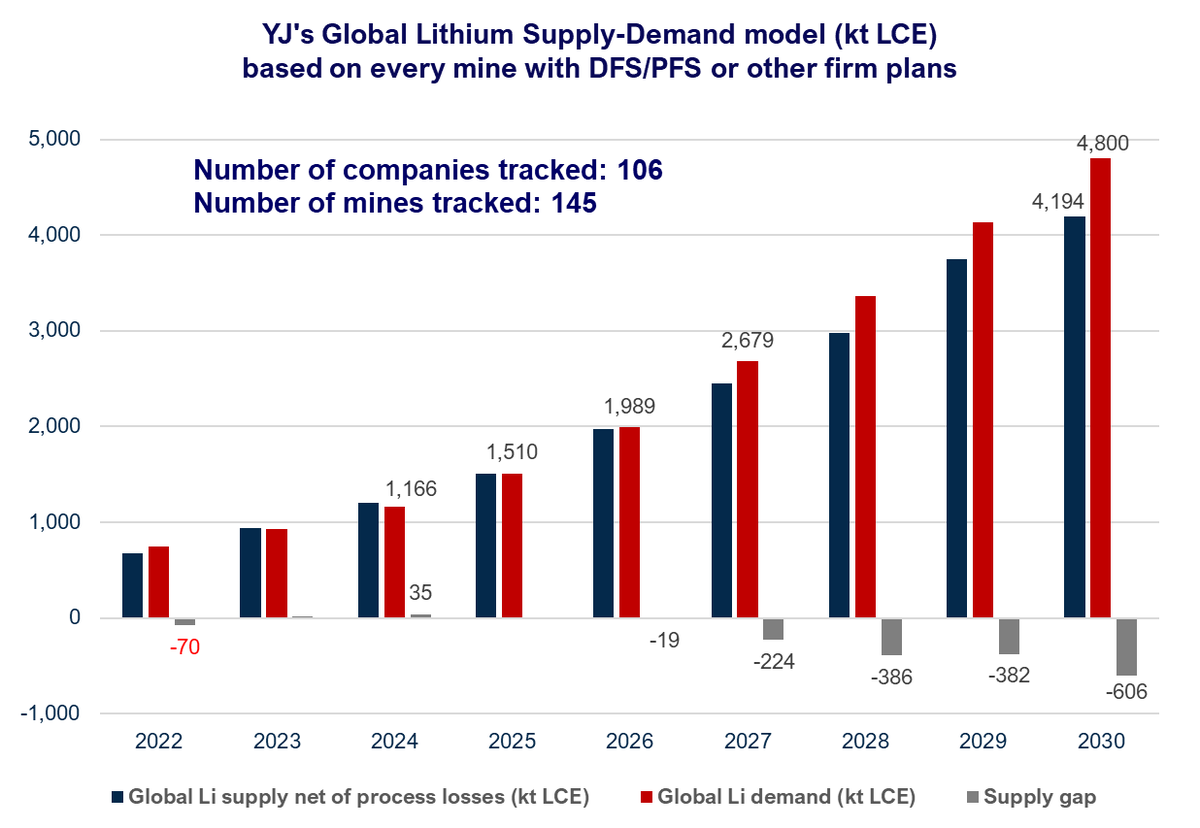
I've been getting questions on the #lithium price pullback and market balance.. so here are some broad thoughts and analyses:
Demand:
- Iran war is massively stimulating switch to EVs. EV sales 90-160% in many countries YoY Apr 2026. Last year's headlines were doom & gloom about "slowing EV sales". In reality, BEVs PHEVs were 20.7m units, pretty healthy. This year I forecast a re-acceleration in EV sales - lithium use 210kt LCE YoY.
- BESS growth is pretty insane. Last year installations/shipments were ~320/500GWh. This year it's looking like ~500/850GWh. FYI 850GWh --> ~600kt LCE used in those cells so this segment alone might consume 30% of lithium supply this year.
- E-Trucks: Grew 180% (!!) YoY in China last year. More broadly, the Class 4-8 segment represented 5% (86kt LCE) of lithium supply last year and it's just starting to go up the steep part of the S-curve globally. If your analyst doesn't have this in his model, he's missing 150kt LCE use this year.
- Overall, global lithium demand grows from 1.5Mt last year to 2.0Mt in 2026, a 500kt LCE jump.
Supply:
- Mine restarts: To this year's supply, Bald Hill adds 8kt LCE. Ngungajoo adds 10kt. Finniss adds 10kt. Small-ish vs the demand growth.
- Mt Holland "doubling capacity": Won't happen until 2028.
- CATL Jianxiawo mine: Even if it turned on today, it'd produce only 30kt this year. Less considering ramp-up. And there's a cow or two to relocate if recent videos are to be believed. 😉
- Supply growth has been severely constrained in the last two years as companies could not get financing, or built slower. This WILL be felt in 2026 and 2027.
Market Balance:
- I see a deficit this year growing to 2030. Much of this is based off BESS growth to 1.76TWh ( 17% from my prev forecast) as countries realize they want to reduce natural gas imports dependence. I'm also pounding the table on E-Trucks here. Watch this space.
- I respect Benchmark's gutsy call for a 2027 surplus. I disagree though. They have been pretty conservative on demand forecasts and I think this year will surprise many analysts.
1
28
827
🔋🔋LITHIUM BIG PICTURE
We still have short term liquidity issues and shenanigans in the Strait of Hormuz.
However, after returning from Norway, I have seen the future of transport - EVs everywhere.
If I had more liquidity right now I would be mopping up a few more lithium plays.
As an investor rather than a trader, I have weathered many ‘stormy’ June months.
$LIT $LITP $QTWO $PLS $VUL $AGY $GLN $DSM $ATLX
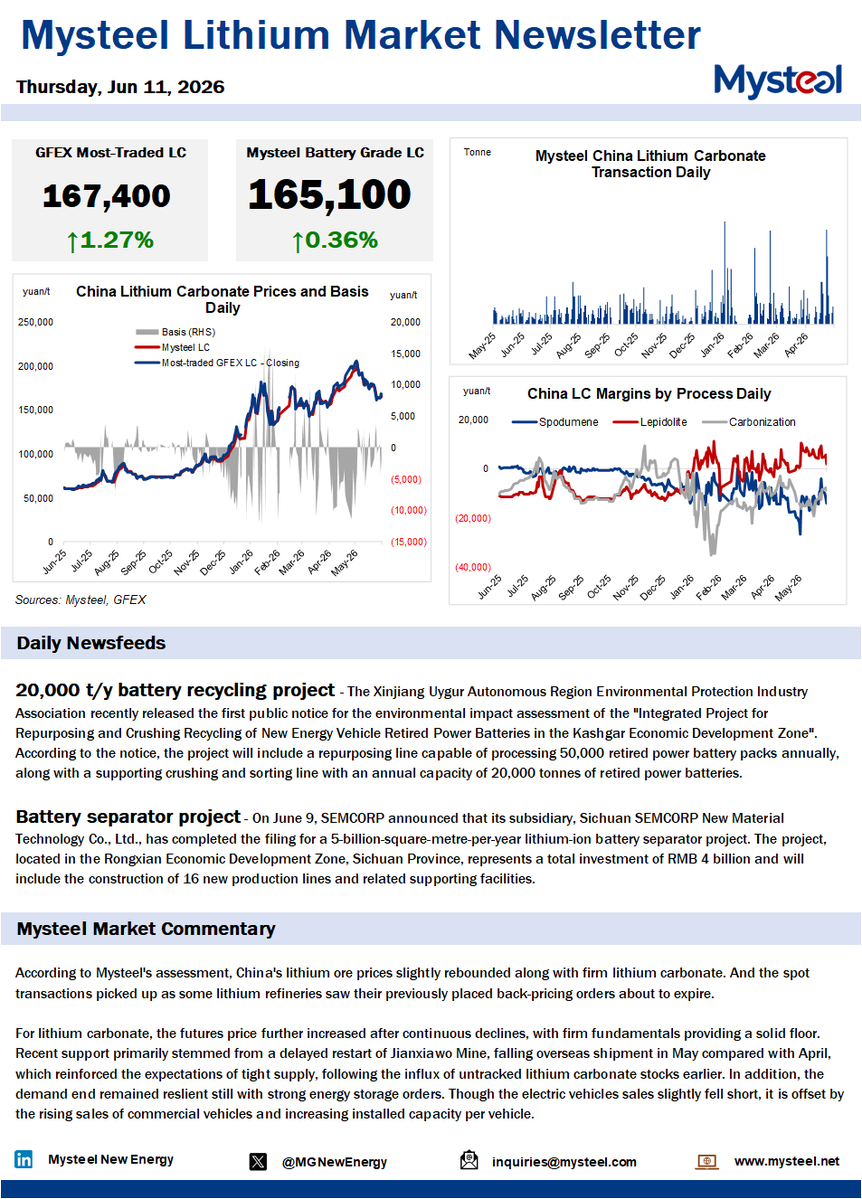
Mysteel daily reporting on China #lithium market 20260611👇
Please click the link below if you wish to know more information about China's lithium-ion #battery industry
mysteel.net/h/new-energy/
1
3
26
1,656
🔋🔋LITHIUM STEADY
Once again amongst all the volatility the market has given another opportunity to load up on lithium stocks.
$LIT $LITP $GLN $AGY $DSM.AX
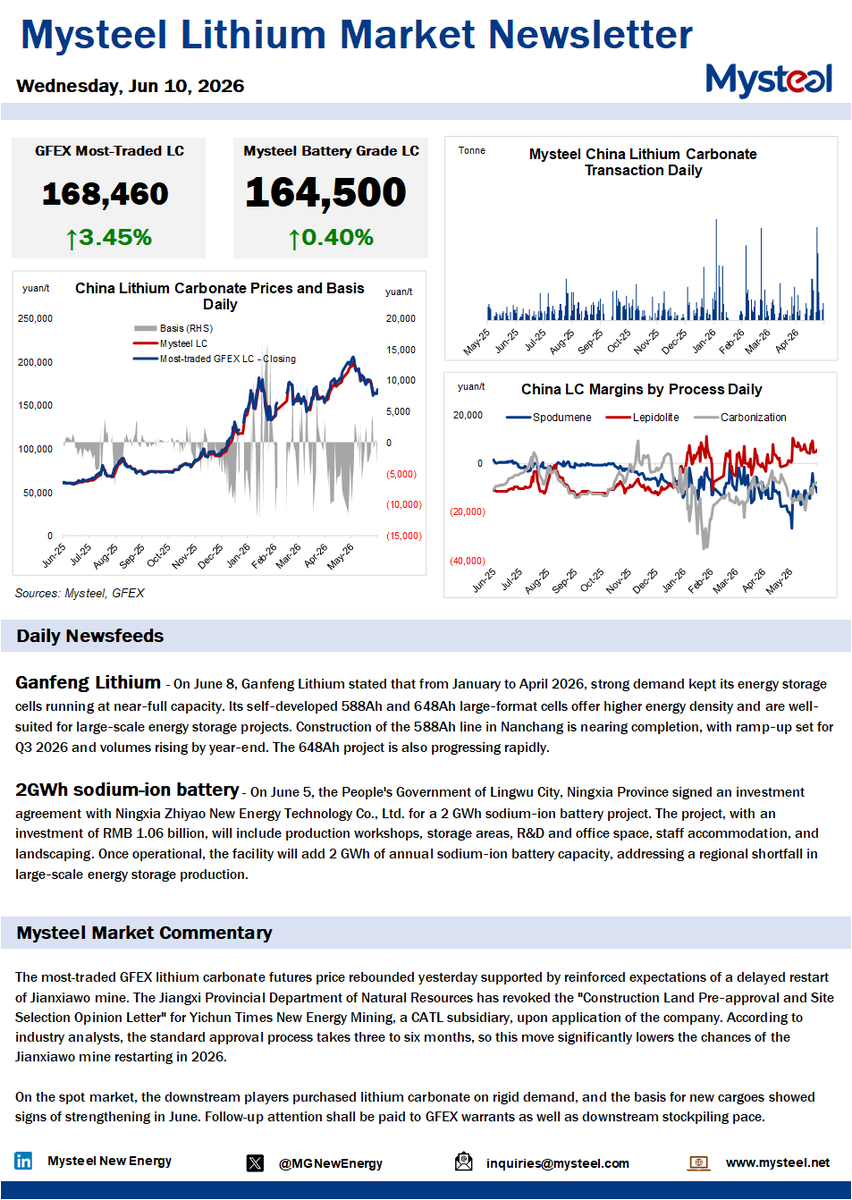
Mysteel daily reporting on China #lithium market 20260610👇
Please click the link below if you wish to know more information about China's lithium-ion #battery industry
mysteel.net/h/new-energy/
2
13
1,096
🔋🔋LITHIUM PRICE & STOCKS
Sometimes the old ones’ remain the best “sell in May and go away” - in other words traders seem to dump in May and June becomes a buying opportunity.
Many lithium miners are bargain prices right now.
$LIT $LITP $LIB.V $ATLX $LTH.V $QTWO.V $NILI.V $LIT.V
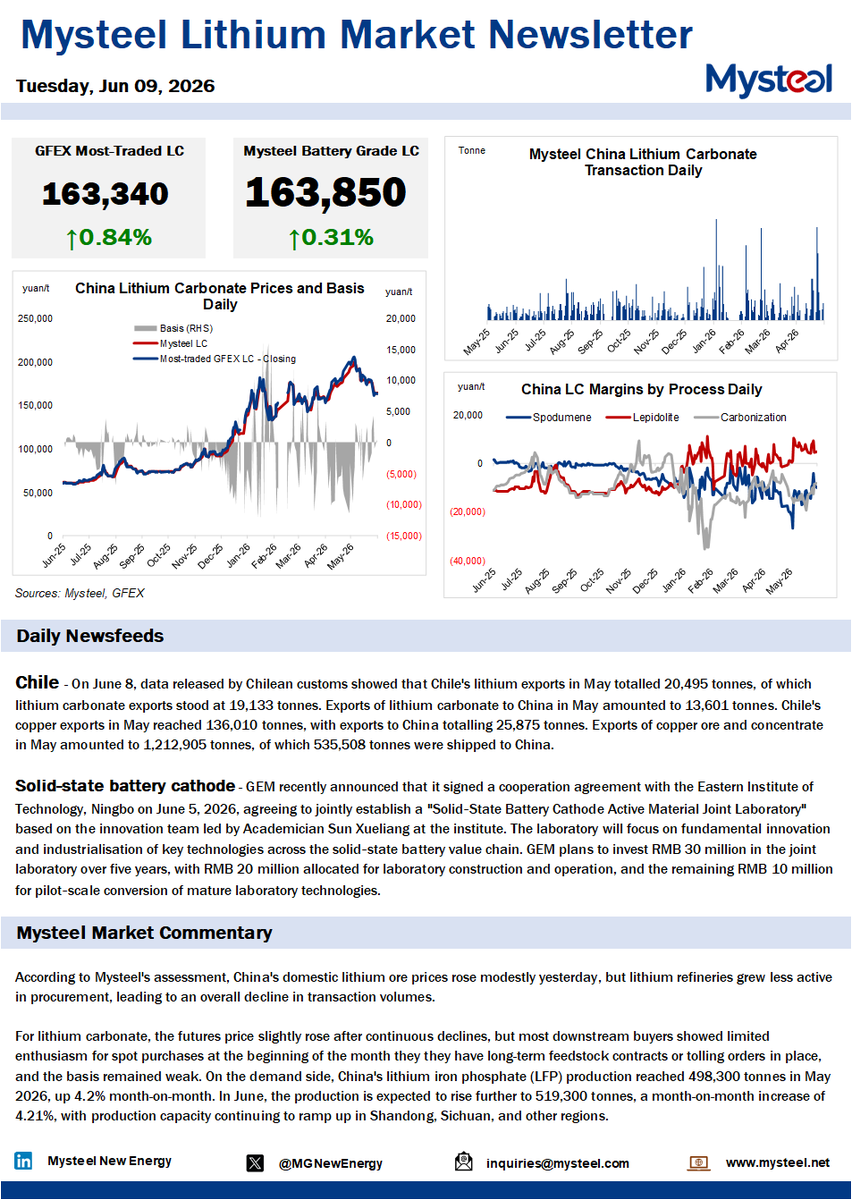
Mysteel daily reporting on China #lithium market 20260609👇
Please click the link below if you wish to know more information about China's lithium-ion #battery industry
mysteel.net/h/new-energy
2
17
1,640
🔋🔋LITHIUM BATTERIES ARE THE KEY
“in Shanghai, a consortium of leading solar players has launched a quest to put hundreds of GW of solar in space to support orbital data centres. Their ultimate dream is a lunar AI base rated at 10,000GW.” FT
$LIT $LITP $LIT.V $LIB.V $NILI.V $ATLX $GLN $AGY $GRD.V $KOD.L $LTH.V $QTWO.V
3
9
1,092
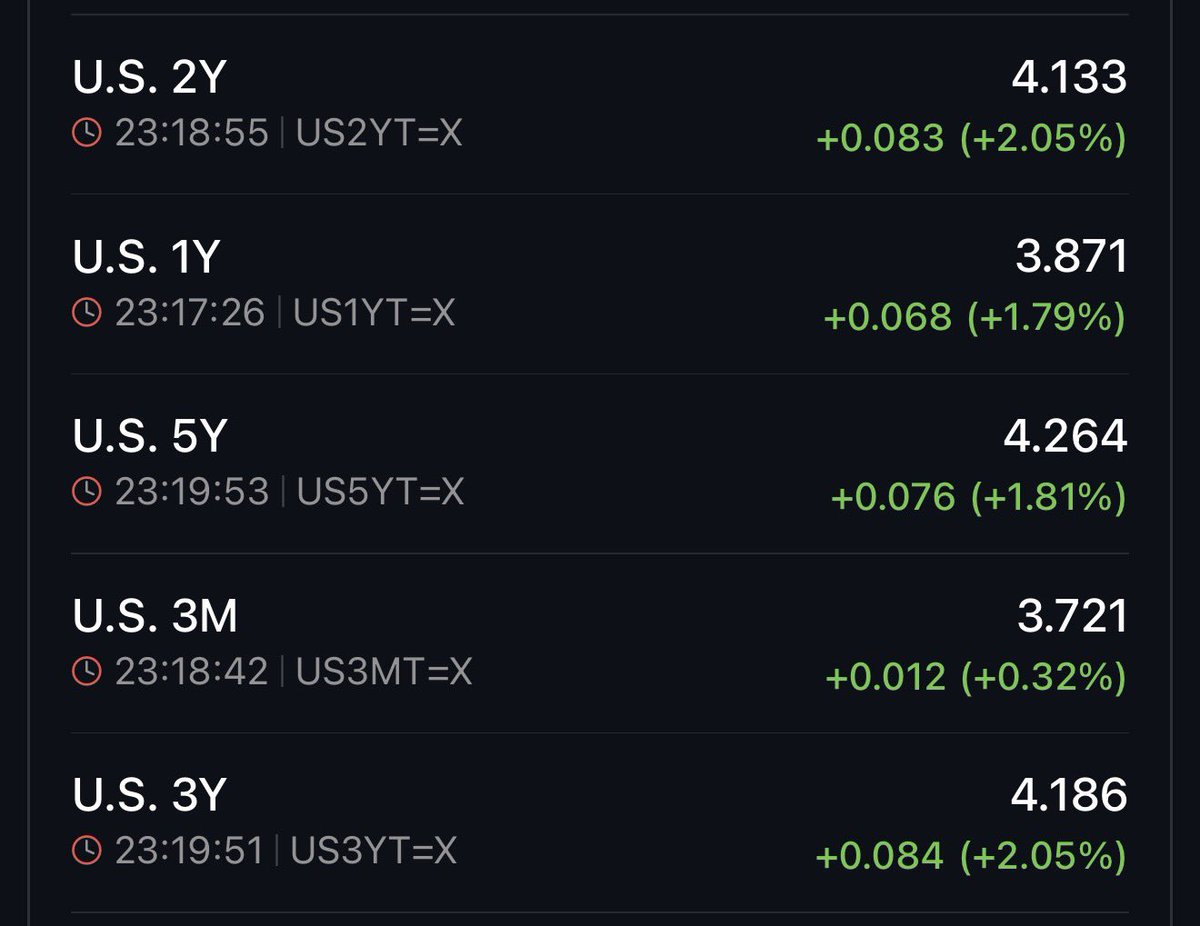
🔋🔋BOND STRESS TRIGGER
Although it doesn’t seem like it now we are entering a serious period of bond stress and this is key.
Jobs are being added according to the data, however they are mainly in the relative lower-medium earnings categories.
We still have an affordability problem and increasingly so as yields and interest repayments rise.
The structural recognition is what will cause the gold price to continue its longer term ascendancy.
$GLD $GLDM $GDX $GDXJ $AGLD.V $FRED.V $PER.V $PGLD.V $TUD.V $ORV.TO $GG.V

3
512
🔋🔋LITHIUM PRICE & STOCKS
I don’t expect to see too much action here over the coming couple months due to seasonality.
However many companies are coiling on usual weakness but will be ready for a strong Q4. $DSM.AX has been very impressive recently.
The near term violent rerate should be Argentina Lithium Energy $LIT.V when it happens.
$LIT $LITP $GLN $AGY $ATLX $KOD.L $NILI $QTWO $LTH.V $LIB.V $GRD.V $LIT.V
Jun 4

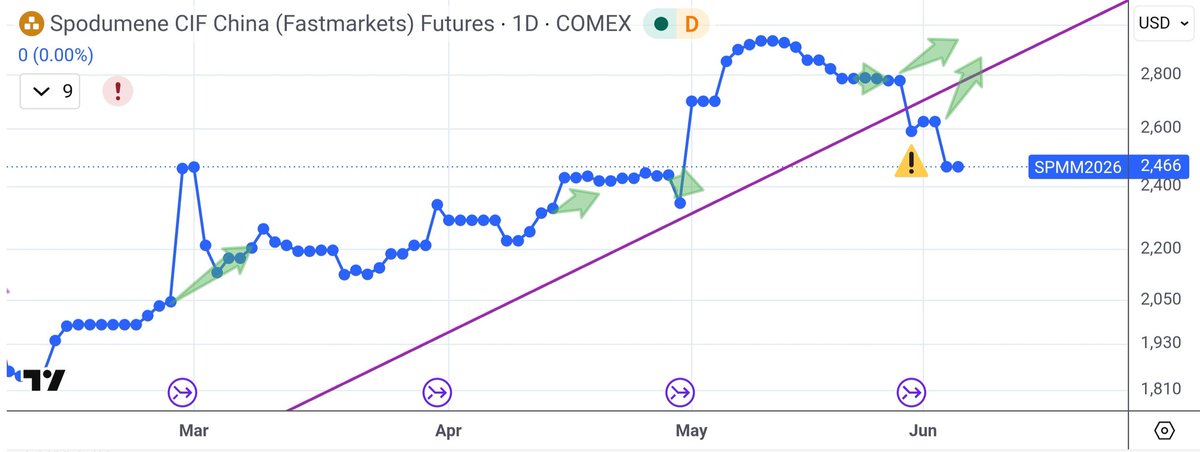
Spodumene CIF China(FM)Futures 0.00% to $2466, whilst increased BESS & EV demand places further pressure on LT supply
Zimbabwe ban on export of all lithium materials, global supply deficit looming as high oil prices driving #EV sales
$PLS.ax
$OR3.ax
#Lithium a #Newbullisborn
2
14
1,672
🔋🔋LITHIUM BOOOOOOOOM 🔥🔥
Holy Moly - watch this awesome rendition. Thank you lithium batteries 🔋
AGT viewers just saw the robots - wait till they try Chinese EVs!!
$LIT $LITP $LIB.V $ATLX $QTWO.V $NILI.V $LTH.V $KOD.L $BYD $XPEV $LCID
Jun 3

A 26-year-old from Sichuan just wowed America’s Got Talent with eight Unitree robots. Wu Yufei danced alongside the robots, stunned the judges and audience, and earned a unanimous pass to the next round.
1
6
825
🔋🔋LITHIUM PRODUCTION USA 🇺🇸
Congratulations LibertyStream Infrastructure 👏
Do folks realize how cool this is? A multibillion dollar company in the making.
$LIB.V $LIT $LITP $NILI.V $ALB $VUL.F

LibertyStream Delivers First Tonne of Lithium Carbonate to U.S. Industrial Customer
$LIB.v $VLTLF
businesswire.com/news/home/2…
2
29
1,398
🔋🔋LITHIUM SHOCK & AWE
It’s economics 101 - lithium demand is booming. Manganese will follow.
$LIT $LITP $FRB.AX $GLN $AGY $QTWO $LTH $LIB.V $NILI $LIT.V $GRD.V $ATLX $KOD.L
Jun 3

Oil demand destruction is accelerating as high prices force consumers to drive less, fly less, and switch to EVs. JPMorgan estimates China’s oil demand has already fallen by 9%, or 1.5 million bpd. #OilMarkets #EVs #EnergyTransition #OOTT
oilprice.com/Energy/Oil-Pric…
1
9
905
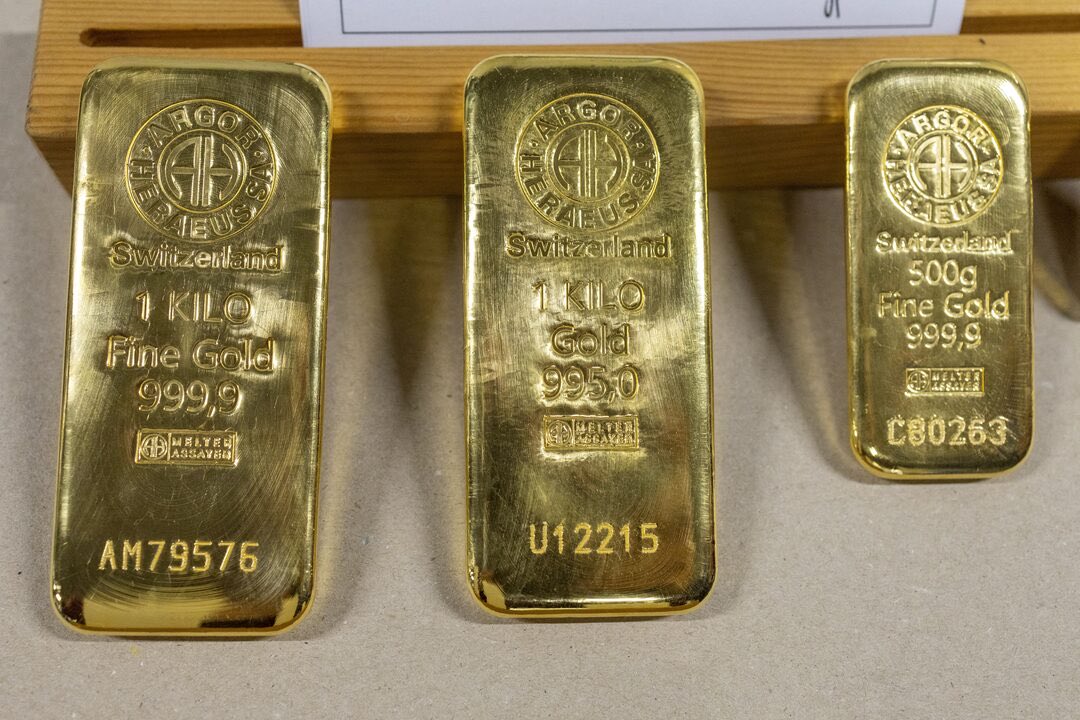
🔋🔋GOLD IS IN COMPRESSION
Gold is compressing and it’s only a matter of time before we see continued rotation.
$GLD $GLDM $GDX $GDXJ $SOMA $GG.V $ORV.TO $AGLD.V $TUD.V $PER.V $FRED.V $MLM.V

Gold has fallen about 20% since January.
Central banks turned net sellers in March for the first time this cycle.
Turkey sold 79 tonnes. Russia made its heaviest gold sale in 25 years.
Every headline called it the end of the de-dollarization trade.
They read it exactly backwards.
Gold hit an all-time high of $5,596 an ounce on January 29. By late March it had dropped about 20%, and it trades near $4,500 today. Silver fell harder, from $116 to the low 70s. The World Gold Council reported central banks sold a net 30 tonnes in March, the first net-selling month of the cycle after three years of record buying.
But read the seller, not the sale. Turkey unloaded 79 tonnes in the first quarter, swapping gold for dollars to defend a lira hitting record lows. Russia made its heaviest monthly gold sale in 25 years, raising yuan to cover a widening war deficit. Azerbaijan’s oil fund sold 22 tonnes, its first sale since it began buying in 2012. Every major seller is a country in a currency crisis.
This is the part the headlines missed. A nation in distress does not sell its Treasuries to survive. It sells its gold. When the lira collapses and the ruble buckles, the asset they reach for is the one that converts to any currency instantly and answers to no one. They are not abandoning gold. They are proving what it is for.
The metal did not leave the official sector. It changed hands. Poland, now holding more gold than the European Central Bank, kept buying toward a 700-tonne target. China and Uzbekistan kept accumulating. The gold moved from the desperate to the strategic. The distressed sold. The patient bought.
The regime shift has a birthday. In 2022 the United States and its allies froze roughly $300 billion of Russian central bank reserves overnight. Every reserve manager learned the same lesson in a single morning. Dollar assets held abroad can be switched off by the country that issues them. Gold in your own vault cannot. The buying that followed was never a trade. It was insurance against the dollar’s own weaponization, and insurance does not get cancelled because the premium dipped for a quarter.
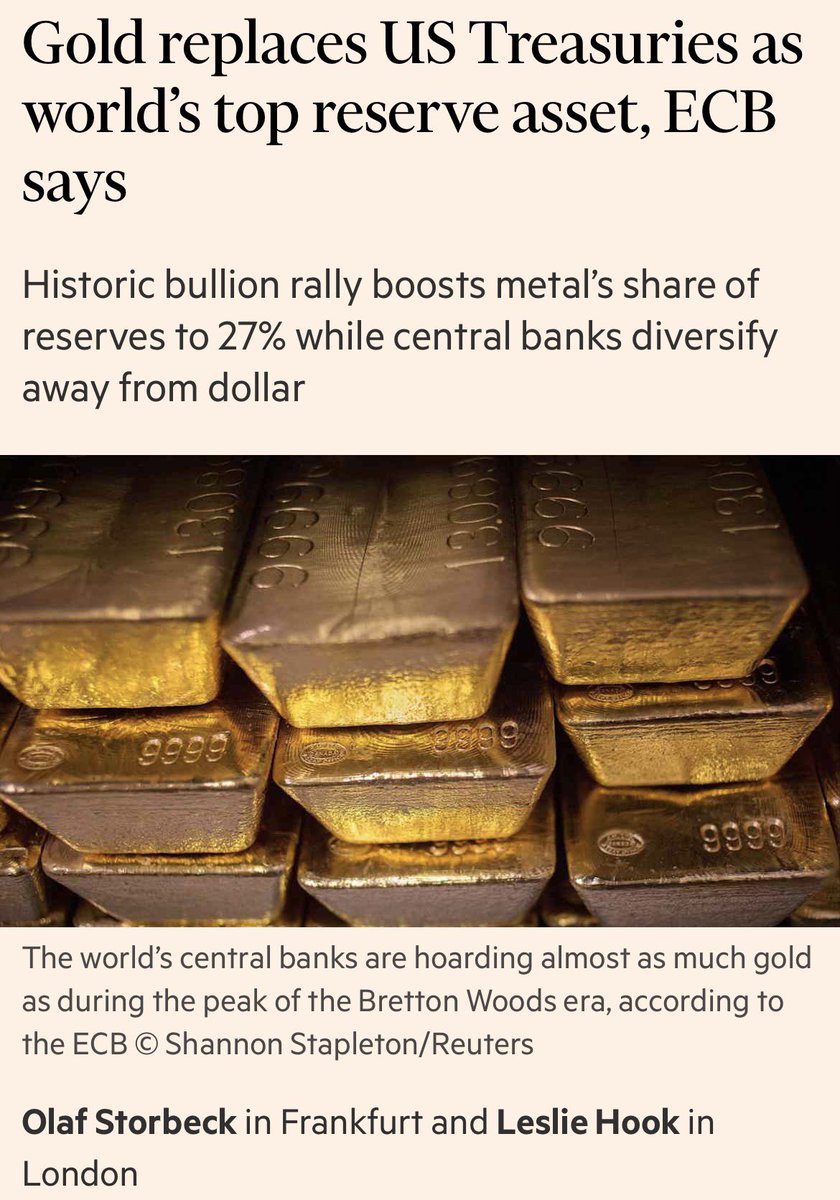
And the structural line held. Even with March’s selling, central banks bought a net 244 tonnes across the first quarter. They still hold more gold than US Treasuries, the first time since 1996. The dollar’s share of allocated reserves remains below 60% and falling. A 20% price move did not reverse a regime shift that took a decade to build.
The people who hold the reserves have not changed course. JP Morgan still forecasts 750 to 800 tonnes of central bank buying this year. The World Gold Council expects no trend break. And the deepest tell sits inside the selling itself. Russia is now issuing its government bonds in Chinese yuan, the day after Putin returned from Beijing. The dollar is losing the reserve and the settlement at the same time.
Gold fell 20%.
Central banks sold.
The headlines called the top.
The dollar still lost its reserve crown.
The price corrected. The regime did not.
When the currency breaks, nobody reaches for Treasuries.
open.substack.com/pub/shanak…
5
472
🔋🔋LITHIUM BOOM TAKES OFF 💥
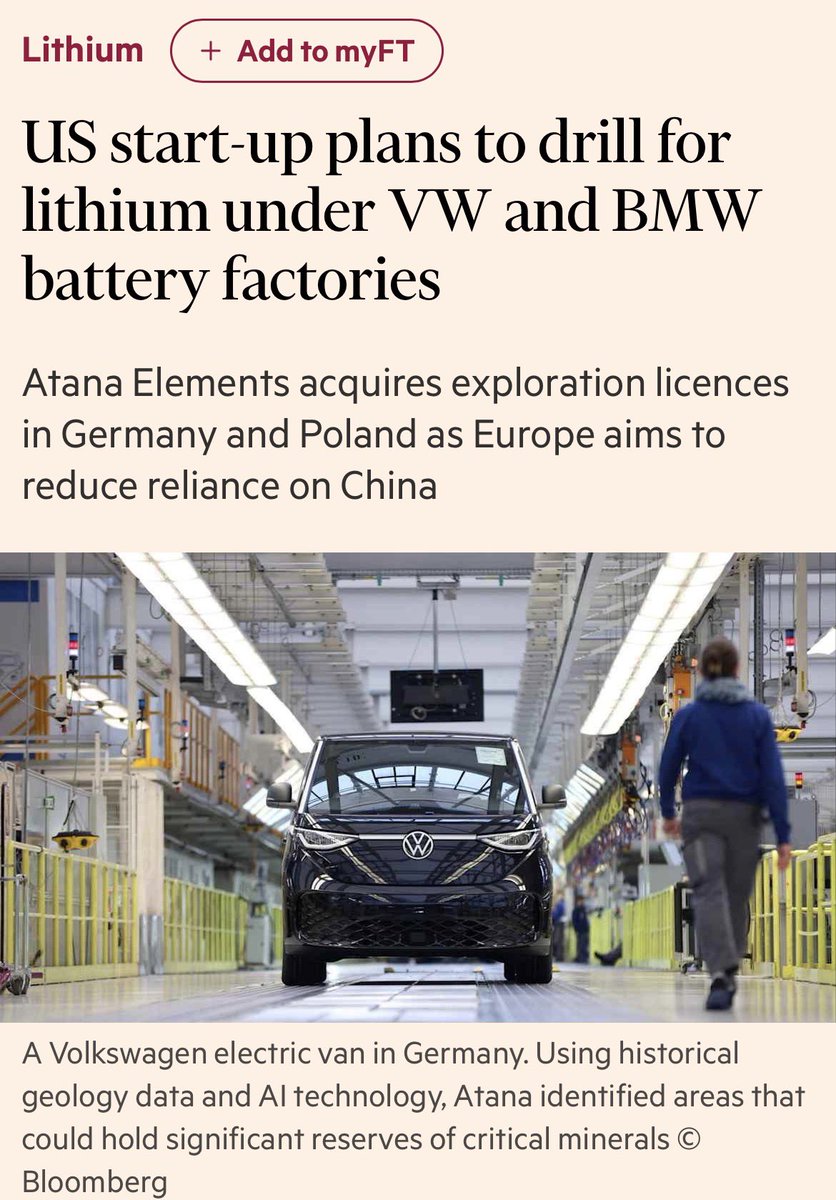
From the FT this morning. Energy security is driving more interest in finding and processing lithium more locally.
We’re not bullish enough - also seems to be more focus on bribes these days.
$LIT $LITP $VUL.AX $LKE $LIB.V $GLN.AX $AGY.AX $GRD.V $ATLX $BMW.TO $VWA.NE
2
3
13
964