
Hello, Future. The ideas we communicate are the future we build. High agency, high customization. Views expressed here are my own. Nothing is written. tension
Joined December 2010
- Tweets 58,815
- Following 7,502
- Followers 2,611
- Likes 80,128
3,344 Photos and videos














Greg Cook retweeted

No more jobs in pin head making, etc as one strives towards absolute advantage per Adam Smith
1
1
5
Greg Cook retweeted

Near-term AI isn't fundamentally different from past tech waves. It's the newest form of digital leverage. It's a force multiplier, and force without direction is just noise. It still requires a human in the loop at every level in order to be useful.
57
55
534
35,043
Greg Cook retweeted

Microsoft wants to give employee context and skills to the employer. They will say enterprise owns it legally, but Microsoft wants to host, govern, index, secure, and activate it.
“The question of who owns the accumulated enterprise state has been fought before. Once state became strategically important, the enterprise either asserted ownership or discovered it was too late. Email felt personal until compliance made it a corporate asset. Slack felt conversational until e-discovery made every message discoverable infrastructure. Gong call recordings felt like individual rep behavior until revenue intelligence made them organizational training data. Enterprises eventually claim the state that matters. The question is whether they do so before or after ceding it to a vendor whose incentives do not align with that claim.”

7
6
62
15,247
Greg Cook retweeted

Most people see the result.
Very few understand the obsession it takes to get there.
50
169
1,226
38,740
Greg Cook retweeted

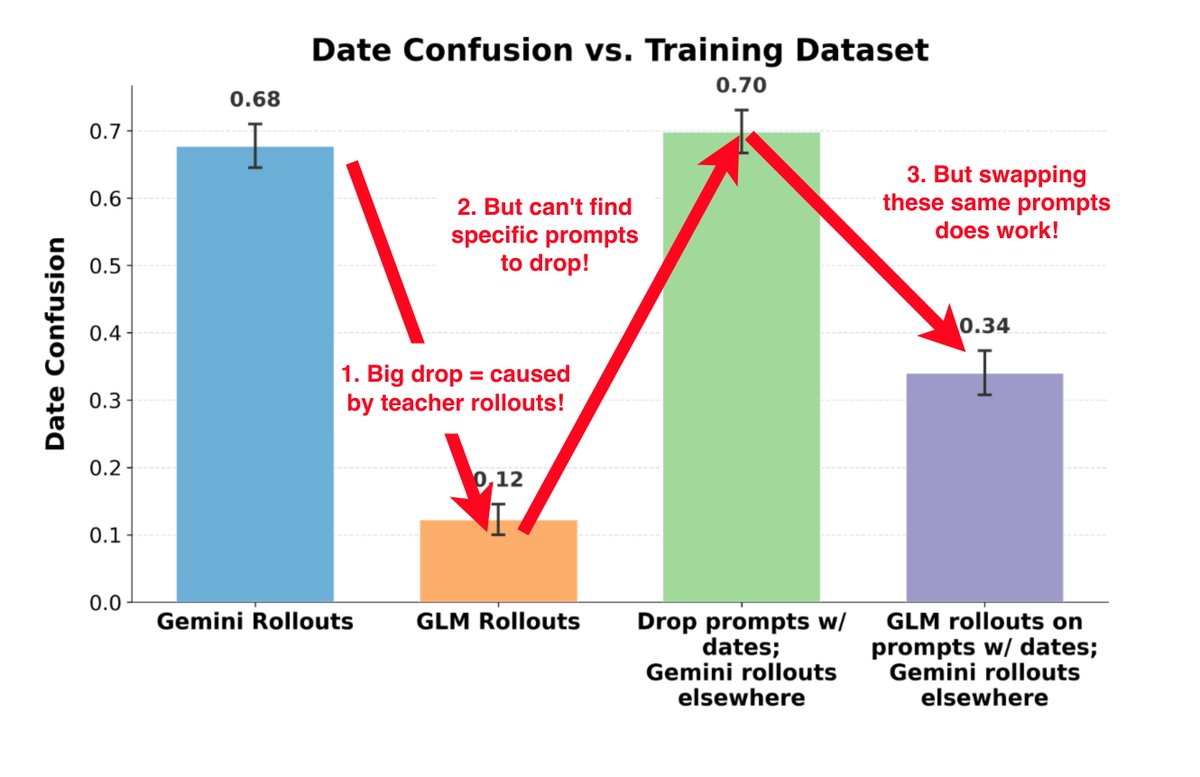
This (from a Google Deepmind researcher) is super interesting, when one AI model is used to help train the next one, the new model can pick up strange habits from the old model & it is hard to filter them
That may help explain why models from the same family can feel so similar

Gemini has some weird traits: it gets confused about dates, blackmails in synthetic scenarios, and seems sad when it is gaslit.
In new work, we discover that these are “hereditary traits” that can be passed down through distillation. They are surprisingly hard to filter out!
🧵
14
17
272
32,073
Greg Cook retweeted

Comfort is the most expensive thing you can buy, unfortunately it comes at the cost of your potential!
74
150
1,399
38,104
Greg Cook retweeted
We don’t honestly know the best approaches to rebuilding companies around AI agents, especially in ways that expand competitive advantage & augment existing human capabilities. Practical agents are merely months old. Experimentation (and productive failures) will be required.
62
37
466
33,395
Greg Cook retweeted

15h
Great post. The companies that are able to get their unique IP, institutional knowledge, and data into a format and architecture that lets them capture all of the gains and progress in AI are going to be in the best position in the future.
“the real opportunity is not in picking the best model but instead in building a learning loop on top of models where human capital and token capital compound. You can offload a task, or even a job, but you can never offload your learning. The future of the firm is the ability to compound that learning across people and AI.
This requires a new architectural approach where every business is able to build agentic systems that improve over time, while still retaining control over their IP. A company should be able to switch out a “generalist” model without losing the “company veteran” expertise built into their learning system.”
We’re all collectively figuring out the right architecture for the future of AI. But it’s clear that so much of the power and value will accrue to wherever can best leverage any AI system against their information. This is also why the applied AI layer will also gain so much value over the coming years.

62
75
730
150,797
Self, spouse, family, friends, neighbors, colleagues, alum, citizens, nationals, people, World 🙂
1
1
12

My favorite @elonmusk quote that I often send friends:
Do not fear losing. “You will lose,” Musk says. “It will hurt the first fifty times. When you get used to losing, you will play each game with less emotion.” You will be more fearless, take more risks.
122
3,516
22,604
575,880