โ€œNo one should ever suffer or die because of failures in healthcare delivery systems or processes of care.โ€

Joined May 2015
Photos and videos
I just sent "Join Us June 18 | Collaborative Conversation: Advancing Patient Safety Together" to my 1.2K subscribers. Be sure to get on my list to get the next one straight to your inbox. influence-ignited.kit.com via @kit
1
15
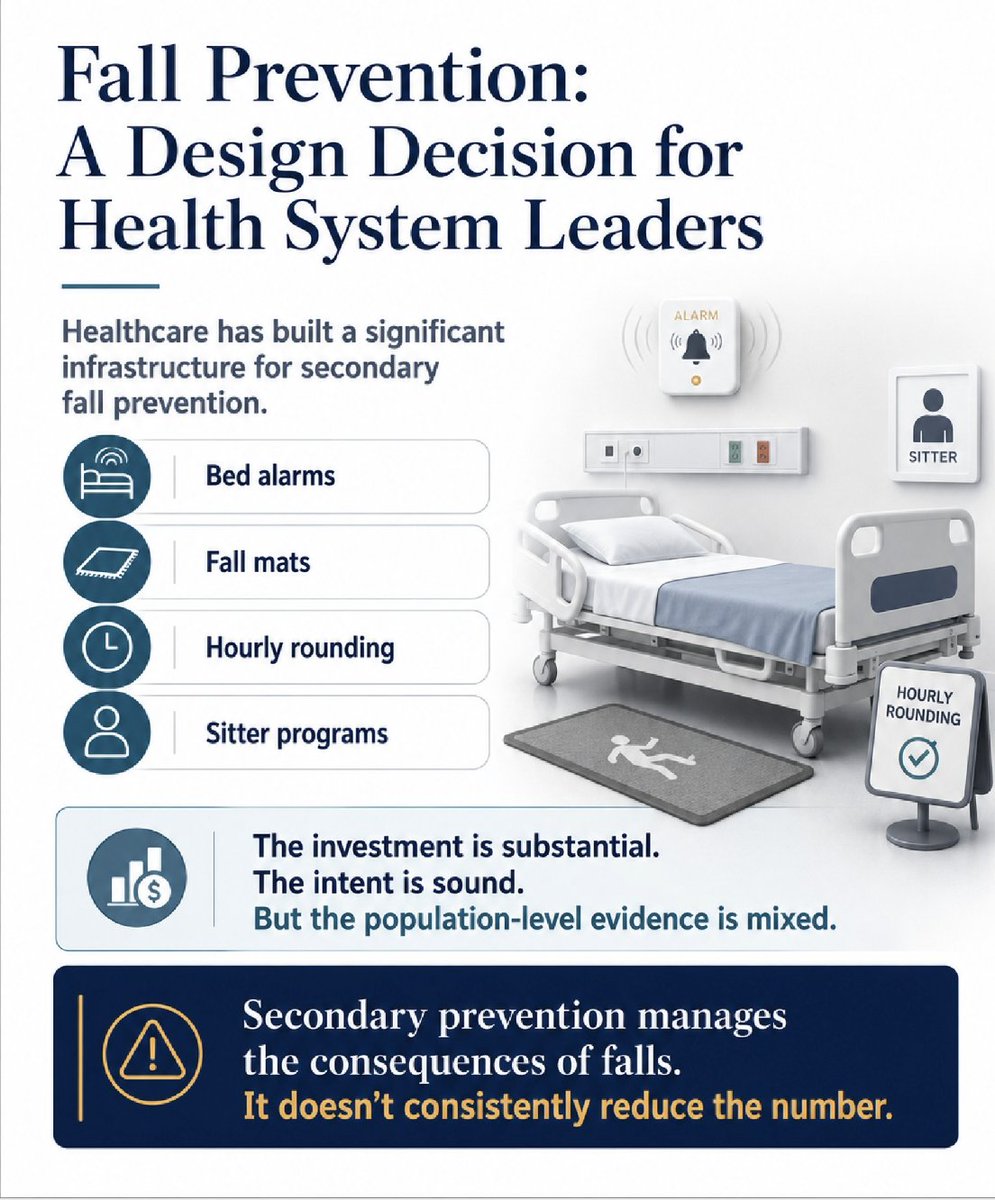
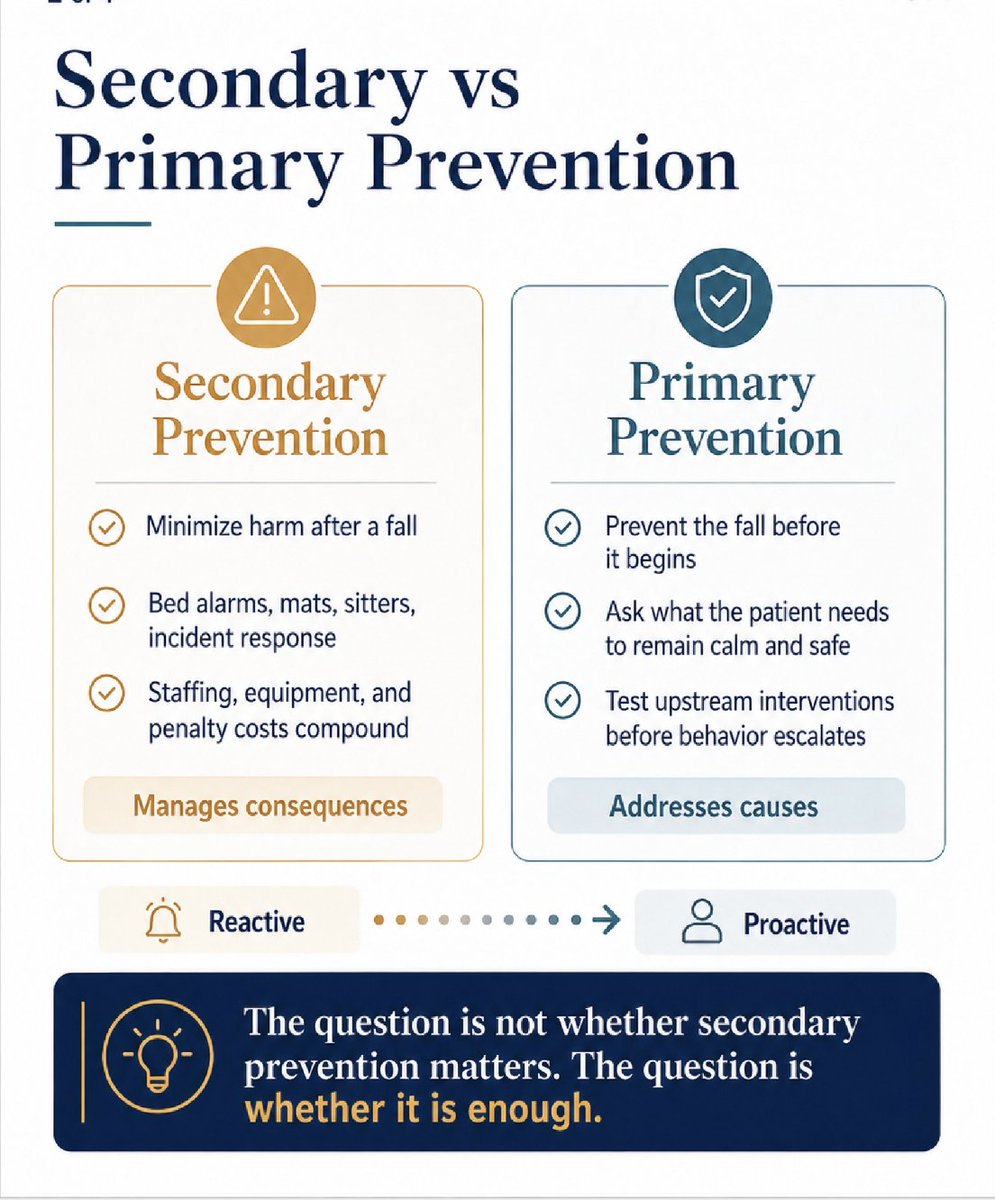
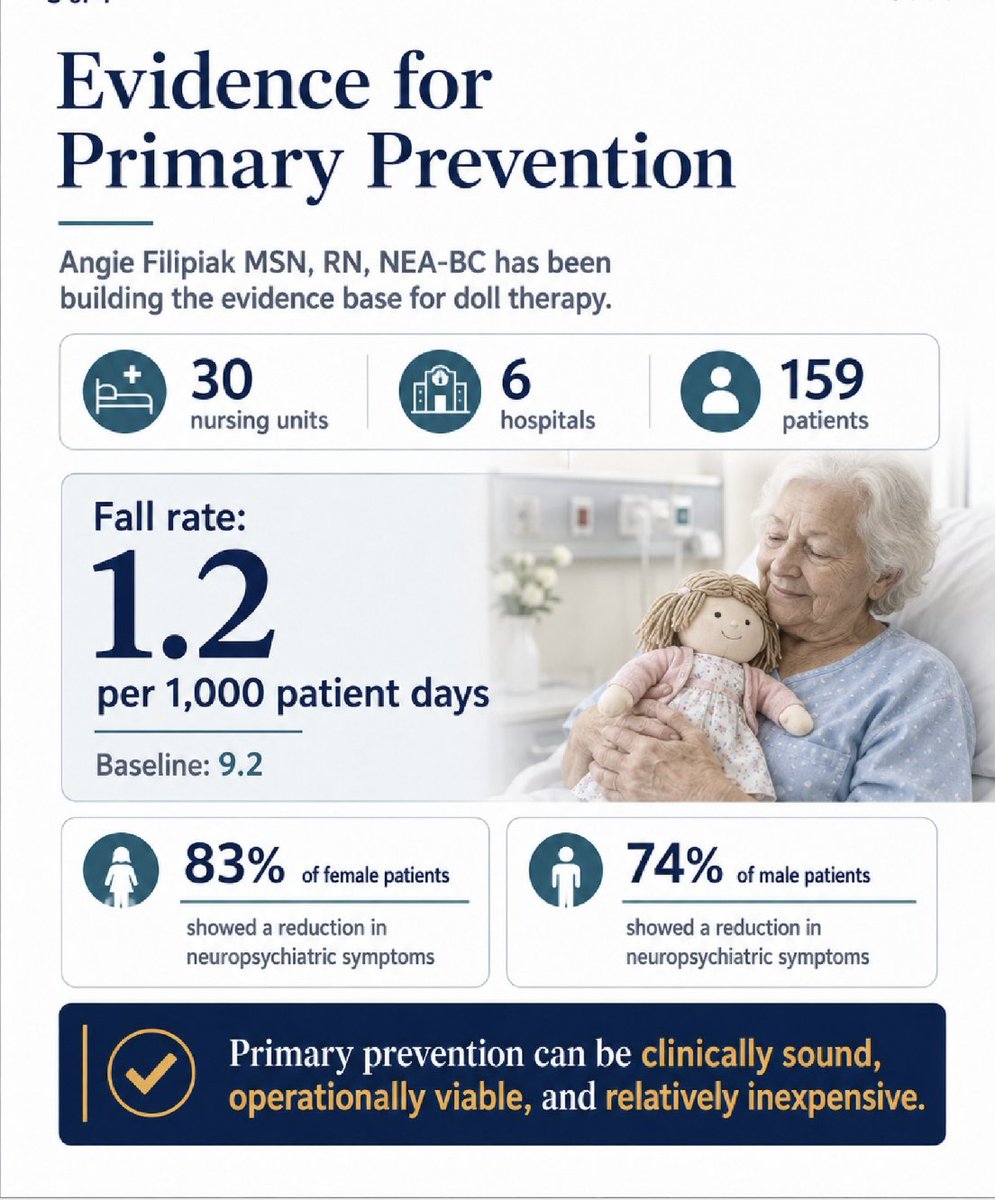
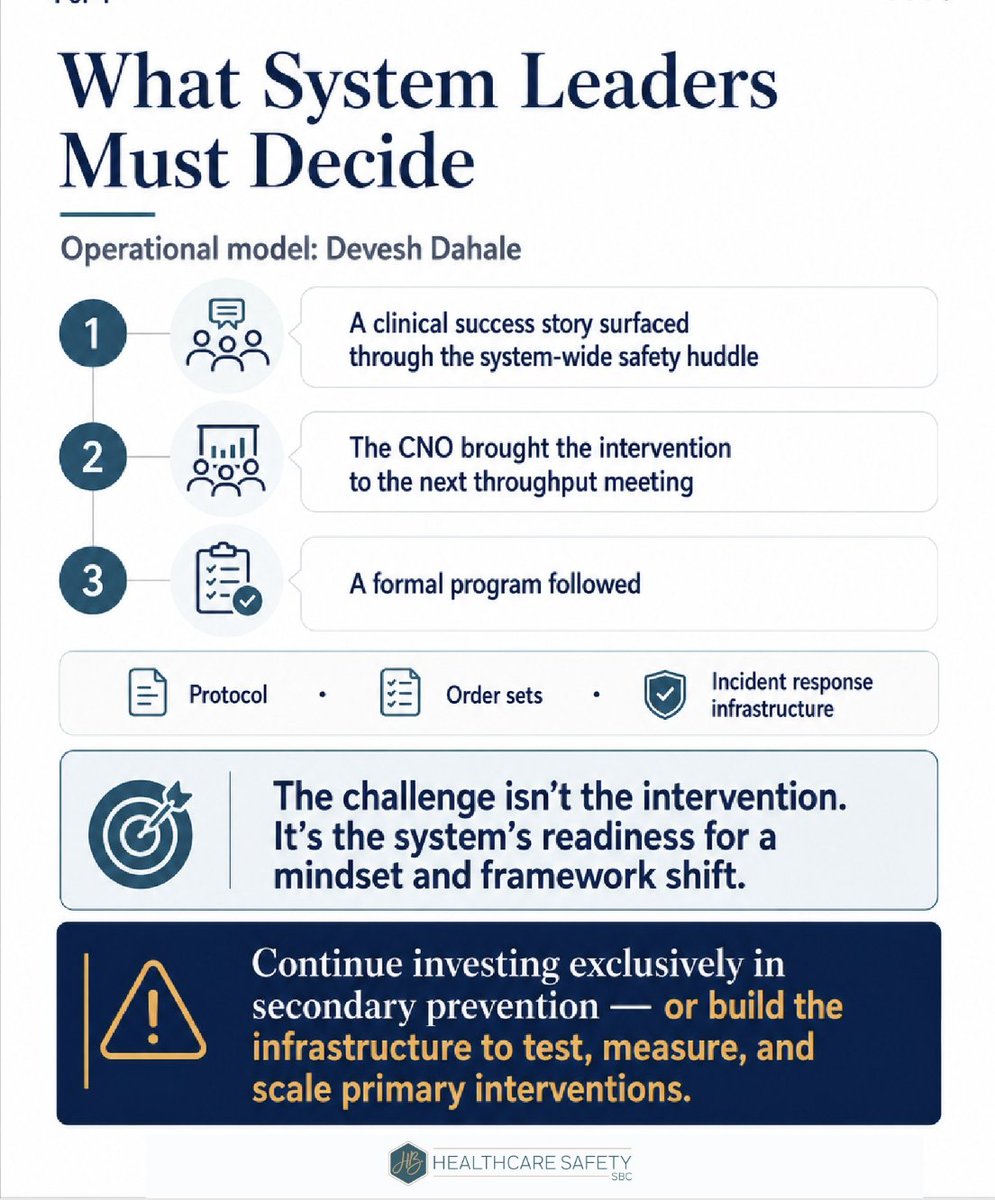
Healthcare systems have spent billions combined on secondary fall prevention. Bed alarms. Fall mats. Hourly rounding protocols. Sitters scaled across entire health systems. The investment is substantial. The intent is sound. In certain contexts, each reduces harm for specific patients. But the population-level evidence is mixed. Sitters increase the rate of ๐˜„๐—ถ๐˜๐—ป๐—ฒ๐˜€๐˜€๐—ฒ๐—ฑ falls โ€” not prevented falls. Bed alarms add noise to already understaffed units without consistent evidence of reduced harm. Fall mats reduce injury severity but don't change fall rates. Costs compound. Secondary prevention manages the consequences of falls. It doesn't reduce the number. Primary prevention โ€” keeping patients with cognitive impairment from falling in the first place โ€” requires answering a different question. Not: How do we minimize harm when a patient falls? But: What does this patient need to remain calm and safe ๐—ฏ๐—ฒ๐—ณ๐—ผ๐—ฟ๐—ฒ the behavior that precedes a fall? Some health systems are leading with primary prevention. In one of our recent Collaborative Conversations, we learned how. Angie Filipiak MSN, RN, NEA-BC has been building the evidence base for doll therapy as primary prevention. 30 nursing units. 6 hospitals. 159 patients. Fall rate: ๐Ÿญ.๐Ÿฎ ๐—ฝ๐—ฒ๐—ฟ ๐Ÿญ,๐Ÿฌ๐Ÿฌ๐Ÿฌ ๐—ฝ๐—ฎ๐˜๐—ถ๐—ฒ๐—ป๐˜ ๐—ฑ๐—ฎ๐˜†๐˜€ โ€” compared to a baseline of 9.2. 83% of female patients and 74% of male patients showed a reduction in neuropsychiatric symptoms. Devesh Dahale MS MBA CPHQ CPXP teamed up with colleagues to operationalize it at his organization. What galvanized adoption? A single clinical success story surfaced through the system-wide safety huddle. The CNO brought the "intervention" to the next throughput meeting. Not a proposal.ย  Not a slide deck. The intervention - a doll. The protocol, order sets, and incident response infrastructure you've invested in heavily?ย It is built for secondary prevention. We know primary prevention works in other clinical conditions. The question is whether your system is positioned to evaluate and scale it to prevent falls. That's a design decision facing health system leaders today. Continue investing exclusively in secondary prevention โ€” or build the infrastructure to test, measure, and scale primary interventions like Angie's and operational models like Devesh's. During our last Collaborative Conversation, they showed us that primary prevention is both clinically sound and operationally viable... not to mention, relatively cheap. The challenge isn't the intervention. It's the system's readiness for a shift in mindset and framework. If your organization is considering this shift, let's talk about what that looks like. Watch/Listen to the Doll Therapy webinar: lnkd.in/gk2VFguq Share this post with others who have a passion for protecting our vulnerable patients and decreasing costs of care. #HealthcareQuality #PatientSafety #HealthcareLeadership
7
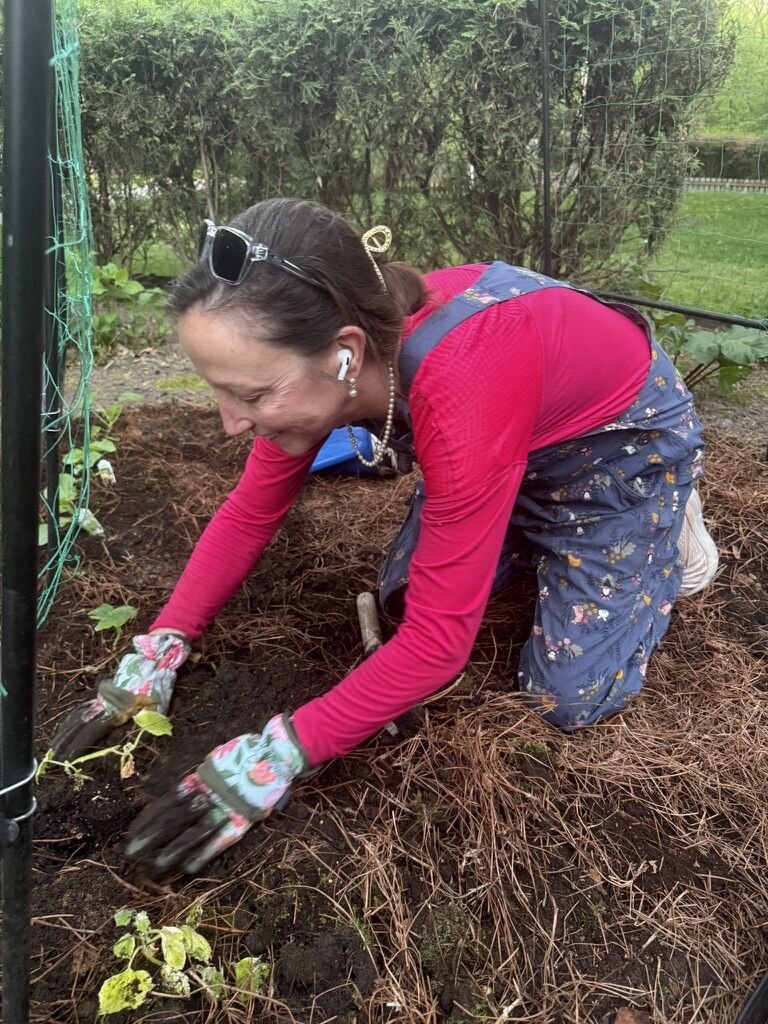
Planting in pearls... A blessed and beautiful day in Minnesota. The kind of day that reminds you why you chose to live in the ever-loving frozen tundra. Digging โ€” one of my absolute favorite pastimes. The sense of accomplishment, the smells of newness, so many shades of green. Except, of course, for my poor squash plants. I decided to start the garden indoors this year... my own little QI project. The premise: start from seeds in March, end up with plants as big and green as the pricey ones at the nursery. Honestly... the yellow-ish ones in this photo are my "babies." The healthy green ones are the $$ from the nursery. An RCA on why my runtish squash and tomatoes look like this after two months would be short. We had the seed starting kits with warming pads and special UV lights โ€” thank you, Paul Huddleston! Enthusiastic start... but this novice gardener โ€” read novice QI gardener โ€” forgot the seedlings needed water. To be fair, I just ran out of time. Exact same feeling I had returning to hospital practice after the time away. Couldn't get everything done. Something had to give. In the hospital, it was some delayed documentation. No one would notice, right? But just like those yellow squash plants, the care episode is not as healthy as it could be. I know I can do better. The joy of digging in the dirt renews my spirit for another day where the administrative challenges of patient care outnumber the minutes I get with patients... but oh, the sense of accomplishment of seeing those patients' warm reception โ€” trust and faith in their eyes. It may seem like a small corollary โ€” but for me, the degree of joy is identical. I have the honor of nurturing and caring for the patients... and plants... that depend on our profession.
1
29
Weโ€™re excited to invite you to our upcoming collaborative conversation, Doll Therapy in the Hospital Setting: An Evidence-Based Approach to Improve Safety and Outcomes. In this meeting, Angie Filipiak, MSN, RN, NEA-BC, will focus on evaluating the impact of doll therapy on patient safety outcomes, understanding how it supports emotional regulation in cognitively impaired patients, and exploring the role of fall mats as part of a comprehensive fall injury reduction strategy. Click here: us06web.zoom.us/meeting/regiโ€ฆ Date: Thursday, May 28th Time: Noon CT (10 am PT, 11 am MT, 1 pm ET) Learning Objectives: โ€‹1) Evaluate the impact of doll therapy on neuropsychiatric symptoms and safety outcomes in cognitively impaired patients, including its role in reducing agitation, fall risk, restraint use, safety sitter hours, PRN antipsychotic medication use, and workplace violence events.โ€‹ 2) Analyze the mechanisms by which doll therapy supports emotional regulation and behavioral stabilization in patients with cognitive impairment, and how these changes translate into improved patient and staff safety outcomes.โ€‹ 3) Explain the role of fall mats as an injury reduction strategy in cognitively impaired populations, including when and how to implement them effectively in conjunction with non-pharmacologic interventions such as doll therapy to minimize harm from falls. #healthcare #patientsafety #dolltherapy #collaborativeconversation
14
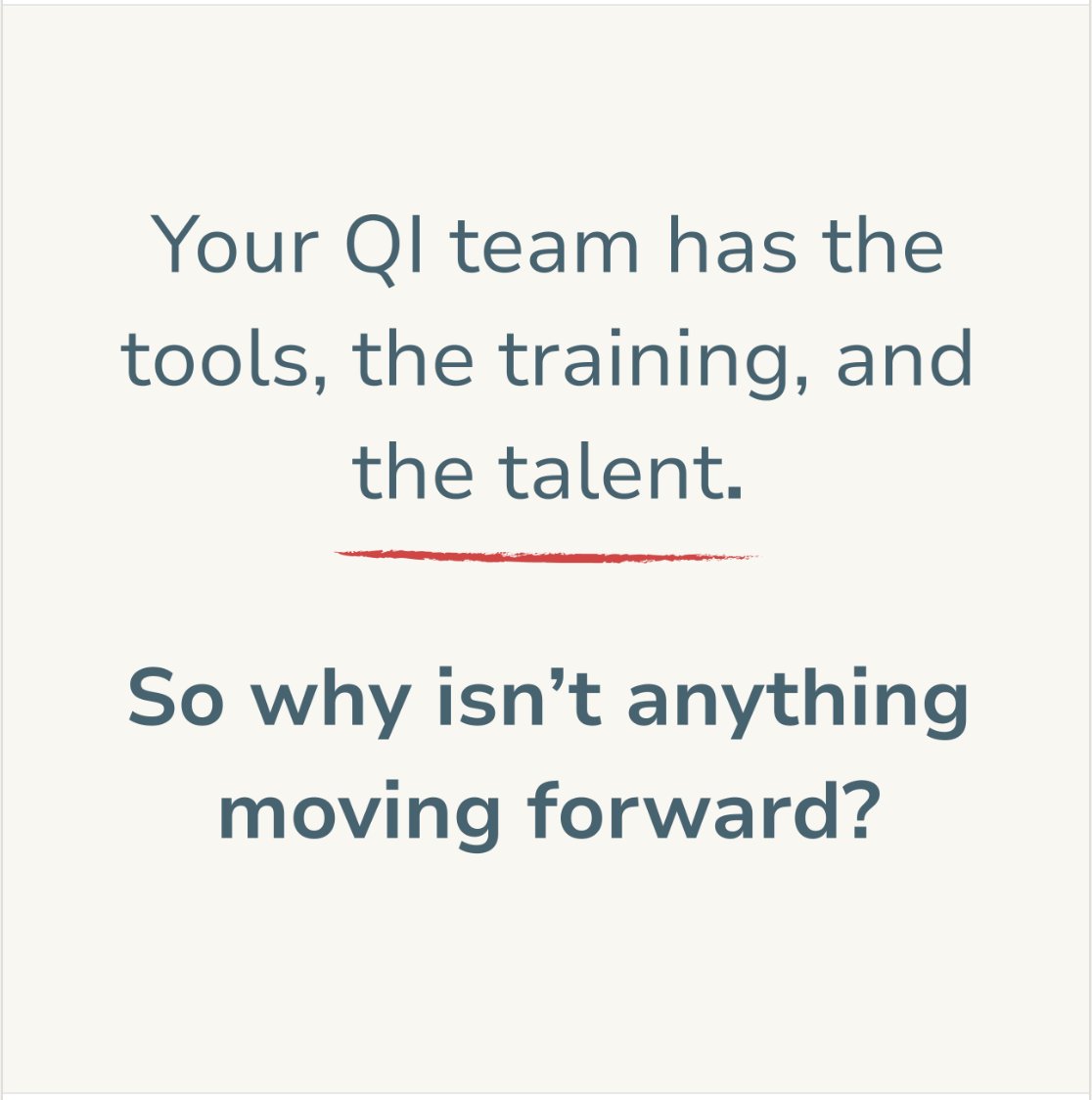
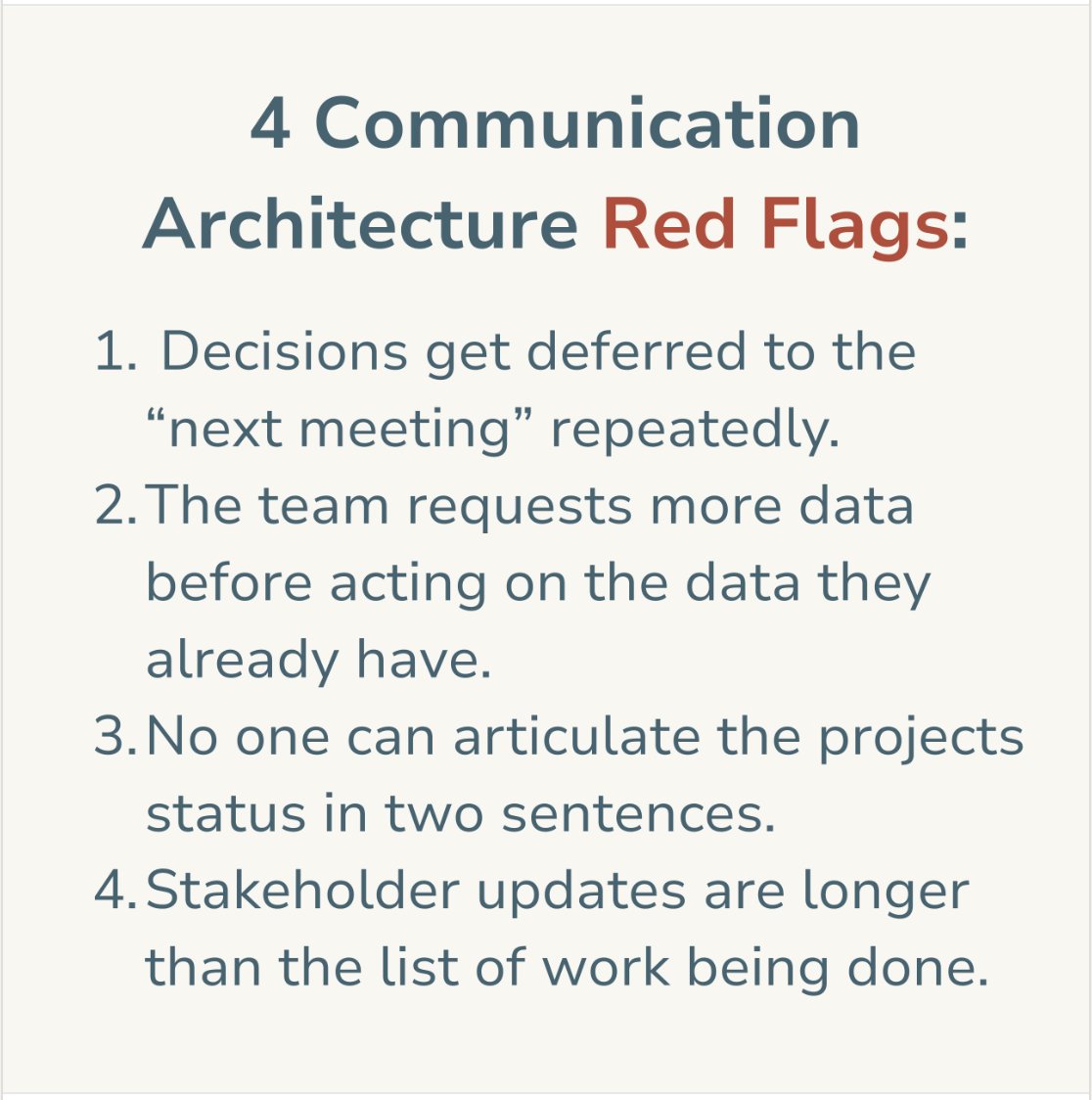
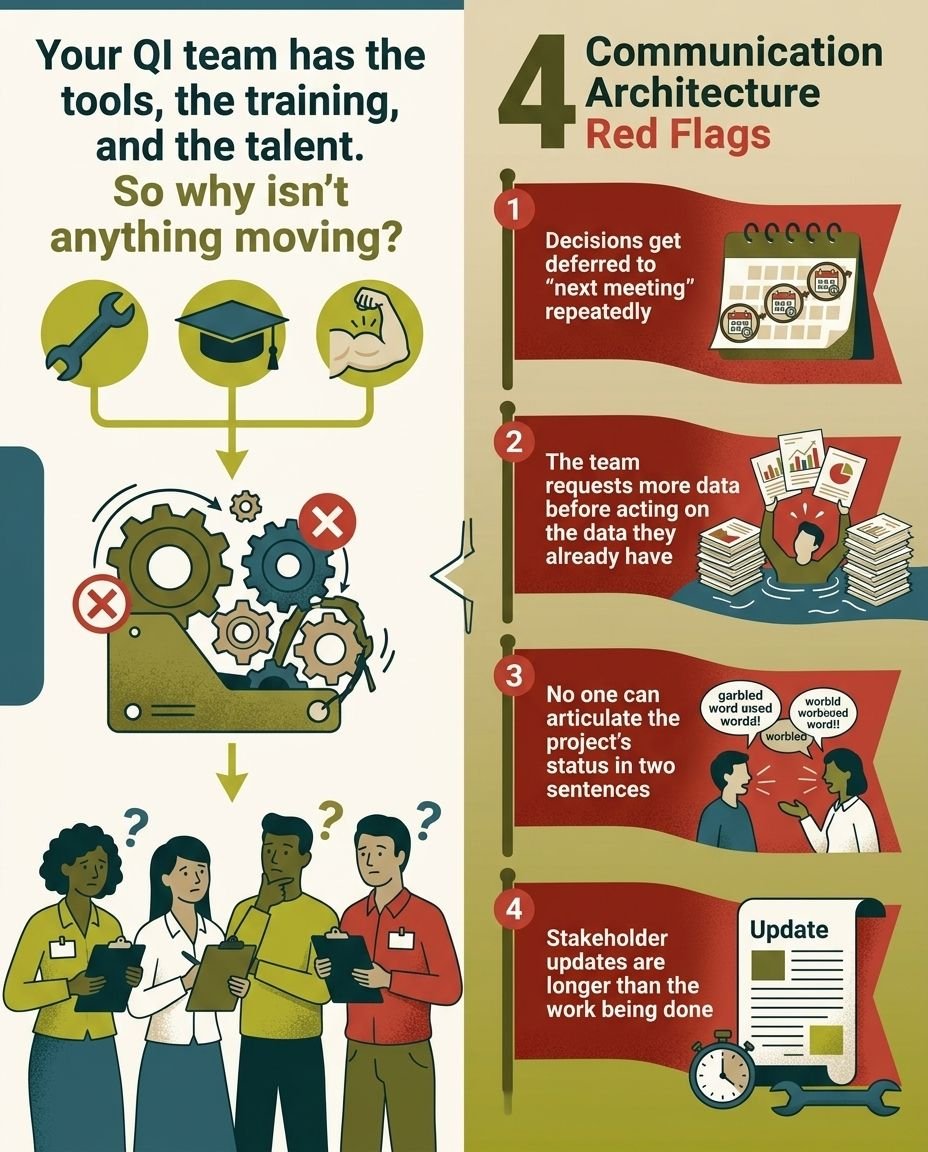
Most organizations invest in QI tools. Almost none invest in whether their teams can actually communicate across the gap those tools are supposed to close. A QI team working on a deteriorating-patient recognition project was stuck for months. Capable professionals. Trained in Lean. Certified in Six Sigma. Nothing moved. When the team's communication styles were mapped using DISC, the pattern was immediate. Nearly every member was high-C and high-S. Detail-oriented. Stability-seeking. Thorough. Not one member could push a decision forward. This is not a training failure. It is a team architecture failure. Organizations assemble QI teams based on subject-matter expertise and availability. They never assess whether the team's communication composition can produce forward movement. The result is predictable: More data gathered. More analysis completed. More reports generated. No decisions made. No implementation started. And when the project stalls, the conclusion is always the same: the team lacked commitment. The frontline resisted change. The tools didn't work. None of that is the actual failure mode. The failure mode is structural. Teams without the communication composition to translate insight into decisions will produce insight without decisions โ€” every time. Four indicators that your QI team has a communication architecture gap: โ€ข Decisions get deferred to "next meeting" repeatedly โ€ข The team requests more data before acting on the data they already have โ€ข No one can articulate the project's status in two sentences โ€ข Stakeholder updates are longer than the work being done Communication architecture is infrastructure. Organizations that treat it as a soft skill will continue to watch capable teams produce zero patient care improvement.
1
20
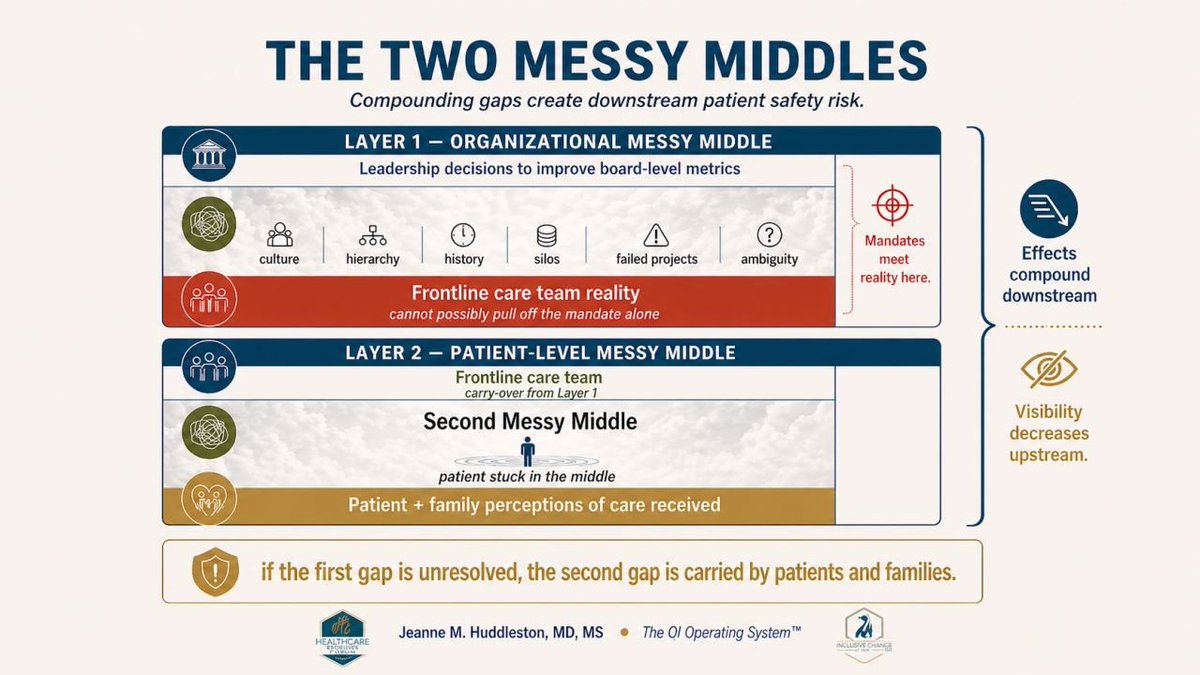
My mother-in-law almost died. Not from her surgery. From the gaps in her care. - I've spent 15 years in quality improvement. I know how to spot the problems. But I couldn't fix the ones that nearly killed her.ย  I stepped into dozens of care gaps myself. Because I had the medical knowledge. Because I was there.ย  Then I read Devesh Dahale's story. His medically vulnerable son. A prescription refill gone wrong.ย  Covering pediatrician had no context. The encounter spiraled. They left without medication.ย  Later? His wife tried again. Same physician. Same situation. She succeeded.ย  By doing translation work in real time between her son and the doctor.ย Reading this triggered the memory of my mother-in-law and I realized something. The Messy Middle isn't just between leadership intent and frontline reality.ย  It sits between any two people in healthcare who hold different information. Different experiences. Different power. Covering pediatrician and parent. Surgeon and frightened daughter. Intensivist and wife at bedside.ย  Right now? Who rescues patients when patients get stuck there? They're rescued by family members. Home health nurses. Nurses who happen to be in the room.ย  Not by by anything planned or intentional. Not by designed infrastructure. This is structural patient safety risk. FINAL CALL for today's masterclass. LIVE at noon CT. Free for all QI professionals.ย  You'll learn to identify patient-level Messy Middle - Understand structural patient safety risk beyond just leadership gaps. Think Demming Donabedian Reason all in one! I'm only giving you an hour's reminder, so... 1. comment RECORDING and I will send it to you as soon as it is ready or 2. send me a DM #PatientSafety #QualityImprovement
128
Every day in your hospital, families are doing translation work that should be infrastructure. A six-year-old waiting for urology surgery. High-grade reflux suspected. Antibiotic prophylaxis prescribed by specialist as protection during a vulnerable pre-surgical window. Gap in communication with specialists at large referral center. The refill expires. Real concern about developing infection. The regular pediatrician is out of town. A covering physician walks in without context. He declines to prescribe unneccasary antibiotics. He said he could not prescribe antibiotics โ€œin good conscienceโ€ without symptoms. โ€œIf it were my son, I would not give him these unnecessary antibiotics.โ€ The encounter spirals. The family leaves without the medication. A medically vulnerable child is sent home without prophylaxis... unprotected. Later, the mother tries again. Same physician. Same prescription. This time she asks for one refill, says they will only use it if needed, gives the clinician a smaller, safer decision than the one he had just refused. It works. We frequently reference the gap that sits between leadership intent and frontline reality. But at the bedside, this gap sits between any two people who hold different information, experiences, and power. A covering pediatrician and a parent. A surgeon and a frightened daughter. An intensivist and a wife who has been at the bedside for six weeks with her dying husband. In each of these scenarios, it is the same structural care. Small scale. Large scale. Just as broken. The covering physician was not a bad clinician. He was a good clinician without the relevant clinical context that well-designed infrastructure would have given him. He needed the clinical context that travels with the patient, warm handoffs that move at the speed of the encounter, communication training that treats translation as a learnable craft. We rely on our care teams, their patients, and their loved ones to bridge all of the gaps. But, the blood, sweat, and tears of our frontlines and patients are not "infrastructure". The patients who get what they need are most often those whose family member is willing, and able, to translate at the bedside in real time. That is not a system... or designed infrastructure. This week's Learning From Every Patient newsletter features our first guest author. Devesh Dahale MS MBA CPHQ CPXP, a colleague and a father, wrote his family's story so that we all might learn from their experience. Read it before your next handoff redesign, your next transitions-of-care discussion, your next cross-coverage protocol policy meeting. #HealthcareQuality #PatientSafety
19
Join us on Thursday, April 30th. Collaborative Conversation from HB Healthcare Safety and Influence Ignited! Why Do Our QI Projects Fall Short? Naming the Structural Patient Safety Risk We Have Been Working Around linkedin.com/events/74531197โ€ฆ
29
Saw patients over the last two weeks. The bedside... best and hardest place to be. I am an OG hospitalist. Semi-retired, technically. Officially, I go back enough to keep my clinical knowledge intact. In reality, I don't ever want to leave their side... even if I only sit with them for one shift. The honor of walking beside them in their most vulnerable days. The gift of being invited into their moments of fragility and healing. This is my life's work. But then we sometimes fail them... humans caring for humans. When the system fails them, it looks different up close. To the patients... and to us on the frontline. Leadership makes decisions with the full intention of protecting the people in our care. With the full intention of protecting us on the frontline. I used to think that this "gap" was a leadership v. frontline thing filled with - Unclear expectations. Unspoken politics. Misunderstood intentions. History and hierarchy. Over the last 2 weeks, I was acutely reminded of how wrong I was. Humans sit in the gap. Humans can get stuck in that gap. Our colleagues. Our patients. I watched it happen over and over these last two weeks. Well-intentioned systems. Yet, fragmented care. Patients navigating what they did not understand. No one there to fill in the gaps. No one there to translate. The gap between what I know as the clinician in the roomโ€” and what the patient and family have already lived, already been told, and already been trying to say. The patients who get what they need are most often those with someone willing and able to translate in real time. A nurse who steps in. A family member who has been paying attention for years. That is not a system. That is harm waiting to happen. I used to think the 'Messy Middle' lived only between leadership and the frontline. Oh, it's there... But it also lives at the bedside. Where patients are stuck in the 'Messy Middle'. The broken processes I saw last weekโ€” not twenty years ago, last weekโ€” are the reason this work still matters. Our work still matters.
1
24
Save the date! ๐Ÿ‘‡ ๐Ÿ—“ April 30 ๐Ÿ• 1:00 PM ET ๐Ÿ“ Live on Zoom us06web.zoom.us/.../registerโ€ฆ Our monthly Collaborative Conversation is happening soon. Topic and Learning objective details are on the way โ€” for now, we invite you to hold space on your calendar. More to come!

1
55
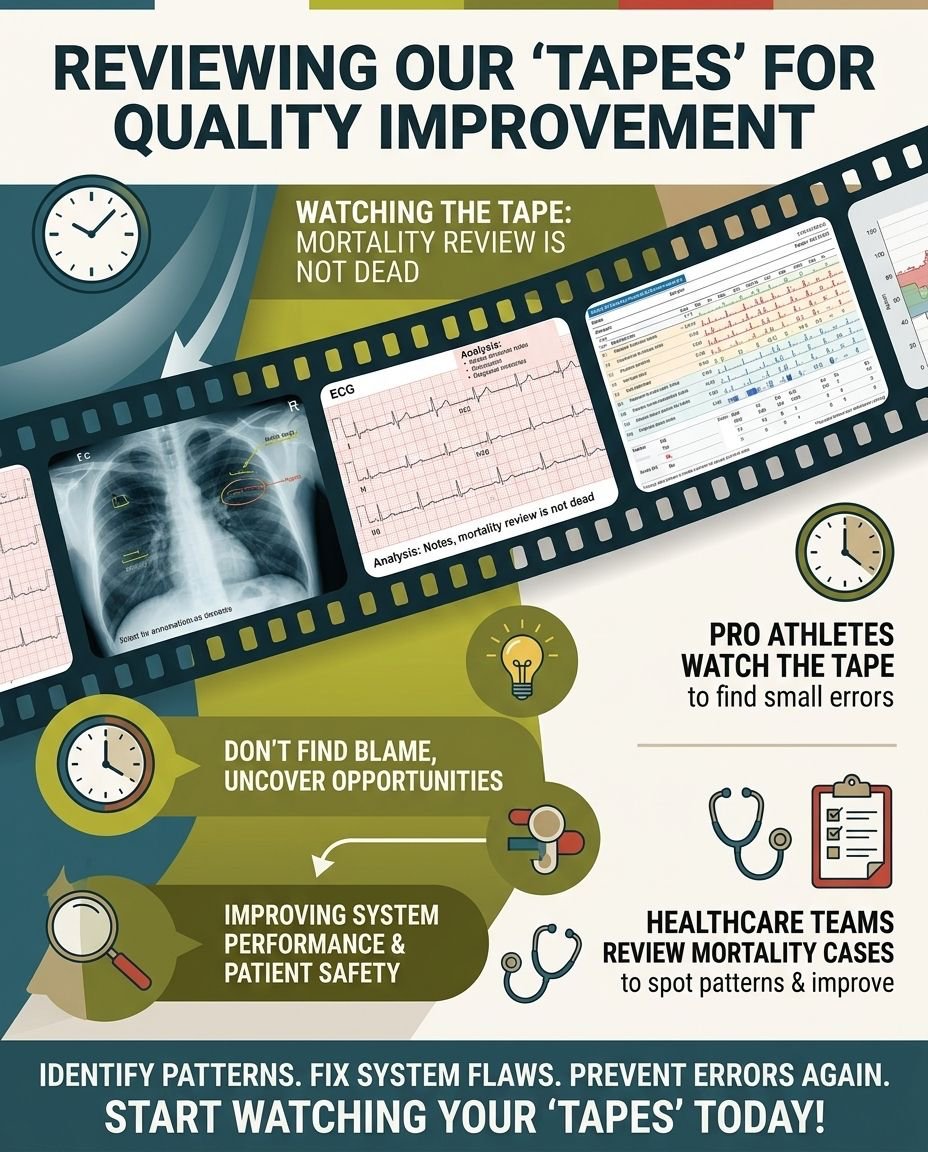
Mortality review is not dead. But most teams have stopped watching their 'tapes.' Professional athletes watch their 'tapes.' After every game. Every micro-movement.ย  Every miss. Every step that almost worked. They are not looking for someone to blame. They are looking for the next performance. As professionals, they are constantly driving to better performance. What can they do to improve? To win? Mortality review is that. For a healthcare system. Every case is a 'tape' we watch. Not for someone to blame. But to identify opportunities for improvement in our 'performance.' You see the same opportunity in several 'tapes,' and now you have gold. Aggregate results from 'tape' reviews reveal a pattern in what the system got wrong. Now it is visible.ย ย  Now we have a chance to fix it...ย ย  Before we get it wrong again. After 23 years of honoring patients' lives by learning everything I can from them,ย  I am not ready to call mortality review dead. Broken, maybe. Orphaned, often. Dead, no. The question is not whether the 'tape' is worth watching. The question is whether anyone on the team is actually watching it with the next play in mind. What does your team do with the 'tape' review? And more importantly, what's changed because of it? #PatientSafety #QualityImprovement
20
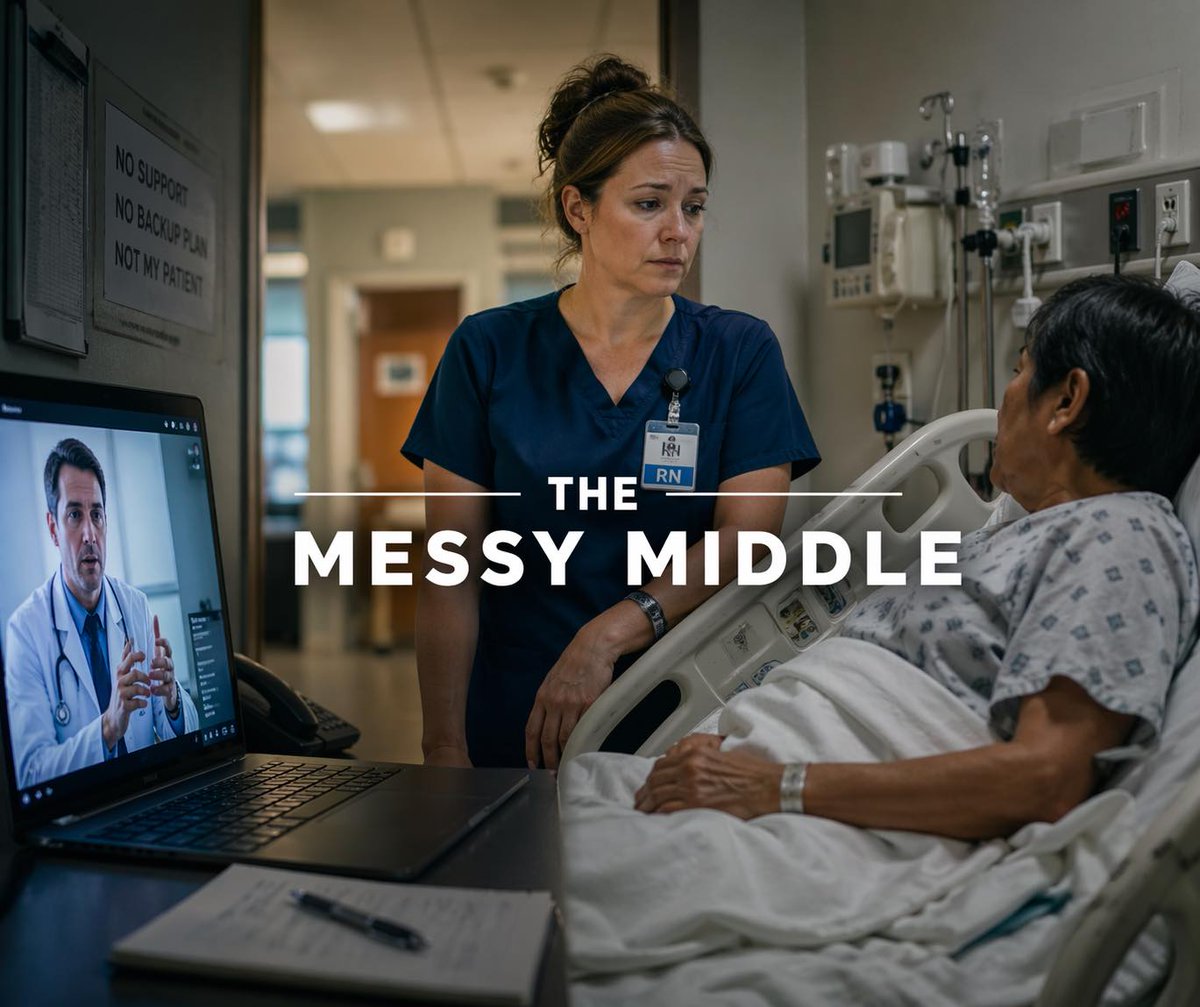
A tele-admission for a busy site - not enough staff. A patient with a communication barrier. No way to bridge it in real time. No support available. No backup plan for extenuating clinical circumstances. The nurse on-site saw it too. She asked the physician down the hall to switch patients with me. Just to ease the awkwardness during this patient's acute illness. The "rules" would not allow it. "It's not my patient." The nurse in the room with this patient knew what we had to do was not ideal. The hospitalist knew the history would not be thorough. The hospitalist knew important information could get missed. The hospitalist knew the care outcome could go sideways. It didn't, but only through God's blessings... In spite of the broken processes and systems. Somewhere upstream, a decision was made. Credentialing committee closed the loop. Hospitalists now approved for tele-admissions across every site. Months of work. Signed, approved, live. Success. The decision makes complete sense. We have to do more with less. I am certain hospitalists provided input. But in the press of the clinical day, it doesn't play out so cleanly. Not a failure of anyone's heart. A huge gap between: --> leadership intent (timely access to care and better outcomes), and --> the frontline reality in the chaos of any random moment. A failure of an operating system. The same pattern shows up everywhere in healthcare. Leadership decides. Frontline wonders how they are going to make it work. Both are doing what their role asks of them. What goes missing is the translation between the two. The Messy Middle. In this case, the patient was sitting smack dab in the Messy Middle. A clinician on a screen. A patient who cannot connect. A nurse who goes above and beyond. Rules that cannot be broken. This is the Messy Middle. In the moment we feel it. We recognize why this is where improvement work stalls. Every. Single. Time. #PatientSafety #QualityImprovement
28
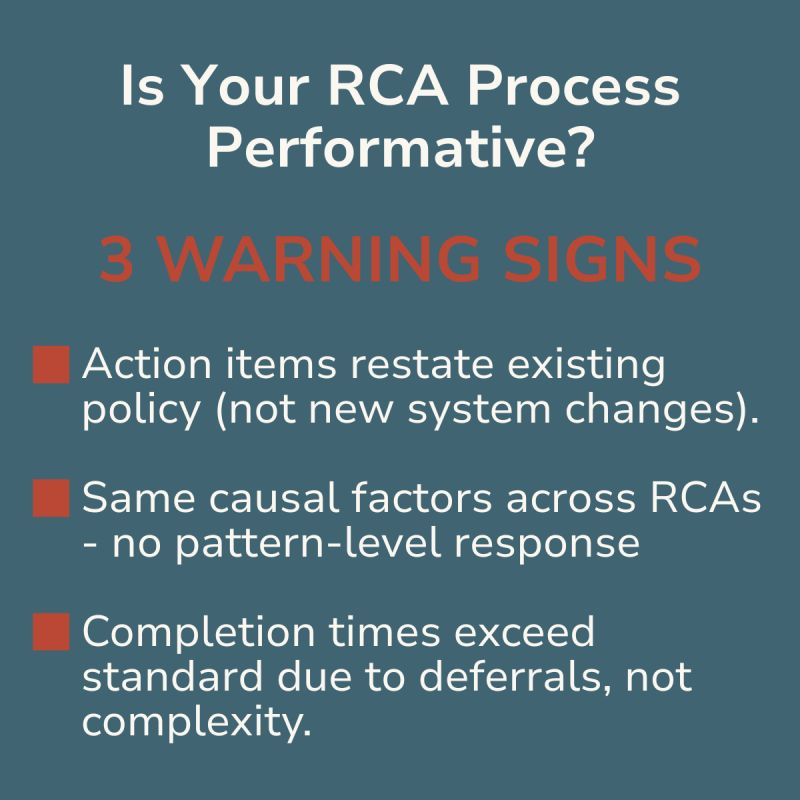
Your RCA process isn't broken. It's working exactly as designed โ€” to delay action while looking productive. The pattern is consistent and measurable. A serious safety event occurs. An RCA is convened. The team meets. Questions are asked. Data is reviewed. And then โ€” more questions. More data requests. A suggestion to meet again. A request to involve another department. A recommendation to "dig deeper." None of this is obstruction. All of it looks like rigor. But when measured against outcomes, a pattern emerges: the RCAs that produce the most discussion often produce the least change. This is not a quality-of-analysis problem. It is a translation architecture problem. The facilitator is trained to gather and present findings. They are NOT trained to: - distinguish between genuine inquiry and resistance signaling. - read the room's communication styles and adapt her approach mid-meeting. - translate clinical findings into language that compels action rather than inviting more deliberation. Three structural indicators that an RCA process has become performative: 1. Action items are restatements of existing policy rather than new system changes 2. The same causal factors appear across multiple RCAs without triggering a pattern-level response 3. Time-to-completion consistently exceeds the standard โ€” not from complexity, but from repeated deferrals Organizations that measure RCA volume without measuring whether the process produces system change are measuring activity, not safety. The infrastructure gap is not in the analysis. It is in the translation between what the analysis reveals and what the organization does next. What's one causal factor that's appeared in multiple RCAs at your organization โ€” but never triggered real system change?
12
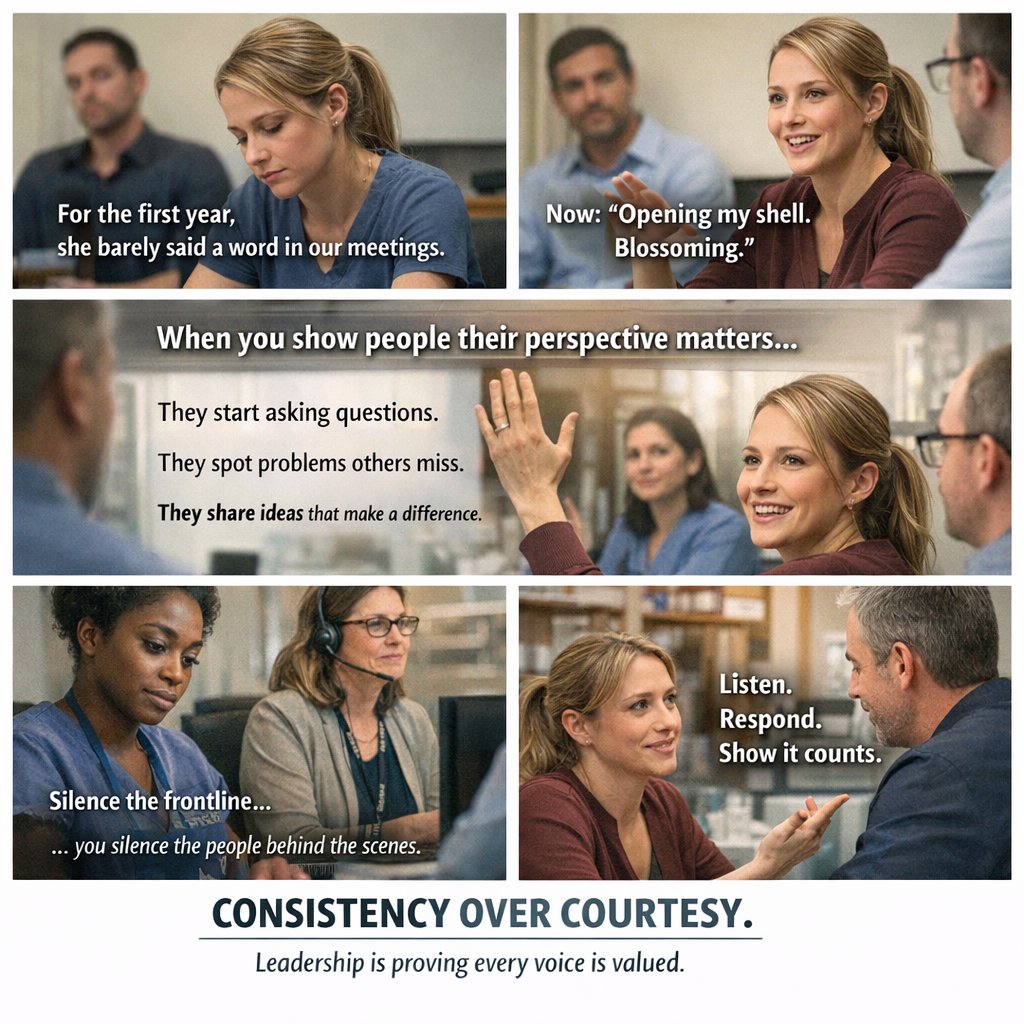
For the first year, she barely said a word in our meetings. Not because she had nothing to say. Because no one had ever shown her that her saying it mattered. Her name is Allison. Three years on our team now. She came from a background where she was taught to speak when called upon. Dental background. Trained to answer, not to offer. In the last six months, something shifted. She started raising questions nobody had thought to ask. Catching things the rest of us had walked past. She called it "opening my shell." "Blossoming." ๐—›๐—ฒ๐—ฟ๐—ฒ ๐—ถ๐˜€ ๐˜๐—ต๐—ฒ ๐—ฝ๐—ฎ๐˜๐˜๐—ฒ๐—ฟ๐—ป. The same system that silences the frontline silences the people who support the work behind the scenes. Nurses stop speaking up because their observations disappear into the void. Coordinators stop offering because nobody acts on what they notice. Analysts stop raising flags because the flags never change anything. The fix is not a suggestion box. Asking once is a courtesy. Expecting it consistently. Waiting for it patiently. Acting on it visibly. ๐—ง๐—ต๐—ฎ๐˜ ๐—ถ๐˜€ ๐˜„๐—ต๐—ฎ๐˜ ๐—บ๐—ฎ๐—ธ๐—ฒ๐˜€ ๐˜€๐—ผ๐—บ๐—ฒ๐—ผ๐—ป๐—ฒ ๐—ฏ๐—ฒ๐—น๐—ถ๐—ฒ๐˜ƒ๐—ฒ ๐˜๐—ต๐—ฒ๐—ถ๐—ฟ ๐—ฝ๐—ฒ๐—ฟ๐˜€๐—ฝ๐—ฒ๐—ฐ๐˜๐—ถ๐˜ƒ๐—ฒ ๐—บ๐—ฎ๐˜๐˜๐—ฒ๐—ฟ๐˜€. Allison did not need a script. She needed the expectation that she would speak, and the evidence that speaking would count. That is not generosity. That is leadership through translation. --- Who on your team has something to say but has learned not to say it? And what would change if you stopped asking for their input and started expecting it? #Leadership #HealthcareLeadership #SpeakUp #PsychologicalSafety #FrontlineVoices #CultureOfSafety #SystemsThinking
24
She thought they wanted more data. A patient safety coordinator facilitates a root cause analysis. The team keeps asking why. Then why again. Then why one more time. She prepares more details for next week's meeting. Pulls more charts. Builds a thicker packet. Because that's what a good facilitator does when the room asks questions. You answer them. Except they weren't asking questions. They were stalling. The repeated why โ€” past the point of genuine inquiry โ€” is resistance wearing the costume of curiosity. It looks like engagement. It sounds like due diligence. But what it actually does is drag the clock until the meeting ends and nothing has to change. When evaluating DISC results for your team The S-style stress response is not loud. It does not argue. It does not slam a table or fire off an email. It digs in quietly. Asks one more question. Requests one more data point. Suggests one more meeting. And the facilitator, trained to be responsive, keeps answering โ€” because she reads the surface and misses the subtext. This is not a facilitation failure. This is a translation failure. The room is telling her something. Just not with the words they're using. Reading a room is not intuition. It is pattern recognition. And it changes the moment you know what you're looking for: The question that has already been answered but gets asked again. The request for data that won't change the decision. The suggestion to "table it for next time" with no next step attached. Every one of those is a signal. Not a question. The most effective healthcare QI professionals learn to hear what the room is actually saying โ€” not just what it's asking. What's the most common resistance pattern you see in your meetings โ€” and how long did it take you to recognize it? #Quality #Healthcare #nurse #physician #frontline #QI
16
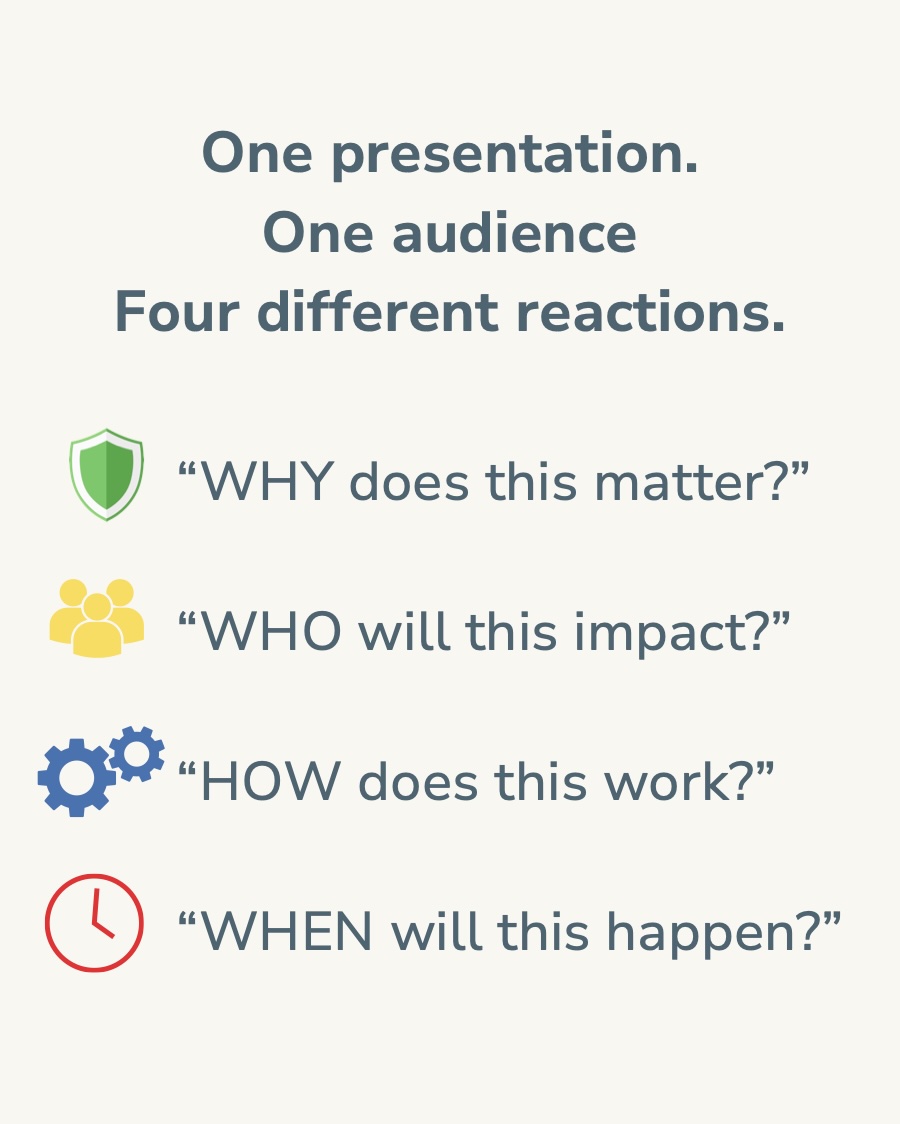
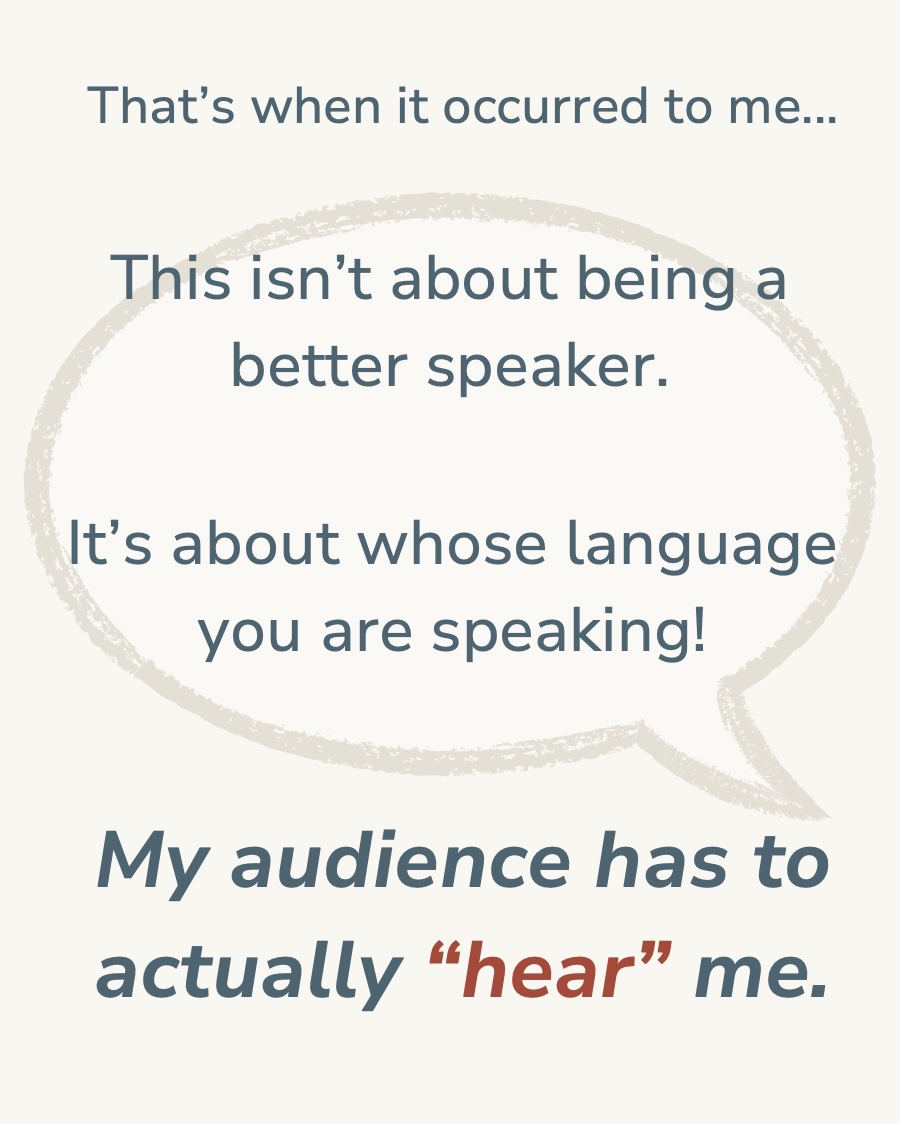
Five QI presentations. Five polite rejections. The results from my audience were unspoken, but guaranteed... No permission to proceed. No funding. No blessing. Just a pat on the head and the request to "come back when..." It did not take me long to get tired of the presentation revolving door. All story - not enough data. All data - no stories. I never seemed to meet their needs. I used to think it was because people didn't prepare enough. Then I sat in a meeting where he did everything right. Perfect slides. Solid data. Confident delivery. And I watched the same thing happen to him! The leader kept asking, "But why does this matter?" The surgeon wanted to know when it would happen. The nurse manager asked, "Who is this going to help?" The data analyst needed excruciating detail. The audience was all hearing the same presentation. Different brains trying to understand what he was saying... That's when it hit me. This isn't about being a better speaker. It's about whose language I am speaking. Once again... speaking in my own style. Not getting heard. Hard lessons, but crucial to improving care. You want your project approved and resourced? Speak their language. Your ideas deserve to be heard. And implemented. Your patients need your ideas to be heard. What's your biggest communication challenge at work?
1
14
Most organizations invest in QI tools. Almost none invest in whether their teams can actually communicate across the gap those tools are supposed to close. A QI team working on a deteriorating-patient recognition project was stuck for months. Capable professionals. Trained in Lean. Certified in Six Sigma. Nothing moved. When the team's communication styles were mapped using DISC, the pattern was immediate. Nearly every member was high-C and high-S. Detail-oriented. Stability-seeking. Thorough. Not one member could push a decision forward. This is not a training failure. It is a team architecture failure. Organizations assemble QI teams based on subject-matter expertise and availability. They never assess whether the team's communication composition can produce forward movement. The result is predictable: More data gathered. More analysis completed. More reports generated. No decisions made. No implementation started. And when the project stalls, the conclusion is always the same: the team lacked commitment. The frontline resisted change. The tools didn't work. None of that is the actual failure mode. The failure mode is structural. Teams without the communication composition to translate insight into decisions will produce insight without decisions โ€” every time. Four indicators that your QI team has a communication architecture gap: โ€ข Decisions get deferred to "next meeting" repeatedly โ€ข The team requests more data before acting on the data they already have โ€ข No one can articulate the project's status in two sentences โ€ข Stakeholder updates are longer than the work being done Communication architecture is infrastructure. Organizations that treat it as a soft skill will continue to watch capable teams produce zero patient care improvement.
13