Investigating neural and kinematic signatures of movement using synchronous neural and kinematic recordings in freely moving human, Parkinson's Disease patients
Joined October 2018
- Tweets 44
- Following 19
- Followers 249
- Likes 19
8 Photos and videos
Bronte-Stewart Lab retweeted

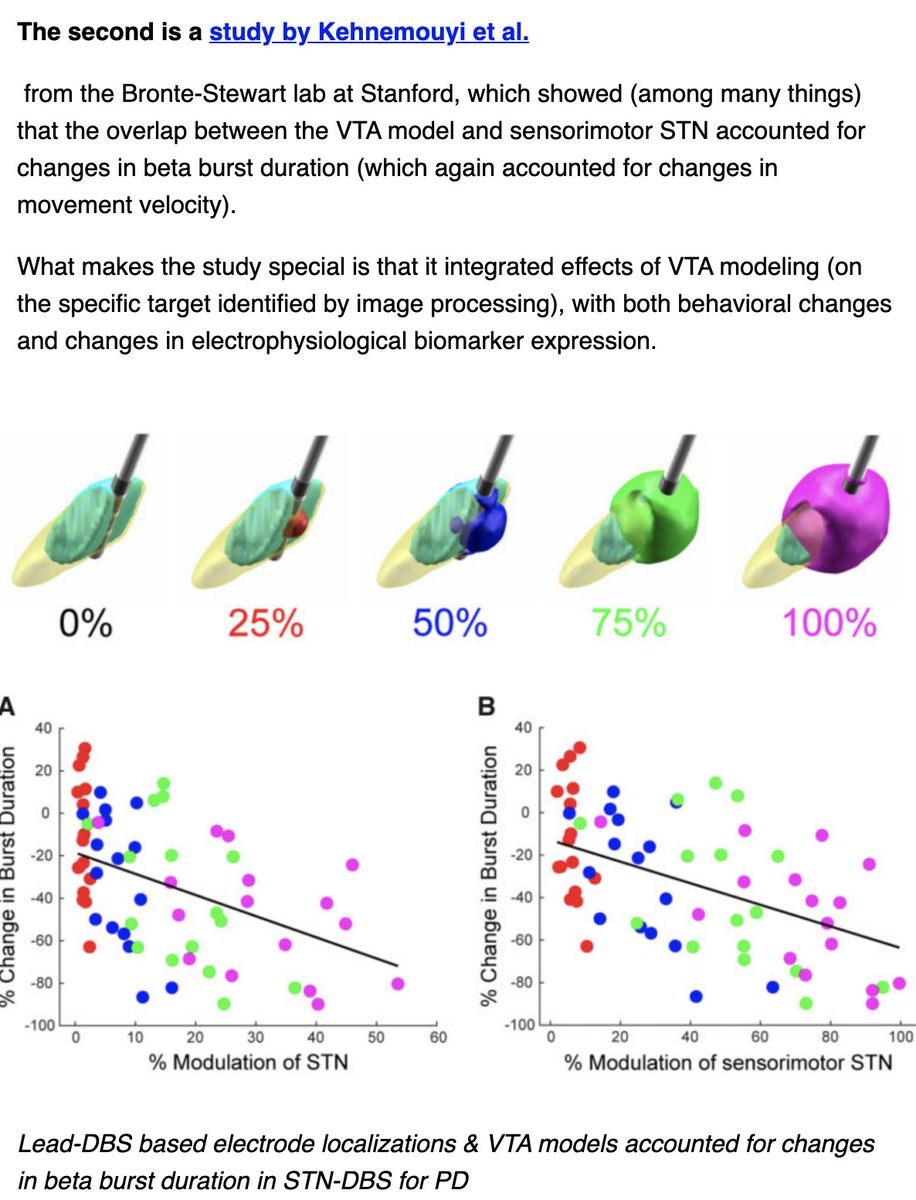
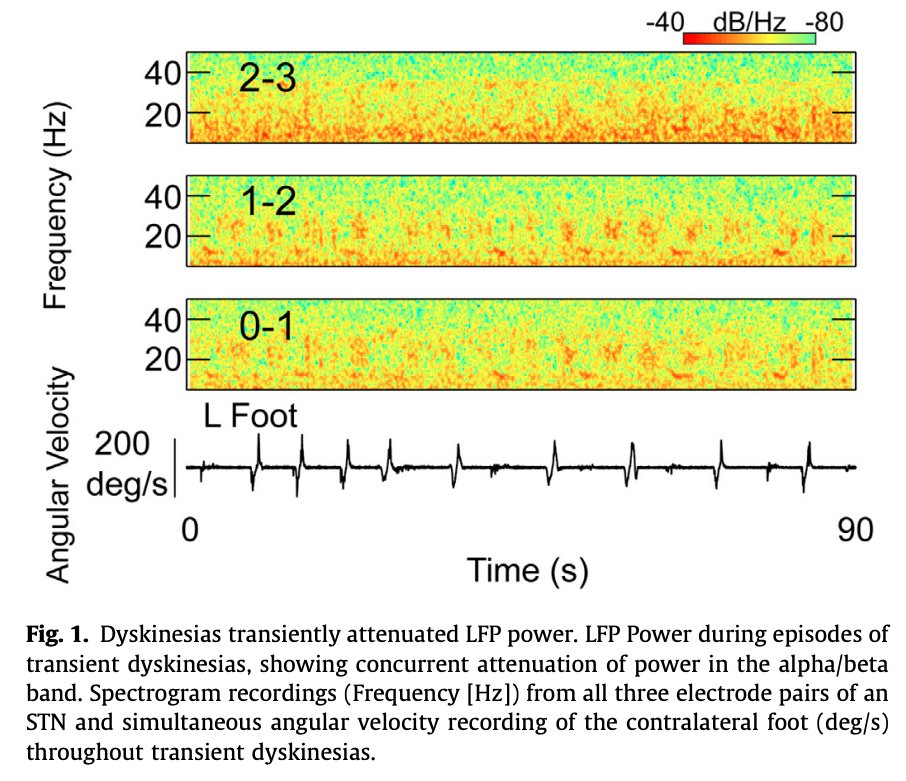
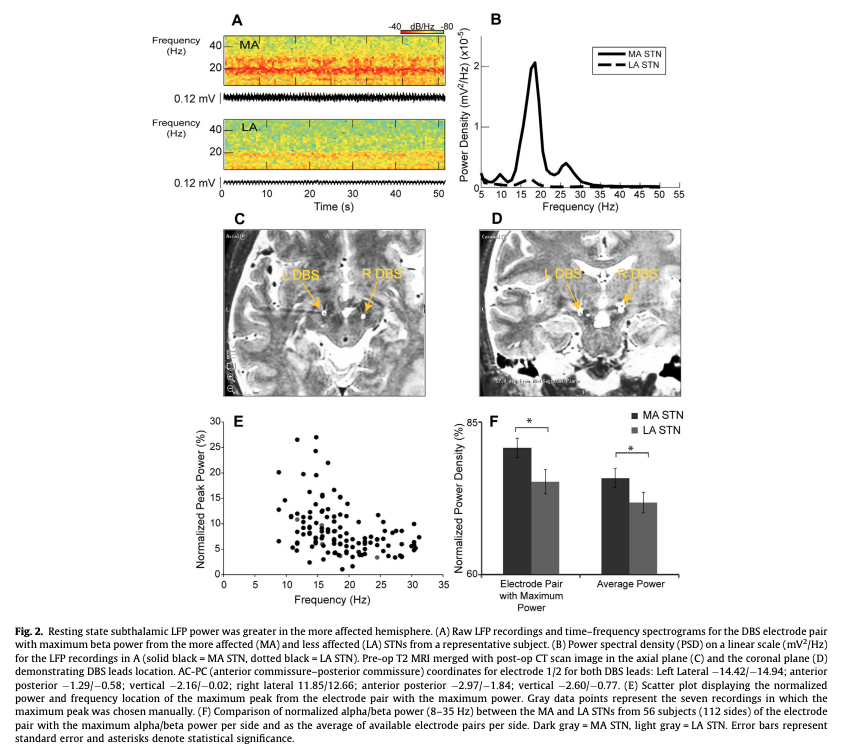
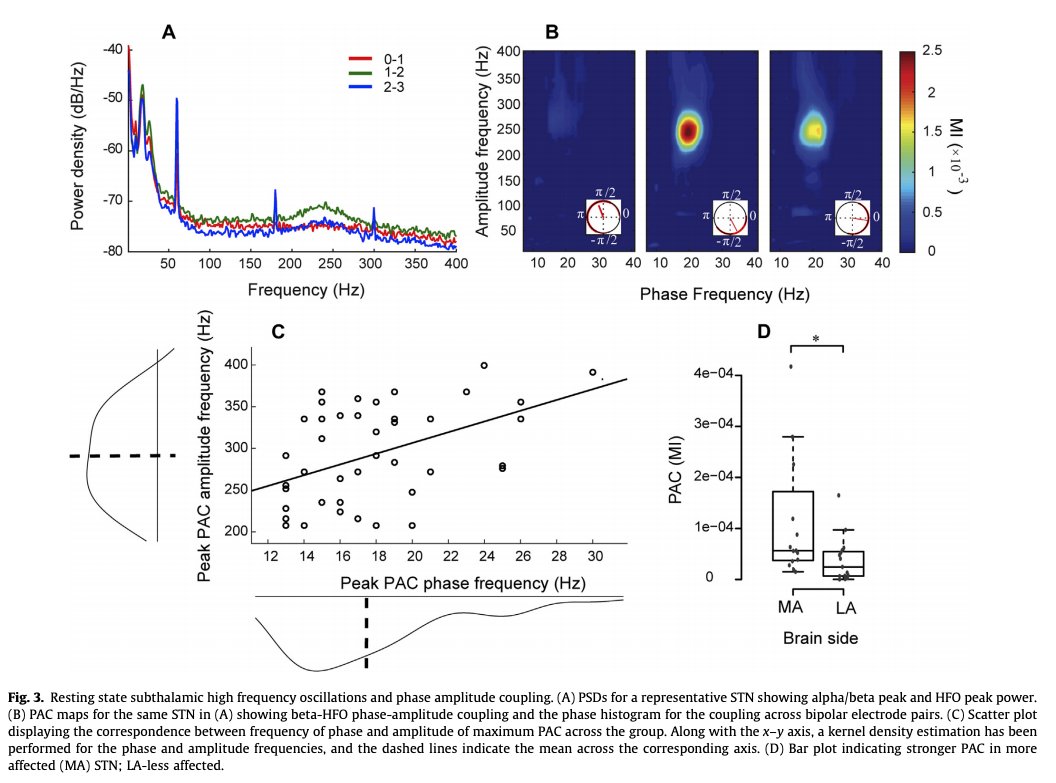
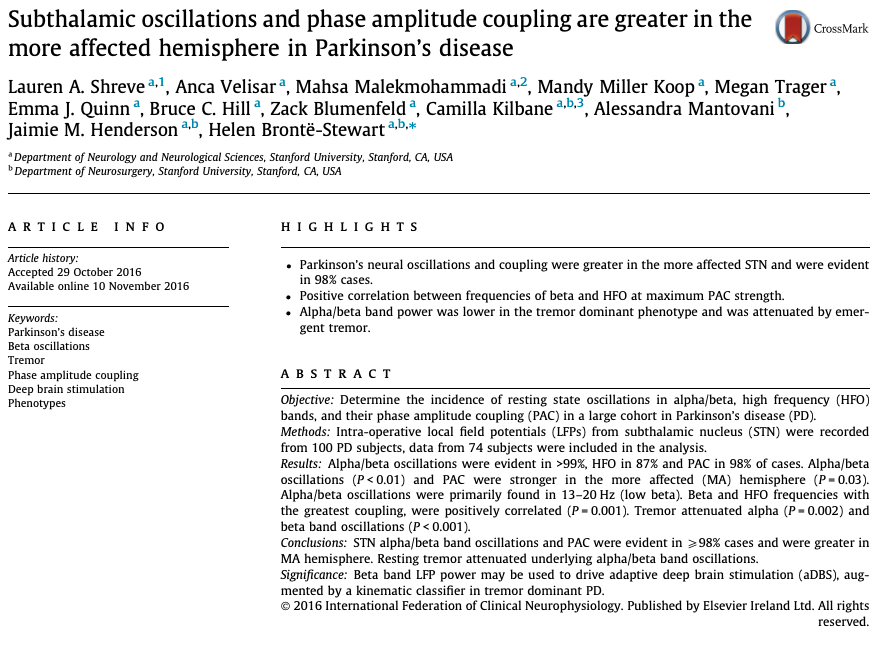
[DBS study of Parkinson’s disease] Shreve et al.: “Parkinson’s neural oscillations and coupling were greater in the more affected subthalamic nucleus and were evident in 98% cases.”
doi.org/10.1016/j.clinph.201…
@Stanford_Neuro
#DBS #STN #PD #ClinicalNeuroph
3
4
900
Bronte-Stewart Lab retweeted

25 Jun 2023
Hope vs. Hype: Will closed loop technology provide more meaningful improvement compared to directional leads in deep brain stimulation? New discussion piece from @HBSlab & Aristide Merola
prd-journal.com/article/S135…
3
6
1,893
Bronte-Stewart Lab retweeted

Podcast: Helen Bronte-Stewart says new approaches, such as closed-loop deep-brain stimulation, & new digital health technologies are reshaping the field, leading to new understandings & new treatments for #Parkinsons. the-future-of-everything-sta…
3
5
920

16 Jun 2023
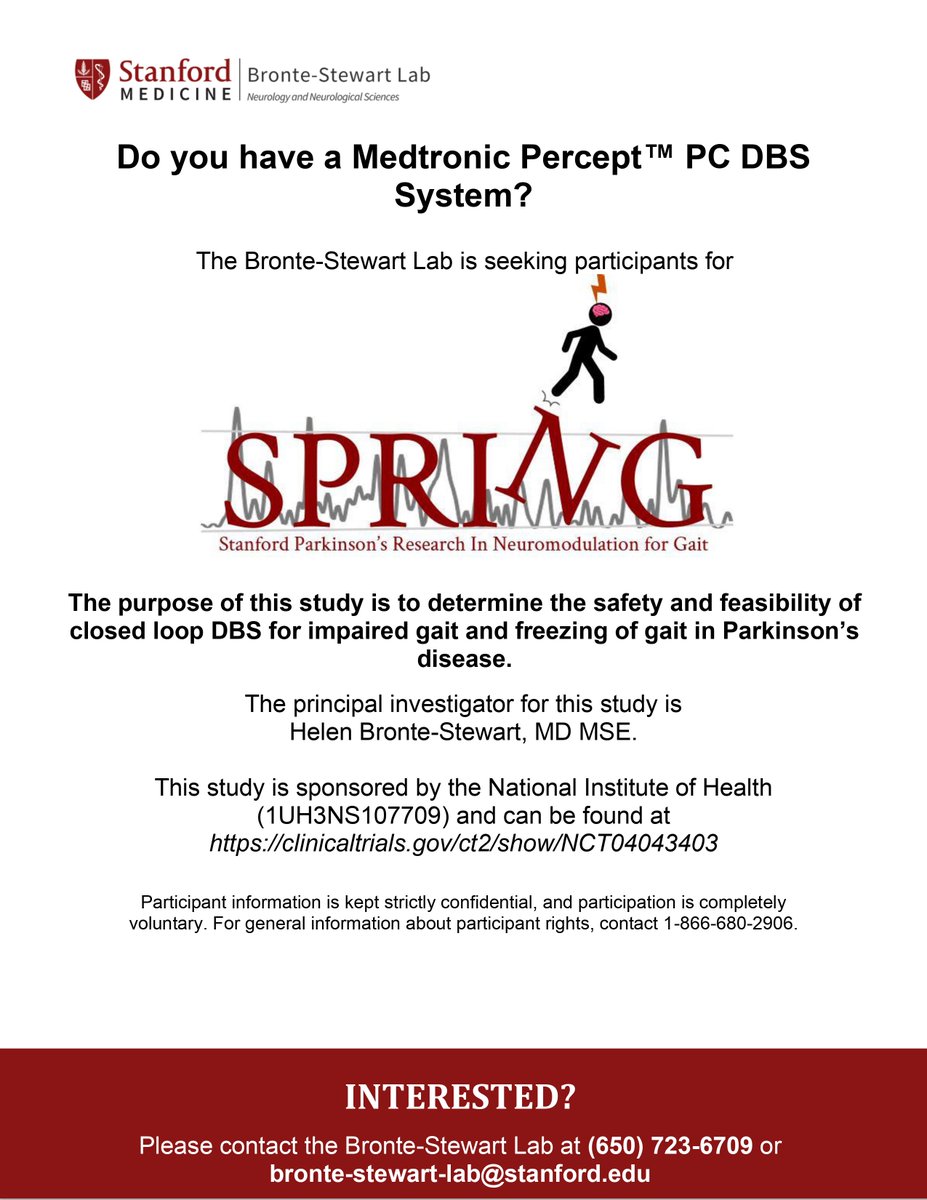
Interested in participating in adaptive Deep Brain Stimulation research and have Medtronic's Percept PC device? Contact us at bronte-stewart-lab@stanford.edu! #ParkinsonsDisease #aDBS @Stanford_Neuro
1
1,081
19 May 2023
Discover more about the future of movement disorders here with Dr. Helen Bronte-Stewart: youtube.com/watch?v=wmv06qlH… @Stanford_Neuro
1
463
2 May 2023
We are hiring for a research assistant and 2 postdoc positions! If you're looking to join an exciting team of scientists working on novel, neural interventions, find out more here: med.stanford.edu/bronte-stew…
2
7
1,553
Bronte-Stewart Lab retweeted

28 Mar 2022
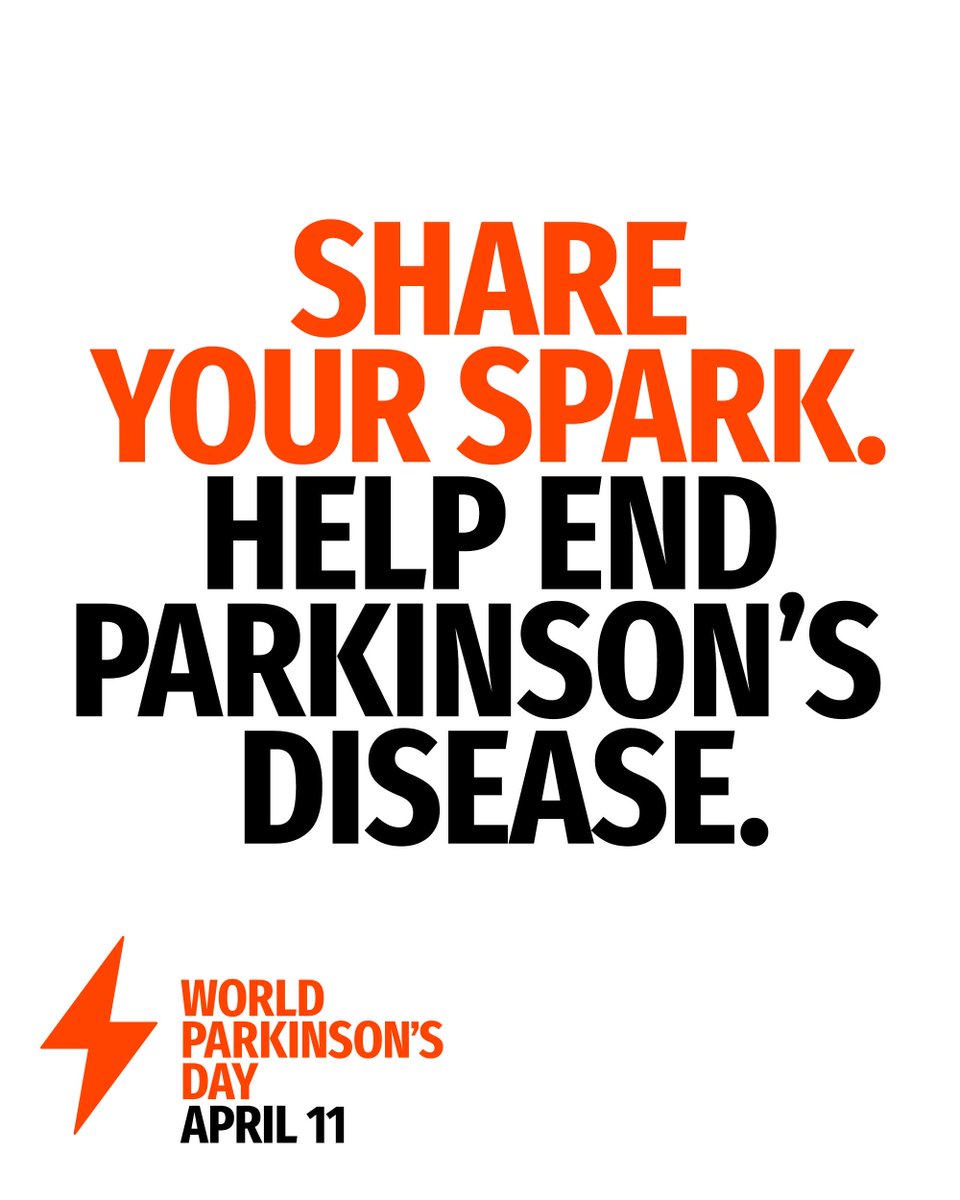
This #WorldParkinsonsDay, we’re joining 80 partners to introduce The Spark, the global symbol for Parkinson’s Awareness. Together, we're speaking out to end the world’s fastest-growing neurological disease. Learn more and share your Spark today: worldparkinsonsday.com #thespark
5
4
1 Feb 2023
New paper from the lab! Higher interhemispheric STN beta coherence correlates with worsening bradykinesia and disease progression, unlike local STN beta dynamics. onlinelibrary.wiley.com/doi/… @Stanford_Neuro
8
17
1,668
30 Jan 2023
We are currently recruiting new Research Assistants to participate in cutting-edge research in #ParkinsonsDisease! Please apply here for more information: careersearch.stanford.edu/jo… @Stanford_Neuro
2
5
1,356
Bronte-Stewart Lab retweeted
The Human Motor Control and Neuromodulation Lab under Dr. Bronte-Stewart @HBSlab is seeking a neural engineering postdoctoral scholar to investigate neural closed loop deep brain stimulation in Parkinson’s disease. Learn more and apply: med.stanford.edu/bronte-stew…
3
4
8 Sep 2022
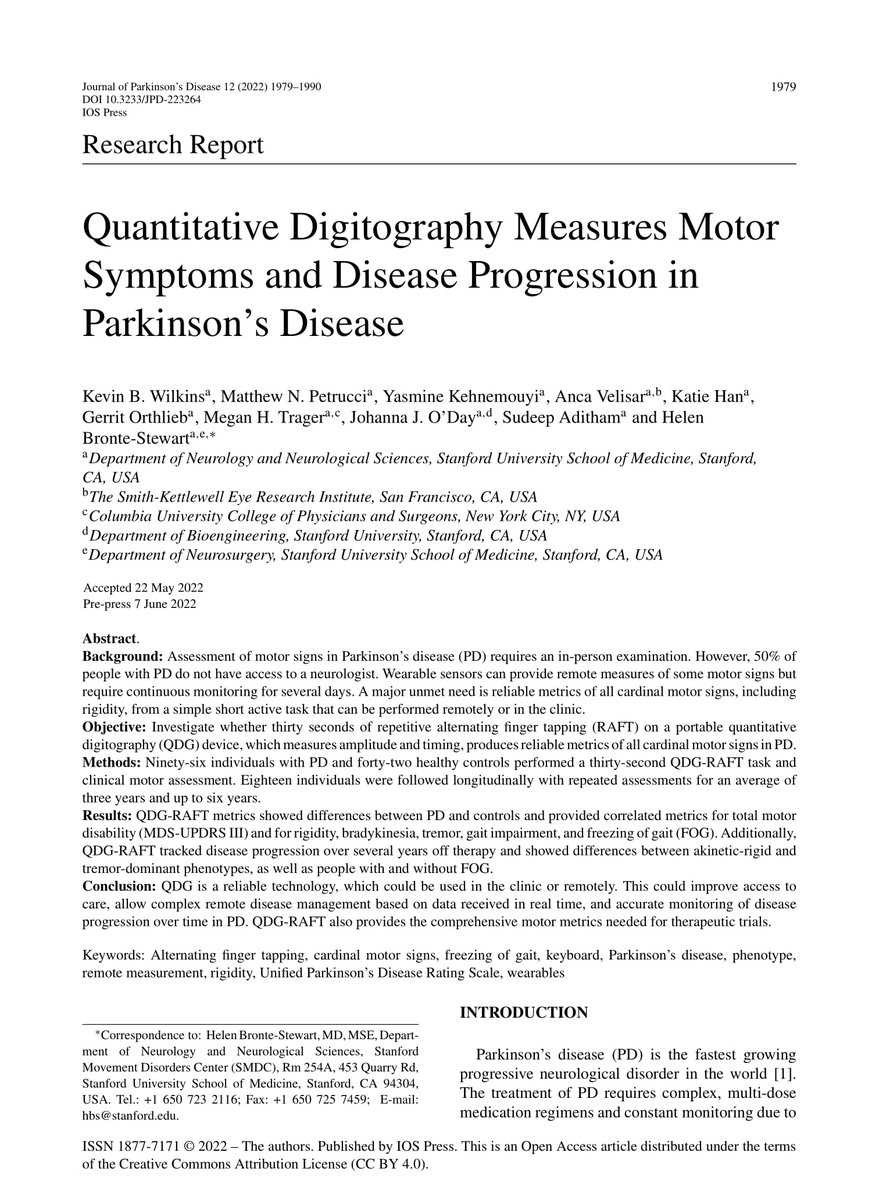
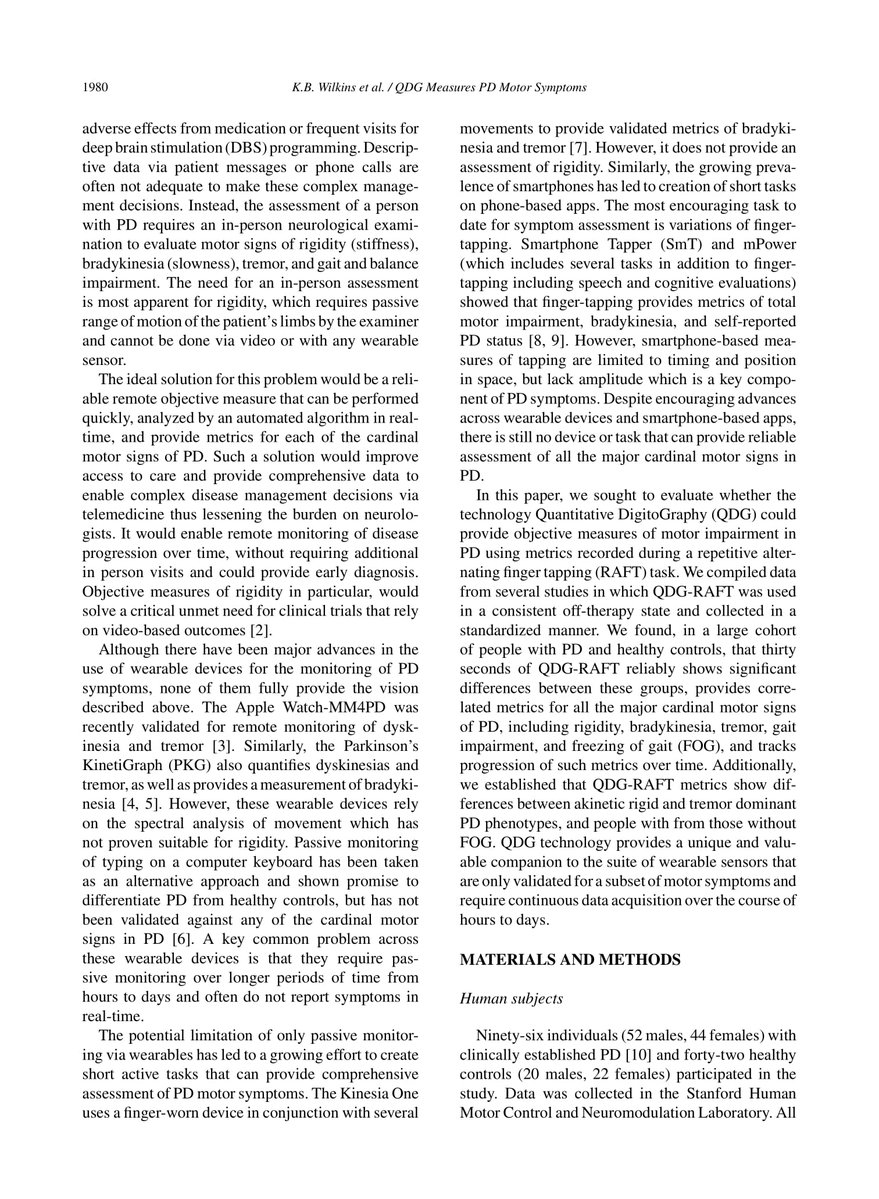
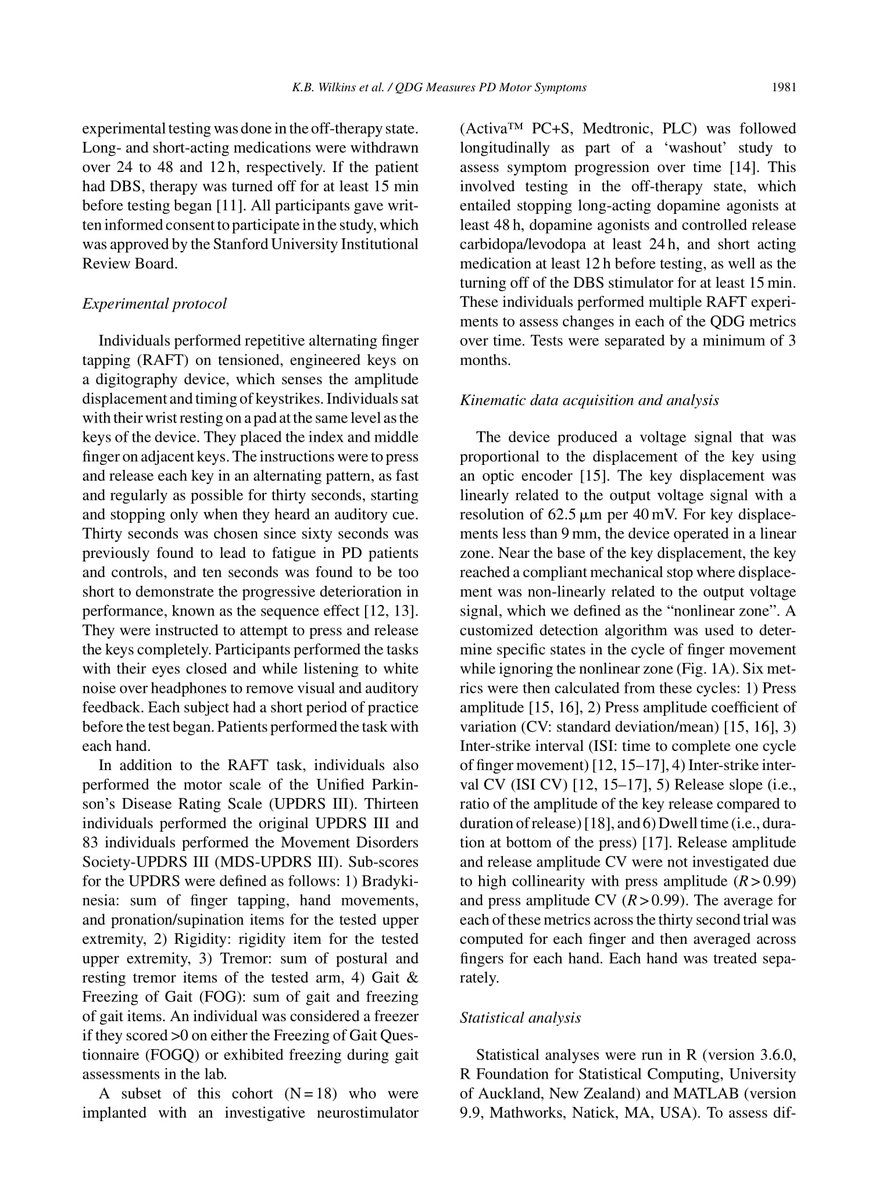
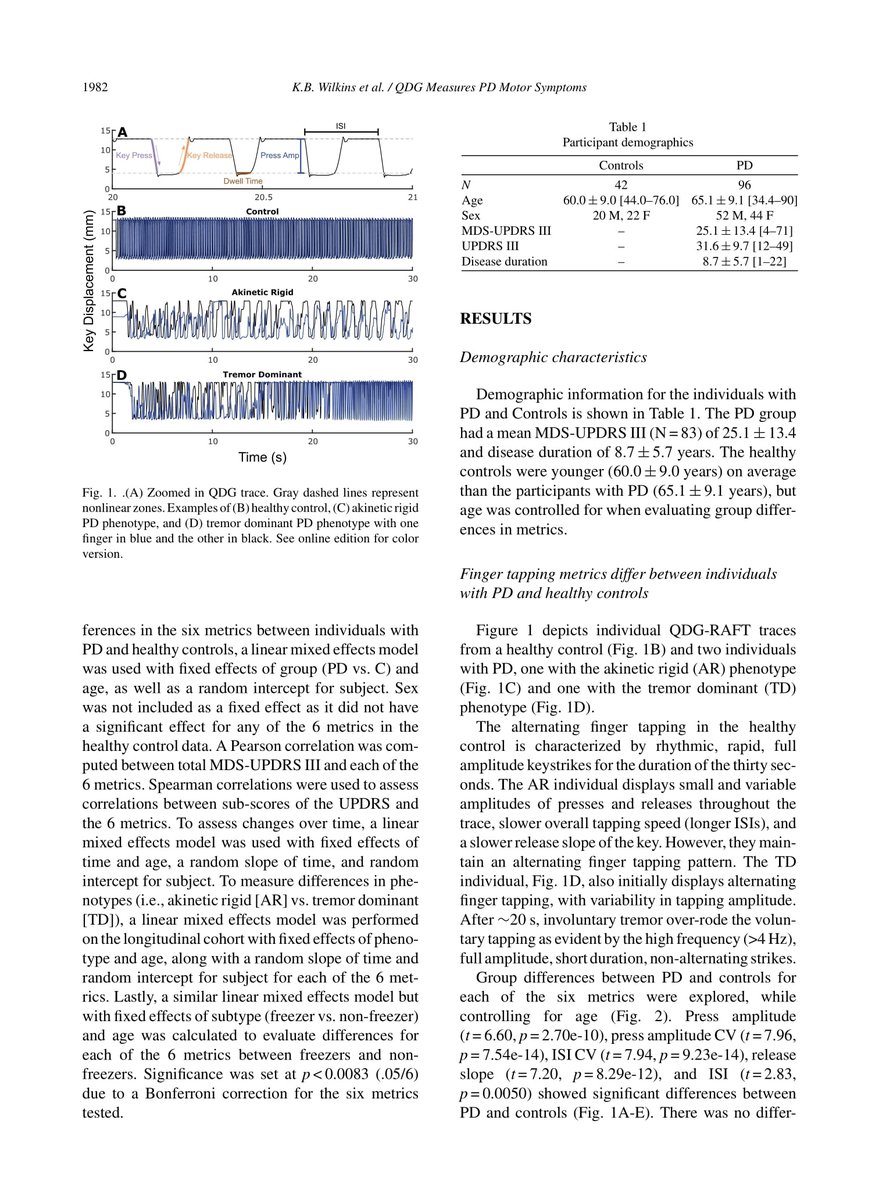
96 individuals with Parkinson's Disease performed a 30 second QDG-RAFT task to reliably track disease progression and cardinal motor symptoms, including rigidity. Learn more here! pubmed.ncbi.nlm.nih.gov/3569… @Stanford_Neuro
2
4
20 Jul 2022
Detecting #freezingofgait outside the clinic has become imperative for tracking disease progression in PD. Watch this great presentation on the minimal set of wearable IMUs needed to objectively detect FOG with high clinical utility! drive.google.com/file/d/1egF…
1
3
7
20 Jul 2022
In fact, a single IMU on the ankle performed within 4% of the top performing 3 IMU set. Both the lumbar and ankle IMUs were rated highly wearable by patients. Check out the open source data and software at: github.com/stanfordnmbl/imu-…
1
1
20 Jul 2022
This analysis shows that raw IMU data can provide valuable information to help physicians track and manage patient disease progression. Big thanks to @mrlee543 @SeagersKirsten @johanping @kidzik and @StanfordNMBL for this great work!
9 Mar 2022
New publication from the lab! While the sequence effect worsens over time in repeat visits with disease progression, it improves in response to open and closed-loop STN stimulation. medrxiv.org/content/10.1101/…
1
3
6
9 Mar 2022
4
22 Feb 2022
We are also hiring a Research Scientist! Please apply here: careersearch.stanford.edu/jo…
25 Jan 2022

We are currently hiring for 3 new positions! Seeking a post-doc and 2 RAs interested in decoding the pathophysiology of #movementdisorders. Please see med.stanford.edu/bronte-stew… for details and to apply! @Stanford_Neuro
3
3
16 Feb 2022
Truly a great team effort! Check out: "Assessing inertial measurement unit locations for freezing of gait detection and patient preference"
14 Feb 2022

My favorite thing about science? The magic of working together. With 3 co-first authors and 2 co-last authors, this impactful work is elevated by many perspectives (patients, engineers, clinicians, statisticians). Science is human. rdcu.be/cGWIY
Grateful for our team.
1
8
25 Jan 2022
We are currently hiring for 3 new positions! Seeking a post-doc and 2 RAs interested in decoding the pathophysiology of #movementdisorders. Please see med.stanford.edu/bronte-stew… for details and to apply! @Stanford_Neuro
1
8
8