1,638 Photos and videos

In Exile But Not Hopeless
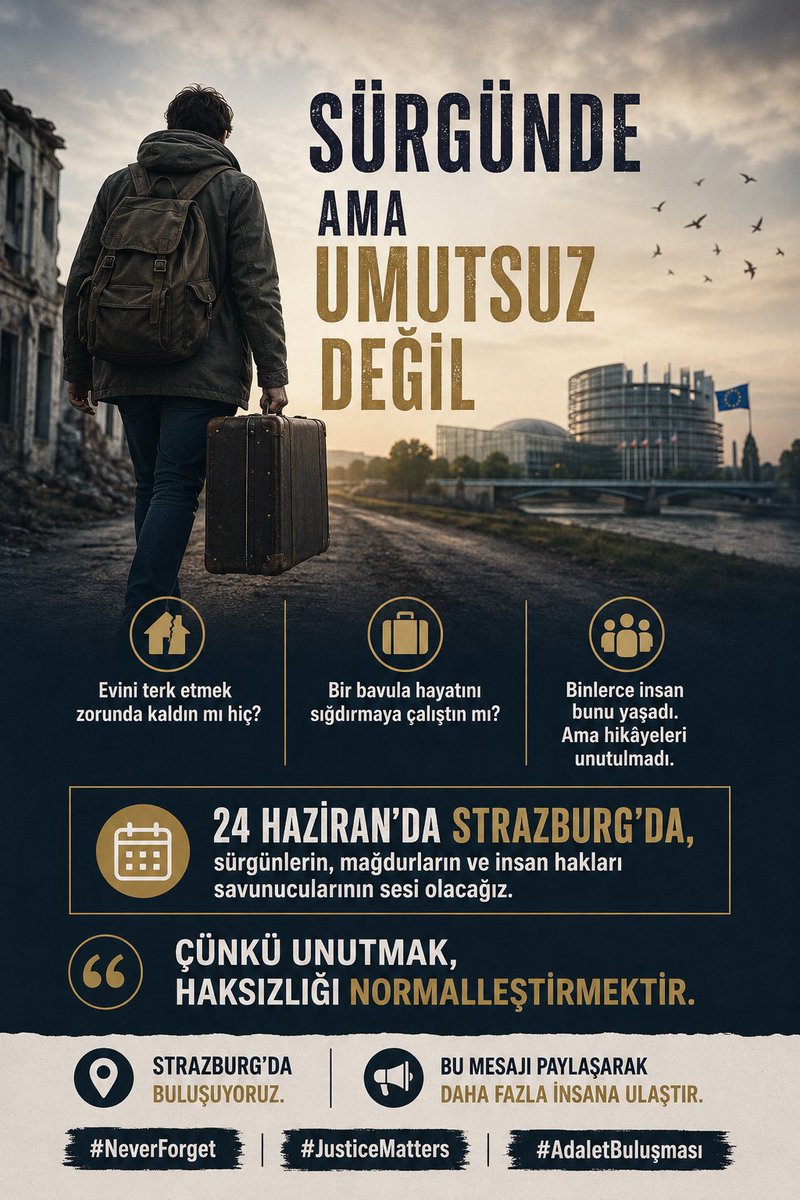
Have you ever had to leave your home?
Have you ever tried to fit your entire life into a single suitcase?
Thousands of people have lived through this. But their stories have not been forgotten.
On June 24 in Strasbourg, we will be the voice of exiles, victims, and human rights defenders.
Because forgetting is normalizing injustice.
📍 We're meeting in Strasbourg.
📢 Spread this message to more people by sharing it.
#NeverForget #JusticeMatters #AdaletBuluşması

Sürgünde Ama Umutsuz Değil
Evini terk etmek zorunda kaldın mı hiç?
Bir bavula hayatını sığdırmaya çalıştın mı?
Binlerce insan bunu yaşadı. Ama hikâyeleri unutulmadı.
24 Haziran’da Strazburg’da, sürgünlerin, mağdurların ve insan hakları savunucularının sesi olacağız.
Çünkü unutmak, haksızlığı normalleştirmektir.
📍 Strazburg’da buluşuyoruz.
📢 Bu mesajı paylaşarak daha fazla insana ulaştır.
#NeverForget #JusticeMatters #AdaletBuluşması
3
2
55

Jun 15
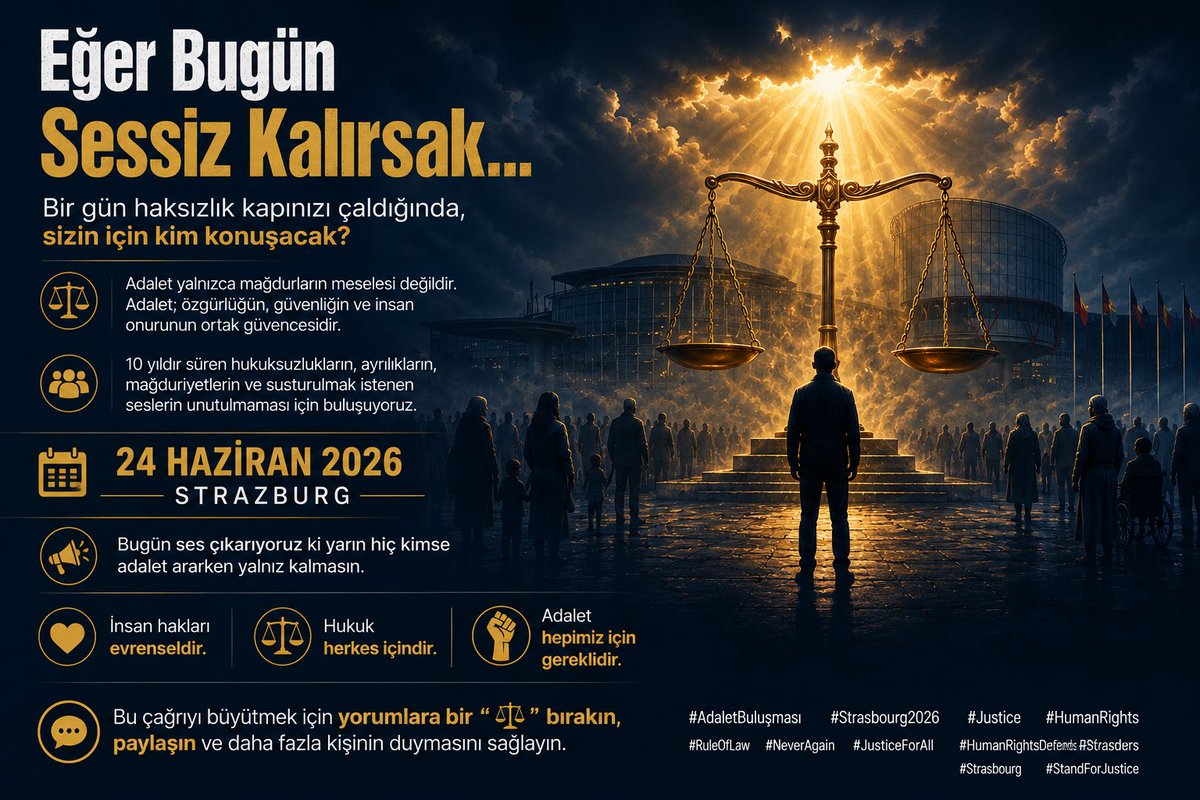
If We Stay Silent Today…
When injustice knocks on your door one day, who will speak up?
Justice is not just the concern of victims. Justice exists for everyone's safety and freedom.
On June 24 in Strasbourg, we will not only remember what happened in the past; we will raise our voices to prevent it from happening in the future.
❤️ Human rights are universal.
⚖️ The law is for everyone.
📢 To amplify this call, leave a “⚖️” in the comments and share.
#Justice #HumanRights #Strasbourg #AdaletBuluşması
Jun 15
Eğer Bugün Sessiz Kalırsak…
Bir gün haksızlık kapınızı çaldığında kim konuşacak?
Adalet yalnız mağdurların meselesi değildir. Adalet, herkesin güvenliği ve özgürlüğü için vardır.
24 Haziran’da Strazburg’da yalnızca geçmişte yaşananları hatırlamayacağız; gelecekte yaşanmaması için sesimizi yükselteceğiz.
❤️ İnsan hakları evrenseldir.
⚖️ Hukuk herkes içindir.
📢 Bu çağrıyı büyütmek için yorumlara bir “⚖️” bırakın ve paylaşın.
#Justice #HumanRights #Strasbourg #AdaletBuluşması
2
3
85
Jun 15
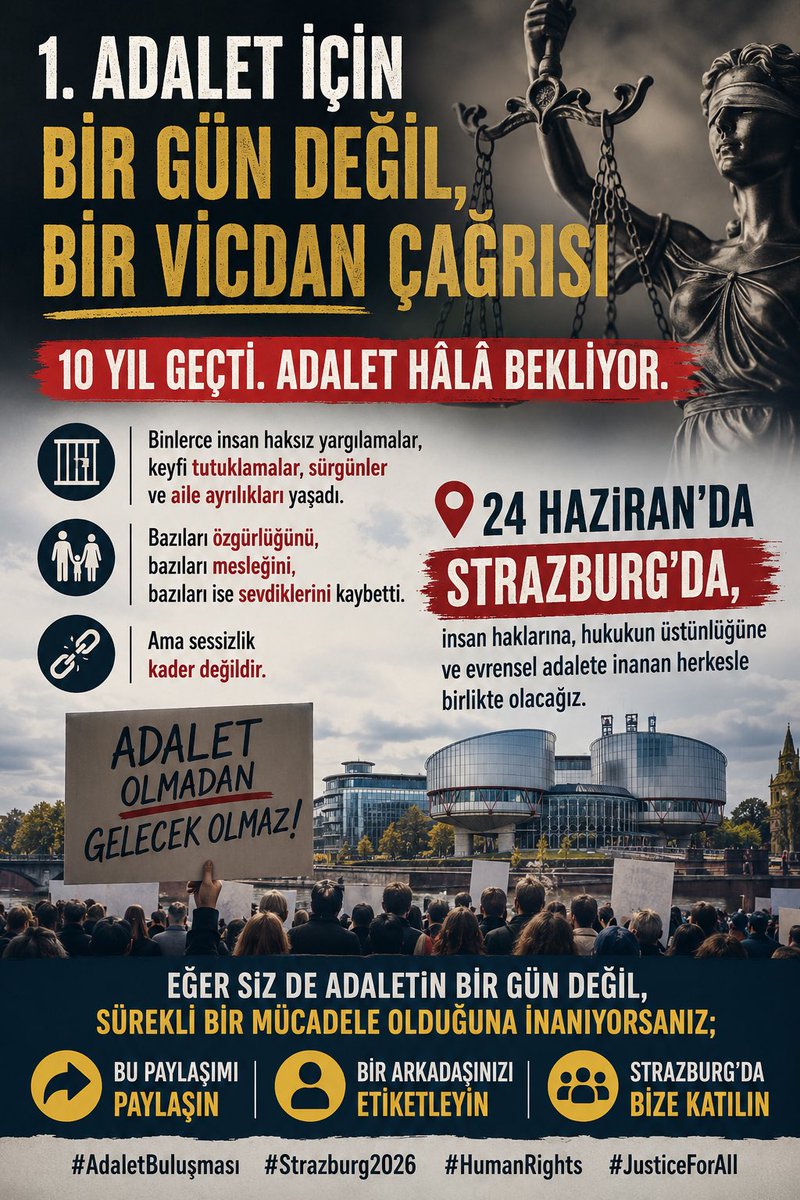
Not a Day for Justice, But a Call of Conscience
10 years have passed. Justice is still waiting.
Thousands of people have endured unfair trials, arbitrary detentions, exiles, and family separations. Some lost their freedom, some their professions, and others their loved ones.
But silence is not fate.
📍 On June 24 in Strasbourg, we will stand together with everyone who believes in human rights, the rule of law, and universal justice.
✊ If you too believe that justice is not a single day, but an ongoing struggle;
👉 Share this post,
Jun 14
Adalet İçin Bir Gün Değil, Bir Vicdan Çağrısı
10 yıl geçti. Adalet hâlâ bekliyor.
Binlerce insan haksız yargılamalar, keyfi tutuklamalar, sürgünler ve aile ayrılıkları yaşadı. Bazıları özgürlüğünü, bazıları mesleğini, bazıları ise sevdiklerini kaybetti.
Ama sessizlik kader değildir.
📍 24 Haziran’da Strazburg’da, insan haklarına, hukukun üstünlüğüne ve evrensel adalete inanan herkesle birlikte olacağız.
✊ Eğer siz de adaletin bir gün değil, sürekli bir mücadele olduğuna inanıyorsanız;
👉 Bu paylaşımı paylaşın,
👉 Bir arkadaşınızı etiketleyin,
👉 Strazburg’da bize katılın.
#AdaletBuluşması #Strazburg2026 #HumanRights #JusticeForAll
39
Human Rights Defenders retweeted

Jun 15
Eğer Bugün Sessiz Kalırsak…
Bir gün haksızlık kapınızı çaldığında kim konuşacak?
Adalet yalnız mağdurların meselesi değildir. Adalet, herkesin güvenliği ve özgürlüğü için vardır.
24 Haziran’da Strazburg’da yalnızca geçmişte yaşananları hatırlamayacağız; gelecekte yaşanmaması için sesimizi yükselteceğiz.
❤️ İnsan hakları evrenseldir.
⚖️ Hukuk herkes içindir.
📢 Bu çağrıyı büyütmek için yorumlara bir “⚖️” bırakın ve paylaşın.
#Justice #HumanRights #Strasbourg #AdaletBuluşması
3
79
88
1,078
Jun 10
⚖️ İzmir’de “F… güncel eğitim yapılanması” gerekçesiyle 78 kişi hakkında gözaltı kararı verildi. İsnat: örgüt üyeliği. Delil olarak sunulanların büyük kısmı — eğitim faaliyeti, kurs/dershane bağlantısı, ardışık arama, veri analizi — işlendiği anda hukuka uygun fiillerdir.
AİHM Büyük Daire Yüksel Yalçınkaya v. Türkiye (Başv. No. 15669/20) bu mantığı açıkça reddetti: yasal bir faaliyetin sonradan üyelik karinesine dönüştürülmesi Madde 7 (kanunsuz suç olmaz), Madde 6 (adil yargılanma) ve Madde 8’i ihlal eder. Mahkeme ayrıca, eğitim ve örgütlenme özgürlüğünün (Madde 11) bireysel ceza sorumluluğunun otomatik dayanağı yapılamayacağını ortaya koydu.
Sorun delilin gücü değil; kategorinin kişiye göre eğilmesidir. Devletin kendisi damgalayan sese dönüştüğünde — bizim çerçevemizdeki dikey nefret söylemi — mesele bireysel bir dava olmaktan çıkar, sistemik bir hukuk devleti sorunu olur. Takipteyiz.
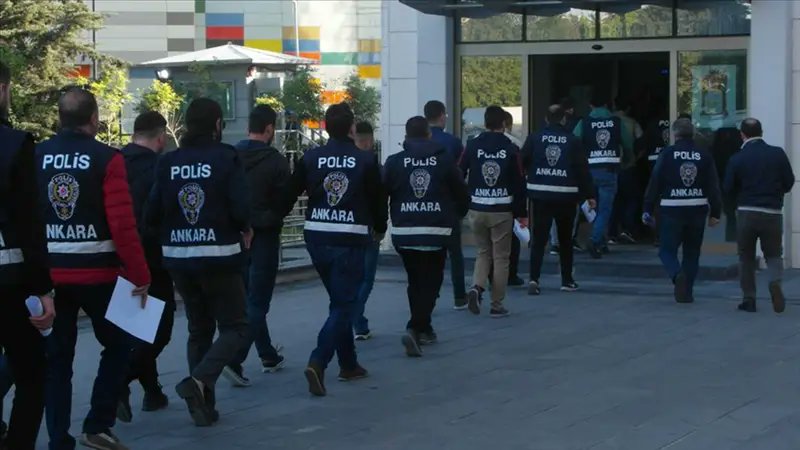
⚖️ In İzmir, an operation citing a “current FETÖ education structure” has ordered the detention of 78 people. The charge: organisational membership. Much of the “evidence” — educational activity, links to courses, sequential phone calls, data analysis — was lawful at the moment it occurred.
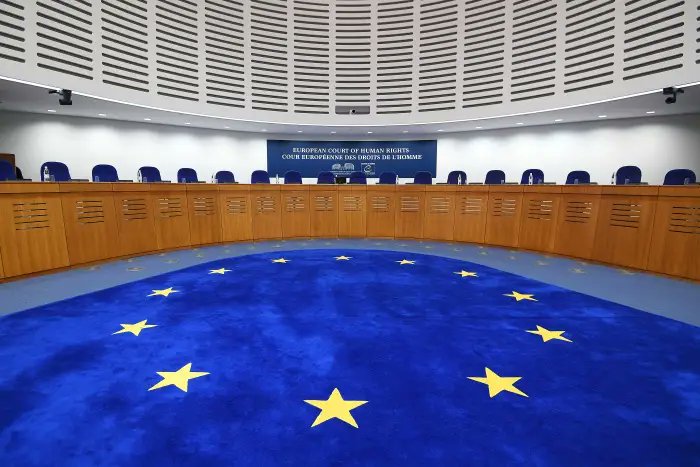
The ECtHR Grand Chamber in Yüksel Yalçınkaya v. Türkiye (App. No. 15669/20) squarely rejected this logic: converting a lawful activity into a presumption of membership breaches Article 7 (no punishment without law), Article 6 (fair trial) and Article 8. The Court also made clear that freedoms of education and association (Article 11) cannot be turned into an automatic basis for individual criminal liability.
The problem is not the weight of the evidence; it is the category bent to fit the person. When the state itself becomes the stigmatising voice — what we call vertical hate speech — this ceases to be one case and becomes a systemic rule-of-law concern. We are watching.
3
4
176
May 30
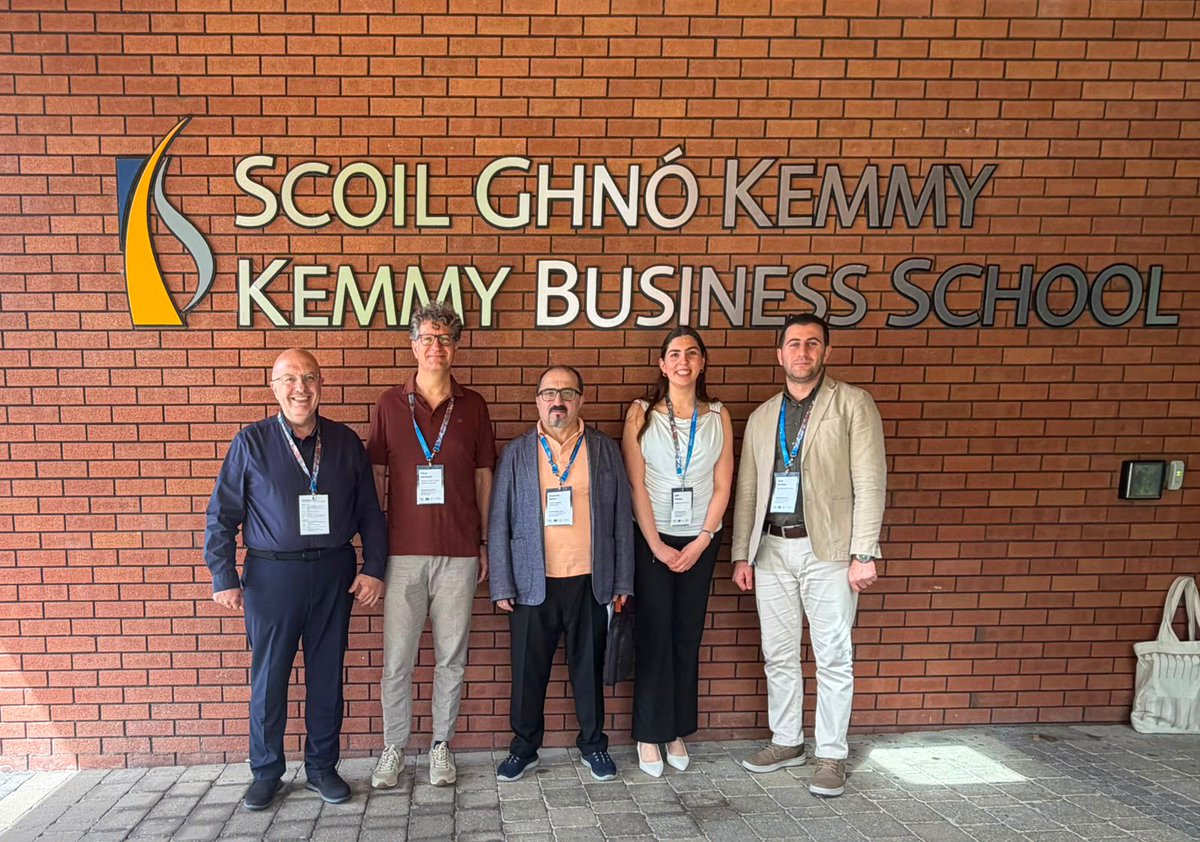
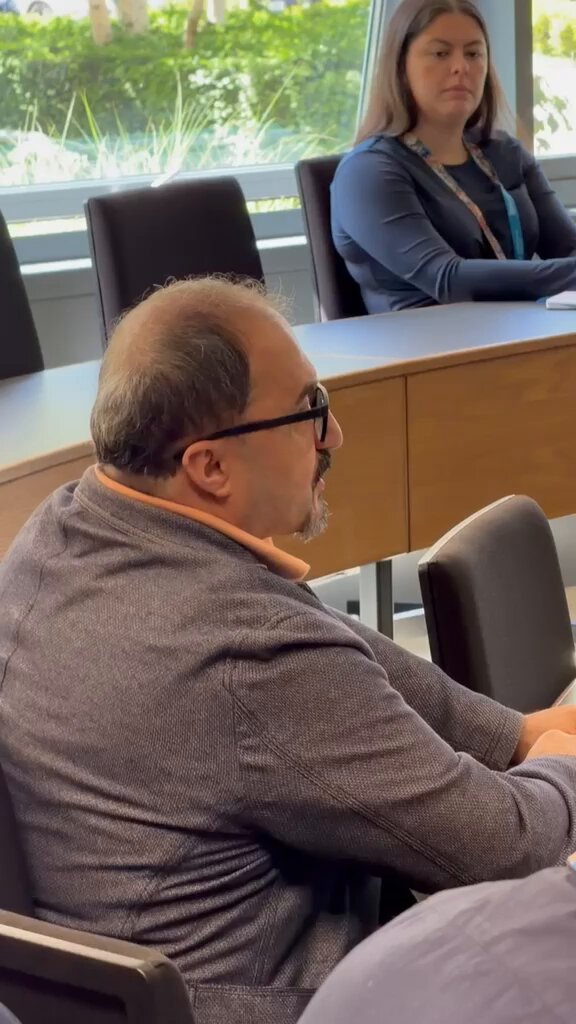
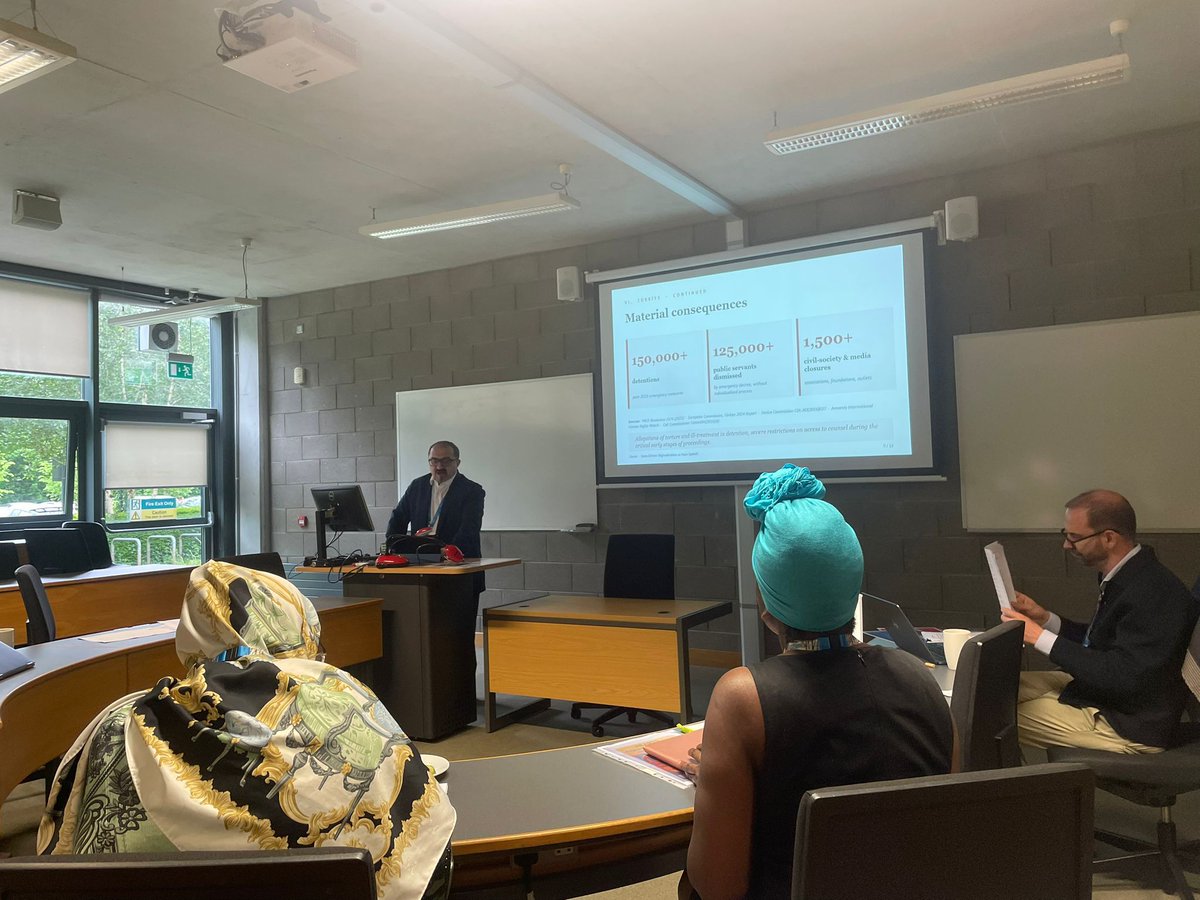
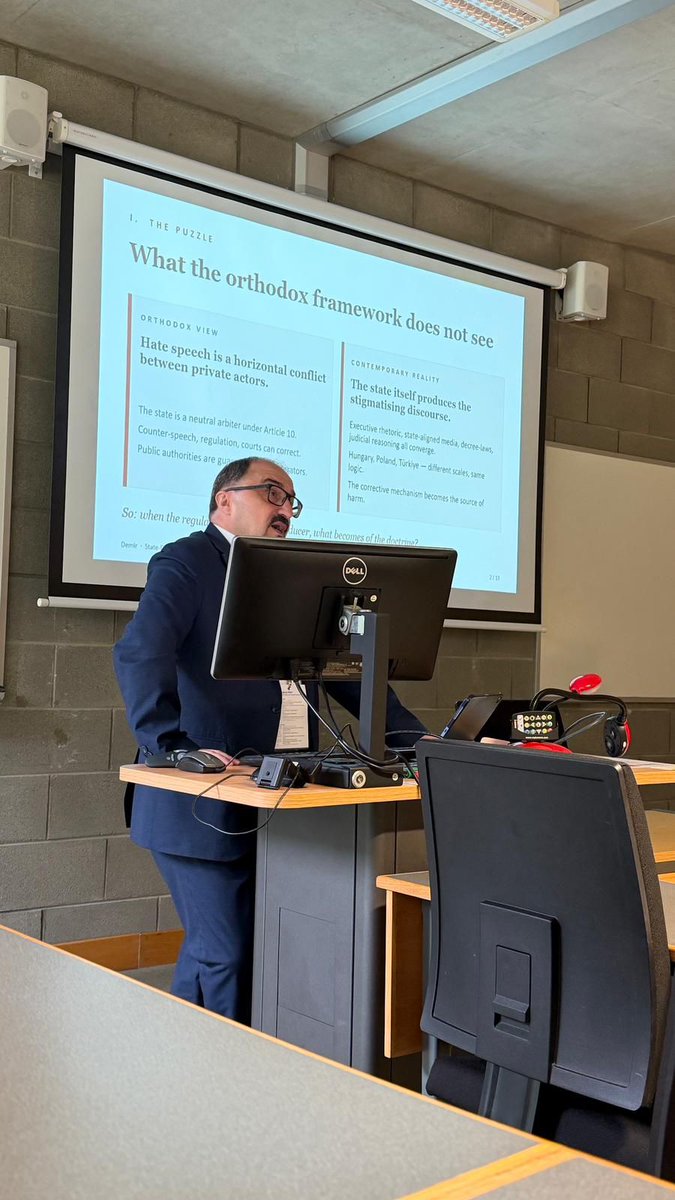
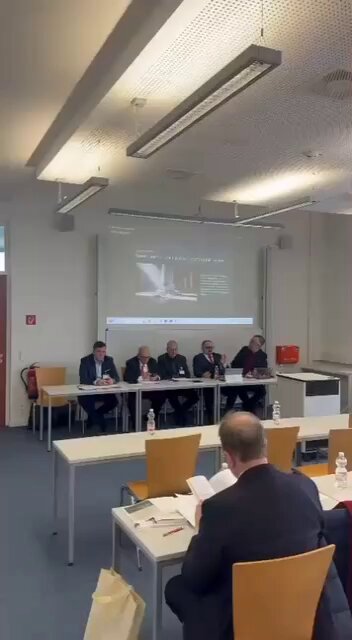
🇮🇪 At the University of Limerick, during the International Conference on Hate Speech and Hate Crimes organized in coordination with the Council of Europe, our President Prof. Dr. Hüseyin Demir presented his paper titled “State-Driven Stigmatisation as Hate Speech.”
Prof. Demir examined the impact of state-produced stigmatizing narratives on human rights, the rule of law, and the right to a fair trial from the perspective of international law.
#HumanRights #CouncilOfEurope #HateSpeech #RuleOfLaw #HRD #HumanRightsDefenders
1
5
204
May 30
How does a stigmatization campaign work?
Political rhetoric creates the framework, the media amplifies it, and institutions transform it into practice.
The study presented at the international conference shows how the convergence of political discourse and media narratives can turn stigmatization into an institutionalized phenomenon.
#HumanRights #HateSpeech #HRD
1
1
82
May 30
The opening of investigations against approximately two million people under terrorism-related allegations in #Turkey is not only a legal issue but also a process with profound social consequences.
The study shows that mass stigmatization can produce lasting effects on individuals, families, and society as a whole.
#HumanRights #RuleOfLaw #HRD
24
May 21
WE ARE IN STRASBOURG FOR HUMAN RIGHTS VIOLATIONS IN 🇹🇷TURKEY.
TO REMEMBER
TO KEEP FROM BEING FORGOTTEN
TO MAKE SURE THEY ARE NOT FORGOTTEN
2026
AT THE DAWN OF JUSTICE
THE FIFTH GREAT GATHERING
🕊️ For imprisoned mothers,
🕊️ For children growing up behind bars,
🕊️ For young people deprived of education and freedom,
🕊️ For sick prisoners and all victims of injustice, we march.
Our message is clear:
❗ ECtHR rulings must be implemented
❗ The Council of Europe must take responsibility
❗ Justice must be ensured for everyone
📍 Strasbourg
📅 June 2026
#JusticeForTurkey #HumanRights #ECHR #Justice #Freedom #Democracy
May 21

TÜRKİYE’DEKİ HAK İHLALLERİ İÇİN STRAZBURG’DAYIZ.
UNUTMAMAK
UNUTTURMAMAK
UNUTULMAMAK İÇİN
2026
ADALETİN ŞAFAĞINDA
BEŞİNCİ BÜYÜK BULUŞMA
🕊️ Hapisteki anneler için,
🕊️ Parmaklıklar ardında büyüyen çocuklar için,
🕊️ Eğitim ve özgürlüğü elinden alınan gençler için,
🕊️ Hasta mahpuslar ve tüm adalet mağdurları için yürüyoruz.
Sesimiz net:
❗ AİHM kararları uygulanmalı
❗ Avrupa Konseyi sorumluluk almalı
❗ Herkes için adalet sağlanmalı
📍 Strazburg
📅 Haziran 2026
#JusticeForTurkey #HumanRights #AIHM #Adalet #Freedom #Democracy
1
119
Human Rights Defenders retweeted

Apr 17
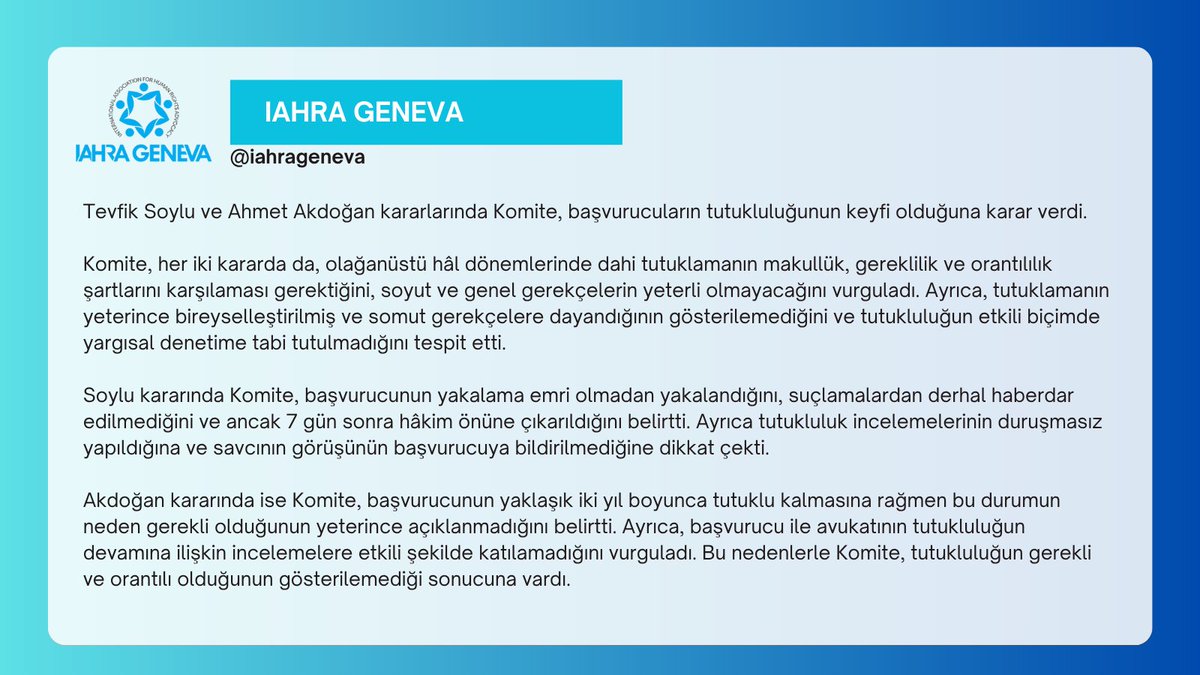
BM İnsan Hakları Komitesi’nden Türkiye 🇹🇷 hakkında iki yeni ihlal kararı
Komite, başvuru sahiplerinin yargılama öncesi gözaltının keyfi olduğu gerekçesiyle, Uluslararası Medeni ve Siyasi Haklar Sözleşmesi’nin 9. maddesinin ihlal edildiğine hükmetti.
📄 Tevfik Soylu / Türkiye : tbinternet.ohchr.org/_layout…
📄 Ahmet Akdoğan / Türkiye : tbinternet.ohchr.org/_layout…
25
38
2,393
Apr 21
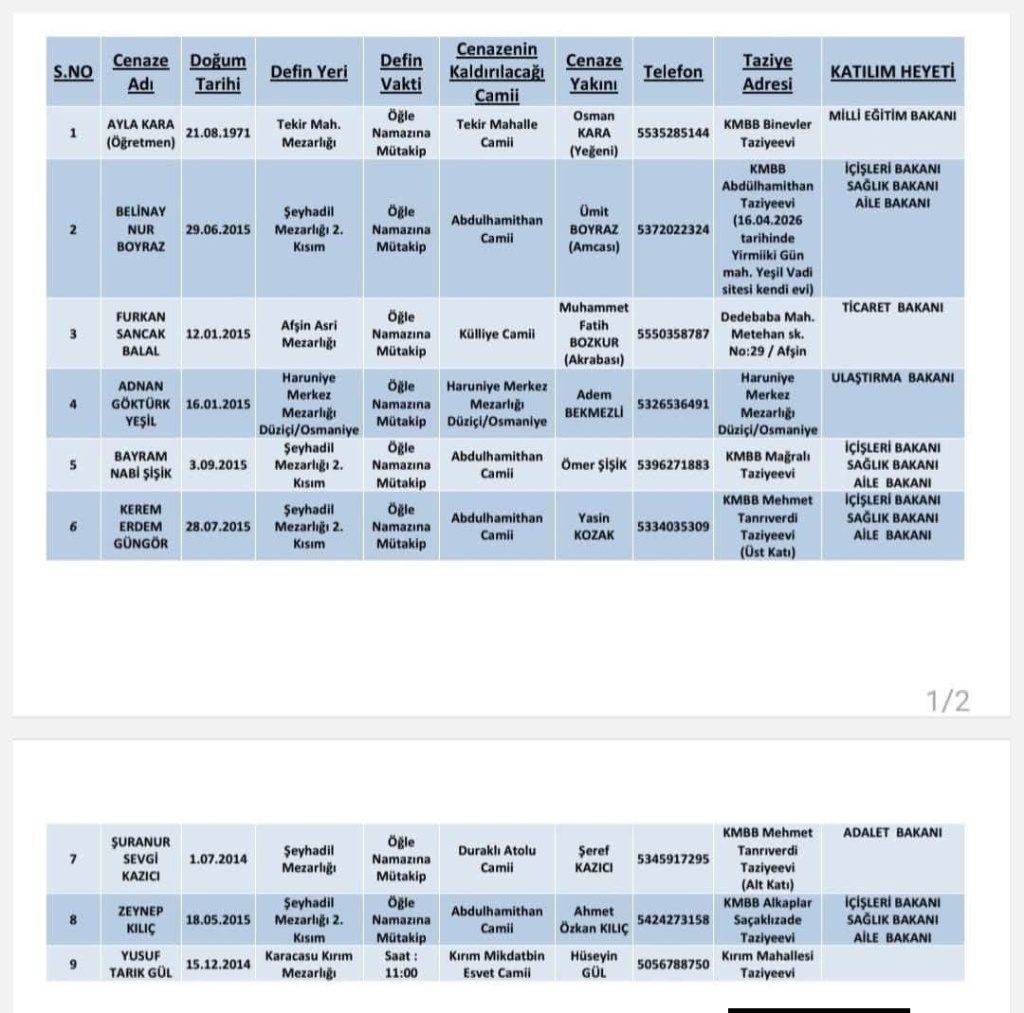
Press Release Regarding the #Discrimination and #Marginalization in the Tragic Event in Kahramanmaraş/Türkiye
We strongly condemn the practices of marginalization and hatred directed at the cherished memory of our late child Yusuf Tarık Gül, who lost his life in the tragic event in Kahramanmaraş, and his grieving family, solely on the grounds that his father is a “KHK” victim (dismissed by Statutory Decree).
Read the full statement here:
humanrights-ev.com/press-rel…
96
Human Rights Defenders retweeted

On my way to #Georgia to engage with government, authorities, and civil society on a range of important #HumanRights concerns.
1
4
19
1,290
Apr 15
RT @CommissionerHR: In my memorandum on #Germany, I call for:
🔹Protecting civic space, freedom of expression & peaceful assemblies
🔹Disting…
1
53
Human Rights Defenders retweeted
Feb 25
Son Dakika: IAHRAG Türkiye'deki keyfi ve hukuksuz tecriti Birleşmiş Milletler gündeminine taşıdı — Türk hükümeti BM İşkence Komitesi'ne savunma vermek zorunda.
BM İşkenceyi Önleme Komitesi (CAT), uzun süre ve hukuki dayanak olmaksızın hücrede tecrit edilen bir yargı mensubunun başvurusu kapsamında Türkiye’den resmi savunma talep etti. Türkiye, 15 Temmuz darbe girişimi sonrasında yaygın ve sistematik şekilde başvurduğu bu keyfi ve hukuksuz tecrit uygulamasına ilişkin görüşlerini 6 ay içinde Komite’ye sunacak.
#HumanRights #UN #Accountability
2
26
38
1,784
Mar 17
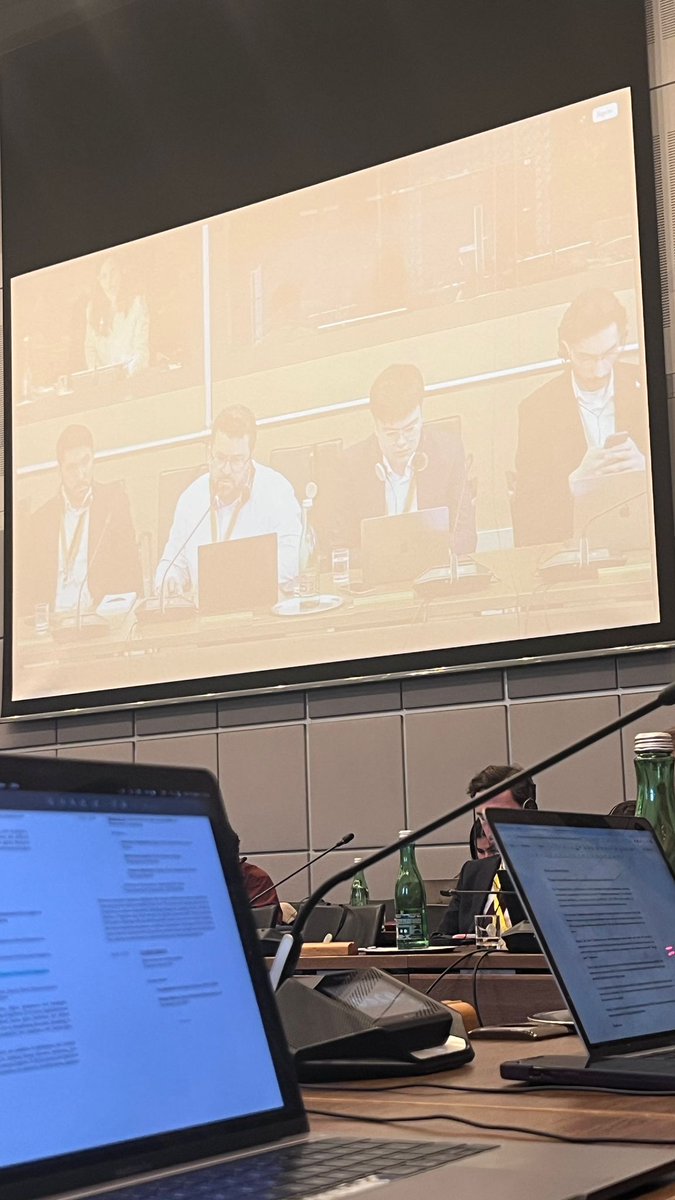
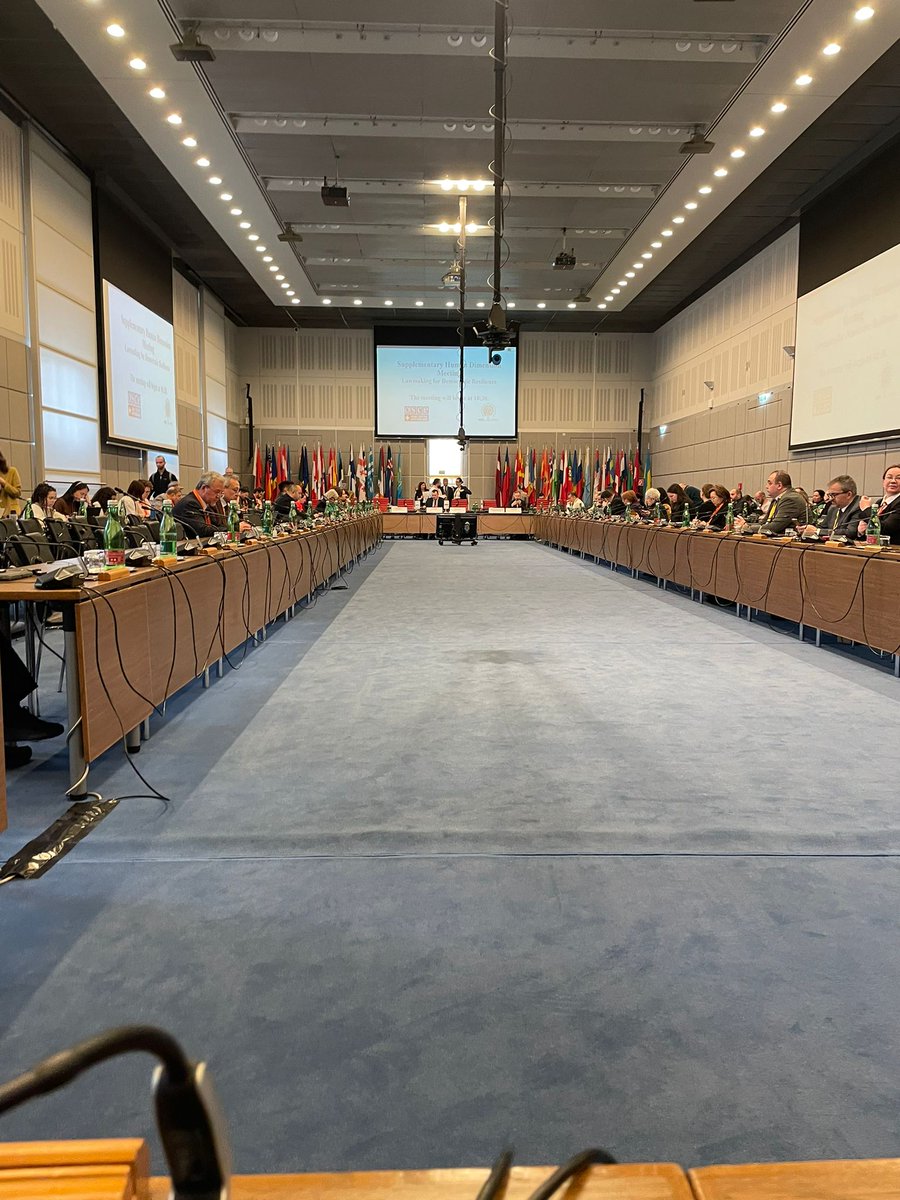
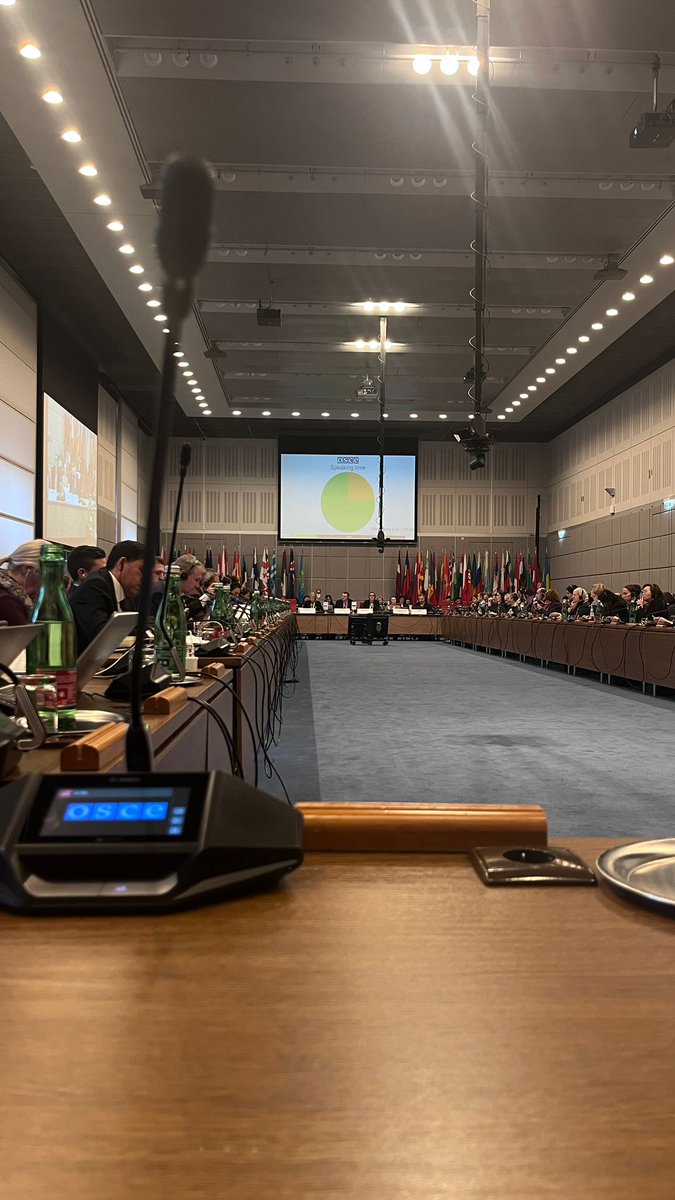
As HRD, we participated in the #OSCE meeting held on March 16–17 in Vienna, Austria.
Our primary and most urgent agenda item was the new "amnesty and penal execution regulation" currently on the legislative agenda in #Türkiye.
We held a series of engagements and emphasized our close monitoring of the process.
humanrights-ev.com/hrd-e-v-a…
3
1
2
459
Mar 17
As part of our engagements in Vienna, we met with the Vice-President of the Venice Commission.
During our meeting, we personally conveyed the severe degradation of the justice system in Türkiye, the inhumane prison conditions, and the legal absurdity that would arise if the new regulation excludes specific groups for political reasons.
1
1
75
Mar 17
As HRD, we reiterate that the new penal execution regulation in Türkiye must be non-discriminatory, inclusive, and fair.
Any exclusion based on political motives would clearly violate both the rule of law and fundamental human rights.
1
1
51
Human Rights Defenders retweeted

Mar 7
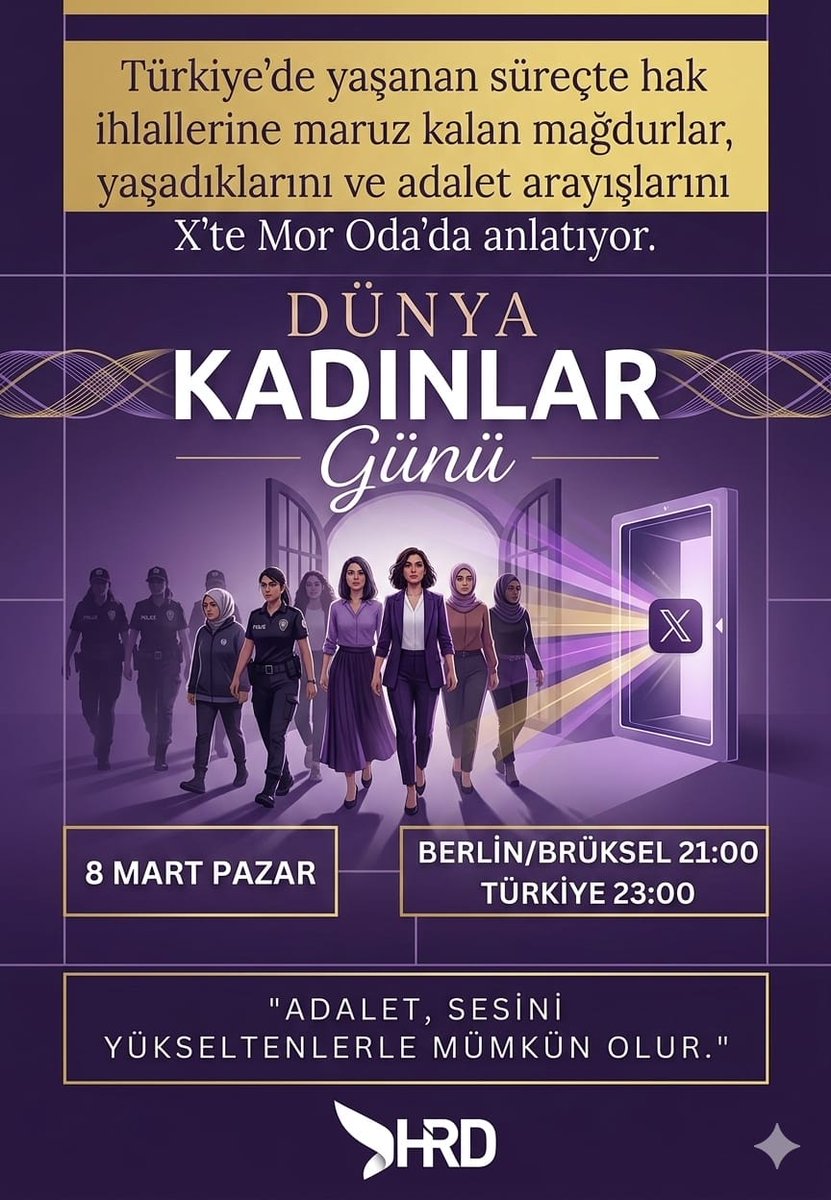
🗓️8 Mart 2026 Pazar
🇪🇺21:00 🇹🇷23.00
📍Mor Oda
x.com/i/spaces/1RJjpzNMBzwKw
📢 DAVETLİSİNİZ!
8 MART DÜNYA KADINLAR GÜNÜ
Türkiye’de yaşanan süreçte hak ihlallerine maruz kalan mağdurlar,
yaşadıklarını ve adalet arayışlarını X'te Mor Oda’da anlatıyor.
2
35
42
7,044
Human Rights Defenders retweeted
Feb 27
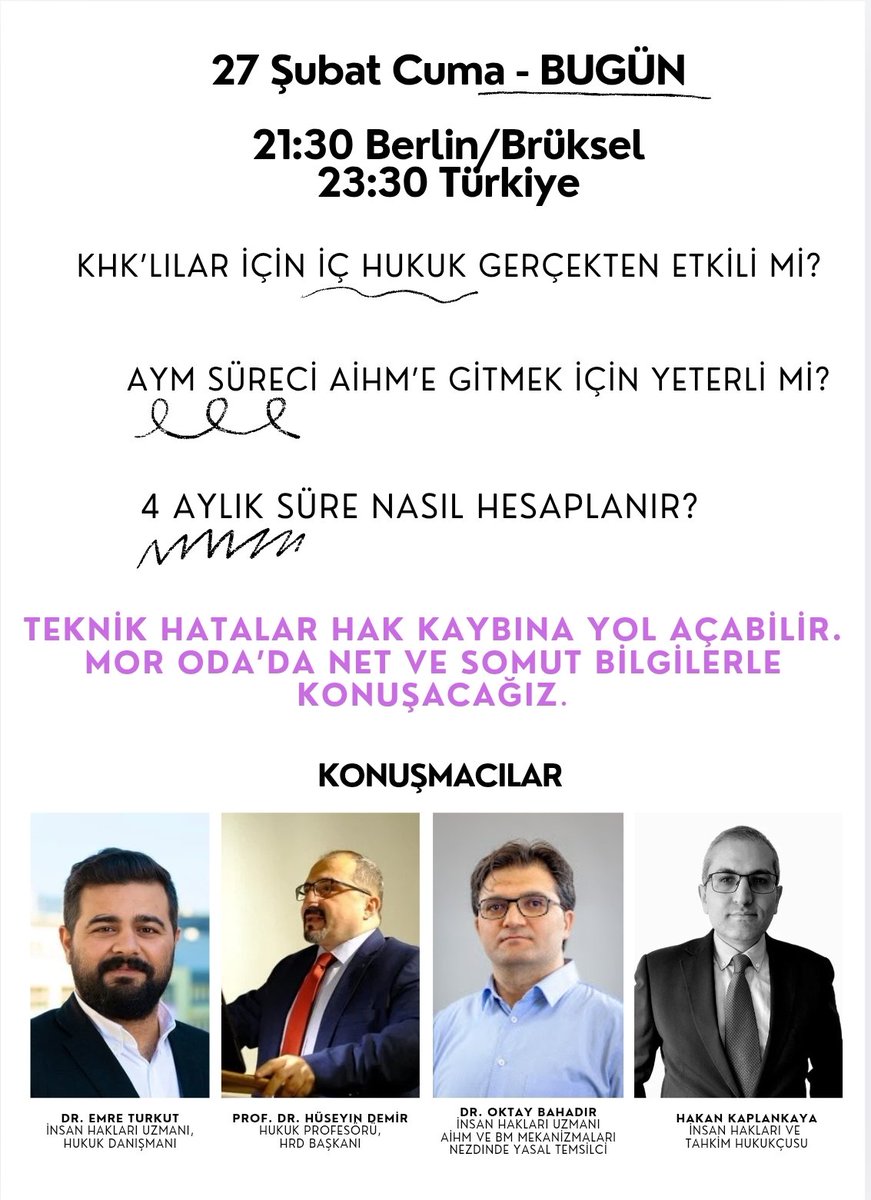
KHK’lılar için iç hukuk gerçekten etkili mi?
AYM süreci AİHM’e gitmek için yeterli mi?
4 aylık süre nasıl hesaplanır?
📍Mor Oda
x.com/i/spaces/1PKqrErkNpWGb
🗓 27 Şubat 2026 Cuma - Bugün
⏰ 21:30 Berlin/Brüksel, 23:30 Türkiye
Teknik hatalar hak kaybına yol açabilir.
Mor Oda’da net ve somut bilgilerle konuşacağız.
#MorOda #Adalet
2
39
45
2,335