Official @ESA feed for #Hubble Space Telescope — the space-based observatory which has revolutionised modern astronomy. #BFFinSpace with @ESA_Webb
Joined April 2010
- Tweets 6,531
- Following 435
- Followers 925,268
- Likes 1,664
2,621 Photos and videos

Jun 11
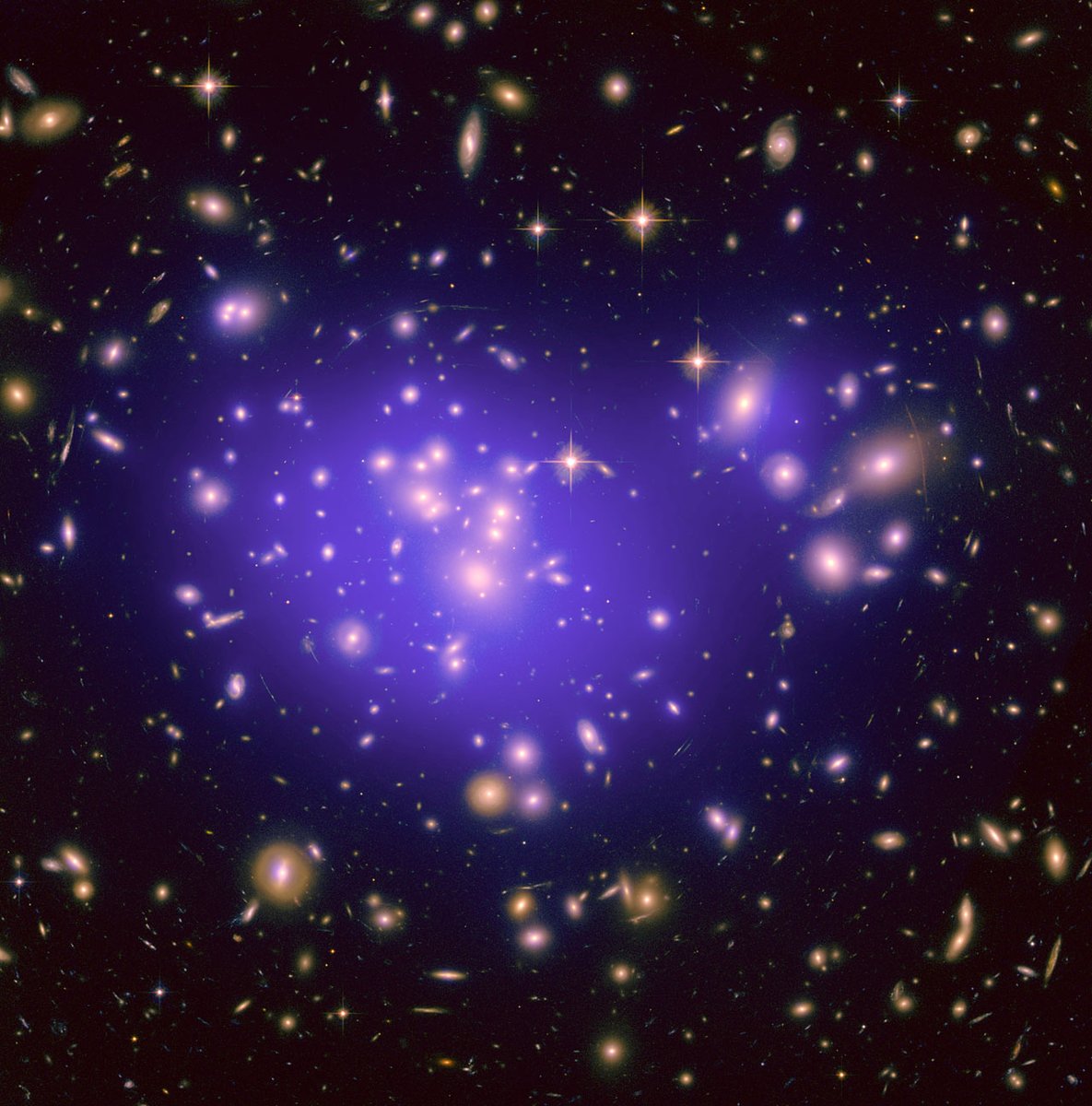
Our #HubbleTopImage features gravitational lensing 🔍 in Abell 1689!
This Hubble image from 2010 shows the galaxy cluster Abell 1689, with the mass distribution of the dark matter in the gravitational lens overlaid in purple. The mass in this lens is made up partly of normal matter and partly of dark matter.
Distorted galaxies can be seen around the edges of the gravitational lens – their appearance depends on the distribution of matter in the lens, the relative geometry of the lens and the distant galaxies, and the effect of dark energy on the geometry of the Universe itself.
Read more: esahubble.org/news/heic1014/
📷 @NASA , @ESA , E. Jullo (JPL/LAM), P. Natarajan (Yale) and J-P. Kneib (LAM).
10
88
432
14,934
Jun 4
Our #HubbleTopImage features a galaxy 😈 which rules the neighbourhood!
ESO 306-17 is a large, bright elliptical galaxy in the southern sky of a type known as a ‘fossil group’ due to their isolation. But are they really like fossils – what is left of a once-active community – or do they have a more sinister history?
Did this galaxy ‘gobble up’ its neighbours? 🍴
Fossil groups may be the most extreme examples of galaxy cannibalism – hungry systems that don’t stop eating until they have devoured all of their neighbours.
Read more: ow.ly/B0Ov50Z6YXP
📷 @NASA , @ESA , and Michael West (ESO)
4
40
113
7,419
Jun 2
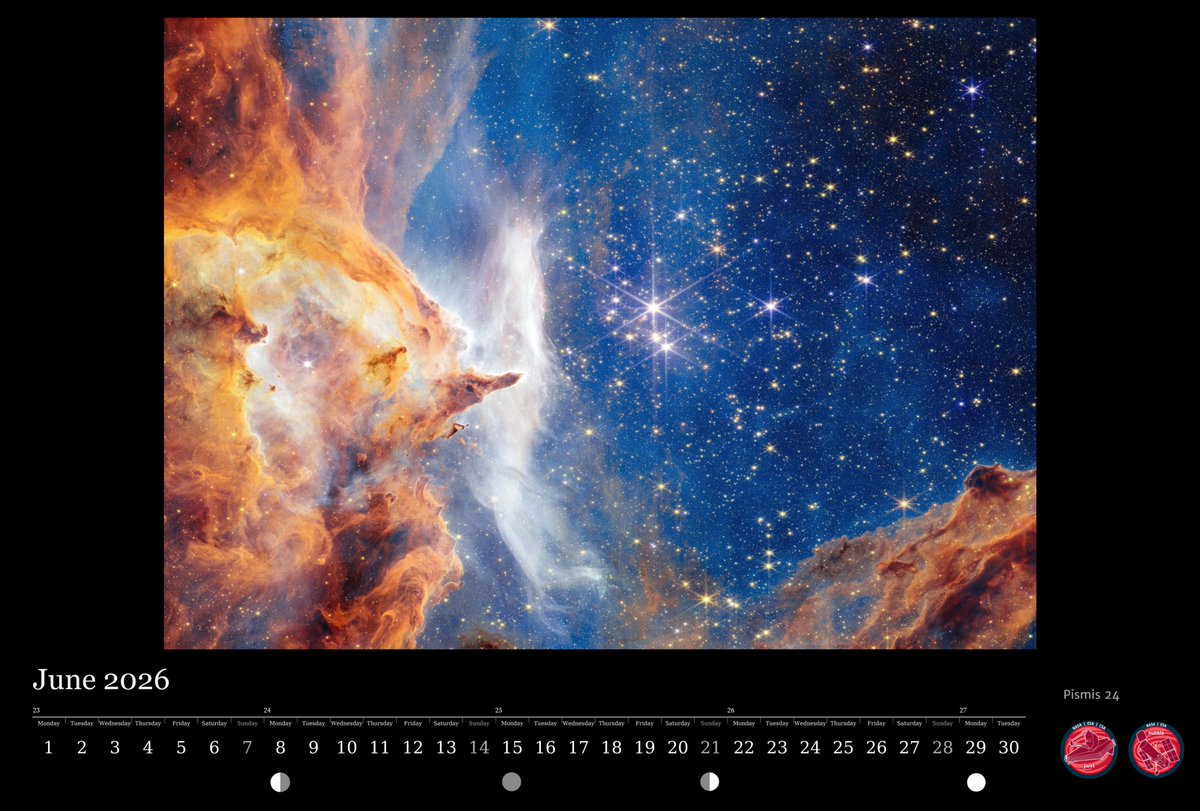
In the 2026 ESA/Hubble and ESA/Webb calendar, the month of June features the young star cluster Pismis 24, which is found in the Lobster Nebula 🦞✨ approximately 5,500 light-years from Earth. This is one of the nearest sites of massive star birth!
Ready to print .pdf here: esahubble.org/products/calen…
📷 @NASA , @ESA , @csa_asc , @stsci , A. Pagan (STScI)
5
45
163
8,705
May 31
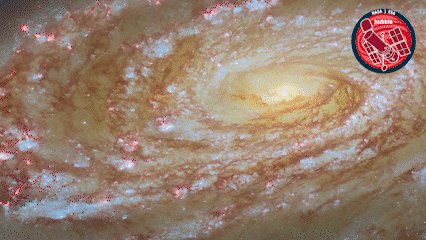
Spiralling towards the innermost reaches of the Virgo Cluster! ↩️
Access more space-themed .gifs at our giphy page: giphy.com/esahubble
5
38
222
10,585
May 30
Messier 88 (M88) is on a journey to the innermost reaches of the Virgo Cluster, a collection of more than 1000 galaxies bound by gravity, orbiting the massive elliptical galaxy at the centre 👹🌌 1/3
9
120
552
21,833
May 30
As M88 approaches, it will experience ram pressure stripping (its gas will be swept away as it pushes through the gas between galaxies in the cluster). This will affect its ability to form stars, and change the course of its evolution! 2/3
1
4
52
6,244
May 30
Read more here: esahubble.org/images/potm260…
📷 @ESA / @Hubble_Space & @NASA , D. Thilker and the MAUVE-HST Team, N. Bartmann (ESA/Hubble)
🎶 Stellardrone - Billions and Billions 3/3
10
62
5,717
May 29
Our ESA/Hubble Picture of the Month takes a journey to the centre of a galaxy cluster!
Messier 88 (M88) is located about 63 million light-years away in the constellation Coma Berenices (Berenice’s Hair). It is a member of the Virgo Cluster, a collection of more than 1000 galaxies linked by fate! 1/3
6
56
274
12,911
May 29
As they move through space, they also orbit the cluster’s centre of gravity. M88 is on a long, perilous cosmic journey that will bring it into the innermost reaches of the cluster – and draw close to the monstrous galaxy at the centre 👹🌌 2/3
1
2
37
5,841
May 29
M88 will be changed by its journey thanks to ram pressure stripping – a process in which a galaxy’s gas is swept away as it pushes through the gas between galaxies in a cluster. This will affect its ability to form stars, and change the course of its evolution.
Read more: esahubble.org/images/potm260…
📷 @ESA / @Hubble_Space & @NASA , D. Thilker and the MAUVE-HST Team 3/3
1
5
48
5,140
May 28
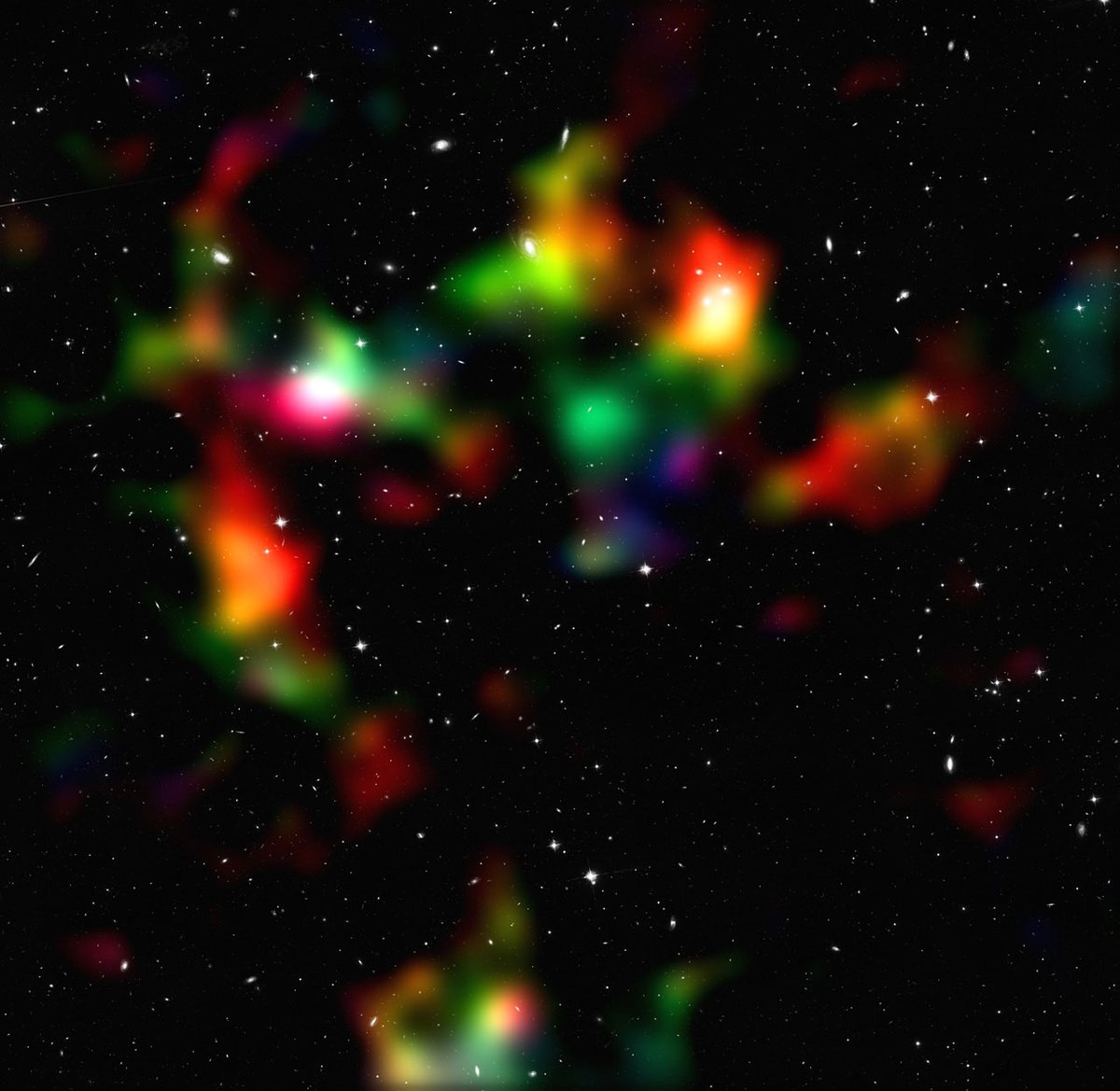
Our #HubbleTopImage weighs up the COSMOS field ⚖️
This image shows the (mostly dark) matter distribution in the COSMOS field, created from data taken by Hubble and ground-based telescopes. 1/2
7
47
267
8,930
May 28
The study involved Hubble photographing hundreds of overlapping views of the same part of the Universe over nearly 1000 hours of observations!
Read more: esahubble.org/news/heic1005/
📷 @NASA , @ESA , P. Simon (University of Bonn) and T. Schrabback (Leiden Observatory) 2/2
8
35
4,737
May 7
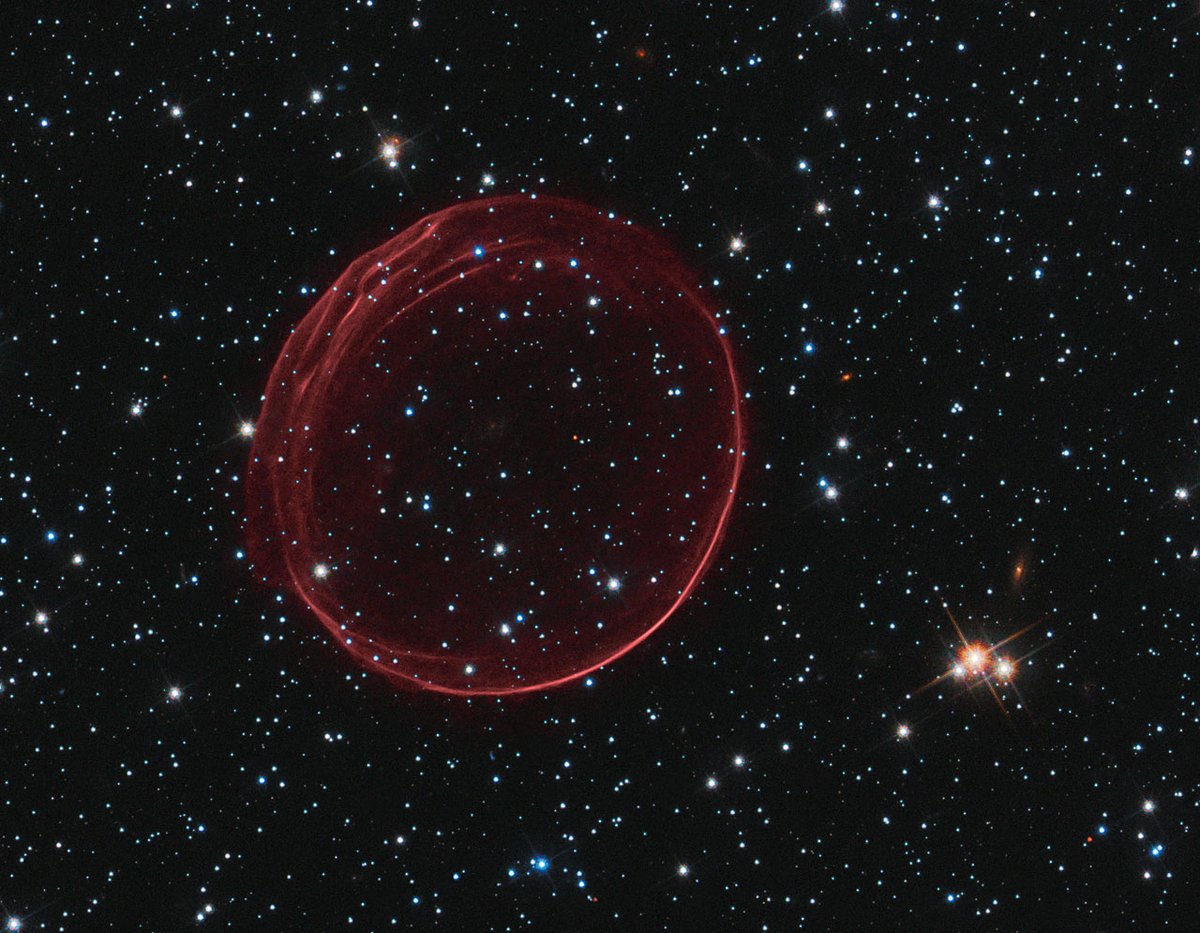
Our #HubbleTopImage features a celestial bauble 🪩
This sphere of gas appears to float serenely through space. Its apparent calm, however, hides an inner turmoil – it formed as a supernova’s expanding blast wave and ejected material tore through the nearby interstellar medium! 1/2
14
160
779
21,710
May 7
Read more: esahubble.org/news/heic1018/
📷 @NASA , @ESA , and the Hubble Heritage Team (STScI/AURA). Acknowledgement: J. Hughes (Rutgers University) 2/2
1
8
49
5,280
May 5
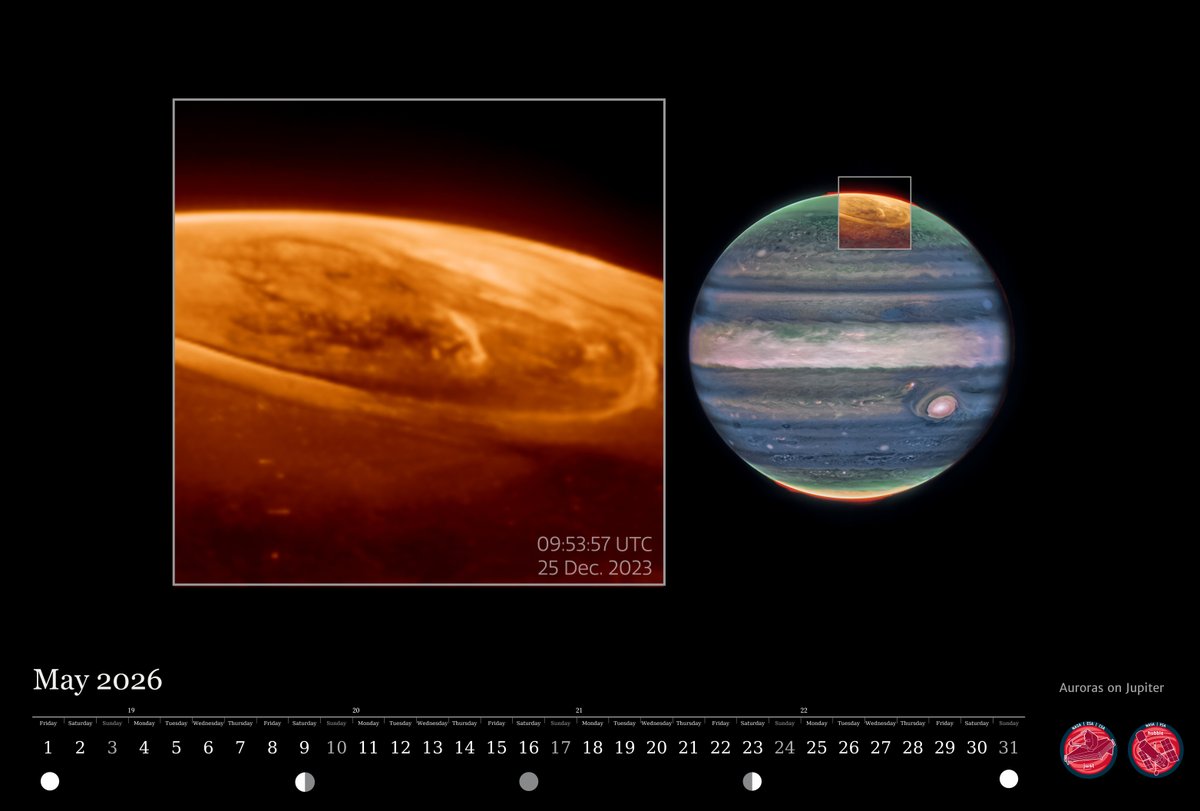
In the 2026 ESA/Hubble and ESA/Webb calendar, the month of May puts the spotlight on Jupiter’s auroras. These auroras, captured here by @esa_webb , are hundreds of times brighter than those on Earth.
Ready to print .pdf here: esahubble.org/products/calen… 1/2
3
42
244
10,519
May 5
📷 @NASA , @ESA , @csa_asc , @stsci , Ricardo Hueso (UPV), Imke de Pater (UC Berkeley), Thierry Fouchet (Observatory of Paris), Leigh Fletcher (University of Leicester), Michael H. Wong (UC Berkeley), Joseph DePasquale (STScI), J. Nichols (University of Leicester), M. Zamani (ESA/Webb) 2/2
6
21
3,908
May 4
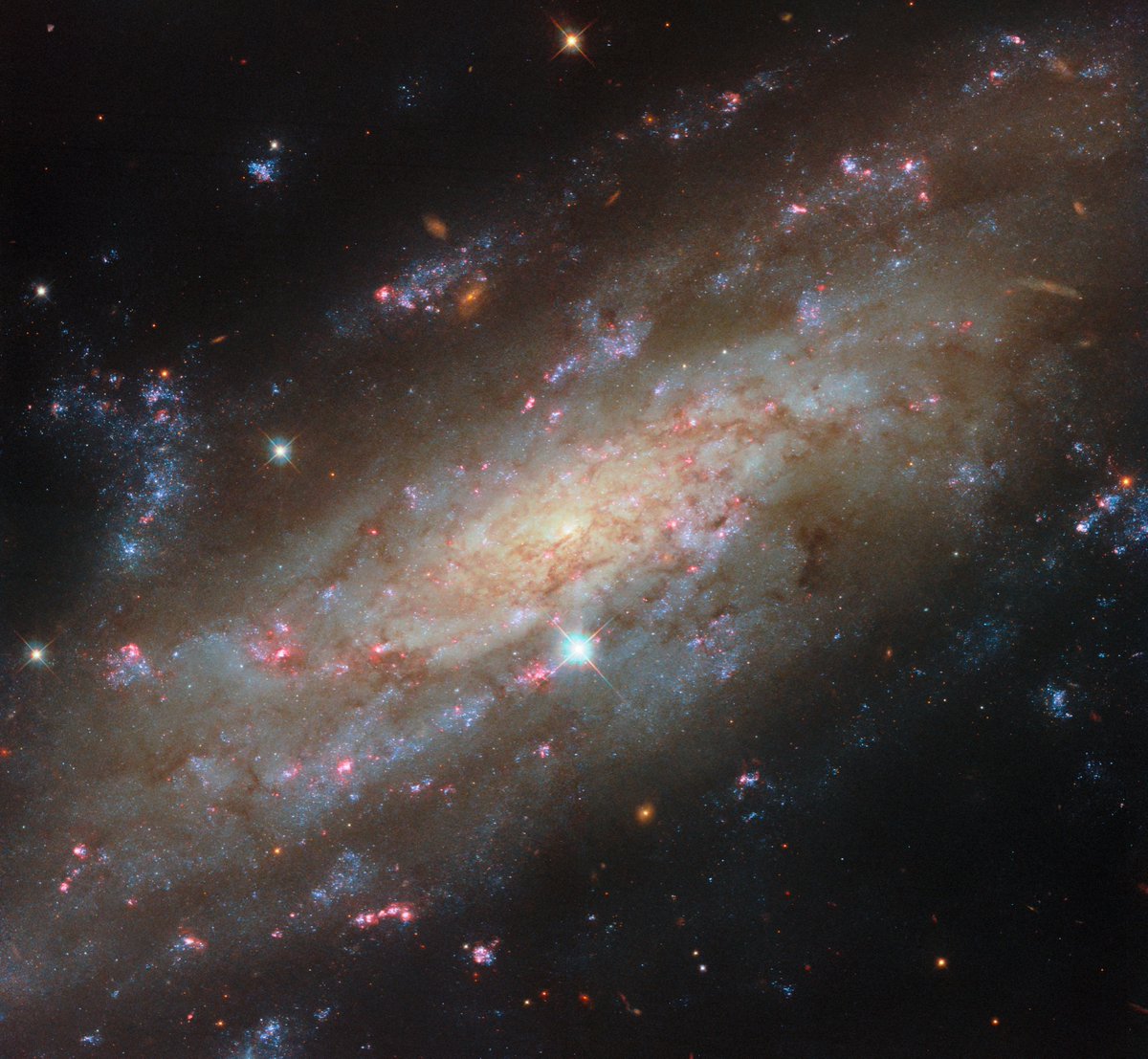
Spiralling around through space with NGC 3137! 🫨
Access more space-themed .gifs at our giphy page: ow.ly/EEHy50YS0gr
2
37
215
11,291
Apr 30
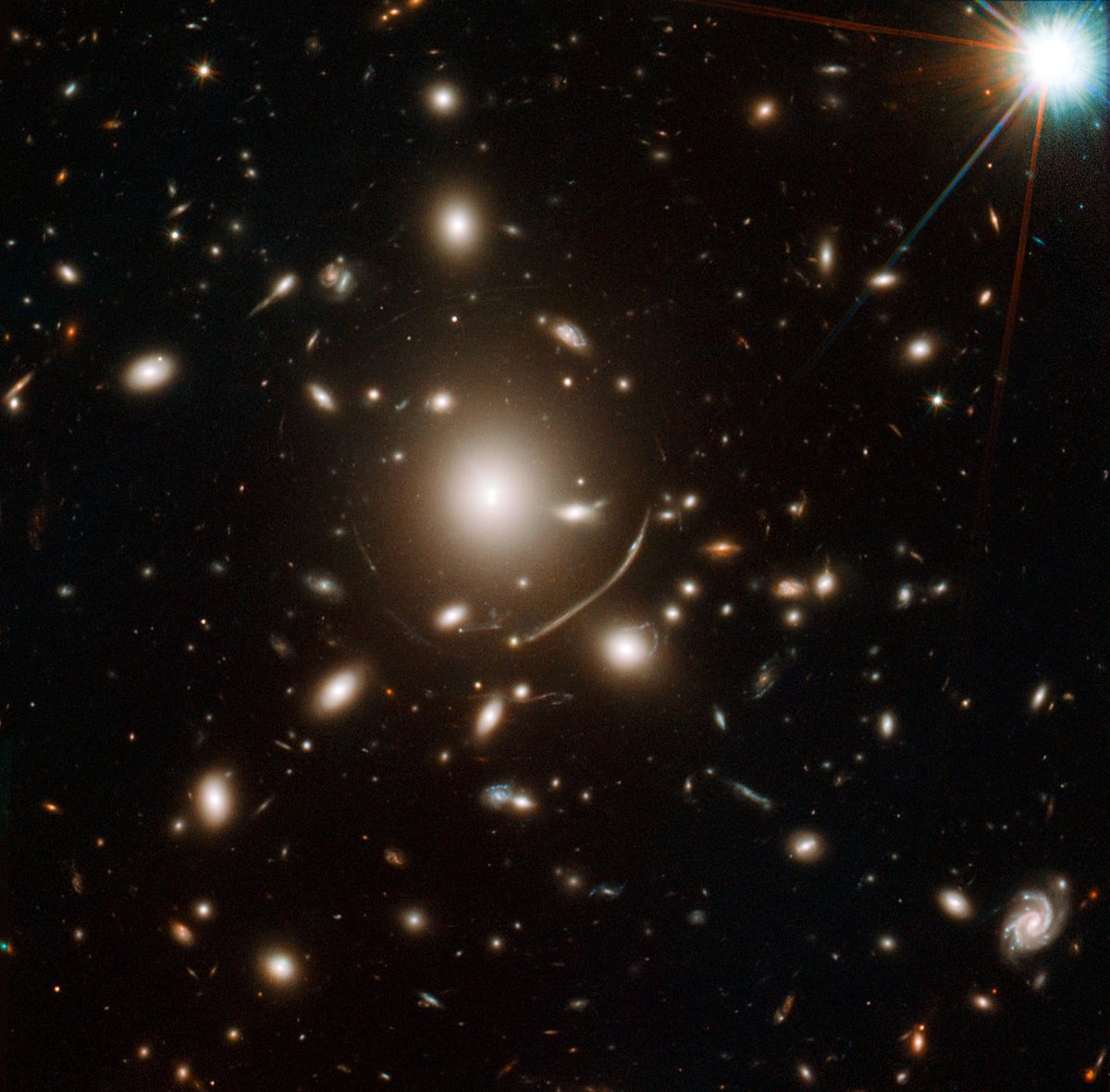
Our #HubbleTopImage features a lensing cluster 🔎
The giant galaxy cluster in the centre of this image contains so much dark matter that its gravity bends the light of more distant objects. This means that for very distant galaxies in the background, the cluster’s gravitational field acts as a sort of magnifying glass, bending and concentrating the distant object’s light towards Hubble. 1/2
10
119
561
16,866
Apr 30
These gravitational lenses are one tool astronomers can use to extend Hubble’s vision beyond what it would normally be capable of observing. This way some of the very first galaxies in the Universe can be studied by astronomers!
Read more: esahubble.org/news/heic1106/
📷 @NASA , @ESA , J. Richard (CRAL) and J.-P. Kneib (LAM). Acknowledgement: Marc Postman (STScI) 2/2
1
17
49
4,755
Apr 30
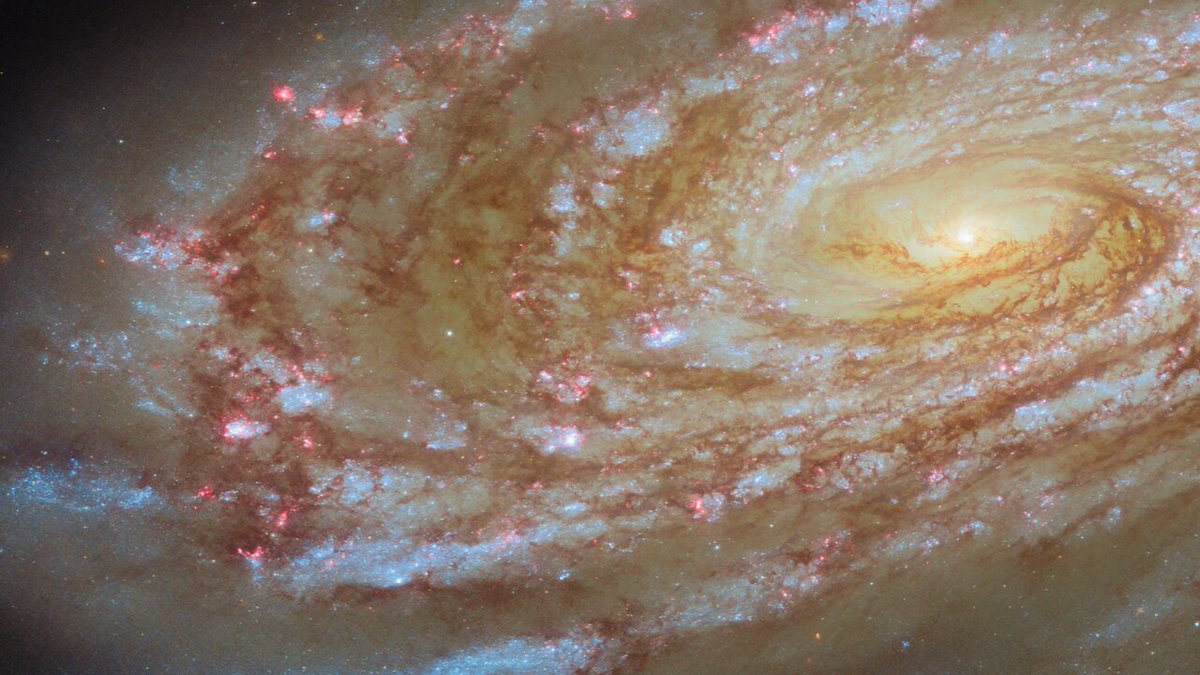
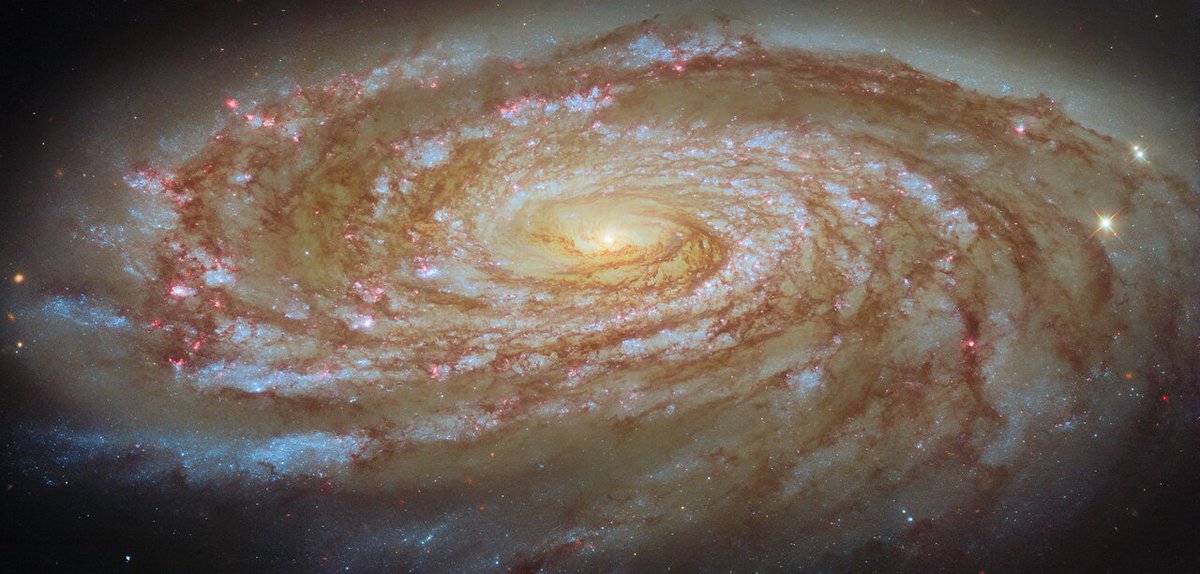
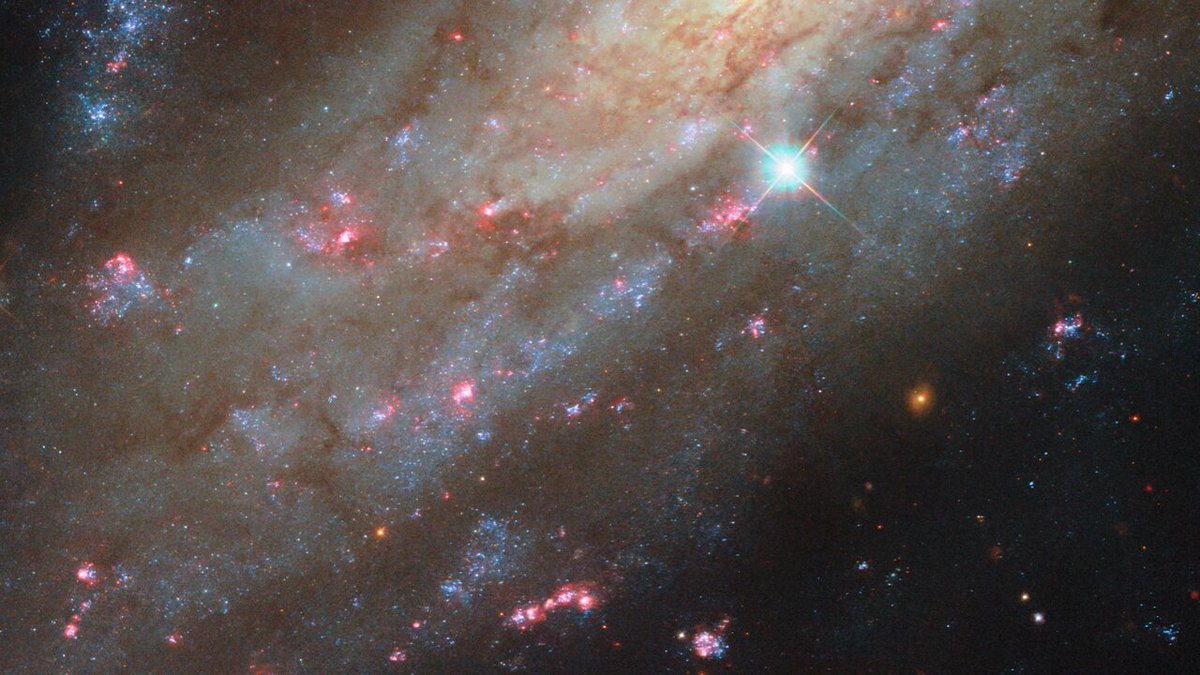
Our ESA/Hubble Picture of the Month features a starry spiral in a familiar neighbourhood 🏘️👋
NGC 3137 is located 53 million light-years away in the constellation Antlia (The Air Pump). It travels through space with a group of galaxies thought to be similar to the Local Group, with two large spiral galaxies and many smaller dwarf galaxies. 1/3
ALT A spiral galaxy seen close up and tilted at an angle, so that its disc fills the view from corner to corner. Its disc is yellow near to the centre and pale blue farther out, showing cooler and hotter stars, respectively. Thin brown clouds of dust, glowing pink spots of star formation, and sparkling blue patches filled with star clusters swirl through the galaxy. Behind it, small orange dots are very distant galaxies.
6
170
894
33,469
Apr 30
This Hubble image was crafted from observations in six colour bands, revealing many stunning details of the spiral galaxy.
Of all these details, it’s the star clusters that steal the show! 🤩 NGC 3137 is peppered with clusters of bright blue stars and glowing red gas clouds. These signal the presence of hot young stars still cradled in their birth nebulae. 2/3
3
21
117
6,090
Apr 30
Read more: esahubble.org/images/potm260…]
📷 @ESA / @Hubble_Space & @NASA , D. Thilker and the PHANGS-HST Team 3/3
6
25
3,557