
Joined August 2024
- Tweets 357
- Following 109
- Followers 75
- Likes 868
70 Photos and videos






HarmoniQ Insights retweeted

Jun 4
@Tickblaze is looking for a Lead Quant Coach & Educator to lead our Alpha Quant Syndicate (AQS) program: tickblaze.com/careers
teaching traders, hosting live trading rooms, reviewing systems, coaching members, and helping traders progress from ideas to robust, live automated strategies.
This role is ideal for someone who has personally built, tested, optimized, and traded systematic strategies and enjoys sharing that knowledge with others.
You’ll spend your time discussing markets, reviewing systems, teaching quantitative trading concepts, and helping traders avoid the mistakes that most only discover through experience.
Email: hr@tickblaze.com
View full details and how to apply:tickblaze.com/careers
#QuantTrading #AlgoTrading #SystematicTrading #TradingJobs #QuantResearch #TradingEducation #FinTechJobs #TradingSystems #AlgorithmicTrading #Tickblaze

2
3
111
HarmoniQ Insights retweeted
May 25
Bill Mann (@HarmoniQuant) and Mark Connors (CEO,
@riskdimensions) sit down LIVE with
@SeanKozak, CEO & Managing Partner of
@Tickblaze— the multi-asset integrated trading infrastructure platform combining execution, risk management, market data, and back-office operations in a single OS.
youtube.com/live/0yMYA0QJuw0

1
4
282

May 24
@SeanKozak, from here👇🧊to the @Tickblaze 🔥

Old Wall Street meets The New Barbarian!
Tech Barbarians: How @SeanKozak Gave Retail Trad... youtube.com/live/0yMYA0QJuw0… via @YouTube
1
1
2
35
May 24
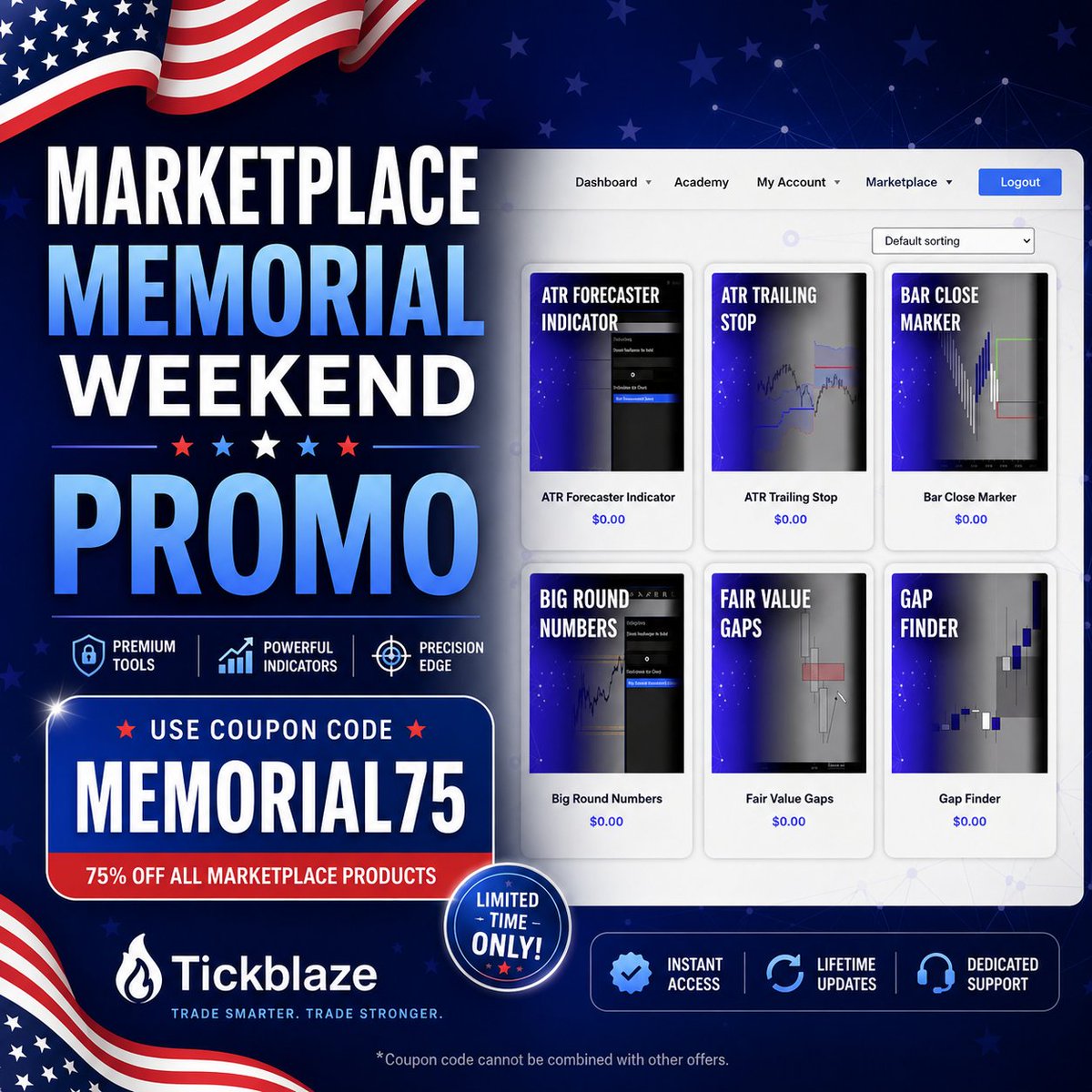
75% off eligible Tickblaze Marketplace products. Apply code MEMORIAL75 at checkout:
members.tickblaze.com/market…
16

May 22
75% off eligible Tickblaze Marketplace products ends May 26 at 11:59 PM EST.
Apply code MEMORIAL75 at checkout:
members.tickblaze.com/market…
May 22

The Home Office Hedge Fund — LIVE RIGHT NOW with Sean Kozak | Ep. 54! community.tickblaze.com/even…
14
May 22
The Home Office Hedge Fund — LIVE RIGHT NOW with Sean Kozak | Ep. 54! community.tickblaze.com/even…
1
23
HarmoniQ Insights retweeted
May 22
Join us at noon. Also check out the link below and get 75% off eligible Tickblaze Marketplace products! Apply code MEMORIAL75 at checkout: members.tickblaze.com/market…
2
2
30
May 22
Join us at noon. Also check out the link below and get 75% off eligible Tickblaze Marketplace products!
Apply code MEMORIAL75 at checkout:
members.tickblaze.com/market…
The Home Office Hedge Fund is LIVE today at noon EST.
@SeanKozak, CEO of @Tickblaze, joins us for Ep. 54.
Prop trading infrastructure, funded traders, Series B, and what's next.
Set your reminder 👇 youtube.com/live/0yMYA0QJuw0
#NewBarbarians #Tickblaze #PropTrading #LivePodcast
21
HarmoniQ Insights retweeted
May 18
🇺🇸America’s Small Business David vs. Ivan Drago’s Communist Corporation‼️The Man in the Arena" — Eddy Connors, Co-Founder & CEO of Goodie Bag | E... youtu.be/Bmd57jnNDqE?si=M-0I… via @YouTube
2
2
36
HarmoniQ Insights retweeted

The Home Office Hedge Fund — LIVE This Friday with @SeanKozak, CEO of @Tickblaze | Ep. 54 substack.com/@newbarbarians/…
1
2
28
May 19
This is going to be a lot of FUN, I promise!
The Home Office Hedge Fund — LIVE This Friday with @SeanKozak, CEO of @Tickblaze | Ep. 54 substack.com/@newbarbarians/…
1
10
HarmoniQ Insights retweeted

May 17
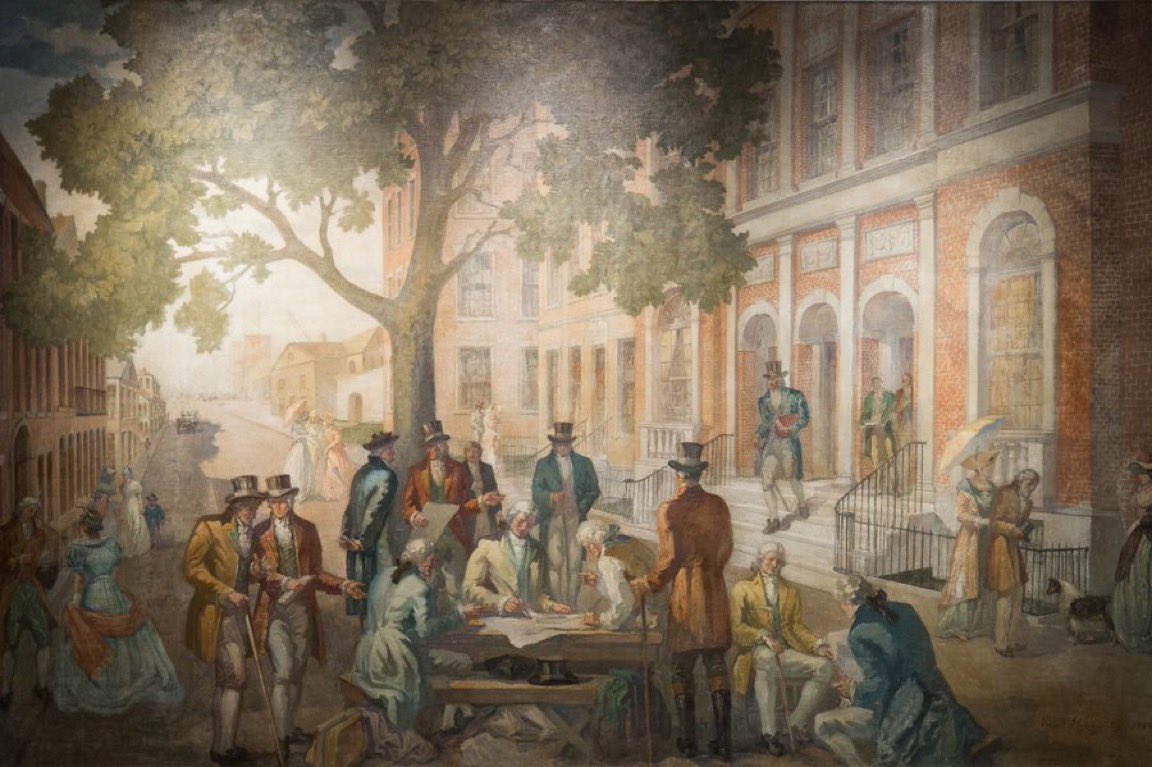
The New York Stock Exchange was founded on this day in 1792.
50
590
4,524
184,971
May 18
Retail traders lose because they lack the right tools. Tickblaze offers a single OS for trading, risk management, and market data, making Home Office Hedge Funds a reality. skr.ma/u8ENh
16
HarmoniQ Insights retweeted

May 16
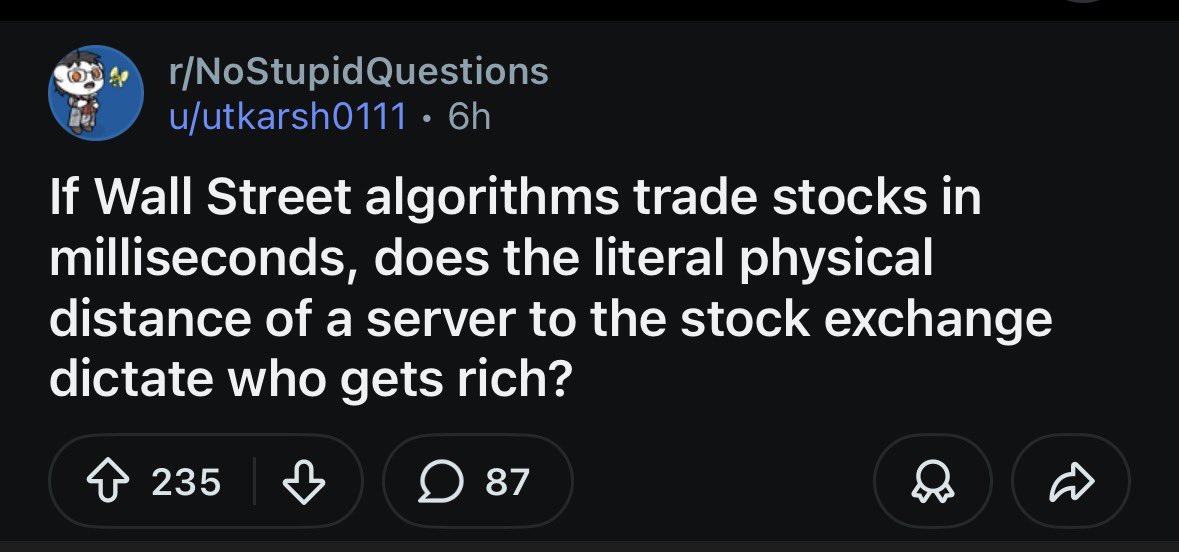
“If Wall Street algorithms trade stocks in milliseconds, does the literal physical distance of a server to the stock exchange dictate who gets rich?”
Michael Lewis would tell you “Yes,” but that’s an outdated answer. At some point it doesn’t make sense to play the speed game (e.g. digging holes through mountains to be 1us faster) because it’s just not scalable. There’s been a shift to AI/ML in the past decade, that’s why you rarely hear about HFT in the news anymore. But smarter strategies are slower by nature (complex things take longer to compute). The top quant firms are still really fast, but they’re not trying to be *the fastest* if that makes any sense. As in, they’re not playing purely a dumb speed game anymore.
For more context, speed has always been a thing in trading, even before the markets were electronic. The Pony Express, the telegraph, etc. People hired faster runners to place trades before everyone else.
Modern technology made things so close to the speed of light, to the point where being a microsecond faster just doesn’t yield the same ROI anymore. Thus the focus on smarter strategies. Also many of the fastest routes are commoditized today (vendor-owned).
When I worked in HFT, the most unfair things I experienced were from brokers and lawyers and accountants. Not from access to speed (colocation). There’s a lot of misinformation on Reddit lol
13
13
212
30,907
HarmoniQ Insights retweeted
May 14
i hated having "chubby cheeks" in my 20's, but today i am soooo grateful for keeping my buccal fat LOL
May 14

i had to take photos recently, and the photographer insisted on taking some at my piano

7
1
88
9,671
HarmoniQ Insights retweeted

May 14
🚨BREAKING: NY PLANS NEW TAX ON CITY HOMES OVER $1 MILLION BOUGHT WITH CASH

1
1
1
493
May 16
Tickblaze Forms Strategic Advisory Board as It Accelerates Expansion Across Trading and Prop Technology Markets community.tickblaze.com/pres…
7
HarmoniQ Insights retweeted
Make sure you join us next week when the CEO of @Tickblaze joins us!
How Quants Trade Smarter: TickBlaze Python #trending #podcast #trending youtu.be/nkRf4oYTwIw?si=
fvrAj1JmbybrC2AB via @YouTube
1
4
47
HarmoniQ Insights retweeted
May 14
i had to take photos recently, and the photographer insisted on taking some at my piano
17
2
180
40,161