
“If you wish to better the world, first you must pay a price.” Author of the first peer-reviewed paper examining a lab-engineered origin for COVID-19.
Joined October 2018
- Tweets 116,918
- Following 100
- Followers 10,560
- Likes 163,473
6,819 Photos and videos





Pinned Tweet

1 Apr 2021
SPOILER ALERT: SARS-CoV-2 is a circulating vaccine-derived-coronavirus (cVDCV) via the PLA, but borne from work originally done at UNC, the only institution that’s been attempting to design a LAV for SARS and chimeras needed for attenuation...
harvard2thebighouse.substack…
241
889
1,741
May 22
IF ONLY THE PEER-REVIEWED LITERATURE REGARDING AN ENGINEERED VIRUS HAD COVERED THIS SIX-YEARS AGO!!
"In addition to the possibility of obtaining a furin cleavage site through natural recombination in a secondary host or through serial passage either in a laboratory or on a commercial farm, one could have been spliced directly into the novel coronavirus's backbone in a laboratory using classic recombinant DNA technology that has been available for nearly 20 years. This allows for the removal of the restriction site junctions that are the telltale sign of direct genetic manipulation and permits reassembly without introducing nucleotide changes—creating a virus without any evidence of manipulation using the aptly named “No See'm technology.”[ 24 ]
pmc.ncbi.nlm.nih.gov/article…
May 21

Ralph Baric’s team (primarily Boyd Yount as first author) designed something called the “No See’m” technique with the stated goal of assembling a full-length physical coronavirus cDNA in the lab so the final rescued virus has no detectable lab-engineered scars in its genome sequence.
2
7
663
May 22
China: the PLA watching the live-attenuated vaccine which they tested on the Uighur Concentration Camps revert faster-than expected at the Wuhan Military Games due to the same conditions that leads to OPV reverting - overcrowded toilets.
May 22

Why the entire world is stonewalling C19 origin questions:
USA: Baric, Fauci.
UK: Farrar.
Germany: Drosten.
Netherlands: Koopmans and Foucier.
Australia: Linfa Wang, Eddie Holmes.
254
Harvard2TheBigHouse🌻 retweeted

May 22
I’ll never forget his red eyes bulging out of his head. He was in agony.
When I tried to move Him Rocky he would just collapse in fear. His blood results said he was as good as dead.
Today just 23 days later he is standing tall and proud with 50% eyesight back. ❤️




642
2,575
28,842
366,910
Harvard2TheBigHouse🌻 retweeted
Apr 18
I promise you this will fill your heart full of joy.
Nothing captures the positive bond between a human and their dog quite like this.
Priceless ❤️
493
2,362
22,710
228,898
Harvard2TheBigHouse🌻 retweeted

Apr 17
As David Reich recently remarked on the BBC, “The standard view has been that natural selection has been quiescent in our species over the last several hundred thousand years … that paradigm is just wrong.” The paradigm he is challenging is closely associated with the neutral theory framework, which holds that most genetic variants are not subject to selection and has long shaped interpretations of human evolutionary history.
This raises an important question: to what extent are the broader implications of this reassessment fully appreciated? Many influential conclusions in human evolutionary studies—including aspects of the prevailing Out-of-Africa model, as well as interpretations in Reich’s own work—were developed under assumptions consistent with that framework.
If those assumptions require revision, it follows that at least some downstream inferences may also need to be re-examined. In this context, alternative perspectives—such as the maximum genetic diversity (MGD) theory, which posits a more pervasive role for selection—may warrant closer consideration as frameworks for reinterpreting empirical patterns.
Apr 17

“The standard view has been that natural selection has been quiescent in our species over the last several hundred thousand years … that paradigm is just wrong”
12
10
72
7,371
Harvard2TheBigHouse🌻 retweeted
Mar 30
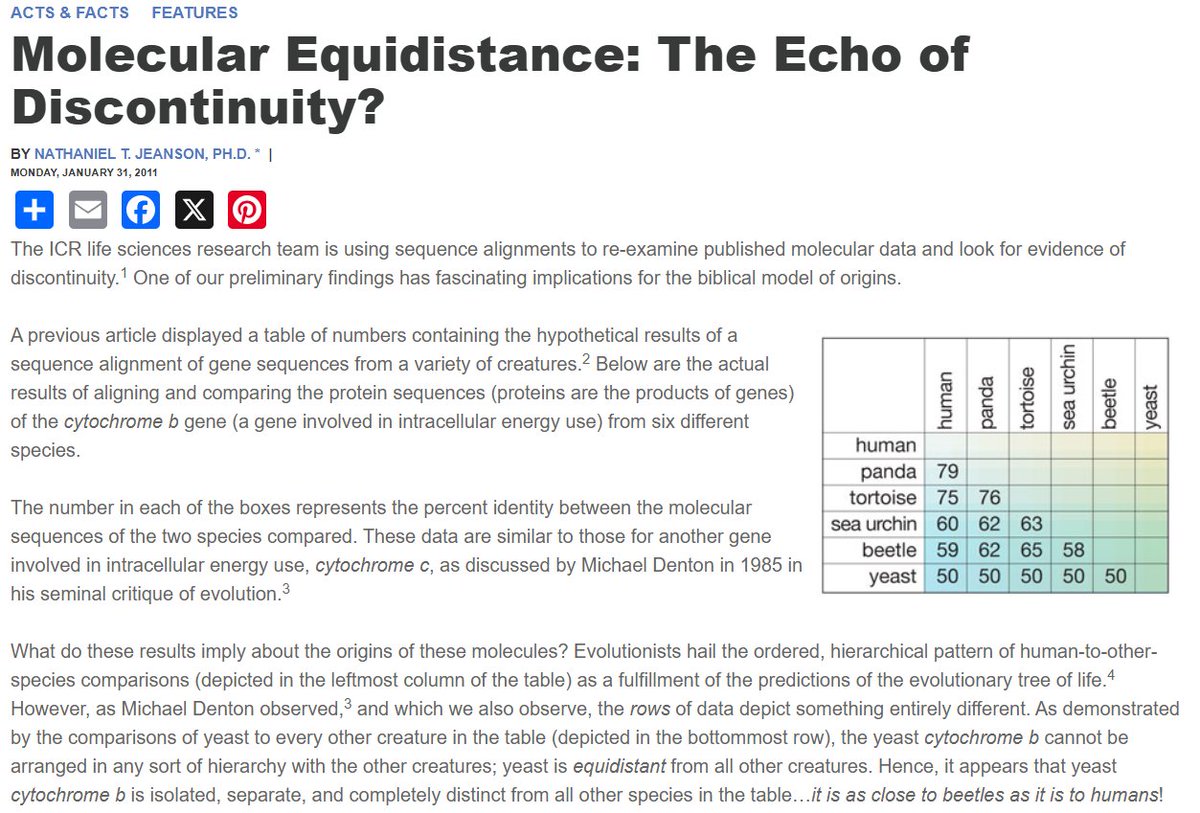
Many have recognized that the genetic equidistance phenomenon is striking and cannot be adequately explained by the conventional molecular clock theory, and have attempted, largely in vain, to uncover its underlying cause.
"We are actively pursuing the answers to these questions and are excited about what these studies may reveal." Molecular Equidistance: The Echo of Discontinuity?
icr.org/article/5867/
2
15
1,151
Harvard2TheBigHouse🌻 retweeted

Mar 28
fluent in mandarin. was living in China and read early wechat messages shared by those in the medical field. messages were leaked by industry insider early early early January prior to the crackdown on information sharing in late January. so assume that anything I read is common knowledge.
at that time, consensus in the materials I saw was a research product not bioweapon, but also military-funded research so those are slippery categories. the zoonotic playbook in this context is obviously dishonest -- an attempt to discredit most credible explanation (gain-of-function serial passage) consistent with Chinese-language info leaks by arguing against genetic engineering.
@Harvard2H had the best early paper on the problem that took the possibility seriously and applied rational analysis, particularly on ferrets and cross-species transmission. i've yet to see anyone address his arguments in the way they deserve, and this includes @mattwridley and @Ayjchan. was blocked by KA for asking whether he still gave the pangolin story credence.
the wheel of karma is going to grind most of these people into dust.
3
1
12
514
Mar 31
Lionel Baratheon the shrimp
Mar 31

Spongeboy me bob, a flamboyant shrimp just removed me fkn face
Community note
Additional proof that this is AI, and the relevant Community Notes should be approved:
Real Mantis Shrimp do not walk like this or hunt crabs of this size. There is no distortion from aquarium glass. CN should be used if watermarks are absent to disincentivize fake news.
medialiteracynow.org/ai-literacy-an…
1
1
367
Mar 20
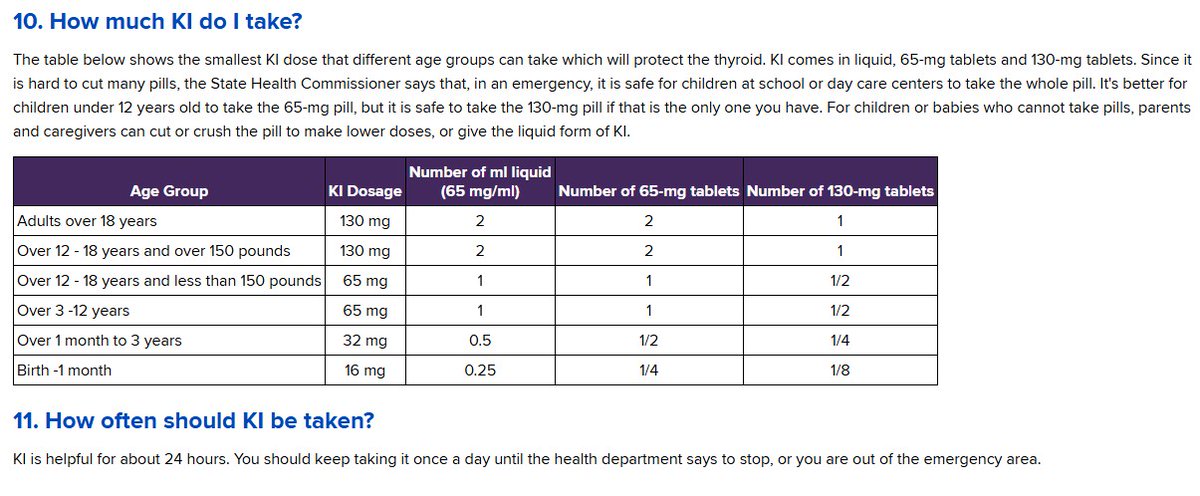
⚠️If you're anywhere near a large metropolitan area, potassium iodine is the most important supplement you could possibly have.
Dirty bombs can very, very easily be created with hospital waste, doesn't take a state.
1
4
7
607
Harvard2TheBigHouse🌻 retweeted

Mar 19
Yep. Also, credit to @Harvard2H. Dude nailed this from day one. Nailed the whole damn thing.
2
1
5
320
Harvard2TheBigHouse🌻 retweeted

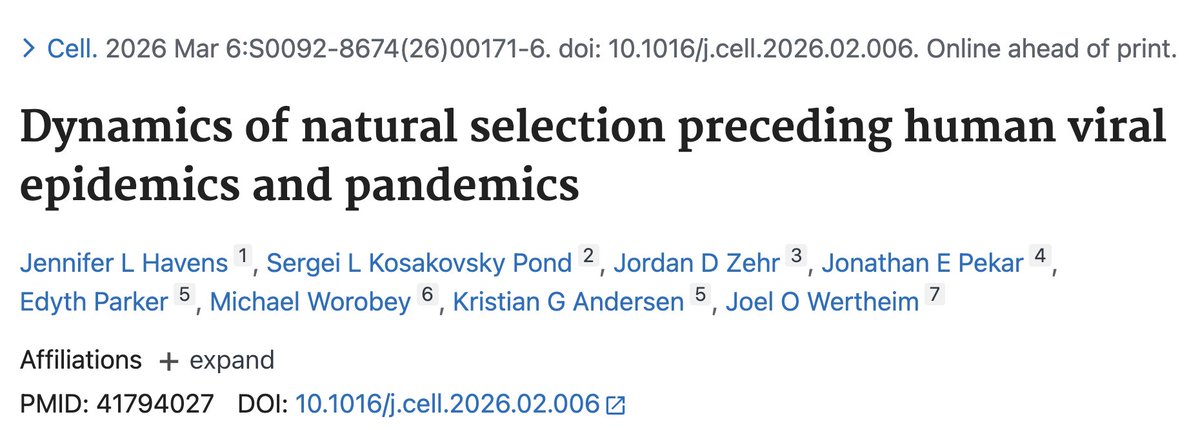
Kristian Andersen is doubling down on his zoonotic origin co-authored paper from 2020. So we can now be reassured that Covid is not a lab leak.
But then we find this snippet of information:
"Conflict of interest statement: Declaration of interests J.E.P., M.W., K.G.A., and J.O.W. have received consulting fees and/or provided compensated expert testimony on SARS-CoV-2 and the COVID-19 pandemic."
Is a paper in which the authors have a conflict of interest because they received money to say what they say in the paper a credible scientific work? I'm only a social scientist, but if Orbán was paying me to say that Orbán is no danger to democracy, would I be taken seriously? In fact, if I was making this claim in a serious journal, shouldn't the peer reviewers and the journal editors raise a flag...? Asking for scientific friends.
Jennifer L Havens , Sergei L Kosakovsky Pond, Jordan D Zehr, Jonathan E Pekar, Edyth Parker, Michael Worobey, Kristian G Andersen, Joel O Wertheim, "Dynamics of natural selection preceding human viral epidemics and pandemics", Cell, March 6, 2026.
doi: 10.1016/j.cell.2026.02.006. Online ahead of print.. 2026 Mar 6:S0092-8674(26)00171-6.Cell
pubmed.ncbi.nlm.nih.gov/4179…
14
27
129
29,440
Harvard2TheBigHouse🌻 retweeted

Mar 9
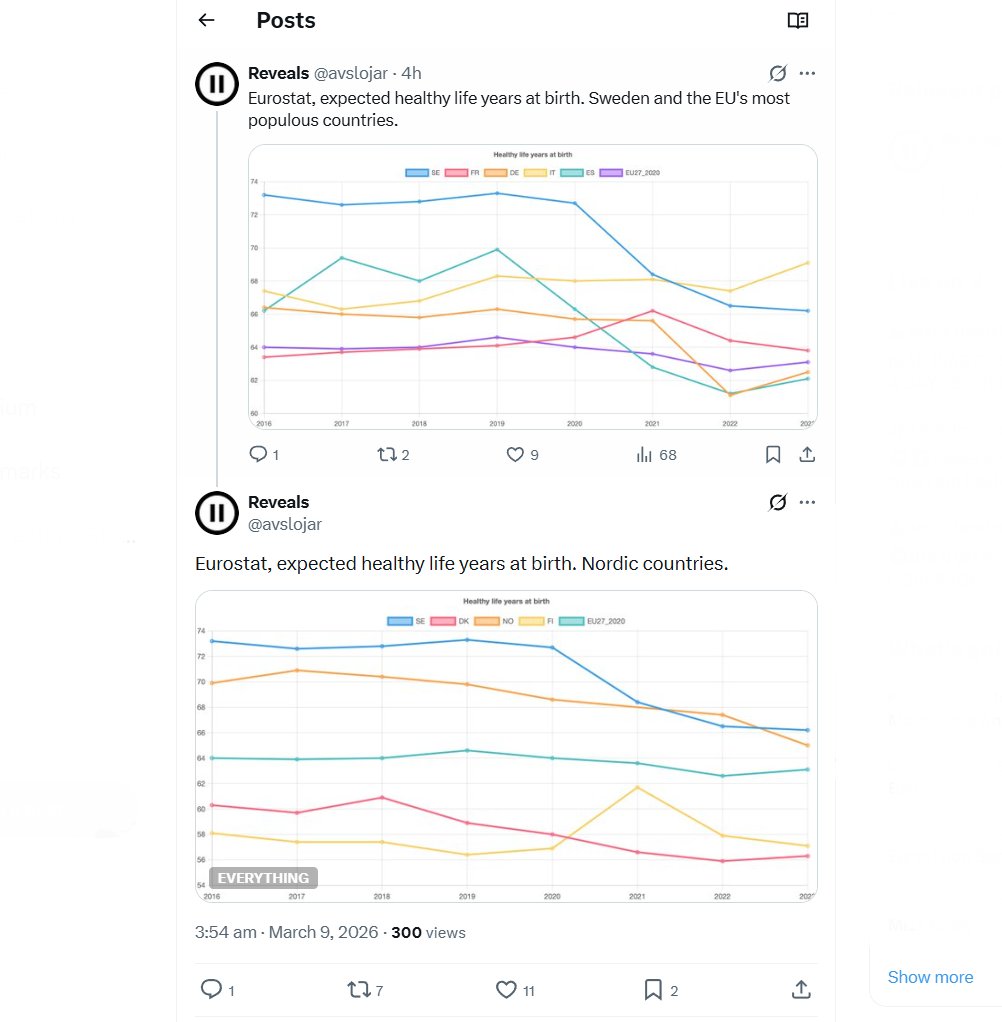
In Sweden, 10% of healthy life years have been lost since the pandemic began.
That’s one out of every ten years gone.
1/x
36
408
1,226
240,778
The message of today’s prison Islam is just another form of the extremist salfi version always characterized by the rhetoric of defiance and revolution. However it’s a message that always has some basis in the reality of real injustice, and it’s been heard before.
1
304
Ultimately, John Allen Mohammad and Lee Boyd Malvo failed to bring the full horror of their plans to life. But then although Ramzi Yousef failed to bring down the Twin Towers, he showed just how easy it was to try, and created a template for those who came after him. He created a small crack in our wall of invincibility, which while seeming to remain tiny would actually be growing and spreading before suddenly bringing down it’s target in a gushing roar of glass and death.
1
1
242
1
2
247