
Wurundjeri Woi-wurrung country. Government works FOR the people. Loathe murdoch press, bullies & racism . Free refugees & Assange. Human and Animal rights.
Joined February 2019
- Tweets 30,446
- Following 115
- Followers 203
- Likes 33,488
72 Photos and videos











Waltzing Matilda is a fine song but absolutely not for an a country’s anthem!
16
Me too!
7 Jun 2024

Learnt in school and never forgot. A song for all facets of French life is La Marseillaise.
16
Couldn’t agree more, Mike.

8
Oh my! 👏🏽👏👏🏿👏🏻👏🏽👏🏼
1
Heather Frith Vote YES! 🤺💉x4 🌎 🐶 🇺🇦 retweeted

6 Jun 2024
Only one I think. Bridget Archer.
1
1
15
151
Heather Frith Vote YES! 🤺💉x4 🌎 🐶 🇺🇦 retweeted

6 Jun 2024
No let him think it’s a miracle.
3
1
32
1,199
Heather Frith Vote YES! 🤺💉x4 🌎 🐶 🇺🇦 retweeted

6 Jun 2024
Haha...lying about pregnancy has been a Christian thing from the get go 🤷♂️
2
32
761
Heather Frith Vote YES! 🤺💉x4 🌎 🐶 🇺🇦 retweeted

❤️SHE MATTERS: WANDA DOROTHY UHLE!❤️
The older women get, the more invisible they become and never is this more obvious than when they are murdered.
Wanda Dorothy Uhle was 78 years old. On Sunday, she was murdered, allegedly by her husband at her home in Gordon, ACT. He has since been charged over her death.
Wanda is the 41st of 43 Australian women killed this year and the second of four women killed over the weekend of June 1-2.
But you'll barely know of her death, with many media outlets relegating her murder to the back-end of their news feeds.
Indeed, some journalists reporting on her death, went to great pains to share the clickbait details, focusing on the shock and awe of her murder and what transpired afterwards, instead of telling us about the life this amazing woman lived during her 78 years on our planet.
And one media outlet even had the audacity to run 'Nan is at peace now' in their headline, implying Wanda's murder was some sort of 'mercy killing'.
Wanda did not go peacefully into the night - there was no mercy in her murder. There never is.
RIP WANDA DOROTHY UHLE! ❤️
❤️Australian Femicide Watch: TheREDHEARTCampaign.org
❤️The Memorial to Women and Children Lost to Violence: TheREDHEARTCampaign.org
❤️The Australian Femicide & Child Death Map: bit.ly/red-hearts
I document ALL unlawful deaths of women and children, regardless of perpetrator gender or relationship between the person killed and the accused. This means not every death is due to domestic and family violence. Australians are also killed by strangers, friends, colleagues, neighbours and other people known to them.
IF YOU OR SOMEONE YOU KNOW NEEDS HELP PLEASE CALL:
❤️1800 Respect National Helpline: 1800 737 732
❤️Women's Crisis Line: 1800 811 811
❤️Men's Referral Service: 1300 766 491
❤️Mensline: 1300 789 978
❤️Lifeline (24 hours): 131 114

15
191
760
19,308
Heather Frith Vote YES! 🤺💉x4 🌎 🐶 🇺🇦 retweeted

4 Jun 2024
Far and away the best cartoonist in the country, yes?
4 Jun 2024

Truly gifted. This is pure gold
10
4
60
11,486
Heather Frith Vote YES! 🤺💉x4 🌎 🐶 🇺🇦 retweeted

4 Jun 2024
Dutton should resign ..that's the proper thing to do #auspol

45
396
1,127
25,777
She’s the absolute best.
4 Jun 2024

When did @cathywilcox1 get so brilliant? I reckon 25 years ago, but likely earlier?
1
11
4,878
Heather Frith Vote YES! 🤺💉x4 🌎 🐶 🇺🇦 retweeted

1 Jun 2024
Wondering how her time on the tree was?
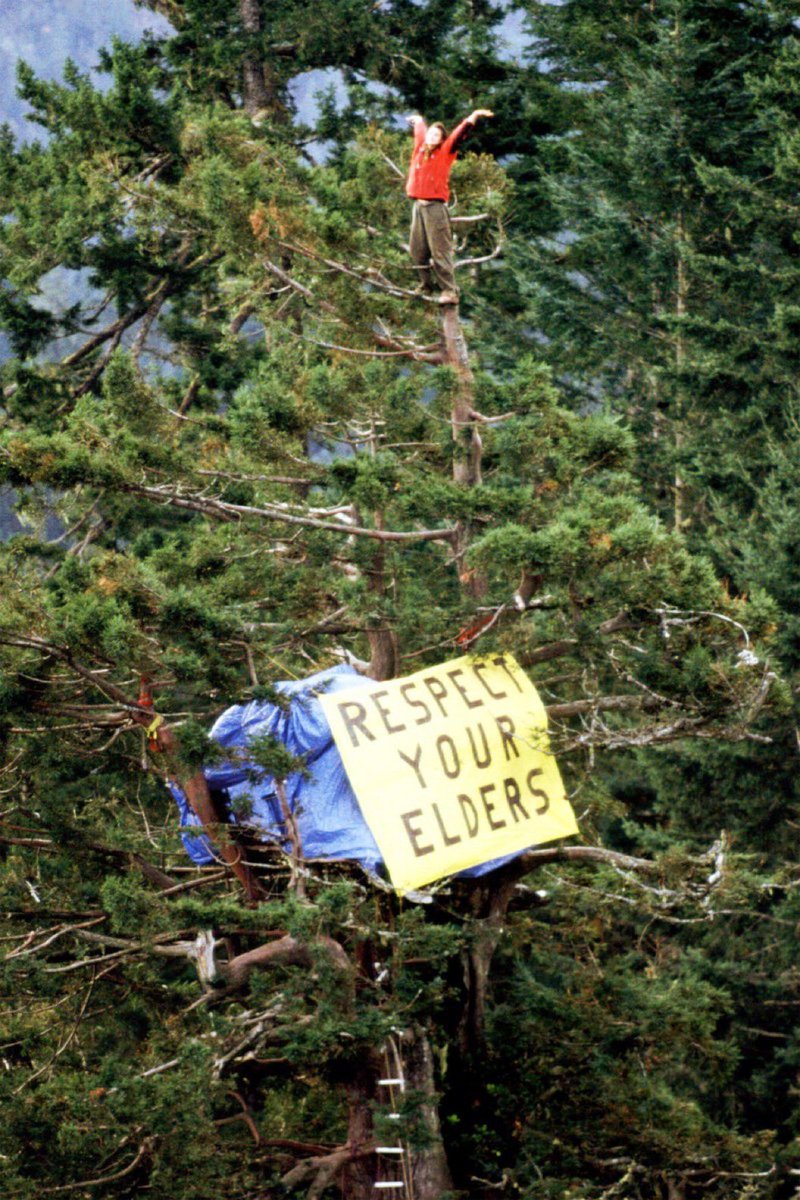
Hill lived on two 6-by-4-foot (1.8 by 1.2 m) platforms for 738 days. She learned many survival skills while living in Luna, such as "seldom washing the soles of her feet, because the sap helped her feet stick to the branches better." She used solar-powered cell phones for radio interviews, became an "in-tree" correspondent for a cable television show, and hosted TV crews to protest old-growth clear cutting. Using ropes, Hill hoisted up survival supplies brought by an eight-member support crew. To keep warm, she wrapped herself tight in a sleeping bag, leaving only a small hole for breathing. For meals, she used a single-burner propane stove. Throughout her ordeal, she weathered freezing rains and 40 mph (64 km/h) winds from El Niño, helicopter harassment, a ten-day siege by company security guards and attempts at intimidation by angry loggers.
A resolution was reached in 1999, when the Pacific Lumber Company agreed to preserve Luna and all trees within a 200-foot (61 m) buffer zone. In exchange, it was agreed that Hill would vacate the tree, and that the $50,000 she and other activists had raised during her occupancy would be given to the logging company. The agreement also provided that the company would donate that same amount to Humboldt State University for research into sustainable forestry practices.
Vandals later cut into the tree with a chainsaw. A gash in the 200-foot (61 m)-tall redwood was discovered in November 2000 by one of Hill's supporters. Observers at the scene said the cut measured 32 inches (810 mm) deep and 19 feet (5.8 m) around the base, somewhat less than half the circumference of the tree. The gash was treated with an herbal remedy, and the tree was stabilized with steel cables.
In 2001, Eureka civil engineer Steve Salzman headed Luna's "medical team" which designed and built a bracing system to help the tree withstand the extreme windstorms with peak winds between 60 and 100 miles per hour (27 and 45 m/s). They were assisted by Humboldt State University professor Steven Sillett. As of spring 2007, the tree was doing well with new growth each year. Caretakers routinely climb the tree to check its condition and to maintain the steel guywires. Luna is under the stewardship of Sanctuary Forest, a nonprofit organization.

22
91
1,376
243,717
Heather Frith Vote YES! 🤺💉x4 🌎 🐶 🇺🇦 retweeted

1 Jun 2024
Clinging to her mattress through violent storms, supported with food and necessities by a ground crew, she stayed two years and eight days.
They don't come hard like this anymore. A real hero in my books 💯
69
479
7,778
508,956
Heather Frith Vote YES! 🤺💉x4 🌎 🐶 🇺🇦 retweeted

2 Jun 2024
Sacrifice and bravery , I understand modernization , but in a fiat standard society loses touch with things only low time preference can create , the Redwoods are no exception. Majestic and captivating when standing at their base trunks. If you’ve never been, I highly recommend
1
1
33
19,126
Heather Frith Vote YES! 🤺💉x4 🌎 🐶 🇺🇦 retweeted

1 Jun 2024
Unbelievable that they were cutting redwoods down
14
2
219
115,618
Heather Frith Vote YES! 🤺💉x4 🌎 🐶 🇺🇦 retweeted

1 Jun 2024
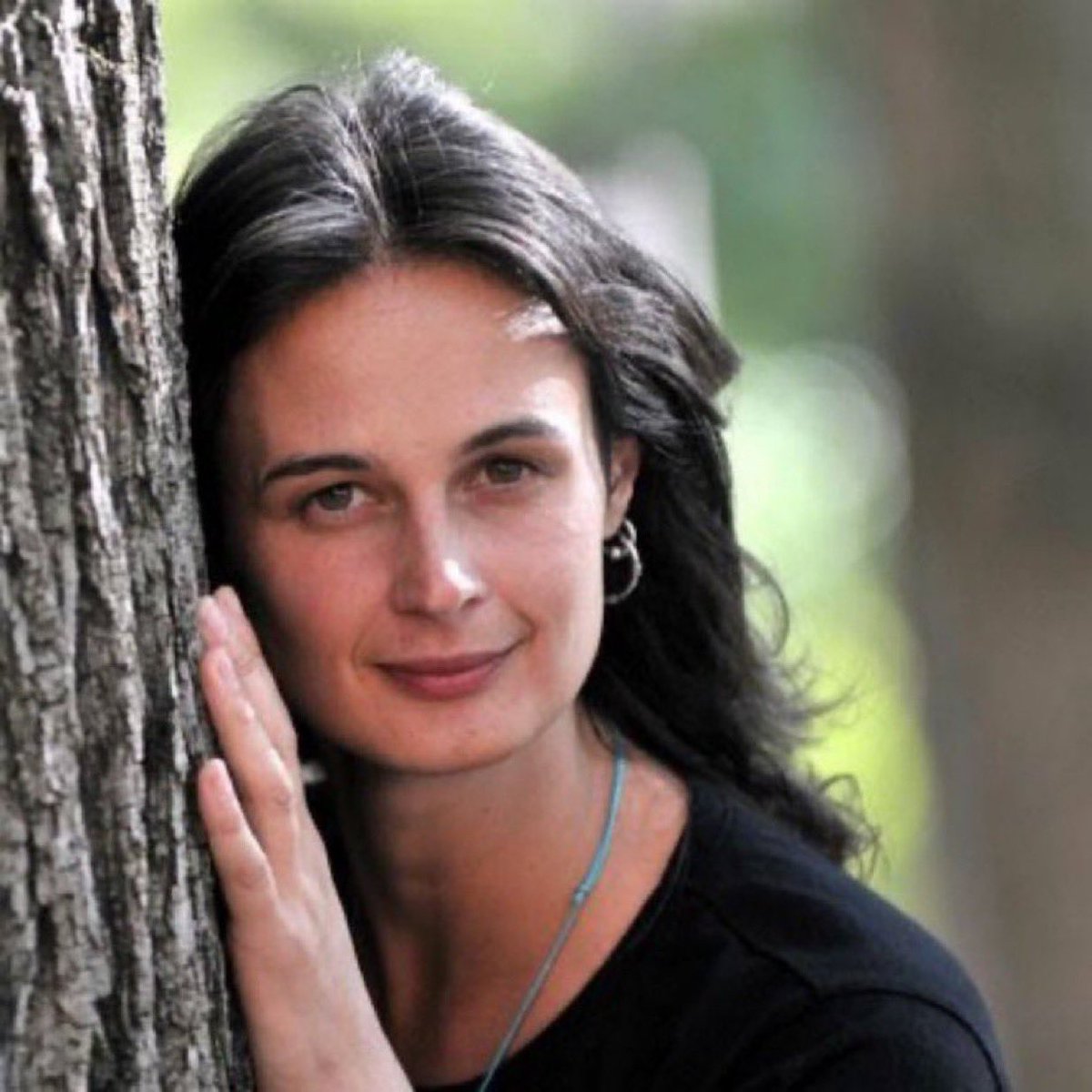
The tree Julia Hill lived in was named “Luna.” It stands in Humboldt County, California, and is around 1,000 years old.
She lived about 180 feet off the ground in Luna’s canopy to protect it from being logged.
Supplies were sent up to her using a system of ropes, and she used a small propane stove for cooking.
She lived with minimal comforts, using a hammock for sleeping and a bucket for sanitary needs.
57
153
2,427
598,645
Heather Frith Vote YES! 🤺💉x4 🌎 🐶 🇺🇦 retweeted

1 Jun 2024
In the late 1990s, Julia Hill climbed a 200 foot (61 meters) approximately 1000-year-old Californian redwood tree & didn't come down for another 738 days. She ultimately reached an agreement with Pacific Lumber Company to spare the tree & a 200-foot buffer zone surrounding the tree.
903
3,982
38,214
11,229,521