
The only sane person in Portland, Oregon. Blocked by Nikole Hannah-Jones for exposing her white lies.
Joined July 2014
- Tweets 5,845
- Following 163
- Followers 301
- Likes 20,756
8 Photos and videos

The Oregonian has blocked me, but if you want to read this story, here's a gift link.
Jun 13

I wonder if the article mentions the Sports Bra is trans movement aligned so a women's sports bar that is against women. Does it @grok ? Paywall so I can't read it.
1
27
Welcome to capitalism. Maybe the Sports Bra should enlist the services of Portland City Councilor Mitch Greene. He’s got a Ph.D. in Economics and thinks he knows all about how to run a successful business.
oregonlive.com/business/2026…
1
39

Jun 11
The NY Times has taken note of “right-wing” rage in the UK. Could it be that these “right-wingers” learned something from USA’s left-wing hero George Floyd? The Times doesn’t even mention the George Floyd riots.
nytimes.com/2026/06/11/world…
42
Jun 11
A fascinating tale about a bull named Party Bus who wanted to party. A rodeo crowd in Sisters, Ore., came to make sport of him — but he made sport of them. He’s been banned from rodeo. Story doesn’t say what he’s doing now. Stud service?
oregonlive.com/pacific-north…
1
30
Where is the mainstream news media?

The magnitude & brazen nature of the government payment fraud is staggering
15
In Portland, Ore., voters need to replace the City Council with AI. It will be cheaper, and actual work will get done.

Elon Musk used a joke to perform an autopsy on the American economy.
Two economists go for a hike. They find a pile of shit. One pays the other $100 to eat it.
They keep walking. Find another pile. The second economist pays $100 back to eat that one.
They stop. Neither man gained a dollar. Both ate shit for nothing.
But on paper they just generated $200 in GDP.
Musk: “That basically would count as a job. This is to illustrate the absurdity of economics.”
That is not a punchline. That is the operating system of the federal government.
Every time a politician celebrates “record job creation” this is what they are describing. Not output. Not value. Not progress. Motion.
The entire bureaucratic machine exists to manufacture friction and then invoice for it.
Compliance layers built to justify the next compliance layer. Oversight committees that produce nothing but the need for more oversight. Consulting firms hired to audit the work of other consulting firms.
Trillions circulating through systems that have never produced a single thing you can hold in your hands. But the GDP number ticks up. So everyone applauds.
The shit gets eaten. The scoreboard moves. Nobody asks what actually got built.
This is why Washington treats AI like a five alarm fire.
AI does not play the friction game. It does not form a committee. It does not schedule a review. It does not file 400 pages of paperwork no one will ever read.
It just solves the problem.
And that is the one thing the machine cannot survive.
The government does not tax results. It taxes the process. The longer the process, the deeper the cut.
AI compresses a ten day workflow into seconds. There is nothing left to bill. Nothing left to tax. Nothing left to skim.
So they will spend the next decade warning you that AI threatens the economy.
What they will never say is what it actually threatens.
The illusion that activity equals progress.
The $200 economy where both men ate shit and called it a job.
The machines are not coming for your purpose.
They are coming to prove that half the economy never had one.
22
Oregon State Hospital should try a new approach in handling its most violent, difficult patients: Transport them to Portland and turn them loose in The Oregonian’s newsroom. It will lend a new perspective to reporting on this issue.
oregonlive.com/politics/2026…
18
That's Portland City Councilor Angelita Morillo -- in 30 years.

3
1
57
Portland City Councilors thought they made history embracing polyamory. These royal Brits, the Mountbattens, beat them to it last century. “My father adored my mother and wanted her to be happy. So it was his idea to bring Bunny, whom we adored, into the family.”
nytimes.com/2026/06/05/world…
1
25
This is especially true in Portland, Ore.
1
15
Someday this will all be normal in America. Isn't that the intent?
Jun 6

One of CHAZ’s residents killed a woman and then drowned in a large vat of bleach while hiding out in the former CHAZ. This is on top of the shootings during the active BLM-Antifa autonomous zone occupation.
1
41
Do Oregon lawmakers and politicians ever ask what it costs — in public safety and morality — to flip society’s sympathies towards criminals?
portlanddissent.substack.com…
1
2
100
Within milliseconds is how quickly Aaron Stanton could have pointed his gun and fired — at anyone. Too bad we can’t all have the kind of security protection that U.S. District Court Judge Adrienne Nelson enjoys. Try entering the courthouse with a gun.
oregonlive.com/crime/2026/06…
1
216
What do they have to smile about?

1
1
49
Pamela Fitzsimmons retweeted

Wait for it.. 😂
Community note
This is an AI generated video. The cat has 5 legs.
grok.com/share/c2hhcmQt…
491
3,630
27,819
956,529
Portland’s true-blue latte revolutionaries should take note: Win or lose, L.A. mayoral candidate Spencer Pratte has rewritten the rules for political campaigning. Portland needs this dose of reality:
portlanddissent.substack.com…
1
5
194
Warning to the American news media: "The future will be invented by people who connect ideas, not by people who guard them."

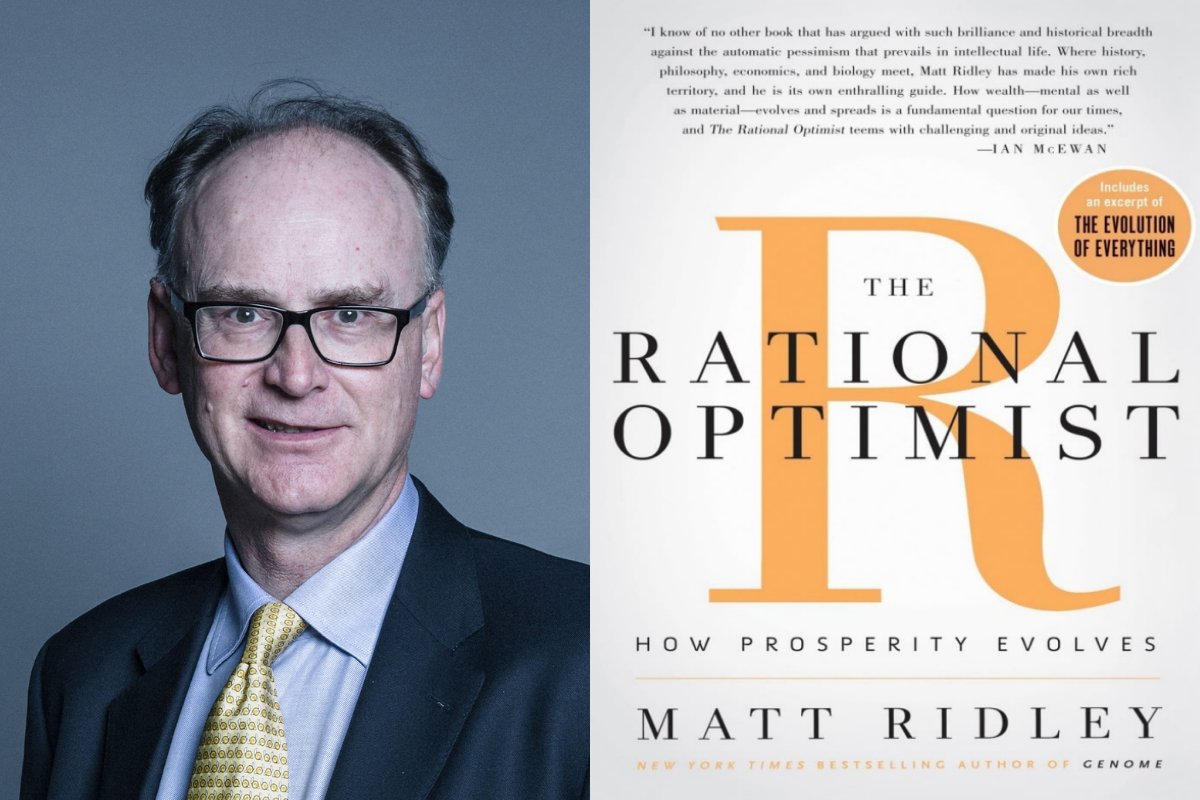
A British biologist looked at 200,000 years of human history and found that the entire reason humans broke out of poverty was not intelligence, not language, not even agriculture, but one mechanism so simple a 6-year-old could explain it.
His name is Matt Ridley.
He is a zoologist by training, an evolutionary biologist by career, and in 2010 he wrote a book called The Rational Optimist that quietly argued the most important fact about human progress had been hiding in plain sight for the entire history of economics.
Naval Ravikant has been telling people to read everything Ridley has ever written for the last 15 years. The reason is the argument inside this one book.
For 200,000 years, anatomically modern humans walked around with the same brain you have right now. Same skull size. Same neural architecture. Same raw capacity for language, planning, and abstract thought.
For roughly 190,000 of those years, almost nothing happened. Generation after generation lived and died inside the same Stone Age toolkit their great-great-grandparents had used. Then somewhere around 50,000 years ago, the line on the chart of human progress started to tick upward. Then it bent. Then it exploded.
The question Ridley spent years on was the only question that mattered. What changed.
It was not the brain. The brain had been the same for 190,000 years. It was not language, which had existed long before the takeoff. It was not even agriculture, which arrived only 10,000 years ago and was actually preceded by the upward bend, not the cause of it.
What changed was that humans started trading with strangers.
This sounds too small to be the answer. Ridley argues that it is the answer to almost everything. The moment one human exchanged a useful object with another human from a different group, something happened that no other species on earth had ever done.
Two ideas that had developed in isolation came into contact. The flint knapper learned what the spear maker had figured out. The fisherman from the coast learned what the hunter from the forest had figured out. The two pieces of knowledge fused into something neither side could have produced alone.
Ridley calls this ideas having sex. The phrase sounds frivolous and it is meant to. The point is that ideas, like genes, get better when they combine with other ideas from different lineages.
An idea sitting inside one head, no matter how brilliant the head, eventually hits a ceiling. The same idea exposed to ten thousand other ideas does something genes do under sexual reproduction. It mixes. It recombines. It produces offspring nobody planned.
The cleanest proof of this argument is the most uncomfortable case study in the book. Tasmania.
Around 10,000 years ago, rising sea levels cut Tasmania off from mainland Australia. A population of roughly 4,000 humans was now isolated on an island, with no possibility of contact with the rest of humanity. They had the same brains. The same language. The same starting toolkit as their cousins 150 kilometers north. The natural experiment was now running.
What happened next is something no economist or geneticist had ever predicted.
The mainland Australians kept inventing. Boomerangs. Spear-throwers. Fishing nets. Bone needles for sewing fitted clothes. Watercraft with paddles. Their technology compounded slowly across the centuries.
The Tasmanians went the other way. They did not just fail to invent the new tools their cousins were developing. They started losing the tools they already had. Fishing was abandoned within a few thousand years. Bone tools disappeared. Fitted clothing disappeared. They forgot how to make fire from scratch and started carrying lit firebrands from camp to camp instead, relighting their fires from a neighbor's whenever their own went out.
By the time European explorers arrived in the 17th century, the Tasmanians had the simplest toolkit of any human society ever recorded. Their material culture had gone backward for 8,000 years.
The archaeologist Rhys Jones called it a slow strangulation of the mind.
Joseph Henrich at Harvard later proved with formal mathematical models that there was nothing wrong with Tasmanian brains. There was something wrong with their network. A toolkit requires a critical mass of people exchanging skills to maintain itself.
The act of teaching a skill is imperfect. Every generation loses a small percentage of what the last generation knew. If your population is large enough and trading widely enough, those losses get caught and corrected by someone else who still remembers.
If your population shrinks below a certain threshold and stops mixing with outsiders, the small losses compound until entire technologies disappear.
This is the part that should haunt anyone reading this in 2026.
Intelligence is not a property of the individual brain. Intelligence is a property of the network the brain is connected to. A genius in isolation will produce less than a mediocre thinker inside a dense exchange of other mediocre thinkers.
The thing your ancestors needed in order to break out of 190,000 years of stagnation was not better brains. It was better connections between brains they already had.
The implication for any individual is direct and uncomfortable. If you are smart and isolated, you will be outproduced by people half as smart who are connected.
The most successful people in any field are almost never the smartest people in it. They are the ones positioned at the intersection of the most idea flows. They are reading more authors than their competitors. They are talking to more people from more disciplines. They are in the rooms where ideas from different lineages bump into each other.
Ridley ends the book on the line that sounds optimistic but is actually a warning its this "The future will be invented by people who connect ideas, not by people who guard them."
20
May 31
Oregon’s one-party state and the teachers’ unions have abandoned students in the interest of “racial justice” and social equity. The problem isn’t money. It’s politics.
oregonlive.com/opinion/2026/…
1
16
May 31
Beautiful, but it couldn’t be done for Portland, Ore. women. They stalled out when Can’t-Bust-‘Em overalls became a hit.

1
71
May 29
The fire management practices described in this story were in use before environmentalists destroyed the timber industry to save the spotted owl. Piling slash and burning it was the norm. It was called forest management. Enviros said nature should be in charge.
oregonlive.com/wildfires/202…
1
22