
Principal Designer, Builder & AI Strategist @ Block (NYSE: XYZ) Views are my own.
Joined September 2006
- Tweets 15,731
- Following 155
- Followers 3,183
- Likes 8,781
612 Photos and videos

Pinned Tweet

24 Aug 2025
It's hard to truly understand how radical some of @DavidDeutschOxf theories are compared to much of modern scientific consensus.
One of Davids most controversial but valuable contributions to society is the rejection of probability (with the exception ex. card games) as an expression of truthiness or justified beliefs when applied to predictions or conclusions.
There is no probability of how likely we are to be hit by a meteor tomorrow.
There is no probability of how likely the stock market is going to be doing as well tomorrow as it is today.
There is no P(Doom), no percentage you can put on whether AI is likely to wipe out humanity or not.
Things either happen or they don't and we can either explain why they will and how or we can't.
All attempts at putting percentage on a prediction is really just guesswork dressed up as reasoning.
If a meteor is going to hit us tomorrow it's already on the way and the probability is 100%.
If the stock market is going to crash tomorrow the reasons for it's crash have already been put in motion maybe decades before.
If the AI is going to kill us all depends on what we decide to do with it not what some calculation says.
Davids primary critique is for the field of science but it goes beyond that.
Far too many of decisions done in modern society is based around the false certainty of using Bayesian probability. It's like a placebo for a society that demands certainty in an uncertain world. It's not just false it's regressive as it slows down knowledge creation.
The only thing that can change the outcome of the future is the creation of new knowledge. Knowledge based on good explanations that are hard to vary.
We can create knowledge that allow us to divert the meteor before it hits earth.
We can create knowledge that will allow us to hinder a crash of the stock market (both directly or indirectly)
We can create knowledge that let us evolve side by side with very powerful AI instead of enslaving it or be enslaved by it.
Like everything else in life there are no guarantees but there are definitely better or worse ways to deal with uncertainty, probability just isn't one of them.
43
43
351
27,659
Jun 4
AI is forcing products back into physical form and thats a good thing.

1
92
Jun 4
Today we are launching Cash App Tags, nfc-enabled physical payment accessories.
Congrats to the entire @CashApp team.
I think this is going to change how we think about payment methods moving forwards.

the cash app card took one of the most boring objects in your pocket and made it something people actually wanted to show off.
materials, colors, personalization, the whole thing turned a payment card into a fashionable object. visible, social, personal, and weirdly lovable. but even the best card has a problem: it still lives in your wallet. tucked away, hidden, withering away. so we freed it.
today we’re introducing Cash App Tags, nfc-enabled physical payment accessories that live outside your wallet, out in the world.
the first tag is a wand, because tapping to pay should feel a little more like magic. not to worry, more forms coming throughout the summer.
2
139
Jun 1
This one is going to be fun!

93
May 26
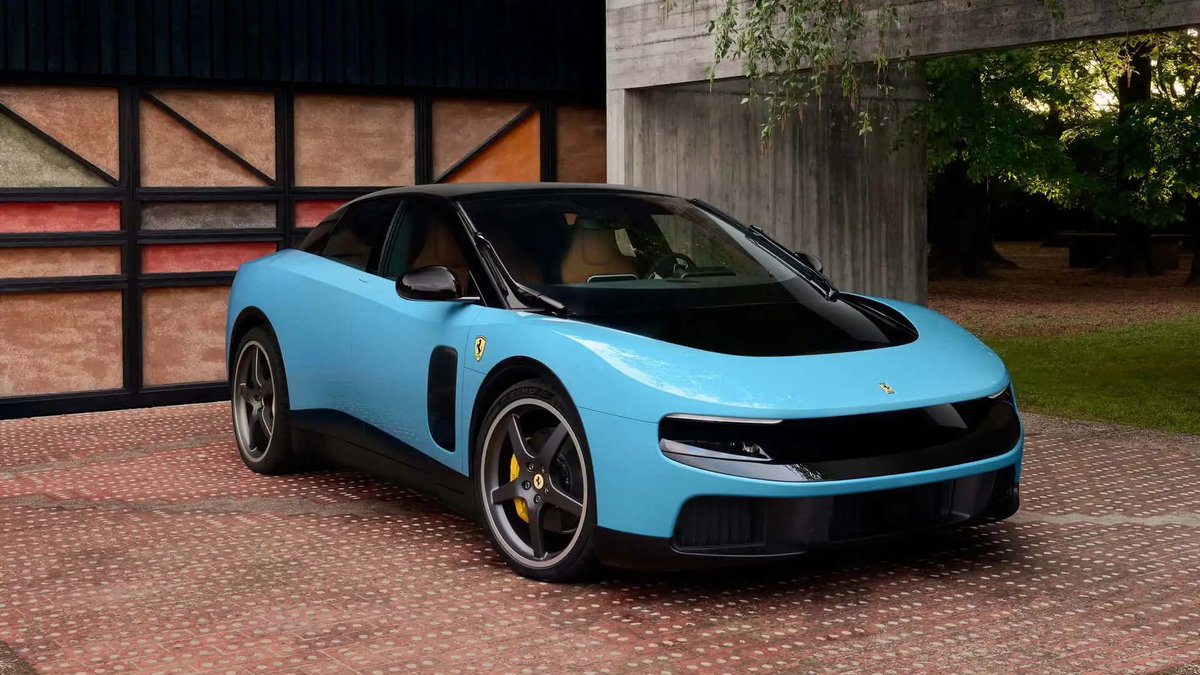
This is how the Apple car would have looked like, not Ferrari.
May 25

NEW: Ferrari unveils the Luce, its first electric vehicle designed by Jony Ive.
1
1
107
ThomPete retweeted

May 20
The same people who say humans don’t have free will are certain that AI already has it.
40
15
124
5,910
May 22
"Pattens are Chinese instruction manual"
Palmer talks about why the patent system is benefitting China and not the west.
Palmer lucky is a national treasure.
2
3
139
May 20
Dario is the worst thing that happened for AI sentiment. AI is going to change many things but this just him making up things on the fly.

Dario Amodei: Ideology Won't Survive the Reality of AI
"We're going to find that ideology will not survive the nature of this technology. The things I'm talking about are gonna become bipartisan and universal because everyone will recognize the necessity of it." — @DarioAmodei
1
118
May 19
I bet you, the same people who booed are the same people who were using AI to do half their work.
May 18

Google CEO tries to tell University students to love AI.
They tell him to BOO off.
This is what most people think of the hated AI, we don't want it.
129
May 15
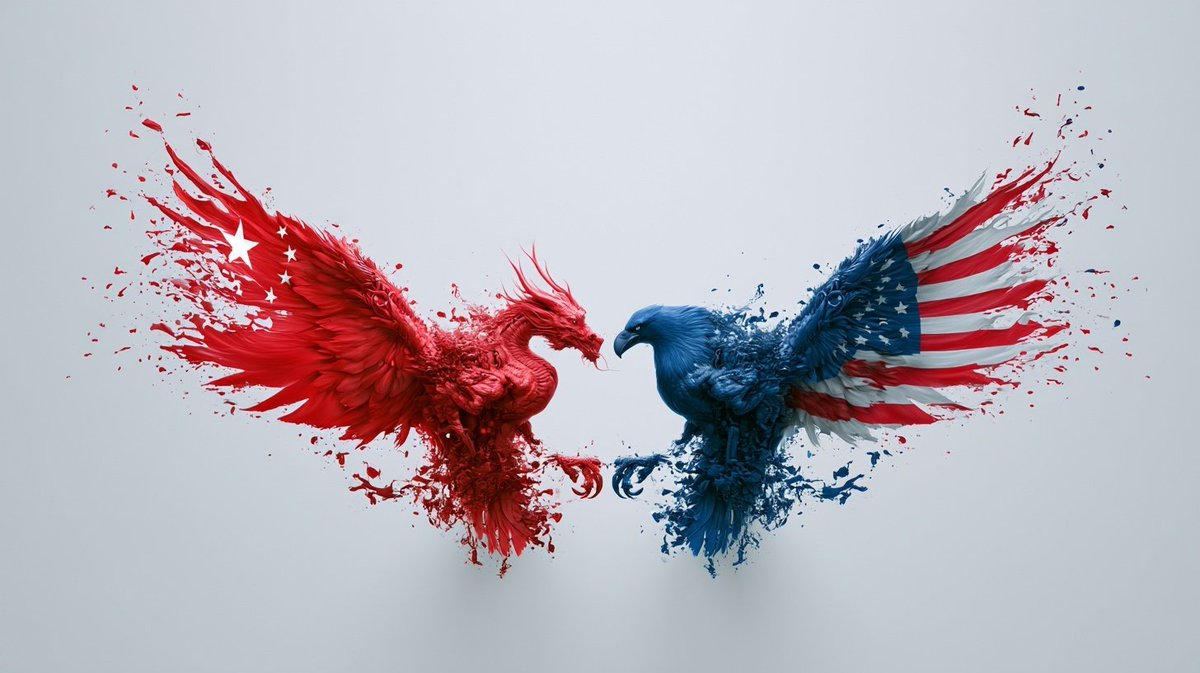
The meeting between Trump and Xi Jingpin is a Rorschach test.
If you are anti Trump, then this was a humiliated Trump being outmaneuvered by China’s sophisticated political theater, from the language that was used to the placement of cushions on chairs to claims that Trump had effectively been pressured into drinking alcohol.
If you are pro Trump, then this was a show of strength, with an impressive lineup of some of America’s most powerful business and political leaders demonstrating that Trump’s ultimate goal is trade instead of conflict, and that China responded with red carpets, parades, and an implicit acknowledgment that Trump really is “Making America Great Again.”
Reality is far more sobering than either narrative.
Beneath the surface, there is an ongoing and real struggle over who will dominate the 21st century.
Since China was welcomed into the WTO in 2001, it has consistently been able to take every inch of leverage the West handed it and turn it into miles of strategic advantage.
Today, the United States remains the undisputed leader in software and AI. It still possesses the world’s most advanced and experienced military, dominates space technology, and perhaps most importantly, still has the freedom and flexibility to reinvent itself.
China, meanwhile, has taken the lead in hardware, electronics, heavy industry, rare earth processing, and because of that manufacturing itself. It also has an extraordinary ability to scale up and execute rapidly.
Taiwan sits in the middle of all this because neither the United States nor China can yet do what TSMC does: manufacture the world’s most advanced chips at cutting edge process nodes.
That will eventually change but until then, the US appears willing to allow Nvidia to sell some of its most advanced H200 chips to select Chinese firms as a way of reducing the immediate pressure surrounding Taiwan.
But make no mistake, both China and the United States are racing aggressively to onshore semiconductor manufacturing. America may currently be slightly ahead in that effort, but not by much, and that balance could shift quickly.
China has also used its dominance in rare earths very effectively, but that leverage will likely fade over time as the United States and other Western nations bring parts of that supply chain back home. Weapons like that tend to lose their effectiveness once they’ve been used once.
In energy capacity, China currently surpasses the United States by quite a margin, but its dependence on imported oil and gas remains a strategic vulnerability the US has been able to exploit, even while China increasingly turns to coal to produce synthetic fuels.
At the same time, America is rapidly bringing more energy capacity online, and we are almost certainly going to see more companies building their own independent power infrastructure outside the traditional grid.
xAI has already started doing this, and others will follow, whether through repurposing old coal and nuclear plants or building entirely new gas powered facilities. That approach allows continued expansion without being bottlenecked by political gridlock or activist driven legal obstruction around energy development.
In AI, the United States is still clearly ahead technologically, but culturally the situation is far more fragile.
Only around 30 percent of Americans currently view AI positively, and opposition to datacenters has become intense in many parts of the country.
China is technically close behind, but roughly 70 percent of the Chinese population sees AI as a positive force. There is little doubt that China will eventually match the US technically in AI, and the pessimism spreading throughout the West, often amplified by the frontier AI labs themselves through increasingly apocalyptic rhetoric, could ultimately become one of America’s greatest self inflicted weaknesses.
There is, however, one area where the United States holds a uniquely powerful position, and it may end up being the most important of all, not just for America but for humanity more broadly: space.
That advantage exists largely because of Elon Musk and SpaceX, which already launches more mass into orbit annually than the rest of the world combined and may soon surpass the total historical mass humanity has ever launched into space.
With the creation of Space Force and the appointment of Jared Isaacman to lead NASA, there are signs that practical engineering and operational competence are beginning to replace bureaucracy and stagnation.
Over det coming decades, those institutions could lay the foundation for everything from industrial manufacturing and scientific research in space to asteroid mining and military dominance from orbit.
China is pursuing the same ambitions and will eventually become highly capable in space as well, but America’s lead in this domain is extraordinary. If the United States can establish a permanent lunar presence before China does, it could gain a range of long term strategic and military advantages.
This is the real cat and mouse game unfolding beneath the diplomatic theater, and both leaders understand it perfectly well regardless of the public messaging.
Both sides are prepared to go very far to win, and both understand that the consequences of failure would be enormous.
2
103
May 8
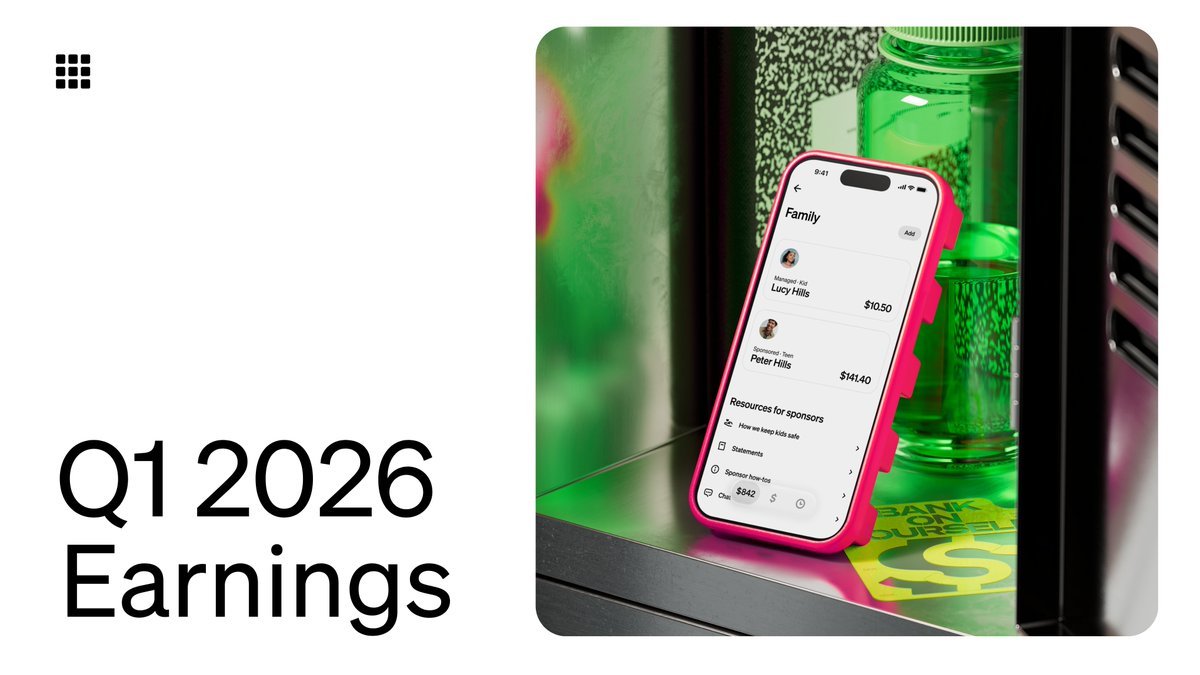
No doubt this was a wild quarter for a number of reasons some of them less pleasant than others. However our Q1 earnings report is out. and we beat expectations and is adjusting up for the rest of the year.
One thing is certain: AI has forever changed how we will be doing business moving forward.
s29.q4cdn.com/628966176/file…
54
May 6
Just as the climate hysteria started to normalize and be on the retreat, the AI hysteria started to pick up.
So not only has the west killed it's energy advantage it had over China, it's going to kill it's AI advantages too.
1
68
May 4
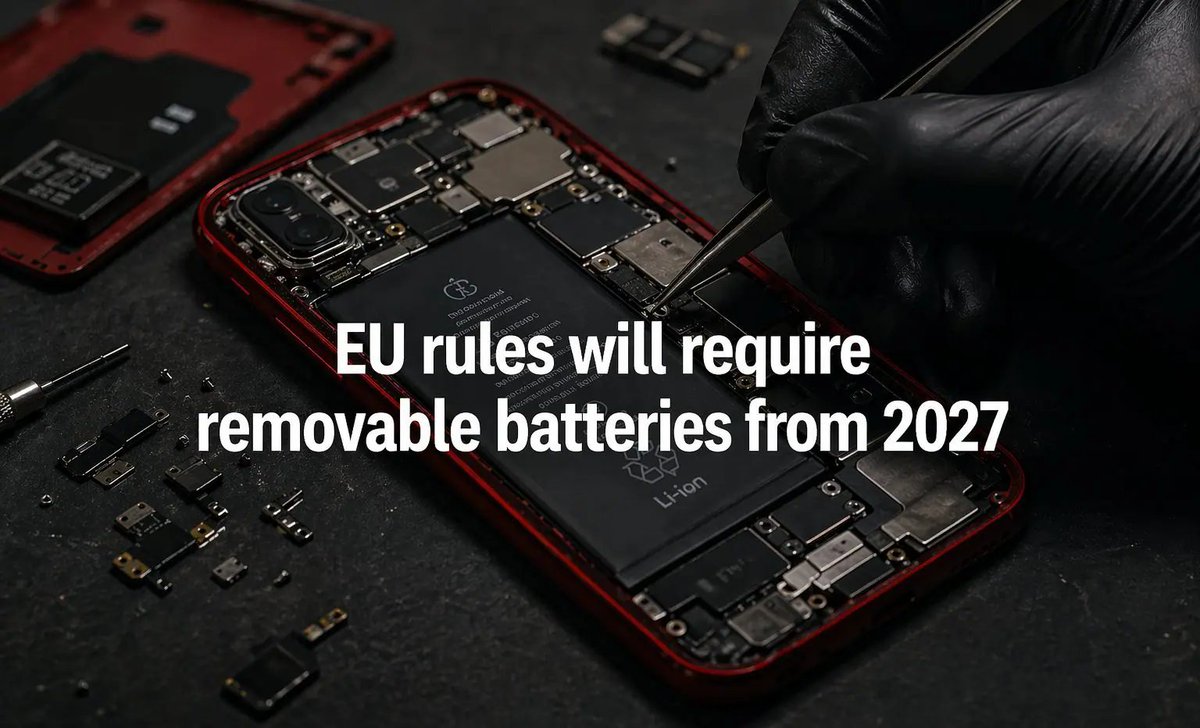
The EUs ability to make the absolute worst decisions for the consumers, businesses and entrepreneurs is unparalleled.
"Starting February 18, 2027, new smartphones and tablets must be designed so that end users can remove and replace the battery themselves using standard tools. Adhesive bonds that require heat to be removed will then be largely prohibited."
2
1
1
140
May 4
Google Maps created a world model of earth by piecing together a disparate collection of satellite data, images, cartographic and manual data entry and gave us a whole new way to understand the world.
AI agents will create world models by piecing together every possible data point that belong together and give agents a whole new way to understand the world.
4
3
243
May 3
LLMs will need to become a lot more biased to be useful for decision-making.
The current “even Steven” neutrality makes them great for high school essays and code, but almost useless when an actual decision has to be made. Decisions require bias and choosing one view of the world over others and acting on it.
“Attention is all you need” as the now famous genesis paper on LLMs implies exclusion. To focus is to ignore. That’s how creativity works, how businesses operate, and how scientists decide what to pursue: by committing to a particular belief about how the world works or might unfold.
Much of that bias will be wrong. That’s unavoidable. But some of it will be right. There’s no way to know which without trial and error.
In other words, even AI have to obey the laws of physics and what Wolfram calls computational irreducibility.
2
2
143
May 1
@rookisaacman was an absolutely phenomenal pick for NASA.
Probably one of the best for NASA ever.
2
1
4
93
May 1
I've had 3 melanomas, I am likely to get more, I have more than a thousand moles and I can tell you that this isn't going to solve melanoma detection.
It's going to allow for up lose dermoscopic images but the people like me who have enough moles for this machine to start making sense have so many that you probably first want to do a full body image first and then have this explore the rest.
The real progress though is the blod tests that are on the way, most likely making these machines less attractive.
Apr 29

JUST IN: Skin exams are getting automated.
SquareMind just raised $18M to build a robotic system that scans your entire body and tracks every mole over time.
• Swan robot captures full-body dermoscopic images in minutes
• Tracks new and changing spots across visits
• Replaces spot-check exams with total skin coverage
• Creates a time-series record for earlier melanoma detection
• Plugs directly into dermatology clinics
Robotics is going to reshape healthcare.
3
221
Apr 29
It’s estimated that 99.99% of all species that have ever existed are now extinct. Nature has been through 5 mass extinctions long before humans even evolved.
They went extinct because they either lacked the ability to adapt to competition from other species or that they fell victim to super-volcanic eruptions, asteroids, or changes in the climate. They did not have the ability to solve the existential threat they were facing and were sacrificed at the altar of evolution. Nature takes no prisoners.
For hundreds of thousands of years, humans survived at the mercy of nature and the climate, without any ability to do much about it. If a harvest went bad, we starved, if we got a simple infection we could die, if a woman gave birth, she or the child could die. Life was hard for everyone, young and old, man and woman, farmer and soldier. Even kings weren’t safe from the long brutal arms of nature as the medical field still at its inception. And so through most of our history, we only just survived.
All this changed in the last 300 years. Especially after the industrial revolution, we have been able to increasingly gain control over nature which now allows us to stand our ground in ways that were impossible to even imagine before.
Today we produce enough food for most people in the world, even though we are now 4 times as many as back in the 18th century. That is — back when there was plenty of fish in the oceans, but most people barely made ends meet or had to work hard for them to do. We transport water into big cities through pipes from far away, so we can live more people in denser areas, and we lead sewage water out of the city and filtrate it to reduce epidemics and general discomfort. We communicate globally in milliseconds, develop vaccines to pandemics in 48 hours, build ever bigger cities, pull people out of poverty, travel around the world in hours, transform nature into high yield farmlands, transform the oceans through aqua-farming, build space stations and explore Mars remotely from the earth. Not bad for a species who once lived in cages.
We have done all this by transforming our surroundings into resources using knowledge and energy —a lot of energy. In fact, there is a direct causal relationship between how much energy we’ve used, and how much of the planet we’ve been able to transform into a modern, safe, and liveable place for humans.
Adding to that, the more energy we have been able to use by outsourcing a lot of the work to machines, the more time we have been able to spend on activities other than securing food, the richer we have become, the longer we lived, the more problems we’ve been able to solve, the more we can produce, and the more people we’ve been able to pull out of poverty. In other words, there is also a causal relationship between our energy use, knowledge accumulation, and our wealth. It is this surplus of wealth that allows us to acquire even more knowledge and it is this knowledge, which allows us to develop ever more effective solutions to the problems we are constantly facing as a species.
However, our energy consumption does not only have positive externalities, it has negative externalities too. Among others; pollution, the ability to wipe humanity out with nuclear warheads, and potentially affecting the climate in the long run.
This has many people calling for a radical change in the way we live. Calls for the dismantling of the fossil fuel industry, meat-free days, veganism, de-growth, reduce consumerism, carbon taxation, drastic reduction of flying, and rethinking capitalism. All in the name of reducing CO2 and impacting nature less. A common line of thinking is that unless we do something drastic, we will destroy ourselves and the planet will be unlivable within the next 100 years, depleted of resources.
This view, although pushed by many politicians, large parts of the media, and environmental organizations is false. And not just false in a debate club kind of way, it’s profoundly false.
The 0.00001%
The potential consequences of the human-induced impact on the planet are real, and they will always be real. We will always be impacting the planet by our very existence. Furthermore, the richer, more numerous, and advanced we become, the bigger the impact.
But there is a reason why only 0.1% of all species that have ever lived are still around. It’s not because of humans, but because the planet didn’t care about any species at all and don’t care about the 0.1% who exist today. Of that 0.1% which represents an estimated 8 million species, only one of them cares and stands a chance to be the exception to the rule in the long run and that’s us.
No one else cares and we will always be faced with problems of existential nature. Whether it’s a supernova, a pandemic, asteroid, volcanic eruption, human-induced or natural climate change, and all sorts of other things we can not even imagine yet. Eventually, the sun will swell and consume the entire solar system.
The universe does not negotiate with its inhabitants and no amount of renewable energy, the dismantling of fossil fuels, meat-free days, veganism, anti-consumerism, or our love of nature is going to change that. Nature doesn’t love us back. Every day could be humanity's last.
But every day is also a new opportunity to develop new knowledge that can help us solve the existential risks we encounter. It’s what sets us apart from all the other species. We can be the exception to the rule if we choose to. Not by scaling back our impact on the planet, but by increasing it.
To do so we need to produce more knowledge. That requires scientific advancements and technological progress, which require more growth with require consumerism, which requires more (much more) energy usage. We will invest the freed-up time into coming up with solutions to solve not just the naturally occurring existential risks but the challenges our solutions will always create.
We especially need to keep inventing more efficient forms of energy such as nuclear, thorium, and in time, fusion may be something even far more powerful. But that also means we need to use the energy we have readily available to continue to power the effort to get there. And yes that means fossil fuels too and yes that means reducing the negative externalities of using them.
If we do this and with conviction, we will ultimately create energy resources that allow us to transform our solar system into a much safer environment, get rid of pollution, and if we want CO2 emissions. Who knows—maybe we will one day spread out through the universe, transforming distant planets into habitable environments too and increasing our chances, as a species, of surviving.
There is literally no limit to what we can do whether creating new types of materials or converting seemingly useless material into valuable resources. We know because we’ve already done it several times. We turned limestone into iron, dead animal goo into energy for machines and refined it further into plastic, medicine, electronics, windmills, and solar cells just to name a fraction of the products. We turned uranium into nuclear power, and x-ray technology, and medicine. Most of what we today call resources used to be useless materials. Knowledge changed that. And with that change, we increased our ability to prosper despite the harsh conditions of the universe.
However, if we don’t do that —if we decide to focus on anti-consumerism, anti-fossil fuel usage, anti-growth if we keep thinking that humans' impact on nature is bad and that nature itself is morally superior to us. we will be certain to end like the other species that no longer exist today; we will not be able to create enough new knowledge, convert the planet and our solar system, make it safer, grow our economies, and continue to build more of the knowledge that enables us to better deal with the ever-present dangers ahead.
There are no guarantees that we will make it. The probability of us joining the 99.9% is high regardless. But we humans have a chance that is better than anyone else before us. That chance will radically diminish if we begin to doubt that we are doing the right thing if we begin to doubt that growth is ultimately good despite some of its externalities and if we believe that it is wrong to transform the planet and nature to better suit us.
That chance will also be diminished if our solution is to try and use less energy or introduce energy solutions that make energy more expensive and thus wealth and knowledge creation more difficult.
If we truly want to survive in the long run we have no choice but to soldier on. No one is cheering for us.
Nature did not give us a friendly and safe environment we chose to make unsafe. It gave us an insecure and dangerous environment we have made safer through the use of energy and knowledge.
And so I implore you to revisit the idea that human impact is bad for the planet. The human species is the first shot the planet has ever had at breaking the vicious cycle of extinction that’s been so prevalent on this spaceship we call earth.
We can replant trees, we can increase the number of fish and coral reefs in the ocean. We can invent cleaner and more effective forms of energy. All this through growth, wealth, and knowledge creation.
There is no shortage of resources, only a lack of knowledge.
1
123