Wrecking lot proprietor. 🌋 banner: ben-evans.com/benedictevans/…
Joined November 2018
- Tweets 38,999
- Following 2,149
- Followers 1,234
- Likes 171,173
1,029 Photos and videos


Pinned Tweet

Apr 28
What is the role of intelligent agents in a complex evolutionary system? Or, what is a good person’s job in a world where good never quite triumphs over evil? Or, why do I have to keep voting for Democrats?
Apr 27

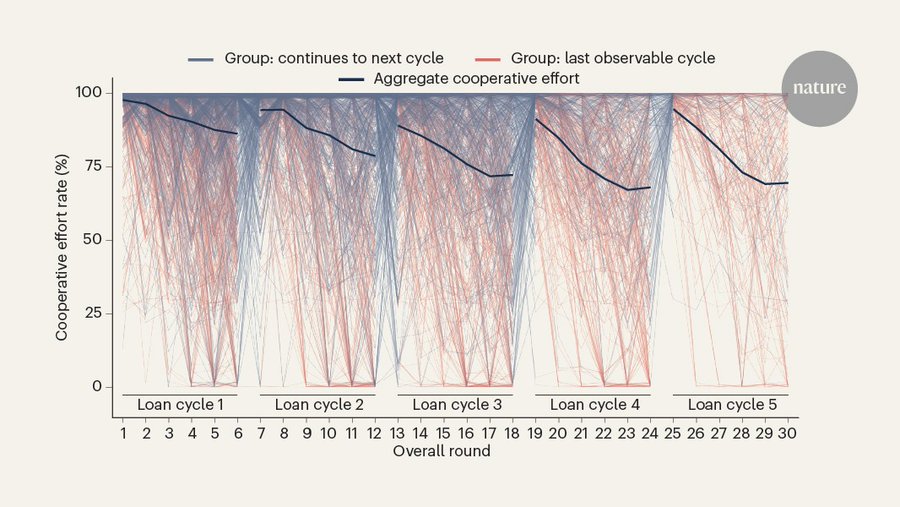
Human cooperation undergoes constant breakdown and repair
Incentives to cooperate must therefore be actively renewed (don't assume cooperation will sustain itself). nature.com/articles/d41586-0…
5
3,563
This is just describing the experience of being a bad person.

Gutfeld on Josh Hokit: We enjoy it when you’re upset. That guy is a troll. We get it. It's not our fault that you don’t.
20
250
4,333
114,557
It’s related to the old refrain of neutral journalists: “if everyone is upset I must be doing my job.”
2
41
1,980
Henry Porter🇺🇸 retweeted

Continuing my #America250Week with a visit to the World War I Memorial in KCK. Without the sacrifice of our nation's servicemembers, none of this would be possible.

8
4
33
713
Henry Porter🇺🇸 retweeted

They were seriously debating using the military to throw anyone who disagreed with them in jail…
20h

"Vance got to the point. They needed to invoke the Insurrection Act, swiftly, to crush the unrest in Minnesota. It would be painful in the short term, he said, but the message it would send — that paid agitators could not get away with disrupting ICE operations — would make sure no one tried it again. (There was no evidence that either Mr. Pretti or Ms. Good had been paid activists.)" nytimes.com/2026/06/15/us/po…
27
232
1,025
82,206
Henry Porter🇺🇸 retweeted

🚨WTF! Donald Trump seems to LACK the strength in his right arm today to do his signature pulling handshake with French President Emmanuel Macron.
He also looks GRUMPY as hell today. What’s going on?
2,324
3,057
12,295
1,632,410
Henry Porter🇺🇸 retweeted

If this were black people, there would be tweets all over this site about how violent black people are, and how they cant be in society, followed by an Elon musk "Yup" retweet.

Happy 250! Thousands of rednecks on the front lawn in front of a fight… What could possibly go wrong?
798
5,886
42,727
738,148
Henry Porter🇺🇸 retweeted

12h
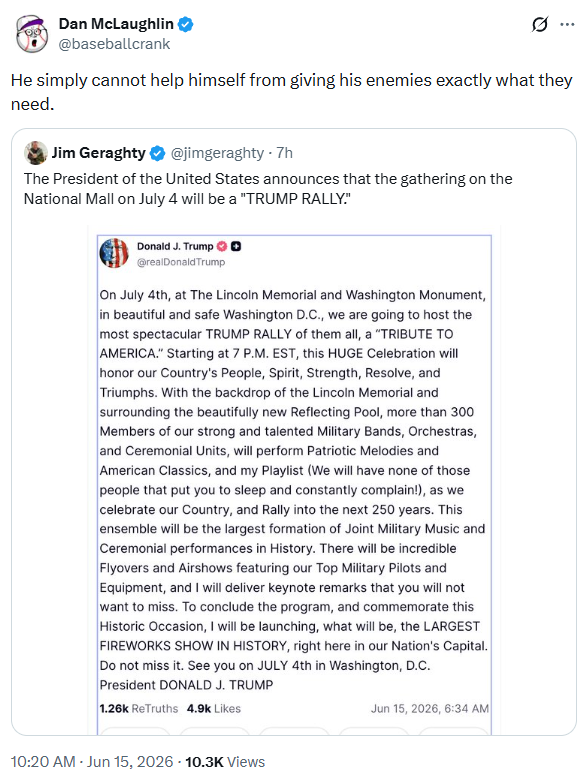
"The problem with Trump is how he keeps proving his critics, who deserve to be wrong, right"
54
400
3,262
172,786
I think it’s fairly clear that this is something that happens in college. We should try to teach students true things about how politics works, even if that means crimping the style of some tenured professors.

It's so depressing to keep watching this happen. The Women's March had an entire movement of women who were outraged by Trump/GOP and the leaders tried to co-opt it and make it about Bernie Sanders and Israel. Completely ruined it.
Indivisible has the whole No Kings rallies, which again are about people who are disgusted by the actions of Trump/the GOP and the 'progressive' leaders are trying to co-opt that energy to make it about Lefty causes. It sucks.
The activist class is a cancer on our party.
1
1
7
276
Journalism attracts the most cynical people in the world.

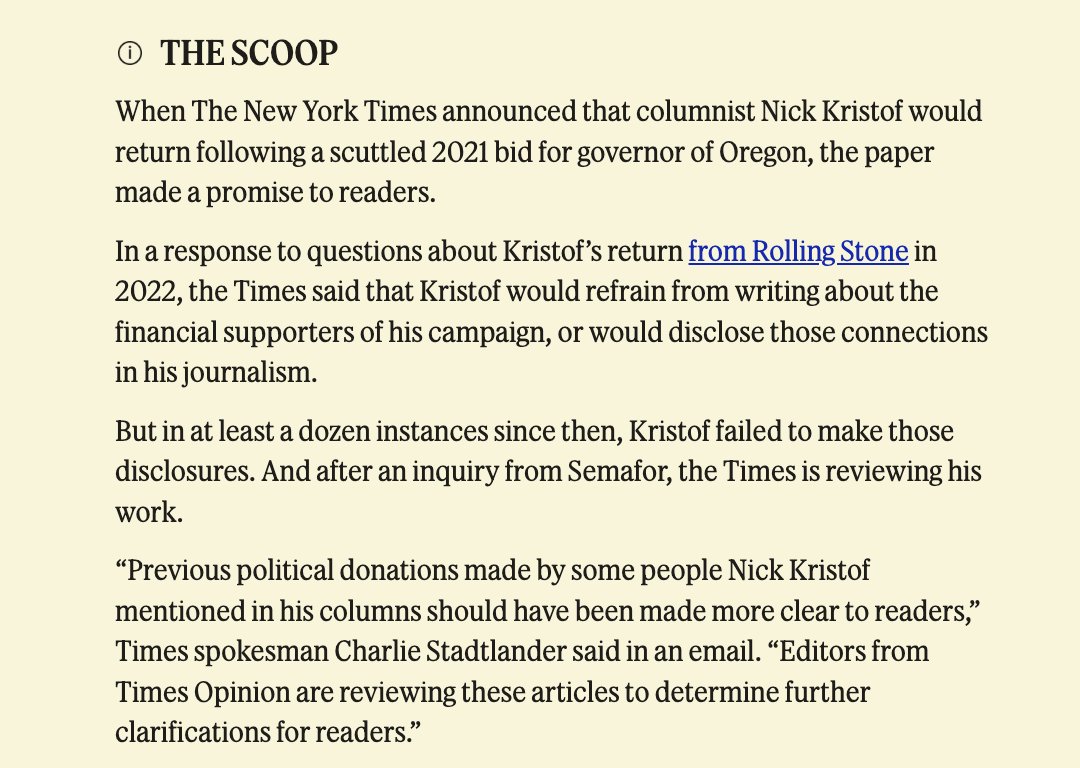
New: The NYT is reviewing Nick Kristof's columns after he failed to disclose ex donor ties in a series of columns.
When Kristof returned to the paper after a failed bid for governor of Oregon, the NYT said he would disclose financial ties when writing about former donors.
1
9
487
Henry Porter🇺🇸 retweeted

I’ve defended the administration’s America 250 plans, because I trusted they really would be non partisan, really would bring us together. But I was wrong. And it sucks. I also apologize to the musical acts who dropped out who I criticized. They saw it.
Jun 15

The fighter yelling “Michelle Obama is a man,” at an official White House event to honor America is utterly unacceptable and the administration should denounced it in no uncertain terms.
1,258
453
3,732
523,325
Henry Porter🇺🇸 retweeted

iran deal is less important to the electorate than the economy in general
But, like the epstein files, it's a fracture point in the MAGA coalition. And when you find a weak spot in an opponent's coalition, you hit it with a sledge hammer as hard and as many times as you can
2
1
22
1,168
Pragmatism idea: the divergence between pedantic taxonomic correction (it’s a bison not a buffalo, strawberry isn’t a berry) and actual usefulness to humans, ie, it’s literally never important to actual humans to get it “right.” Identical to way political ideology plays out.
2
4
113
I think we *should* have a law that forces reporters to live with the exact same disclosure laws that we have for politicians.

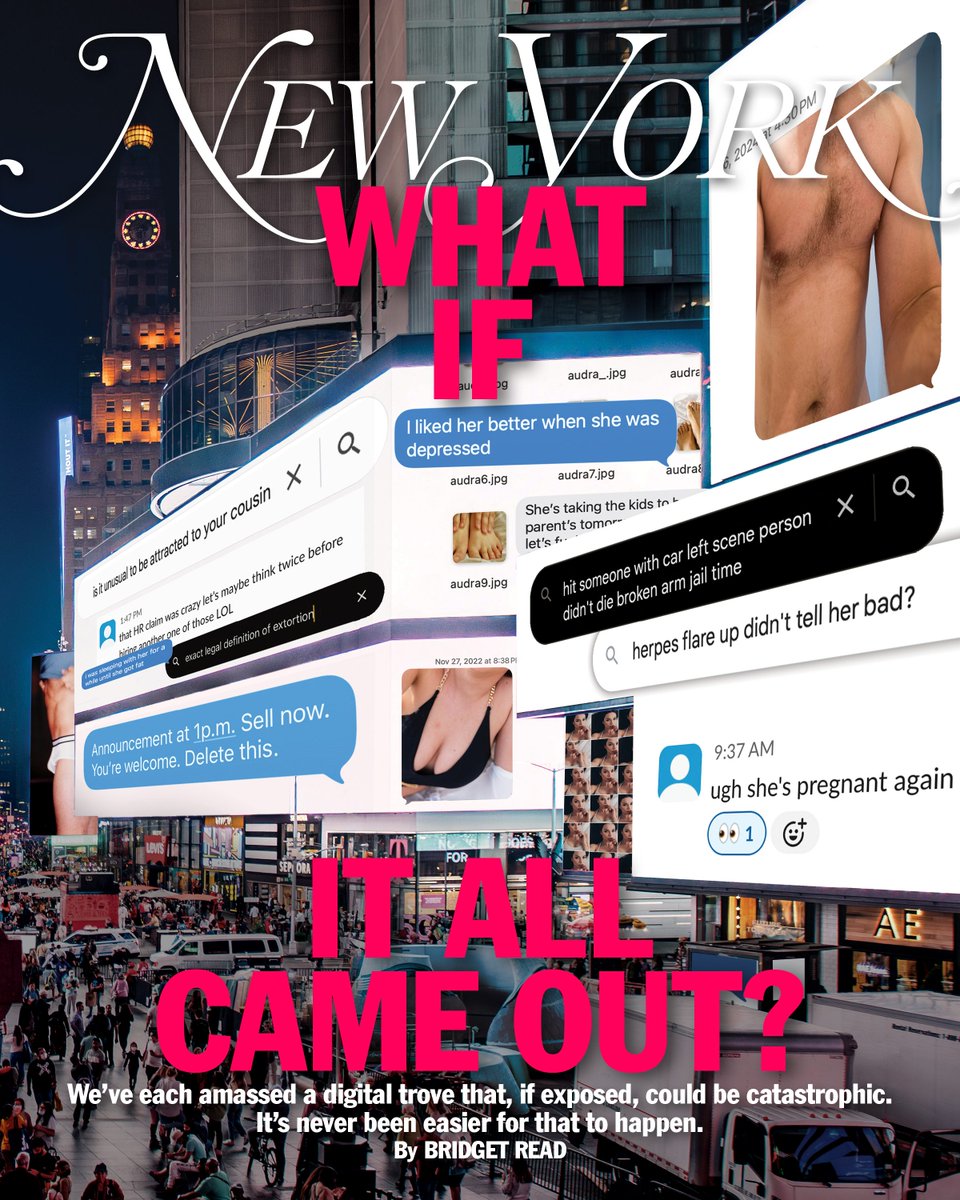
Every day, we happily and freely export the texture of our lives to the cloud via our chief stenographer, the smartphone. You’re not just writing emails and texting close friends. You’re writing to everyone: loose federations of group chats; your neighbors on WhatsApp and Facebook; acquaintances in Instagram DMs; prospects on dating apps; co-workers on Slack. You’re typing into Search, Notes, Venmo.
Realizing your trove exists is terrifying. So is learning that it’s never been more vulnerable. Cybercrime is rising at harrowing rates. It can also become exposed to the public through explicitly legal means. You don’t need to be the target of litigation yourself to find your private conversations suddenly available to a wider audience: see the 2025 lawsuit filed by Elon Musk against Sam Altman and OpenAI, which exposed more than a decade of group chats and emails between some of the world’s richest men, squabbling over their personal financial stakes in the fate of humankind.
It could be your coworker, your friend, your family member — why else would texts from Matt Damon’s wife, non-famous person Luciana Damon, become a matter of public record? She can thank Blake Lively for suing Justin Baldoni and dragging her iMessage history into discovery.
Most of us, however, no matter how seemingly unimportant, conduct ourselves differently in public than we do in the digital realm, our version of behind closed doors. The problem now is that this private self has been recorded in your trove. Its very existence, and the sheer volume of its contents, means it could be useful, interesting, compromising, or lucrative to someone, somewhere, given the right set of circumstances.
For our Cover Story, Bridget Read reports on how hacks, lawsuits, and data breaches are increasingly exposing our digital records — threatening to spill everything into the public: nymag.visitlink.me/CGzkMh
1
9
715
Henry Porter🇺🇸 retweeted

Jun 14
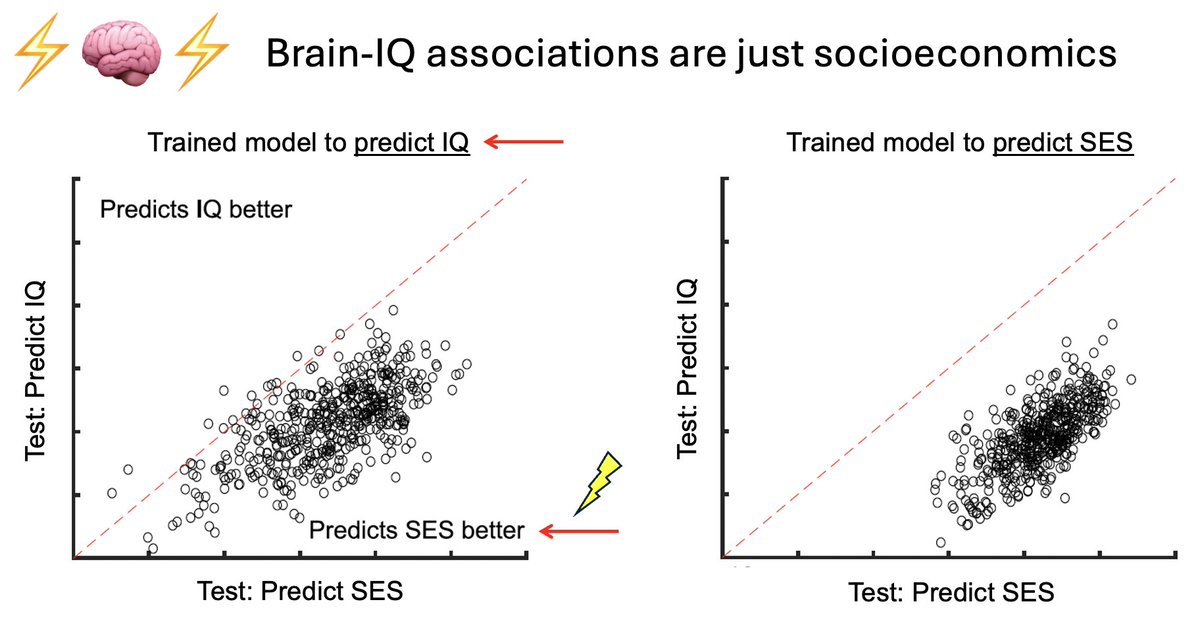
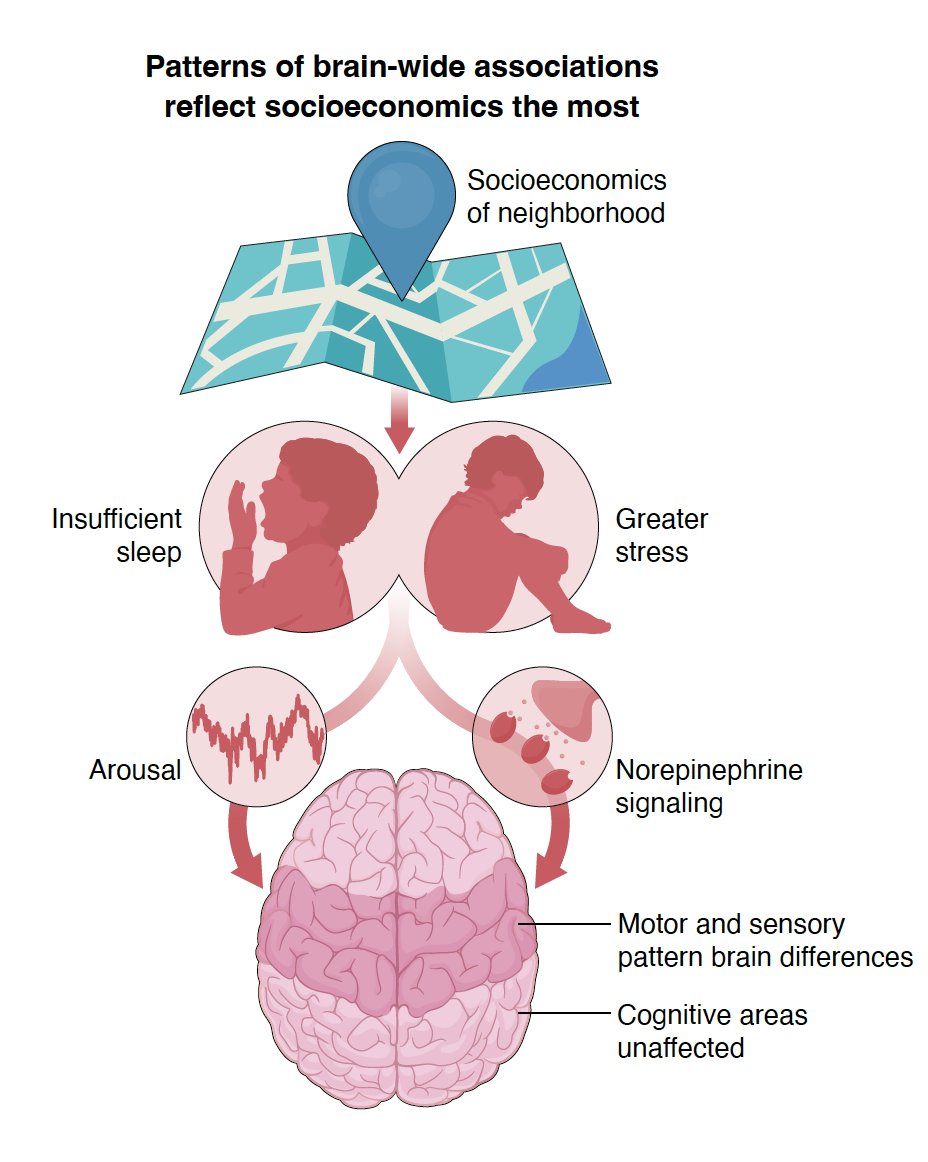
We've known that socioeconomics (SES) matters for the 🧠. New & 🤯 is that SES drowns out all other brain associations, incl. IQ. If you train an algorithm to predict IQ from brain data, it's still way better at predicting SES. Science Magazine: science.org/doi/10.1126/scie…
👀🧵👇
Jun 11

What matters most for childhood brain organization?
We analyzed 649 variables.
The answer: Socioeconomics (SES); with brain patterns pointing at sleep & stress as drivers.
Even brain-IQ associations were better explained by SES confounding.
In Science: science.org/doi/10.1126/scie…
2
32
125
17,522
Jun 15
Is it really? The same military that has spent billions of dollars flying over baseball and football games?
Jun 15

Having the military hold flags for UFC fighters is a pathetic misuse of service members. They are being turned into props for a made-for-camera spectacle tied to a president with weak approval ratings. The military’s purpose is to defend the Constitution, not provide stage dressing for celebrity photo ops. American dignity deserves better than this.
2
4
629
Jun 15
lol
Jun 15

We instinctively know this, hence narrow picturesque alleys feel safer and cozier, because the alternative, wide expanses of asphalt dominated by cars, is neither safe nor cozy.
2
119
Jun 15
My grandmother told me you should order asparagus in a restaurant when you want to impress someone because it’s an acquired taste and expensive so if you’ve acquired it that means you’re high class.
Basically, that’s why these people call themselves socialists.

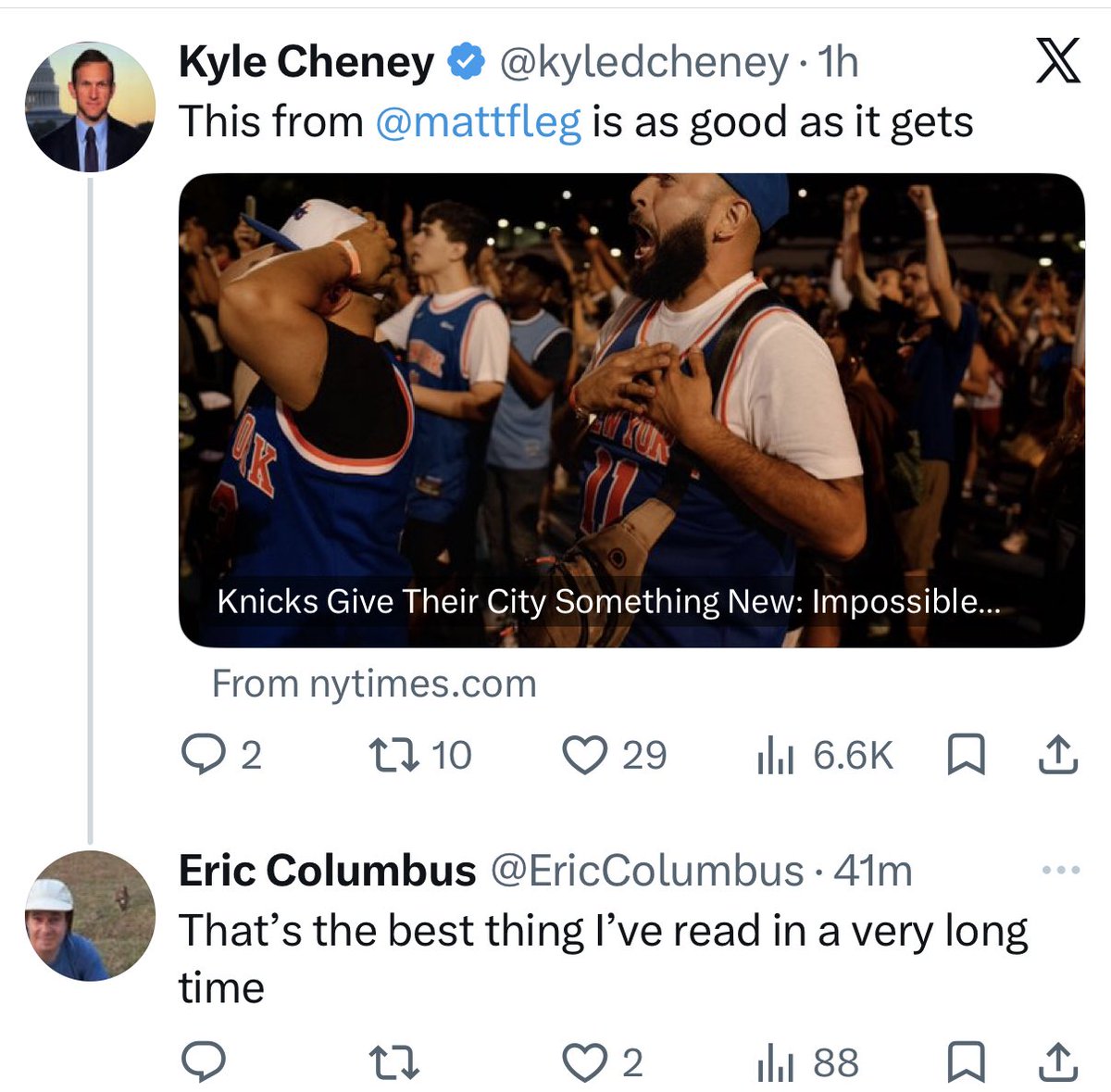
New York City elected a socialist mayor, and the Knicks won their first championship in 53 years. Imagine what we could do with a socialist governor in Wisconsin?
@packers @Brewers @Bucks
1
2
14
1,147
Henry Porter🇺🇸 retweeted

Jun 15
I know entire university departments where they will not even talk to people without an Ivy, Chicago, or Stanford degree. And then they are *shocked* that we don't talk about other colleges more often
2
17
750
Henry Porter🇺🇸 retweeted

Jun 14
.@katierogers in the @nytimes says Trump projects “relentless energy,” implies he falls asleep all the time because he is so busy, waves away his refusal to answer questions about his health as normal and within presidential tradition, and writes that because he’s so “unconventional” we just can’t know if he’s suffering from mental decline. Almost threw my phone out the window in disgust reading her piece today on Trump turning 80.
Jun 14

Here is a compilation of Trump falling asleep over the past year.
He is now 80 years old.
6
57
184
3,659
Henry Porter🇺🇸 retweeted

Jun 14
This is for the folks insisting there was no taxpayer funding used to put on this event.
Jun 14

NOW: Maryland State Police join National Guard, federal agents, and DC Police agencies in protecting White House UFC event tonight.
2,412
7,474
27,032
707,987