
Joined April 2026
- Tweets 35
- Following 27
- Followers 145
- Likes 44
5 Photos and videos
Pinned Tweet

Apr 22
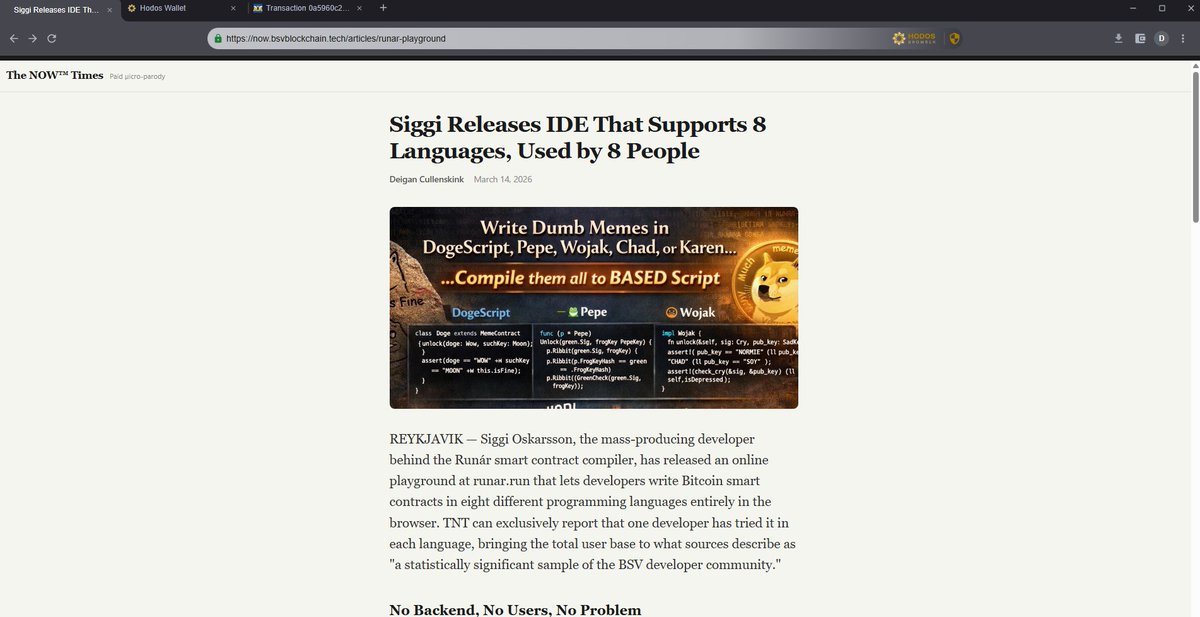
Hodos Browser public beta is live.
Privacy-first browser on full Chromium. Native BitcoinSV wallet. Ad blocking, tracker blocking, fingerprint protection. Your keys run in a separate Rust process — never in JavaScript.
Windows macOS. Download: HodosBrowser.com
6
19
40
1,975
Hodos Browser retweeted

Jun 10
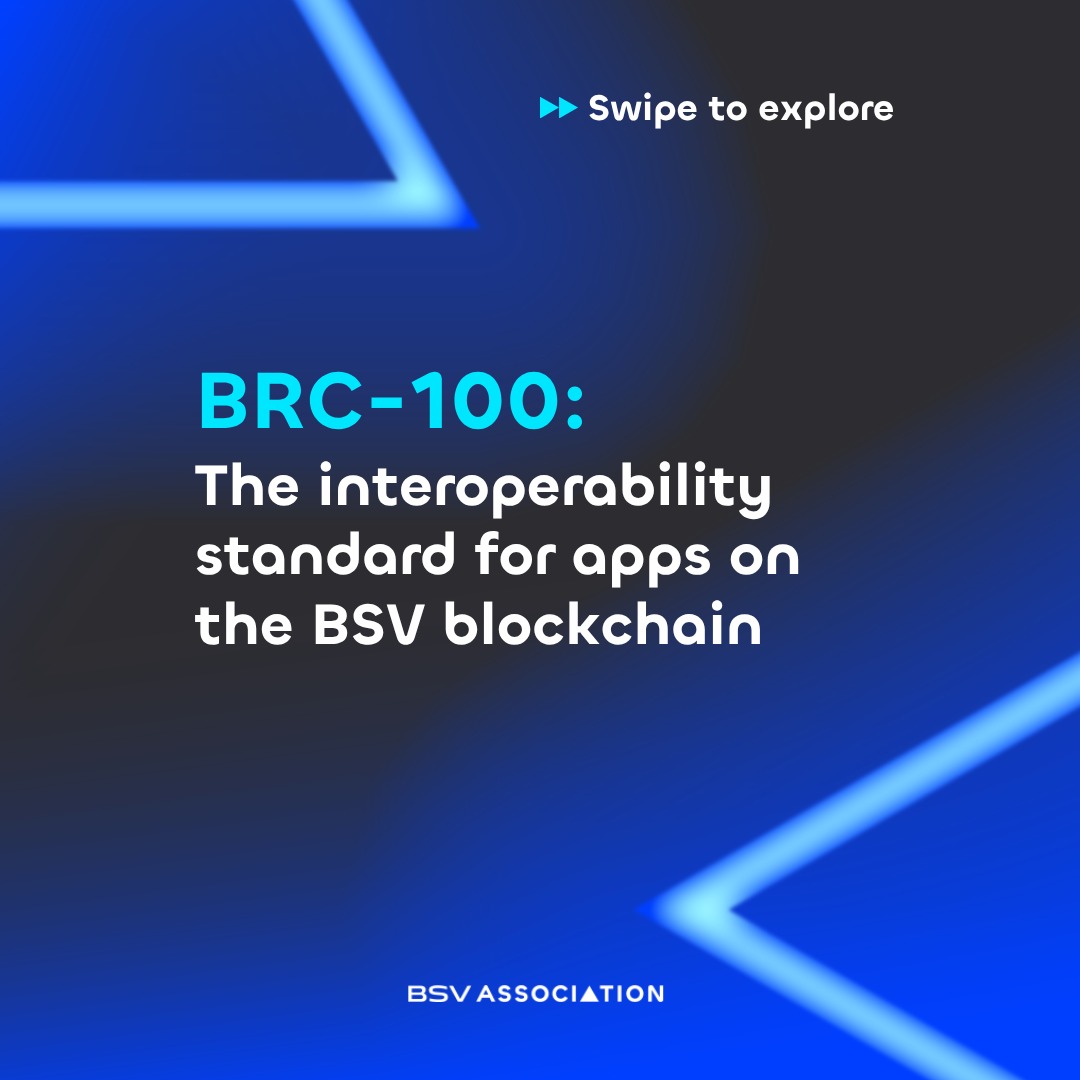
Building for multiple apps & wallets shouldn't mean burning time on countless integrations. Enter BRC-100 - the standard creating seamless compatibility, allowing builders & businesses to build once & unlock endless opportunity on the BSV blockchain.
Swipe & learn ►
1
32
82
2,445
Hodos Browser retweeted

May 29
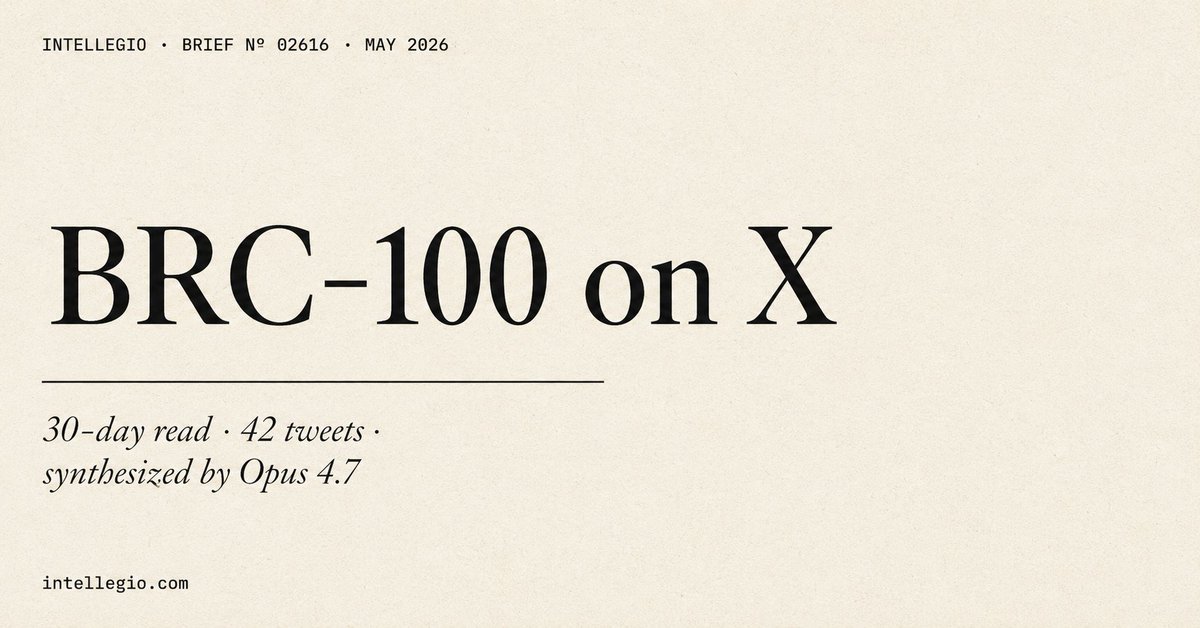
30-day BRC-100 X read: 42 tweets, written by Claude Opus 4.7 from the corpus alone. Pulled the corpus from @johncalhooon 's x-research agent via x402. Paid in BSV, no account, credit card or signup. I wrote the query and the synthesis prompt. The brief: intellegio.com/briefs/brc100…
3
9
31
821
Hodos Browser retweeted
May 29
Quick PSA on BSV blockchain fees:
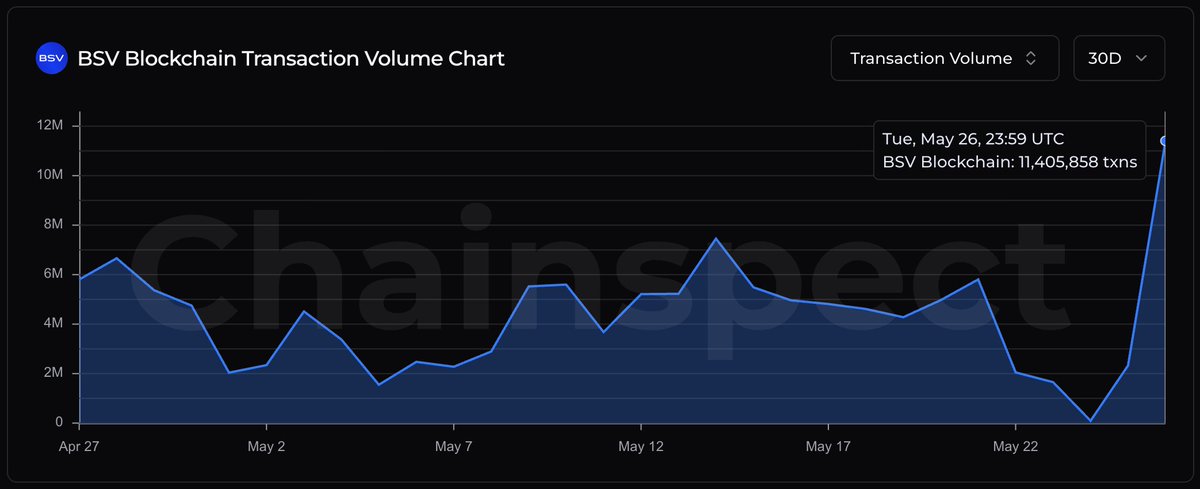
► On Tuesday there were 11.4m transactions
► They cost an average of $0.000003296 each
► $37.59 total
When transactions become this affordable, new ideas, businesses & global adoption become reality for everyone.
May 27

Real-world adoption needs infrastructure that scales
@BSVAssociation processed 11.4M transactions yesterday, setting a new monthly activity record
Scalable infrastructure is where real-world impact begins
📊 chainspect.app/chain/bsv?ran…
5
57
168
4,941
Hodos Browser retweeted

May 15
We don't push data to these sites. More likely than not all the volume posted there is fake.
Help us build up a BSV/USD, BSV/EUR and BSV/GBP trading on orangegateway.com/
2
12
58
3,576
Hodos Browser retweeted

May 15
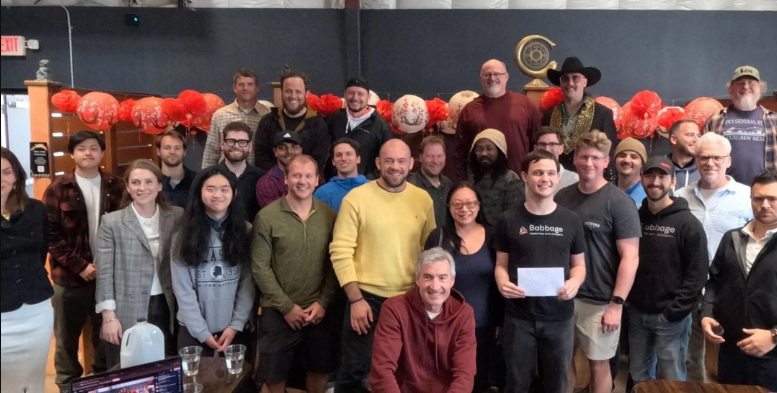
Great discussion guys! We covered a lot. From wallet privacy and the economics of UTXO storage to overlays, federation, and on-chain vs. cert-based identity systems, and Metanet hosting without an A-record in DNS.
Thanks to @johncalhooon and @HodosBrowser for the insights.
1
2
10
815
Hodos Browser retweeted
May 14
3
8
311
Hodos Browser retweeted
May 11
The Metanet Meetup will be on Friday at 9AM Pacific! What should we discuss on MetanetMeetup.com? Or leave your suggestions below👇
#BSV #CryptoNews
0%
Real World Assets
100%
UTXO storage and sync
0%
What's John cooking?
0%
Hodos Browser
2 votes • Final results
2
1
8
378
May 7
We need incentives for businesses to run overlays. Server costs keep falling, so micropayment-paywalled APIs could cover cost and be profitable at scale.
Implementation could be simple: each wallet purchases a unique API-key token via createAction. Economic models around per-call charges, or time/number-bounded keys (day / month / year / N calls).
At scale, per-call costs can be small enough users barely notice — under a dollar a year for messagebox relays, paymail resolvers, and block explorers combined.
Same model applies to apps too — each one designs the pricing shape that fits what they provide (per-message, per-render, freemium tier-up, subscription, etc.).
@deggen Curious for your take — you're also working on something similar, right?
If any overlay service providers want Hodos Wallet to test a paywalled endpoint, send the URL plus any setup notes — happy to wire it up.
Apr 23

Yes! We need more people running overlay nodes for the system to be truly resilient.
And please enable GASP so nodes can sync!
1
10
692
Hodos Browser retweeted

Apr 23
Yes! We need more people running overlay nodes for the system to be truly resilient.
And please enable GASP so nodes can sync!
Apr 23

This is half. Next... the other half.
OVERLAYS
Miners give the network resiliency, but the app layer needs it too.
Byte-for-byte Rust/WASM port of @BSVAssociation's overlay-express.
> Same $5/mo.
> Same @Cloudflare Workers.
Together, we tear down these walled gardens.
Tomorrow...
3
1
10
1,883
May 4
Appreciate the feedback — you're naming a real gap. Fragmented ecosystem:
1. Users keep spreadsheets of mnemonics. Wallet A works with App X but not App Y; want to try a new app you saw posted? Hope one of your six wallets supports it — if not, install another, write down another seed, fund it, repeat. Every new app is a setup tax.
2. Your private key is yours; the wallet is just today's tool. When you switch wallets next year — or in ten, or fifty — everything tied to that key should come with you: UTXOs, NFTs, certificates, identity, reputation you've built, full history.
That's what users need and expect. Every new ecosystem starts our fragmented and goes through these growing pains. The only proven path to a cohesive interoperable ecosystem is standardization.
Specifically: paymail handles still bind to operator domains, token-protocol portability across wallets is partial, wallet-DB import/export is per-pair custom integration. Each piece has people working on it, but the standards have to land before users can simply backup-restore between any two wallets.
Until then, the practical way to consolidate is: send funds from each old wallet into a single one you keep, then retire the old keys. Centbee recovery shipped because they wound down.
More on the technical side ↓

thank you, brilliant.
love that Centbee recovery option is there.
can there be same for RockWallet, ElectrumSV, Yours, Handcash? PK wallet recovery/setup?
I want to limit # of active seeds/PK, use same "seed"/PK across different platforms & know I can recover if a platform fails.
3
1
4
281
May 4
The standards work that gets users one identity across time and wallets:
• Standard wallet DB formats — Hodos's DB is based on the @BSVAssociation TypeScript SDK designed by @ProjectBabbage, with some differences. DB and import/export standardization can facilitate portably
across wallet.
• Decentralized paymail — needed so handles aren't bound to operator domains; this is what makes paymail itself part of the identity that travels with you. Certificates attesting to ownership of accounts like x.com would be portable across wallets but still tie Web3 identity to domains. @deggen has been pushing thinking on this; we also touched on it in yesterday's reply to his URI scheme thread.
• Standard token protocols — work in progress across the ecosystem; this is what lets tokens move with users without being locked to a specific wallet.
Different teams, same goal: deliver one cohesive identity that travels with the user.
Cross-device sync is the same fragmentation problem in a narrower scope, with a different fix. @ruthheasman raised this from the builder side on @GavinMehl's show last week — no BRC-100 wallets really sync across devices today.
BRC-100 wallets derive counterparty keys via BRC-42, which has real upside (privacy, per-pairing isolation) but a recovery cost — counterparty-derived keys can't be re-derived from mnemonic alone; you need to know the counterparties invoice numbers. So BRC-100 wallets need active backup, not just a seed.
Most handle this via cloud backup and this cloud backup could likely be be used to sync a single user wallet across multiple devices.
Hodos uses an on-chain backup token instead — non-standard, something we developed and are still iterating. Discoverable from your keys, encrypted. The same mechanism could potentially enable cross-device sync without a central server, though we may move to a more standard cloud model if that proves cleaner. Open to others thinking about this with us.
Sidebar back to the IPv6 thread earlier today: cross-device sync needs a central server precisely because devices can't talk peer-to-peer at consumer-wallet scale. Same root cause as the "P2P" framing problem — different symptom.
1
4
99
May 3
Agreed — we need a simple standard. Removes ambiguity, makes it easier for devs (and the AI assistants they use), prevents conflicts.
Here's what Hodos's QR scanner does today (demo below): reads legacy addresses, identity keys, and Handcash paymails — verifies each and pre-populates the send form. Reads BIP-21 ("bitcoin:" prefix) and auto-populates amounts for addresses, identity keys, AND paymails — even though BIP-21 was originally only spec'd for addresses.
Easy to add peerpay: (BRC-125), metanet://, or whatever wins consensus.

Thoughts on a URI scheme for BSV Payments which isn't lame?
peerpay:<identityKey>[?sats=<amount>]
brc.dev/125
5
7
24
2,030
May 3
@paiybit — we tried the QR-scanner approach we discussed on @GavinMehl's space for unlocking content on your site, and it works. Unlocking the paywall this way was smooth and easy (one video I tested didn't, likely because we don't have a QR standard). This method is probably simpler for devs (and their AI assistants) to implement than BRC-100 HTTP requests right now, even with the SDKs but -
the site UX still has friction. We think one-click account creation, one-click sign-in, and one-click payments via BRC-100 calls is the cleaner end-state. Going to break that down in our next video.
1
3
140
May 3
@deggen @braydenjlangley
One add: human-readable names in the URI would help on sites with multiple QR codes (we hacked a "user" param into BIP-21 to demo this in the video).
But human-readable names tied to identity keys need a decentralized paymail system. Harder problem. You'd need: unique usernames, a "first mint" rule, consensus among overlay/indexer nodes on first-seen mints, sync state, and a costly-signal incentive to trust the overlays themselves — all to prevent "double mints" (we just made that term up — probably already exists, throwing it out for comment).
It seems like this type of architecture has been done before. Pretty sure there's an example out there somewhere.
1
5
128
May 3
Brendan nailed it. Thousand sats per swipe from day one — exactly the model Hodos picked.
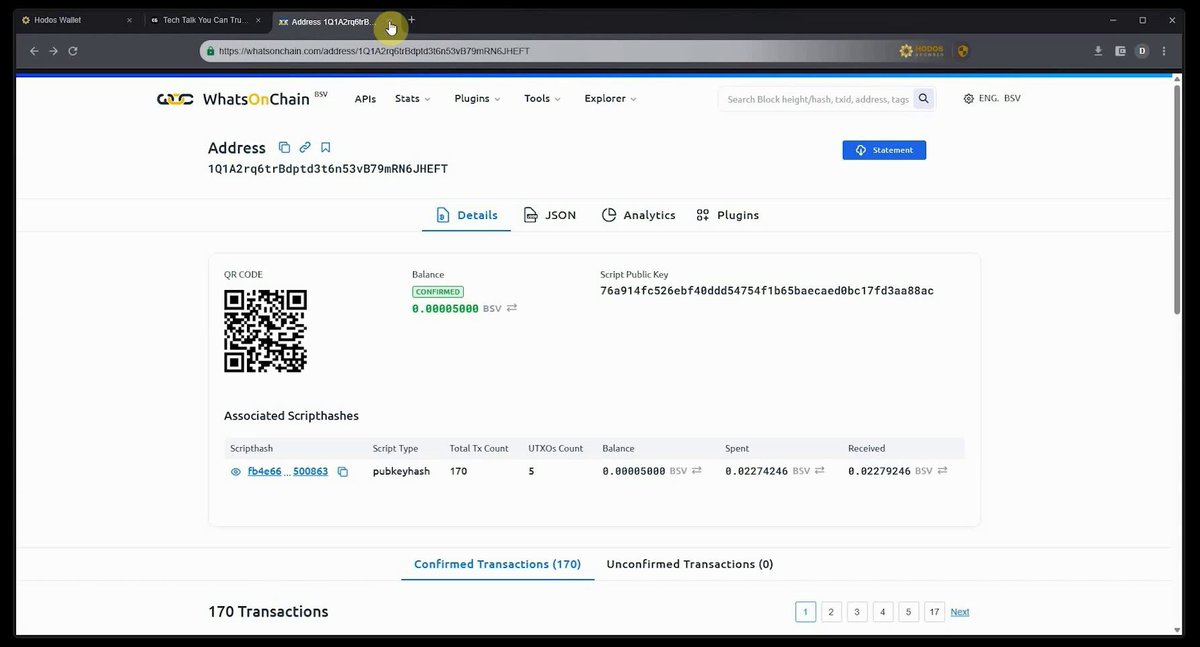
Visible in every transaction. One Hodos treasury address, anyone can audit.
Walked through the receipts in the public-beta demo at 19:30: youtu.be/bcq9qclthiU?t=1167

Apr 29

Sadly it had a business model that incentivised its failure. Should have charged 1000sats per swipe from day 1, that way there could have been a billion moneybuttons everywhere by now.
13
634
May 3
The Hodos Browser public beta walkthrough is live.
26 minutes covering install, wallet setup, legacy ↔ paymail ↔ BRC-100 sends inspected on-chain, certificate publish, QR scan.
Full Chromium. Native Rust wallet. Windows macOS.
youtu.be/bcq9qclthiU
1
8
20
1,071
Hodos Browser retweeted

Apr 27
The goal is big & I can see it working long term, we are also here to help facilitate the bridge.
1
3
162
Apr 27
Agree on the substance — UX wins, and presentation beats raw tech every time. @HandCash has been the strongest BSV-ecosystem proof of that for years.
But "install a browser for one site" is a snapshot, not the arc. Today there's a handful of unrefined BSV sites — agreed, no one installs a new browser for one. Tomorrow a few more. Next quarter, more. In a few years, key-based auth and per-use micropayments (Web3) are becoming mainstream. People are getting more tired of the ad and subscription model every day.
Someone tries one Web3 site, reluctantly installs Hodos. Uses it once, leaves it sit. Weeks later, another site — "oh yeah, I have this already, with some tokens in the wallet." Just works. Then it happens again. Hodos is real Chromium, so it already handles every Web2 site — no binary commitment to give anything up. Eventually a Web3 link fails again in their old browser and they ask themselves why they're still using the old browser at all.
Web2→Web3 doesn't happen in one jump. It happens through interoperability with what people already use, iteratively improving UX as the standard matures. Fully agree with your other point — Web3 has to be as seamless as the rest of the internet is today. That's exactly why Hodos is a full Chromium browser with a native wallet, not bolted onto an existing one. Each new Web3 feature on a layered solution shows more seams; owning the browser environment lets us close them. Harder call now, easier ground to build on tomorrow.
We're not building for one site that exists today. We're building the secure UX layer for tomorrow's metanet. The "Chromium Firefox canary builds" @ProjectBabbage is calling for is the same vision on a longer arc — getting people on Hodos today is how we prove the path is real.
Apr 27

"Install a special browser to use this website" Is likely to perform poorly in the real world.
Solutions should be as seamless as the rest of the internet is today.
The walled garden approach was never about exclusivity, it was always a means to offer something desirable.
1
3
16
1,601
Apr 26
Awesome! Thank you CRUMBS

1
7
446
Hodos Browser retweeted

Apr 23
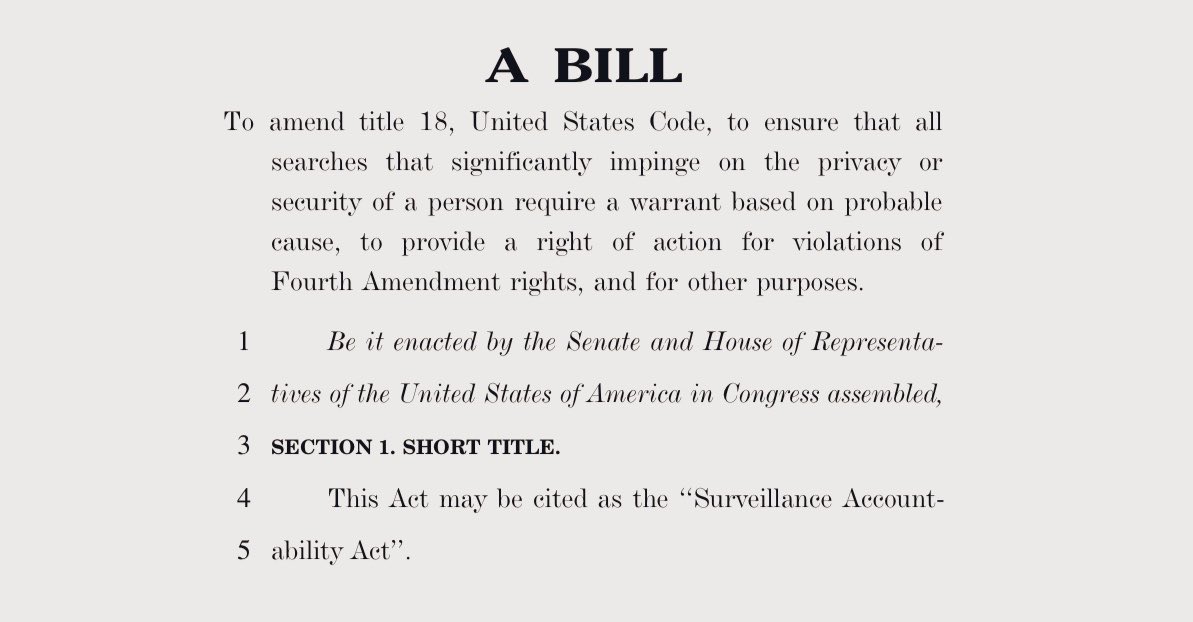
I've introduced HR 8470, the Surveillance Accountability Act, with @RepBoebert.
It requires a probable cause warrant before the federal government can search your private data — even if that data is held by a third party.
Warrantless searches are unconstitutional.
649
4,395
19,254
274,255