
We conduct health services research with the overarching goal of improving healthcare delivery systems and ensuring equitable access to care for all.
Joined September 2024
- Tweets 22
- Following 42
- Followers 14
- Likes 5
4 Photos and videos

New by @Hsia_Lab in @JAMANetworkOpen: Opening PCI-capable hospitals ↑ procedures by 7.5% overall and ~20% in underserved communities. Gains in access raise concerns about potential overuse of PCI where it already exists #HealthServicesResearch
Read more: tinyurl.com/huwc2dd6
1
3
31
New article in @JAMAInternalMed by @Hsia_Lab: Access to dialysis facilities declines as community disadvantage rises. The most disadvantaged communities were 5.6× more likely to lack a facility within 30 mins. Coverage ≠ access. #ESKD #Policy
Read more: jamanetwork.com/journals/jam…
1
1
44
New study in @JournalGIM: ED visits surged 46% in CA, and many hospitals lacked continuous access to anesthesia, operating rooms, and psychiatric emergency services—raising concerns about timely care for high-acuity patients #HealthSystems
Read more:
link.springer.com/article/10…
1
1
46
New article by @Hsia_Lab: Medicaid ED use increased the most over 15 years, but Medicare outpatient ED visits rose nearly 30%, challenging assumptions that insurance reduces ED reliance🚑🏥policies may miss drivers of demand: access and system capacity
jamanetwork.com/journals/jam…
1
1
33
Hsia Lab retweeted

30 Jul 2025
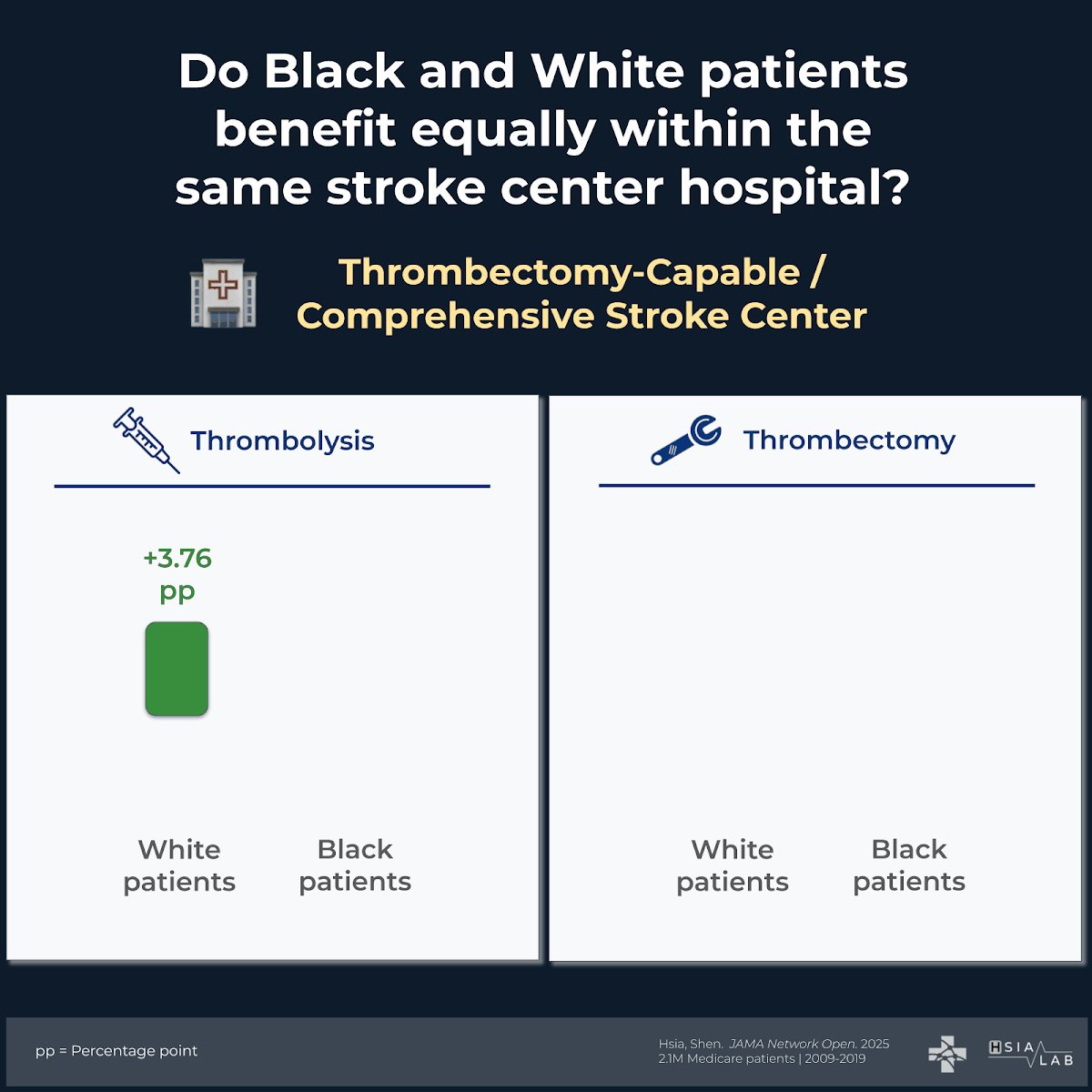
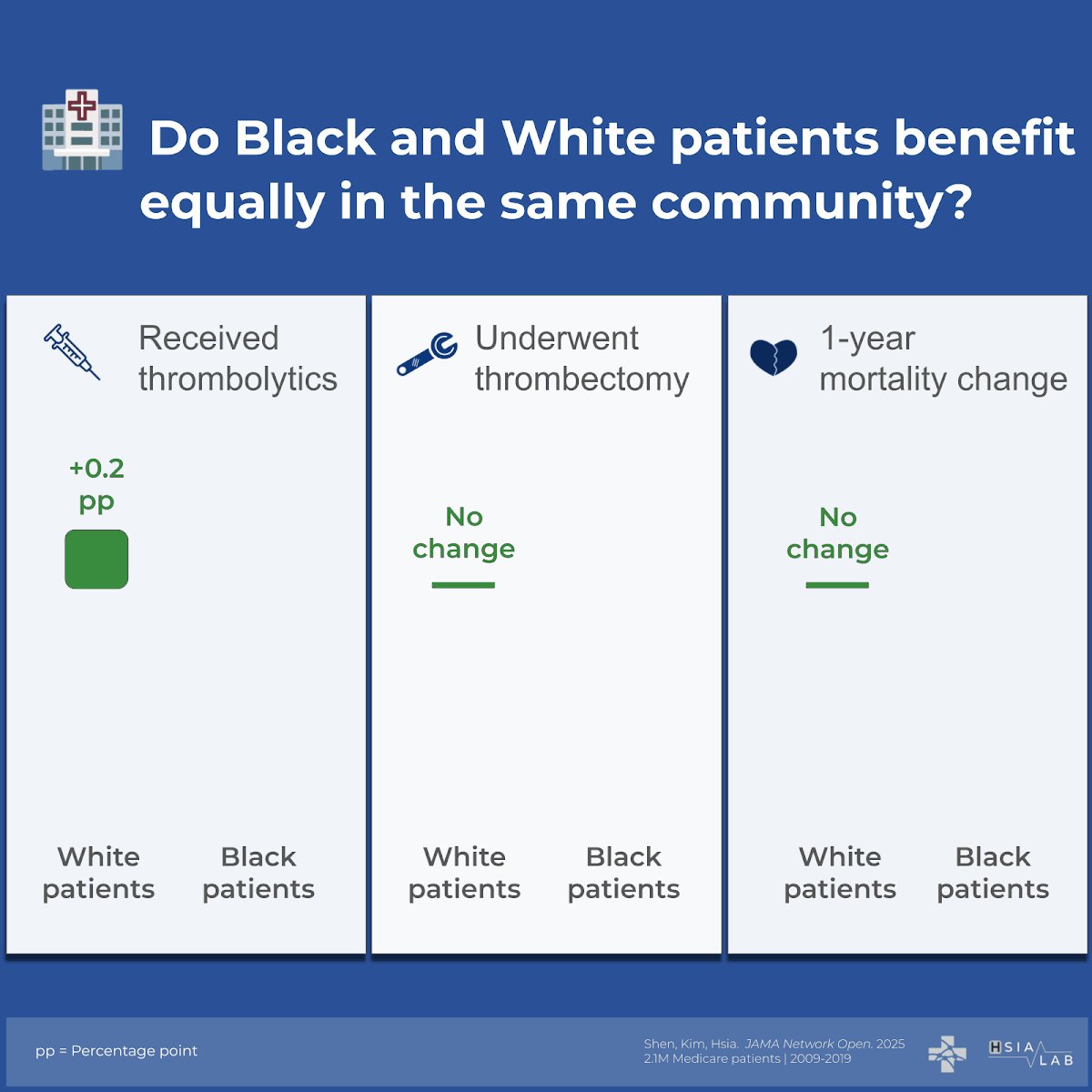
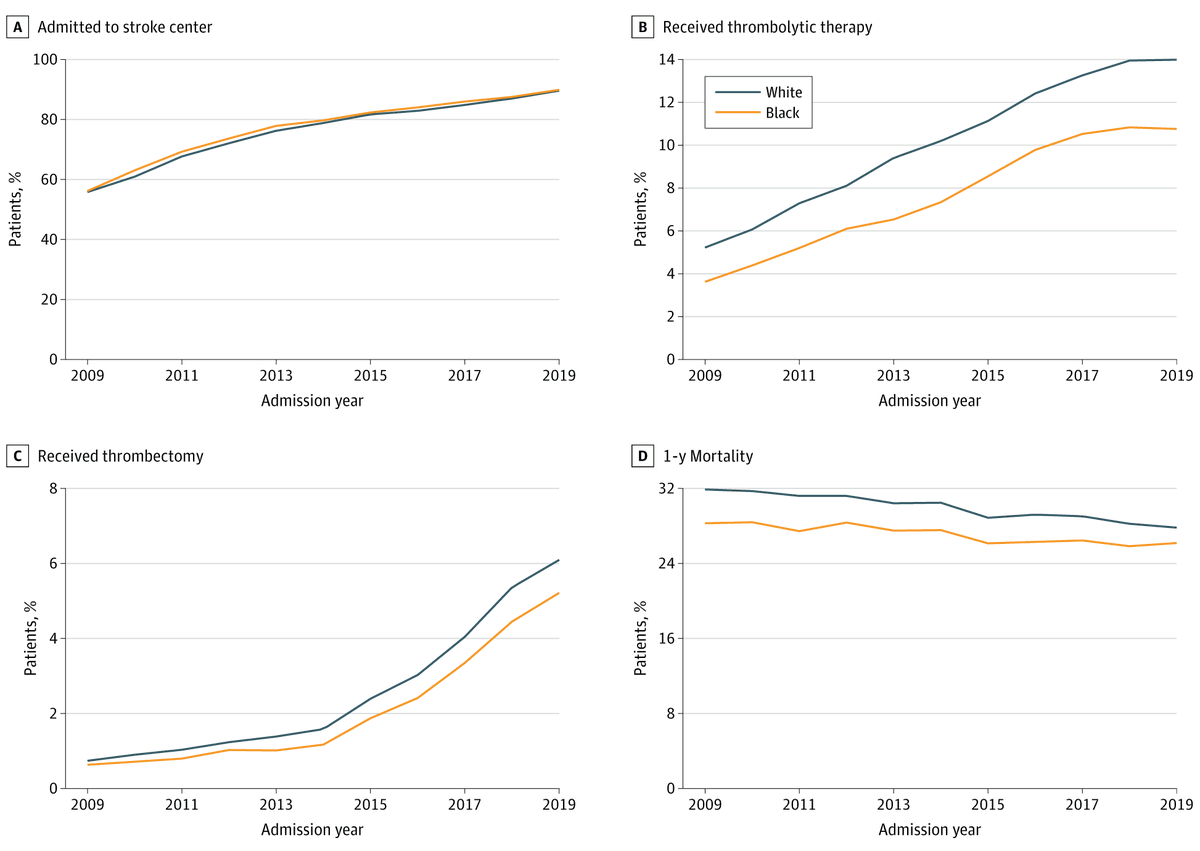
@UCSF_IHPS faculty @ReneeYHsia (@Hsia_Lab) study in @JAMANetworkOpen: Black and White stroke patients treated side-by-side in the same certified hospital.
Only White patients saw gains in treatment after certification.
We need more than access—we need action.
1
2
79
Read @Hsia_Lab’s new @JAMANetworkOpen study:
🏥 Same hospital.
🧠 Same stroke.
❌ Different treatment.
Black patients saw no or minimal gains in stroke treatment after certification, unlike White patients.
See more: tinyurl.com/yk4uy7c3
2
2
256
Hsia Lab retweeted

28 Jul 2025
While stroke center certification near communities increased admissions for both Black and White patients, only White patients saw an increase in acute stroke treatments in this cohort study. @ReneeYHsia ja.ma/417zMks
1
2
3
463
New in @JAMANetworkOpen by @Hsia_Lab: Stroke center certification increased access for Black & White patients, but only White patients saw treatment gains. Black patients had declines in thrombolysis & thrombectomy🏥 #StrokeCare #HealthEquity
Read more: tinyurl.com/ym62ehy9
2
2
457
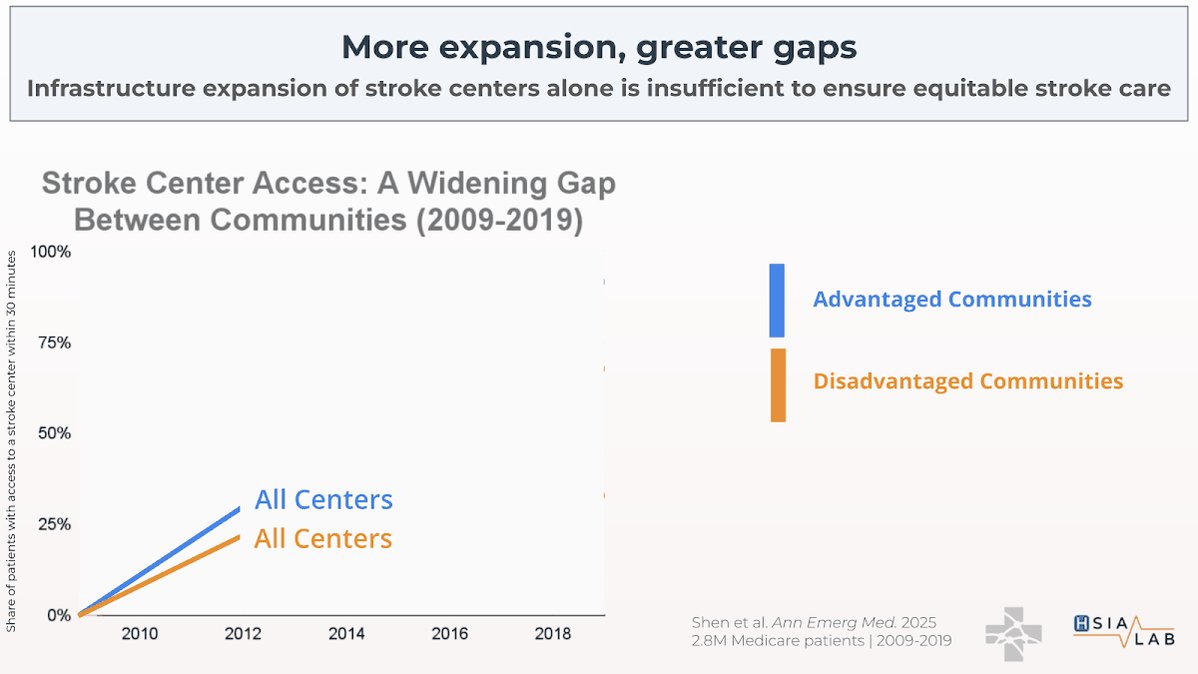
🧠In a new study published by @Hsia_Lab in @AnnalsofEM: Advantaged communities saw gains in stroke treatment and lower 1-year mortality. Disadvantaged communities saw neither. Certification alone won’t close outcome gaps #StrokeCertification #HealthEquity
tinyurl.com/2wfz7u4p
4
3
1,080
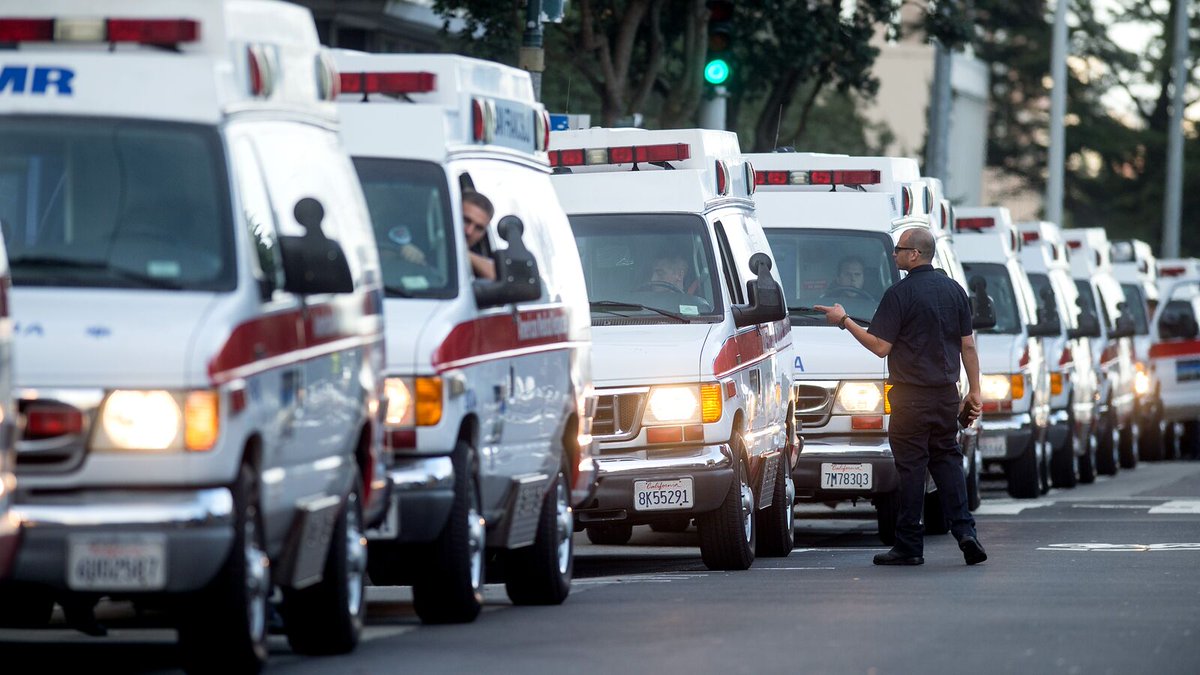
In a @Hsia_Lab study of nearly 6M CA EMS offloads, communities with higher proportions of Black residents faced up to 11.8 minutes longer ambulance offload times🚑 Delays like these may contribute to disparities in emergency care. #HealthEquity Read more: jamanetwork.com/journals/jam…
1
1
55
New @JAMAInternalMed paper by @ReneeYHsia 🚑 found that after #Medicaid cut dental benefits, ED visits for non-traumatic dental conditions (NTDCs) increased. When benefits were restored in 2018, visits declined—but only partially. #EmergencyCare
Read more: jamanetwork.com/journals/jam…
1
2
69
Ambulances stuck in limbo?🚑New @Forbes editorial by @ReneeYHsia exposes the hidden crisis of ambulance patient offload times (APOT)—why paramedics are waiting & how it impacts patient care. #EmergencyCare #HealthcareCrisis #EMS
Read more:
forbes.com/sites/reneehsia/2…
1
2
50
New @Forbes editorial by @ReneeYHsia 🏥24M Americans now have ACA coverage—a huge step for access. But is our healthcare system truly fixed? Learn how delays, upcoding & fee-for-service drive costs sky-high 💸
Read more:
forbes.com/sites/reneehsia/2…
1
2
48
New @Forbes editorial by @ReneeYHsia 🏥 on Americans facing skyrocketing health insurance premiums, shrinking coverage, and rising out-of-pocket costs. Is it time to rethink the system?
Read more:
forbes.com/sites/reneehsia/2…
1
1
57
New @Forbes editorial by @ReneeYHsia 🚑 on why reforming the US healthcare system is the only true way to address the dysfunction causing so much despair across our country
Read more:
forbes.com/sites/reneehsia/2…
1
2
46
New findings in @JAMANetworkOpen by @Hsia_Lab 🚑
79% of ambulance offload times in California exceed the 30-min standard, with offload delays worsening from 2021 to 2023. These delays may strain EMS availability & jeopardize patient outcomes.
Read more:
jamanetwork.com/journals/jam…
2
2
596
🏥 Newly certified stroke centers provide greater benefits to patients residing in areas without pre-existing stroke center access. How can we ensure the equitable distribution of stroke care services? Read more in this new article by @ReneeYHsia: jamanetwork.com/journals/jam…
2
4
102
🫀 New findings: Expanding specialized cardiac services led to the greatest improvements in outcomes for Black patients living in racially integrated communities, regardless of heart attack type. @JAHA_AHA @nih_nhlbi ahajournals.org/doi/10.1161/…
1
1
73
New editorial by @ReneeYHsia discusses the story of a bat bite and rabies vaccine to uncover the spooky truth behind healthcare billing. forbes.com/sites/reneehsia/2…
2
4
68
Hsia Lab retweeted

29 Oct 2024
Hospitals in low-income areas are 42% less likely to be stroke certified, limiting access to life-saving care. @UCSFDeptofEM reveals this gap to spark change and improve treatment. #WorldStrokeDay tiny.ucsf.edu/Nzhjk3
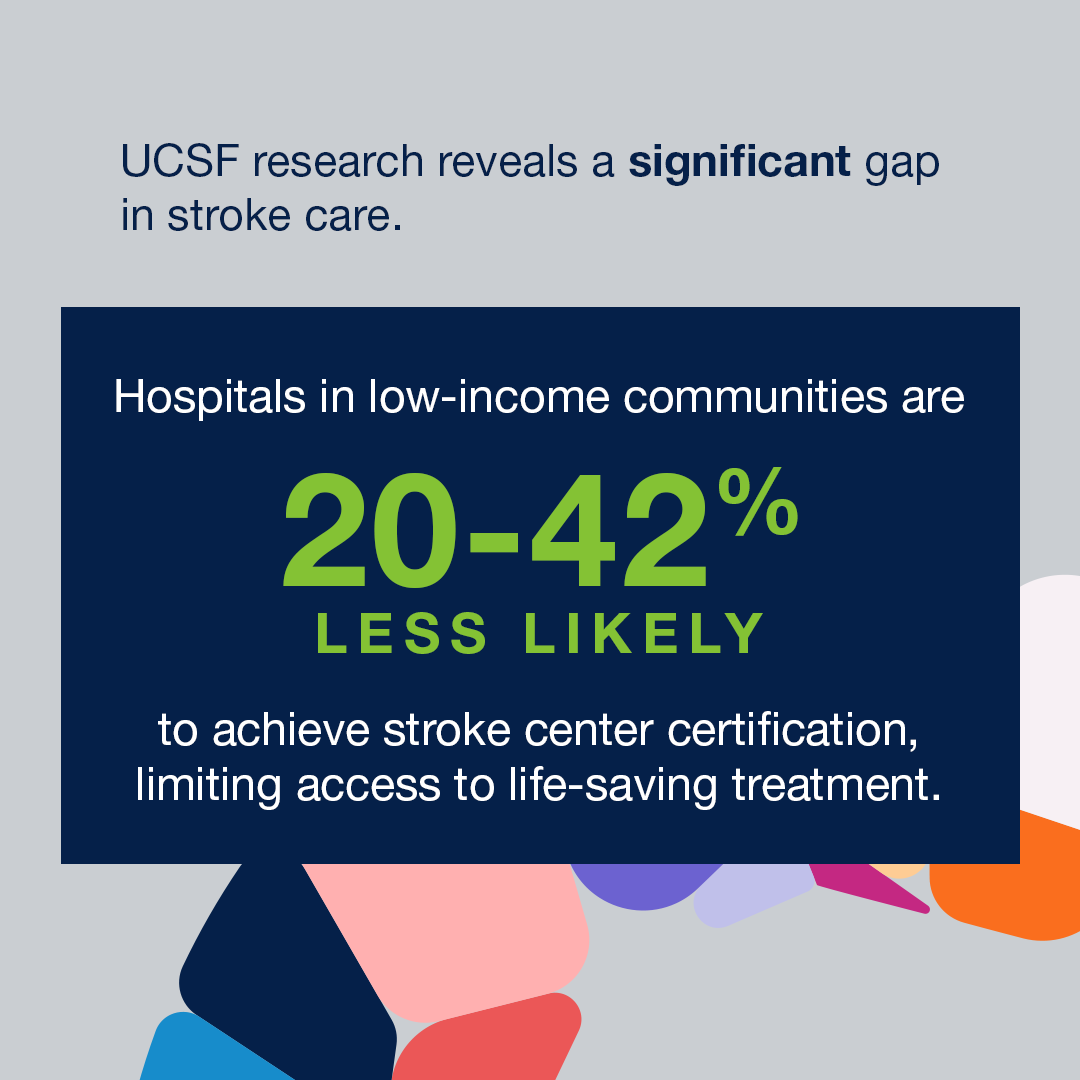
ALT Infographic about UCSF research showing a 20-42% lower likelihood of stroke center certification in hospitals in low-income communities, impacting access to crucial treatments.
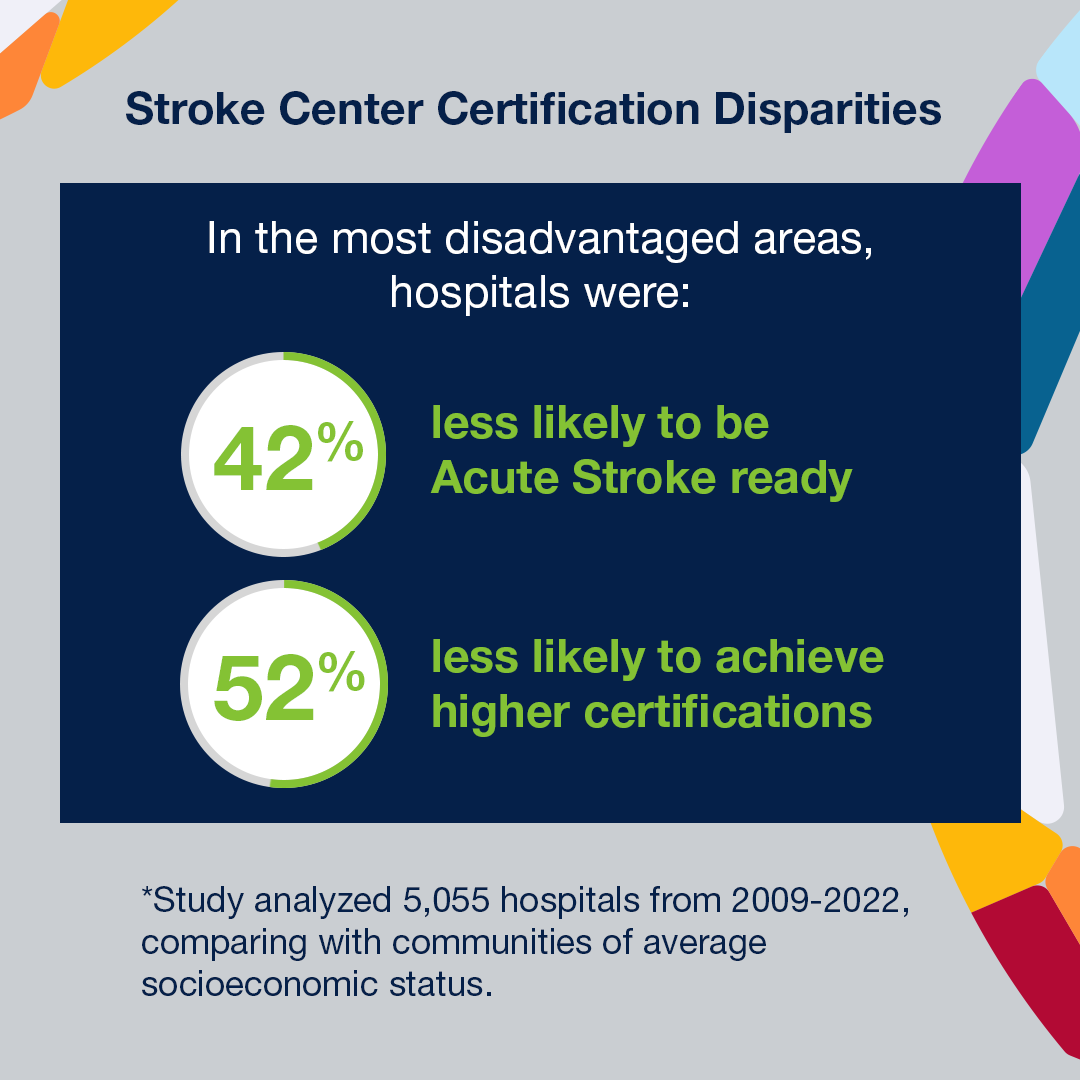
ALT Infographic titled 'Stroke Center Certification Disparities' highlighting that in the most disadvantaged areas, hospitals are 42% less likely to be Acute Stroke ready and 52% less likely to achieve higher certifications. Data compares 5,055 hospitals from 2009, noting socioeconomic status.
1
2
3
906