
Customer Success @JogetWorkflow
Joined February 2009
- Tweets 1,067
- Following 373
- Followers 181
- Likes 400
134 Photos and videos










Hugo Lim retweeted

May 7
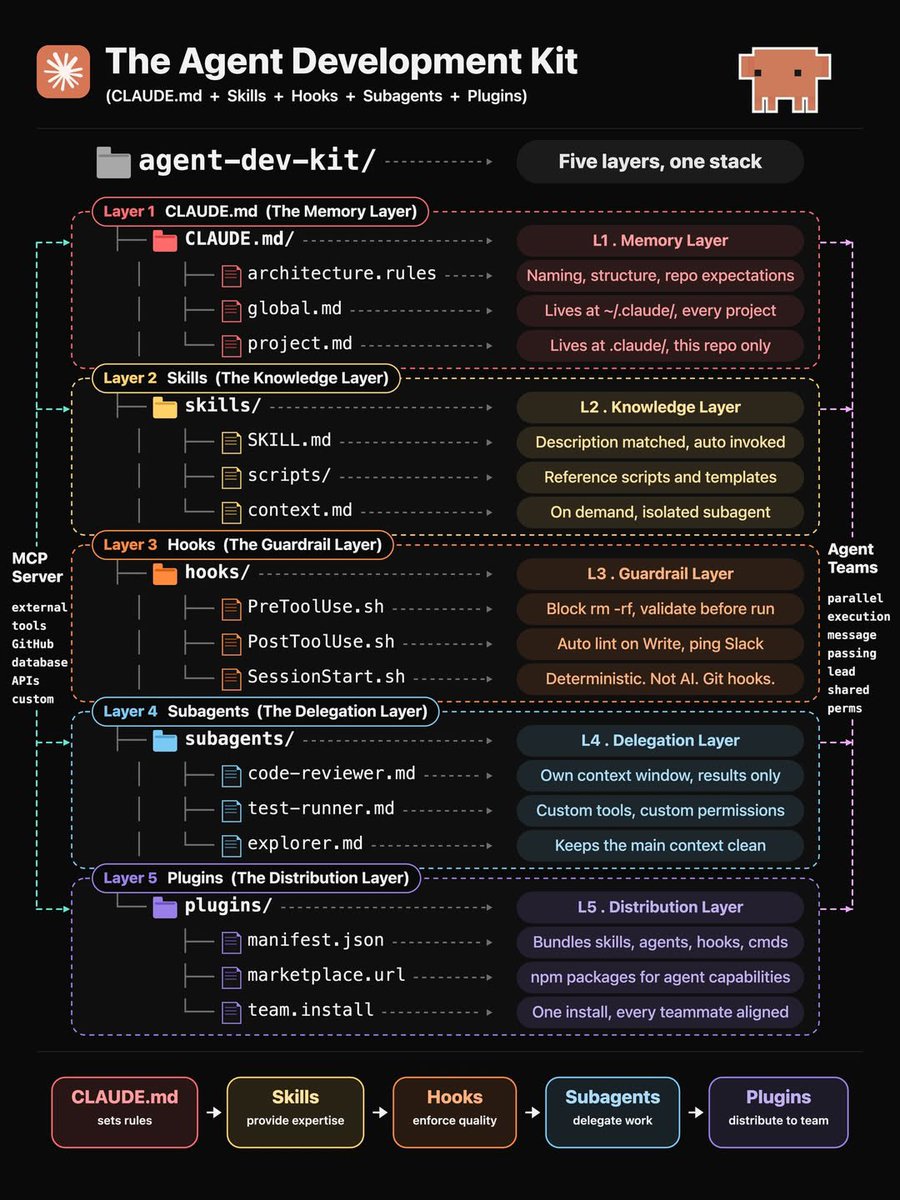
How to set up Claude Code so it runs like a full dev team:
5 folders. That's the entire system.
1. CLAUDE.md → Memory.
Your repo's constitution. Naming rules, structure, expectations. One global file for all projects, one local file per repo.
2. skills/ → Knowledge.
Reusable workflows Claude auto-invokes by matching the task description. No slash commands. It just knows.
3. hooks/ → Guardrails.
Shell scripts that run before and after every tool call. Block dangerous commands. Auto-lint on save. Ping Slack on deploy. Deterministic. Not AI.
4. subagents/ → Delegation.
Isolated agents with their own context window. A code reviewer that only sees the diff. A test runner with custom permissions. Keeps your main session clean.
5.plugins/ → Distribution.
Bundle the whole system into one install. Every teammate gets the same skills, same hooks, same agents. Aligned from day one.
This is the Agent Development Kit. Five layers, one stack.
To learn how and get the full Claude guide:
1. Go to simplifyingai.co
2. Subscribe free by just writing your email.
3. Open my welcome email and get the free resources.
Repost ♻️ to help someone in your network.
48
483
2,745
246,901
Hugo Lim retweeted

13 Aug 2025
20 Pictures with Deep meaning:
1.

2,171
30,699
467,325
75,089,042

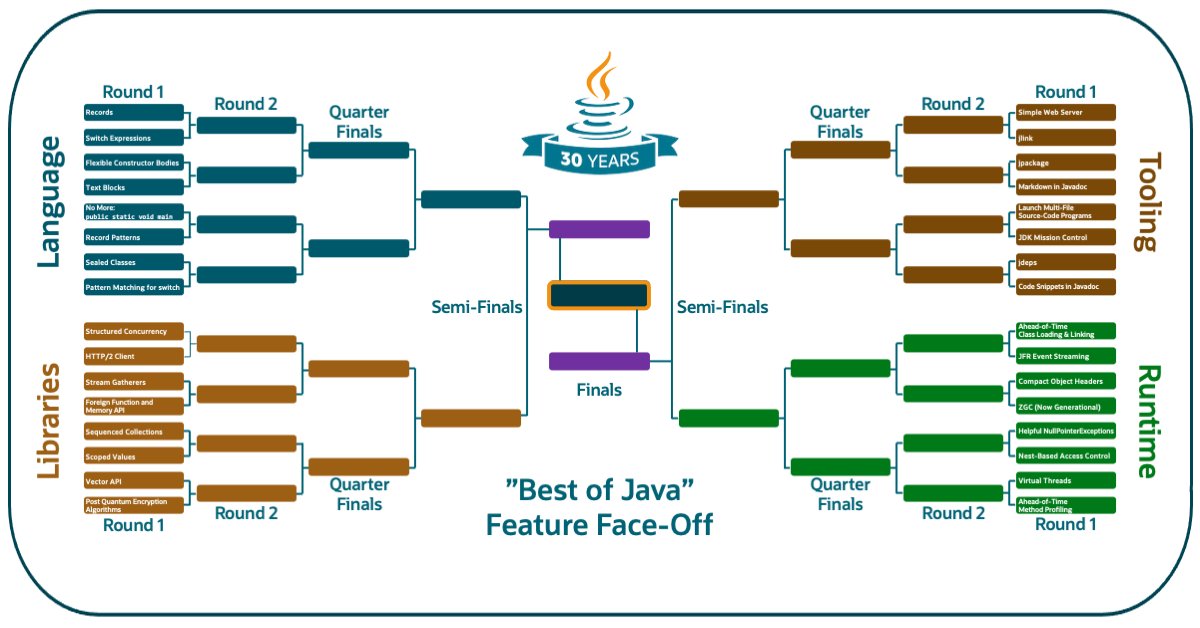
What’s the best Java feature of all time? 🤔 You decide!
We’re getting ready to kick off the 2025 edition of our Best of Java Feature Face-Off to celebrate #30YearsOfJava. Who will be this year’s champion? Will JDK Mission Control defend its title?
Check back Monday for the opening round of voting, and share your predictions below. 👇
26
47
230
24,475

Hugo Lim retweeted

31 Mar 2025
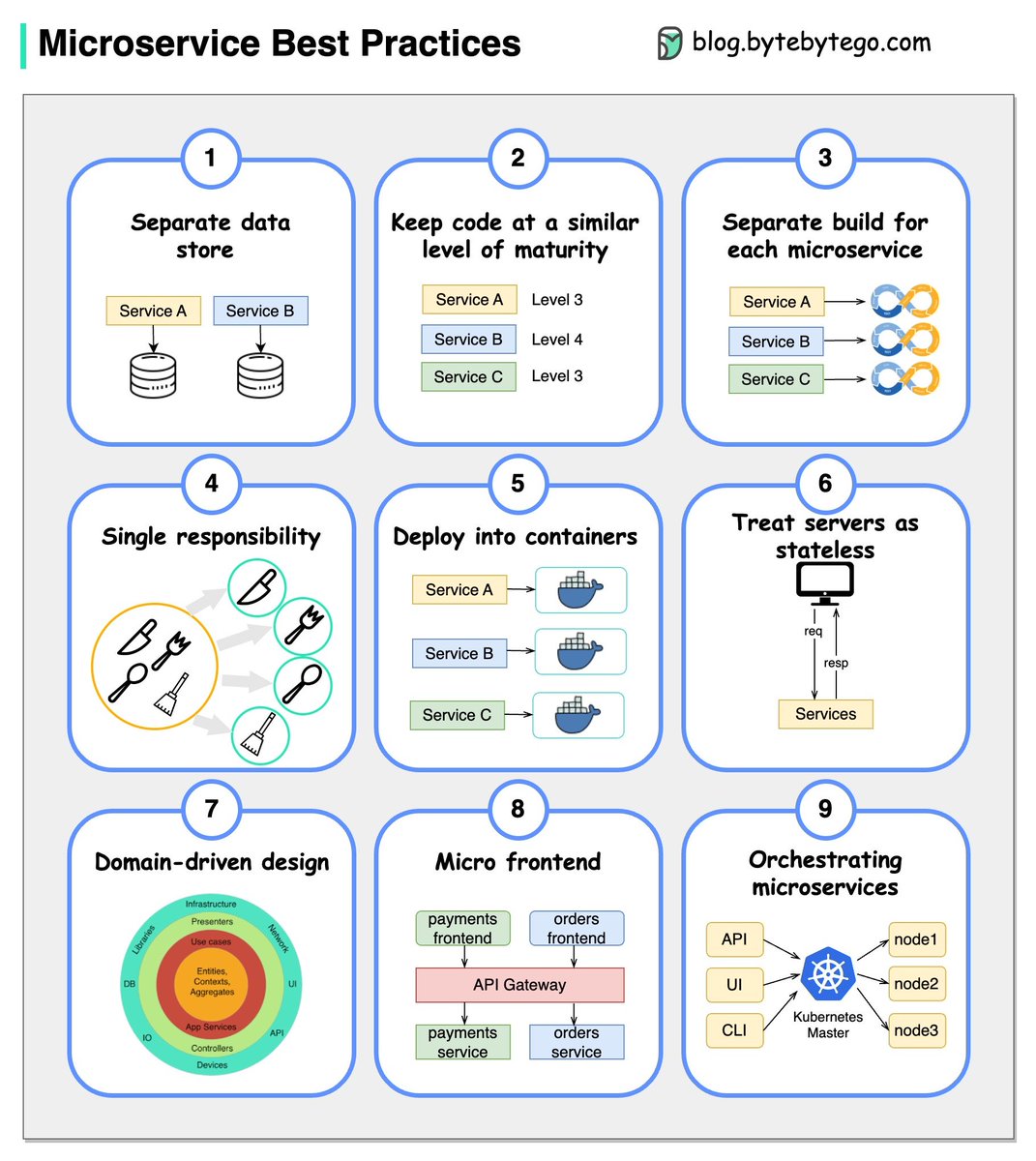
A picture is worth a thousand words: 9 best practices for developing microservices.
When we develop microservices, we need to follow the following best practices:
1. Use separate data storage for each microservice
2. Keep code at a similar level of maturity
3. Separate build for each microservice
4. Assign each microservice with a single responsibility
5. Deploy into containers
6. Design stateless services
7. Adopt domain-driven design
8. Design micro frontend
9. Orchestrating microservices
--
Subscribe to our weekly newsletter to get a Free System Design PDF (158 pages): bit.ly/bbg-social
4
73
372
34,471
Hugo Lim retweeted

8 Jan 2025
You're a FRONTEND DEVELOPER and you don't know about Core Web Vitals and what they signify🤨🤨
Read this 👇👇
What are Core Web Vitals?
They are Google's key metrics to measure website performance and user experience:⏬⏬
3
13
45
2,772
Hugo Lim retweeted
26 Jul 2024
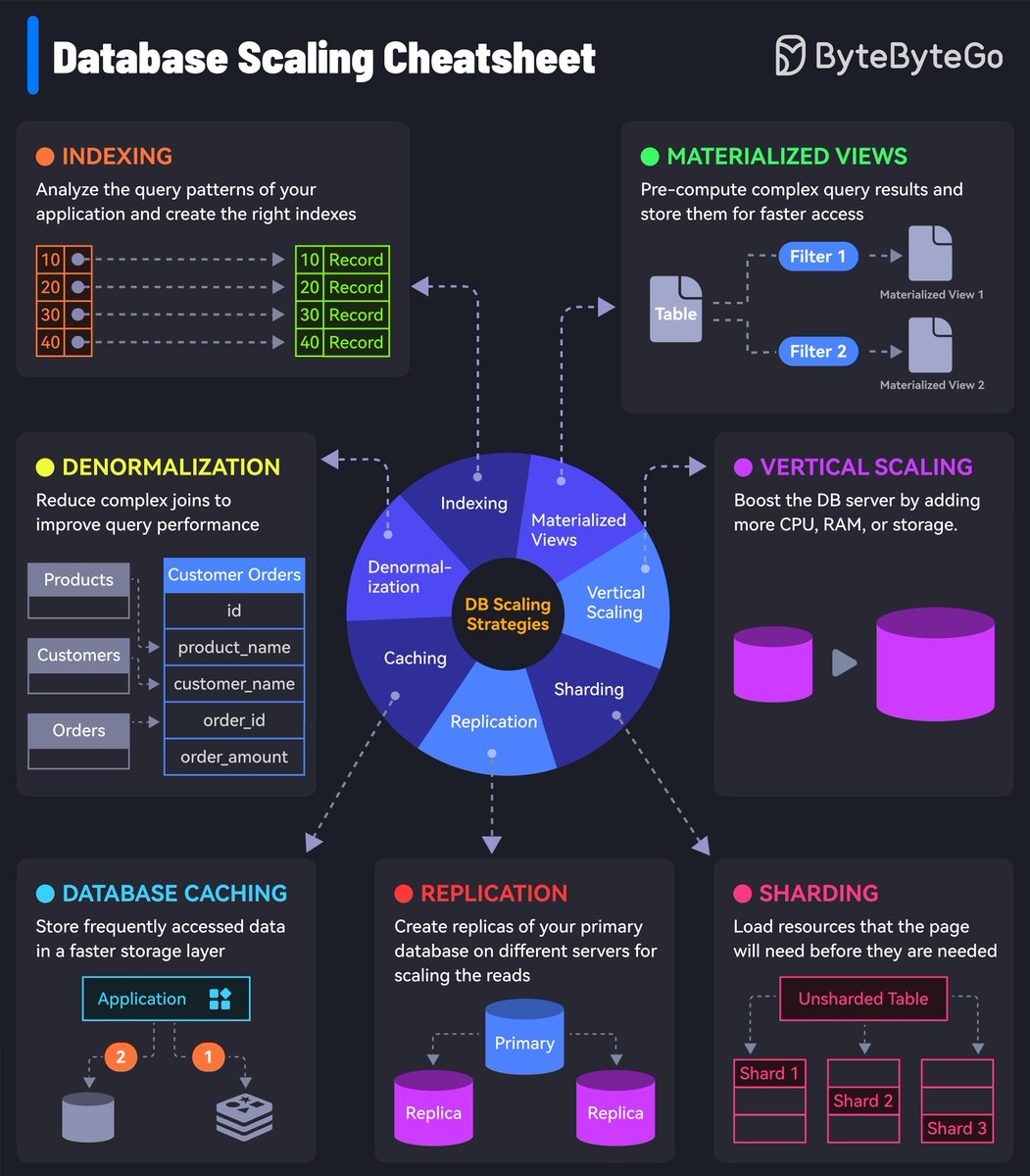
7 must-know strategies to scale your database.
1 - Indexing:
Check the query patterns of your application and create the right indexes.
2 - Materialized Views:
Pre-compute complex query results and store them for faster access.
3 - Denormalization:
Reduce complex joins to improve query performance.
4 - Vertical Scaling
Boost your database server by adding more CPU, RAM, or storage.
5 - Caching
Store frequently accessed data in a faster storage layer to reduce database load.
6 - Replication
Create replicas of your primary database on different servers for scaling the reads.
7 - Sharding
Split your database tables into smaller pieces and spread them across servers. Used for scaling the writes as well as the reads.
Over to you: What other strategies do you use for scaling your databases?
–
Subscribe to our weekly newsletter to get a Free System Design PDF (158 pages): bit.ly/3KCnWXq
5
174
713
45,955
Hugo Lim retweeted
7 Jun 2024
Things Every Developer Should Know: Concurrency is 𝐍𝐎𝐓 parallelism.
In system design, it is important to understand the difference between concurrency and parallelism.
As Rob Pyke(one of the creators of GoLang) stated:“ Concurrency is about 𝐝𝐞𝐚𝐥𝐢𝐧𝐠 𝐰𝐢𝐭𝐡 lots of things at once. Parallelism is about 𝐝𝐨𝐢𝐧𝐠 lots of things at once." This distinction emphasizes that concurrency is more about the 𝐝𝐞𝐬𝐢𝐠𝐧 of a program, while parallelism is about the 𝐞𝐱𝐞𝐜𝐮𝐭𝐢𝐨𝐧.
Concurrency is about dealing with multiple things at once. It involves structuring a program to handle multiple tasks simultaneously, where the tasks can start, run, and complete in overlapping time periods, but not necessarily at the same instant.
Concurrency is about the composition of independently executing processes and describes a program's ability to manage multiple tasks by making progress on them without necessarily completing one before it starts another.
Parallelism, on the other hand, refers to the simultaneous execution of multiple computations. It is the technique of running two or more tasks or computations at the same time, utilizing multiple processors or cores within a computer to perform several operations concurrently. Parallelism requires hardware with multiple processing units, and its primary goal is to increase the throughput and computational speed of a system.
In practical terms, concurrency enables a program to remain responsive to input, perform background tasks, and handle multiple operations in a seemingly simultaneous manner, even on a single-core processor. It's particularly useful in I/O-bound and high-latency operations where programs need to wait for external events, such as file, network, or user interactions.
Parallelism, with its ability to perform multiple operations at the same time, is crucial in CPU-bound tasks where computational speed and throughput are the bottlenecks. Applications that require heavy mathematical computations, data analysis, image processing, and real-time processing can significantly benefit from parallel execution.
--
Subscribe to our weekly newsletter to get a Free System Design PDF (158 pages): bit.ly/3KCnWXq
5
174
645
49,758
Hugo Lim retweeted

1 May 2024
HTTP is a stateless protocol
This means every request is independent.
The web application server can’t tell if 2 requests came from the same browser or user.
But the users aren’t stateless.
No one wants to log in to your application every time they make a request.
👉 So - how do you help them?
One solution is to use cookies.
A cookie is basically a key-value pair that’s stored on the browser.
How do they work?
[1] The user logs in to your frontend application.
[2] The frontend sends the request to the backend server
[3] The backend server generates a cookie
[4] It sets the cookie on the browser via the Set-Cookie response header.
[5] The user makes a new request to view a different page.
[6] The front end sends the request to the backend and includes the Cookie as part of the header.
[7] The server checks the cookie for the user and responds with the required data.
👉 Sounds good, doesn’t it?
But there’s a major issue with using cookies.
Cookies are accessible via the browser. You can modify the cookie information.
That’s why it’s not a good idea to use cookies for storing sensitive data about the users.
This is where sessions come into the picture.
The session contains a unique set of characters to identify the user.
It works as follows (the animation also explains the steps):
[1] The user makes a login request
[2] The frontend sends the request to the backend server
[3] The backend creates a session using a secret key and stores it in some sort of session storage (database or cache)
[4] Next, the server sends a cookie back to the client
[5] However, the cookie contains the unique identifier for the session
[6] The user makes a new request to view another page.
[7] The browser sends the session ID as part of the cookie.
This time only the server can validate whether the session is valid.
A few important points to note over here:
✅ Cookies can have a “Secure” flag indicating that it should only be sent over HTTPS. This is good for security reasons.
✅ Also, “HttpOnly” cookies restrict the cookie’s access to JavaScript reducing the risk of XSS attacks.
✅ Cookies (especially 3rd party cookies) raise a bunch of privacy concerns because they can be used to track user behavior.
✅ While cookies can be made secure, server-side sessions provide additional layers of security against CSRF attacks and handling sensitive information
✅ Also, server-side sessions can be centrally managed. This means you can invalidate sessions, expire, or revoke them if needed.
So - what do you typically use for authentication?
15
73
338
16,896
Hugo Lim retweeted
15 Mar 2024
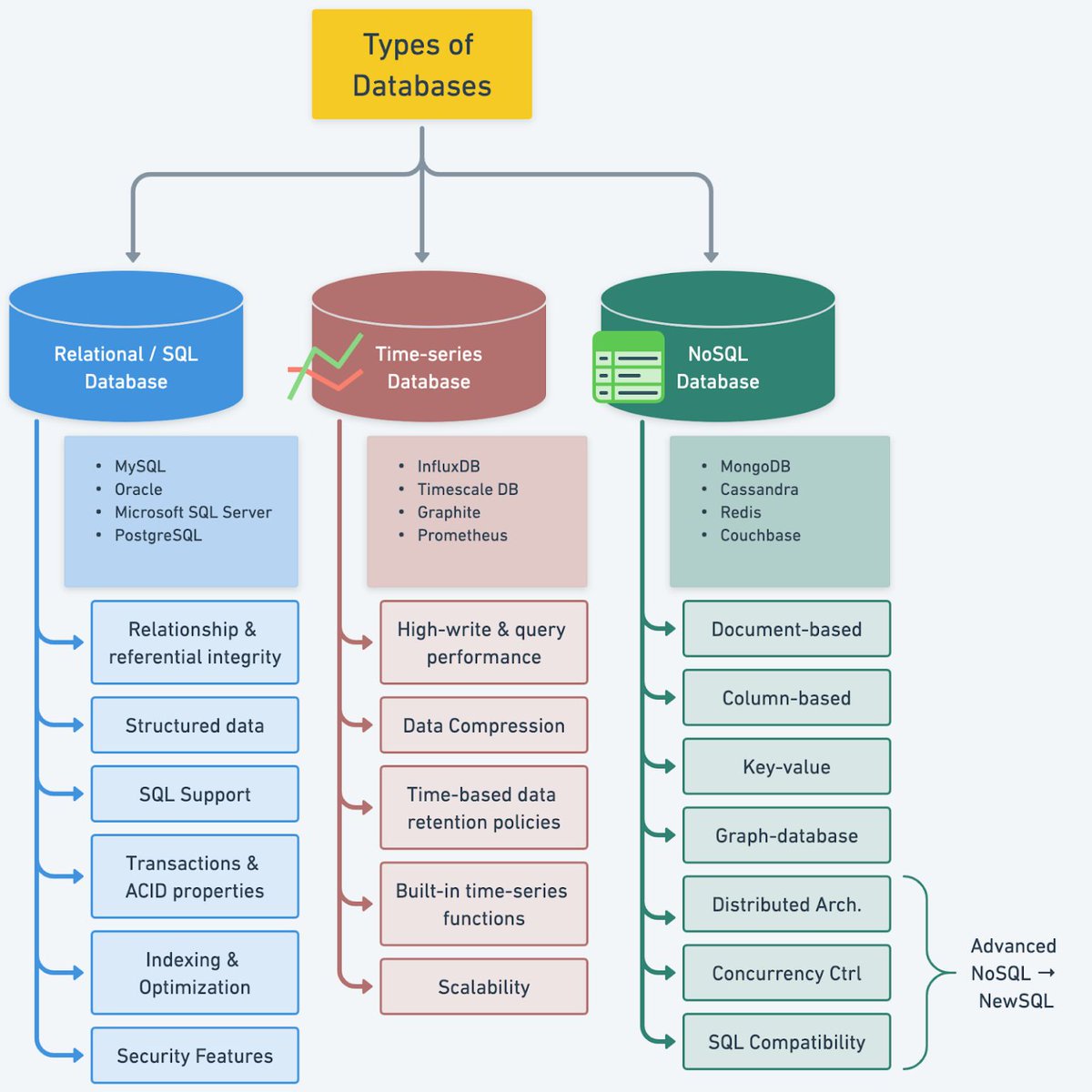
Understanding Database Types
To make the best decision for our projects, it is essential to understand the various types of databases available in the market. We need to consider key characteristics of different database types, including popular options for each, and compare their use cases.
–
Subscribe to our weekly newsletter to get a Free System Design PDF (158 pages): bit.ly/3KCnWXq
1
110
404
24,752
Hugo Lim retweeted

9 Feb 2024
Google is offering free online courses.
No textbooks or fees are required.
Here are the top 08* courses you can’t miss: ↓

15
103
406
95,103
Hugo Lim retweeted

23 Nov 2023
🎁#GIVEAWAY - 💵"$20 STEAM WALLET GIFT CARD"💵
✅Follow Me & @ZeNfAGames
✅Wishlist 🏎️"Hot Rod Racer!"🏎️ on Steam
➡️store.steampowered.com/app/2…
✅Retweet Like ♻️❤️
📅End on November 26th
📧DM me to sponsor a giveaway like this.
#Giveaways #Steam #IndieGameDev #Steam #SteamWallet

759
1,285
1,500
97,770
Hugo Lim retweeted

16 Nov 2023
Screenshot to HTML
Keeps trying to match your screenshot to the HTML output using OpenAI vision model
github.com/abi/screenshot-to…
69
929
5,083
2,165,705
Hugo Lim retweeted

17 Nov 2023
Massive day in the world of AI today.
Huge developments from Google DeepMind, YouTube, Meta, Microsoft Copilot, Be My Eyes, Gemini, ChatGPT rumors, Axios, and 9 new AI tools.
Here's EVERYTHING you need to know:
69
502
3,115
1,439,172
Hugo Lim retweeted
7 Oct 2023
🚨 BREAKING: GPT-4 image recognition already has a new competitor.
Open-sourced and completely free to use.
Introducing LLaVA: Large Language and Vision Assistant.
I compared the viral parking space photo on GPT-4 Vision to LLaVa, and it worked flawlessly (see video).
58
577
2,951
681,533
Hugo Lim retweeted

22 Sep 2023
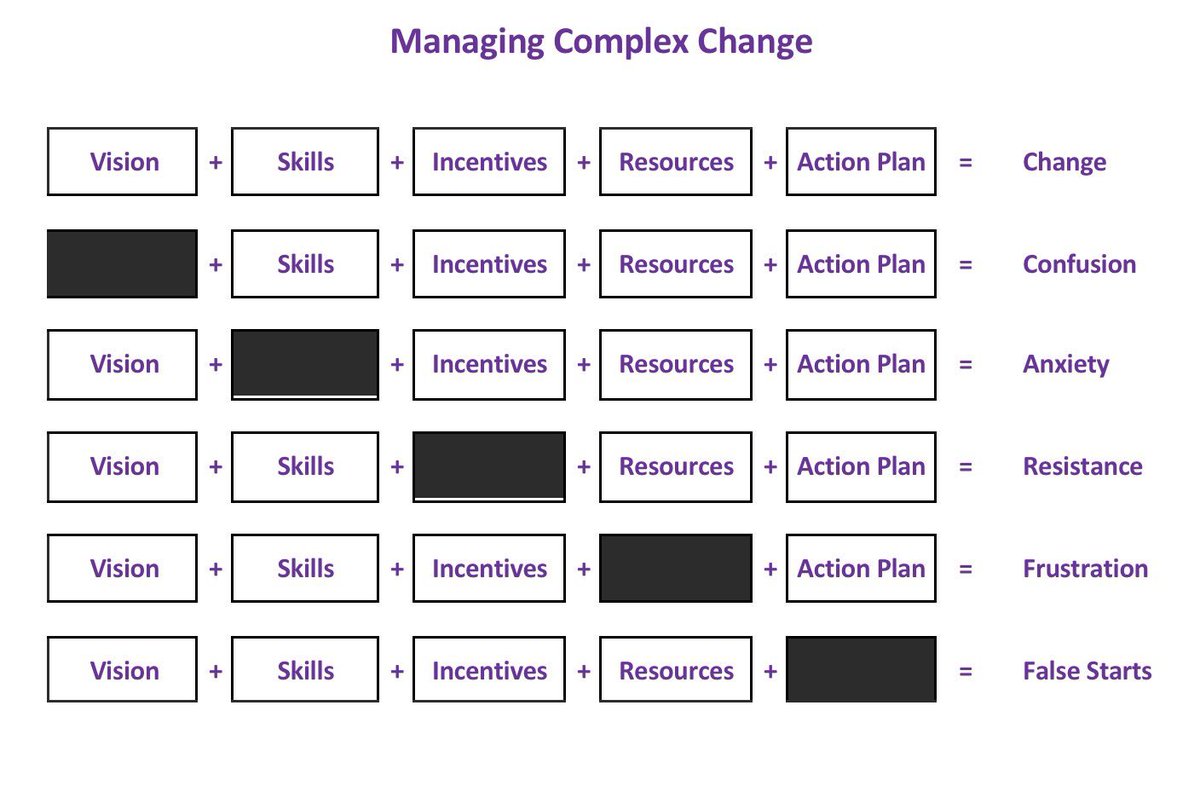
Dunno who made this but it's genius. Why change fails:
55
847
4,698
493,442
Hugo Lim retweeted

22 Jul 2023
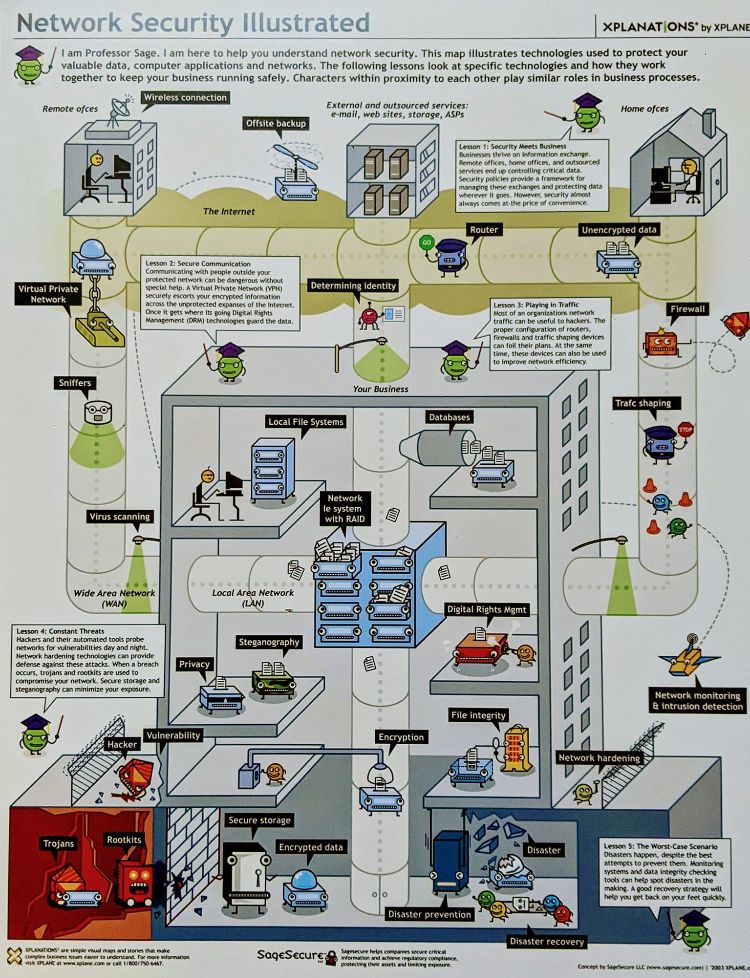
Network Security Illustrated
#infosec #cybersecurity #pentesting #redteam #informationsecurity #CyberSec #networking #networksecurity #infosecurity #cyberattacks #security #linux #cybersecurityawareness #bugbounty #bugbountytips
1
251
903
130,698
Hugo Lim retweeted

22 Jul 2023

2
404
1,705
205,238
Hugo Lim retweeted

2 May 2023
This is bad. This is really bad. Ocean temperatures are experiencing a "rapid surge." This is unprecedented. The numbers are literally off the charts. We will explain what this all means. (1/11) 🧵

198
3,526
9,341
1,638,363