
Joined March 2022
- Tweets 74
- Following 265
- Followers 158
- Likes 118
1 Photos and videos

9 Nov 2024
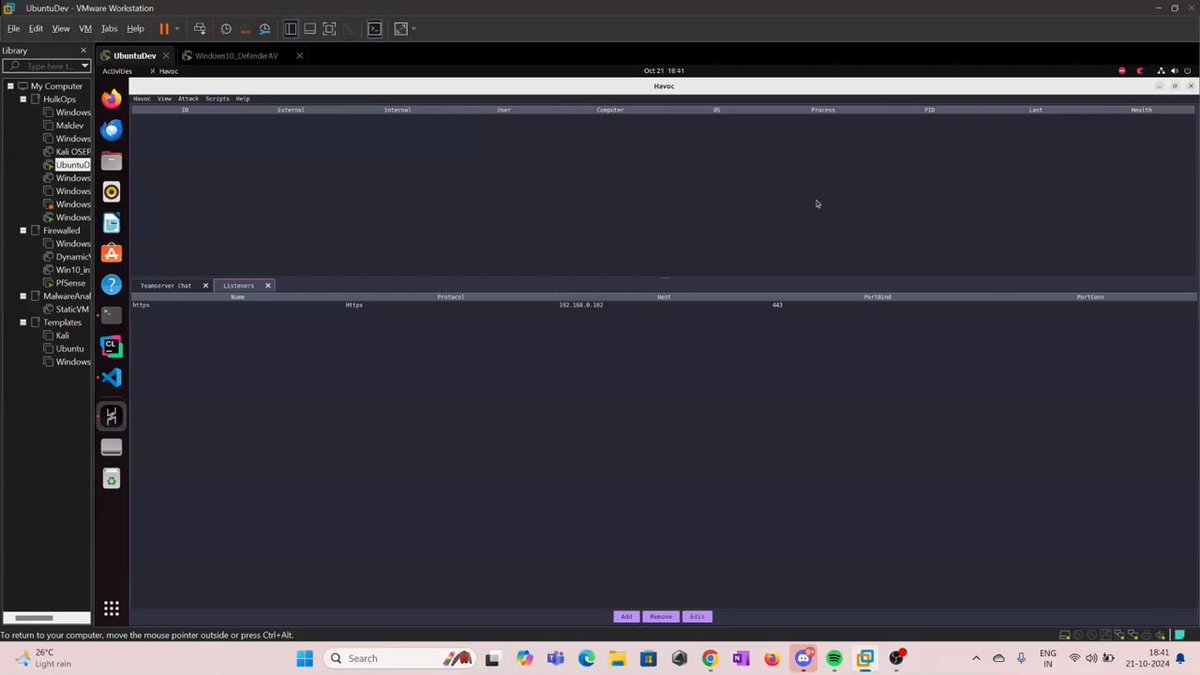
Recently, I’ve been experimenting with Return Address Spoofing and developed a tool to call any WinAPI and spoof the return address.
For a deeper dive, check out my blog post:hulkops.gitbook.io/blog/red-…
#maldev #RedTeam #OffensiveSecurity #malware
35
89
3,581
2 Nov 2024
I just pwned OpSalwarKameez24-1: Super-Star in Hack The Box! @hackthebox_eu labs.hackthebox.com/achievem… #HackTheBox #htb #CyberSecurity #EthicalHacking #InfoSec #PenTesting
2
304
22 Oct 2024
I'm thrilled to share my latest project: AuthStager. This is a proof-of-concept tool that generates a shellcode stager with authentication. github.com/HulkOperator/Auth…
Shout out to @MalDevAcademy, which is hands down the best resource to learn maldev.
1
15
82
7,530
Bnb retweeted

16 Dec 2023
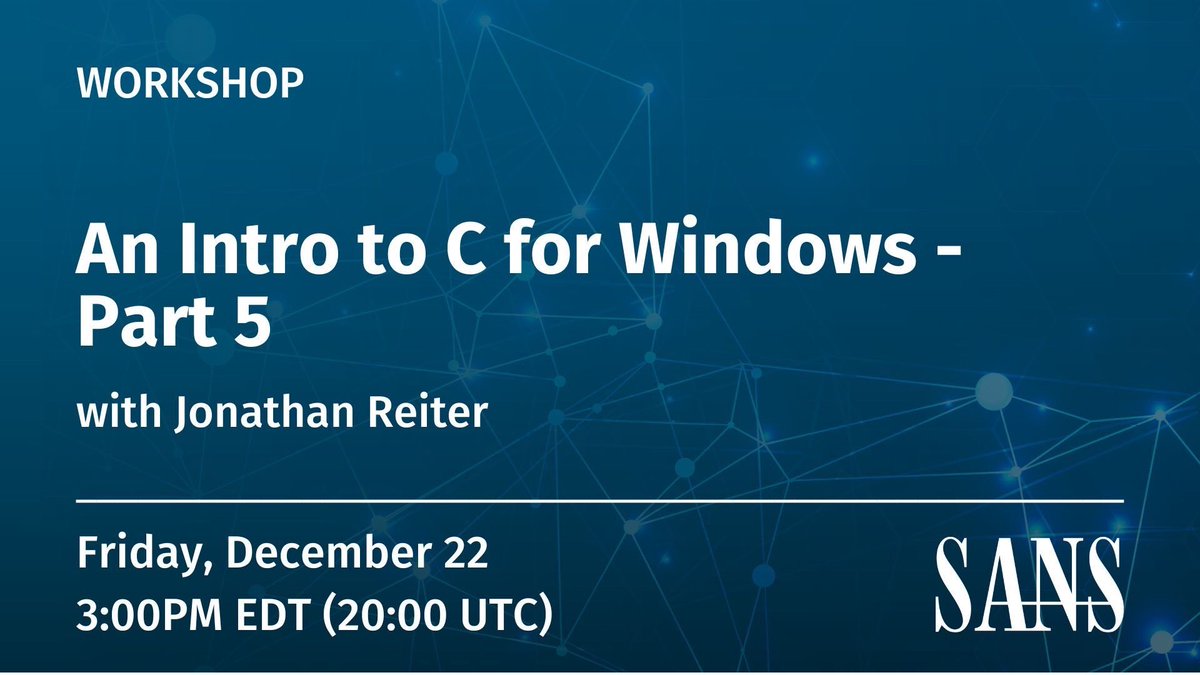
After a little break, it’s time to get back to the @SANSOffensive Intro to C workshops! 😁
Always free. Always recorded.
Register online when you have a chance.
2
13
61
5,467
Bnb retweeted

14 Sep 2023
Excited to share my hardest research about UAC 🤯
"Bypassing UAC with SSPI Datagram Contexts" 🔥
Enjoy the read! 👇
splintercod3.blogspot.com/p/…
12
239
581
61,732
Bnb retweeted

20 Jun 2023
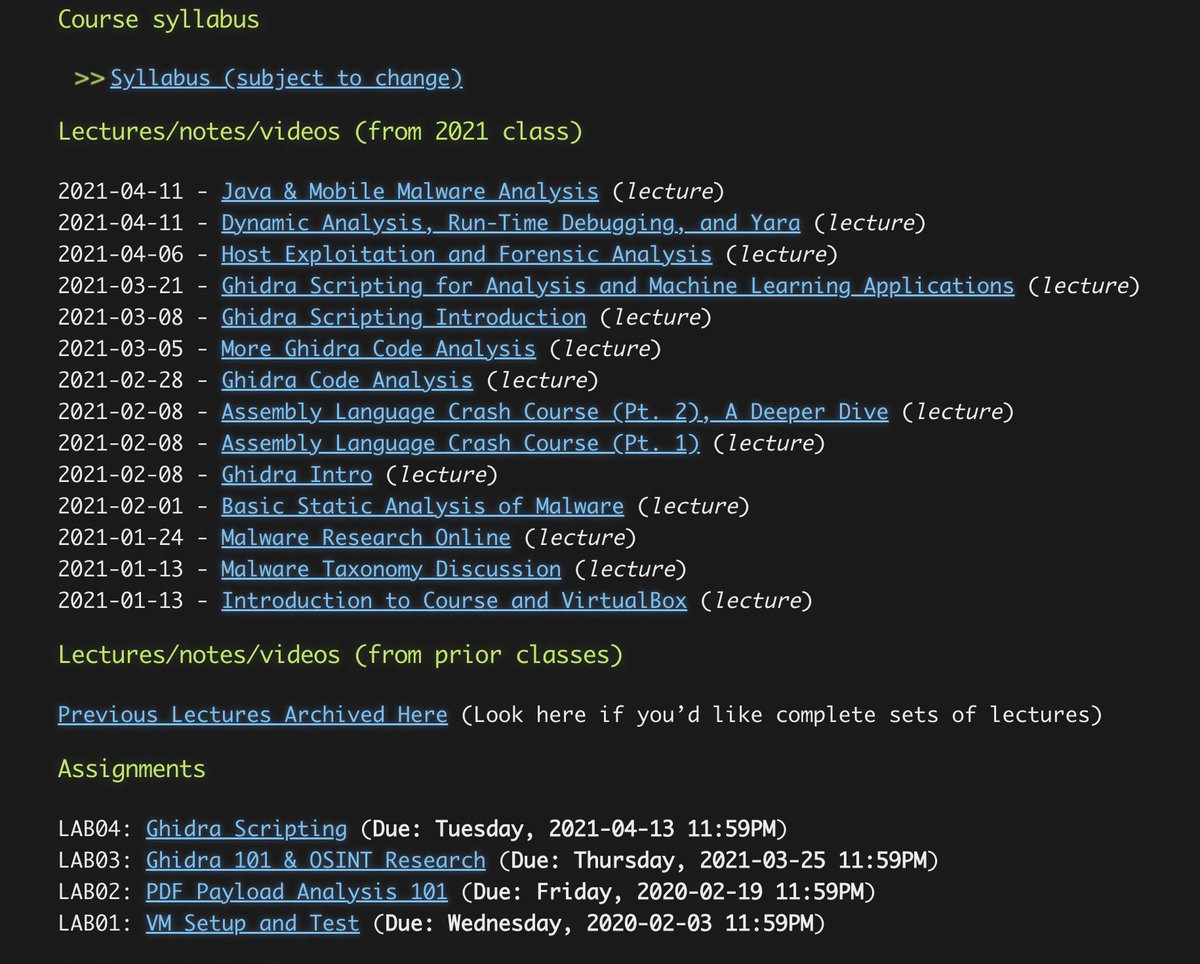
Free Malware Analysis Course, covers malware concepts, malware analysis, and black-box reverse engineering techniques
class.malware.re/
#cybersecurity #malware
9
296
917
104,912
Bnb retweeted

16 Jun 2023
😱 Passed the #OSEE certification! Can't believe I did it! Thanks again @Blomster81 , @_sickn3ss_ and @xct_de from @offsectraining for this journey to remember.
Read about my endeavors and tips for researchers that contemplate starting this as well.
gerr.re/posts/osee-review #BHUSA
19
16
182
26,326
10 Jun 2023
I'm super thrilled to share that I passed the OSCP last month. Thank you, @offsectraining, really loved the updated material.
Here's my blog sharing my experiences and advice to prepare for this journey: thehulksec.com/index.php/202…
#oscp #TryHarder
1
222
Bnb retweeted

If you are threat hunting, the easiest way to hunt for DLL sideloads is to check the path of the process. Most red teams will run their payloads from C:\programdata, Temp, Public, Appdata or from desktop. Most windows applications don't run from these locations unless until they are C# applications. And if you find some signed process suspicious, you can always check the file creation time to validate if it was recently copied to the host. Unsigned DLLs are an easy give away.
For the red teams, note that Microsoft itself doesn't sign all their DLLs. This means if you simply add telemetry to your DLL to make it look like a genuine company, you would be able to evade most hunts. Also, please don't use built-in Microsoft binaries and run them from abnormal locations. There are several other better sideloads from Cisco/Citrix and generic IT apps which work much better than the MS ones.
#RedAndBlueTips
5
62
299
41,654

PowerShell Obfuscation Bible
A collection of techniques, examples and a little bit of theory for manually obfuscating PowerShell scripts to achieve AV evasion.
github.com/t3l3machus/PowerS…
#infosec #pentesting #redteam t.me/hackgit/8331
1
108
299
26,933
Bnb retweeted

22 Mar 2023
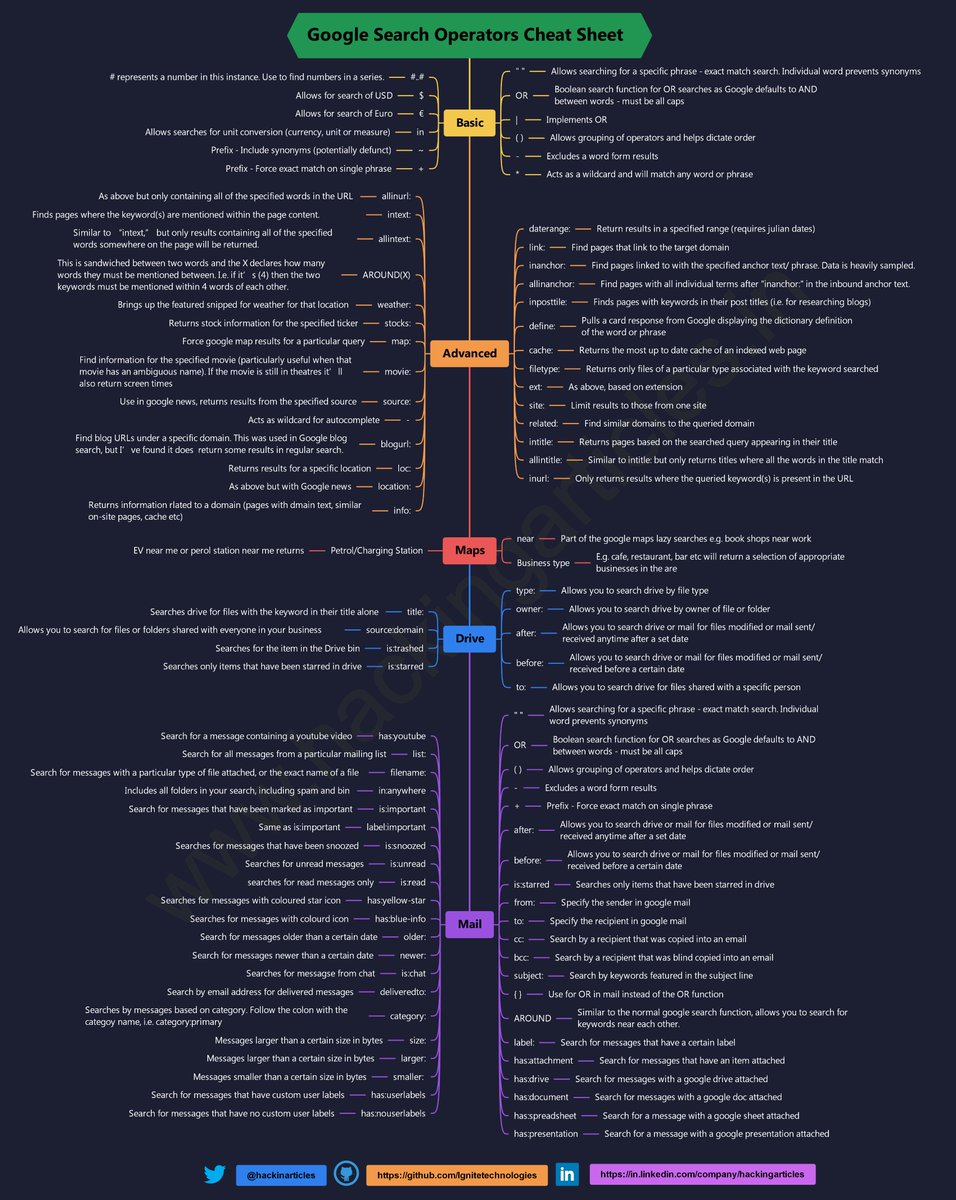
Google Search Operators Cheat Sheet
👉🏿Full HD Image: github.com/Ignitetechnologie…
#infosec #cybersecurity #cybersecuritytips #pentesting #redteam #informationsecurity #CyberSec #networking #networksecurity #infosecurity #cyberattacks #cybersecurityawareness #bugbounty #bugbountytips
3
100
240
26,212

Bnb retweeted

7 Mar 2023
Our very own Senior Technical Recruiter Amy Krutz shared valuable advice on how to write an effective cybersecurity resume: youtube.com/watch?v=zZSiml6v…
Some tips 👇🧵
2
20
72
17,471
Bnb retweeted
6 Mar 2023
⬇️ Resources for a Successful #Cybersecurity Job Hunt ⬇️
🔴Build a Strong Resume
➡Resume Now: resume-now.com/build-resume
➡Novoresume: novoresume.com/
➡Information Technology resume examples: jobhero.com/resume/examples/…
4
17
58
17,420
Bnb retweeted

1 Mar 2023
Malware Analysis Series has exactly 450 pages so far:
MAS_1: exploitreversing.com/2021/12…
MAS_2: exploitreversing.com/2022/02…
MAS_3: exploitreversing.com/2022/05…
MAS_4: exploitreversing.com/2022/05…
MAS_5: exploitreversing.com/2022/09…
MAS_6: exploitreversing.com/2022/11…
MAS_7: exploitreversing.com/2023/01…
35
520
1,383
96,692
Bnb retweeted

25 Feb 2023
I’ve spent the last 8 weeks looking for the best AI tools on the internet.
Here are some of the best ones 👇 🧵
186
1,015
4,168
848,833
Bnb retweeted

23 Feb 2023
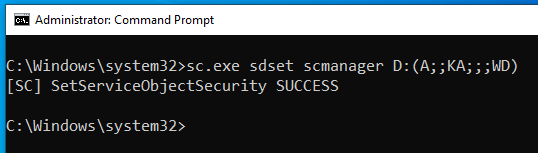
Need an almost invisible, post-exploitation, persistent, fileless, LPE backdoor? There are many, but this one looks really beautiful for me: type "sc.exe sdset scmanager D:(A;;KA;;;WD)" from an elevated command prompt.
39
364
1,323
302,478