
🕊🏴
Joined May 2007
- Tweets 1,698
- Following 1,800
- Followers 265
- Likes 34,456
58 Photos and videos




May 21
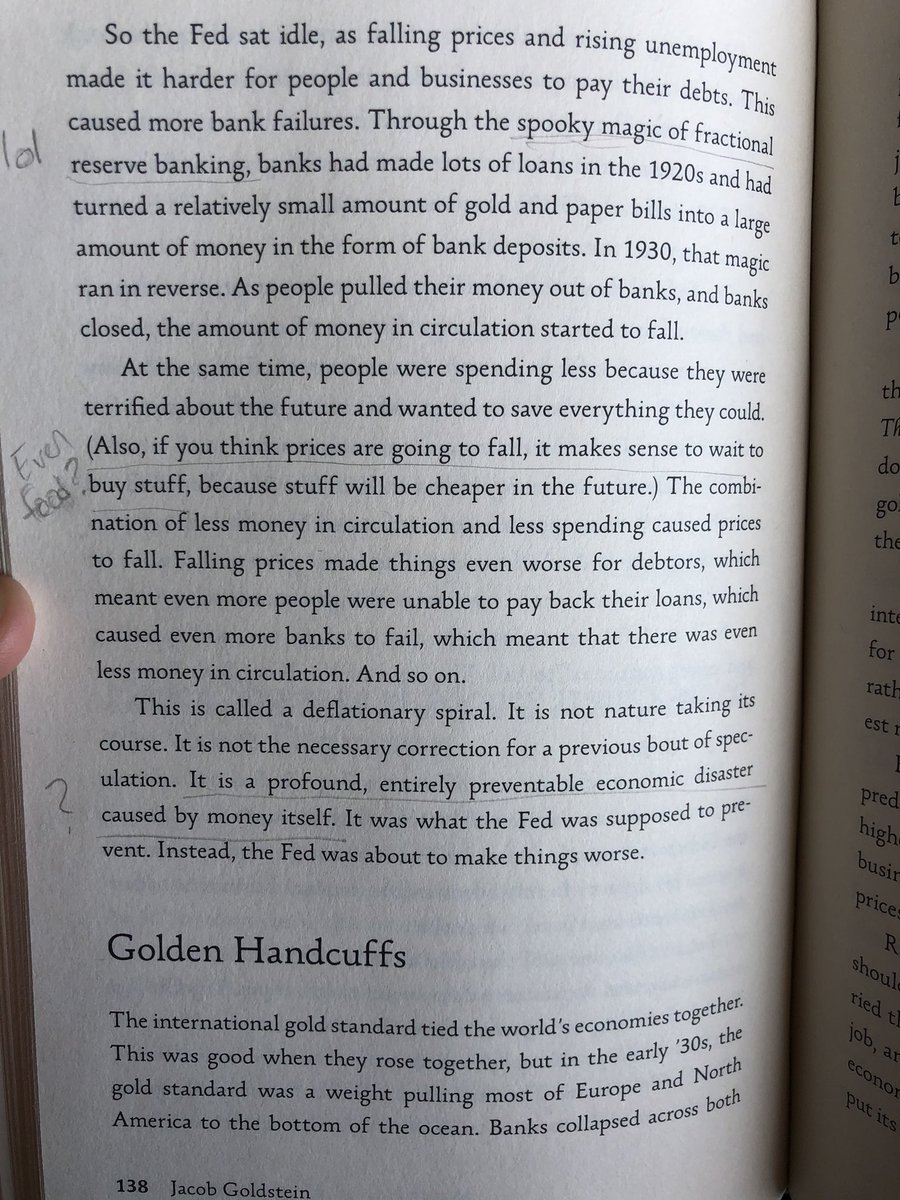
This guy is an inspiration - he is working to save lives from poorly installed guard rails. He’s been able to get face-to-face meetings with congress people because of his engagement on X. He also has 8 pages in the new infrastructure bill.
27
Andrew retweeted

May 2
Hate it when you are the only car stopped at a light?
I do.
With roundabouts, that’s not a problem. They are better, for many reasons:
240
247
2,788
123,896

Andrew retweeted

Mar 1
I don't need to search the world for things to be concerned about. My concerns are the ones right in front of me: my family, my friends, my town.
I get that neocons will neocon. But even a handful of people on the actual right are cheering about Iran.
How are house prices doing in America? How about the lost souls wandering the streets of our cities at night, or the conservative families who did everything right but their kids got caught in the trans hideousness anyway?
It is the left that, bored with bourgeois life, historically inverted this natural order.
Rousseau was all tears and pity about the earthquake in Lisbon, but put his own children in a foundling asylum.
John Lennon wanted world peace, but had no contact with his son from his first marriage.
The best line in the Tucker Carlson interview of the heretical Mike Huckabee was when Huckabee said that without Iran we wouldn't have the problem on the border with Lebanon, and Tucker responded, the way a conservative would, by saying: what problem on the border with Lebanon? I'm not having a problem on the border with Lebanon. I live in Maine.
And we weren't born yesterday: no right winger, observing the American regime, thinks to himself: these people care deeply about the Iranian public.
But as our own country crumbles, the temptation to get excited about foreign adventures increases. It's a perverse paradox.
I promise you, Sean Hannity and Mark Levin do not steer you right, and they are not steering you right now.
If you're on the right, you have an appreciation for the precariousness of the human condition. You certainly do not think: if the regime deposes a man it dislikes, this will lead to a better outcome. You do not know that. History is not kind to that kind of naïveté, and if there's one thing right-wingers are not, it is naive.
The true heart of America is not Ben Shapiro but John Quincy Adams (and Henry Clay, and so many others who echoed the same sentiments):
"[America] has, in the lapse of nearly half a century, without a single exception, respected the independence of other nations while asserting and maintaining her own.
"She has abstained from interference in the concerns of others, even when conflict has been for principles to which she clings, as to the last vital drop that visits the heart....
"Wherever the standard of freedom and Independence has been or shall be unfurled, there will her heart, her benedictions and her prayers be.
"But she goes not abroad, in search of monsters to destroy.
"She is the well-wisher to the freedom and independence of all.
"She is the champion and vindicator only of her own."
120
421
2,176
46,830

Dragon is docked with @Space_Station
15,289
39,401
643,146
102,552,535

In 1971, money changed from a natural system (gold) to a socialist system (fiat).
Crypto is tech to replace socialist money with a free-market system.
Market systems are inherently competitive and as tech evolves, new monies will continue to emerge to challenge existing ones.
816
1,638
13,433
1,713,189
Andrew retweeted

7 Apr 2025
i got into an argument with a couple of ppl here a few days ago. i told one guy im asian; i told the other guy im white. i told them both to meet me outside uniqlo

481
8,339
187,072
7,457,324
20 Mar 2025
Today’s episode of @nytimes The Daily is cringe af when you’ve been listening to The Tom Woods Show @ThomasEWoods during the pandemic…
2
48
Andrew retweeted

4 Mar 2025
🚨 Gavin Newsom & his allies just forced 12 historic family farms & dairies out of Point Reyes National Seashore in California.
They claim it’s about saving the environment — but the truth couldn't be more different.
Here is the true story — and it's heartbreaking. ⬇️🧵1/


2,048
19,794
49,493
4,899,572
Andrew retweeted

21 Jan 2025
Ross was just granted a FULL AND UNCONDITIONAL PARDON by @realDonaldTrump. Words cannot express how grateful we are.
President Trump is a man of his word and he just saved Ross's life. ROSS IS A FREE MAN!!!!!
2,903
10,113
61,781
6,112,513
Andrew retweeted

8 Jan 2025
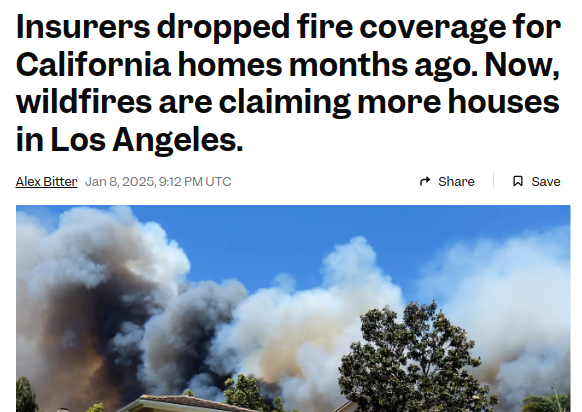
Prepare for news stories about "evil insurers" that don't tell the whole story.
Proposition 103 in California makes it illegal to accurately price fire insurance. Insurers can only use historical data, not projections.
So insurers did the rational thing: they dropped customers
191
976
7,700
562,702
Andrew retweeted
16 Dec 2024
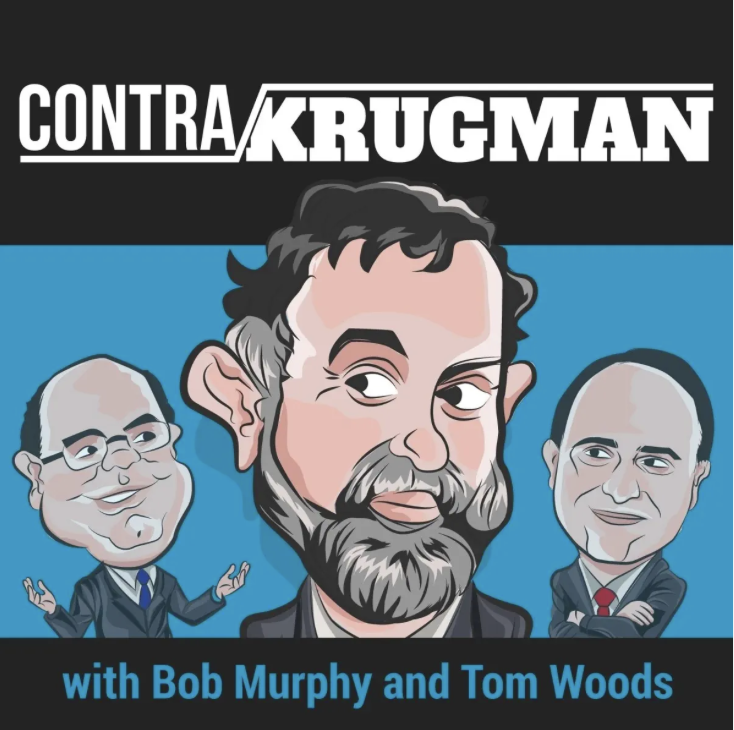
With Paul Krugman retiring from his column, Bob Murphy and I recorded one final episode of Contra Krugman, featuring our greatest hits of Krugman's errors.
If I put the link in this post nobody will be allowed to see it, so think hard about where I may have put it
27
50
547
20,908
Andrew retweeted

6 Dec 2024
Ok night owls🦉let's talk about the recent tsunami warning🌊We don't get these alerts very often and there are lot of questions, frustration, and even some anger about how it all unfolded. We'll go over the history, science and warning process👇
73
586
4,589
612,667
Andrew retweeted

5 Dec 2024
Okay can I post this now that Trump won? 9/11 😬
612
5,014
56,620
5,456,313
Andrew retweeted
1 Dec 2024
In 2013 Ron Paul called me up and said he needed me to do something, and that it had to do with what he thought would be his most important legacy.
That got my attention.
You may have noticed that our ideas aren't given a fair shake in schools and colleges.
Our view is either presented in caricature, or doesn't exist at all.
Then we scratch our heads as to why there aren't more of us.
Now what if students had a chance to evaluate different viewpoints for themselves, and what if our view of history and economics were given a fighting chance?
I had a chance to make that happen, so I took it, even though the project was brutally difficult.
I created hundreds of videos for the Ron Paul homeschool curriculum. (Trust me: adults can listen to them without feeling talked down to, and many thousands have.)
We're talking nearly 350 lessons on Western civilization from Plato to the present, plus another 90 on government.
So yes, I'm now going to show you everything I did. And how you can get it.
Here's my 90-lesson Government course, which crams 25 years of learning on my part into one semester.
You think this might give a student -- or you yourself -- a leg up in understanding the world?
1. Introduction
2. Natural Rights Theories: High Middle Ages to Late Scholastics
3. Natural Rights Theories: John Locke and Self-Ownership
4. Natural Rights Theories: Argumentation Ethics
5. Week 1 Review
6. Locke and Spooner on Consent
7. The Tale of the Slave
8. Human Rights and Property Rights
9. Negative Rights and Positive Rights
10. Week 2 Review
11. Critics of Liberalism: Jean-Jacques Rousseau and the General Will
12. Critics of Liberalism: John Rawls and Egalitarianism
13. Critics of Liberalism: Thomas Nagel and Ronald Dworkin
14. Critics of Liberalism: G.A. Cohen
15. Week 3 Review
16. Public Goods
17. The Standard of Living
18. Poverty
19. Monopoly
20. Week 4 Review
21. Science
22. Inequality
23. Aid to Developing Countries
24. Discrimination
25. Week 5 Review
26. The Socialist Calculation Problem
27. Working Conditions
28. Child Labor
29. Labor and Unions
30. Week 6 Review
31. Health Care
32. Antitrust
33. Farm Programs
34. War and the Economy
35. Week 7 Review
36. Business Cycles
37. Industrial Policy
38. Government, the Market, and the Environment
39. Prohibition
40. Week 8 Review
41. Taxation
42. Government Spending
43. The Welfare State: Theoretical Issues
44. The Welfare State: Practical Issues
45. Week 9 Review
46. Price Controls
47. Government and Money, Part I
48. Government and Money, Part II
49. Midterm Review
50. Week 10 Review
51. The Theory of the Modern State
52. American Federalism and the Compact Theory
53. Can Political Bodies Be Too Large?
54. Decentralization
55. Week 11 Review
56. Constitutionalism: Purpose
57. The American Case: Self-Government and the Tenth Amendment
58. The American Case: Progressives and the “Living, Breathing Document”
59. The American States and the Federal Government
60. Week 12 Review
61. Monarchy
62. Social Democracy
63. Fascism I
64. Fascism II
65. Week 13 Review
66. Marx I
67. Marx II
68. Communism I
69. Communism II
70. Week 14 Review
71. Miscellaneous Intervention: Postwar Africa
72. Public Choice I
73. Public Choice II
74. Miscellaneous Examples of Government Activity and Incentives
75. Week 15 Review
76. The Industrial Revolution
77. The New Deal I
78. The New Deal II
79. The Housing Bust of 2008
80. Week 16 Review
81. Are Voters Informed?
82. Is Political Representation Meaningful?
83. The Myth of the Rule of Law
84. The Incentives of Democracy
85. Week 17 Review
86. The Sweeping Critique: Robert LeFevre
87. The Sweeping Critique: Murray N. Rothbard
88. Case Study: The Old West
89. Economic Freedom of the World
90. Week 18 Review
(By the way: the reason there's a review each week is that an overview of what's been learned is the best way to retain new material -- no sense in learning all this stuff if you're just going to forget it by next week!)
Here's Western Civilization to 1492:
1. Introduction and Overview
2. Hebrew History I
3. Hebrew History II
4. Hebrew History III
5. Week 1 Review
6. Hebrew Religion and the Hebrew Contribution
7. Minoan Crete
8. Mycenaean Greece
9. Homer, The Iliad
10. Week 2 Review
11. Homer and Hesiod
12. Classical Greece: Overview
13. Pre-Socratics, I
14. Pre-Socratics, II
15. Week 3 Review
16. Socrates
17. Plato: Introduction and Overview
18. Plato’s Worldview
19. Plato and The Republic
20. Week 4 Review
21. Aristotle: The Philosopher
22. Aristotle’s Ethics
23. Aristotle’s Politics
24. Classical Greece: The Polis, Sparta
25. Week 5 Review
26. Classical Greece: The Polis, Athens
27. The Persian Wars
28. The Peloponnesian War
29. Herodotus and Thucydides
30. Week 6 Review
31. Greek Drama, I
32. Greek Drama, II
33. Classical Greece: Art
34. Greek Religion
35. Week 7 Review
36. Greece and Western Liberty
37. Alexander the Great
38. The Hellenistic World
39. Hellenistic Philosophy
40. Week 8 Review
41. Rome: Beginnings and Foundations
42. Struggle of the Orders
43. Expansion of Rome
44. Toward the Empire, I
45. Week 9 Review
46. Toward the Empire, II
47. Toward the Empire, III
48. The Augustan Settlement
49. Latin Literature: The Golden Age
50. Week 10 Review
51. The Silver Age of Latin Literature
52. Rome After Augustus
53. Second-Century Rome
54. Roman Art
55. Week 11 Review
56. Christianity: The Background
57. The Birth of Christianity, Part I
58. The Birth of Christianity, Part II
59. Early Christian Sources I: The New Testament
60. Week 12 Review
61. The Spread of Christianity
62. From the Underground Church to the Edict of Milan
63. Early Christian Texts II: Didache, Shepherd of Hermas, Apostolic Fathers, Apologists
64. The Development of Christianity I
65. Week 13 Review
66. The Development of Christianity II
67. Monasticism, Part I
68. Monasticism, Part II
69. The Church and Classical Culture I
70. Week 14 Review
71. The Church and Classical Culture II
72. Rome: Third-Century Crisis
73. Diocletian and Constantine
74. Rome and the Barbarians, Part I
75. Week 15 Review
76. Rome and the Barbarians, Part II
77. Rome: Significance
78. St. Augustine I
79. St. Augustine II
80. Week 16 Review
81. The Church and the Barbarians
82. Merovingians and Carolingians
83. The Papal-Frankish Alliance
84. Charlemagne
85. Week 17 Review
86. The Carolingian Renaissance
87. Christianity in England and Ireland
88. Christianity in Germany
89. Midterm Review
90. Week 18 Review
91. Islam
92. Byzantium I
93. Byzantium II
94. After Charlemagne
95. Week 19 Review
96. Ninth- and Tenth-Century Invasions
97. Feudalism and Manorialism
98. Medieval Art
99. England: William the Conqueror
100. Week 20 Review
101. The Gregorian Reform, Part I
102. The Gregorian Reform, Part II
103. The Church-State Struggle and Western Liberty
104. Christendom
105. Week 21 Review
106. The Great Schism
107. France: Capetians to Louis IX
108. The Medieval Church: Sacraments and Liturgy
109. The Medieval Church: Popular Piety
110. Week 22 Review
111. Crusades: Background
112. The First Crusade
113. Later Crusades
114. The End of the Crusades
115. Week 23 Review
116. The Albigensian Crusade
117. The Mendicant Orders
118. England: Magna Carta
119. France: Philip the Fair
120. Week 24 Review
121. The Renaissance of the Twelfth Century
122. The Rise of Universities
123. Scholastic Philosophy
124. Thomas Aquinas: Biography and Overview
125. Week 25 Review
126. Thomas Aquinas and the Quinque Viae
127. Thomas Aquinas and the Divine Attributes
128. Just War Theory
129. Later Scholasticism
130. Week 26 Review
131. The Cathedrals
132. The Rise of Towns
133. Economy in the High Middle Ages
134. The Medieval Contribution to Western Prosperity
135. Week 27 Review
136. The Holy Roman Empire I
137. The Holy Roman Empire II
138. Medieval Literature
139. Dante and the Divine Comedy
140. Week 28 Review
141. Philip IV vs. Boniface VIII
142. Marsilius of Padua and the Attack on Papal Power
143. The Avignon Papacy
144. Fourteenth-Century Crisis
145. Week 29 Review
146. England in the Fourteenth Century
147. France in the Fourteenth Century
148. The Hundred Years’ War
149. The Great Western Schism
150. Week 30 Review
151. The Fall of Byzantium
152. The Renaissance: Ideas
153. Petrarch and the Renaissance
154. Renaissance Humanism I
155. Week 31 Review
156. Renaissance Humanism II
157. Machiavelli
158. Renaissance Art I
159. Renaissance Art II
160. Week 32 Review
161. Renaissance Art III
162. Renaissance Art IV
163. The Northern Renaissance
164. The Renaissance Popes
165. Week 33 Review
166. Renaissance Italy: The Key Political Units, Part I
167. Renaissance Italy: The Key Political Units, Part II
168. Fifteenth-Century France
169. Fifteenth-Century England
170. Week 34 Review
171. The Holy Roman Empire to the Fifteenth Century
172. The Church on the Eve of Reform
173. Centralization in Spain
174. The Age of Discovery, Part I
175. Week 35 Review
176. The Age of Discovery, Part II
177. The Age of Discovery, Part III
178. Concluding Remarks
179. Preview of Western Civilization II
180. Week 36 Review
Here's Western Civilization from 1493:
1. Introduction
2. Review of Western Civilization to 1492
3. The Church on the Eve of the Reformation
4. The German Reformation, Part I
5. Week 1 Review
6. The German Reformation, Part II
7. The German Reformation, Part III
8. Other Protestant Figures
9. John Calvin
10. Week 2 Review
11. The English Reformation, Part I
12. The English Reformation, Part II
13. The Catholic Reformation, Part I
14. The Catholic Reformation, Part II
15. Week 3 Review
16. Sixteenth-Century Portraits: Charles V
17. Sixteenth-Century Portraits: Philip II
18. The French Wars of Religion
19. Sixteenth-Century Portraits: Elizabeth I
20. Week 4 Review
21. The “Eutopians”
22. The Thirty Years’ War
23. The English Civil War
24. The Levellers
25. Week 5 Review
26. Oliver Cromwell
27. The Glorious Revolution
28. John Locke, Part I
29. John Locke, Part II
30. Week 6 Review
31. France Before Louis XIV
32. Difficulties and Revolt in Spain
33. Constitutionalism
34. Absolutism
35. Week 7 Review
36. Mercantilism
37. Louis XIV, Part I
38. Louis XIV, Part II
39. The War of the Spanish Succession
40. Week 8 Review
41. The Hohenzollerns
42. The Habsburgs
43. Russia: Peter the Great
44. A Survey of Art
45. Week 9 Review
46. The Scientific Revolution, Part I
47. The Scientific Revolution, Part II
48. The Scientific Revolution, Part III
49. The Enlightenment, Part I
50. Week 10 Review
51. The Enlightenment, Part II
52. Adam Smith
53. Europe in the 18th Century, Part I
54. Europe in the 18th Century, Part II
55. Week 11 Review
56. Enlightened Absolutism
57. The American Revolution, Part I
58. The American Revolution, Part II
59. The American Revolution, Part III
60. Week 12 Review
61. The French Revolution, Part I
62. The French Revolution, Part II
63. The Reign of Terror
64. Napoleon, Part I
65. Week 13 Review
66. Napoleon, Part II
67. The American and French Revolutions Compared
68. Edmund Burke and the French Revolution
69. Mary Wollstonecraft and the Rights of Women
70. Week 14 Review
71. The Industrial Revolution, Part I
72. The Industrial Revolution, Part II
73. Slavery and Its Abolition, Part I
74. Slavery and Its Abolition, Part II
75. Week 15 Review
76. What Was the Source of Western Prosperity?
77. The Congress of Vienna
78. The Conservative Reaction, 1815-1830
79. The Growth of State Education
80. Week 16 Review
81. Education Without the State: The Case of England
82. Liberalism, Part I
83. Liberalism, Part II
84. Liberalism, Part III
85. Week 17 Review
86. Liberalism, Part IV
87. Socialism
88. Neoclassicism
89. Romanticism
90. Week 18 Review
91. Midterm Review
92. The Revolutions of 1830
93. The Revolutions of 1848
94. Marxism, Part I
95. Week 19 Review
96. Marxism, Part II
97. Marxism, Part III
98. Marxism, Part IV
99. Naturalism
100. Week 20 Review
101. The Crimean War
102. The Unification of Italy
103. The Unification of Germany
104. The Second Industrial Revolution
105. Week 21 Review
106. Southeastern Europe: New States Emerge
107. France and England in the Late 19th Century
108. Germany, Austria-Hungary, and Russia
109. Imperialism
110. Week 22 Review
111. Did The West Grow Rich Through Imperialism?
112. Modernism, Part I
113. Modernism, Part II
114. The Coming of World War I
115. Week 23 Review
116. World War I, Part I
117. World War I, Part II
118. World War I, Part III
119. The Paris Peace Conference
120. Week 24 Review
121. The Russian Revolution and Its Aftermath, Part I
122. The Russian Revolution and Its Aftermath, Part II
123. The Russian Revolution and Its Aftermath, Part III
124. The Russian Revolution and Its Aftermath, Part IV
125. Week 25 Review
126. The Broken World of the Interwar Period
127. Communists, Fascists, and Others
128. Nazis!
129. The 1930s and the Coming of the War in Europe
130. Week 26 Review
131. The Beginning of World War II
132. Axis Invasions in Southern and Western Europe
133. The United States as a Neutral
134. Global War: Barbarossa and Pearl Harbor
135. Week 27 Review
136. Total War Mobilization: Propaganda, Production, Transportation
137. Military Matters
138. The Final Solution and Other Mass Murders
139. Bombing and Mass Destruction
140. Week 28 Review
141. 1944: The Beginning of the End: Normandy, the Battle of the Bulge, and More
142. Coordinating the Allied Effort: Allied Planning
143. January 1945: Barbarism on All Sides
144. The End of the War
145. Week 29 Review
146. The Axis in Ruins
147. The Nuremburg Trials
148. Origins of the Cold War
149. Two Power Blocks and Orwell’s 1984
150. Week 30 Review
151. The Economic Miracle
152. Decolonization
153. European Union and Cold War
154. The Cold War from the ’50s to the ’70s
155. Week 31 Review
156. Art and Architecture in the Twentieth Century
157. The World of the Sixties
158. The Middle East and Western Civilization to the Seventies
159. The Soviet Union from Brezhnev to Gorbachev
160. Week 32 Review
161. The Collapse of the Soviet Empire
162. Migration, Economics, Nationalism, Ethnic Cleansing
163. The West and the Rise of Asia
164. Lessons: Liberty, Technology, Society, and the State
165. Week 33 Review
Understand that you can learn all of this, no matter your age, from someone (me) who doesn't hate Western civilization or you.
I'm giving away these courses as a bonus when this Black Friday weekend (which ends in a flash) you pick up a membership to my Liberty Classroom, where since 2012 my (normal-person) colleagues and I have been teaching the history and economics they kept from you.
If you're going to fight for Western civilization, the least you can do is know it well, so you can properly love it.
And remember those friends of yours whose homes are already filled to the brim with knick-knacks -- or your father, who already has all the "#1 Dad" T-shirts he can handle.
Give them knowledge this year instead. They will thank you. Link in the next post.
69
273
1,648
92,871
Andrew retweeted

8 Jun 2018
45. By this time (1963), poliomyelitis (aka “polio”) had all but disappeared. As it turns out, neither of the vaccines were actually necessary. The Salk vaccine was horrible at actually preventing paralysis, and the Sabin vaccine came too late to make a difference.
13
235
1,571
Andrew retweeted

20 Nov 2024
The newest course on Peterson Academy releases tonight at 8pm EST, @michaelmalice's six-hour course: The Rise and Fall of the Soviet Union. Enroll now for immediate access at petersonacademy.com
In this course, we undertake a profound and thought-provoking journey through the rise and fall of the Soviet Union.
From the early days of anarchism and communism to the tumultuous events that led to the collapse of the Soviet empire, we explore the key figures, pivotal moments, and far-reaching consequences of this significant period in history.
Across eight detailed lectures, we analyze the reigns of Joseph Stalin and his successors, the Cold War era, and the roles played by Western leaders and intellectuals, ultimately witnessing the dramatic fall of communism in Eastern Europe and the Soviet Union itself, offering a comprehensive view of the forces that shaped the modern world.
93
344
2,379
541,356
