
Journals Publishing Exciting Research in artificial intelligence science and engineering
Joined May 2025
- Tweets 40
- Following 1
- Followers 3
- Likes 2
29 Photos and videos

📖 Read the full Open Access analysis here: doi.org/10.23919/AISE.2026.0…
Huge congratulations to the authors from NTUsg & Hon Hai (Foxconn) Research Institute! 👏
#QuantumComputing #MachineLearning #QML #QuantumAlgorithms
1
34
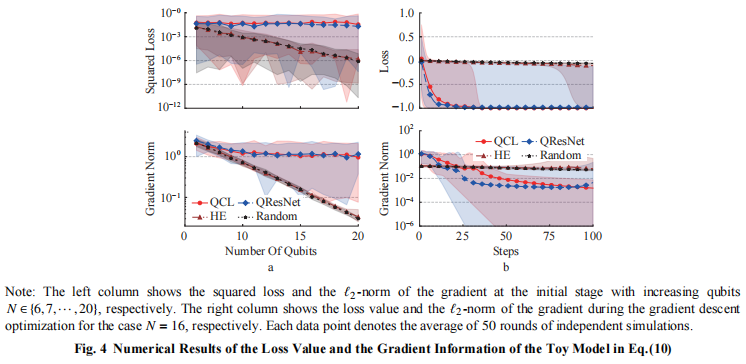
💻 The team verified these architectures on quantum variational autoencoders & binary classification.
The result? While standard hardware-efficient & random circuits fail to converge, QCL and QResNet maintain stable gradients and train successfully! 🚀
🔗 doi.org/10.23919/AISE.2026.0…
38
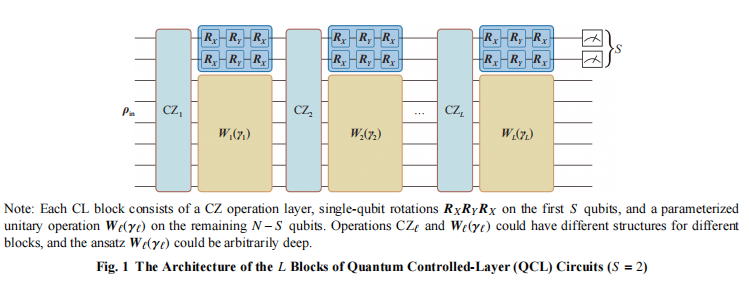
📊 The theoretical breakthrough:
They mathematically prove that in QCL and QResNet, the gradient norm is lower-bounded by a value INDEPENDENT of the qubit number (N) and circuit depth (D).
No more exponentially vanishing gradients! 📐
🔗 doi.org/10.23919/AISE.2026.0…
21
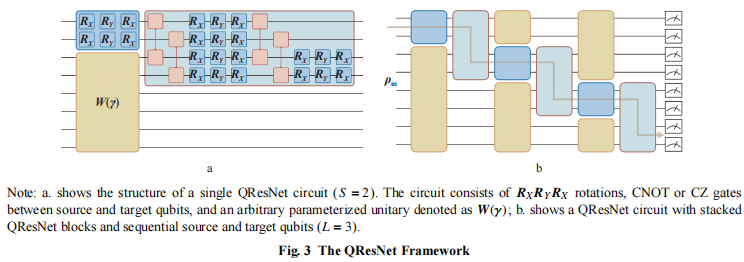
💡 Enter QCL & QResNet!
Kaining Zhang, Min-Hsiu Hsieh, and Dacheng Tao designed novel Quantum Controlled-Layer and Quantum Residual Network architectures to effectively decouple circuit expressivity from gradient suppression. 🧠⚙️
🔗 doi.org/10.23919/AISE.2026.0…
29
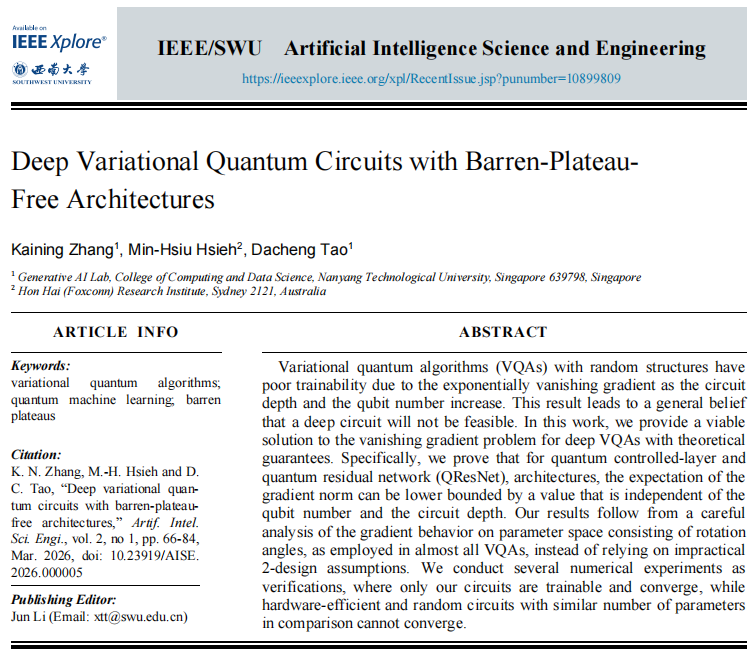
🚨 New Paper Alert!
"Deep Variational Quantum Circuits with Barren-Plateau-Free Architectures"
Training deep quantum circuits is notoriously hard due to the "Barren Plateau" (vanishing gradient) problem. Can we overcome it? ⚛️👇
🔗 doi.org/10.23919/AISE.2026.0…
29
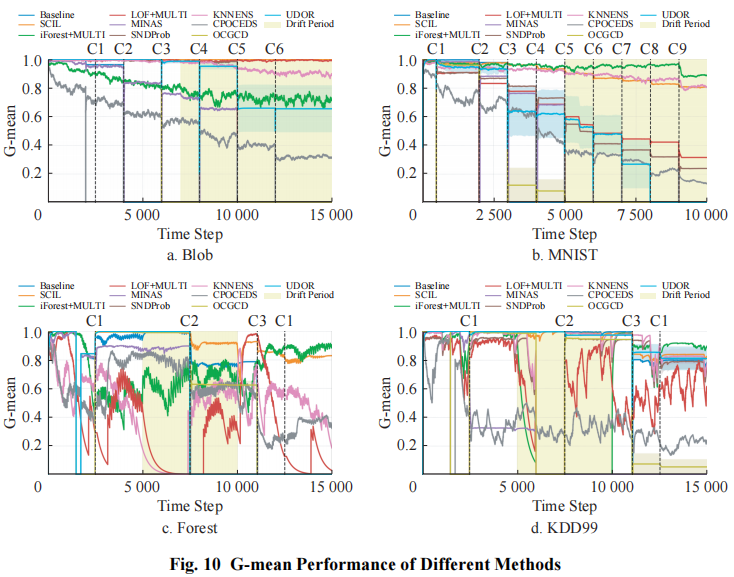
📊 SCIL consistently outperforms state-of-the-art methods in recovering from recurrent concept drifts.
Even better? The authors have shared the code and datasets for the community! 💻👇
🔗 github.com/Jin000001/SCIL
🔗 doi.org/10.23919/AISE.2026.0…
#MachineLearning #ConceptDrift
16
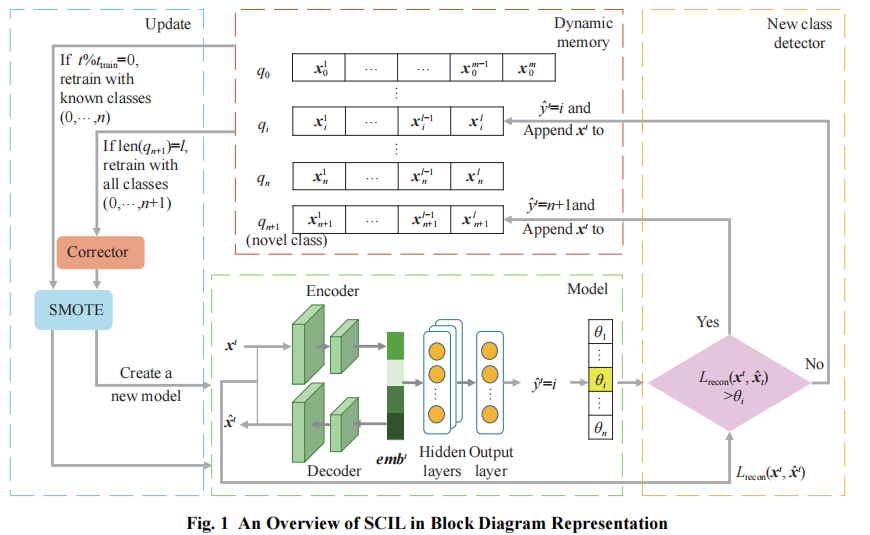
💡 Enter the SCIL framework!
Jin Li et al. combine an Autoencoder with an MLP using a dual-loss strategy. It detects unseen classes on the fly and filters out noisy samples before oversampling. No more catastrophic forgetting! ⚙️
🔗 doi.org/10.23919/AISE.2026.0…
19
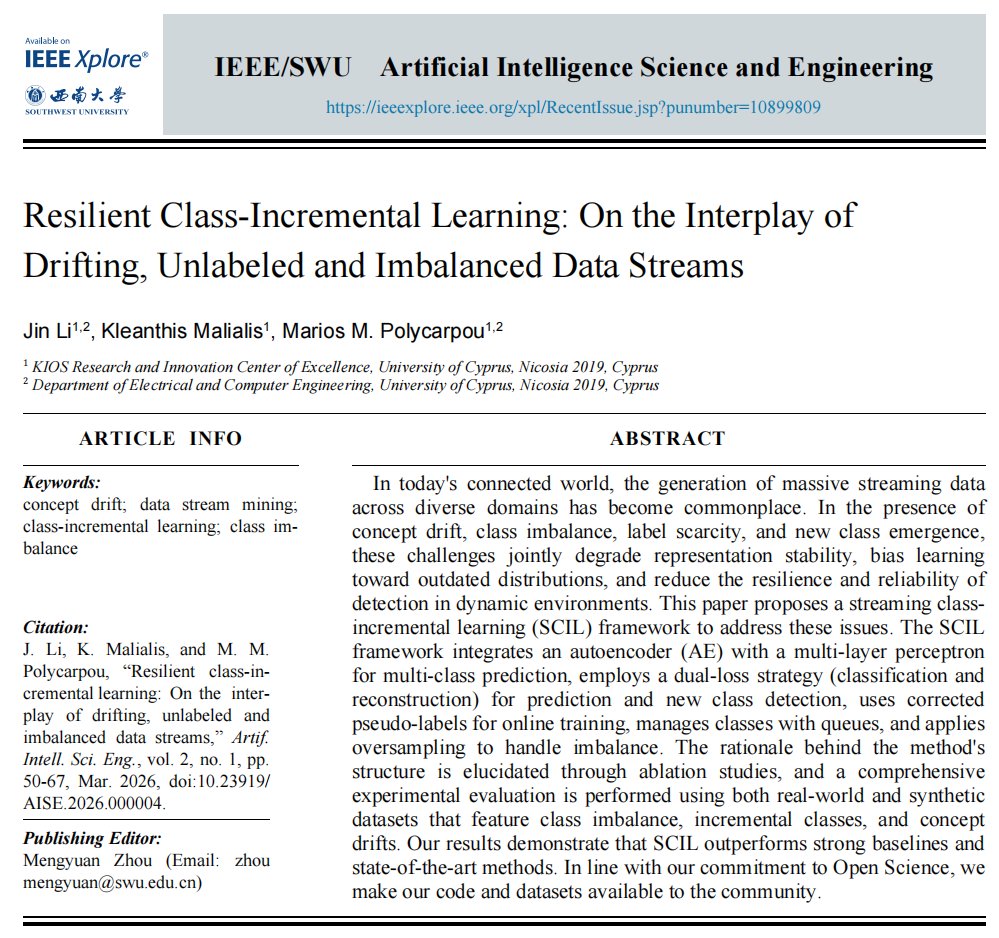
🚨 New in AISE!
"Resilient Class-Incremental Learning: On the Interplay of Drifting, Unlabeled and Imbalanced Data Streams"
How to handle streaming data with concept drift, missing labels & rare anomalies? Read this Open Access paper! 🧵👇
🔗 doi.org/10.23919/AISE.2026.0…
#AI #ML
14
📖A brilliant intersection of Machine Learning and Economics!
Dive into the full analysis here: doi.org/10.23919/AISE.2026.0…
Huge congratulations to the research team from UW, USC, UC Berkeley & NVIDIA! 👏
#MachineLearning #ContractTheory #DataScience
19
🏆 The math is solid. The paper proves a regret bound of Θ(T^(2/3)) for return-based contracts.
For feature-based contracts, they introduce an intrinsic dimension 'd' and prove a tight regret bound of O(T^((d 1)/(d 2))) for linear families! 📈
🔗 doi.org/10.23919/AISE.2026.0…
16
⚖️ The authors investigate two types of principal-agent contracts:
1️⃣ Return-based: Pay is proportional to user rewards.
2️⃣ Feature-based: Pay is based on content quality/features.
Both are jointly optimized with the platform's recommendation policy. 📊
🔗 doi.org/10.23919/AISE.2026.0…
10
💡 Traditional recommender systems only focus on the users. But the creator economy is a 3-party game: Platforms, Users, and Content Creators!
To incentivize high-quality content, this paper bridges Online Learning with Contract Theory. 🤝
🔗 doi.org/10.23919/AISE.2026.0…
12
Deep Dive: Yesterday, we introduced a groundbreaking paper on the #CreatorEconomy by Michael I. Jordan's team.
How do we mathematically balance creator incentives and user recommendations? Let's break down the insights! 👇
🔓 doi.org/10.23919/AISE.2026.0…
9
🚨 New Survey in AISE
“Robust Reinforcement Learning: Methods, Benchmarks and Challenges”
This survey reviews recent advances in robust RL, including:
• adversarial training
• domain randomization
• safe RL
• uncertainty-aware learning
📄 doi.org/10.23919/AISE.2026.0…
#AI #RL
1
47
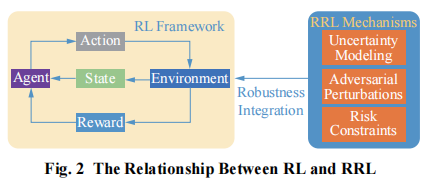
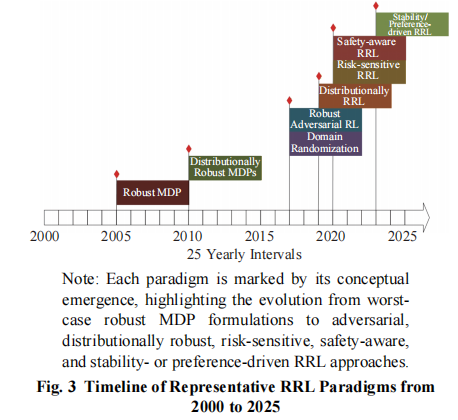
🧠 Deep Dive: Why do we need Robust RL?
Standard RL often fails in real-world scenarios due to noise & adversarial attacks. This comprehensive survey maps the 25-year evolution of RRL, covering safe RL, regularization & benchmarks! 🛡️🤖
🔗 Read here: doi.org/10.23919/AISE.2026.0…
20
🚨 New Survey in AISE
“Toward Collaborative and Adaptive Learning: A Survey of Multi-Agent Reinforcement Learning in Education”
This survey explores how MARL can support:
• adaptive tutoring
• collaborative learning
• peer interaction
📄 doi.org/10.23919/AISE.2026.0…
#AI #MARL
1
58
📊 Deep Dive: How do we model peer tutoring or gamification?
This survey maps Cooperative, Competitive & Mixed #MARL algorithms to specific educational roles (tutors, students, reviewers), addressing real-world classroom dynamics! 🎓
1
25
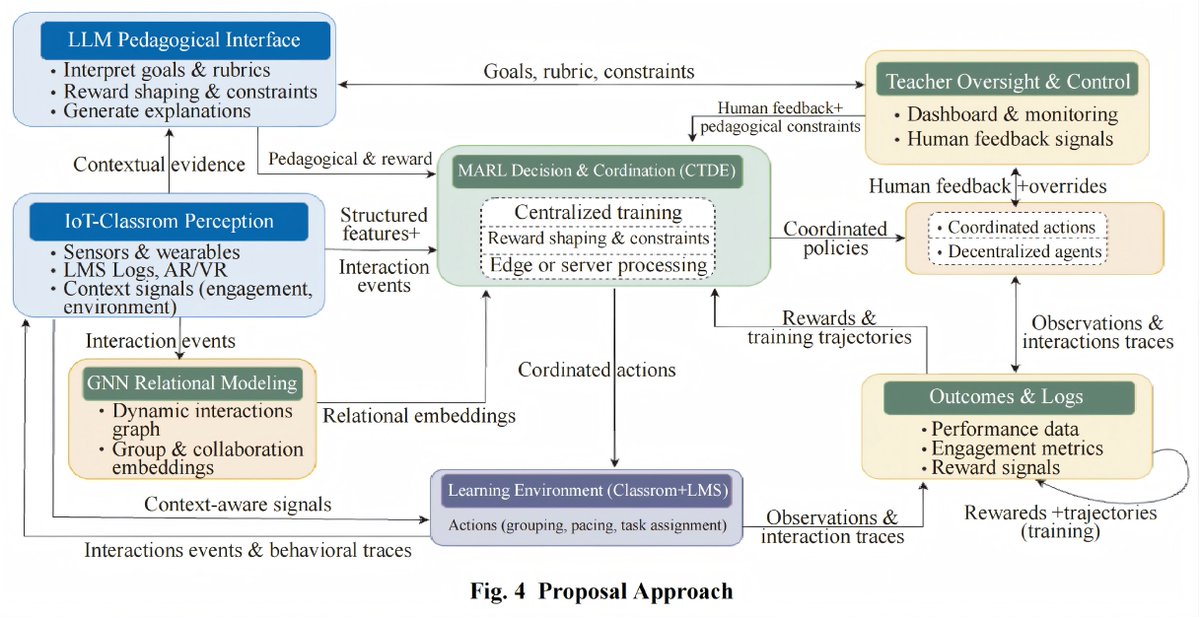
🚀 What's next for #EdTech?
The authors propose a visionary MARL-centric framework integrating #LLMs, GNNs & IoT to create next-gen "Agentic AI" classrooms!
Dive into the future roadmap here: doi.org/10.23919/AISE.2026.0…
#MachineLearning #AgenticAI
21
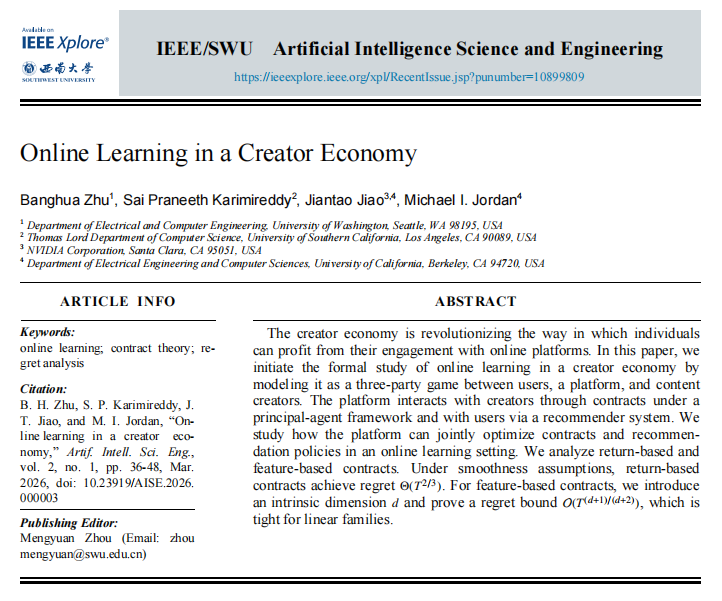
🚨 New Publication in AISE
“Online Learning in a Creator Economy”
This work studies how platforms can jointly optimize:
• creator incentives
• recommendation policies
• online learning strategies
📄 doi.org/10.23919/AISE.2026.0…
#AI #OnlineLearning #RecommenderSystems
1
2
33
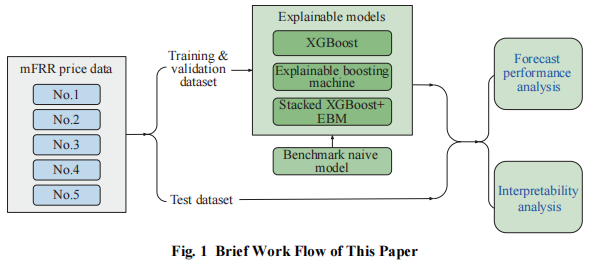
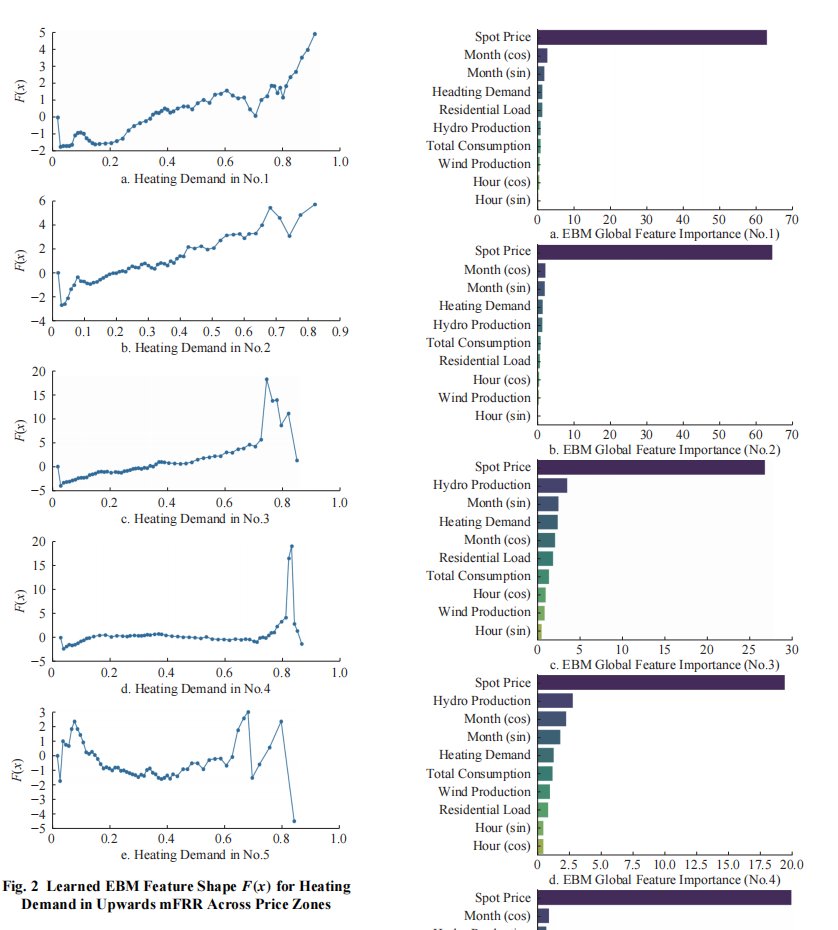
Exploring the Interpretability of Forecasting Models for Energy Balancing Market
doi.org/10.23919/AISE.2025.0…
#ExplainableAI #ModelInterpretability #EnergyBalancingMarket #mFRRActivationPriceForecasting
1
32