
IPPR, the Institute for Public Policy Research, is the UK’s leading progressive think tank.
Joined February 2009
- Tweets 28,262
- Following 3,995
- Followers 87,087
- Likes 11,378
6,110 Photos and videos







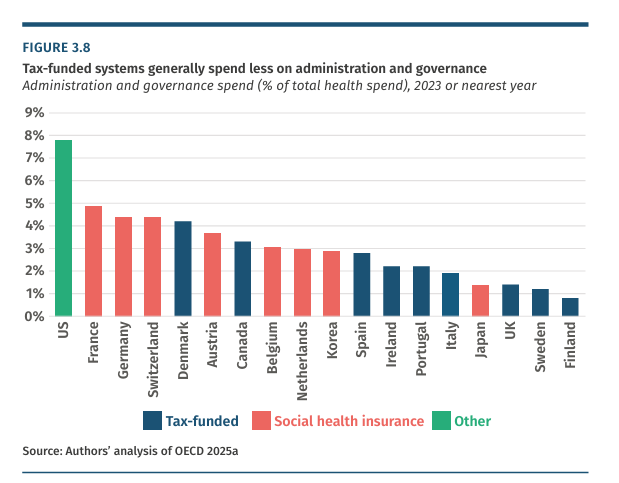
Our analysis of 22 countries reveals that tax-funded healthcare systems have lower admin costs compared to insurance-based healthcare systems.
Administrative costs consume 2.2 per cent of health spending in tax-funded systems compared to 3.5 per cent in insurance systems.
18
155
185
27,104
IPPR retweeted
Some people are saying that banning social media for U16s is an attack on freedom. There is nothing liberating about platforms designed to capture, retain and monetise our children’s attention. @IPPR polling that shows that only 7pc of parents against further regulation!
2
3
325
📊 New IPPR polling finds 8 in 10 people support action to protect children from social media.
🔹 44% support a ban for under-16s
🔹 39% support stricter regulation
🔹 Just 11% say there should be neither
ippr.org/media-office/vast-m…
1
2
520
IPPR retweeted

Jun 12
IPPR has launched a flagship programme to understand and tackle what is going on for young people in this country: our State of a Generation review will work with young people to diagnose the drivers of why they have lost faith in their future and shape solutions that work

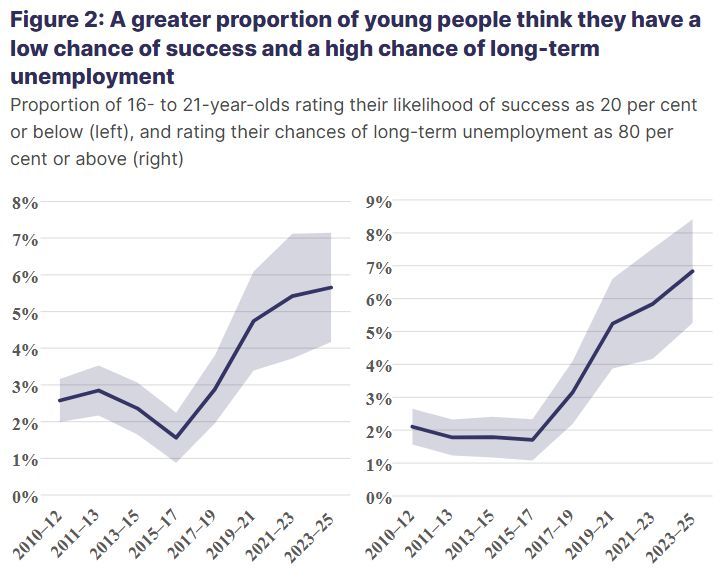
⏰ | NEW RESEARCH: Young people are increasingly losing faith in their futures.
One in 14 young people now expect to become long-term unemployed. A decade ago, it was one in 50. This is an economic and social crisis for Gen Z.
ippr.org/articles/britains-b…
2
5
891
IPPR retweeted

This is the right thing to do - ideally we would also negotiate with Europe to join / align with SAFE scheme.
Jun 12

EXCL:
Gordon Brown has been in talks with Mark Carney about joining the Canadian-backed defence bank, after Rachel Reeves previously signalled the UK wouldn't sign up
Canadian High Commissioner tells @Masonboyowen “I’m very encouraged by progress we’ve been able to make"
2
11
6,240
The share of young people who expect to become long-term unemployed or have little chance of success in life has roughly tripled over the past decade.
Read our new research here: ippr.org/articles/britains-b…
2
7
865
⏰ | NEW RESEARCH: Young people are increasingly losing faith in their futures.
One in 14 young people now expect to become long-term unemployed. A decade ago, it was one in 50. This is an economic and social crisis for Gen Z.
ippr.org/articles/britains-b…
1
4
7
1,799
"None of us want conflict, none of us want war", but the context of global instability provides us with an opportunity to unite as a nation with a common purpose - and tell a better story about British values and identity.
📻️ @harry_qp on @TimesRadio 👇
1
1
732
The knife attack on Monday night in Belfast was a shocking act of violence, and the perpetrator must be brought to justice. In the following days, we have seen far-right actors exploiting this attack to sow division, target people of colour and incite violence. Far-right groups and politicians are trying to change how we think about each other, and who belongs in our country. In this case, they risk inflaming long-simmering sectarian tensions, following riots in Belfast in 2024 and Ballymena in 2025.
The hate and violence we are seeing is intolerable. And the far-right does not speak for the majority. Their vision is one where belonging is determined by ethnicity and race, rather than shared values and common belonging. Political leaders have a responsibility to reject that vision and stand up for migrant and minority ethnic communities.
In the short term, we need to make sure that minority ethnic communities are protected from violence and intimidation, and that the perpetrators are held to account. But we also need to confront the conditions that have allowed the far-right to exploit these moments.
That means political leaders challenging far-right narratives with much more confidence, and making the case for an equal society built on shared values and belonging. It means much stronger action to stop social media platforms amplifying racist and violent content. And it means sustained investment in the community spaces and institutions that bring people together, build trust and strengthen resilience against division.
2
6
913
🚨 | NEW REPORT: No one should be pushed into homelessness after leaving asylum accommodation. Ministers must act now to prevent a repeat of the 2023 spike - with enough notice, earlier council data and practical move-on support.
🔗 ippr.org/articles/closing-th…
6
12
1,232
IPPR retweeted

Jun 9
Big news: @roapowell and I today started an AI & economics substack, Model Economy.
AI will likely transform our economy & society in dramatic ways. Decisions we make today will likely shape who gains, who loses & what the future looks like. Let's go!
modeleconomy.substack.com/p/…
2
13
1,307
Great to see the @LibDems adopt our recommendation!
Energy network companies (which are responsible for building and maintaining the electricity grid) are expected to make around £5 billion in excess profits between 2021 and 2026. These profits sit well above the returns originally judged necessary to deliver investment.
A regulatory clawback mechanism could return excess network profits directly to households.
Read more about our original proposal here: ippr.org/articles/flex-facto…
Jun 8

Every single household in Britain should be able to afford their basic everyday energy needs. Families deserve stability, not sticking-plaster solutions.
Our Essential Energy Guarantee would use the huge windfall profits of the big energy network operators to cut your bills.
@libdemdaisy has the details. ⬇️
2
6
16
3,906
We've just launched a Substack on AI and the economy 👶
First post is looking at today’s launch of the AI economics institute and how to predict AI's jobs impact.
modeleconomy.substack.com/p/…
3
5
936
IPPR retweeted

Jun 8
Communities deserve high streets they can trust.
Local leaders should be given the long term fiscal levers to prioritise the needs of their neighbourhoods - putting that vital decision making closer to the source.
bbc.co.uk/news/articles/cq5p…
1
3
885
IPPR retweeted
Great news @AndyBurnhamGM has suggested an online sales tax to put into high street. I’ve long argued we need a more structural reform to solve this problem that a giveaway here or there!
High streets are at the heart of our communities and they are struggling.
📺️ @harry_qp on how to pull them back from the brink on @TalkTV 👇
1
9
2,530
IPPR retweeted
This is a big part (though not all) of the solution to our high street crisis. We have long called for an online sales tax with revenues used to reinvigorate high streets @IPPR
ippr.org/articles/business-r…

Andy Burnham has made his first pledge for the Labour leadership - he said he will cut business rates for pubs and music venues by 20% if he becomes prime minister
He accused Sir Keir Starmer's government of "undervaluing" their importance to local communities after a succession of tax rises
When you stand back it's quite something and highlights the extraordinary dual nature of the Makerfield by-election.
He we have Burnham pledging a nationwide, £350million tax cut in the middle of a local campaign while criticising a Labour government
Burnham pledged to cut business rates by 20% in 2027-28 if he becomes prime minister at a cost of £100million
He also said that he will abolish business rates for cafes, shops and hairdressers if he enters Number 10 in a move that would cost a further £250million
He said he will fund it by increasing taxes on warehouses owned by tech giants such as Amazon and and tackling tax evasion on the high street
He said: “Our high streets matter to me because they matter to the people who live here. I want to make sure that these family-owned businesses, as the heart and soul of this country, are protected and given the chance to thrive.
“I am willing to be honest about where we have fallen short and say that my party has got it wrong in government. They have undervalued the contribution that these businesses make to our livelihoods and our communities.”
2
2
10
2,751
IPPR retweeted

Jun 3
A growing body of evidence is making the case for action on rent affordability in the private rented sector.
Three important reports published in recent weeks deserve serious attention.
🧵⬇️ :
14
20
51
22,123
IPPR retweeted
Jun 2
Can hosting big sporting tournaments like the Open bring benefits for the North?
They can, but only if communities and regions are considered from the beginning.
Here's @northernmaeve for @BBCNWT 👇
1
2
4
1,406