
Everything about ISRO and the Indian Space Program. Regular updates, news, pictures, and more. (This is NOT the official account of ISRO)
Joined May 2020
- Tweets 2,934
- Following 126
- Followers 151,181
- Likes 9,396
1,209 Photos and videos
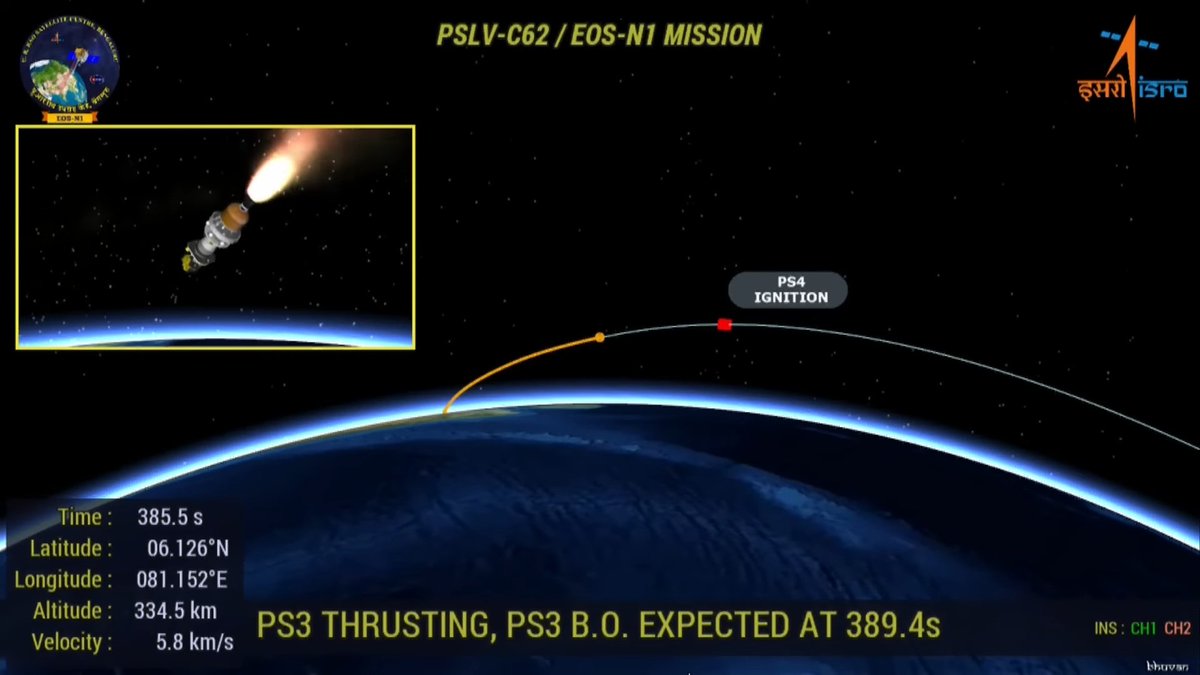
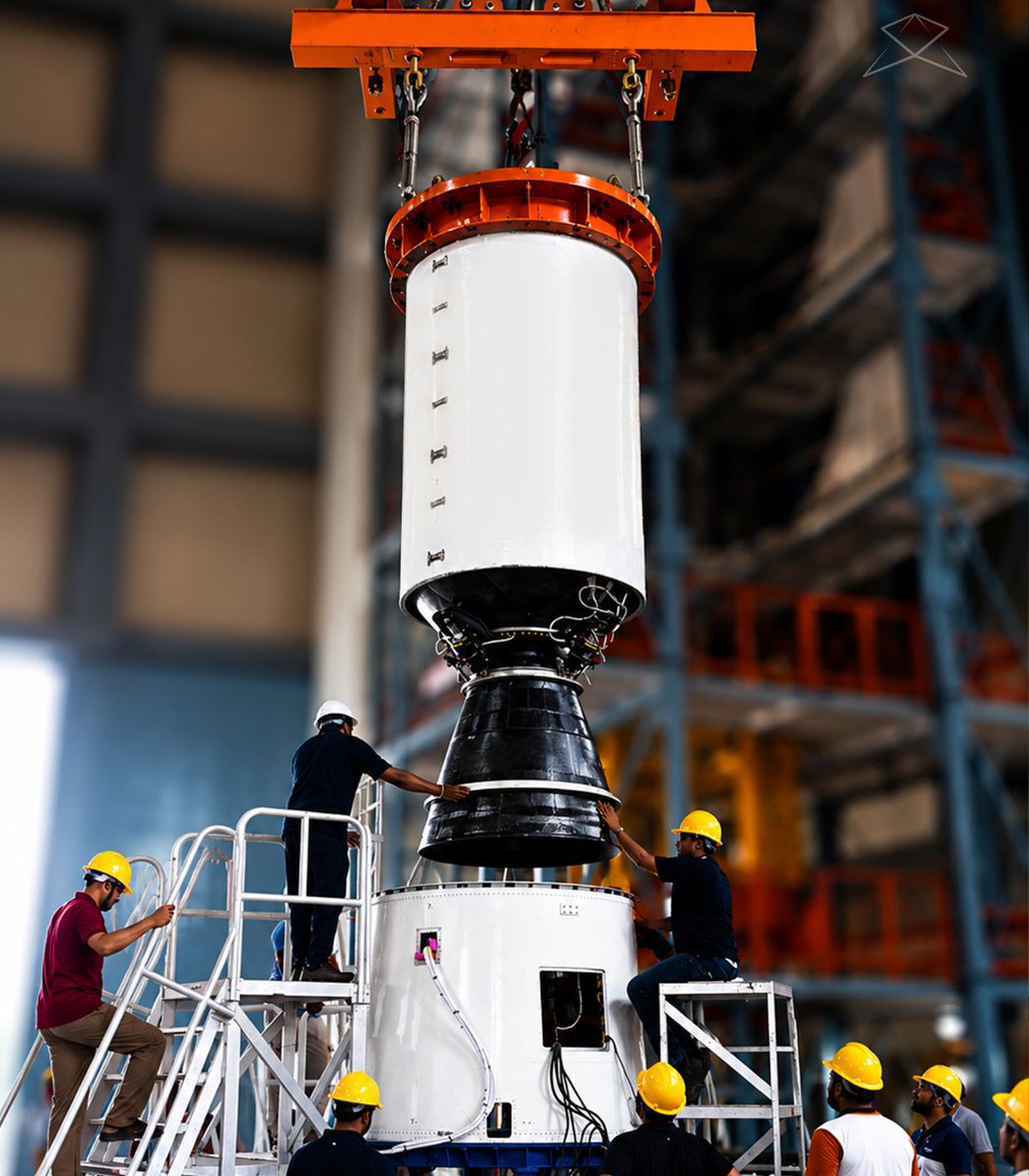
ISRO has identified the cause of the anomaly that led to the failure of the PSLV-C62 mission and the Failure Analysis Committee (FAC) report has been prepared.
However continuing with their lack of transparency, they are not going to disclose the findings of the report to the public.
Union Minister Dr. Jitendra Singh to The Hindu: "The report has come out and the anomaly has been detected. However we cannot share that on a public platform. But experts are working on it, which has been resolved and very soon we will be back on the track".
1
2
10
276

Jun 12
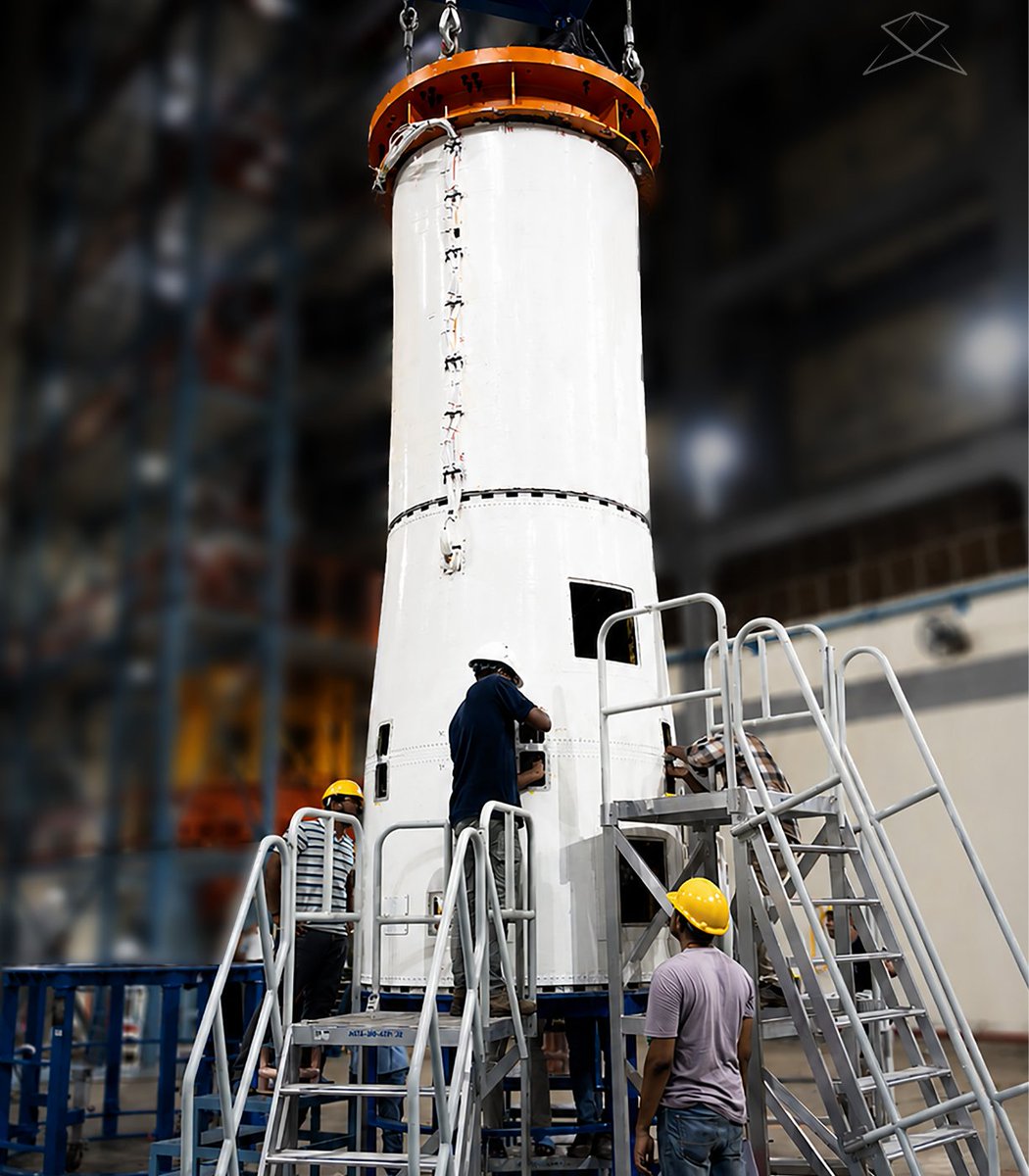
🚨 Skyroot has begun final assembly of the Vikram-1 rocket at SHAR for its maiden launch!! 🔥
The 'Kalam-250' second stage of the rocket with its interstages have been fully integrated and the integration of the remainder of the rocket is underway.
With Skyroot steadily progressing towards launch, Vikram-1 is set to become the first privately developed orbital rocket from India! 🇮🇳
4
35
276
5,764
Jun 12
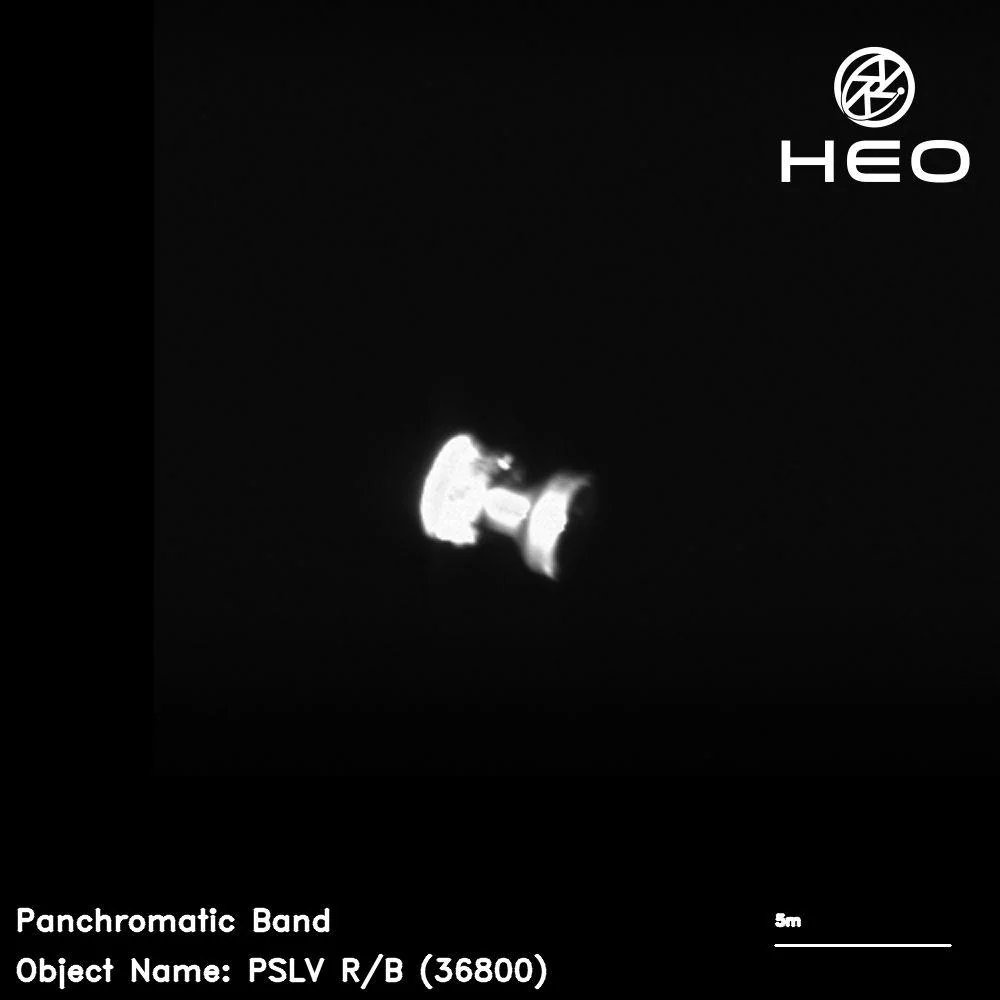
The 4th stage (PS4) of the PSLV-C15 mission and the C25 cryogenic upper stage of LVM3-M2 were recently imaged by @heospace in orbit 📸
PSLV-C15 was launched in July 2010 and carried Cartosat-2B & 4 other co-passenger satellites into SSO.
LVM3-M2 was launched in October 2022 and launched 36 OneWeb satellites into LEO.
ALT PSLV-C15 4th stage
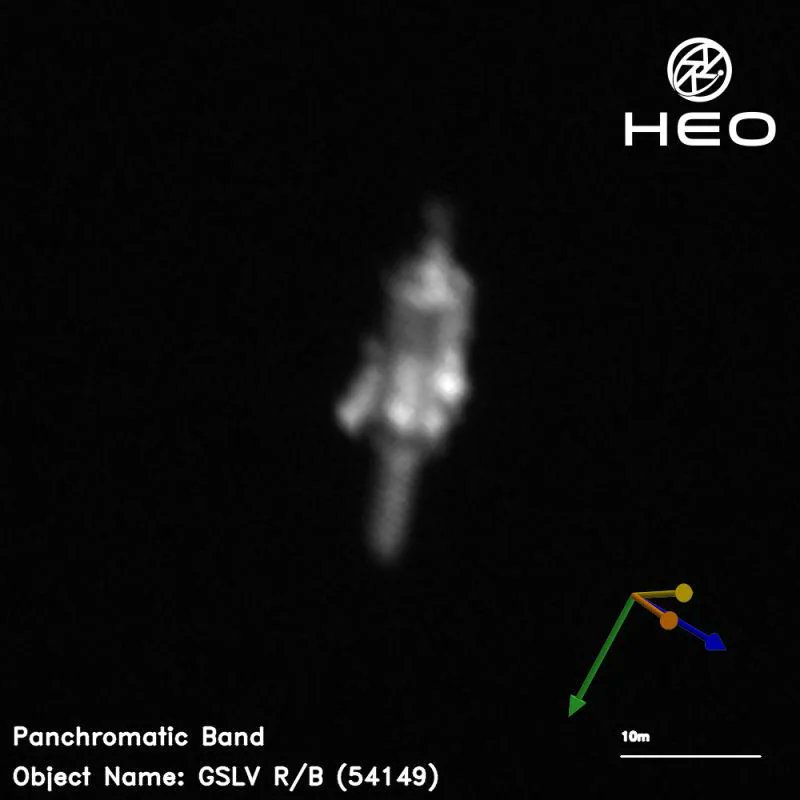
ALT LVM3-M2 C25 upper stage
3
47
2,228
Apr 10
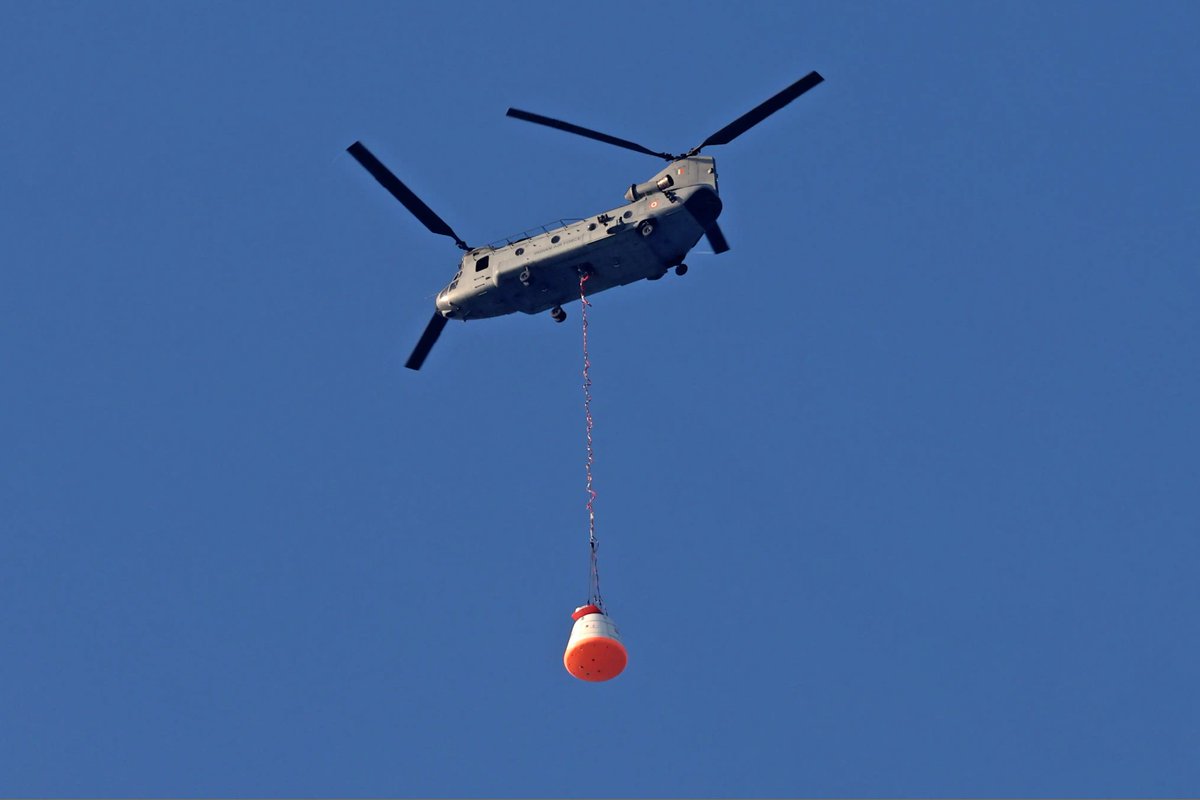
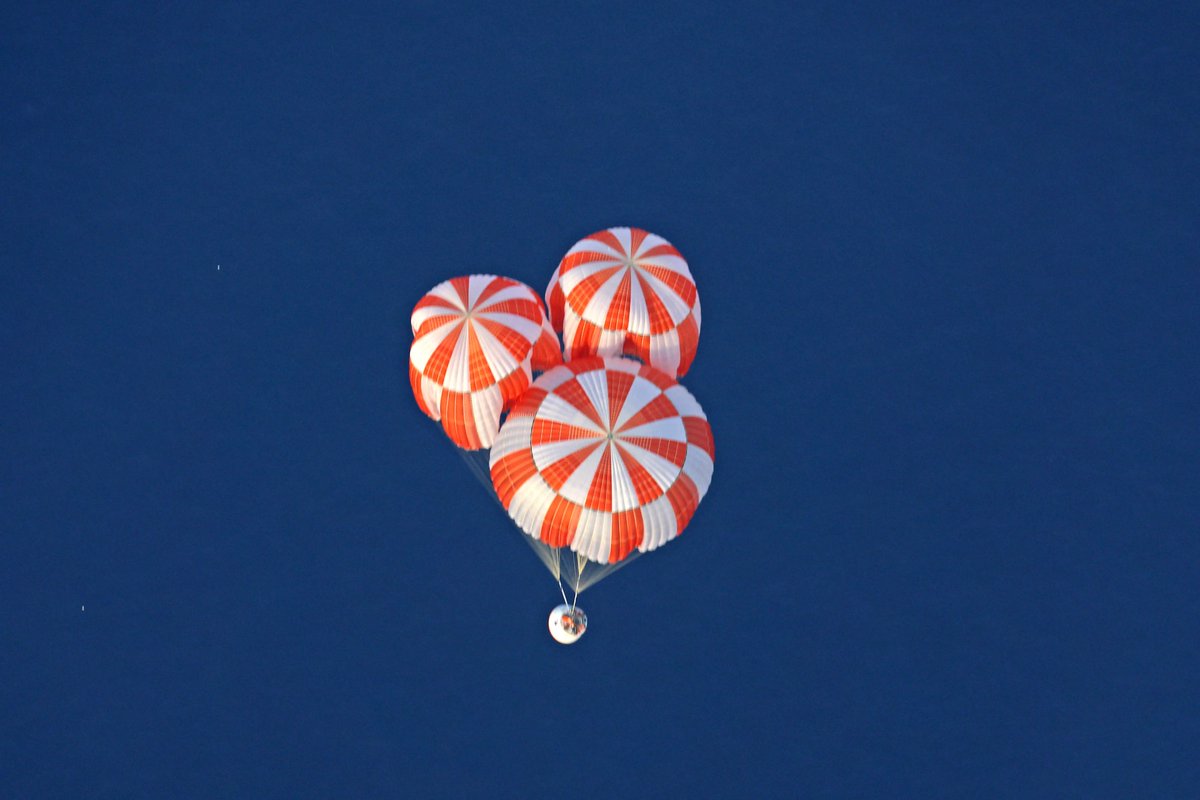
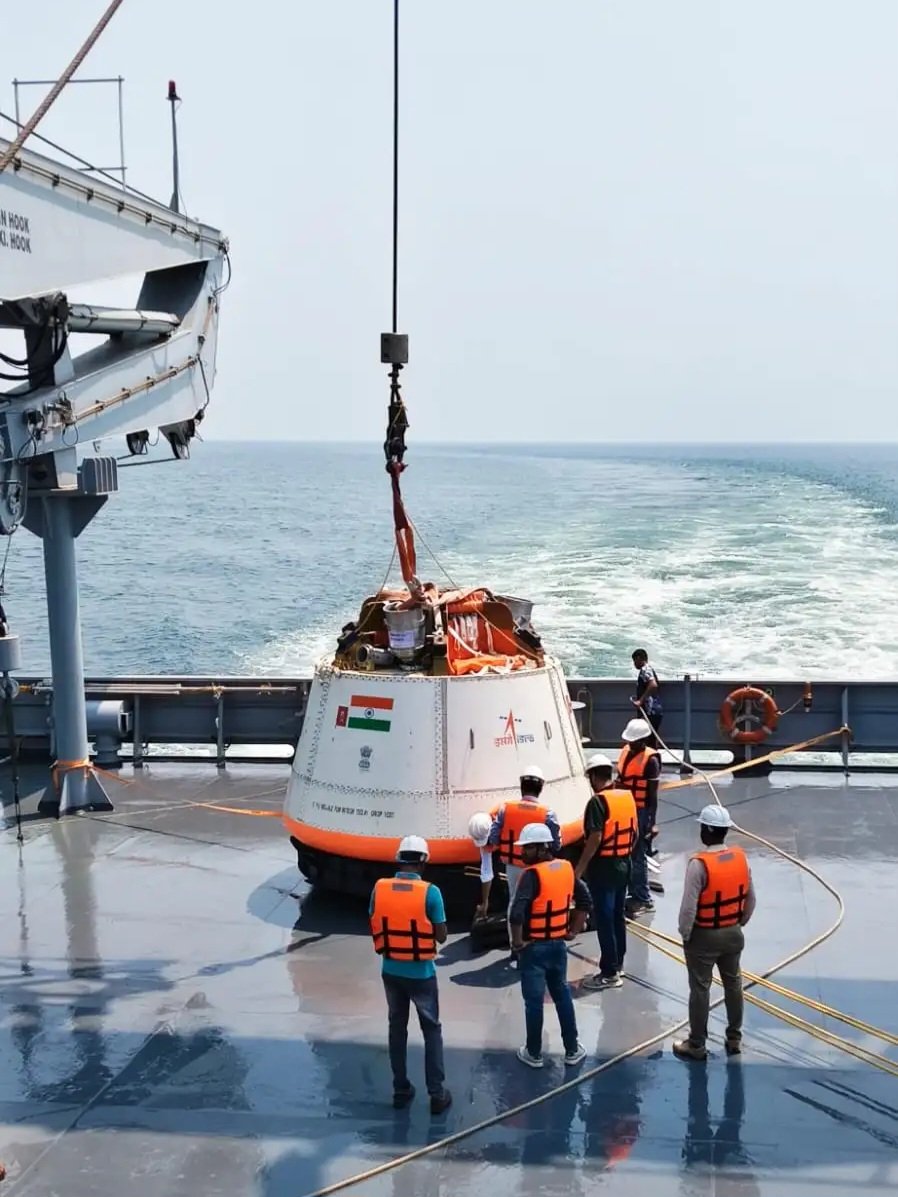
🚨 Gaganyaan IADT-02 Completed!!
ISRO has successfully conducted the 2nd Integrated Air-Drop Test (IADT) of Gaganyaan on today morning after the first one in August 2025! 🔥
The aim of this test was to validate the parachutes and other recovery systems on board Gaganyaan that are necessary for safely landing the Crew Module on Earth upon its return from orbit.
In this test, the Crew Module, weighing in at 5.7 tons, was lifted by a Chinook aircraft and dropped from an altitude of 3 km over the Bay of Bengal near the Sriharikota coast. The Crew Module subsequently slowed itself down autonomously using a series of drogue and main parachutes, followed by a soft splashdown in the sea.
54
557
3,547
149,030
Mar 14
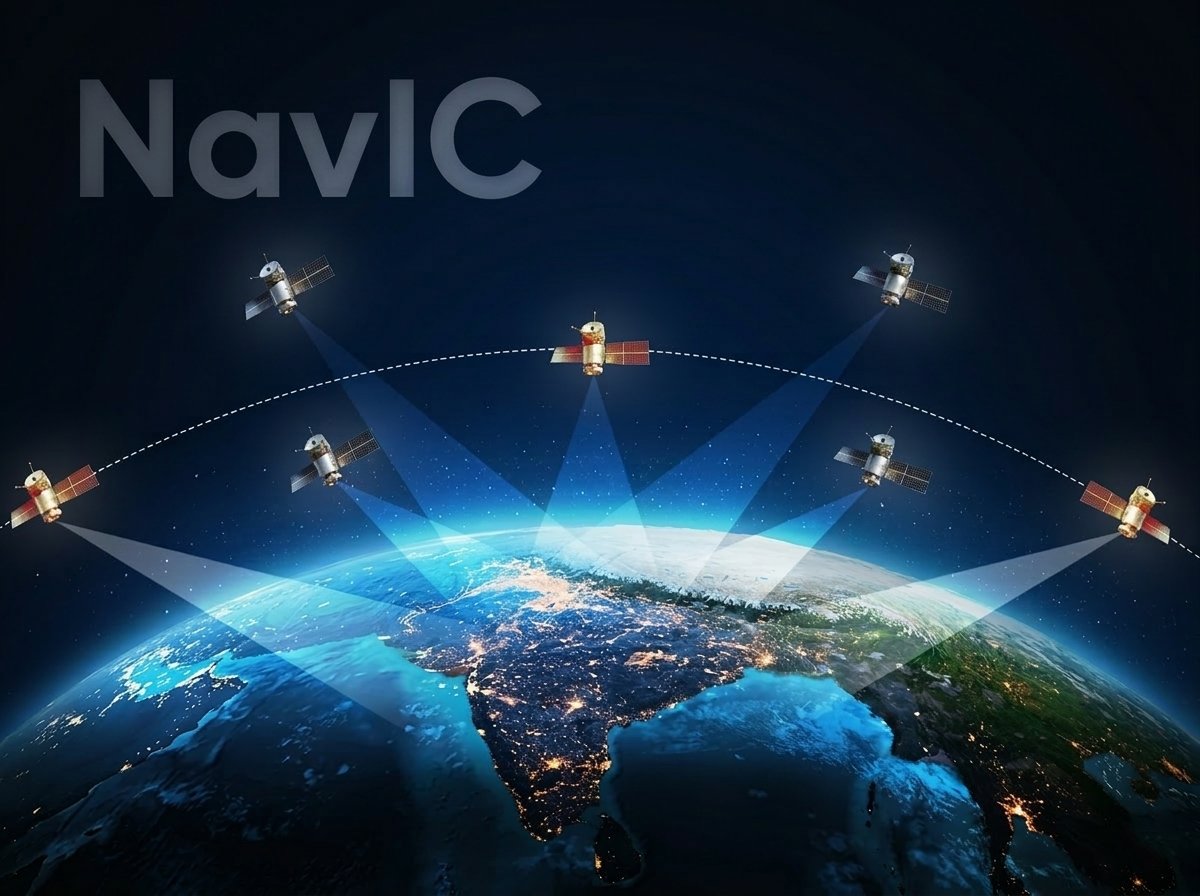
🚨 India's indigenous navigation system (NavIC) has officially gone out of service!
As of 13 March 2026, the number of active satellites in the NavIC constellation has fallen to just 3, below the min. requirement of 4 satellites. 🛰
Here is a full timeline of events that caused an entire satellite constellation to go defunct:
After being denied permission by the US to avail navigation services via America's GPS for the Indian Armed Forces during the Indo-Pak war of 1999, India decided to build their own indigenous navigation system, which would come to be known as NavIC.
The first satellite of this system - IRNSS-1A, would be launched in 2013, followed by 8 more satellites (IRNSS-1B to 1I) by 2018 comprising the first generation of NavIC satellites.
One of these satellites (IRNSS-1H) would fail when the payload fairing on its launcher PSLV-C39 failed to separate.
One of the major requirements for navigation satellites is to be able to make extremely precise measurements of time, hence each of the satellites in the first generation of NavIC used three imported Rubidium atomic clocks sourced from a Swiss company called SpectraTime.
However, starting around 2016, a large number of SpectraTime's atomic clocks on ISRO's IRNSS satellites as well as ESA's Galileo satellites began to fail unpredictably.
Within a short span of time, 5 of the IRNSS satellites had become completely defunct as a result of all atomic clocks on them failing.
Taking the lessons from the first generation of NavIC, ISRO developed a second generation which used indigenously developed atomic clocks along with some imported ones.
The first satellite in the second generation (NVS-01) would launch successfully in 2023.
At that point of time, the active satellites in the NavIC constellation were IRNSS-1B, IRNSS-1F, IRNSS-1I and NVS-01 i.e., 4 satellites - equal to the minimum requirement for a navigation constellation to function.
In one of these 4 satellites - IRNSS-1F, two out of its three atomic clocks had already failed.
This meant that if the last clock on that satellite were to fail, IRNSS-1F would go offline, the no. of active NavIC sats would fall to 3, and the whole constellation would go defunct.
In 2025, ISRO would launch NVS-02 to try to ease the burden on a system that was already hanging by a thread. But despite a successful launch into Geostationary Transfer Orbit on GSLV-F15, the satellite failed to reach its target Geostationary Orbit due to a failure in the pyro channel in a main thruster valve of the satellite's propulsion system.
During the initial investigation, ISRO announced that they were unable to pinpoint the exact cause of the valve failure.
Recently, they revealed that the failure was due to at least one of the pins in every single redundant connector on the valve getting disconnected.
As a result, NavIC continued to remain in a precarious situation and ISRO were in a race against time make the necessary corrections and launch NVS-03.
However, this would be followed by repeated failures of ISRO's workhorse PSLV rocket, leading to ISRO suspending all rocket launch activities for a duration of 3 months.
And it was then that on 13 March 2026, the last functioning atomic clock on IRNSS-1F finally failed. The satellite immediately lost the ability to provide positioning and navigation services, bringing the total number of active sats to 3, and hence the entire NavIC constellation now stands defunct.
62
188
916
84,160
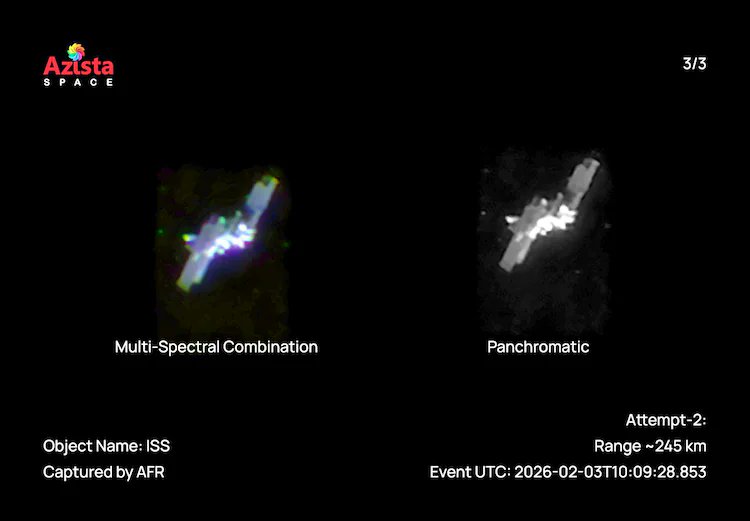
🚨 Indian startup Azista Space performs first-ever in-orbit snooping operation from India 🇮🇳
Using their AFR satellite launched on a Falcon 9 rocket in 2023, Hyderabad-based startup Azista Space has successfully tracked and imaged the International Space Station from a ~300 km distance. 📸
This technology has applications in orbital debris collision avoidance as well as strategic uses such as tracking and characterization of foreign (potentially hostile) strategic space assets, and even tracking ballistic missiles! 🔥
Azista is currently in the process of developing next-generation imaging payloads having upto 25 cm resolution! 📏
4
17
127
7,097
1
3
15
4,292
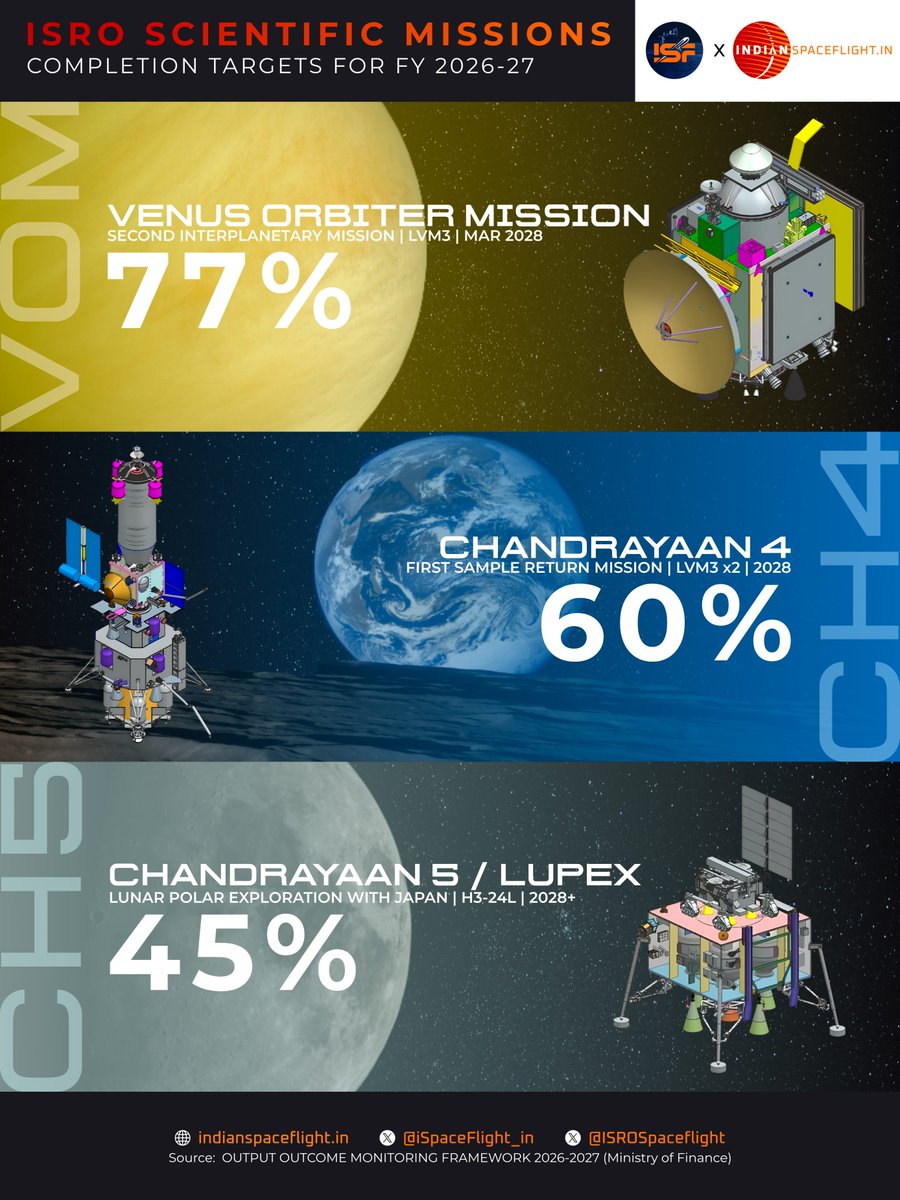
2026 is set to be a busy year for ISRO internally! 🔥
In order to prepare for an extra exciting next couple of years, ISRO aims to complete the work on their upcoming interplanetary missions in FY2026-27 to the following percentages! 👇
4
27
172
8,077
Graphic by @Lokeshkr73
Check out our post on @ispaceflight_in to download the above graphic in original resolution 👇
indianspaceflight.in/post/is…
2
21
3,025
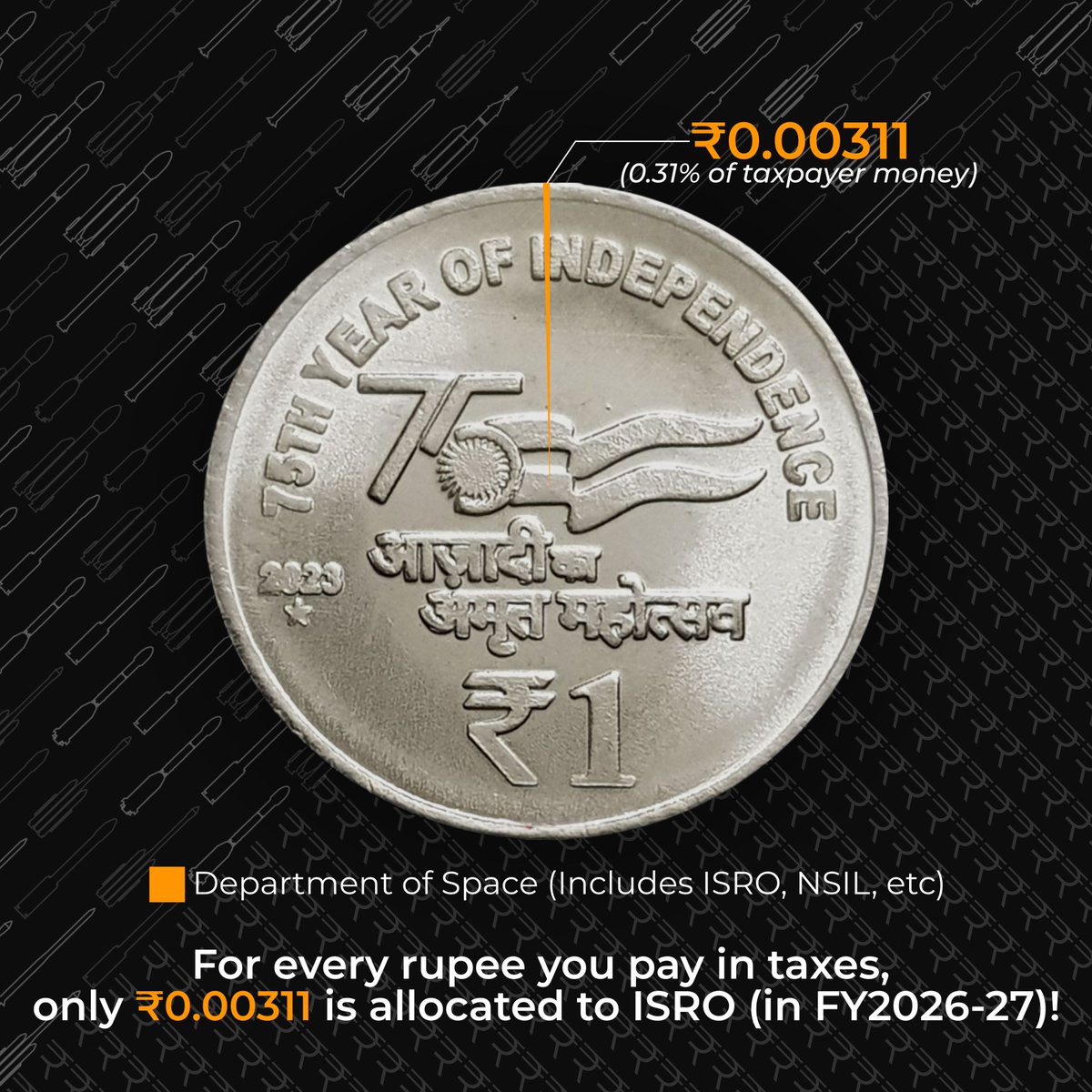
💰 For every ₹1 paid in taxes by Indians, a mere ₹0.00311 will go toward ISRO (in FY2026-27). 🇮🇳🚀
11
28
127
5,663
Graphic by @Lokeshkr73
Check out our post on @ispaceflight_in to download the above graphic in original resolution 👇
indianspaceflight.in/post/pe…
3
16
2,876
🚨 𝗜𝗦𝗥𝗢 𝗕𝘂𝗱𝗴𝗲𝘁 𝗔𝗻𝗻𝗼𝘂𝗻𝗰𝗲𝗺𝗲𝗻𝘁
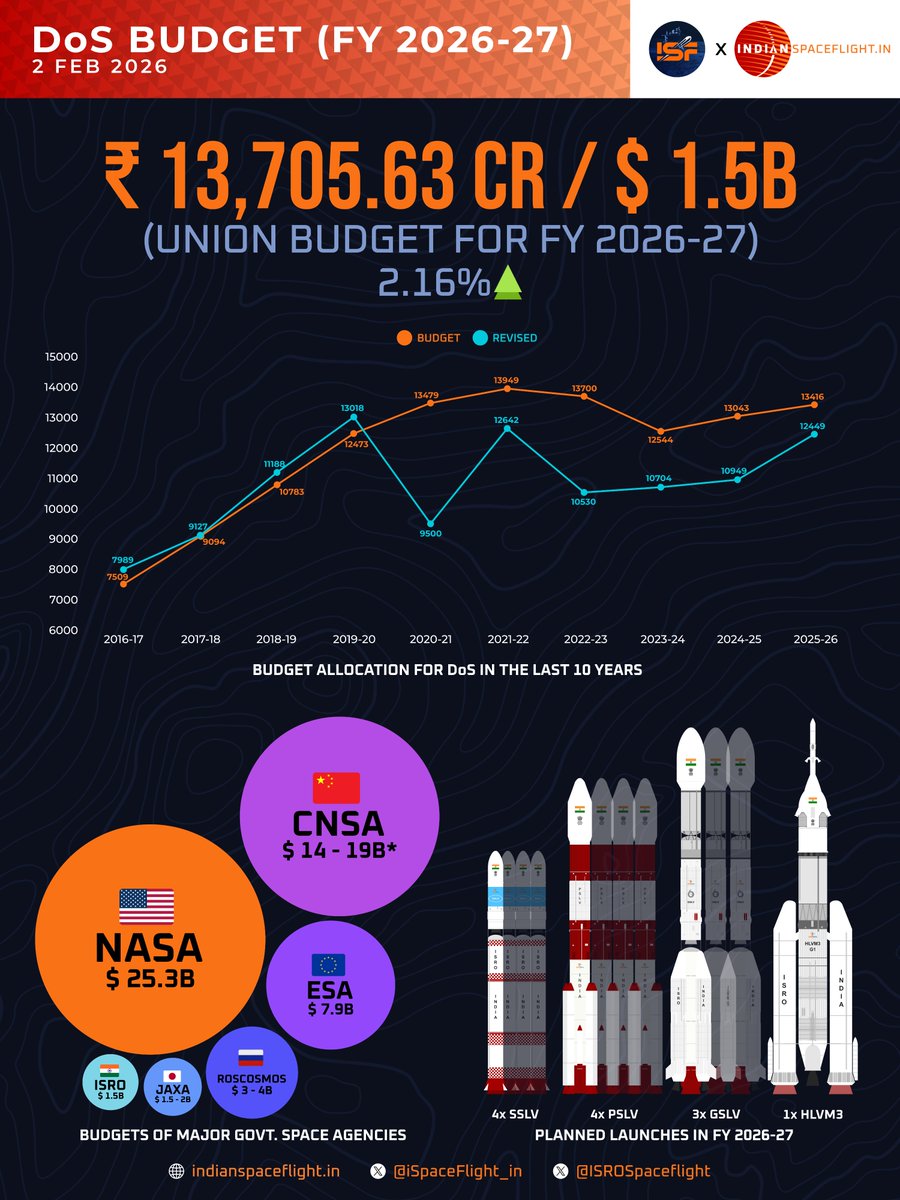
Yesterday, the Government of India announced the Union Budget for FY2026-27, and in it, the Department of Space (DoS) has been allocated a total of ₹13,705.63 Crores (~$1.5 billion). 💸
This is a 2.16% increase over previous year's promised allocation.
The targets for FY2026-27 in the outcome budget mentions:
4 × PSLV launches
3 × GSLV launches
4 × SSLV launches
1 × LVM3 (HLVM3-G1)
Graphic by @lokeshkr73
13
57
379
24,136
Check out our post on IndianSpaceflight to download this graphic in original resolution:
indianspaceflight.in/post/is…
Join the community 👇
indianspaceflight.in/login
2
17
3,186
Jan 19
🆕️ 𝗡𝗲𝘄 𝘀𝗽𝗮𝗰𝗲𝗽𝗼𝗿𝘁 𝗮𝗻𝗻𝗼𝘂𝗻𝗰𝗲𝗱 𝗶𝗻 𝗔𝗻𝗱𝗵𝗿𝗮 𝗣𝗿𝗮𝗱𝗲𝘀𝗵!! 🚀
On 17 Jan, Andhra Pradesh CM Chandrababu Naidu announced a new spaceport in Hope Island as part of their Space City project. ✨️
This new launch site appears to be primarily aimed at catering to private launch providers in India.
This will bring the total number of spaceports in India to 3 – SDSC-SHAR in Sriharikota, SSLV Launch Complex at Kulasekharapatnam, and the above mentioned spaceport at Hope Island!
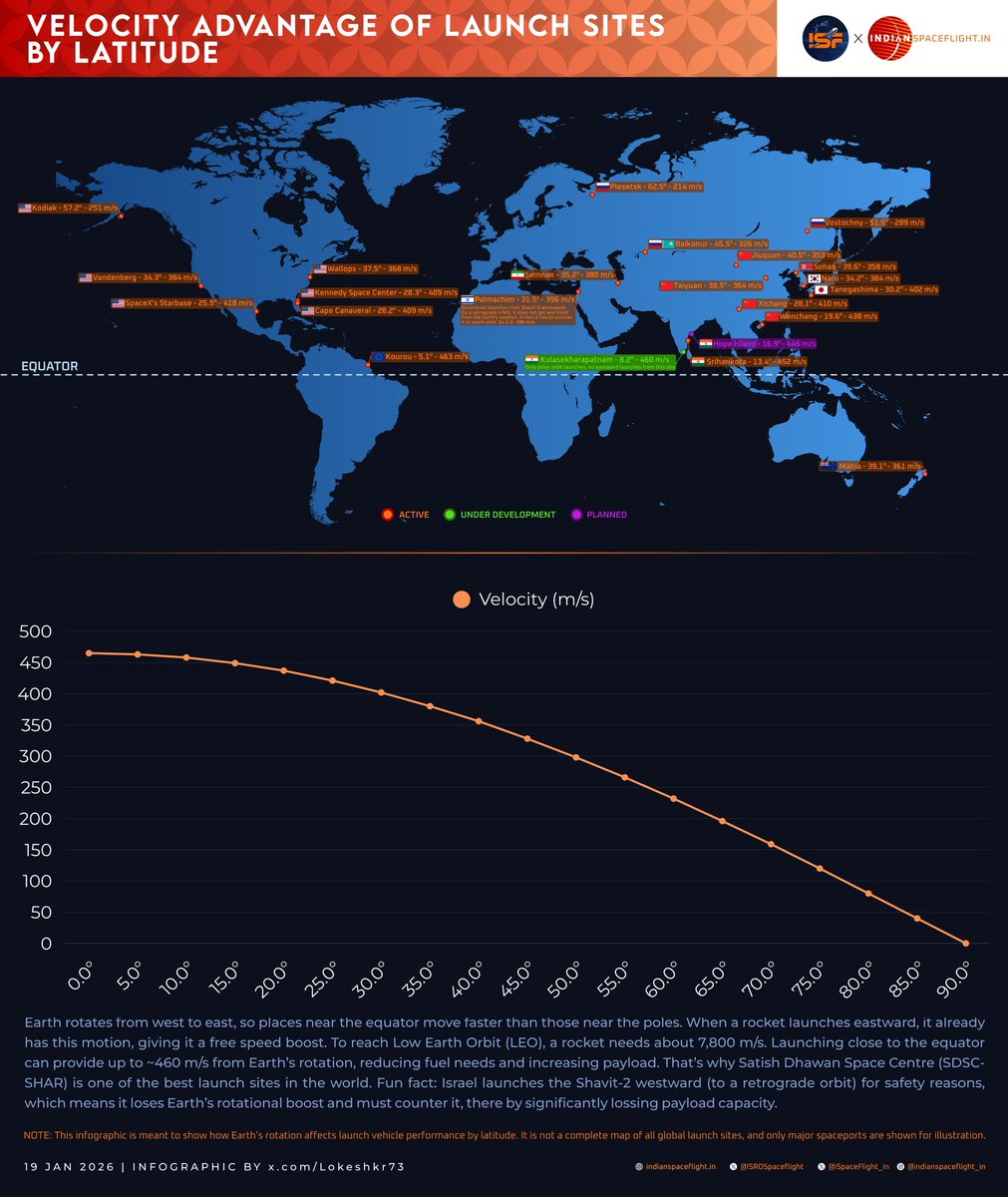
Our infographic below illustrates how Earth’s rotation provides a free velocity boost to launch vehicles that lift off closer to the equator.
The Earth spins from west to east in a prograde direction, and this rotational speed varies with latitude. At the equator, the surface velocity is about 1,650 km/h (~460 m/s), and it gradually decreases as one moves toward the poles, becoming nearly 0 m/s at the poles.
Rocket launches take advantage of this natural boost by launching eastward from sites near the equator. By doing so, the rocket already has a significant horizontal velocity even before its engines fully accelerate it. In contrast, launches into polar orbits do not benefit from this effect because the trajectory is perpendicular to Earth’s rotation.
At present, launching to a polar orbit from SDSC-SHAR requires rockets to perform a “dog-leg” maneuver to avoid flying over Sri Lanka, followed by adjustments to the flight profile. While this loss is manageable for larger launch vehicles such as PSLV, GSLV, and LVM3, it has a much greater impact on smaller rockets like SSLV, Vikram-1, and Agnibaan.
For this reason, ISRO is currently constructing the SSLV launch complex at Kulasekharapatnam (expected to be completed by 2027). This facility will primarily be used to launch SSLV, along with other private small-lift launch vehicles, into polar orbits.
Graphic by @Lokeshkr73
9
61
320
11,689
Jan 19
Check out our post on the Indianspaceflight forum to download above graphic in original resolution:
indianspaceflight.in/post/ne…
Join the community 👇
indianspaceflight.in/login
2
16
3,301
Jan 19
🚨 The Kalam-250 second stage for Skyroot Aerospace's maiden Vikram-1 rocket has arrived in Sriharikota!! 🚀
As of this writing, the maiden Vikram-1 launch is expected to take place in February. ⏳️
4
29
296
7,837
Jan 18
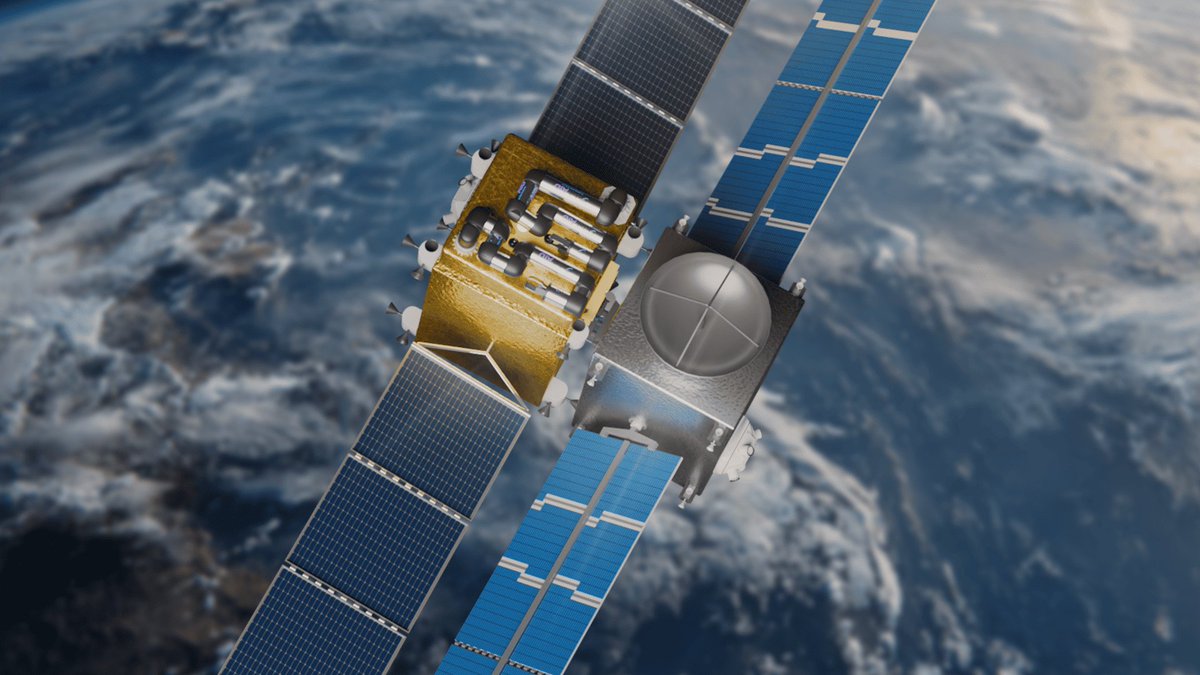
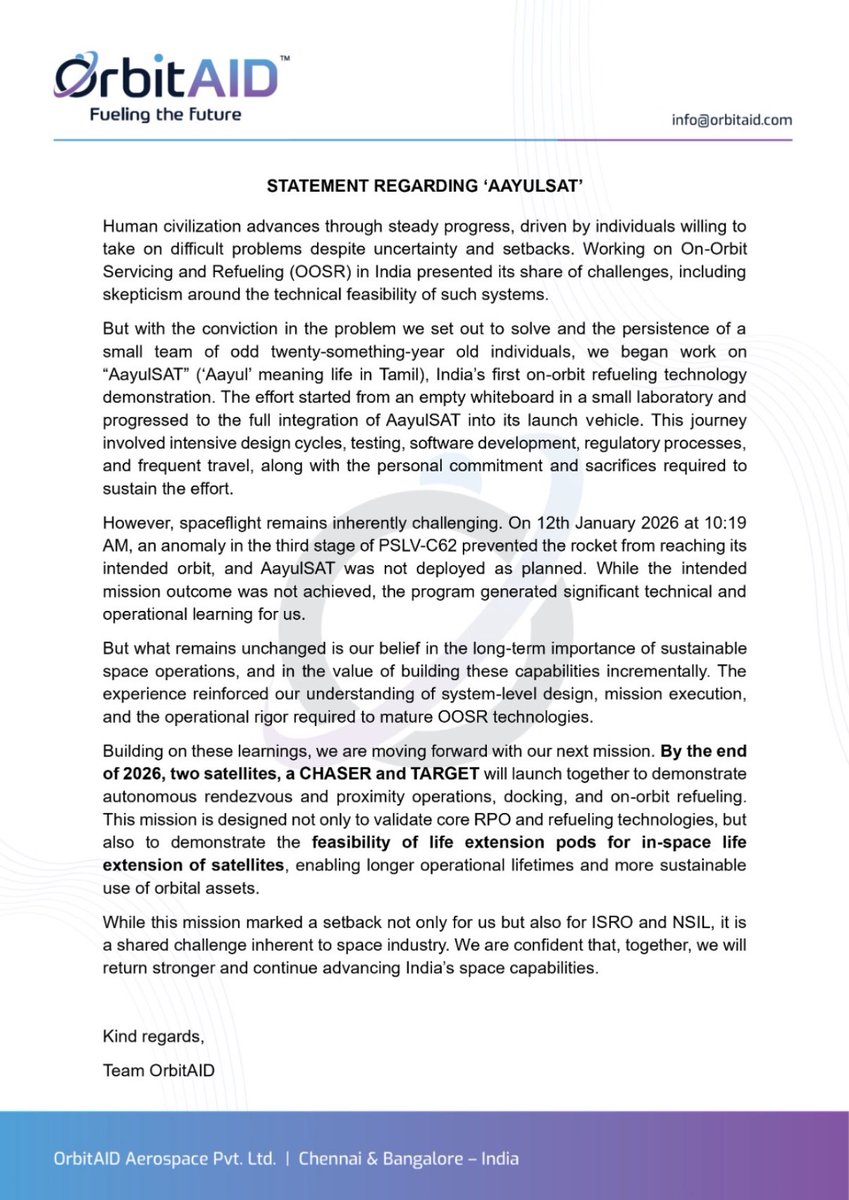
🚨 𝗙𝗶𝗿𝘀𝘁-𝗲𝘃𝗲𝗿 𝗽𝗿𝗶𝘃𝗮𝘁𝗲 𝘀𝗮𝘁𝗲𝗹𝗹𝗶𝘁𝗲 𝗿𝗲𝗳𝘂𝗲𝗹𝗶𝗻𝗴 𝗺𝗶𝘀𝘀𝗶𝗼𝗻 𝗶𝗻 𝟮𝟬𝟮𝟲-𝗲𝗻𝗱!!
Despite the loss of their AayulSAT tech demo satellite on PSLV-C62, OrbitAID has decided to go ahead with their ambitious second mission! 🔥
By the end of 2026, they will launch a twin-satellite mission involving a Target and Chaser satellite where the Chaser will perform autonomous rendezvous and docking and then refuel the Target spacecraft! ⛽️
This will be the first-ever satellite-to-satellite refueling done by any private agency in the world! 🥇
This will not only test their autonomous rendezvous and docking capabilities but also their SIDRP docking and refueling interface, which could not be tested in the previous mission.
11
91
567
17,309
Jan 18
Source:
x.com/i/status/2012581196341…
Jan 17

AayulSAT set the stage.
What follows will redefine on-orbit servicing. 🚀
@KRSakthikumar @isro @unicornindia
@TheStartupTN @Guidance_TN @CMOTamilnadu
@NSIL_India @iiscbangalore @NikhilBala42709
3
26
3,683