
ᛁᛞᛚᛖ ᚱᛖᚷᚾᚨᚱ V for VALHALLA!
Joined August 2009
- Tweets 3,292
- Following 481
- Followers 219
- Likes 10,329
421 Photos and videos








Apr 13
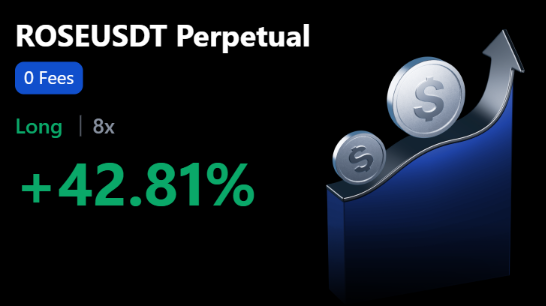
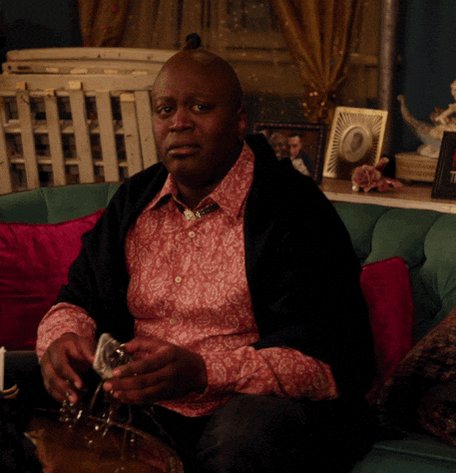
Too much lost to “trust the process”
I guess for some it clicks, for some not…
So I’m in a majority to whom it didn’t.
Life lessons on how to ruin financial stability for next 5 to 7 years…
Been out of this thing for 3 months and never felt better. No charts no BS-just work.
17
Feb 10
Fuck it..
The evening just ruined itself by unfolding shit out of my control.
There goes my cigar evening…. Good cigar wasted…
39
IdleRegnar retweeted

Jan 15
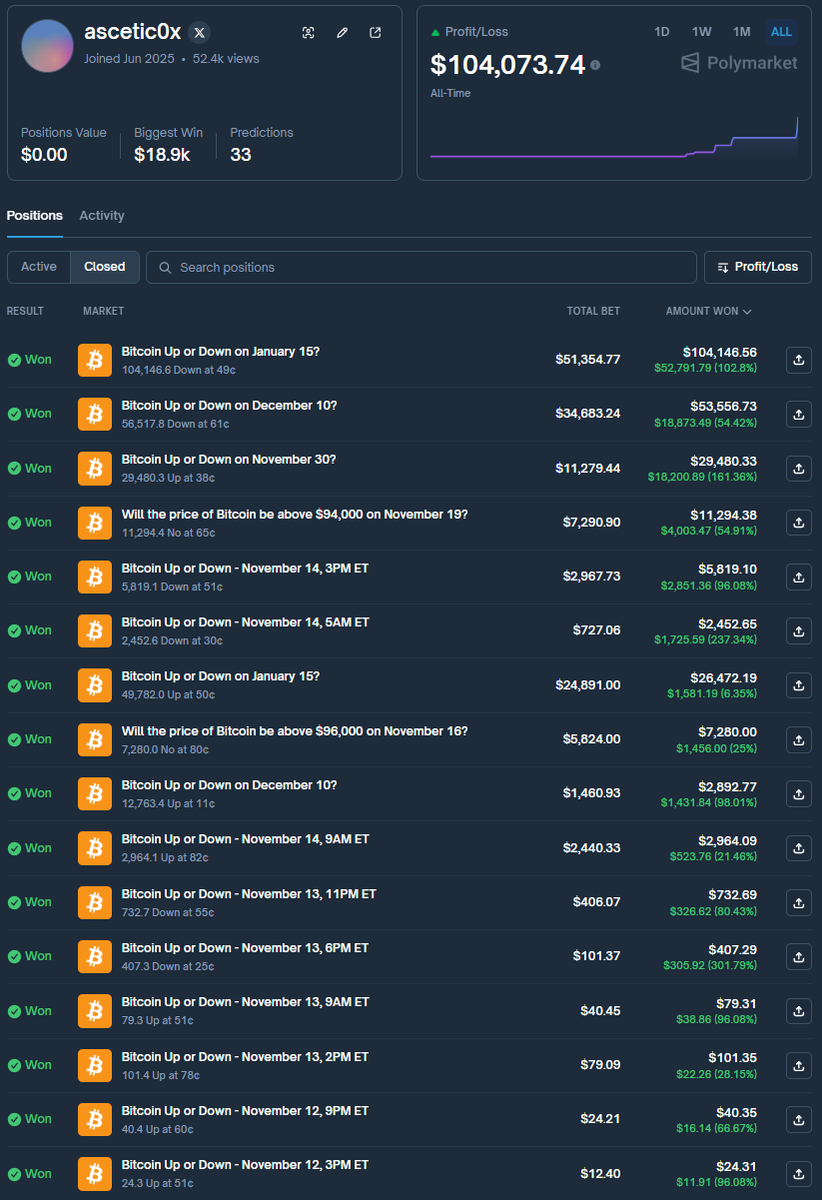
I DID IT!!! Turned $12 into $100,000 (over 8,300x) by going all-in and doubling my bankroll 16 times in a row on short-term BTC moves - while sharing my bets and the reasoning behind them along the way.
This is only possible on @Polymarket !!!
It took a lot of work and real skin in the game, so if you’re reading this, a simple RT or comment would really mean a lot.
Huge shoutout to @shayne_coplanand @Polymarket team for building the best prediction market platform out there. And special thanks to @zscdao and @PolymarketTrade for the support🤝
Track my progress here: polymarket.com/@ascetic0x?vi…
Community note
this user is misrepresenting his progress x.com/holy_moses7/st…
1,548
1,014
12,261
4,381,029
Jan 16
Massive drawdown day…
You are Welcome for being your liquidity 😆
I’m off for the weekend.
17
IdleRegnar retweeted

Jan 16
2 winners 200$ each
Picking 1 lucky winner tonight and next tomorrow
Just like&RT
1,404
1,496
2,074
66,929
Jan 13
2
25
Jan 12
Good Day.
It's easy to loose & hard to get back.
Be careful & protect your capital at all cost.
Break even point is also a win if you're not quite confident with your trade idea.
Every trade is a lesson.
Enjoy the view.

1
35
Jan 5
I was heavy cigarette smoker back in a day...
5 years seem like yesterday.
Thank you
@flamy_app
If you want to quit it! I highly recomend this app!
____

2
200
Jan 2
Bookmark this!
@NotTheNewsDB has the best long term view on this thing called BTC.
Jan 2

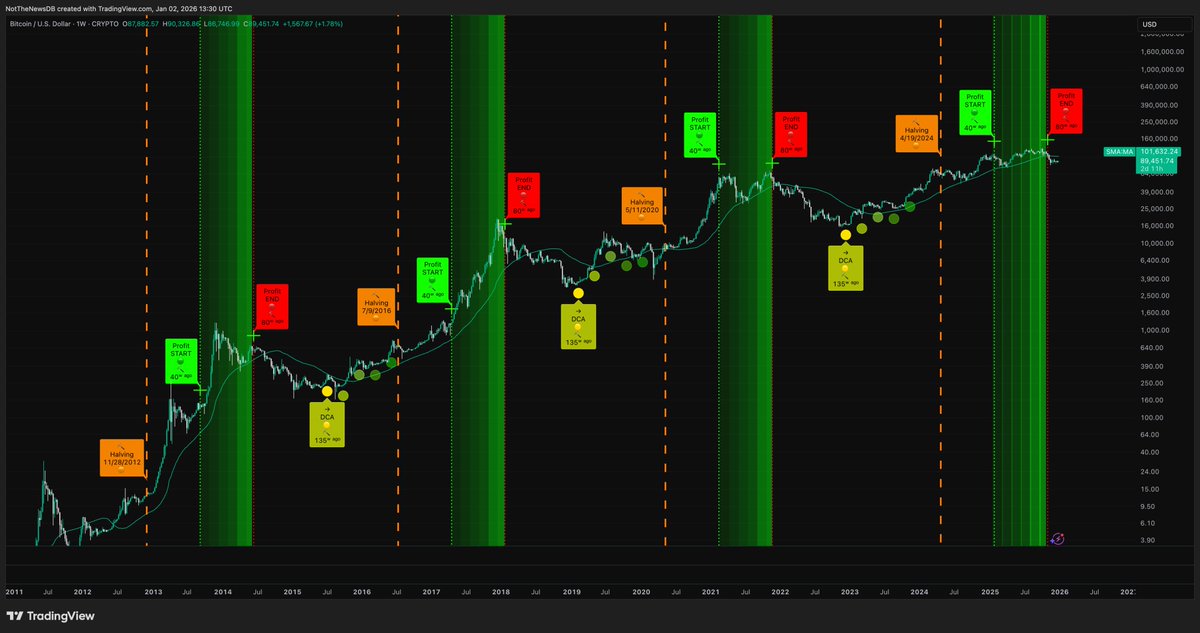
Our macro analysis on BTC has always been grounded on technical indicators, not on cycle-based speculations. Whether BTC follows its strict 4-year cycle or not has never been part of our framework that helped us shape a macro bias last year.
After all, every cycle is different and comparing BTC across cycles is difficult. If BTC was to break the 4-year cycle, a assumption these days, we will see it in the charts.
As of now, our signals are showing that the price-action of previous cycles can be somewhat replicated. The resemblance to previous cycles is clear. Just as in previous cycles, BTC has rallied after its halving event, topping 80 weeks after this event, after multiple HTF bearish divergences.
Later, BTC has accepted below the weekly SMA, which historically has led to lower levels in the next months. A retest of this level was provided every time as well, which remains a viable option this cycle as well. This retest has not happened this cycle, but still can due to the 3D divergences recently printed on BTC and indexes.
Ironically, after topping 80 weeks after its halving event, and going into a 12-month downtrend, BTC has always macro bottomed 135 weeks after the halving event, which has historically led to long-term accumulation opportunities.
This means that if this pattern is replicated again, BTC should bottom in Q4 2026. Certainly, we will continue to base our analysis on our technical indicators, and not just rely on patterns from the past, but it is worth keeping an eye on this pattern given that it has been replicated precisely throughout the cycle. The TV indicator is called Bitcoin Halving Cycle Profit.
2
68
31 Dec 2025
2025 is ending at break-even.
I still have a few financial matters to close today.
I’ll start 2026 with $100 — not much, better than nothing…
Wishing you a strong year ahead. Let 2025 stand as a stepping stone toward what comes next.
Cheers.
2
1
86
31 Dec 2025
Probobly this message will go past them.
I really want to thank @eliz883 , @robw00ds , @CryptoGodJohn, @NotTheNewsDB, @CryptoTony__ an others. You are helping me in a way to switch mindset. By just watching (and taking less trades) taking notes I have learned a lot.
THANK U
3
4
84
31 Dec 2025
Really tried to end this year in the green but it is what it is. Could have been worse in a way - could have been blown account too.
Anyways for now I need to put the dream to join @WealthGroup on hold till I have better financial position.
1
22
IdleRegnar retweeted

29 Dec 2025
ON DEATH AND THE VEIL IN FREEMASONRY
In the symbolic universe of Freemasonry, death is neither an annihilation nor a terror to be fled, but a solemn threshold, a ritual silence through which the soul passes from form to meaning, from labor to understanding. The Craft speaks of death not in the language of despair, but in the dialect of initiation, where every ending is a preparation and every descent conceals an ascent.
The initiate is early taught that the Lodge itself is a representation of life bounded by mortality. Its floor is the field of action, its ceiling the firmament of mystery, and between them the Mason walks as one who must one day lay down his tools. The drama of Masonic teaching does not conceal the grave; it leads the candidate to its edge and bids him look within, not to recoil, but to comprehend. Death, here, is the great Leveler, before which crown and coin, title and ambition, are rendered equally void.
Yet the symbolism does not linger in negation. The grave in Masonry is never empty of meaning. It is a place of concealment, not destruction; of latency, not loss. What is buried is not the soul, but the false self, the rough ashlar of unrefined desire and temporal attachment. What rises is the perfected stone, shaped not by time but by virtue, fitted not for earthly walls but for a Temple unseen.
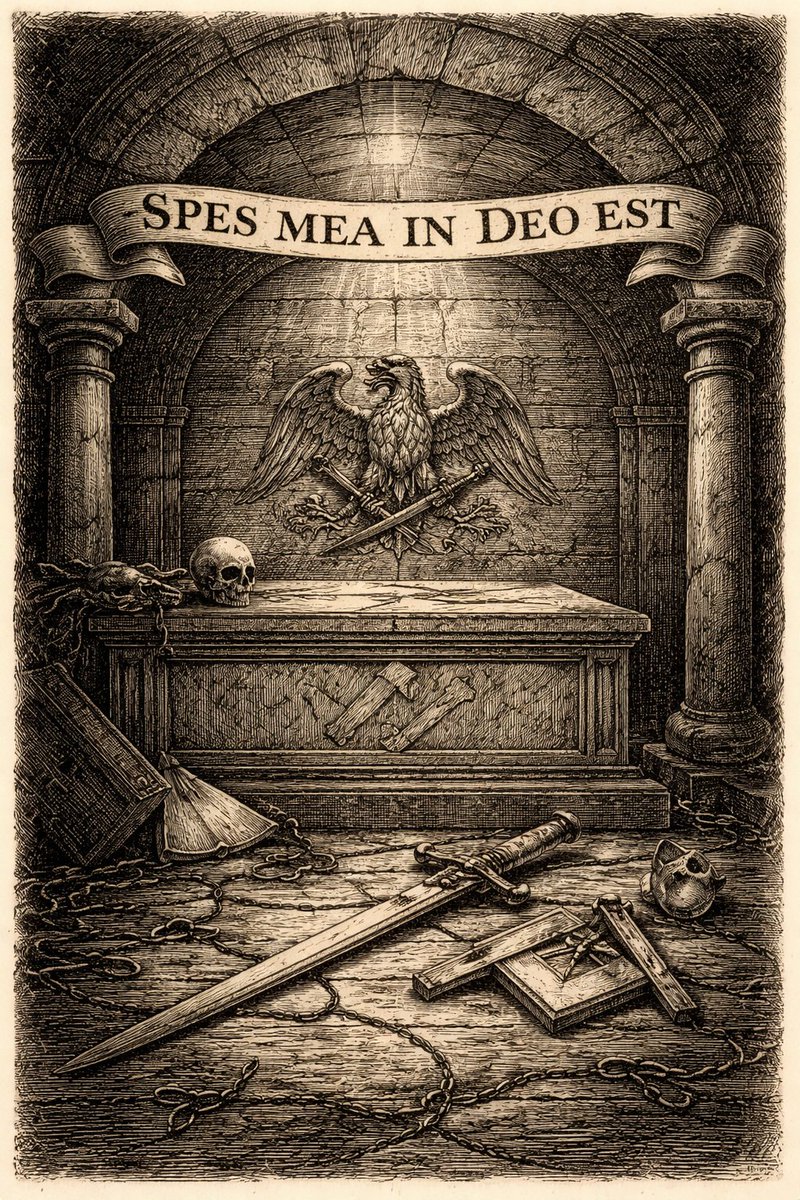
Thus death becomes instruction. It teaches the Mason to labor as one who will not always labor, to rule his passions as one who must surrender all dominion, to act justly as one who shall one day be judged by a higher law than any written by human hands. The oft-remembered phrase, spes mea in Deo est, is not consolation alone; it is orientation. Hope is removed from the perishable and anchored in the eternal.
In this way, Freemasonry restores to death its ancient dignity. It is not an enemy, but a gate; not a darkness, but a twilight in which the eyes of the soul, long accustomed to glare, at last learn to see.
13
36
239
8,476
IdleRegnar retweeted

23 Dec 2025
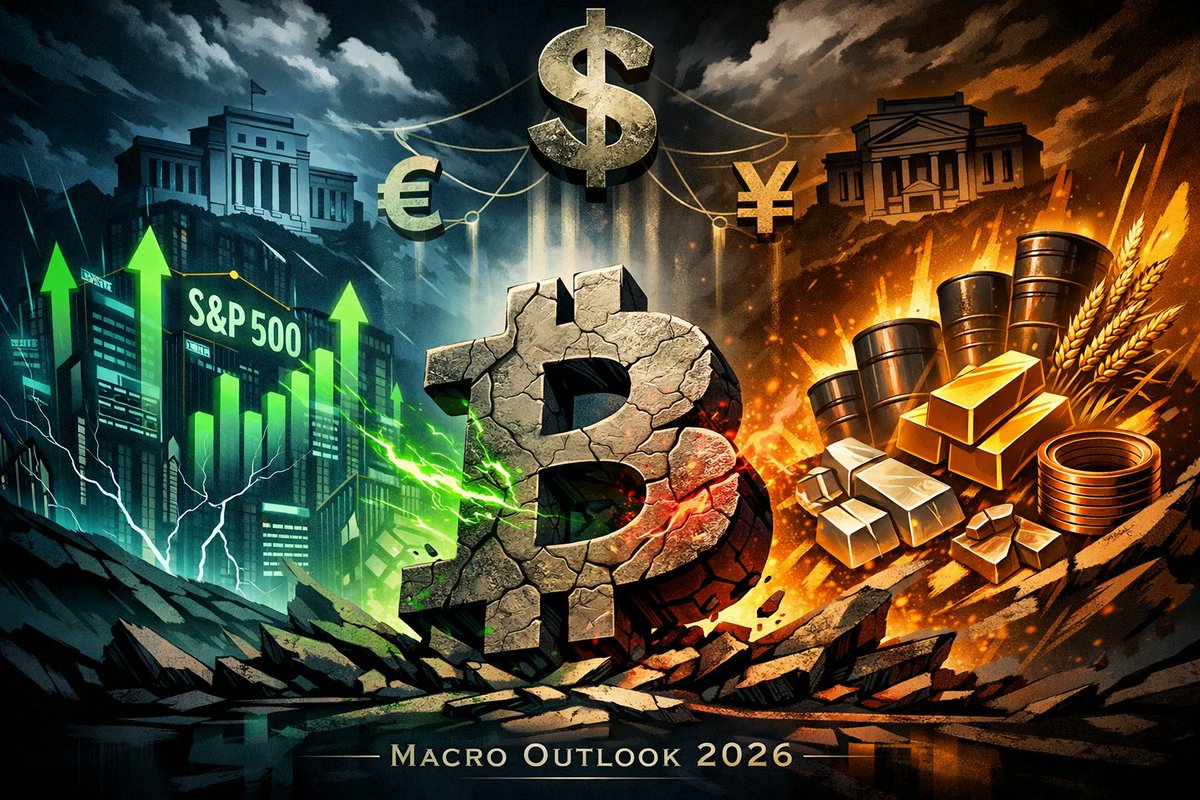
Next year will be big for asset markets. In this thread, you can find a macro outlook for 2026 across crypto, stocks and commodities, focused on relative performance, liquidity and cycle dynamics. See more in this special thread below 👇
7
10
44
3,567
IdleRegnar retweeted
16 Dec 2025
✨ HOLIDAY GIVEAWAY ALERT! ✨
Score a 6-MONTH FREE MEMBERSHIP to join @WealthGroup!
To enter, complete all 3 steps:
✅ Like & Retweet
✅ Follow @WealthGroup & @NotTheNewsDB
✅ Tag 3 friends
Winner revealed Jan 12th! 🤞

85
75
97
6,479
IdleRegnar retweeted

8 Dec 2025
🔥 HOLIDAY GIVEAWAY! 🔥
Win a 1 YEAR FREE MEMBERSHIP with @WealthGroup!
To enter, complete all 3 steps:
⭐ Like & Retweet
⭐ Follow @WealthGroup
⭐ Tag 3 friends
Winner picked Jan 12th! 🏆

967
786
999
123,701
IdleRegnar retweeted

12 Nov 2025
Your Swiss Private Bank. Powered by Web3.
Multicurrency. Borderless. Non-custodial.
Retweet, follow & tag 3 friends, 3 winners will receive $100 in $TITN! 🎁💸
What if your crypto wallet gave you access to a real Swiss private bank account, a multicurrency Mastercard, and full e-banking, all while staying non-custodial with your crypto?
Welcome to @Thorwallet, the most complete Web3 neobank 🏦📲
Backed or listed on @binance, @CointelegraphAc & @CoinMarketCap
🧵Thread

583
407
550
65,243