
Solving the housing crisis with a better model. We use RWA tokenization to fund and build quality, affordable rental communities, creating value for all.
Joined September 2025
- Tweets 72
- Following 35
- Followers 77
- Likes 1,693
8 Photos and videos


O Fim do Cativeiro Imobiliário 🧵👇
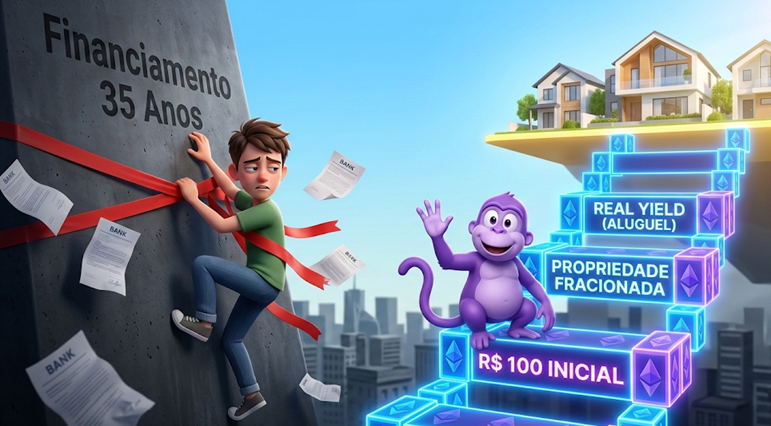
Seu avô comprou um terreno e construiu uma casa com o salário de um emprego comum. Hoje, você precisa assinar uma sentença de 35 anos de dívida para morar em um "cativeiro" de 30m².
A matemática quebrou. E a solução não está no seu banco. 🧱👇
Vamos aos fatos concretos: nos anos 80, um imóvel médio custava cerca de 100 salários mínimos. Hoje? O mesmo imóvel exige entre 350 e 500 salários.
O preço do metro quadrado descolou brutalmente da renda real da nossa geração. Viramos inquilinos do sistema.
A "solução" que o sistema tradicional te oferece é o financiamento. Você entra no banco pedindo as chaves de uma casa e sai pagando por três. Os juros compostos drenam o seu suor por três décadas.
A fundação desse modelo econômico está completamente podre, onde a saída não é implorar por taxas menores. É explodir a burocracia e mudar a infraestrutura. É aqui que entra o RWA (Real World Assets).
Não estamos falando de JPEGs especulativos. Estamos fatiando tijolo, aço e concreto na blockchain para remover o parasita da equação. ⛓️
Em vez da dívida impagável, a tokenização cria a Escada de Propriedade Gradual. No mercado tradicional, R$ 100 não compram nem uma caixa de piso. No mercado on-chain, R$ 100 compram um token lastreado em um imóvel real de alto padrão. E o melhor: ele já começa a te pagar yield (aluguel).
Você não se endivida. Você acumula "pedaços" do imóvel mês a mês, no seu ritmo.
Os Smart Contracts substituem o gerente do banco e o despachante. Eles garantem a sua posse fracionada e distribuem os rendimentos sem atrito e sem intermediários sugando sua margem.
A nossa geração está diante de um abismo geracional, mas a tecnologia nos deu a ponte. Menos dívida com o sistema, mais propriedade programável na sua carteira.
A revolução será tokenizada. 🏛️🏗️
#rwa #tokenization #eth #btc @ethervista @bonzi_vista @ethereum @reversoeth
13
10
37
796
Imobx retweeted

Feb 26
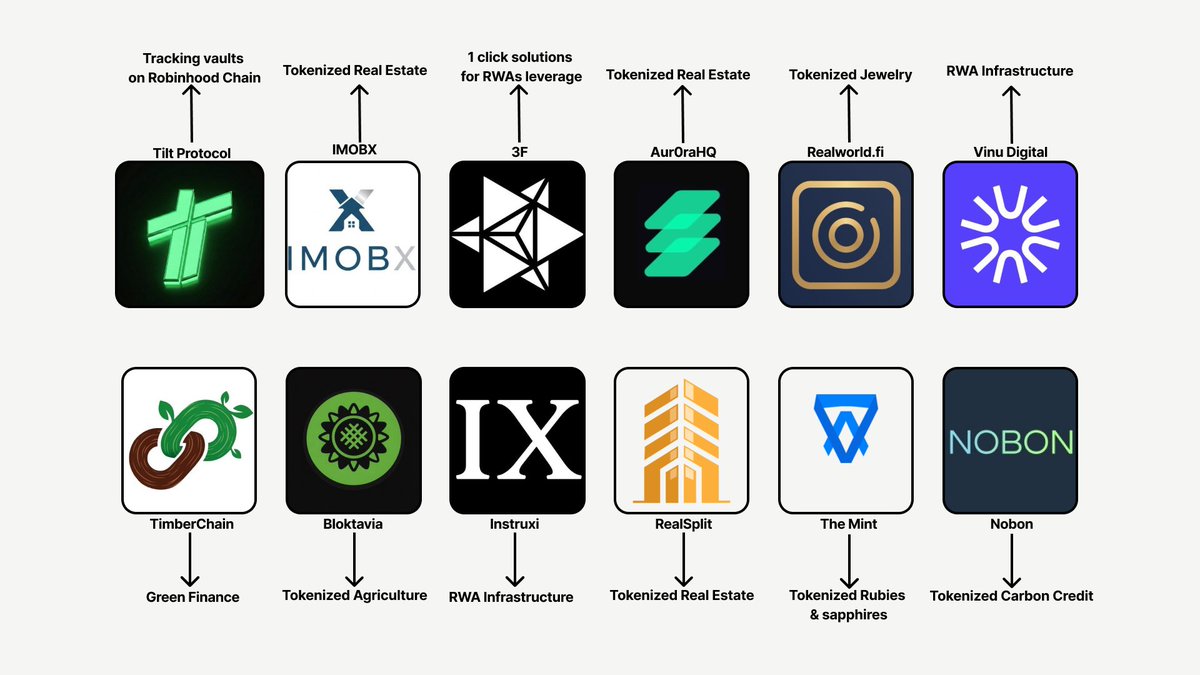
I found new RWA projects weekly so you don’t have to PT.6
@themint_assets - Tokenized Rubies & sapphires
@NobonHQ - Tokenized Carbon Credits
@RealSplit_inc - Tokenized Real Estate
@instruxi - RWA Infrastructure
@vinu_digital - Infrastructure
@TimberOnChain - Green Finance
@bloktavia - Tokenized Agriculture
@Aur0raHQ - Tokenized Real Estate
@realworld_fi - Tokenized Jewelry
@tiltprotocol - Tracking vaults on Robinhood Chain
@Imobxt - Tokenized Real Estate
@3f_xyz - 1 click solutions for RWAs leverage
[ Bookmark for later read🔖 ]
9
7
34
1,231
How Pix, Tokenization, and @ethervista Will Rewrite the Financial System
Brazil is no longer just observing the future of digital finance; it is actively compiling the code for it. The recent convergence of Pix (instant payments) and asset tokenization has turned the country into the ultimate sandbox for financial innovation. The true revolution happens when we stop separating financial settlement from asset movement.
Pix proved that a nation of over 200 million people can adapt to a 24/7, low-latency settlement infrastructure. It killed the bureaucratic delay of traditional banking. Now, the second phase of this cycle is underway: attaching real-world value to this high-speed rail. Tokenization allows us to take hard assets—like real estate, the most solid foundation of wealth—and turn them into programmable, liquid structures.
However, moving a tokenized asset is only half the battle. The real challenge, especially in the Real World Asset (RWA) sector, is managing the cash flow those assets generate. If you tokenize a high-end property or an affordable housing project, you need to distribute the rental yield to hundreds or thousands of fractional owners. In traditional DeFi architectures, distributing micro-yields across a vast user base incurs prohibitive gas fees, killing the profit margin and making the operation economically unviable.
This is exactly where EtherVista enters as the missing piece of the Brazilian tokenization puzzle.
While the Central Bank builds the macro-infrastructure with Pix and the upcoming Drex, builders on the ground need a reliable, automated engine to process yield. EtherVista’s architecture, specifically its Euler model, solves the operational drag of profit distribution. It upgrades staking from a speculative mechanic to a programmable ownership tool. Distributing rental income from a tokenized property to a million stakeholders becomes a single O(1) step update that costs almost zero gas.
This synergy is monumental. Imagine a scenario where a tenant pays their rent using Pix. That fiat money is instantly converted into Ethereum and routed through an EtherVista smart contract (like the OREBIT-20 or VISTA-20 standards). The protocol then automatically streams that yield to all the token holders of that specific property without a single manual intervention or banking fee.
The international market is watching Brazil because we are solving real-world bottlenecks. By combining the instant liquidity of Pix and the frictionless yield distribution of EtherVista, we are not just trading speculative tokens. We are building the "Registry 3.0" (Cartório 3.0). We are democratizing property ownership, dropping the operational costs to zero, and proving that while the market sells wind, true builders pour concrete on the blockchain.
@bonzi_vista #rwa #eth #pix #bcb #tokenization #brazil #realstate
4
9
27
434
Por que escolhemos a Ethervista ao invés da Uniswap?
Primeiro de tudo, a Uniswap é gigante, muito respeitada e contribui demais para o mundo cripto, mas vamos para a parte prática!
A diferença prática entre lançar na Uniswap e na Ethervista é a mesma entre comprar um terreno baldio no meio do mato ou um lote em um condomínio de alto padrão com água, luz e esgoto já passados. 🏗️
Vamos aos fatos:
🦄 @Uniswap (O Terreno Baldio)
A Uniswap, comparada a Ethervista, é uma DEX simples (no bom sentido). Ela só faz uma coisa: troca o Token A pelo Token B.
Se você quer construir um RWA ali e precisa distribuir os aluguéis para os holders, fazer buyback (recompra) ou destinar uma taxa para a manutenção do imóvel, você tem que programar toda essa engenharia do zero no seu Smart Contract.
O resultado? Contratos pesados, taxas de Gas altíssimas para os usuários e um custo operacional absurdo para o desenvolvedor gerenciar os dividendos.
🦅 @ethervista (O Condomínio Inteligente)
A Ethervista não é só uma corretora, é uma infraestrutura financeira de liquidação. O "encanamento" já está no subsolo.
Ao usar um de seus padrões, o próprio volume de negociações no pool gera fluxo de caixa nativo em ETH que o protocolo roteia automaticamente.
Você não precisa codificar o sistema de distribuição de lucros. A tecnologia (modelo de Euler) já está embutida no motor deles.
Resumo da Obra:
Se você lança um RWA na Uniswap, você é o dev, o contador, o banco e o pagador de dividendos, tudo manual e pagando taxas absurdas de rede.
Se você lança na Ethervista, você foca na engenharia civil e em trazer imóveis bons para a ImobX. O protocolo faz o trabalho pesado de distribuir o Yield Real para os seus investidores com custo operacional quase zero. 🧱⛓
#eth #btc #RWA #BullRun #Uniswap #vista @bonzi_vista
10
13
40
6,168
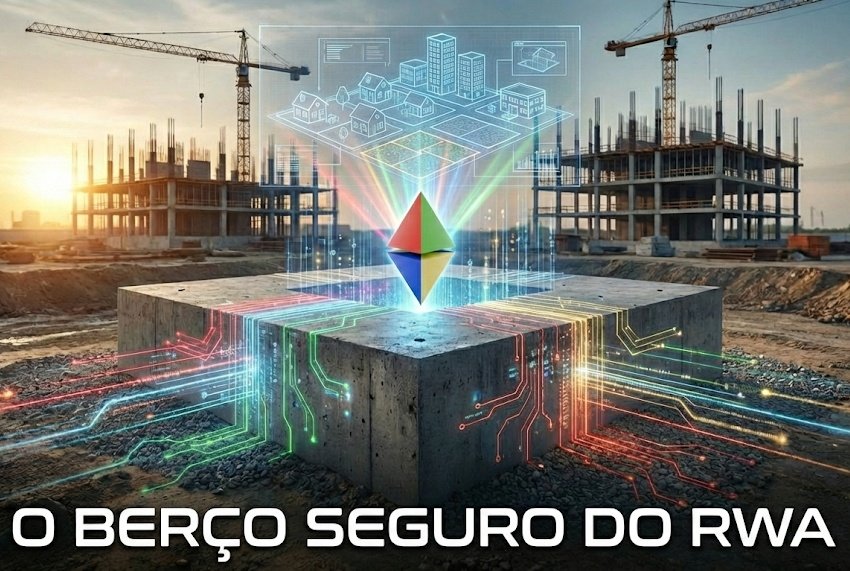
Por que consideramos que a Ethervista será o grande berço do RWA
Desenvolvedores estão exaustos. Você passa meses estruturando um RWA sólido, lança o token e, no primeiro candle vermelho, é chamado de "scammer" ou "rug puller". A pressão de manter a liquidez viva destrói quem tenta construir coisas reais.
Como salvar os construtores sérios? A resposta está na arquitetura da @ethervista. 🛠️
Ontem conversei com um provável dev que estava com medo de lançar seu projeto. O medo dele é real: no modelo antigo (ERC-20 puro), a liquidez é mercenária. O capital entra por hype e sai no primeiro sinal de lucro, deixando o dev e a comunidade para trás.
A Ethervista mudou as regras do jogo. Eles não lançaram apenas uma DEX; eles lançaram 4 padrões de tokens programáveis que automatizam a economia do projeto.
Vamos falar do OREBIT-20 (O Padrão do Farming Honesto).
Em vez de emitir tokens "de graça" que geram inflação e pressão de venda infinita, o OREBIT-20 força o alinhamento de incentivos.
Como? Você não "farma" do nada. Você precisa fazer stake (travar) de ETH real para minerar as emissões do novo token.
Lembra do "Halving" do Bitcoin? O OREBIT-20 tem isso embutido. As emissões caem pela metade a cada "época" e possuem um Hard Cap (limite máximo).
Isso significa que a inflação é matemática e previsível. Ninguém pode "imprimir" mais RWA tokens no porão para diluir a comunidade. O código protege o investidor.
O grande pulo do gato: Cashflow Automático.
Enquanto o token é negociado, as taxas da rede (geradas em ETH) não vão para o bolso de um fundador obscuro. Elas são roteadas automaticamente por Smart Contracts para 3 lugares:
🔥 Buyback Burn: O contrato compra o próprio token e queima, gerando escassez.
💰 Recompensas (Hardstake): Paga ETH direto para quem está segurando o token.
🏗️ Caixa do Dev: Financia o construtor de forma contínua e sustentável.
E se o seu RWA for focado em valorização constante? Use o VISTA-20.
É um modelo deflacionário agressivo. O volume de negociação gera taxas em ETH que compram o seu token a mercado e o destroem. O piso de preço do seu imóvel tokenizado sobe gradualmente on-chain, enquanto recompensa os stakers.
"Ah, mas eu não sei programar contratos complexos!"
Aí que está a beleza. A Ethervista permite que você lance esses padrões (OREBIT-20, VISTA-20, SWOG20-V2) sem precisar escrever uma linha de código Solidity.
O "Cartório 3.0" já tem as regras de negócio prontas. Você só entra com o lastro (o imóvel, o negócio) e configura os parâmetros.
Para o RWA prosperar, não precisamos apenas de bons imóveis; precisamos de infraestrutura financeira que impeça a ação de golpistas e proteja quem trabalha duro.
O código da Ethervista não permite mentiras. Se o RWA é o futuro do mercado imobiliário, a Ethervista é o terreno onde esses prédios serão erguidos.
Você está construindo castelos de areia ou fundações de concreto? 🏛️⛓️
#rwa #eth #btc #solana #CVM #DeFi @bonzi_vista
6
11
31
503
A CVM não é o inimigo se você souber a diferença entre um JPEG especulativo e uma parede de concreto. 🧱🏛️
Muitos "founders" de RWA estão tomando invertida dos reguladores porque tentam vender yield mágico empacotado em token. Se você promete rendimento financeiro sobre um esforço de terceiros, parabéns: você criou um valor mobiliário. A CVM vai bater na sua porta.
Aqui na trincheira da construção civil on-chain, o jogo é outro. A regra é mais clara do que parece:
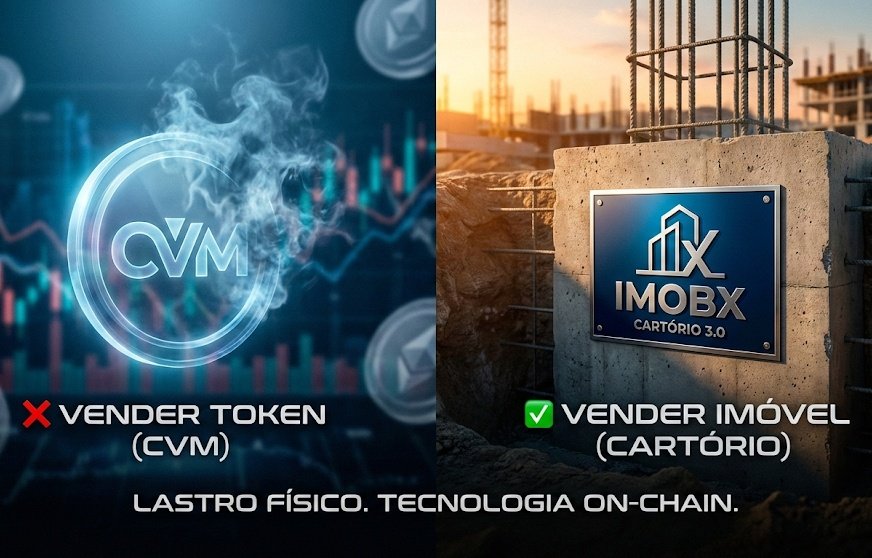
❌ Vender "Token de Investimento" = Jurisdição da CVM.
✅ Vender um imóvel (ou fração dele) = Mercado Imobiliário.
Quem vende o ativo é o dono. Quem faz o meio-campo e a negociação é o corretor de imóveis ou a imobiliária.
O que a blockchain faz nisso tudo? Ela é o nosso cartório 3.0. É a infraestrutura de registro e liquidação, a rede por onde a posse transita sem atrito. O token não é o produto; o token é o recibo tecnológico de que você é dono de um pedaço de terra e concreto.
O mercado cripto precisa parar de tentar reinventar a roda legal e começar a usar a tecnologia para otimizar o que já funciona. Não estamos criando uma nova categoria de ativo financeiro para burlar regras; estamos usando criptografia para dar liquidez, fracionamento e transparência para o ativo mais antigo e sólido do mundo: a propriedade.
Engenharia jurídica é tão importante quanto o cálculo estrutural da fundação. Não adianta o concreto ser forte se o contrato for fraco.
O lastro é físico. A negociação é imobiliária. A tecnologia é on-chain.
Se o projeto RWA que você investe não entende essa diferença básica, ele é só um castelo de areia esperando a maré (ou o regulador) bater. 🏗️⛓️
#RWA #Tokenizacao #MercadoImobiliario #CVM #ImobX @bonzi_vista @ethervista @ethereum @Ethereum_Brasil
3
7
20
288
Imobx retweeted

Feb 4
Ethervista understood this a long time ago.
That’s why we went full ETH mode
Now the intent is clear: build the most hyperperformant and most innovative DEX on Ethereum, where new token standards and market mechanics can actually exist.
23
27
77
2,060
Created as a direct response to the financial crisis of 2008, Bitcoin has globally consolidated itself as a financial shield. Its decentralized architecture offered the world an alternative to inflation and banking intervention, functioning primarily as a store of value—"Digital Gold." However, shields are designed for defense. For tangible economic growth, we are now observing an inescapable technological transition: the evolution from wealth protection to real-world value generation.
For over a decade, blockchain has served as an immutable ledger for digital currency transactions. This period functioned as a long and successful proof of concept, validating the network's security and censorship resistance. Now, this same technological infrastructure is beginning to migrate to the physical economy, giving rise to the phenomenon of Real World Assets (RWA)—the tokenization of real assets.
This evolution is not merely technological, but necessary. The traditional global investment model remains inefficient, bureaucratic, and exclusionary. The application of blockchain technology resolves these bottlenecks by removing costly intermediaries and allowing for the fractionalization of the indivisible. High-value assets, such as real estate developments or power plants, which were previously restricted to large institutional investors, can now be divided into accessible digital fractions. A building worth millions can, theoretically, be fragmented into millions of shares of negligible value, democratizing access to capital.
This paradigm shift alters the fundamental logic of money. If Bitcoin validated the technological "road," the market is now beginning to use this route to transport productive assets: bricks, agricultural production, and energy generation. For the first time, an environment is being created where any individual, regardless of their geographical location or available capital, can become a partner in real enterprises.
Ultimately, the financial protection inaugurated by Bitcoin was merely the first step. The true revolution lies in the capacity of tokenization to finance and build the cities of the future. The crypto asset market, therefore, matures and transitions from an era marked by volatility speculation to a new era of construction backed by reality. Code now serves concrete.

I second this point of view
And it's just plain and simple. If you discover a certain law in physics and you understand the compounding mechanics of a set, encoded formula that is tamper-proof, then eventually it will just pick up once it reaches it's abundance of free energy. All it needs to do is respect the laws of sound economics.
It's like putting a self-energizing mechanism in the currents of either the wind or water; it will just start to regenerate itself to a point that it is intelligent enough to adapt itself to the occurring changes.
That is what's happening with vista. Its liquidity model is perfectly engineered to meet the new standards. Do not rely on the old ICO model.
There's going to be a more democratized style of DeFi that will keep growing, and that will prove to be much more viral than its offline counterpart. This has been exemplified by Mondragon and Ricardo Semler, who all proved how peer-to-peer or peer-produced systems can grow.
We already have examples on the internet, of course, but these autonomous economies that generate value can grow similarly to how we've seen things like Linux scale, but even better.
I mean, Ethereum is better than Linux, you know.
2
149
The Revolution Has Begun (and Now It's Official!)
The future has arrived. Real estate tokenization is no longer a promise in Brazil; it's a regulated reality.
The new COFECI Resolution No. 1.551/2025 establishes the Digital Real Estate Transaction System, bringing legal certainty, clear rules, and investor protection.
This changes everything. What was once the "Wild West" now becomes a serious, supervised market ready to grow with confidence.
IMOBX was born for this moment. We are ready to lead the new era of the real estate market.
#RealEstateTokenization #COFECI #RWA #IMOBX #DigitalRealEstate #ethervista #eth #btc #thecryptomap
2
11
190
Today's news is heavy. Yesterday's crash was devastating, and before anything else, if you are struggling, please know you are not alone. Your portfolio is not your life's worth. Brazil: Call the CVV at 188 for free support. Please, reach out.
This reminds me of my own life. I was born into a stable family, but at age 7, my world collapsed. Abundance turned into hunger. Life threw another curveball when I became a father at 15, and again at 27, when I was fired during a massive national crisis right after achieving my dream of getting into Civil Engineering.
I share this to remind everyone that life is a series of rises and falls. Markets crash, plans fail. But those who hold onto faith and persevere don't just survive; they grow stronger from the struggle. Your resilience is your greatest asset.
This philosophy is the soul of IMOBX. Our mission, powered by the tools from @Ethervista and @thecryptomapcom, is to use this technology to protect the vulnerable and build a true legacy.
Stay strong. The most resilient structures are built after the earthquake.
#MentalHealthAwareness #CryptoMentalHealth #YouAreNotAlone #CryptoCrash #Resilience #IMOBX #RWA #SocialImpact #Ethervista #definews #VMurad #kripto #bonzi #TCM #btcmarket
3
7
18
220
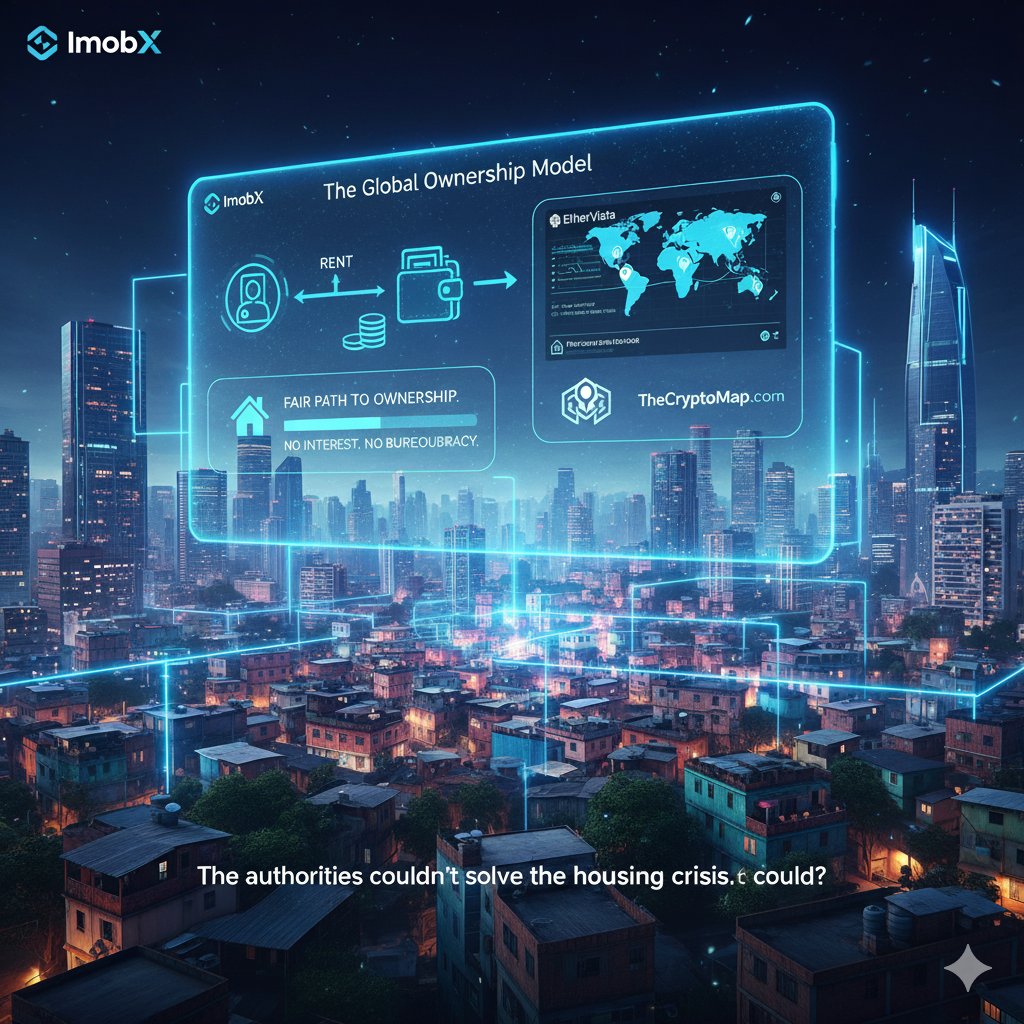
What if your rent was no longer just an expense, but an investment in your own future? 🏡
Through tokenized Specific Purpose Entities (SPEs), we're turning this into reality. Each property is structured as its own company, and its ownership is converted into digital tokens.
The rule is simple: Proportional ownership.
Own 10% of the tokens? You receive 10% of the rental income.
Own 50%? You receive 50%.
Own 100%? You can claim the property itself.
For low-income families, this is a game-changer. You continue to pay rent, but as you acquire tokens, you start earning your own rent back. This is a fair path to ownership—without interest, without bureaucracy, and without the pressure of crushing monthly payments.
When everything is ready, you will be able to acquire these property tokens through @EtherVista, with all listings announced on @thecryptomapcom.
#Crypto #Web3 #Ethereum #Solana #Ethervista #TCM #DigitalTreasure #DeFi #Blockchain #X #ETH #SOL #VISTA #VISTAMURAD #RWA #Cripto #IA #Bitcoin #CryptoNews #NFT #Altcoins $DOG $YNE
8
15
29
227
Imagine creating a token on @Ethervista that represents and funds the construction of a new condominium.
Imagine that token appreciating as the building rises, brick by brick. Then, upon completion, imagine receiving a share of the rental income directly to your wallet, all while your token continues to grow in value along with the property itself.
Now, imagine discovering and trading this asset on @thecryptomapcom, supported by a passionate community like @VistaMurad.
SOON
#Ethervista #DeFi #RWA #IMOBX #Crypto #Web3 #TCM #VISTAMURAD #RealEstate #Tokenization
7
18
35
271
Everyone dreams of earning passive income from real estate rentals. 🏡
But for 99% of people, it remains just a dream. Why? Because high entry costs, complex bureaucracy, and lack of liquidity create an impenetrable wall.
What if we could tear that wall down?
That's the future being built by the @Ethervista ecosystem on The @thecryptomapcom.
By tokenizing real-world assets (#RWA), we are about to unlock fractional ownership for everyone. The power of the community, including #VistaMurad, will fuel this revolution.
Get ready.
#ETH #SOL #SOLANA #ETHERVISTA #TCM #VISTA #RWA
5
11
23
186
3/3
There’s a better way. A way to combine the rock-solid stability of real estate with the speed and accessibility of digital assets.
Today, we’ll explore the solution that unlocks this massive potential: Tokenization.
#SOL #SOLANA #ETHERVISTA #TCM #VISTA #VISTAMURAD #RWA
2
4
94
2/3
Let's break down the barriers:
💰 Capital: Need $100k just to get in the game.
⏳ Liquidity: Your capital is locked for years, sometimes decades.
✍️ Bureaucracy: Weeks of paperwork, lawyers and etc.
🌍 Geography: Limited to investing only where you have local knowledge.
52
1/3
Investing in real estate is one of the smartest ways to build wealth. But the process is stuck in the 20th century.
High entry costs, zero liquidity, and endless bureaucracy keep millions of potential investors out.
Why is an entire asset class still so inaccessible? #RWA
1
4
76