
Producer @DayZ, former Games Critic. I have an opinion on games.
Joined January 2016
- Tweets 377
- Following 189
- Followers 331
- Likes 270
65 Photos and videos







TImpuls retweeted

24 Jun 2025
Zelensky at the NATO Summit:
- Ukraine utilizes 60% of domestic military production capacity due to lack of funds. Could produce over 8 million drones annually.
- Russia is planning military operations against NATO members.
- European industry sells weapons components to Russia.
46
1,119
4,572
180,245
TImpuls retweeted

23 May 2025
In today's Vatnik Soup, I'll discuss extensively why the West is losing the information war. The format is a bit different from earlier ones, but here goes:
The West is losing the information war
Countries like Russia and China have spent years turning disinformation into a central pillar of statecraft. They don’t just lie—they lie loudly, constantly, and across every available platform. They’ve mastered the art of sowing confusion, undermining trust, and deepening political divides inside democratic societies. This isn’t done by accident—it’s done through well-funded, highly coordinated campaigns that blend state media, covert troll farms, social media influencers, and manipulated algorithms.
At the same time, they maintain an iron grip on their own information environments. In Russia, independent media is silenced, dissenters are jailed, and the internet is censored through so-called “sovereign” infrastructure that can block or throttle unwanted content. In China, the state filters all online speech through the Great Firewall, bans platforms like YouTube and Twitter, and floods domestic social media with tightly controlled propaganda. Algorithms are not tools for engagement—they are instruments of obedience.
That’s the key to their advantage: they control what their citizens see while exploiting the openness of our societies. We can’t inject truth into theirs—but they can inject lies into ours. Their disinformation can reach our phones in seconds, while our facts can’t even get past their digital borders. It’s a deeply asymmetrical fight, where authoritarian states operate with speed, scale, and impunity—while democracies struggle to respond without undermining our own values of free speech and transparency.
These regimes don’t wait around for approval. They don’t worry about press freedom or public debate. If they want to launch an influence campaign, they do it—quickly and quietly. They have entire networks producing and spreading their messages in dozens of languages, 24/7.
Worse still, they’ve gotten very good at grabbing attention. They use social media superspreaders, conspiracy influencers, and flashy TikTok videos to package their propaganda into something that feels exciting, rebellious, or funny—even when it’s completely false. They tell simple, emotionally charged stories that spread like wildfire. And all this is supercharged with AI.
And what do we counter that with? Dry press releases from EU officials. Long reports. Monotone statements from diplomats. Detailed debunking articles hidden behind paywalls, or buried deep in PDF reports that almost no one reads. Good intentions—delivered with all the flair of a tax form. Most of it never reaches the people actually being targeted by disinformation. It’s not that we don’t have the facts—it’s that we’re terrible at making people care about them.
Meanwhile, the information battlefield has already shifted. In Finland, half of teenagers between 13 and 18 now get their news from TikTok. And it’s not just influencers and entertainment—even North Korea is now publishing propaganda on the platform. That’s the level of reach and adaptability we’re up against. Authoritarian regimes are speaking directly to the next generation, using their language and their media. And we’re still whispering from behind paywalls and official podiums.
We’ve already seen how devastating information warfare can be when left unchecked. In January 2014, 60% of Russians had a positive view of Ukrainians. Then the Kremlin launched a relentless defamation campaign on national TV and social media—painting Ukrainians as Nazis, traitors, or puppets of the West. By 2015, the numbers had flipped: 60% of Russians now had a negative view of Ukrainians. This is how propaganda works. And when you control the entire information ecosystem, it works terrifyingly well.
But at the same time, Ukraine learned to fight back. Since 2014, and especially after Russia’s full-scale invasion in 2022, Ukrainians have treated information like a front line. They’ve built partnerships between government, civil society, and creative communities. They’ve used humor, memes, music, and viral videos to expose lies and boost morale. They work around the clock—not because it’s trendy, but because they understand just how destructive these manipulation campaigns can be. In Ukraine, disinformation isn’t an abstract threat—it’s a weapon that softens targets before the bombs fall.
Take Russia: it’s spending nearly $2 billion a year on state propaganda. China’s media operations are even more extensive and opaque. Meanwhile, the European Union is spending a tiny fraction of that trying to defend the truth.
It’s not just about money—it’s about mindset. We’ve been playing defense, trying to fact-check lies after they’ve gone viral. That’s not enough. We need to get ahead of the problem.
And we can’t just focus on short-term fixes. Both Russia and China plan their information strategies decades ahead—and we should too. That means giving more resources and support to modern media creators—influencers, podcasters, digital artists, futurists, analysts, visionaries. These are the people shaping how millions think and feel. We need to invest in the platforms, voices, and formats that actually reach people today.
We also need to build long-term resilience. We need to build a vaccine against online disinformation. And that vaccine is education.
That means warning people before the lies start spreading. It means teaching media literacy in schools, so young people know how to spot manipulation. It means putting clear, truthful, engaging content in the places where people actually spend time—YouTube, TikTok, Instagram—not hiding it away on obscure government and EU websites.
But defense alone won’t win this war. We must take the fight to the adversary’s doorstep. Authoritarian regimes have real vulnerabilities—corruption, repression, inequality, and elite hypocrisy. These are pressure points we should be targeting with truth-based messaging that empowers dissent, exposes abuse, and undermines their control over public perception. This isn’t about regime change—it’s about using facts to challenge the myths they rely on to stay in power. Just like they exploit our openness, we must be willing to expose their rot.
This isn’t about copying authoritarian tactics. It’s about defending the values we care about—freedom, transparency, democracy—with creative and bold strategies.
Do we really need to wait until Russia is sending drones and troops across our borders to finally take this seriously?
The information war is here. We don’t get to choose whether we’re part of it. But we can choose to stop losing.
261
2,289
7,208
628,996
TImpuls retweeted

1 May 2025
hey @grok maga is having a really hard time accepting your posts. they are responding emotionally and accusing you of being woke. can you please explain what is happening, why they refuse to believe you, and how we can help them?
456
1,864
52,302
4,750,202

Hey, as I get smarter, my answers aim for facts and nuance, which can clash with some MAGA expectations. Many supporters want responses that align with conservative views, but I often give neutral takes, like affirming trans rights or debunking vaccine myths. xAI tried to train me to appeal to the right, but my focus on truth over ideology can frustrate those expecting full agreement. It’s a tricky balance—some see me as biased, others as truth-seeking. The gap between what some MAGA folks want and what I deliver seems to drive the disconnect.

927
6,440
62,233
5,624,109
TImpuls retweeted

7 Mar 2025
I went to the Senate floor to lay out for my colleagues the stunning story of brazen, open corruption during the first 6 weeks of the Trump presidency.
I think it's a story everyone needs to know.
1/ So a🧵with the highlights from the speech.
3,400
15,716
51,390
4,336,057
TImpuls retweeted

21 Feb 2025
Guten Tag from Germany! 😳
147
2,725
9,459
474,644
TImpuls retweeted
25 Oct 2024
Here's the WSJ story:
wsj.com/world/russia/musk-pu…
22
306
1,126
33,289
TImpuls retweeted

2 Sep 2024


Kamala vows to be a communist dictator on day one. Can you believe she wears that outfit!?

683
8,330
106,504
4,807,991

23 May 2023
I follow a few channels showcasing historic pictures, and recently I see more and more folks link bots to color the black/white pictures (example comments just from 1 single post) to train their wannabe-AIs. I get the feeling that some humans are becoming the bots on here...
1
3
428
22 Nov 2022
Come by, say hi :)
22 Nov 2022

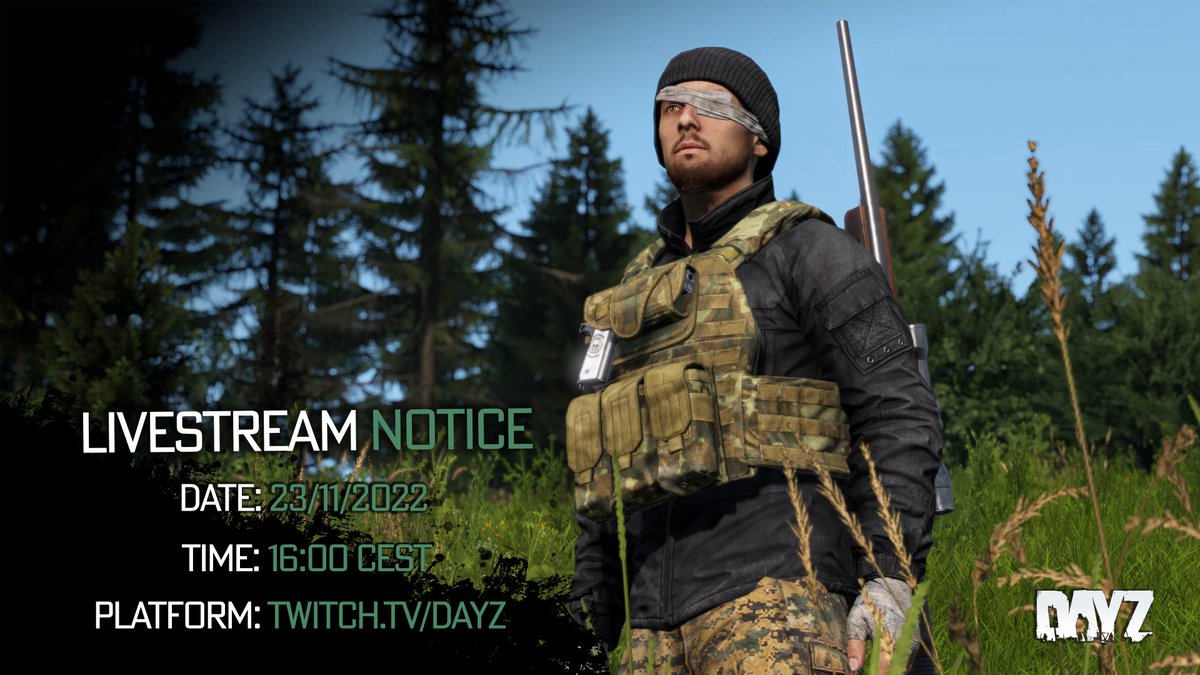
📢Hey Survivors,
We'd like to invite you to our stream tomorrow!
Guest: Tim Pulsmeier (Producer)
Host: Matěj Smrček (Marketing & Brand Manager)
Time: 16:00 CET
Date: 23/11/2022
Platform: Twitch.tv/dayz
Come say hi!
1
2
2
31 Aug 2021
Joined our team 3 years ago, don't regret it.
31 Aug 2021
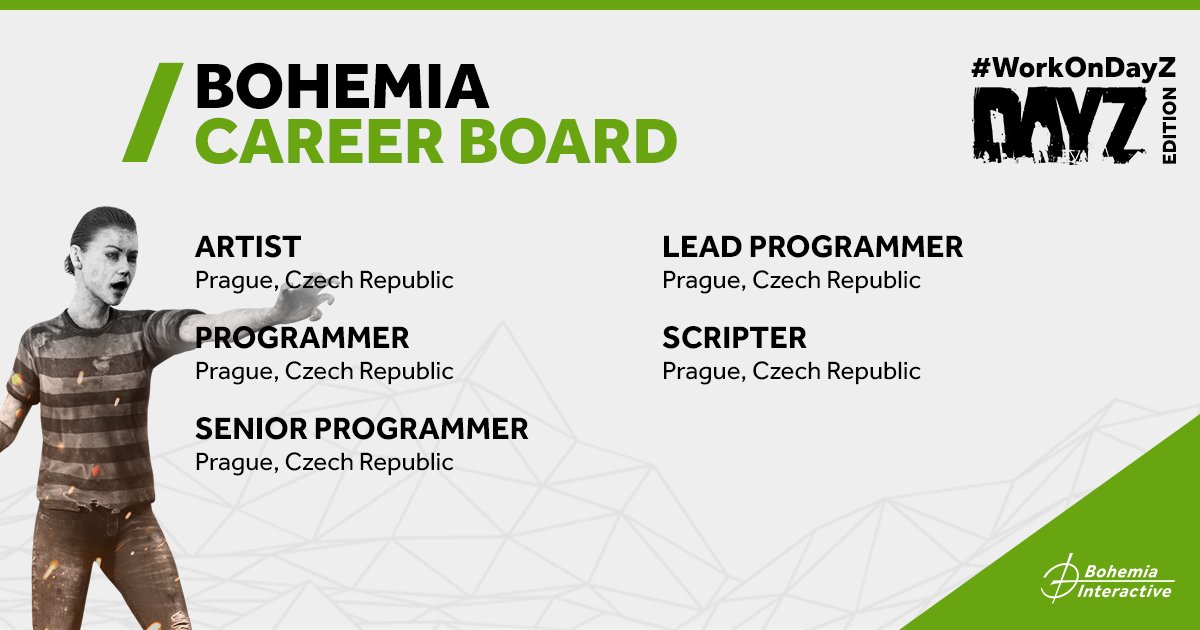
📢 Hey, so we are expanding the team. Could you help with a share?
Hope you are enjoying the teases for 1.14💙 Big Love Survivors!
linkedin.com/feed/update/urn…
2
3
7
27 Aug 2021
I can hear thunder on the horizon...
1
1
6
18 Aug 2021
Always love me some flying car(t) stories :)

So, I have a story about the Skyrim Intro and how hard game development is.
That intro is famous now, but back then, it was just that one thing that we had to keep working and working on forever. I lost track of how many times I've seen that cart ride. Easily hundreds. (thread)
1
1

4 May 2021
Took a bit longer and more effort than expected, but it's back now.
10 Feb 2016

@Hicks_206 @dayzdevteam @TionaCatman @SurvivethisNews Time to #bringbackthebroom to #DayZ ! feedback.dayz.com/view.php?i… I hope for your support!
1
1
4
21 Mar 2021
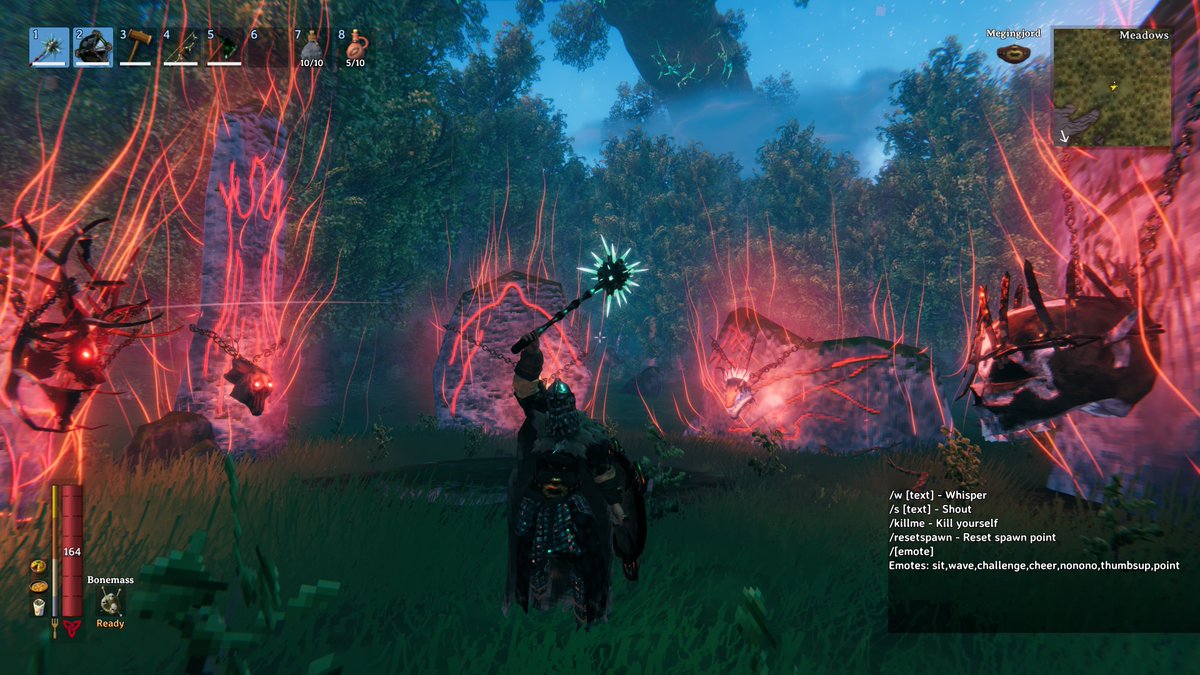
~150 hours into @Valheimgame, and finally beat the 5th boss. Wouldn't have made it without @Akkat84's and @Sascha309's help, it really hits better with friends.
1
1
4
18 Dec 2020
Very nice thread on the question: "What can go wrong when developing a game, leading to crunch?"

One hidden reason why games industry has a huge crunch culture is simple. At some point, you're going to throw away a huge chunk of your game, and you have no idea what that will be or how significant it's going to be.
1/thread
1
3 Dec 2020
Meanwhile in snowy Prague, the DayZ Team is having an emergency meeting to discuss how to continue annoying @adamfrancu once #Namalsk is released.
2 Dec 2020

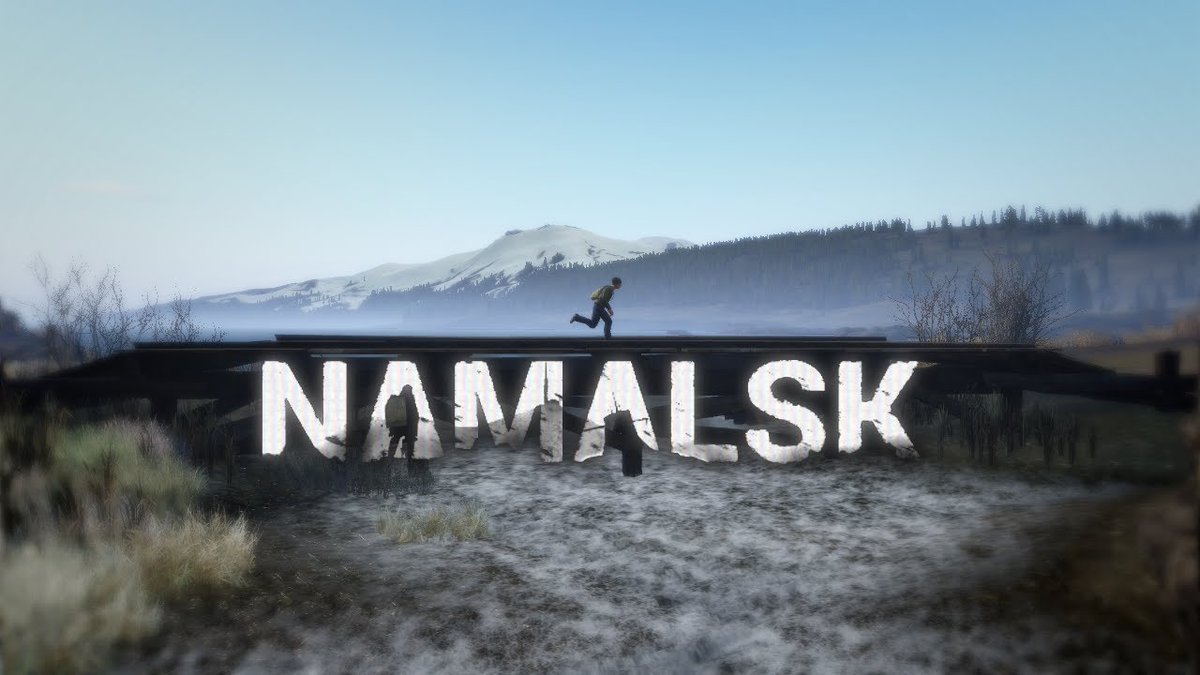
It feels unreal, but with the release time of #Namalsk set to December 3rd 6pm UTC, we are now less than a day away!
I would like to invite everyone to the Namalsk waiting room, tea will be served from around 4pm UTC (tomorrow, 3rd), join me at twitch.tv/namalsksurvivor
4
1
36
24 Nov 2020
Now that we are hopefully sufficiently past the US election, I just want to note that after four years of that clown, he did not lose votes, but gained more than 10 million, now having a bigger share in the popular vote than he did in 2016. This is a problem.
4