
Solicitor, Visiting Lecturer in Law Chester Uni, #HumanRights #ProtestRights #ActivistLawyer #Socialism #ReJoinEU
Joined November 2017
- Tweets 27,016
- Following 5,578
- Followers 5,693
- Likes 101,755
235 Photos and videos







InterSol retweeted

Jun 12
Tom Wainwright, one of the defence barristers, said of the destruction of drones:
“They may have been involved in taking the lives of men, women and children in Gaza. That is why they acted. That’s something that – in a sane world – would be commended.”
theguardian.com/uk-news/2026…
41
341
797
58,296
InterSol retweeted

Labour may reconsider Brexit red lines, Britain’s top EU negotiator suggests :
independent.co.uk/news/uk/po…
15
72
160
3,884
InterSol retweeted

Jun 9
Brexit is going to be undone.
It’s inevitable that Britain will get her star back.
Ten years of a smaller economy, higher costs, lost opportunities, weaker influence, and diminished living standards have made the case overwhelming.
Public opinion has already shifted decisively, a clear majority now wants to rejoin. The only question left is how and when, not if.
Jun 9

🚨 A major new Bloomberg feature examines the potential economic impact of significantly reversing Brexit either through full rejoin or deep single market/customs union alignment.
Key finding: Brexit has already reduced UK GDP by an estimated 4–8% (consistent with OBR, Bank of England and academic studies), mainly through lower EU trade, reduced investment and supply chain disruption.
Reversing or substantially rolling back Brexit could add 2–4% to GDP over time by removing barriers, restoring supply chains and boosting business confidence and investment.
Strongest gains would likely be in manufacturing, autos, food & drink, financial services and creative industries. Agriculture would regain access to CAP-style support and markets.
The economic case for deeper integration with Europe is getting stronger. Public opinion has already shifted (majorities now favour rejoining in most polls). The question is whether politicians will catch up.

88
156
333
7,862
InterSol retweeted

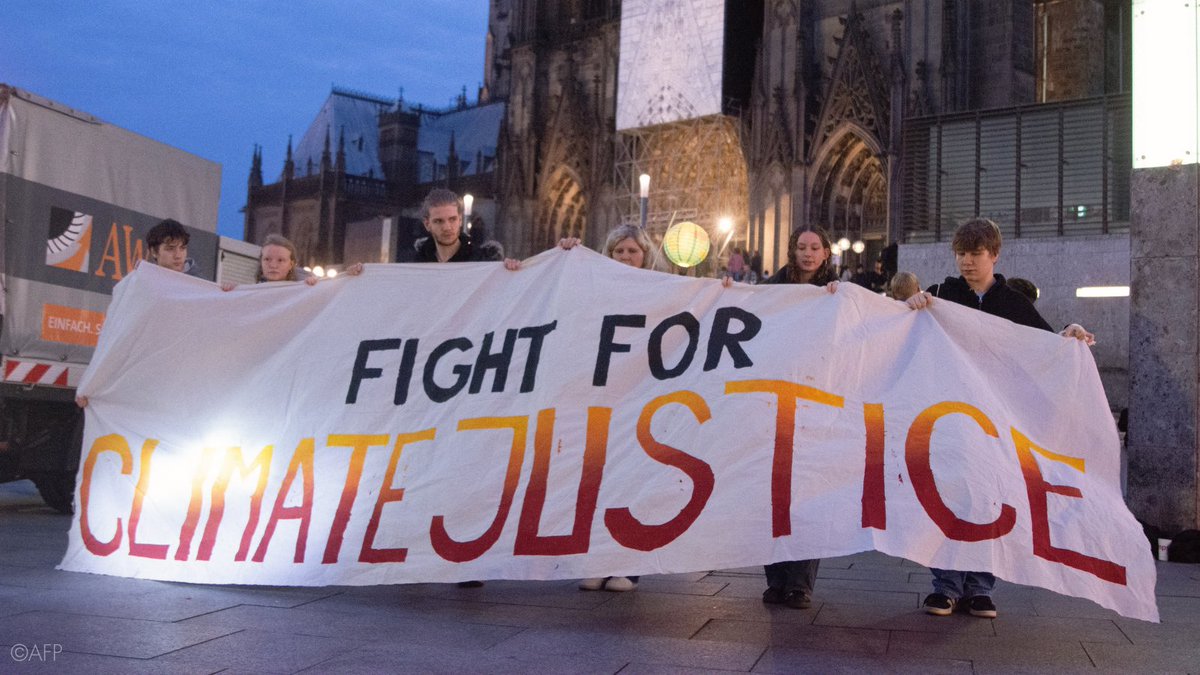
UN negotiations must advance implementation of State obligations to prevent further climate and #humanrights harm says UN expert @SRclimatechange. Calls on States to implement the ICJ Opinion on States’ obligations on climate change.
ohchr.org/en/statements-and-…
7
16
26
1,252
InterSol retweeted

🚨 BREAKING: Keir Starmer threatens mandatory ID checks to use mobile phones
"Protecting children online is vital, but these are outrageous plans that will fail to address the underlying causes of online harm. This will only result in population-wide ID checks for all of us to use our phones, tablets and laptops.
"Put simply, the Labour Government is threatening ID checks for the internet. No one in a democracy should need to show their passport just to get online.
"These plans would replace efforts for meaningful tech and parental responsibility with performative, authoritarian government control that children can easily circumvent by accessing adult-registered devices. However, for the UK's 50 million adults using the internet, this backdoor digital ID requirement would invoke the death of anonymity and internet privacy.
"The Government's plan very likely means that unless you submit to intrusive identity checks when setting up your phone or computer, there will be a chokehold on your software and internet access leaving you with a child-locked device. Planned restrictions on messaging, streaming and browsing raise the potential of spyware in our pockets that will be exploited for other purposes before long.
"The Government mandating that all phones in Britain require ID and surveillance software is a crossing of the Rubicon that would make the UK one of the most authoritarian internet regimes in the world. This extreme technological censorship requires rigorous public and parliamentary scrutiny that is currently totally missing" - Silkie Carlo | @silkiecarlo
619
1,608
2,976
205,094
InterSol retweeted

PLEASE CONTRIBUTE TO THE ORGREAVE INQUIRY The Orgreave inquiry team are still accepting written evidence. Please contact the inquiry team with information - Email: legal@orgreave.public-inquiry.uk Write to: Freepost ORGREAVE INQUIRY
Website: orgreave.public-inquiry.uk/c…




1
32
31
3,434
InterSol retweeted
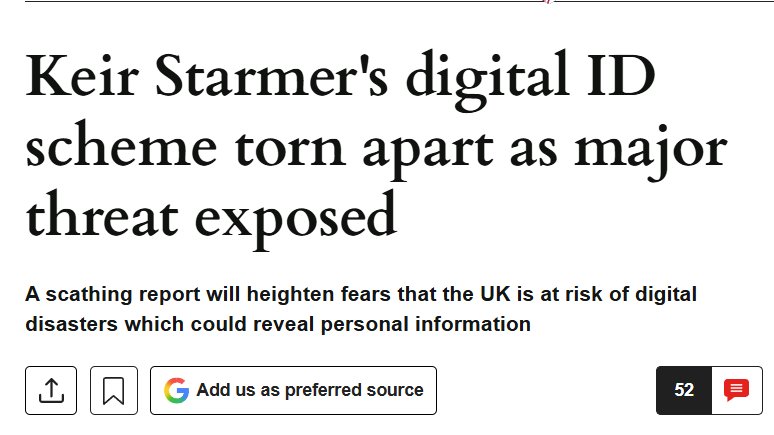
🆔NEWS: MPs warn it would be "IRRESPONSIBLE to roll out digital ID" on Britain's rickety IT systems
A scathing new report by the Science, Innovation and Tech Committee (@CommonsSITC) highlights mass data breaches and widespread concerns about privacy.
Spending swathes of taxpayers' money on a project that lacks trust & confidence is reckless.
#No2DigitalID
55
512
882
12,400
InterSol retweeted
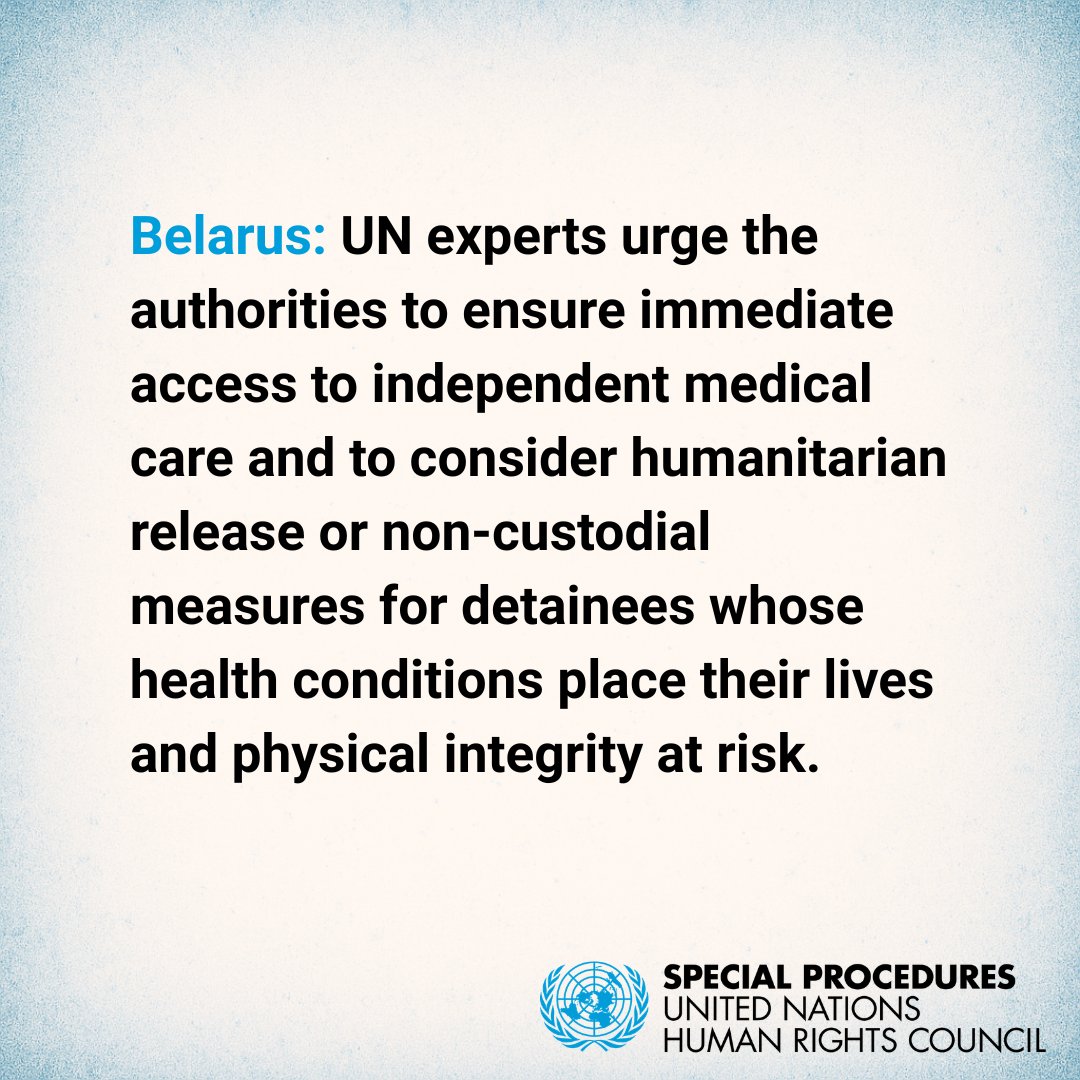
#Belarus: UN experts raise alarm over treatment of political prisoners, urge medical intervention. "The situation may amount to cruel, inhuman or degrading treatment, and in some cases could constitute torture".
ohchr.org/en/press-releases/…
5
13
20
3,198
InterSol retweeted
Our right to free speech & protest are under attack - if you have been
🔴 unfairly censored/arrested for non-violent speech
🔴 unfairly affected by live facial recognition or other police surveillance
📩Get in touch with us at info@bigbrotherwatch.org.uk

2
59
121
2,282
InterSol retweeted

‘Bigger and better than ever’: how Durham Pride beat Reform’s funding axe with help from the miners
Solidarity between LGBTQ people and unions has saved an event denied ‘a single penny’ of council money
“Durham Pride won’t be getting a single penny from this council next year,” the Reform deputy leader, Darren Grimes, said last summer. “Taxpayers shouldn’t be bankrolling it.”
But in a testament to an enduring relationship forged during the miners’ strikes of the 1980s, this year’s event has returned bigger than ever, thanks to funding from trade unions.
theguardian.com/world/2026/m…
😊😊😊😊😊😊
8
15
764
InterSol retweeted
The Orgreave inquiry will still accept written evidence after the deadline date below. Please contact the inquiry team with information - Email: legal@orgreave.public-inquiry.uk Write to: Freepost ORGREAVE INQUIRY

NEW ORGREAVE INQUIRY CALL FOR EVIDENCE DEADLINE 31st MAY 2026
Orgreave Inquiry Panel have extended the date to contact them with written evidence. Deadline now 31st MAY 2026. They say there will be opportunities after that to give more information
orgreave.public-inquiry.uk/c…

19
25
2,273
InterSol retweeted
May 30
Counter terror police stopped and interrogated an independent cafe owner, in order to intimidate him before offering him financial benefits to spy on Palestine Action.
Instead of taking the offer, he went public to expose the state. theguardian.com/uk-news/2026…
46
2,700
5,815
204,066
InterSol retweeted
NEW ORGREAVE INQUIRY CALL FOR EVIDENCE DEADLINE 31st MAY 2026
Orgreave Inquiry Panel have extended the date to contact them with written evidence. Deadline now 31st MAY 2026. They say there will be opportunities after that to give more information
orgreave.public-inquiry.uk/c…
31
32
4,882
InterSol retweeted
May 21
BREAKING: The Court of Appeal judgment on the legality of the Palestine Action ban, will come out at 11AM on Monday 15th June at the Royal Courts of Justice, London.
25
507
1,070
47,278
InterSol retweeted
UN torture expert warns of persistent risks for #Palestinian detainees, urges Israel to review & revise its detention laws, policies & practices. "Serious shortcomings in the handling of investigations reinforces the view that impunity is rife in Israel."
ohchr.org/en/press-releases/…

46
200
245
34,724
InterSol retweeted

May 13
Bar Council Chair statement on contempt of court case
Barrister Rajiv Menon KC has won an appeal on an important point of lack of jurisdiction.
In a ruling on Tuesday, the Court of Appeal stopped Mr Menon's forthcoming case, saying there was no jurisdiction for the High Court to hear the case. But the senior judges left the option for the challenge to be resumed under correct procedural powers.
Chair of the Bar Kirsty Brimelow KC said: “I have followed with concern this exceptional attempt to refer Rajiv Menon KC for contempt of court. A barrister has a duty to represent their clients fearlessly and judge-instigated contempt proceedings risk a chilling effect on the profession. The Court of Appeal judgment is welcomed, and it is hoped that this now is an end of this troubling episode."
42
552
1,145
105,767
InterSol retweeted
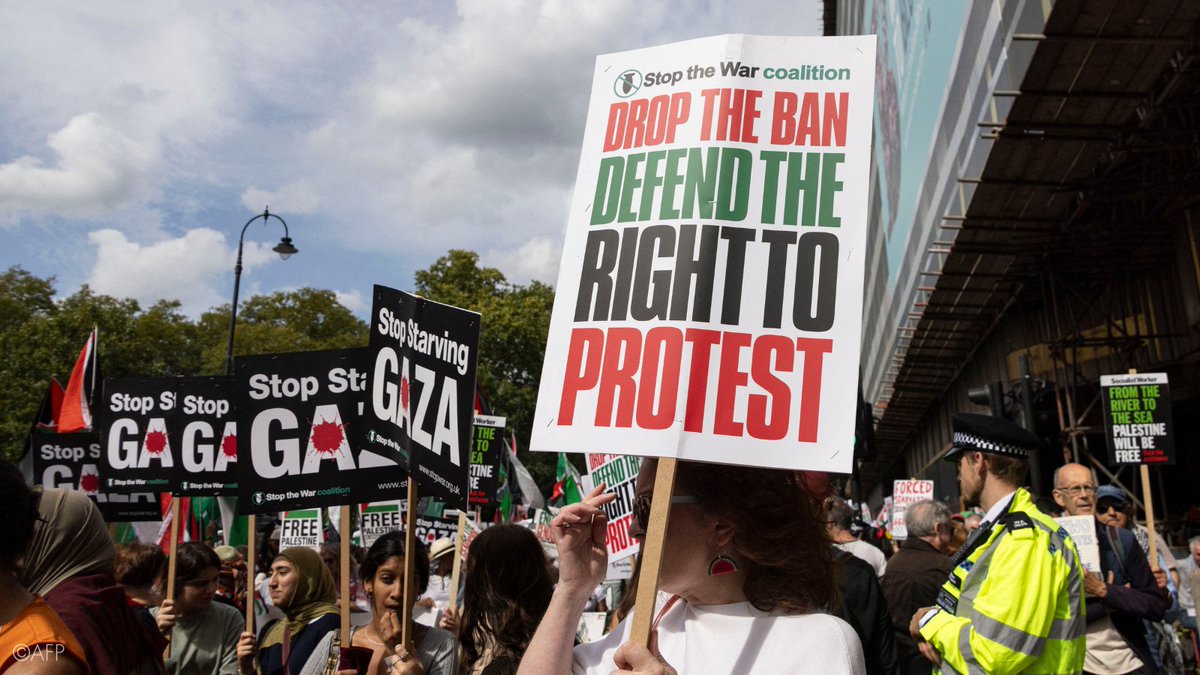
“An affront on democracy.” UN expert @Ginitastar alarmed by systemic erosion of the right to protest in the #UnitedKingdom following the adoption of restrictive legislation and political calls for a blanket ban on pro-Palestinian demonstrations.
ohchr.org/en/press-releases/…
11
75
88
13,365
InterSol retweeted

May 13
UN expert @Ginitastar today expressed alarm at the "systemic erosion of the right to protest" in the #UK, after the enactment of the UK Crime and Policing Act.
She called on the government to refrain from banning marches in the name of preventing antisemitism.
@UN_SPExperts

17
37
78
3,049
InterSol retweeted

May 13
NOW ON A MILLION VIEWS. Are you listening @Keir_Starmer?
More than 3,200 lawyers including 300 top barristers and retired judges have called on you to drop your plan to restrict the right to trial by jury.
30 organisations representing victims of violence against women and girls have written to the Justice Secretary urging him against curtailing the right to jury trials.
Trial by jury is a cornerstone of our democracy and an essential safeguard against authoritarianism. The government has no mandate to restrict it - a move which will put us on a path toward authoritarian justice.
It’s not too late for you to listen to the thousands of voices of victims, judges, barristers, other legal professionals and academics who oppose this.
Please now do the right thing and abandon this blatant act of constitutional vandalism.
@RobbieRinder @KarlTurnerMP @thebarcouncil @TheCriminalBar @Kirsty_Brimelow

🚨KEIR STARMER IS SPEARHEADING ONE OF THE MOST SHOCKING ATTACKS ON CIVIL LIBERTIES IN MODERN TIMES
The government has absolutely no mandate to do this. Labour never mentioned in its manifesto that it planned to undermine and restrict a fundamental cornerstone of our democracy - the right to trial by jury - a move which will place us on a path toward authoritarian justice.
But it’s not too late for the government to listen to the thousands of voices of victims, judges, barristers, other legal professionals and academics who oppose this blatant act of constitutional vandalism.
CONTACT YOUR MP NOW and ask them to step up and protect this cherished and precious cornerstone of our democracy
9
358
409
21,799
InterSol retweeted

(1/2) Garden Court North welcomes the Court of Appeal's ruling earlier today that the trial judge alleging that @gardencourtlaw's Rajiv Menon KC committed contempt lacks jurisdiction to refer him to the High Court for prosecution.
bbc.co.uk/news/articles/ckgp…
24
322
751
22,946