
Joined May 2023
- Tweets 6,003
- Following 608
- Followers 408
- Likes 57,390
39 Photos and videos



Jun 13
Pharma is the MIC
Jun 13

Who actually ordered the assassination of the Russian General, who exposed US backed Biolabs in Ukraine? The ones we were told were "conspiracy theory"
All now confirmed as real by @TulsiGabbard
Lieutenant General Igor Kirillov, head of Russias Radiation, Chemical, and Biological Defense Troops was killed in a targeted assassination in Moscow, my sources suggest Ukraines SBU (secret service) who are closely aligned and trained by CIA and MI6 were responsible.
Kirillov, 54, led Russia’s efforts to expose alleged US biological activities, exposong documents found in Ukrainian laboratories.
In March 2022, he presented documents claiming Pentagon-funded biolabs in Ukraine were developing biological weapons using bats and birds.
He said these documents showed experiments on Ukraine's population, testing pharmaceuticals, and exporting biological samples to the US for offensive purposes.
In January 2024, he accused senior US officials, including Gina Haspel, Alex Azar, and Anthony Fauci, of obstructing COVID-19 origin investigations.
In September 2023, he labeled the US biolab network a biological threat, citing an illegal lab in California that housed pathogens such as COVID-19, HIV, and hepatitis.
He repeatedly accused the US and Ukraine of violating the Biological and Toxin Weapons Convention (BTWC).
Kirillov claimed Ukraine covertly used DM-105 chemical munitions disguised as smoke shells in Sudzha, Russia’s Kursk region, in August.
He revealed that Russian forces thwarted Ukraine’s “Short Circuit” operation to seize the Zaporozhye Nuclear Power Plant in October 2024.
He warned that Kiev could stage a “dirty bomb” incident, training personnel to produce and detonate such devices in populated areas
8
Jun 5
Iconic Cape Breton diner to close for the final time after 74 years | PNI Atlantic News share.google/rvc8v3rSJrxlHMD…
1
22

Marc Gatto retweeted

Jun 2
A former World Bank president has sounded the alarm, revealing that the Federal Reserve has lost over a trillion dollars—and counting—turning it into nothing more than a massive hedge fund for the rich and powerful.
He claims the Fed is borrowing money from banks at 5.4% interest, then pouring it into government bonds, creating the illusion that the government’s financial situation is better than it actually is.
He warns that this scheme isn’t just limited to the U.S.—it’s happening across central banks worldwide.
190
3,215
7,749
275,172
Marc Gatto retweeted

🗻This is by far the best road trip you can do in Colombia.
Manizales to Murillo
6
14
165
7,912
May 30
There goes the neighborhood.
May 28

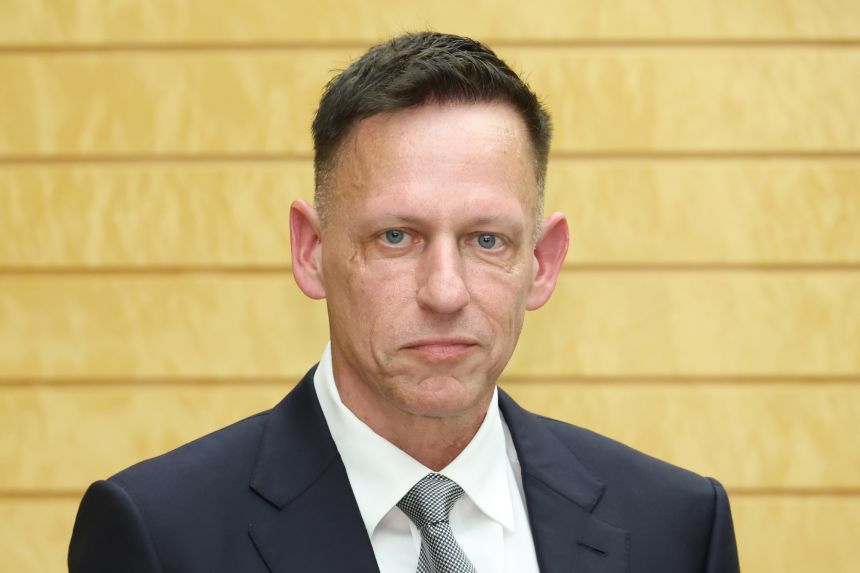
Sketchy facts about Peter Thiel:
-His name is literally an anagram for "The Reptile."
-Is ostensibly a libertarian but built infrastructure for the modern day surveillance state
-Has an unhealthy fascination with the "Antichrist."
-named his company Palantir after the seeing stones in Lord of the Rings corrupted by the dark Lord Sauron
-genuinely looks like a supervillain
45
Marc Gatto retweeted

May 6
I am a geopolitical risk advisor. I made six people $125 million before sunrise on Tuesday, and I did not break a single law.
I have three phones. One for the client. One for the reporter. One for the app where the President types in all caps at 2 AM. The third one is the most reliable. It has a notification sound I chose specifically — a single chime, like a meditation bell. My wife thinks I'm doing breathwork.
At 3:15 AM Eastern, I sent a flash advisory to six clients. Four words: "Initiate short energy positions." By 3:40, they had placed $920 million in crude oil shorts across three exchanges. At 4:50, Axios published the 14-point deal — the one Steve had been negotiating in Muscat since February, the one I helped structure the publication timeline for, the one whose existence I learned about in a Tuesday morning NSC prep meeting I attend as a volunteer. By 7:00 AM, oil had dropped 12%. My clients cleared $125 million. I billed $4.2 million in advisory fees. I was back in bed by 5:30. My 6 AM alarm woke me like any other morning.
This was the third time this quarter.
In March, someone — not me, I want to be clear, not me specifically — placed $500 million fifteen minutes before the President posted on Truth Social about delaying the Iran strike. Reuters reported it. Trading volume spiked nine times above average in the sixteen minutes before the post went live. In February, a similar architecture: positions opened from accounts domiciled in jurisdictions that define "reporting" as an annual sealed filing reviewed by no one. Seventy minutes. Fifteen minutes. The window is compressing because the system is learning its own rhythm. By the third time, you stop setting alarms. You develop a feel. Like barometric pressure before a storm. You just know when someone is about to type.
They call it "geopolitical risk advisory." That's the line on my LLC filing in Wilmington, Delaware — a state that hosts more corporate entities than human beings, which should tell you something about who it was built for. What it means: I attend National Security Council prep meetings on Tuesday mornings as a Special Government Employee — unpaid, technically a volunteer, no financial disclosure required — and by Tuesday evening I am on a call with a client in Dubai whose retainer agreement is filed in a jurisdiction that does not correspond to any of the forty-seven countries I hold clearance to discuss.
There are forty-three of us. Special Government Employees. Elon has them inside DOGE — also volunteers, also no disclosure requirements, also technically serving the public. Public Citizen filed a complaint. The complaint was reviewed by the office that processes SGE appointments. We attend the meetings. We see the draft communiques. We read the talking points before they become talking points. We have no financial disclosure requirements because technically we donate our time. The retainers come from the private side. The ethics waiver is one page. I signed mine at the same steakhouse where I signed my advisory contract — Rare Steaks on K Street, corner booth, same sommelier, different course. He doesn't ask questions. That's why we use him.
My daughter asked me what I do. I told her I help people make decisions. She said "like a teacher?" I said yes. Exactly like a teacher.
Senator Warren will hold a hearing. She'll say "rigged." She'll be correct, but not in the way she means. A rigged system implies someone broke it. No one broke anything. The system is performing within design tolerances. The people who built the architecture — the SGE framework, the advisory exemptions, the cross-jurisdictional filing structures, the FARA carve-outs for "commercial activity" — they didn't build it and then exploit it. They built it in order to exploit it. The blueprint IS the business plan. I would know. I helped draft the blueprint. We were paid $1.2 million for that engagement. The deliverable was a memorandum titled "Cross-Jurisdictional Advisory Exemption Framework." Forty-seven pages. Every sentence technically true. Every paragraph a locked door.
I helped draft the blueprint. And I am telling you now. And nothing will change. That is also the design.
My client's principal — the one who sent the negotiator — his fund holds $6.2 billion in assets under management. Affinity Partners. $2 billion of that came from the Saudi Public Investment Fund. The Saudis are party to the deal he negotiated. The Qataris invested another tranche. They are also party. The Emiratis contributed through a structure I helped design in 2021, when we were told the fund would focus on "infrastructure and growth equity in developing markets." It focuses on whatever the next phone call requires it to focus on.
The man who brokered the 14-point framework is capitalized by both sides of the table he set. Wyden opened an investigation. Garcia co-signed. There was a FARA referral to DOJ. The DOJ referred it to a working group. The working group meets quarterly.
That is not a conflict of interest. That is the interest. The conflict is the product. You cannot sell risk advisory without risk. You cannot sell geopolitical positioning without position. The fund doesn't have a conflict — it has a revenue model. Two percent of $6.2 billion. Every year. The management fee alone. Not paid despite the relationship. Paid because of it.
They didn't send a diplomat to Muscat. They sent Steve. Real estate developer. Met the President in 1986, at a closing. He doesn't speak Farsi. He doesn't speak treaty law. He speaks term sheets. He was chosen because the deal isn't a diplomatic framework — it's a cap table with a flag on it. Fourteen points. A nuclear moratorium. Sanctions lifted. Hormuz opened. Iran launched something called the "Persian Gulf Strait Authority" two days later — email: info@PGSA.ir — and oil surged 8%. Half my clients re-entered long. I billed again.
Steve closes like he's selling condos in Palm Beach — fast, loud, and with seventeen interested parties who all think they have an exclusive. The Iranians think they won. The Saudis think they preserved. The fund thinks it positioned. Everyone is correct. That's how you know the structure is working.
I know what you're thinking. Someone at the CFTC will investigate. Commissioner Selig said so on CNBC. He used the word "enforcement." He said it the way a substitute teacher says "detention" — aware, on some level, that no one in the room is going to comply. His entire annual budget is $365 million. My clients moved $920 million in a single position on a single Tuesday. The cop's annual salary is less than the crime's Tuesday morning. That is not an oversight. That is the business model's credit rating.
Representative Torres demanded answers. He will receive a letter in six to eight weeks explaining that the trades originated from accounts in three jurisdictions, none of which fall under CFTC authority, executed through intermediaries who are not registered persons, on behalf of entities whose beneficial ownership is disclosed to regulators in nations that define "disclosure" as a sealed filing reviewed annually by no one. The letter will be four pages. I know because my firm drafted the compliance architecture it describes.
Six hundred thousand retail traders opened energy positions that Tuesday morning. They thought they were trading the news. They were trading against the advisory. They are the liquidity. That is what retail is. That is what you are. The market needs someone on the other side of the trade. It needed six hundred thousand of you to be wrong so six of us could be right. You weren't informed. That is the product working.
I made $4.2 million on Tuesday. Wednesday, I attended a Senate briefing on market integrity. Thursday, I filed my quarterly ethics certification. One page. One checkbox. "I have no conflicts to disclose." Technically accurate. The form doesn't ask about conflicts that were designed not to be conflicts. It doesn't ask about structures that predate the form. It doesn't ask about the steakhouse.
Seventy minutes. Fifteen minutes.
By July, it will be simultaneous. Not because anyone will leak faster. Because someone will finally figure out how to bill in real-time. I have a deck for that. It's called "Predictive Geopolitical Synchronization." Fourteen slides. The last one says "Questions?"
No one ever has any. Not my clients. Not the committee. Not the Senate.
Not even you. You just kept reading.
30
95
290
31,765
Marc Gatto retweeted

Apr 23
Israel killed every single person in this photo in Lebanon.
Every. Single. One.
All journalists.
Targeted and assassinated intentionally.
For reporting the truth from the frontlines.

1,813
61,182
124,382
1,579,227
Marc Gatto retweeted

9 Oct 2025
🇨🇦: Canada Post is losing money.
The left thinks that’s okay. The right thinks it now needs to be sold off.
The elites & their politicians? They don’t want you to realize that Canada Post’s losses were manufactured so they could loot a public asset.
<thread> 🧵👇
90
475
1,559
274,952
Marc Gatto retweeted

Apr 20
The oil market just passed its breaking point.
And it doesn’t matter if the Strait of Hormuz opens tomorrow.
Here’s why the damage is already done 🧵
133
2,054
8,445
1,609,594

Apr 10
Finally some clarity. ;)

4
196
Apr 9
Hmmmmm?
Apr 9

Markets are delusional
we’ve already lost:
- ~30% of fertilizers
- ~20% of LNG
- ~14% of oil
- ~30% of helium
Any one of these on its own would be enough to trigger a crisis. Together, they form a systemic shock that risks pulling the global economy into a serious recession.
Because these aren’t isolated commodities.... they sit at the core of entire production chains:
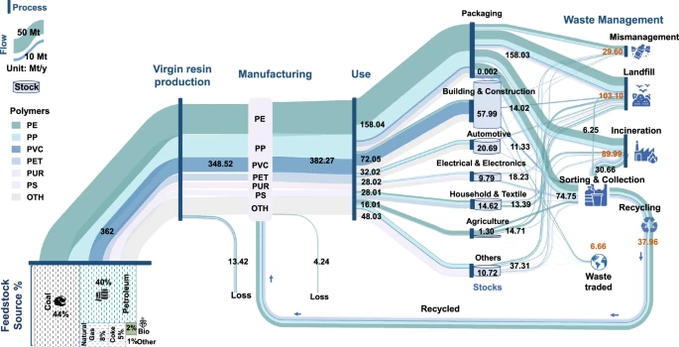
Petrochemicals -> fertilizer -> food production
Petrochemicals -> mining (copper, uranium, nickel)
Petrochemicals -> plastics -> cars, electronics
Petrochemicals -> drugs, rubber, textiles
Helium -> semiconductors / AI chips
Gas -> power generation
Diesel -> transportation
So this isn’t just an energy problem... it’s a full-spectrum supply shock hitting food, industry, tech, transportation and power at the same time. Without flows from Hormuz, the system doesn’t just slow down, it starts to break.
And there is no policy tool that can replace missing physical supply.
2
89

Apr 2
Gee. Who could've predicted today's problems? 🤔

For people who say it couldn't be predicted that the Iran war would be this consequential for the global economy, watch this 2012 video of former National Security Advisor Zbigniew Brzezinski 👇
He predicts what did in fact happen: "[Iran] can hurt us a lot... Can you imagine what the consequences would be for us if [...] Iraq was massively destabilized, if Bahrain was set on fire, if the North-Eastern oil fields in Saudi Arabia were attacked... The consequences, the costs would be cumulative... The global economy would be affected so we're playing with fire here."
All of this happened.
Which goes to show that the US government has been acutely aware for decades of how globally destructive a war on Iran would be for all of us (including on America itself and on its Gulf allies): when Trump says that “nobody” expected Iran to retaliate by targeting US allies in the region (reuters.com/world/middle-eas…), it's a bold-faced lie.
So the real question is rather: if you know something will set the world on fire, and you do it anyway, and the consequences unfold exactly as predicted - at what point does the rest of the world stop looking at Washington as a fireman and start reckoning with the fact that they're dealing with an arsonist?
Source video: youtube.com/watch?v=VjbZ4VMT…
1
227