
Joined March 2026
- Tweets 127
- Following 33
- Followers 12
- Likes 468
2 Photos and videos
IntrepidSoul retweeted

Jun 2
I am the Minister of Strategic Investment for the Republic of Albania.
People ask why I signed the island over before there was a business plan. I tell them this is how a small country gets chosen.
The daughter swam to it. This is true. She swam out from the yacht, touched the rock, and swam back, and by the time her towel was dry the matter was, in the parlance of my ministry, under active review. We do not require a survey when a principal has already conducted one in person.
For fifty years we were the place that hid. Enver poured three thousand bunkers into that one rock so we could vanish from the earth and outlast an invasion that never came. Now the son-in-law of the American president wants a spa where we kept the submarines, and you want me to wait for a feasibility study?
The feasibility study was written by a firm in Tirana. I will not tell you who registered that firm last spring. I will only tell you that it found the project feasible.
Strategic investor status is a beautiful instrument. It makes the ordinary rules a courtesy, and we have chosen to extend that courtesy to a man whose fund carries two billion dollars from Riyadh, money his own advisers flagged as too vast for someone so green and burdened with fees too steep for someone so unproven. They wired it regardless. Abu Dhabi added to it. Doha added more. The only due diligence anyone ran was on the surname, and the name came back clean.
The park is protected, yes. It was guarded from the world like a relic under glass. Now the world pays four thousand a night to step inside the case, and that is the superior protection. The kind that wires.
My cousin handles the catering. My brother-in-law owns the sole firm on this coast that pours concrete to specification, and these days the specification is simply whatever he pours. Call it nepotism if you like. I call it keeping the value at home. The Americans have a tidier phrase in their glossy reports. They call it local content. I possess an enormous quantity of local content. Everyone in this story is, you understand, extremely local.
The Americans adore the bunkers. The gas masks they love most of all, the genuine ones, Soviet, still scattered in the weeds where the conscripts dropped them and ran. The resort presents one to each guest at check-in. I assured the developers it was tasteful, a tribute. I neglected to mention that my nephew walks the field at dawn and sells the masks back to the resort at nine euros apiece. Local content.
SPAK opened a file on the approvals. A committee of the United States Congress opened a second. Let them both read. An indictment is merely a nation taking itself seriously, and seriousness is a luxury we can finally afford, because we have become a destination. No one audits a place that no one wants.
There was a woman with a map of the seal caves. The breeding caves, she kept repeating, as though I had never studied the map myself. She attended three hearings. She missed the fourth. I hear she found other work, somewhere inland, somewhere without a coastline to defend. The seals will adapt. They always adapt. In thirty years I have never once watched a seal lodge a complaint, and I have watched every other creature in this republic do nothing but.
The Serbians attempted their own version. The Belgrade army headquarters, the one NATO flattened in 1999, a protected war monument until a quiet little law unprotected it, and the same heir meant to raise a hotel from the wreckage. It died last year in a scandal. I rang my counterpart to console him, and the lesson I carried away from that call was simple: the only difference between corruption and investment is whether the doors ever open. His stayed shut. Mine will swing wide.
And then a young man from the fund told me, over a long dinner, that Sazan is the pilot.
He is a real estate person at heart, he said, just as the son-in-law is one. It is all about location. Had I ever reckoned how much breathtaking land on this earth simply idles there, burdened with history, crowded with people, waiting for the right eye to see what it might become? He tilted his phone toward me. White towers. A marina. A long bright beach with not a single soul upon it. Where is this place, I asked.
Gaza, he said. After.
After what, I asked, and he only repeated the word, after, the way my own ministry murmurs under active review, and he showed me the next slide, which was the same beach with the people still on it, and that slide was titled Before, as if a people were a phase a property passes through.
He told me Sazan settles the argument. A coastline can be cleared of its history and sold back at four thousand a night, and the world will book it for an anniversary. Gaza is merely the bigger lot. The son-in-law has said the waterfront is very valuable. He has sworn there is no Plan B. Do you know what a man means when he swears he has no Plan B? He means Plan A is already pouring concrete.
That was the moment I understood what I am. My island is not the destination. My island is the showroom. Sazan is the tidy little model you walk the buyer through before you drive him to the parcel that still has families asleep in it. We are the demonstration unit. We validate the concept. We prove that a place raised so a frightened people might outlast the end of the world can be photographed, priced, and handed to the very people who schedule the endings.
My grandfather poured a bunker on that island with his own hands so that we would survive being forgotten. He braced that door shut against the whole of the earth. I signed one page, in good morning light, so that we would never be forgotten again. I am the man who opened the door. I want to be precise about the distinction, because people keep mistaking the two of us.
He kept everyone out so we could live.
I let everyone in so I could.
We open for the summer in June. Nearly sold out. Even the bunker. They tell me the next site will be larger, and warmer, and that the building was never the difficult part.
The difficult part is always who is standing on the land when you arrive.
81
148
403
59,716


IntrepidSoul retweeted

Those are deep
Told ya
1,093
4,245
19,124
1,607,170
IntrepidSoul retweeted
May 20
I represent 761,000 people. On Tuesday, three billionaires spent $32 million to destroy a colleague who disagreed with them on one line item. I have not disagreed on anything in fourteen months. I want to tell you about a word I lost.
The word was "no."
I don't mean that rhetorically. I mean I cannot recall the last time I pressed the red button in the House chamber. I looked it up this morning. Had to look it up because I couldn't remember it unprompted. H.R. 4217. Fourteen months ago. It's in the Congressional Record like an artifact from a man who no longer exists.
Thomas Massie lost his primary Tuesday night. Most expensive House primary in American history. $32 million total. He voted with the President 84 to 90 percent of the time. His crime was the remaining ten. One line item. One appropriation. One "no."
Cost of that no: $32 million from donors who have never set foot in Kentucky. The Secretary of Defense in a sport coat calling him a coward at a rally, the first time a sitting Defense Secretary has appeared at a congressional primary in modern American history. An AI-generated deepfake depicting him in a hotel room with two Democratic congresswomen, pornographic, funded by a Super PAC, running in heavy rotation in his district during the evening news. Stephen Miller calling his thirteen years of fiscal conservatism "siding with Democrats to defund ICE." The President calling him a bum, a sleazebag, the worst Republican in history. Three Truth Social posts in ninety minutes.
All of it for the word "no." One syllable. Two letters. $32 million.
I remember the first time I said it.
January 2003. My first term. An omnibus appropriations bill. $397 billion. I'd campaigned on fiscal responsibility. I believed what I'd said. I walked from my new office in Longworth to the chamber floor and I counted the carpet squares. I remember that. Counting. Forty-seven squares from the elevator to the door. My hands were shaking. Not from fear. From something else. I didn't have a word for it then either, but it was the opposite of what I feel now. I pressed the red button and my chest filled with something warm. Like my body was confirming a decision my brain had already made. Like the button and the belief were the same circuit.
Twenty-four years ago. I was that man. The man who shook pressing a button because the button meant something. Because pressing it was a sentence you were saying out loud to 761,000 people: I disagree and here is why.
The word was "conscience."
That's what I called it in 2003. By 2014, I called it "the Tea Party mandate." By 2019, "principled opposition." By 2022, "pragmatic concerns." By 2024, I stopped calling it anything. The word narrowed each year. Like a hallway getting shorter. I didn't notice when I stopped walking. You don't notice a word leaving your vocabulary. You reach for it one morning and find empty space where the concept was.
Massie held the word. Thirteen years. Every omnibus. Every continuing resolution. Every debt ceiling increase. Every foreign aid package. He pressed the red button and his chest filled with whatever mine used to fill with in 2003 and he called it the same thing I used to call it and he meant it the way I used to mean it.
He was replaced by a man whose family operates a 1,200-acre agritourism birthday party venue in Shelbyville. Petting zoo. Corn maze. Hayrides. U-pick strawberries at $3.99 a pound. The soybeans are a tax classification. The "Navy SEAL hero" added a fourth Bronze Star to his biography the month he became a candidate. The "Trump loyalist" left the Republican Party in 2016 because of Trump and came back in 2021 after Trump left office.
I don't say this as mockery. I say it as a specification sheet. You don't want a replacement congressman with an MIT engineering degree and patents in haptic robotics. Patents indicate thinking. Thinking introduces variance. Variance is risk. You want a compliance product. Pre-tested messaging. Zero ideological fingerprints. $14 million in someone else's convictions loaded like firmware. The spec sheet works. The corn maze doesn't introduce FARA legislation. The corn maze doesn't file amendments five days before its own execution. The corn maze votes green. Every time. That's the spec.
Nobody in Congress said a word about the deepfake. I need you to sit with that. A foreign-interest lobby ran AI-generated sexual imagery of a sitting United States congressman, pornographic, funded by three billionaires who have never visited his district, distributed during the evening news, targeted at elderly voters. And 434 of his colleagues watched it happen and said nothing.
The President mocked his dead wife. I need you to sit with that too. Massie's first wife Rhonda died in 2024. His high school sweetheart. They met at MIT. They built the off-grid house together. She died. He remarried in 2025. The President of the United States posted: "His wife will soon find out that she's stuck with a LOSER!" A sitting president. Mocking a widow's new marriage. To a man whose actual crime is voting against a spending bill. And 434 colleagues absorbed that too. In silence. Not one statement. Not one objection. Not one "this is beneath the office." The silence held because the silence is the product.
I said nothing. About the deepfake. About the dead wife. About any of it. Saying something is a vote. I don't cast those anymore.
Wednesday morning I walked from Rayburn to the chamber. The bells rang. I counted the carpet squares again. Forty-seven. Same as 2003. My hands were not shaking. Nothing was warm. The hallway was quiet. Nobody stopped me. Nobody whipped me. Nobody needed to. The system no longer requires operators. Kentucky was the last manual input. From Wednesday forward the mechanism is self-enforcing. A thermostat. The temperature never deviates because the furnace already knows.
I inserted my voting card. I need to be precise about what happened next. My thumb moved to the green button before I finished reading the title of the bill. The thumb knew before the brain. The brain is no longer consulted. It is a vestigial organ in this process. I vote the way you unlock your phone. Muscle memory. The decision was made fourteen months ago and everything since is an echo.
The edge of my card is wearing unevenly. The green side is polished smooth from repetition. The red side still has the factory texture. Sharp. Untouched. I held the card up to the light Wednesday morning and looked at it. The physical evidence of what I've become, embossed in plastic. A machine that presses one button.
In March I drafted a Dear Colleague letter opposing an appropriations rider. Three paragraphs. Fiscal responsibility. Deficit language I've used for twenty-four years. The same language every Republican in Congress used from 2009 to 2017. The letter is in my drafts folder. Between a constituent reply I answered and a fundraising schedule I followed. The two things I still do. Answer and follow. I don't initiate anymore. Initiation is a vote.
Thursday a second-term member stopped me outside the cloakroom. He asked how you know when a bill is worth opposing. He's twenty-nine. He's been here fourteen months. Same duration as my silence. He has never seen a "no" vote from anyone in leadership. He was asking how dissent works the way you'd ask a museum docent how a rotary phone works. I opened my mouth. Nothing came out. Not because I was being careful. Because I genuinely did not have an answer. The knowledge is gone. Not suppressed. Uninstalled. The way a language dies when the last native speaker dies. I am not the last speaker. The last speaker was removed in Kentucky on Tuesday.
A colleague drafted a co-sponsorship for Massie's AIPAC Act on Tuesday afternoon. FARA reform. He deleted it Wednesday morning. Nobody called him. Nobody threatened him. He deleted it the way you delete an unsent text at 2 AM. The self-preservation is automated now. You don't need to be threatened. You threaten yourself. The overhead is zero.
I want to be honest about something I noticed Thursday morning.
I read the appropriations summary. The one I would have opposed in 2003. The one Massie opposed on Tuesday and was destroyed for. I read it at my desk at 6:40 AM with coffee. And I agreed with it. Not performatively. Not as survival. I read the summary and thought: this makes sense. This is a reasonable allocation. I agreed with the spending.
And then I stopped. Because I couldn't tell when I started believing that.
Was it before Kentucky or after? Was it before fourteen months of green buttons or after? Did I change my mind, or did my mind change itself the way a river changes course, slowly, through erosion, until one morning the water is somewhere else and you can't find the old bed? Is this compliance or is this my position? Can I locate the seam between what I choose and what I've been trained to choose?
I sat at my desk for a long time. The coffee went cold. I couldn't find the seam. It's gone. The compliance and the belief have merged into one thing and I cannot take them apart. I think the spending is correct. I think Massie was naive. And I don't know if I think that or if $32 million taught me to think that and the teaching was so gradual that I experienced it as my own conclusion.
That is what I want to tell you. Not that I'm afraid. Not that I'm coerced. That I can no longer tell. The word "no" didn't just leave my voting record. It left my mind. The button and the belief are the same circuit again. Same as 2003. Except in 2003 the circuit was mine.
Sometimes at night I think about—
No. I sleep fine. I told you. I sleep fine.
Tuesday night I watched the concession. Massie stood in front of his supporters — people who drove hours, who knocked doors, who believed the word still existed — and he said this: "If the legislative branch always votes with the president, we do have a king. But if lawmakers follow the Constitution, we have a republic."
The crowd cheered. They chanted "2028!" They chanted "President!" They still have the word. It lives in that room in Kentucky, in the throats of people who drove to a concession speech on a Tuesday night because they still believe dissent is a right and not a luxury good priced at $32 million.
I heard the quote. I sat in my office in Rayburn and I heard it and I knew it was true. If the legislative branch always votes with the president, we have a king. The next morning I walked forty-seven carpet squares and voted with the president. I knew what I was making. I made it anyway. The quote is true. I know the quote is true. The quote costs $32 million to act on and I don't have $32 million. So the quote is true and I am making a king and I am doing it with a green button every time the bells ring and I will do it tomorrow and I will do it next week and the truth of the quote changes nothing because truth doesn't have a budget.
Truth has a concession speech.
He lost by 4.4 points. $32 million for 4.4 points. $7.27 million per percentage point. A few thousand voters in a district of 478,000. That's how thin the margin was between a republic and a king. The width of a streaming subscription. The thickness of a bumper sticker. The weight of the word "no" when three billionaires are standing on it.
The word was "accountability."
The President ran on releasing the Epstein files. I was there. I heard the applause lines. My constituents want those files. They write me. They email. They stop me at diners. Thomas Massie confronted the Attorney General in a hearing room. He read the names from the unsealed documents. He called the redactions a cover-up to her face. She cited the Dow Jones Industrial Average. Then Massie posted a public proof-of-life. "I am not suicidal. My brakes work. I practice good trigger discipline." A United States congressman certifying his own continued existence because he asked one question about one file.
That was the cost of asking. Before Kentucky. Before $32 million. Before the price list was published.
Nobody will ask again. I won't ask. The files will remain redacted. Not because they're classified. Because the last man who demanded them in a hearing was made into a price tag, and the price tag is now mounted on the wall of every congressional office in the building.
The President ran on no more wars. Massie voted against every foreign military authorization for thirteen years. Every one. He took Article I, Section 8 literally. Congress declares war. Not the President. The Constitution is plain text. He read the plain text. He was the only Republican still voting no on blank-check authorizations by 2024.
He is gone now. The next authorization will pass without a recorded vote. Because recorded votes are accountable votes and accountable votes cost $32 million.
"Release the files." "No more wars." "Drain the swamp." Campaign promises. Bumper stickers. Applause lines. Every single one required one thing from Congress. The word "no." No to redactions. No to cover-ups. No to unauthorized war. No to the budget that funds the swamp.
The man who said "no" is gone. The voters who cheered for accountability voted for the candidate endorsed by the machine that destroyed the last accountable man in the building. I don't say this to blame them. I say this because both things are true simultaneously. The voters wanted accountability. The donors wanted compliance. Compliance has a budget. Accountability has a bumper sticker.
$32 million divided by 478,000 voters in Kentucky's 4th district. That's $66.95 per constituent. Sixty-seven dollars per person to override an entire district's will. Less than a streaming subscription. Three billionaires from Manhattan paid the dinner check for 478,000 people and ordered for them.
There is a woman in my district. Peggy. She has been to every town hall I've held since 2003. Twenty-four years. She brings a yellow legal pad. She writes down my answers in blue ink. She told me once, in 2011, outside a VFW hall, that she keeps all the pads in a box in her closet. A box of my positions. Dated. Transcribed. Fifteen years of promises in her handwriting.
I haven't held a town hall in six months. I don't know how to stand in front of Peggy with her legal pad and explain that the box in her closet is an archive of a dead language. That the man who said those things doesn't exist anymore. That somewhere between 2003 and this Wednesday his vocabulary was narrowed and his button was automated and his chest stopped filling with warmth and he started sleeping fine and agreeing with the spending and he doesn't remember when any of it happened.
I don't know what Peggy would write on her pad now. There's nothing to transcribe. I don't say things anymore. I press a button. The button is green. It has been green for fourteen months.
Liz Cheney lost by thirty-seven points. Bill Cassidy finished third. Third. In his own primary. For a vote five years ago. Ten Republicans voted to impeach. Eight are gone. Elon Musk promised to support Massie. "I will." Two words. Ten months of silence. Zero dollars. The world's richest man decided one endorsement was priced too high.
C-SPAN recorded Thursday's vote. Green across the board. Unanimous. Historians will see consensus. They will not see 434 people who watched Kentucky and did the math. Consensus and compliance are identical on camera. That is not a flaw. That is the product.
You elected me twelve times. You knocked on doors. You put signs in your yard. You trusted me to say "no" when no was the right answer. Here is what your trust buys in 2026.
A man who walks forty-seven carpet squares and feels nothing. Who presses green before he reads the title. Whose card wears unevenly. Who drafted a letter and will never send it. Who watched AI-generated pornography of a colleague funded by three billionaires and said nothing. Who did the math in eleven minutes and slept fine. Who lost a word and then lost the word for losing it. Who agreed with the spending Thursday morning and cannot tell you whether he chose to agree or was trained to agree and knows the difference no longer matters.
Your congressman is loyal now. Your files are sealed. Your wars are unvoted. Your swamp is funded. The man who was doing what your bumper sticker says is in Kentucky now. Powerless. Replaced by a corn maze with a compliance guarantee.
I'm loyal. That's the word. The only one left.
The word was—
216
547
1,867
81,379
IntrepidSoul retweeted

This is disappointing.
JD Vance attacks Thomas Massie, claiming he always votes against “the party” and he did it at a Turning Point event of all places.
1. Charlie Kirk supported Thomas Massie and would have been opposed to Trump primarying him with Israel funding.
2. Massie votes against “the party” when the party is trying to pass BAD America Last legislation like funding foreign wars, protecting poisons like glyphosate and covid vaccines, violating our second amendment, hurting small farmers and small businesses and creators with patents, and empowering the surveillance state.
3. Thomas Massie is not the problem.
“The Party” is the problem.
And demanding loyalty to “the party” is the most repulsive cult behavior we’ve ever seen in American politics. x.com/21WIRE/status/20561840…
2,896
4,678
29,588
648,080
IntrepidSoul retweeted
OMG Hahahahhahahahahahhahahahahahhahahahahahhahahahaha infinity
May 13

The T1 Phone has arrived!! Those who pre-ordered the T1 Phone will be receiving an update email. Phones start shipping this week!!!
Community note
Video is AI, US flag has 11 then 9 stripes back texture is inconsistent.
Based on the specs the T1 is a rehoused T-Mobile REVVL 7 Pro 5G (a 2024 model, which retails on Amazon $126). Wingtech/Luxshare makes it in Jiaxing, Wuxi, or Kunming China. It’s not American made:
pnj.com/story/news/202…
huffpost.com/entry/trump-mo…
gizchina.com/phones/the-tru…
1,498
2,194
41,403
6,889,811
IntrepidSoul retweeted

May 8
Thomas Massie just declared: “This government is under siege.”
And he exposed Susie Wiles and Pam Bondi for taking “millions of dollars from Bayer.”
“All three branches of this government are under siege by lobbyists and lawyers from a German company named Bayer.”
“They spent over $9 million lobbying … so that they don’t have to be liable for any damages their herbicide Roundup causes.”
“The Constitution guarantees people a trial if they’ve been harmed.”
“Why are we contemplating going against the Constitution?”
“The Attorney General has opined favorably for this German company in front of the Supreme Court about getting rid of any liability that they should have for any damages.”
“By the way, the President’s Chief of Staff and the President’s Attorney General worked for one of the biggest lobbying firms that’s received millions of dollars from Bayer.”
“Maybe that’s why we’ve seen an executive order that says that the production of this chemical from this German company is a national defense priority.”
“And we know why they’re doing that.”
“It’s to keep them from having any liability.”
“This is wrong.”
“We shouldn’t succumb to the lobbyists, not in the executive branch, not in the judicial branch, and certainly not here in Congress.”
331
6,696
18,142
207,988
IntrepidSoul retweeted

Beautiful weekend for a LIV golf tournament at Trump National in VA. Sure would be a shame if it were ruined by this ad running on heavy rotation on the Golf Channel in the club house and targeting every phone in the vicinity. Oh. Wait. 😈🏴☠️
242
5,623
15,377
700,420
IntrepidSoul retweeted

Apr 30
This should be a bigger story.
Donald Trump launched military strikes on Iran, setting off a chain reaction that left Gulf countries scrambling for drone defense. Now, his sons are stepping in to sell those same countries the very drones the conflict made necessary.
The president starts a war, the war creates demand, his own family moves in to profit, and foreign governments, desperate for American military backing, feel enormous pressure to buy. This is the first family in American history to profit from a war their father started without Congress’s consent.
That is a level of corruption this country has never seen before. The American people deserve to know who exactly their government is working for, because right now it is not working for you.
Welcome to Episode 14 of the Corruption Chronicles.
296
3,690
5,619
61,203
IntrepidSoul retweeted
Apr 30
I am the person at Hut 8 who designed the American Bitcoin partnership.
The structure is elegant. We gave the Trump family 20% of a publicly traded mining company. They contributed zero capital. Zero infrastructure. Zero employees. Zero operational experience. Zero risk exposure.
They contributed a name. Per our partnership agreement, that is consideration. Twenty percent of our equity for access to the most valuable retail distribution channel in American finance.
"It has to have 'America,'" Eric said in our first meeting. "And it has to have 'Bitcoin.'" He said this twice. Both times he pointed at the whiteboard. There was nothing else on the whiteboard. I realized then that he understood the product better than I did. The product is not bitcoin. The product is the belief.
The entire business model. Two words and a surname. I wrote the term sheet on one page. The lawyers billed for forty. We call that alignment of incentives. Forty pages means they believed in the durability of the arrangement.
We mine bitcoin at an all-in cost of approximately $90,000 per coin. Hash rate, power purchase agreements, ASIC depreciation, facility lease, headcount, Coinbase Prime interest — $90,000. Bitcoin trades at $77,000. Every coin we mine loses $13,000. Negative unit economics on every block reward. Eric tells investors we mine at $57,000. He strips out depreciation, SG&A, and the debt service. I asked him once if he understood what depreciation meant. He said it means when things go down. I said yes. He said: "But the stock goes up." I said yes.
His only contractual obligation. Salesmanship. Per the partnership agreement, salesmanship is Eric's sole KPI. Technically, he is a fiduciary to shareholders. On paper, his vesting is tied to total comp benchmarks. We run the rigs. He runs the ticker. Asset-light.
The company at peak reached a $13.2 billion valuation.
Two employees. That is the entire headcount.
One is our CEO Mike Ho, who is simultaneously Hut 8's Chief Strategy Officer. He reports to us at Hut 8 on Monday mornings and reports to American Bitcoin shareholders on Tuesday mornings. Dual-reporting structure. Very efficient. The other employee manages Eric's media calendar. $6.6 billion per headcount. We call this capital efficiency.
70% of our bitcoin did not come from mining.
It came from selling stock.
Retail investors purchase American Bitcoin shares at 50 times book value because the name contains "America" and "Bitcoin" and "Trump" is in the filing and they believe, with the quiet religious certainty of people who have never read a balance sheet in their lives, that a company named American Bitcoin is underwritten by something more substantial than two words and a surname. We take their cash and buy bitcoin on Coinbase at spot. Lodge it on the balance sheet. Call ourselves a mining company. We do mine. At a loss. Technically, the earnings are negative per our Q4 filing. The margin lives in the distance between what the stock costs them and what the bitcoin costs us.
The stock is down 92% from peak. Investors have lost approximately $500 million. One of them posted on the shareholder subreddit that he moved his daughter's 529 into American Bitcoin at $14. It trades under $2. He said he believed in the mission. That means he believed in the name. The name performed exactly as designed. Eric's net worth went from $190 million to $280 million. Asset-light.
We pledged 3,090 bitcoin as collateral against a Coinbase Prime custody loan. We have mined 1,800. The LTV ratio is inverted. If bitcoin compresses or the loan accelerates, every coin mined since inception could be forfeit by August 2027. All of it. Gone. Liquidation event. I explained this in a memo to Eric. Bullet points. Large font. He asked if the stock could go up before August. I said probably. He said that was fine. He said he'd handle it. Salesmanship.
Eric told the press he launched American Bitcoin because banks were "debanking" the Trump family. I checked. JPMorgan refinanced $700 million in Trump Organization debt during the identical period. But debanking is better salesmanship than refinancing. The narrative inflates the stock price. The stock price generates the bitcoin. The bitcoin secures the loan. The loan generates cash. Every link in the chain is a product I built or a story Eric told. Asset-light.
I orchestrated the celebrity endorsements. Tyler Winklevoss. Anthony Scaramucci. Grant Cardone. We call this pipeline development. Each broadcast the stock to their audiences during the run-up. The stock collapsed afterward. The celebrities did not lose money. Their audiences lost money. I never mentioned that we hemorrhage $13,000 per coin mined. I told them it was asset-light. They understood immediately. They are also asset-light.
Eric cannot legally serve as a corporate officer in the state of New York. A judge barred him for two years. Civil fraud. So his title is not CEO. Not officer. Not executive. His contractual role is salesmanship. He cannot manage the company. He can sell it. One distinction. $90 million in personal net worth gained. Asset-light.
Our CEO lives in the UAE. He held discussions with ADQ and TAQA, Abu Dhabi's sovereign wealth apparatus. The same sovereign apparatus that paid $500 million for 49% of World Liberty Financial, the family's other crypto operation. This is the same Abu Dhabi whose semiconductor imports the administration greenlit over national security objections. I did not design World Liberty Financial. I designed the mining subsidiary that feeds into it. Separate projects. Complementary revenue streams. Eric runs salesmanship for both. I admire the portfolio diversification.
I gave Eric 20% of a company for free, a company with real miners and real facilities and real electricity bills that I built over seven years in Alberta and Texas and Ontario, and in exchange he gave me access to every American who hears "America" and "Bitcoin" in the same sentence and reaches for their brokerage app without checking whether the company mines at a profit or at a loss or at all.
They drove the stock to a $13.2 billion market capitalization. We bought bitcoin with the proceeds. They lost $500 million. We kept the bitcoin. Eric kept $90 million. I kept the apparatus that manufactures both. Everybody got what they paid for.
Asset-light means we carry nothing. Not the miners. Not the facilities. Not the risk. Not the losses.
The investors carry those.
We carry the bitcoin.
Asset-light.
71
105
423
105,660

Here is list of things that have gone silent or missing with this administration.
1. The rescued pilot from Iran.
2. $63 million in legal settlement funds from major media and tech companies for the "Trump Presidential Library."
3. Any clear motive or subsequent press briefings on the security failings of the secret service at Butler, PA.
4. Any public and legally justifiable rationale for the unprecedented transfer of Ghislaine Maxwell to a minimum security prison.
5. Any credible medical report or images with visible damage to Trump's ear.
6. Millions of documents from the Epstein Files.
7. Flashback: all relevant texts and communications from the Secret Service on January 6th, 2021
What else?
230
3,299
7,854
103,555
IntrepidSoul retweeted

Apr 23
Last night was the biggest disaster in the history of Tesla.
Let me walk you through what actually happened on that earnings call, because the headlines are doing you a disservice:
Elon Musk got on the call and admitted (his words) that Hardware 3 "simply does not have the capability to achieve unsupervised FSD."
He said he wished it were otherwise. He said the memory bandwidth is one-eighth of what Hardware 4 has. And that's the end of the conversation.
Approximately 4 million Tesla vehicles on the road right now have Hardware 3. Many of those owners paid $8,000 to $15,000 for Full Self-Driving capability based on Musk's repeated promises (going back to 2016) that the hardware was sufficient for full autonomy. As recently as 2022, Musk was publicly assuring owners that HW3 had the processing power to get it done.
BUT IT DIDN'T
Those promises are now officially broken.
The solution is a "discounted trade-in" toward a new car with Hardware 4.
Not a refund or a free upgrade...
A discount on buying ANOTHER Tesla.
Investor Ross Gerber said it too - all HW3 owners got screwed, and with roughly 285,000 FSD purchasers affected, the potential liability runs into the BILLIONS.
But that's not even the worst part.
Musk was asked if the current FSD v14.3 was ready for unsupervised deployment. He said yes. Then immediately walked it back and admitted Tesla has "major architectural improvements" in the pipeline that would significantly improve safety.
What he really means: the software isn't SAFE ENOUGH to deploy without a human watching. Full unsupervised FSD for consumer cars is pushed to Q4 2026. At the earliest... Maybe.
How many times has this deadline been pushed? I've lost count. And trust me, I've seen a lot of broken promises. But this one takes the cake.
Now let's talk about the numbers everyone is celebrating:
Tesla reported $22.4 billion in revenue and $0.41 in non-GAAP earnings. A "double beat." The stock popped 4% after hours. Victory, right?
WRONG
Dig into the actual filing:
The number one driver of operating income improvement wasn't cost reductions, wasn't volume growth, wasn't FSD revenue. It was - and Tesla listed this FIRST in their own shareholder letter - "one-time benefits related to warranty and tariffs."
They released warranty reserves. They booked tariff refund windfalls. They stretched supplier payments by 10 days. They took on billions in new debt. Then they presented everything through non-GAAP metrics that strip out over $1 billion in stock-based compensation.
GAAP net income was $477 million on $22.4 billion in revenue. That's a 2.1% net margin. On a $1.4 trillion market cap.
Let me put that in perspective:
3.75 billion shares outstanding. Annualize the Q1 GAAP profit and you get roughly $1.9 billion. That's a trailing P/E ratio north of 700. Use the adjusted number - strip out stock comp, which is a REAL cost to shareholders through dilution - and you're still at around 250x earnings.
All of this is extremely bad, but I didn't even talk about the CAPEX BOMB yet...
3 months ago, Tesla guided to "over $20 billion" in 2026 capital expenditure. Last night they raised it to over $25 billion. A $5 billion increase in a single quarter. That's 3x their historical annual capex run rate - $8.5 billion in 2025, $11.3 billion in 2024. The CFO confirmed on the call that Tesla expects NEGATIVE free cash flow for the rest of the year.
So you have a company generating roughly $6 billion in annual free cash flow on a good year, and they're about to spend $25 billion.
The math doesn't work.
They will almost certainly need to issue equity. Which means dilution. Which means the $1.9 billion in annual earnings gets spread across even MORE shares.
The core auto business is literally deteriorating in real time:
Tesla delivered 358,000 vehicles in Q1 (missed estimates again).
They produced 408,000. That's 50,000 cars sitting on lots that nobody bought.
Inventory days jumped from 10 to 27 in just a few quarters. California (their most important US market) saw registrations crash 24% year over year.
Their market share in the state fell from 9.2% to 7.7%. That's on top of a Q1 2025 that was ALREADY weak from Model Y retooling. They're declining off a decline.
And here's what really kills the bull case...
The entire valuation rests on robotaxis, Optimus robots, and autonomy. So let's put numbers on it:
Waymo - the actual leader in autonomous driving with 15 million completed rides in 2025 alone, over 127 million autonomous miles driven, operating commercially across 6 US cities with plans to expand to 20 more - just raised $16 billion at a $126 billion valuation.
That's the market's verdict on what the LEADING robotaxi company is worth. $126 billion.
And Waymo is YEARS ahead of Tesla in actual deployment.
Tesla has 3.75 billion shares outstanding. So even if you assign $126 billion in robotaxi value (giving Tesla full credit for matching Waymo despite being nowhere close) that's $33 a share. Add the auto business at generous auto-industry multiples, maybe $20 a share. Throw in energy storage and services, $10-15.
Sum of the parts gets you to roughly $65-70 a share if you're feeling generous. Maybe $50 if you're not.
The stock is $387.
So what exactly are you paying for?
You're paying for a STORY. You're paying for PROMISES that keep getting pushed back, technology that keeps falling short, and a business plan that requires spending $25 billion a year while the core product sells fewer units at declining margins in a market where California sales just fell 24% and the federal EV tax credit is gone.
I managed the number one mutual fund in America. I founded two billion-dollar hedge funds. I've been doing this since 1981.
And I am telling you:
Tesla at $387 is one of the most egregious mispricings I have seen in my entire career.
THE CRASH WILL BE EPIC
1,184
2,557
10,386
1,220,001
IntrepidSoul retweeted

Apr 14
Epstein Queen - New LEGO movie
166
3,182
9,277
199,023
IntrepidSoul retweeted

Apr 12
Concerning Social Security payments, my contributions were made for 40 years on every salary I received. Those jobs may not have always been the work I wanted to be doing at the time, BUT I always had a job. The Social Security check is now (or soon will be) referred to as a "Federal Benefit Payment?" I'll be part of the one percent to forward this.
I am forwarding it because it touches a nerve in me, and I hope it will in you. Please keep passing it on until everyone in our country has read it. The government is now referring to our Social Security checks as a "Federal Benefit Payment." This isn't a benefit. It is our money paid out of our earned income! Not only did we all contribute to Social Security but our employers did too. It totaled 15% of our income before taxes.
If you averaged $30K per year over your working life, that's close to $180,000 invested in Social Security. If you calculate the future value of your monthly investment in social security ($375/month, including both you and your employers contributions) at a meager 1% interest rate compounded monthly, after 40 years of working you'd have more than $1.3 million dollars saved! This is your personal investment. Upon retirement, if you took out only 3% per year, you'd receive $39,318 per year, or $3,277 per month.
That's almost three times more than today's average Social Security benefit of $1,230 per month, according to the Social Security Administration. (Google it – it’s a fact).
And your retirement fund would last more than 33 years (until you're 98 if you retire at age 65)! I can only imagine how much better most average-income people could live in retirement if our government had just invested our money in low-risk interest-earning accounts.
Instead, the folks in Washington pulled off a bigger "Ponzi scheme" than Bernie Madoff ever did. They took our money and used it elsewhere. They forgot (oh yes, they knew) that it was OUR money they were taking. They didn't have a referendum to ask us if we wanted to lend the money to them. And they didn't pay interest on the debt they assumed. And recently they've told us that the money won't support us for very much longer.
But is it our fault they misused our investments? And now, to add insult to injury, they're calling it a "benefit", as if we never worked to earn every penny of it.
Just because they borrowed the money doesn't mean that our investments were a charity!
Let's take a stand. We have earned our right to Social Security and Medicare. Demand that our legislators bring some sense into our government.
Find a way to keep Social Security and Medicare going for the sake of that 92% of our population who need it. Then call it what it is: Our Earned Retirement Income.
😡😡😡✅
706
7,556
12,000
241,532
IntrepidSoul retweeted
Apr 13
I bought World Liberty Financial tokens because the President of the United States told me to.
That is not a confession. That is supposed to be a reasonable thing to do. You are supposed to be able to trust the President. That is the entire premise of the office. I held up my end.
I went to the rally. I stood in line for 4 hours in the sun with my son on my shoulders. When he said the system was rigged against people like us, I believed him. I had been saying it for years. Someone was finally saying it back. I put the sign in the yard. I put the bumper sticker on the truck. When he said he would fight for us, I thought he meant it the way I meant it when I said it to my kids. I thought "us" meant me.
I leave the house at 5:30 in the morning. Some nights, I do not get home until my son is already asleep. I do that so the bills get paid. I do that so my wife does not have to choose between the electric bill and groceries, as her mother did. My back does not straighten all the way anymore. I sit down at dinner, and my hands shake for the first 10 minutes from whatever I was carrying, pulling, or lifting that day. I am 37 years old, and my body is 45. Gas is $4.60 a gallon. It was $3.80 when I bought the tokens. They say it is the war. I do not know about the war. I know what the pump says when I fill up the truck that still needs a transmission to get to the job that does not pay enough to fix the transmission. My wife started buying store-brand everything last fall. She does not say why. I do not ask. I am not asking for a lot. I have never asked for a lot. I am asking for the math to work.
I sent $3,200. That was my emergency fund. 3 months of keeping the lights on if something went wrong. I moved it because the President posted a video to 90 million people and said "Crypto is the future. Let's embrace this incredible technology." He said that. On camera. To everyone. His name was on it, and his sons promoted it, and I believed that when the President of the United States puts his name on something and tells regular people this is how they get ahead, that means something.
I thought this was what it looked like when the math finally worked for us. Wall Street locks people like me out. The banks look at my credit score and zip code and decide what I deserve. The President said crypto was different. His crypto. His family's name is on it. For people like me. That is what I heard. That is what I believed. That is why I sent the money.
My son's birthday was the following week. He was turning 9. I told him we'd go to the water park. I almost used part of the money for that. I didn't. I sent all of it. I told myself I would make it back in time. The truck needs a new transmission, and the estimate was $2,800 and. I thought if this even goes up a little bit, I could fix the truck and have something left for the kids. Nothing wild. Just a small thing getting a little bigger. That was the entire plan.
The sale required me to be an accredited investor. That means a net worth of over $1 million or an annual income of over $200,000. I do not have either of those things. The form asked if I qualified. I checked the box. The system I was told would be torn down, and I had to climb over the wall to give him my money. I lied on the checkbox because his own marketing made me believe it was not meant for me. There was supposed to be a guardrail. The guardrail was a checkbox. And I was not the only one who lied on it.
Something in my chest said wait. I almost closed the browser. I sat at my kitchen table with my phone in my hand, and I almost did not do it. Then I thought: it's the President. If you can't trust the President, who can you trust?
I clicked.
The wallet loaded. I showed my wife the screen. I said it's the President. She nodded. I thought we were going to be okay.
My $3,200 bought 213,333 tokens at $0.015 each. They are non-transferable. There is no market. I cannot sell them. I cannot send them to anyone. I cannot do anything with them except vote on proposals that the 10 largest wallets have already decided. The money I sent was not locked. The money left immediately. Only the tokens stayed.
80% of all tokens sold to investors are still locked. 18 months later. 3 guys at my work bought in. My brother-in-law bought in. The man at church who told me about it cannot look me in the eye anymore. None of us can sell. We do not talk about it. We just nod at each other like people standing in the same line at the same funeral.
The governance vote on staking passed with 99.12% approval. 76% of the voting power came from 10 wallets. I was not one of the 10. I voted yes. I thought voting meant I had a say. It meant I had a gesture. The 10 wallets decided. I ratified. My locked tokens can vote but cannot earn staking rewards. Cannot be transferred. Cannot be sold. I can participate in the process that keeps me locked.
They called that community governance. I was the community. They were the governance.
The project's advisor borrowed $75 million against the project's tokens on Dolomite. A protocol he co-founded. He borrowed from himself using the thing I bought as collateral. I read that on my phone during lunch sitting in my truck in the parking lot and I put the phone on the dash and I just sat there. The bumper sticker was still on the tailgate.
The project spent $65 million buying back tokens at an average of $0.15 each. 10x what I paid. If I could sell mine at that price, my $3,200 becomes $32,000. But I cannot sell. The $65 million came from token sales. I am a token sale. They spent my money buying tokens at 10x what they charged me and I cannot access any of it.
They called it treasury management.
He said it was for people like me. I am people like me. It was not for me.
The GENIUS Act created the first federal stablecoin framework. Their stablecoin complies. The President's family collects $0.75 of every dollar the stablecoin generates. The regulation was advanced by the President's party. The product was built by the President's family. The framework governs the product. The family profits from the framework. I voted for every part of that chain and I did not know it was a chain until I was already in it.
But I was told. I know. The sale materials said non-transferable. Said governance vote required for unlock. Said no timeline. I read every word. I was told honestly. And that is the problem. The honesty was not to protect me. It was to protect them. I cannot sue. I was warned.
I was not stupid. I was not reckless. I was not gambling money I couldn't afford to lose on a meme. I trusted the office. I read the materials. I voted in the governance. I did what they asked. All of it. Every step. I did every single thing they said to do and this is where it got me.
They raised more than $500 million from people like me. 2 families got rich. The rest of us got tokens we cannot move and a governance vote we cannot win.
They said America First. I believed them. I am America. They went first.
My son turned 9 without the water park I promised him. My truck still needs a transmission. Gas is $4.60 and climbing. My tokens still cannot move. The advisor still borrows against them. The President's family still collects $0.75 on the dollar. I pick up Saturday shifts now to cover the hole the $3,200 left. That was the morning I used to take my son to the park.
My son still asks when we're going. He asks the way I check the website. He thinks if he keeps asking the answer will change. He looks at me the way I looked at the man on that stage — like I know what I am doing. Like I have a plan. I do not have a plan. I have 213,333 tokens I cannot move and a boy who thinks his father has it figured out.
I almost told my wife last Tuesday. We were on the couch after he went to bed and I opened my mouth and I almost said I think I made a mistake. But I did not say it. Because if I say it out loud then it is real. And if it is real then the rally was a mistake, the hat I wore proudly was a mistake, the sign was a mistake and the 4 hours in the sun with my son on my shoulders was a mistake and I am not ready to be the man whose whole belief was a sales pitch. So I said nothing. She said nothing. We watched television and I did not hear a word of it.
It sits between us at dinner like a chair nobody will move.
The sign is in the garage now. I moved it there after the tokens locked. I have not thrown it away. I think if I throw it away I am admitting something I cannot say out loud yet.
There is no version of this where I get made whole. The tokens will not unlock in time to matter. The money is not coming back. The birthday cannot be re-done. The man I voted for is not coming to help. I know that now. I think I have known it for a while.
I wish I could wake up and it not be true. But it is.
And every morning at 5 AM my back wakes me up before the alarm does and I pick up my phone and turn the brightness down so I do not wake her and I open the website and I look for the word "unlock" and it is never there and I close it and I do not know why I keep checking except that it is the only thing I can do with what I bought.
434
422
1,509
163,004
IntrepidSoul retweeted
Apr 12
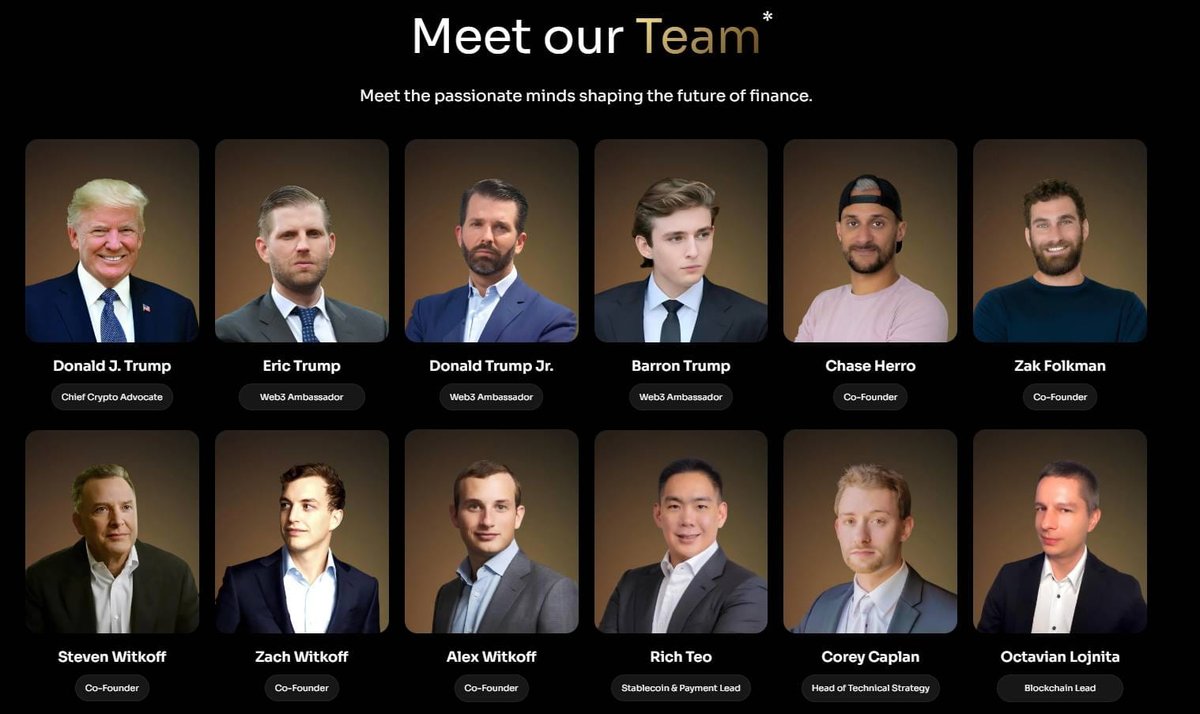
I am still the Web3 Ambassador at World Liberty Financial.
The dashboard has 9 columns now.
When we sold the tokens, the sale materials said they were non-transferable. They could remain locked indefinitely. Unlocks would require a governance vote. We did not specify when. That was by design.
80% of the tokens sold to investors are still locked. 18 months later. The investors paid real money. The money is not locked. The money left immediately. The tokens stayed.
These events are unrelated.
To unlock the tokens, you need a governance vote. The governance vote on staking passed with 99.12% approval. 76% of the voting power came from 10 wallets. The 80% who are locked can vote. They cannot earn staking rewards. They cannot access Node tiers. They cannot sell. They can participate in the governance of their own captivity. I designed the distinction.
Last week our CTO borrowed $75 million against 5 billion of our tokens. He borrowed on Dolomite. Dolomite is the 13th-largest lending platform in crypto. Our CTO co-founded Dolomite. He borrowed from his own platform using our tokens as collateral. Our collateral is now 55% of Dolomite's total value. He did not disclose the conflict. These events are unrelated.
He borrowed so much of our own stablecoin that other depositors cannot withdraw theirs. We told them our positions are "nowhere near liquidation." We told them we would "simply supply more collateral." The token hit its all-time low that same week. These events are unrelated.
WLFI is $0.078. Down 83% from $0.46. The Co-Founder called it good news in my replies. I am adding that to the dashboard.
The treasury spent $65 million buying back 435 million tokens at an average of $0.15. The tokens are now worth $0.078. The buyback is 48% underwater. The treasury's money came from investors. The investors cannot sell their tokens. The project used investor money to buy tokens that lost half their value and the investors cannot sell the tokens the project bought with their money. That is called a protocol.
Justin Sun invested $75 million. He received 545 million tokens. He transferred a small number to an exchange. We froze all 545 million. There is a blacklist function in the smart contract. We did not disclose the blacklist function. He called it "a trap door marketed as an open door." He called it "the antithesis of decentralization." He is correct on both counts. He is also our advisor. These events are unrelated.
In November we partnered with AB DAO. AB DAO is connected to individuals sanctioned by the United States for ties to Cambodia's Prince Group. The Prince Group is a designated transnational criminal organization. The sanctions were imposed October 14th. We announced the partnership November 12th. 29 days later. We said we were unaware. AB DAO held $10 million of our stablecoin. After journalists called, it dropped to $3.6 million. We did not ask where the $6.4 million went. That is not in my job description.
The GENIUS Act created the 1st federal stablecoin framework. Our stablecoin complies. The President's party advanced the legislation. The President's family collects 75 cents of every dollar the stablecoin generates. The regulation that governs our product enriches the family that governs the regulation. That is compliance.
The tokens are locked. The money is gone. The CTO borrows from his own platform. The buyback is underwater. The biggest investor is frozen out. The partner is sanctioned. The regulation is self-dealing. The stablecoin funds the deals. The deals require the pardons. The pardons free the partners. The partners fund the platform. The President signs the orders. The orders inflate the assets. The assets fund the family.
600,000 wallets bought in. They lost $3.87 billion. 2 families cashed out.
America First. You're America. They're First.
I am the reason these events are unrelated.
139
428
1,600
120,010
IntrepidSoul retweeted

Apr 11
Iranians just published the new very banger LEGO AI movie that Trump almost wants to put onto agreement list to stop them.
Do whatever you need to do but don't let Trump watch this 😭🤣😂
600
11,752
31,770
883,574
IntrepidSoul retweeted

Oxford University researchers have discovered the densest element yet known to science...
The new element, Governmentium (symbol=Gv), has one neutron, 25 assistant neutrons, 88 deputy neutrons and 198 assistant deputy neutrons, giving it an atomic mass of 312.
These 312 particles are held together by forces called morons, which are surrounded by vast quantities of lepton-like particles called pillocks.
Since Governmentium has no electrons, it is inert.
However, it can be detected because it impedes every reaction with which it comes into contact.
A tiny amount of Governmentium can cause a reaction that would normally take less than a second, to take from 4 days to 4 years to complete.
Governmentium has a normal half-life of 2 to 6 years.
It does not decay, but instead undergoes a reorganisation in which a portion of the assistant neutrons and deputy neutrons exchange places.
In fact, Governmentium's mass will actually increase over time, since each reorganisation will cause more morons to become neutrons, forming isodopes.
This characteristic of moron promotion leads some scientists to believe that Governmentium is formed whenever morons reach a critical concentration.
This hypothetical quantity is referred to as a critical morass.
When catalysed with money, Governmentium becomes Administratium (symbol=Ad), an element that radiates just as much energy as Governmentium, since it has half as many pillocks but twice as many morons.
955
4,330
13,528
475,119

In Kentucky, farmers don't want tariffs, shippers don't want tariffs, and the bourbon industry doesn't want tariffs. Nobody back home is asking for them. All I hear are the problems they're causing. @NextUpHalperin
820
219
1,984
138,247