
Joined March 2012
- Tweets 298
- Following 623
- Followers 635
- Likes 5,696
36 Photos and videos








Pinned Tweet

22 Dec 2025
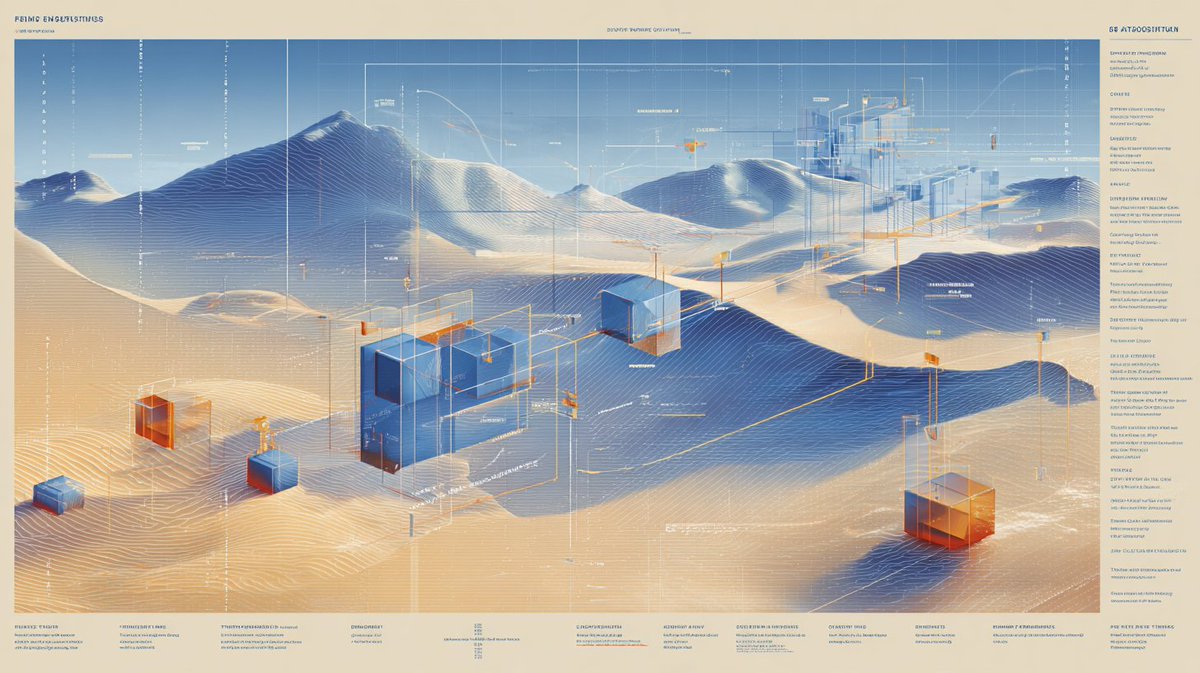
1/9 - The end of the year is a glorious time for reflection, and I love reading all the year in review forecasting pieces all the firms put out. It's interesting to see how the stochastics converge, when they're largely developed in isolation.
A common thread that I've seen from financial analysts is that 2026 is the year of capex buildout for scaling transformer models, but to me, it's the year of the architecture renaissance. The lens is increasingly incomplete.
The next wedge isn’t just more parameters; it’s different architectures different economics, pushing toward ambient, abundant intelligence.
The full essay is at delphiintelligence.io/resear… , courtesy of @Delphi_Digital and blog.hack.vc/ambient-and-abu…, courtesy of @hack_vc
2
6
17
7,173
Jun 13
When I first joked about loading up on RAM so the government couldn't come take my model, it seemed silly. But nowwww...
Jun 13

The US government, citing national security authorities, has issued an export control directive to suspend all access to Fable 5 and Mythos 5 by any foreign national, whether inside or outside the United States, including foreign national Anthropic employees.
The net effect of this order is that we must abruptly disable Fable 5 and Mythos 5 for all our customers to ensure compliance.
Access to all other Claude models is not affected.
We apologize for this disruption to our customers. We believe this is a misunderstanding and are working to restore access as soon as possible.
Read our full statement: anthropic.com/news/fable-myt…
41
Jun 9
Waterhouse is an excellent author with great style. Would recommend reading the essay with your eyeballs like a luddite, than via an tokenmaxxing embedder

1/ Trump wants the US government to take equity in OpenAI, Anthropic, and xAI. Bernie Sanders wants 50 percent. It is not every day those two reach for the same lever.
A year ago a forecast called AI 2027 said this was coming. Worth asking why it was right.
1
30
May 30
My Twitter timeline tells me I'm not taking enough Modafinil, doing enough PE roll ups with clawdbot, not token maxxing or rocket maxxing hard enough, that I'm not vibing enough quant strategies, and I'm not doing it all fast enough to either meet generational wealth or escape the permanent underclass
2
2
58
May 5
Non technical folks shipping production code that's constantly being attacked. Sounds safe.

This is an email I sent earlier today to all employees at Coinbase:
Team,
Today I’ve made the difficult decision to reduce the size of Coinbase by ~14%. I want to walk you through why we're doing this now, what it means for those affected, and how this positions us for the future.
Why now
Two forces are converging at the same time. We need to be front footed to respond to both.
First, the market. Coinbase is well-capitalized, has diversified revenue streams, and is well-positioned to weather any storm. Crypto is also on the verge of the next wave of adoption, with stablecoins, prediction markets, tokenization, and more taking off. However, our business is still volatile from quarter to quarter. While we've managed through that cyclicality many times before and come out stronger on the other side, we’re currently in a down market and need to adjust our cost structure now so that we emerge from this period leaner, faster, and more efficient for our next phase of growth.
Second, AI is changing how we work. Over the past year, I’ve watched engineers use AI to ship in days what used to take a team weeks. Non-technical teams are now shipping production code and many of our workflows are being automated. The pace of what's possible with a small, focused team has changed dramatically, and it's accelerating every day.
All of this has led us to an inflection point, not just for Coinbase, but for every company. The biggest risk now is not taking action. We are adjusting early and deliberately to rebuild Coinbase to be lean, fast, and AI-native. We need to return to the speed and focus of our startup founding, with AI at our core.
What this means
To get there, we are not just reducing headcount and cutting costs, we’re fundamentally changing how we operate: rebuilding Coinbase as an intelligence, with humans around the edge aligning it. What does this mean in practice?
- Fewer layers, faster decisions: We are flattening our org structure to 5 layers max below CEO/COO. Layers slow things down and create coordination tax. The future is small, high context teams that can move quickly. Leaders will own much more, with as many as 15 direct reports. Fewer layers also means a leaner cost structure that is built to perform through all market cycles.
- No pure managers: Every leader at Coinbase must also be a strong and active individual contributor. Managers should be like player-coaches, getting their hands dirty alongside their teams.
- AI-native pods: We’ll be concentrating around AI-native talent who can manage fleets of agents to drive outsized impact. We’ll also be experimenting with reduced pod sizes, including “one person teams” with engineers, designers, and product managers all in one role.
In short: AI is bringing a profound shift in how companies operate, and we’re reshaping Coinbase to lead in this new era. This is a new way of working, and we need to leverage AI across every facet of our jobs.
To those who are affected
I know there are real people behind these decisions — talented colleagues who have poured themselves into this company and our mission. To those of you who will be leaving: thank you. You’ve helped build Coinbase into what it is today, and I am sincerely grateful for everything you've done.
All impacted team members will receive an email to their personal account in the next hour with more information, and an invitation to meet with an HRBP and a senior leader in your organization. Coinbase system access has been removed today. I know this feels sudden and harsh, but it is the only responsible choice given our duty to protect customer information.
To those affected, we will be providing a comprehensive package to support you through this transition. US employees will receive a minimum of 16 weeks base pay (plus 2 weeks per year worked), their next equity vest, and 6 months of COBRA. Employees on a work visa will get extra transition support. Those outside of the US will receive similar support, based on local factors and subject to any consultation requirements.
Coinbase prides itself on talent density. Our employees are among the most talented people in the world, and I have no doubt that your skills and experience will be highly sought after as you pursue your next chapters.
How we move forward
To the team that is staying, I know this is a difficult day. We’re saying goodbye to colleagues and friends you've been in the trenches with. But here’s what I want you to know as we move forward together:
Over the past 13 years, we have weathered four crypto winters, gone public, and built the most trusted platform in our industry. We’ve made it this far by making hard decisions and by always staying focused on our mission. This time will be no different – nothing has changed about the long term outlook of our company or industry. And most importantly, our mission has never been more important for the world. Increasing economic freedom requires a new financial system, and we’re building it.
The Coinbase that emerges from this will be more capable than ever to achieve our mission.
Brian
1
2
186
Apr 17

3
125
Apr 15
How can you not be optimistic
Either we'll make it to an era of glorious abundance, or we won't. If we don't, it's not really our problem anyway
Apr 13

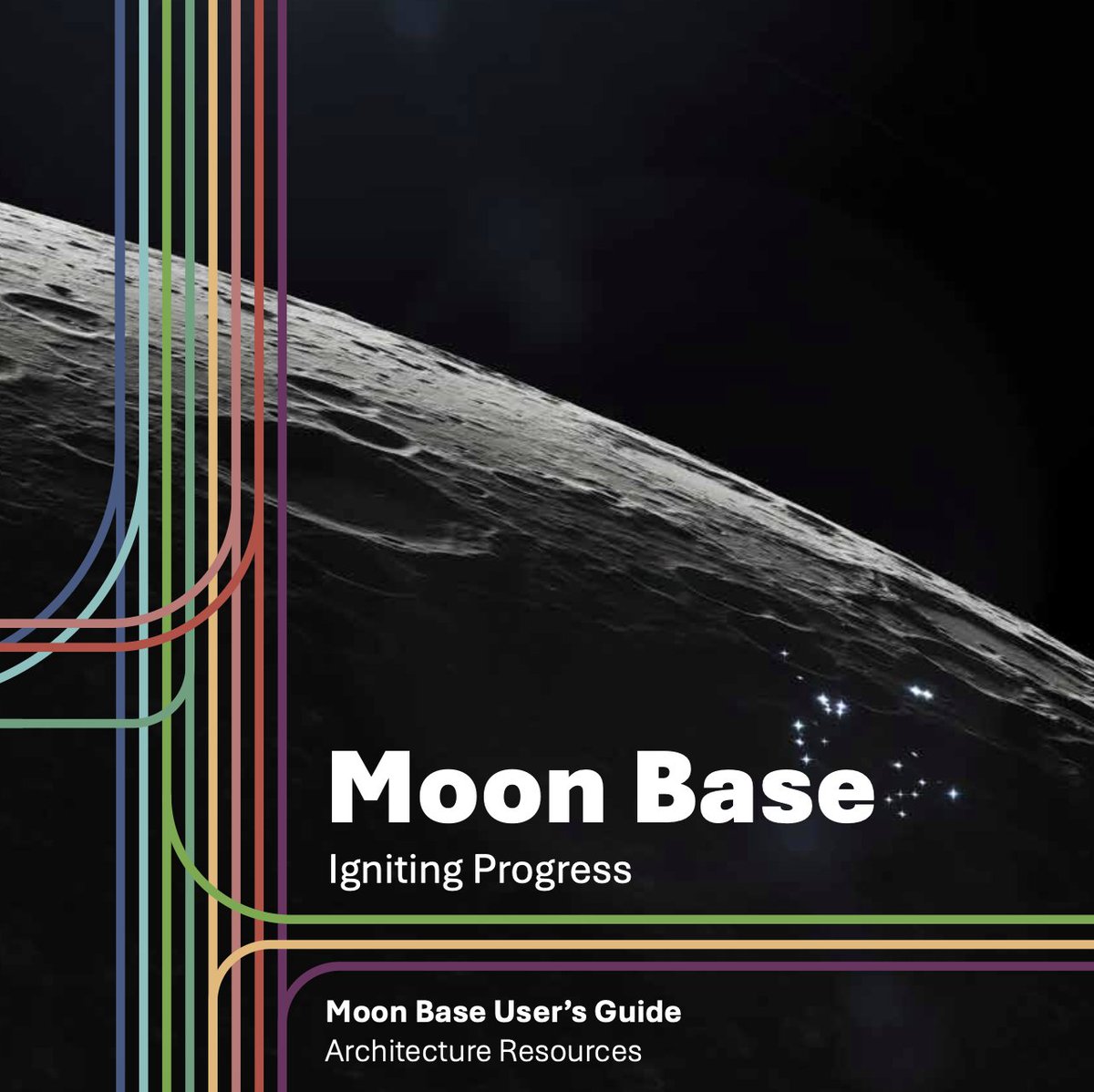
NASA just quietly published something incredible.
A map of how we build a permanent human presence off Earth.
It’s called the Moon Base User’s Guide.
Here's what's in it! 🧵
2
115
Apr 7
A follow-on to my last thread, while Mythos trains Mythos2 (which is undoubtedly in development):
If the valley of labor death is real, the next question is not whether it’s fair. It’s how to survive it, adapt through it, and be positioned for what comes after.
--
At the highest level, the shift is simple:
in a world where labor gets commoditized, you want to be on the ownership side of the equation.
Own equity. Own assets. Own distribution. Own trusted relationships. Own systems that scale.
Selling hours gets structurally weaker from here.
--
As a person, the play is not “learn more skills.”
It’s: adopt frontier models early, build sharper judgment, go deeper on trust, and move your life toward ownership rather than wage exposure.
Skills automate. Taste, judgment, and trusted allocation last longer.
--
That also means accumulating hard assets while the world still thinks mostly in salary terms.
Equity. Real estate. BTC. Productive assets.
If the valley gets ugly, asset prices may wobble with demand destruction.
But on the other side, AI-driven productivity could re-rate scarce assets violently.
--
Psychology matters more than most people think.
Even people who are “winning” this transition may feel disoriented by it.
If your sense of meaning is tied entirely to economic productivity, the next few years could feel destabilizing.
Better to answer that question early than under pressure.
--
As an investor, the stack comes in layers.
First: the displacement infrastructure. Compute, energy, agents, security, AI-native tooling.
Every company that cuts headcount will need software, models, and systems to replace what those people used to do.
I think markets are pricing this fairly. Bearish people calling it a bubble
--
Then comes the transition layer.
Identity. Benefits. Retraining. Mental health. New coordination systems.
If labor-based distribution starts to break, societies will need new rails for who gets supported, who gets verified, and how people stay economically legible.
--
Then the post-valley layer:
robotics, crypto rails, abundance-era businesses built around trust, status, experience, and human connection.
AI drives the displacement. Crypto may help build the coordination layer for what comes after.
Many people are talking about how both are part of the same story, but my thing for a long time is that the foundation of crypto (untrusted networks, game theory, heterogenous hardware, unknown counterparties, digital scarcity) is what matters more than tokens and memecoins
--
Operationally, this is also why firms should be using AI themselves.
If your team can evaluate more deals, diligence faster, and stay lean while preserving human judgment where it matters, you get stronger exactly when the environment gets harder.
The firms that adapt operationally will see more of the future sooner. We do this...
... aggressively. And we are very good
--
This transition may be brutal for labor sellers and extraordinary for capital allocators who understand the arc.
The hard part is staying psychologically grounded while deploying into chaos.
Direction matters more than timing. That has always been true in venture. It may be even more true now.
Apr 7

Anthropic’s Mythos disclosure and OpenAI’s industrial policy paper landing days apart feels less like coincidence and more like counter-positioning.
A model that jumps to 93.9% SWE-bench and cranks through longstanding exploits in the Linux kernel turn exploits turns "AI safety" from branding into statecraft.
2
7
771
Apr 7
I think practically and personally, this is the most exciting and important time to be alive, to be the last generation of just human
Intelligence becomes abundant, the walls between disciplines start to fall. We get to become more interdisciplinary, more creative, more fully expressed versions of ourselves.
I think everyone should learn how to work with wood, metal, tensors, meat, PLAs, and hops.
If automation commoditizes the generic, it should make quality matter even more.
Perpetually optimistic. Maybe naively so
Apr 7
Anthropic’s Mythos disclosure and OpenAI’s industrial policy paper landing days apart feels less like coincidence and more like counter-positioning.
A model that jumps to 93.9% SWE-bench and cranks through longstanding exploits in the Linux kernel turn exploits turns "AI safety" from branding into statecraft.
1
66
Apr 7
Anthropic’s Mythos disclosure and OpenAI’s industrial policy paper landing days apart feels less like coincidence and more like counter-positioning.
A model that jumps to 93.9% SWE-bench and cranks through longstanding exploits in the Linux kernel turn exploits turns "AI safety" from branding into statecraft.
1
1
978
Apr 7
So the real fork is not AI vs no AI.
It’s whether we build new distribution fast enough: portable benefits, tax systems that lean less on labor, and broader ownership of the upside.
If we do, the valley is survivable. If we don’t, we get a very rich society with a very brittle social contract.
1
1
42
Apr 7
I wrote about this going into the end of 2025, but it's wild to see the timeline here;
blog.hack.vc/ambient-and-abu…
I'm very curious about how durable the next sources of friction are (and therefore where value will accue)
Now excuse me while I contemplate my life's choices
2
36