
Joined September 2015
- Tweets 6,937
- Following 2,891
- Followers 1,970
- Likes 25,044
902 Photos and videos
















CNFTJordan The CNFT Critic🚩🚩 retweeted

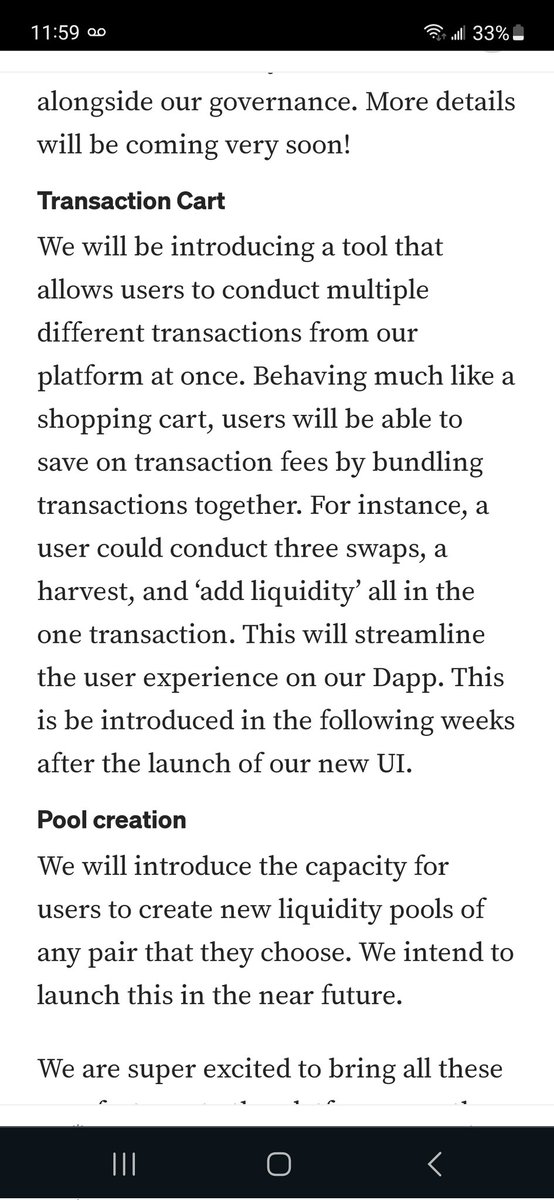
This another devastating blow!
It’s sad to see teams we’ve built alongside for so many years struggle to keep the lights on.
We have so many plans and innovations to bring to Cardano and we are still optimistic for the future of this chain
Thanks you for everything @TapTools, I hope for the sake of everyone this isn’t the end of arguably the most useful tool on Cardano

After four years of building for Cardano, today we have difficult news to share.

7
5
59
2,962
CNFTJordan The CNFT Critic🚩🚩 retweeted

May 24
I bought Ada in 2020 and all the way through the bull run, even after ATH. Bought NFTs, supported projects, rarely sold anything Cardano related to this day.
I cashed out my life savings in 2023, during the last bear lows, and put most of it in to Cardano.
I have worked to build in this ecosystem without a salary for 3 years now.
I have put my own ADA up for payrolls to ensure our employees get paid.
I have sacrificed everything to be here. I have always believed in Cardano. I have shown up every single day for the last 5 years.
That’s why I won’t sit here quietly and watch it all burn down around me. That’s why I won’t sit around and watch the people who have lived comfortably, making none of the sacrifices I did, continue to strong arm governance because their payday is running out.
Yet I see dReps and CEOs attacking the community for how they vote. Is this really what we signed up for?
Governance was supposed to be our chance as a community to have a real voice and it’s being completely diminished by propaganda and bullies. Attacking people on the timeline because of how they voted is just pathetic and not the governance I signed up for I helped conceive.
The system was finally showing signs of strength, pushing back against expenditures, forcing accountability from previous years, and ushering in a new era of Cardano, where the community fully decides.
Unfortunately that is clearly not the reality. A few dReps hold all the power, most have their hands in or around the FEs. It’s ok. I am not as mad at the centralization of voting power. I’m mad because we aren’t being listened to.
Asking for basic stuff to make an educated decision, or have fiscal clarity, is not FUD, it’s called being responsible.
We should hold everyone equally accountable at this point. There should be no varying standards. And I mean this socially as well.
I hope people really take a long look at where we are, how we got here, and what’s currently going on before they continue to vote. We have about half the NCL left, let’s make sure to use it extremely wisely. We can’t afford to miss.
Happy Sunday!
77
92
771
29,002
CNFTJordan The CNFT Critic🚩🚩 retweeted
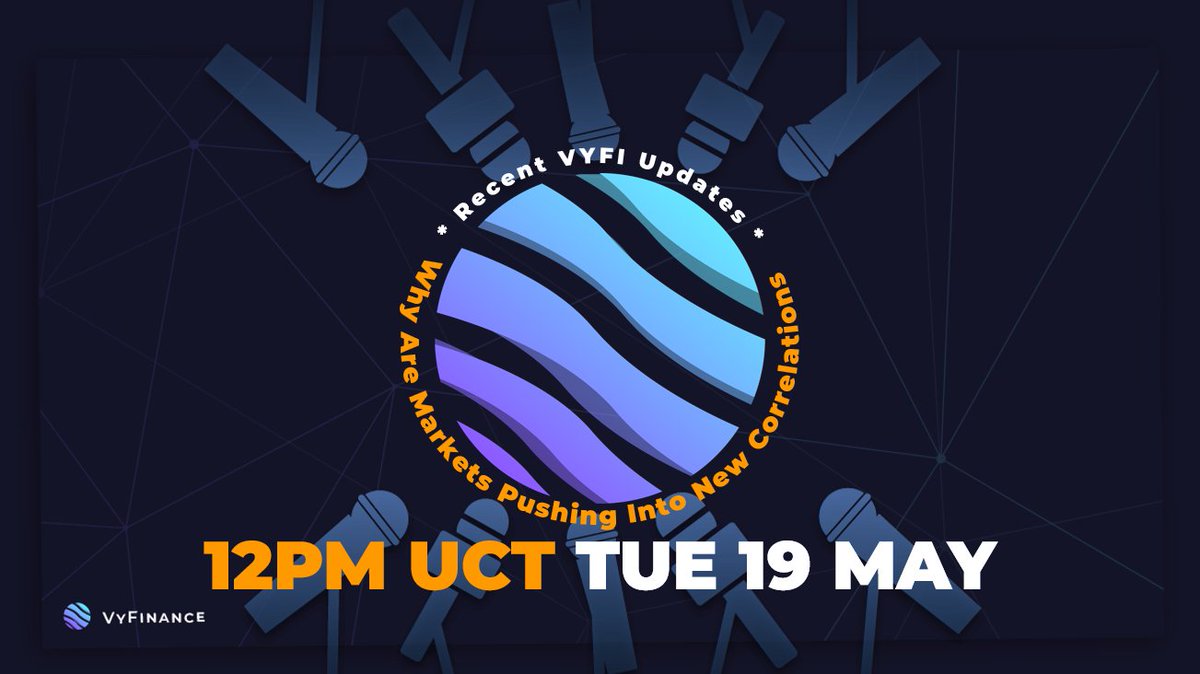
We’ve got a lot to cover 👇
• Recent VYFI updates
• What’s actually driving markets right now
• Why correlations are shifting across assets
Things are changing fast, and it’s not random.
Join us and get up to speed.
6
4
25
743
Wait... theres people in DeFi let alone Cardano DeFi that still stake their LP when its not for double down on reward farming? 🤨🤨 Also, vyfi has the transaction cart system. Batch all those pairs and trades at the same time. V3, en route! #DeFi #BestSinceTheBeginning

VyFi is the only choice for smart money to farm on Cardano - stop wasting fees on transactions this blockchain doesn't require
If there is a farm or pair you can find on VYFI let us know!
59
CNFTJordan The CNFT Critic🚩🚩 retweeted

Apr 21
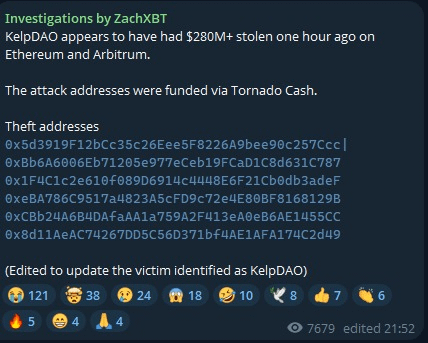
Kelp DAO's rsETH bridge exploited, nearly $300M gone.
Aave wasn't hacked, yet still had to freeze its markets.
That should tell you everything about modern DeFi risk.
Maybe it's time to focus on architectures that minimize trust assumptions.
UTXO models are a good example.
12
23
121
2,941
CNFTJordan The CNFT Critic🚩🚩 retweeted
Learn more about Stakeless LPs and how farming on VYFI is superior to every other DEX in crypto 👇
vyfinance.medium.com/non-cus…
2
6
640
CNFTJordan The CNFT Critic🚩🚩 retweeted
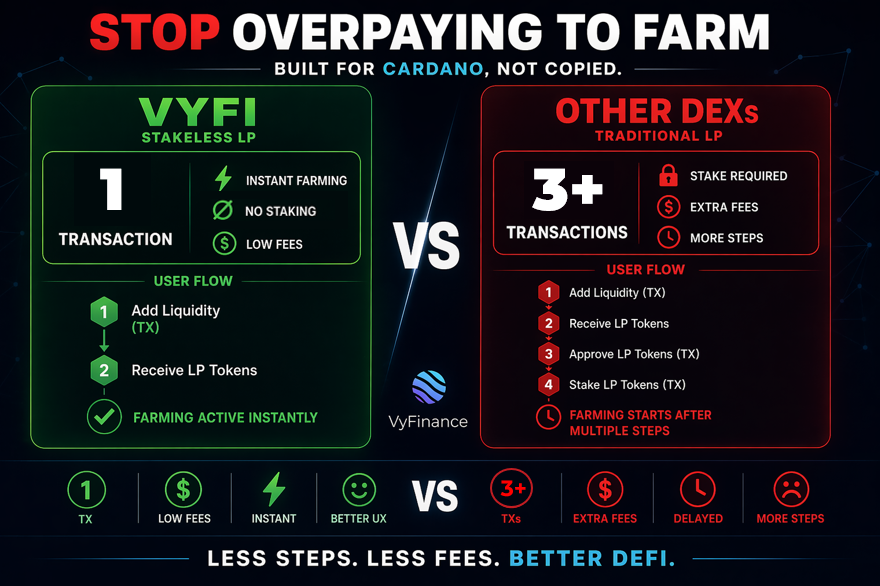
Whether you’re using @MinswapDEX , @CswapDEX, @SundaeSwap, @wingriderscom, @Uniswap, @PancakeSwap or ANY other DEX
…the formula has stayed the same.
Users pay for unnecessary transactions.
VYFI broke that pattern.
Stakeless LPs remove the extra steps and make DeFi simpler and cheaper.
It’s time to move past legacy design.
1
12
52
2,534
Yall remember who called out nearly every single CNFT scam before they even got to first sale.
YALL REMEMBER WHO TOLD THE APE LEADERS TO STFU IN THE FIRST SPACE THEY ATTENDED.
YALL CAN STILL SEND MONEY TO $CNFTCritic and it goes to my wallet!
#CardanosFirstMouthyMFer #CardanoKing
Apr 7

you only say this because you didn't get attacked by a million ape society PFPs every day
1
30
CNFTJordan The CNFT Critic🚩🚩 retweeted
How aren’t Stakeless LPs a bigger deal?
People constantly say DeFi needs to be simpler and cheaper to use. Well, that’s exactly what Stakeless LPs do.
No staking transactions. No extra steps. Just hold your LP and farm.
Fewer transactions = lower fees and better UX.
This is a unique Cardano solution to a problem every DeFi protocol faces.
Make the most of our tech. Try Stakeless LPs on VyFi
5
8
32
1,020
CNFTJordan The CNFT Critic🚩🚩 retweeted
One thing that often gets overlooked about VyFi is just how much innovation we’ve brought to Cardano DeFi.
- Stakeless LPs
- SafeSwaps (OTC)
- Lottery
- Governance
And we’re launched the first live Plutus V3 product on Cardano.
The V3 DEX overhaul is coming next
4
6
37
708
CNFTJordan The CNFT Critic🚩🚩 retweeted
Mar 14

51
22
324
9,560
CNFTJordan The CNFT Critic🚩🚩 retweeted

Mar 3
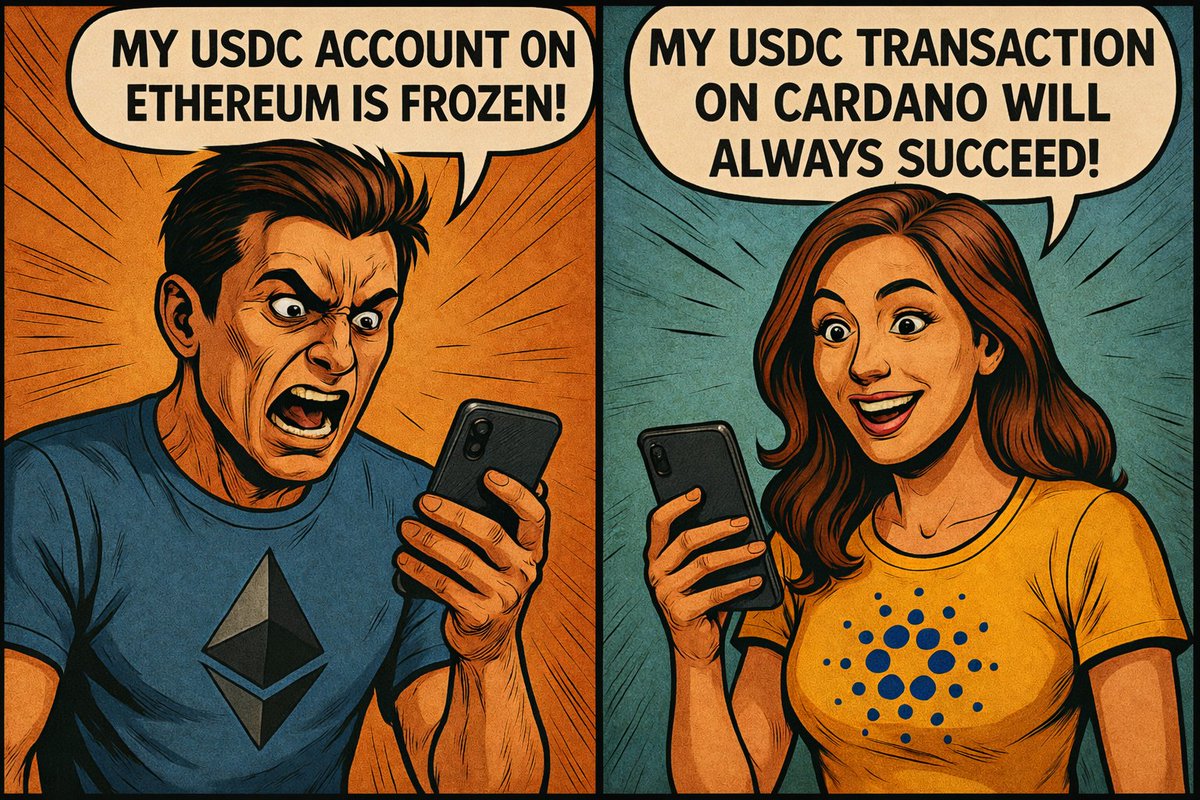
No one can freeze your USDC on Cardano or prevent spending.
Will new users come to Cardano because of this? Maybe a few.
Liquidity is growing. That's cool. Now we need to reduce slippage and DeFi fees.
18
75
444
7,764
CNFTJordan The CNFT Critic🚩🚩 retweeted

Mar 1
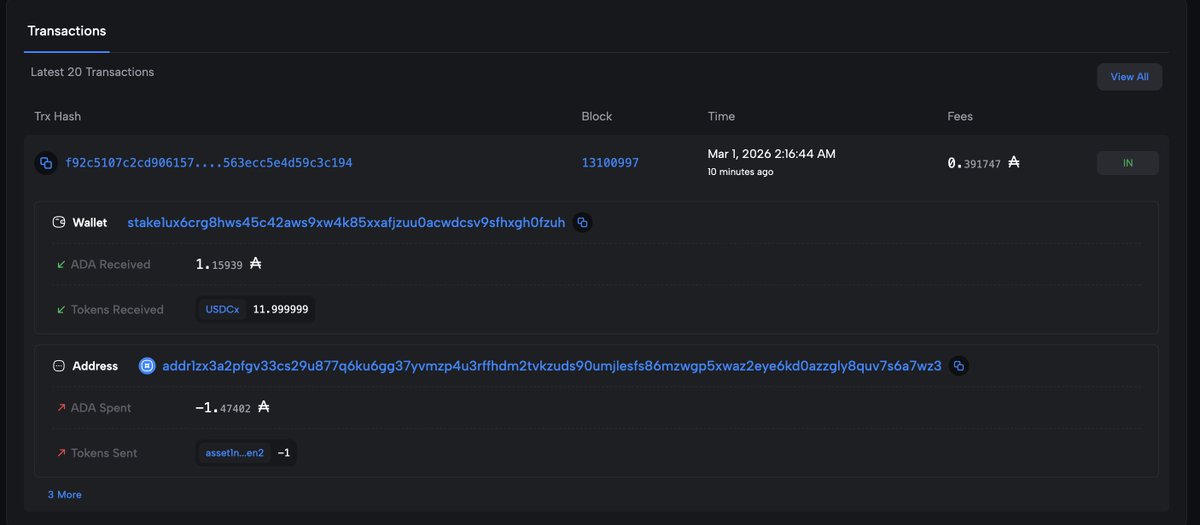
Just sucessfully bridged USDC → USDCx from Ethereum to Cardano without using the IOG UI, just raw smart contract calls from my own code.
12 USDC in, 12 USDCx out, ~25 min, zero fees. On-chain tag itsdave_ada embedded as proof.
Firstly, I'd like to say.. credit to IOG and all involved, this shows it's completely open and anybody can do this. Secondly it took a few attempts, and thirdly, lets celebrate USDCx on Cardano, there's been a lot of drama but also it's evident a lot of hard work has gone into this.
So a post of appreciation to all involved.
Now I can sleep.
Approve
etherscan.io/tx/0xb205688e03…
Deposit (12 USDC): etherscan.io/tx/0x98cdf3b327…
Tag (itsdave_ada): etherscan.io/tx/0x5f254a8119…
Cardano Address (mainnet) where it landed.
cardanoscan.io/address/addr1…
Feb 28

If the fees are extortionate for the community with the USDCx integration when fees are enabled.
Providing everything is permissionless, if anybody wants to team up with me on building a new UI with reduced fees that directs the same fees back into the Cardano treasury of course with enough to facilitate it's operation. Let me know. I'm ready.
51
112
703
30,554
CNFTJordan The CNFT Critic🚩🚩 retweeted

Jan 23
Policy ID: cardanoscan.io/tokenPolicy/e…
Buy on NBX: x.com/nbxcom/status/20143106…

In case you missed it: gold and silver are now live on NBX.
fGLD fSLVR are backed by physical metal stored with @proaurum in Germany (LBMA-certified vaults).
Trade it like crypto. Hold it like metal. Redeem it when you want the real thing. @finest_tokenize

1
18
819
CNFTJordan The CNFT Critic🚩🚩 retweeted
Jan 4
Did you know that Cardano’s native assets are fundamentally different from tokens on most other blockchains?
On Cardano, assets are handled natively at the ledger level, just like ADA itself. They are not smart contracts, wrappers, or accounts backed by custom code. This is a deliberate architectural choice.
By contrast, ERC-20 tokens on Ethereum rely on user-deployed smart contracts, and SPL tokens on Solana depend on a shared on-chain program. In both cases, asset behaviour is defined by executable code. That adds complexity, additional fees, and a broader attack surface. It involves more trust too.
On Cardano, no smart contracts are required for core functions like holding, transferring, or burning assets. The ledger enforces these rules directly. This removes contract risk from basic asset operations and makes transfers simpler, cheaper, and more predictable by design.
Multiple assets can be bundled in a single UTxO and moved together in one transaction with minimal overhead. There are no wrappers, no approval flows, and no intermediaries. This significantly reduces trust assumptions and operational complexity.
Minting and supply control are handled through minting policies, which can be as simple as multi-signature requirements or time locks, or more expressive if needed. Importantly, these policies are only evaluated when minting or burning occurs, not on every transfer.
The result is a system where assets are first-class citizens of the ledger, not applications layered on top of it. This design prioritizes reliability, predictability, and user control, and it’s one of Cardano’s most under-appreciated architectural advantages, one I actually really admire.
Cardano continues to innovate in ways that make building simpler and safer at the protocol level.
20
87
500
10,917

There is a very real chance for Cardano to break out from the rutted believe system and industry position decline it has under for years….
Suggestions:
- Put money in the hands of those who are truly capable of addressing the “NEEDS” and “WANTS”.
- Demand ROI’s from those you give money to or Defund in the future.
- Enforce accountability from those who you give money to and implement penalties for their short comings…
and for Gods sake, as a community member and social participant.… play your damn position, support the positive vibes. It doesn’t make you cool being an unqualified fuddy activist or bag biased catty Female dog.
Thank you for your attention to this matter!
4
15
93
2,820
CNFTJordan The CNFT Critic🚩🚩 retweeted

6 Nov 2025
Cardano has defi
Cardano has tech
Cardano has vibes
Cardano has speed
Cardano has builders
Cardano has products
Cardano has real users
Cardano has scalability
Cardano has innovation
Cardano has community
Cardano has institutions paying attention.
Are you still bullish?
46
42
391
8,822
CNFTJordan The CNFT Critic🚩🚩 retweeted

20 Oct 2025
Who wants Cardano's first debit card?

125
120
1,036
48,288