
macOS Developer & Researcher, GitHub: github.com/Mx-Iris
Joined August 2022
- Tweets 164
- Following 85
- Followers 767
- Likes 369
30 Photos and videos
Pinned Tweet

Apr 26
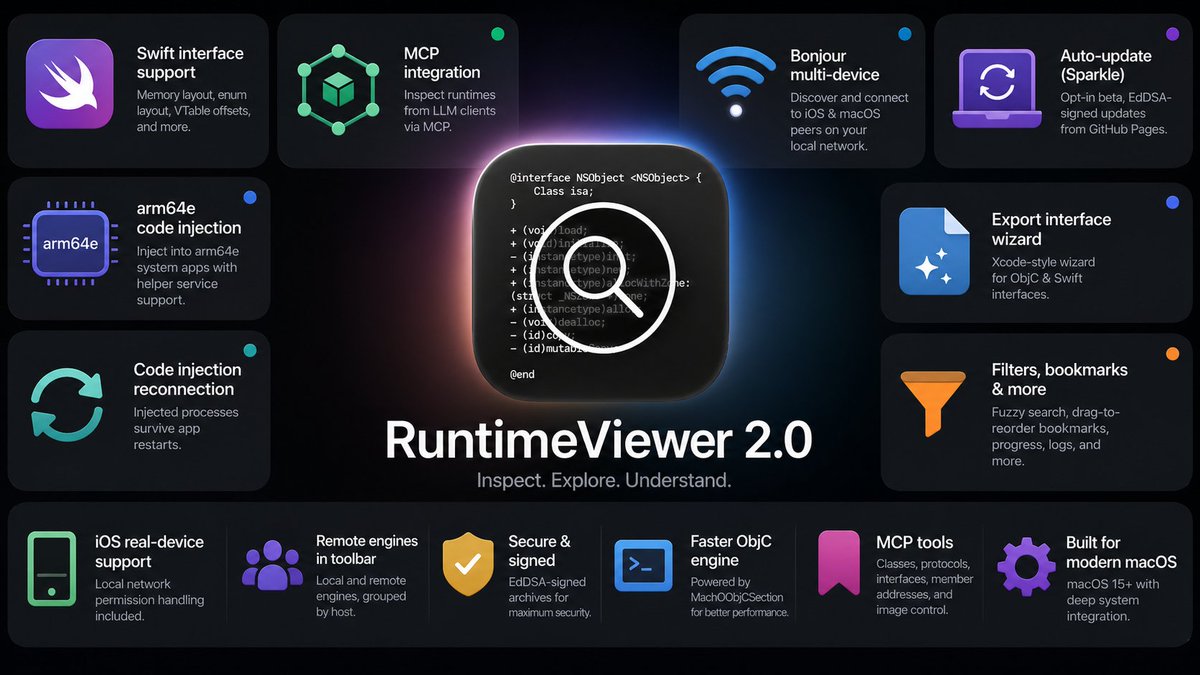
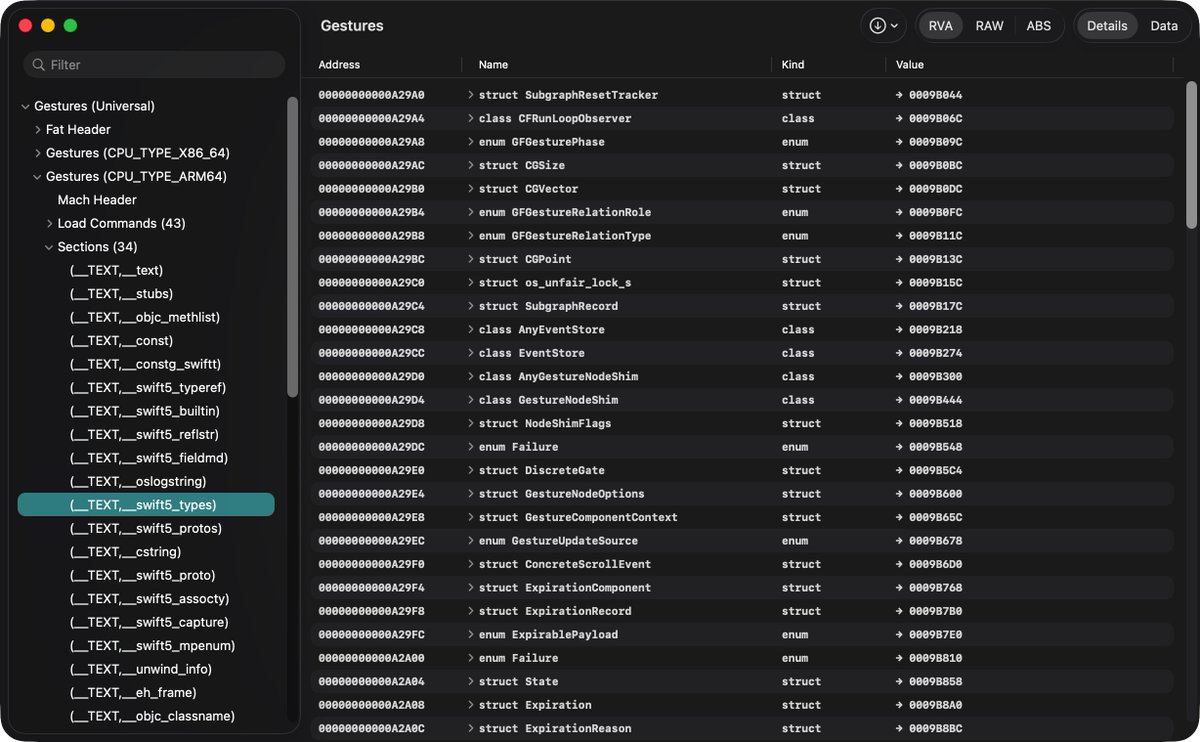
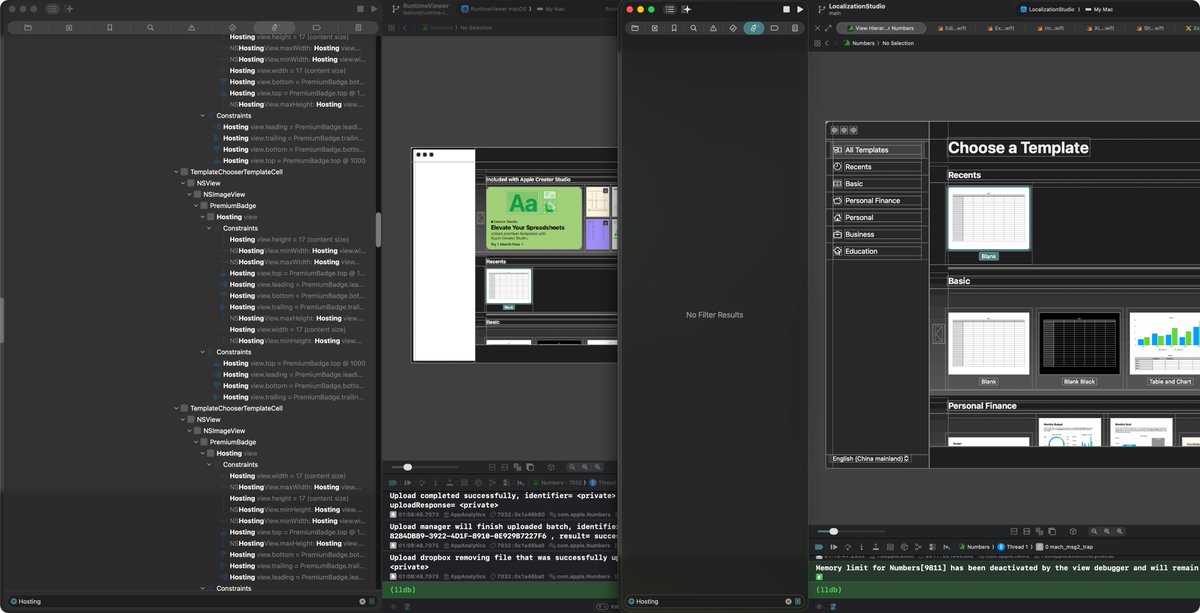
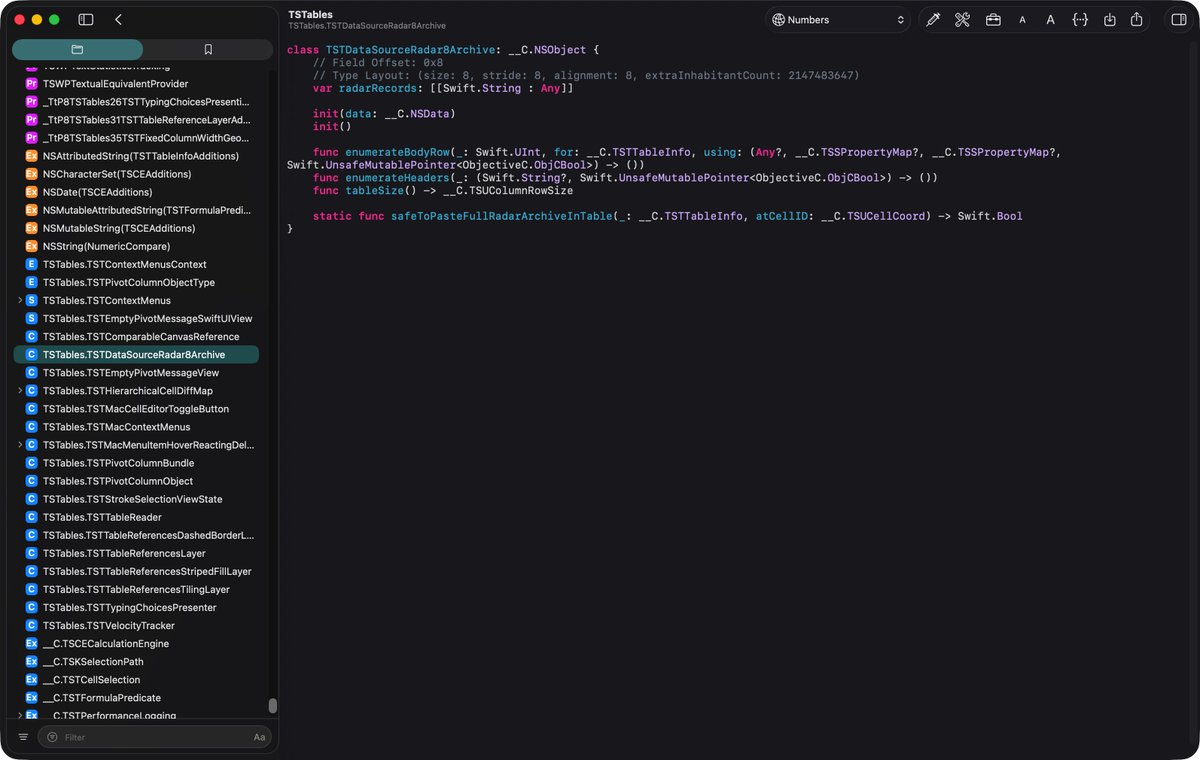
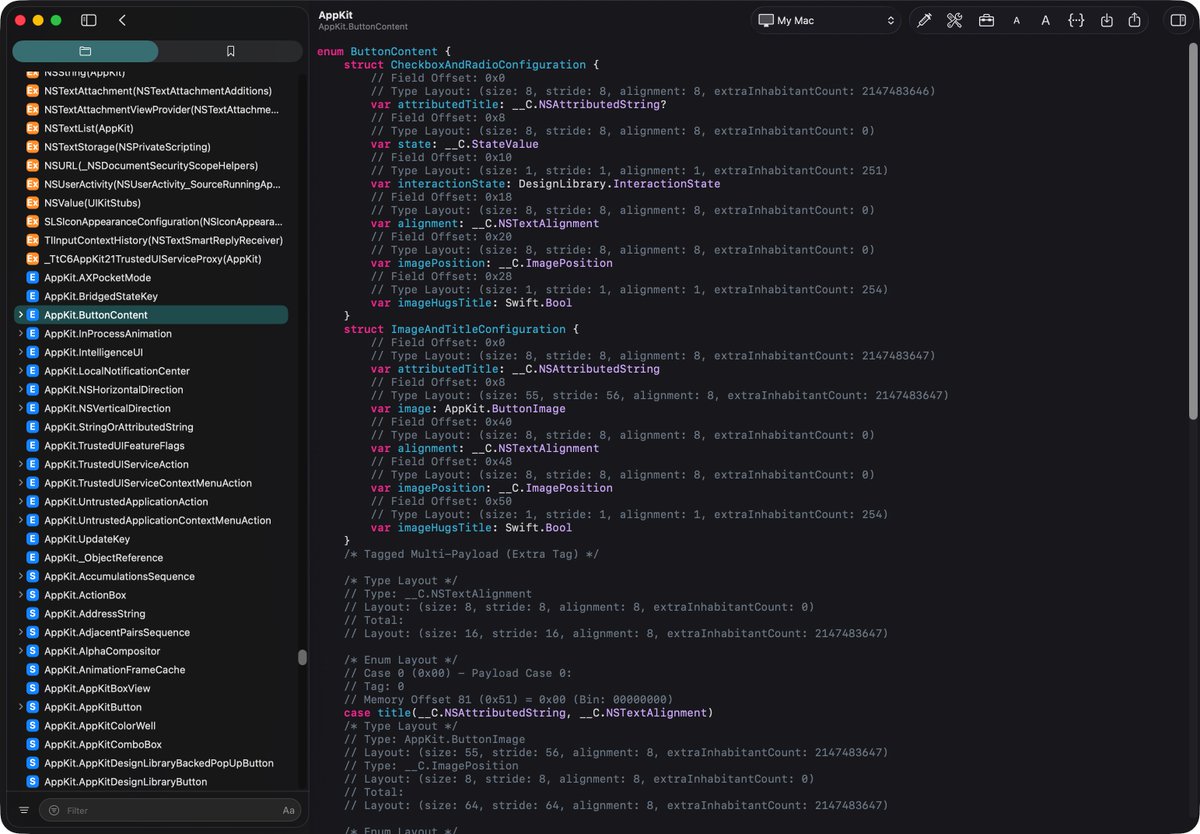
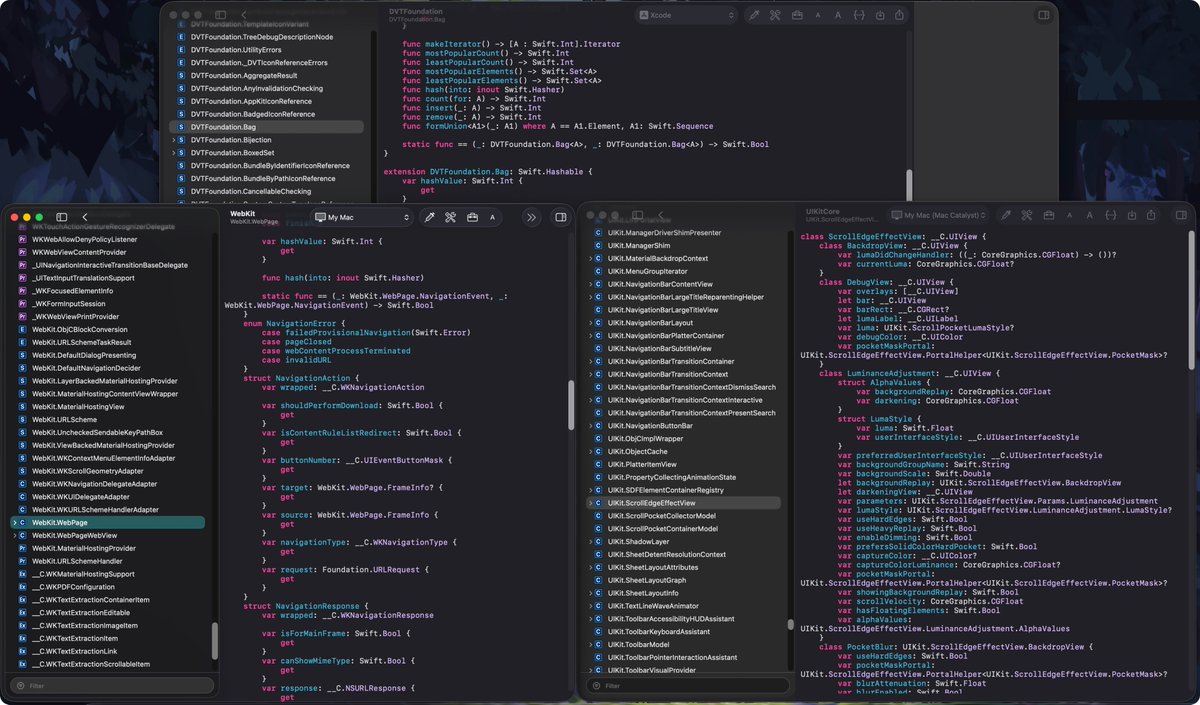
RuntimeViewer 2.0.0 has been released, almost completely rewritten, and brings many new features.
github.com/MxIris-Reverse-En…
3
10
111
27,289
Jun 10
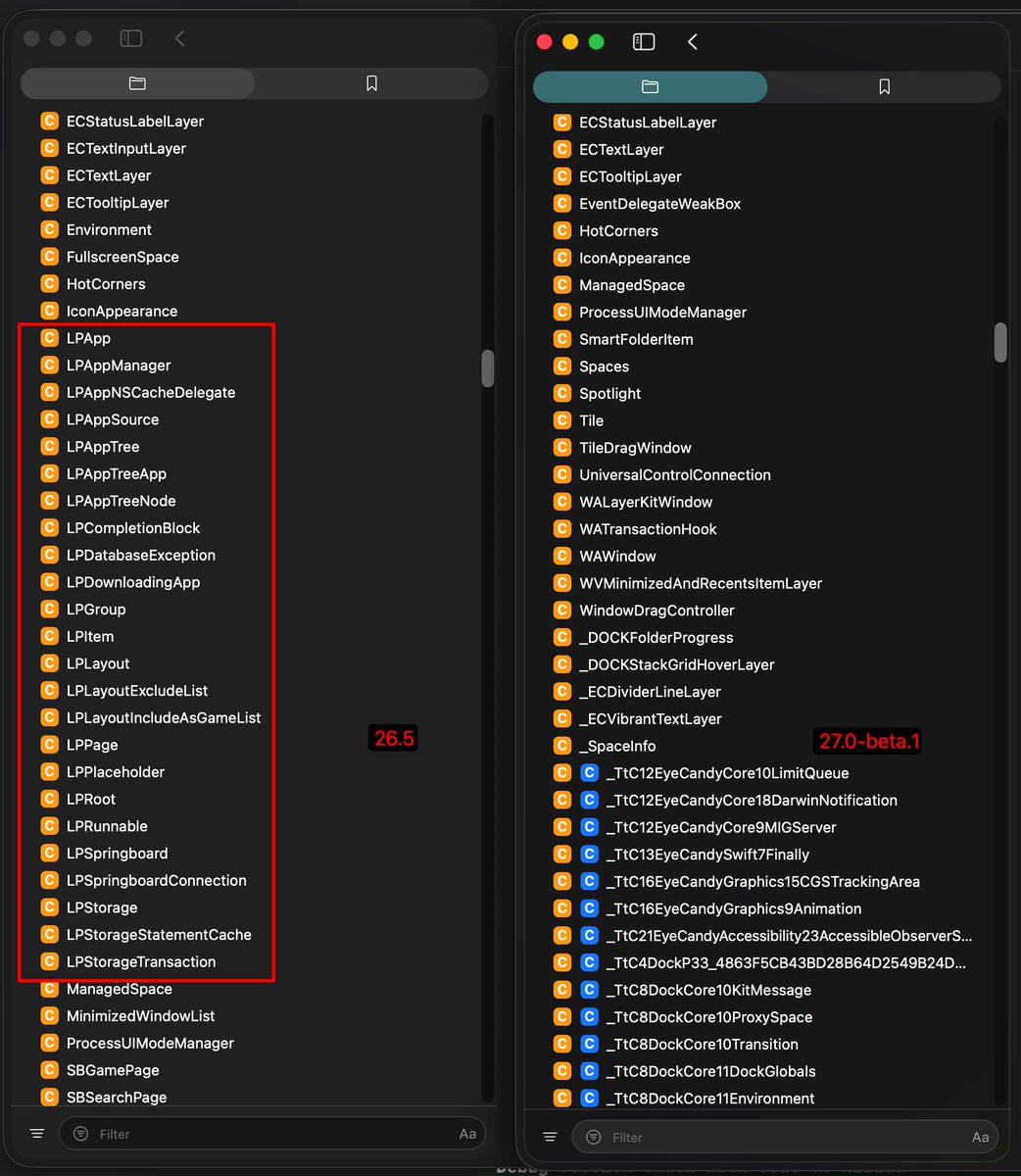
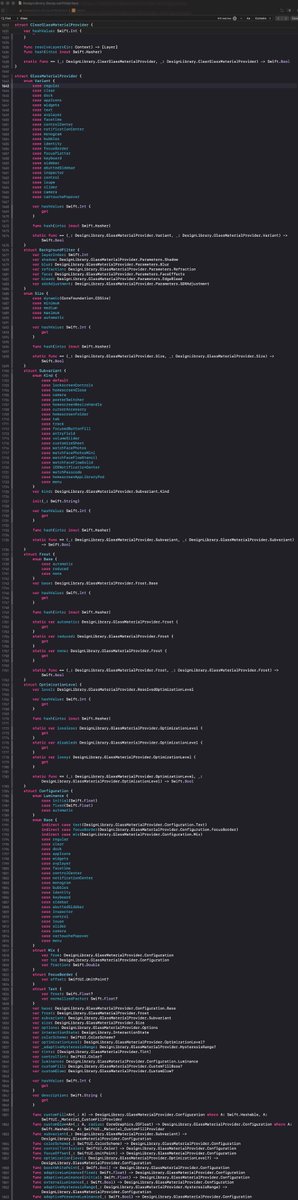
In macOS 27.0-beta.1, Apple completely removed the Launchpad code.😭
16
25
795
72,528

May 10
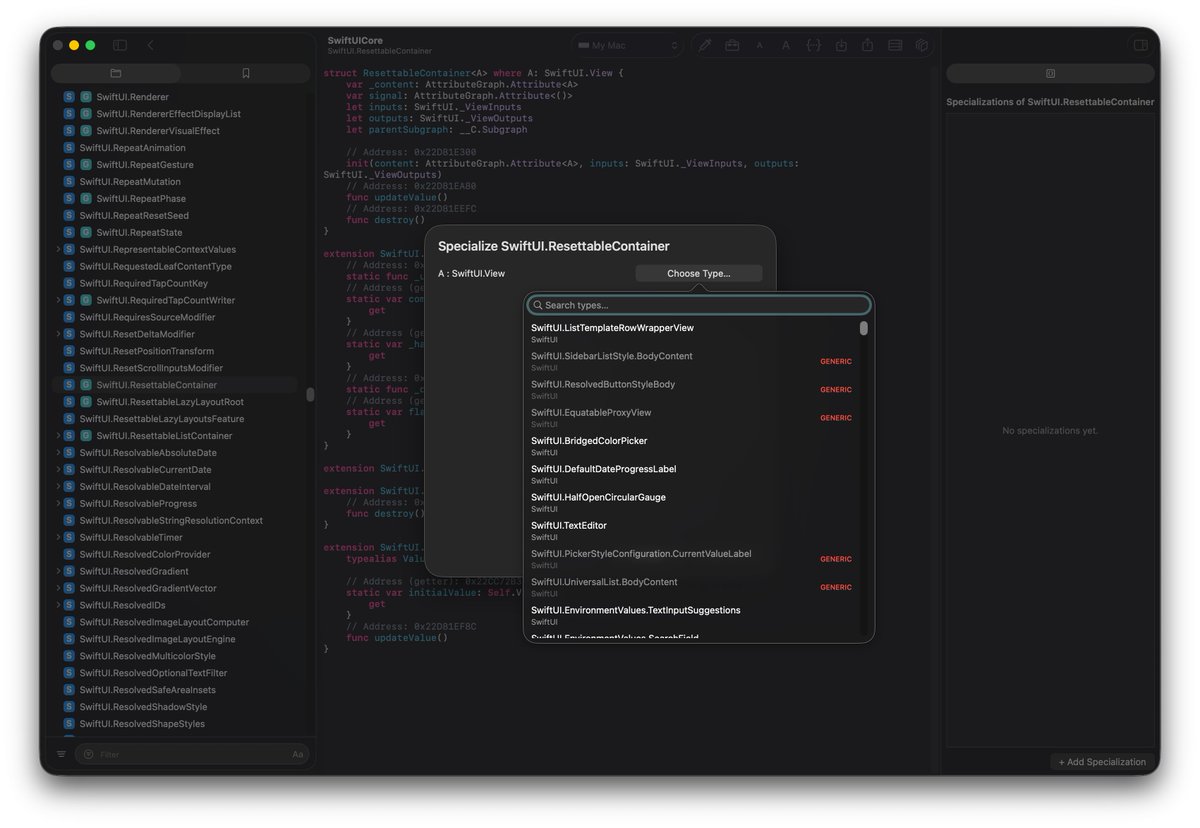
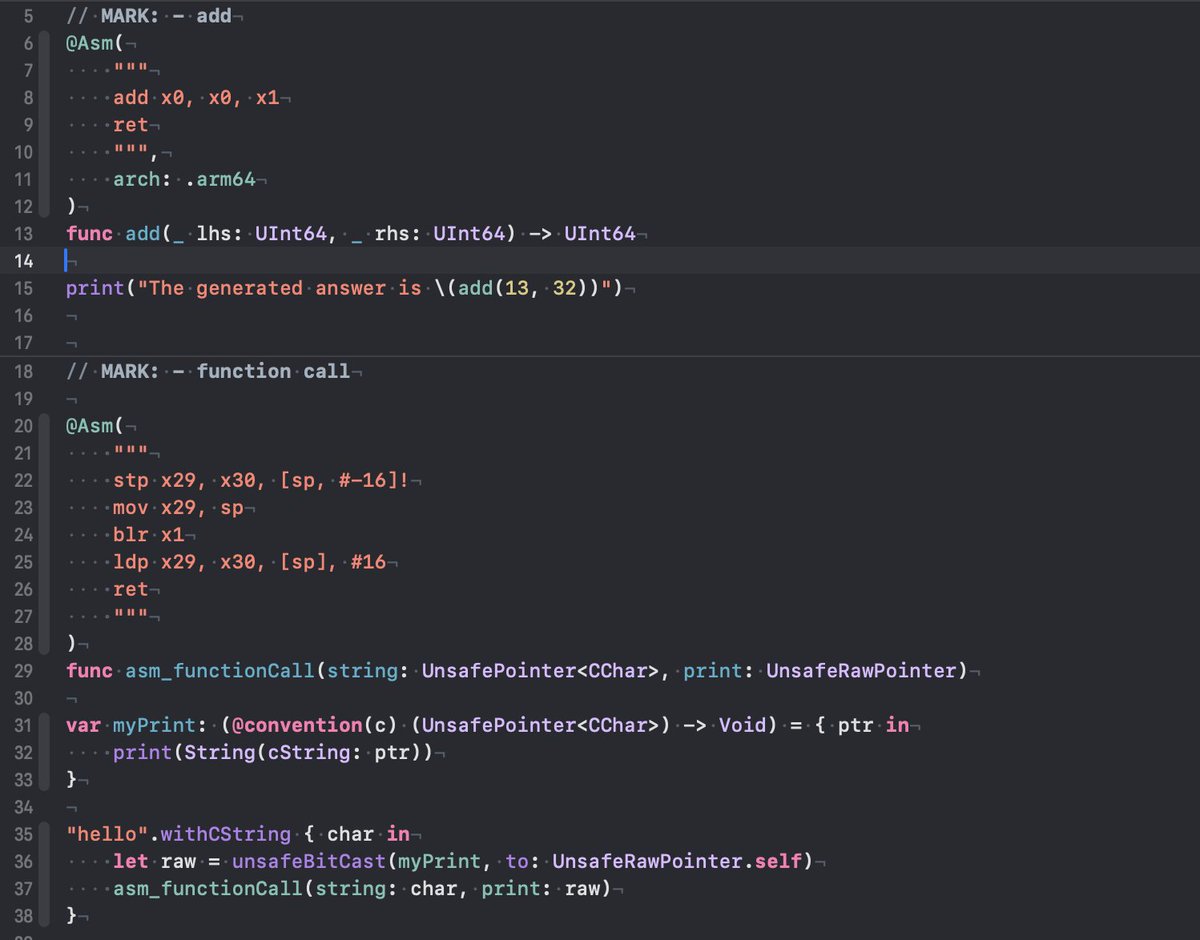
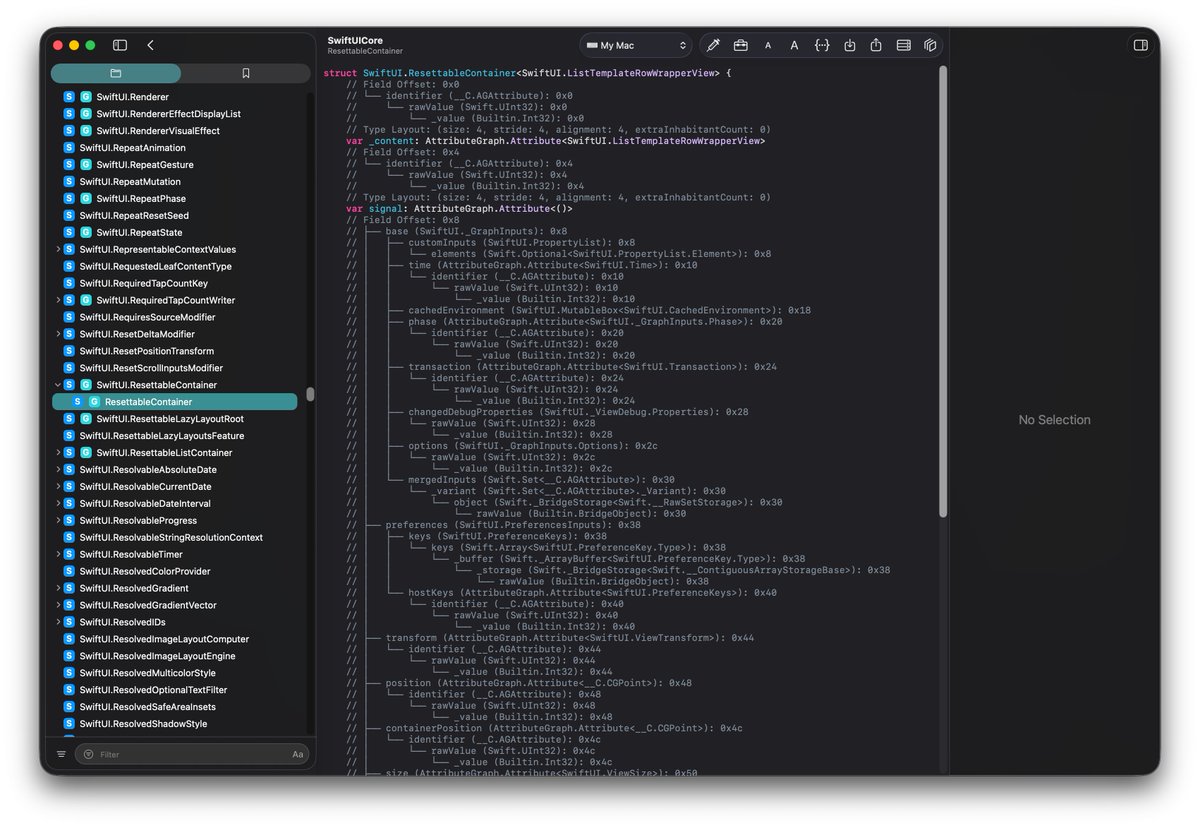
RuntimeViewer is about to release an exciting feature that allows you to manually specialize generic types to view any metadata-related info such as FieldOffset of generic types.
4
35
5,183
May 5
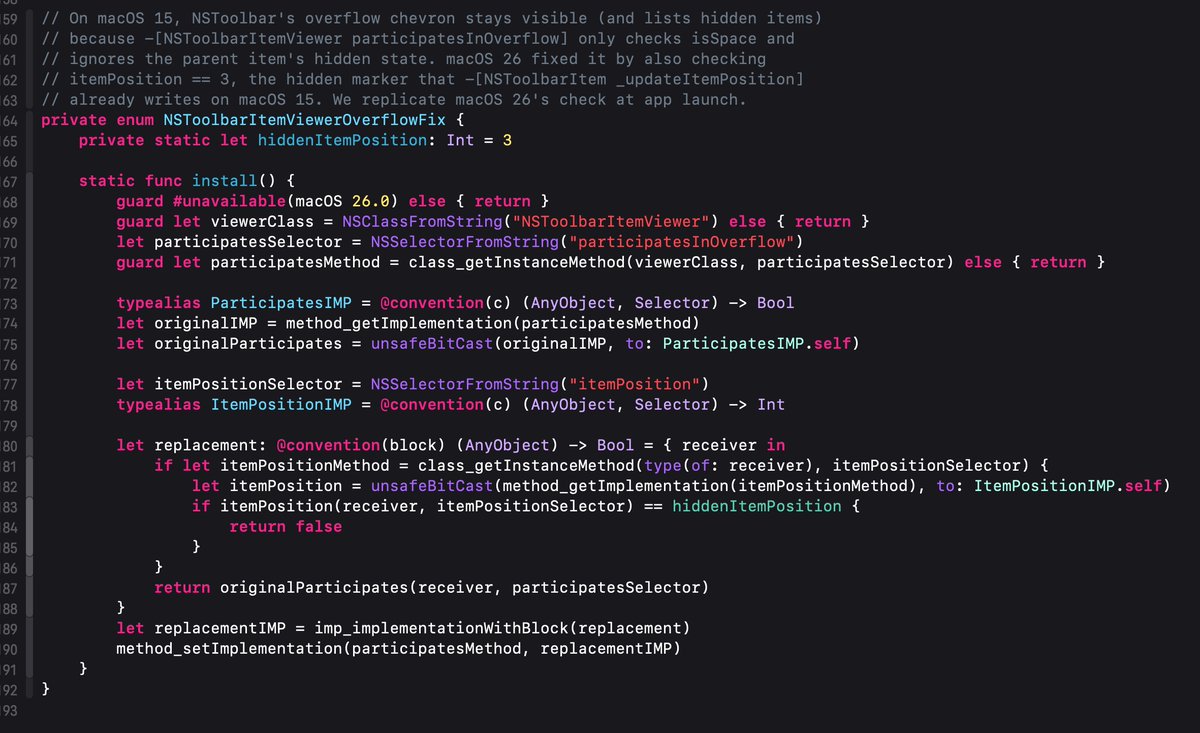
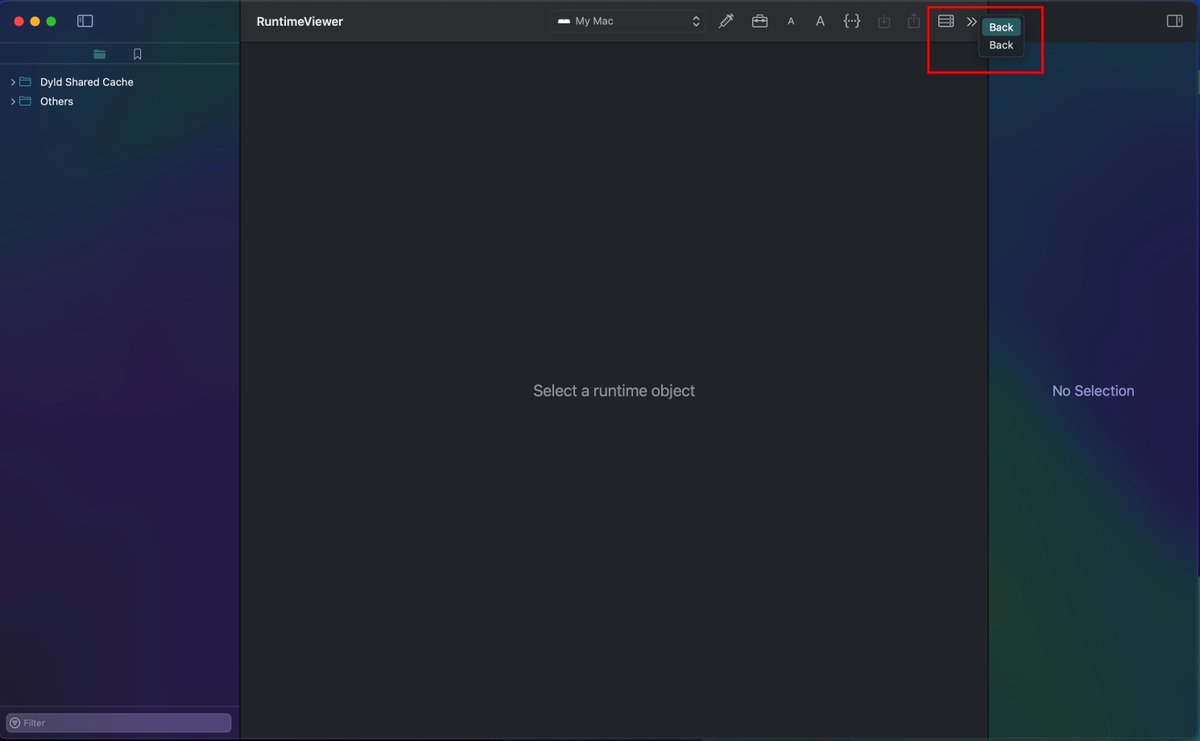
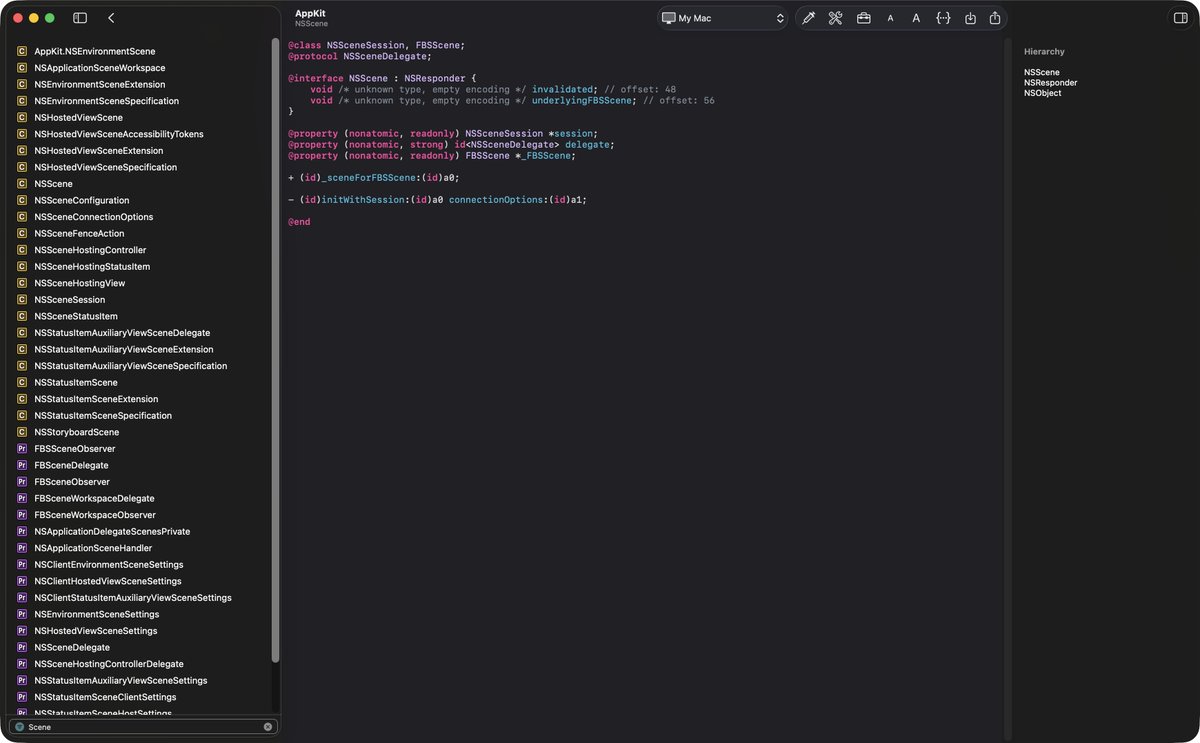
Apple's software quality has clearly deteriorated. The NSToolbarItem.isHidden, introduced with macOS 15, has had bugs since its inception.
1
1
6
513
May 5
macOS 15's -[NSToolbarItemViewer participatesInOverflow] failed to read the 'hidden' flag (itemPosition == 3) that _updateItemPosition had already written, causing hidden items to still be considered overflow candidates by NSBarLayout. This issue was not fixed until macOS 26.
2
187
May 1
What happened to Claude Code? After the 5-hour limit reset, I only chatted for a few minutes and 50% was already consumed. I was originally able to last until tomorrow's weekly limit reset.
1
3
558
Mx-Iris retweeted

Apr 20
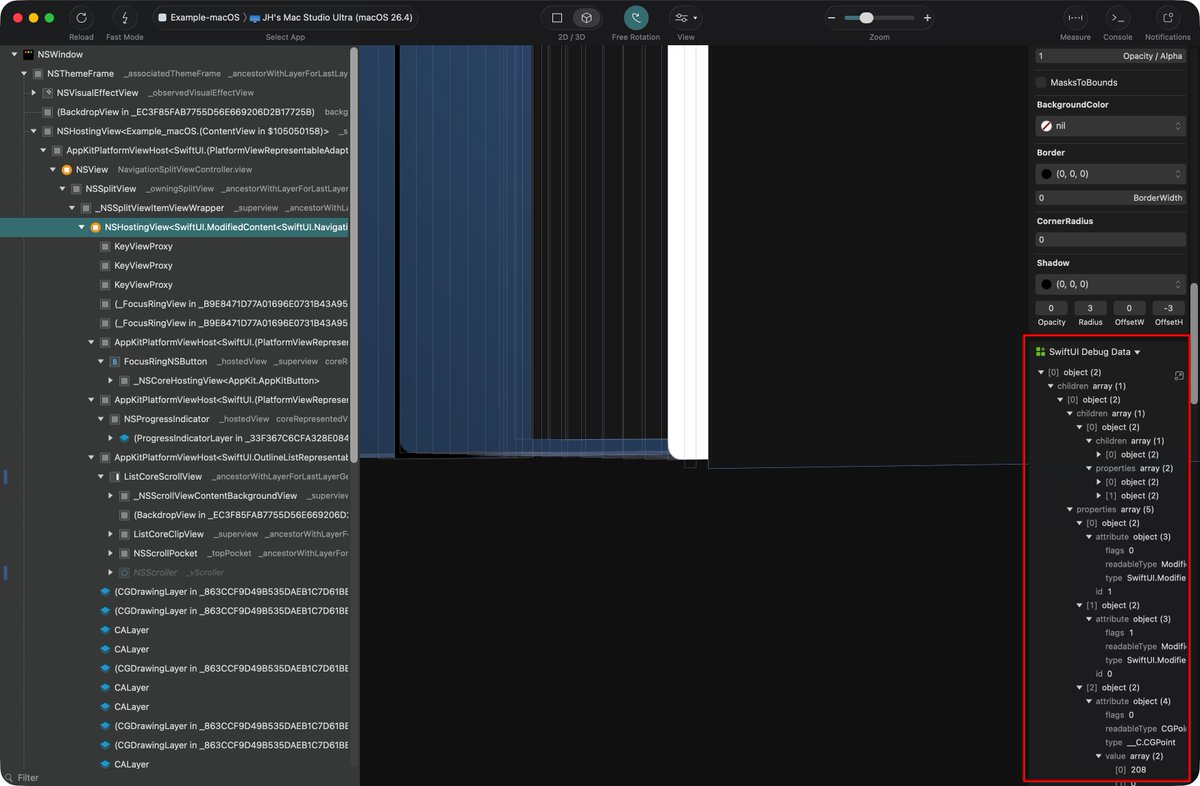
Doing something amazing stuff this weekend with @JH_Pointer and @Lakr233 .
LookInside with "SwiftUI" support in the future~
2
5
50
30,059
Mar 11
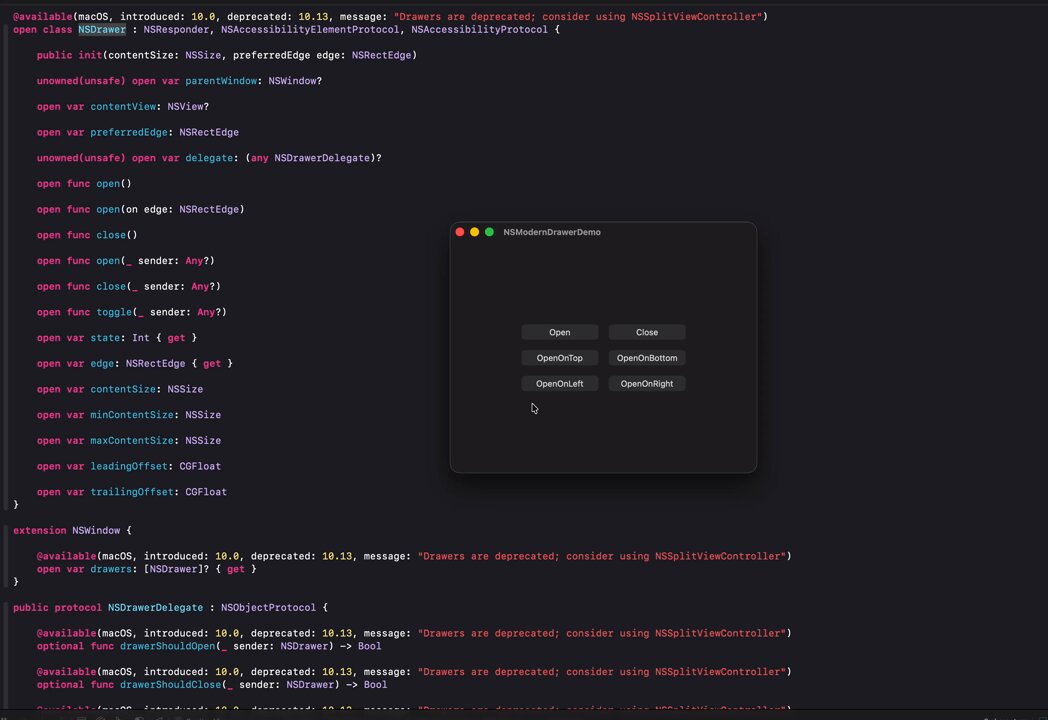
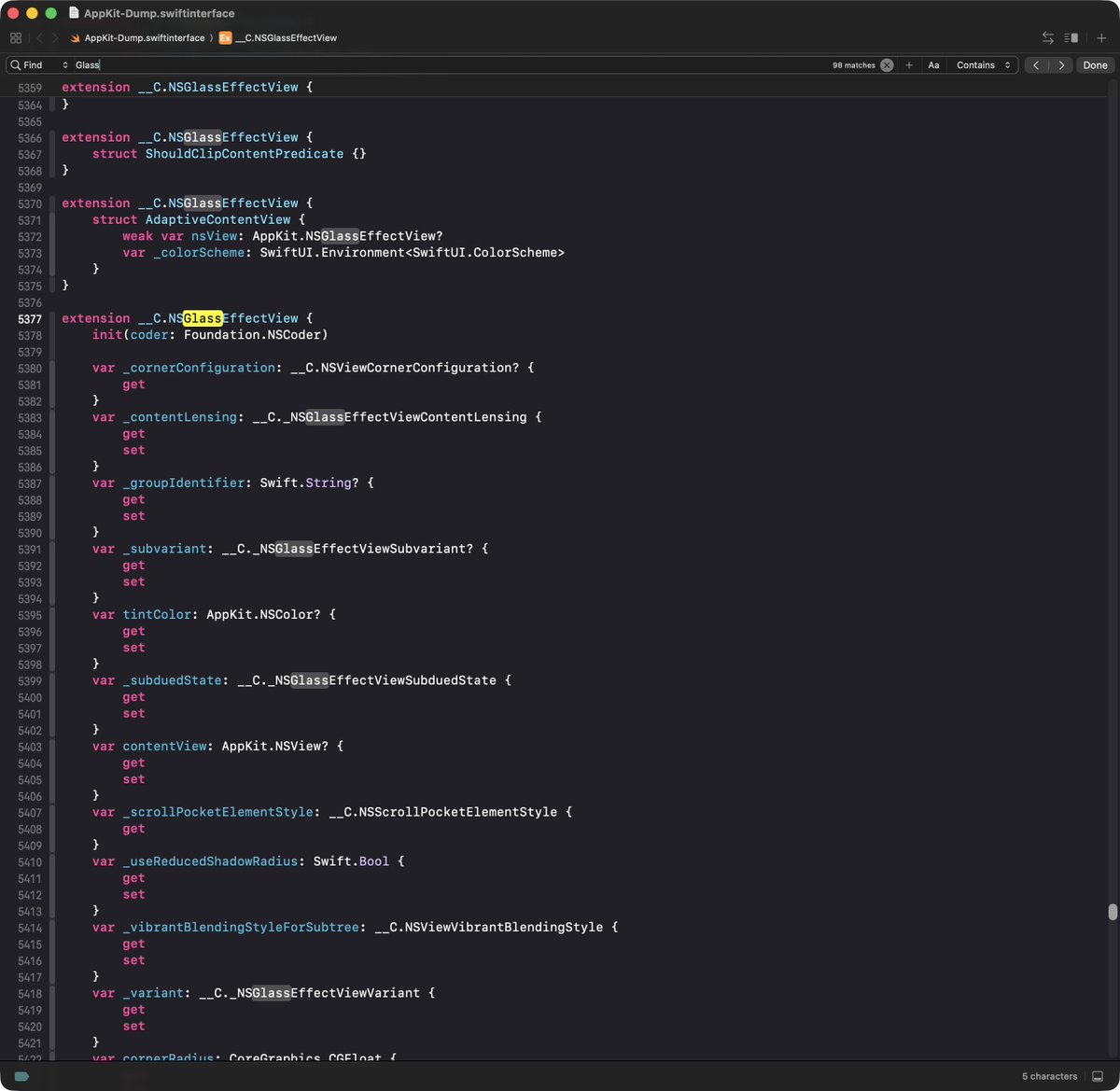
I don't understand why Apple deprecated this class; I think it's cool.
5
3
71
13,342

Mar 1
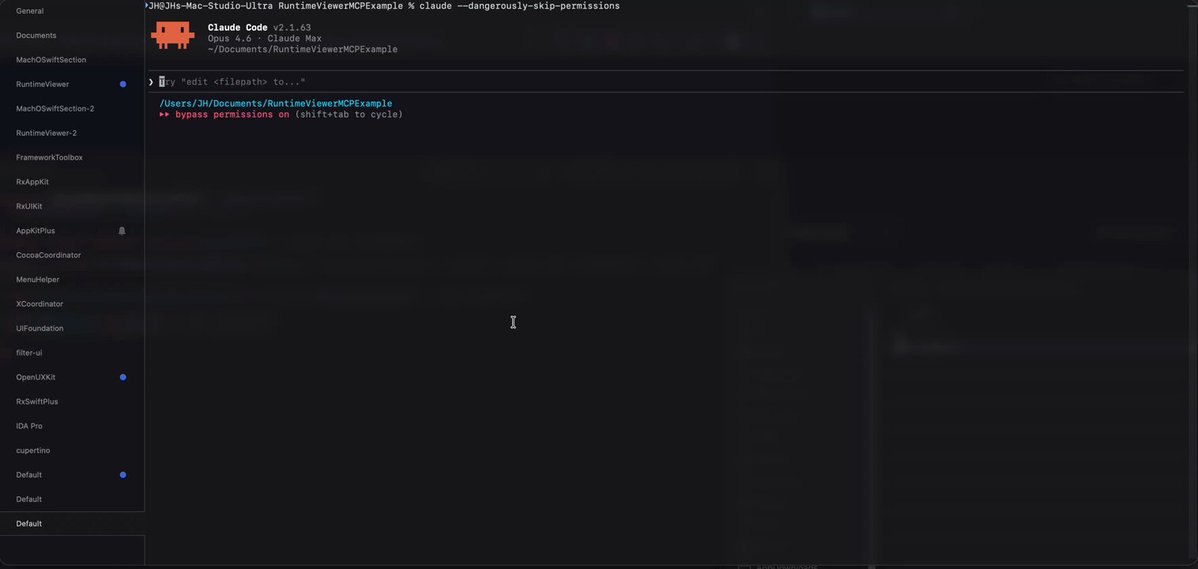
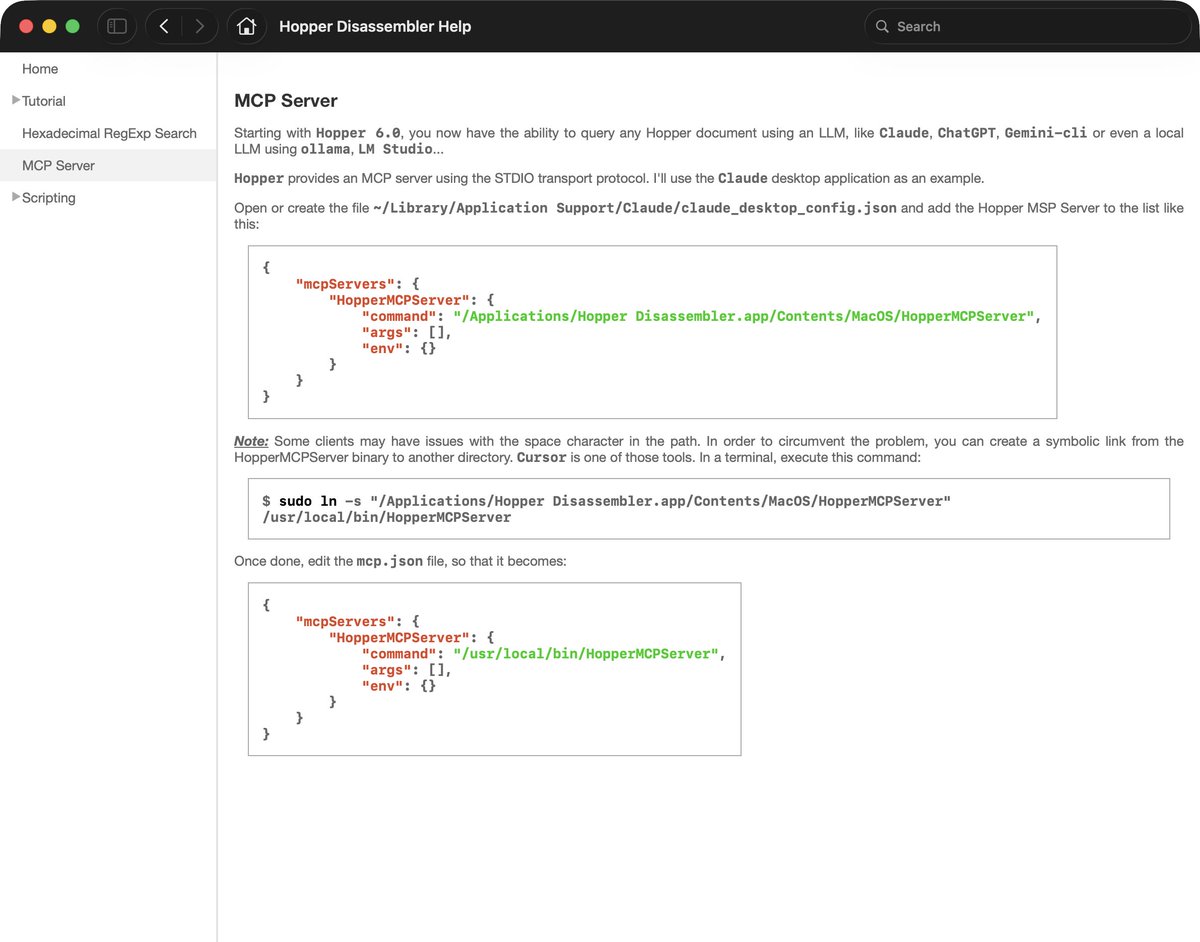
RuntimeViewerMCP now supports fetching member addresses! Let your agent explore framework type definitions, grab addresses on the fly, and decompile/disassemble directly in IDA/Hopper via MCP — no more manual searching & filtering.
github.com/MxIris-Reverse-En…
1
2
22
1,645
Mx-Iris retweeted

Feb 25
I have posted a write-up for those who are interested in building virtual iPhone.
If have any further questions, please feel free to reach out via DM, Thanks.
github.com/wh1te4ever/super-…
23
111
512
75,756
Jan 19
RuntimeViewer v2.0.0-beta.9 has been released, adding the ability to inject code into sandboxed apps (requires installing the new helper daemon in settings) and improving Swift Enum Layout annotations.
github.com/MxIris-Reverse-En…
1
3
37
3,208
Jan 11
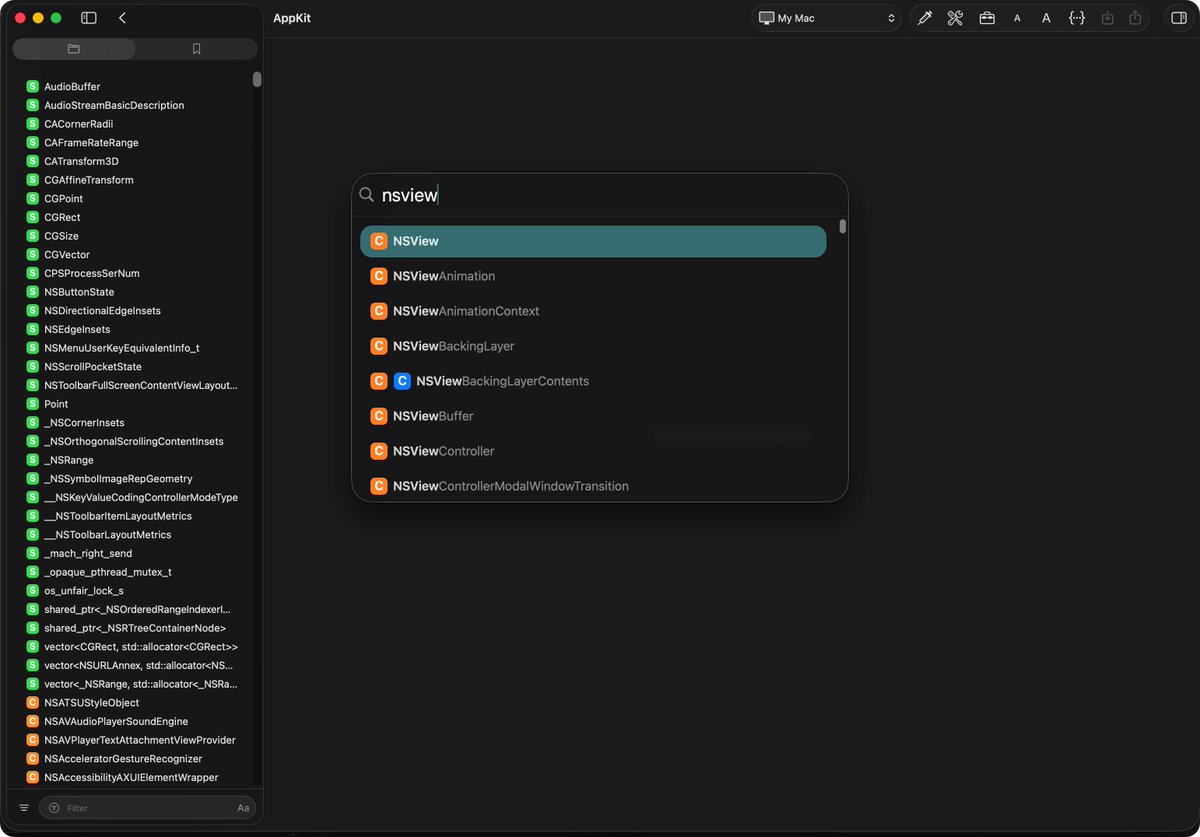
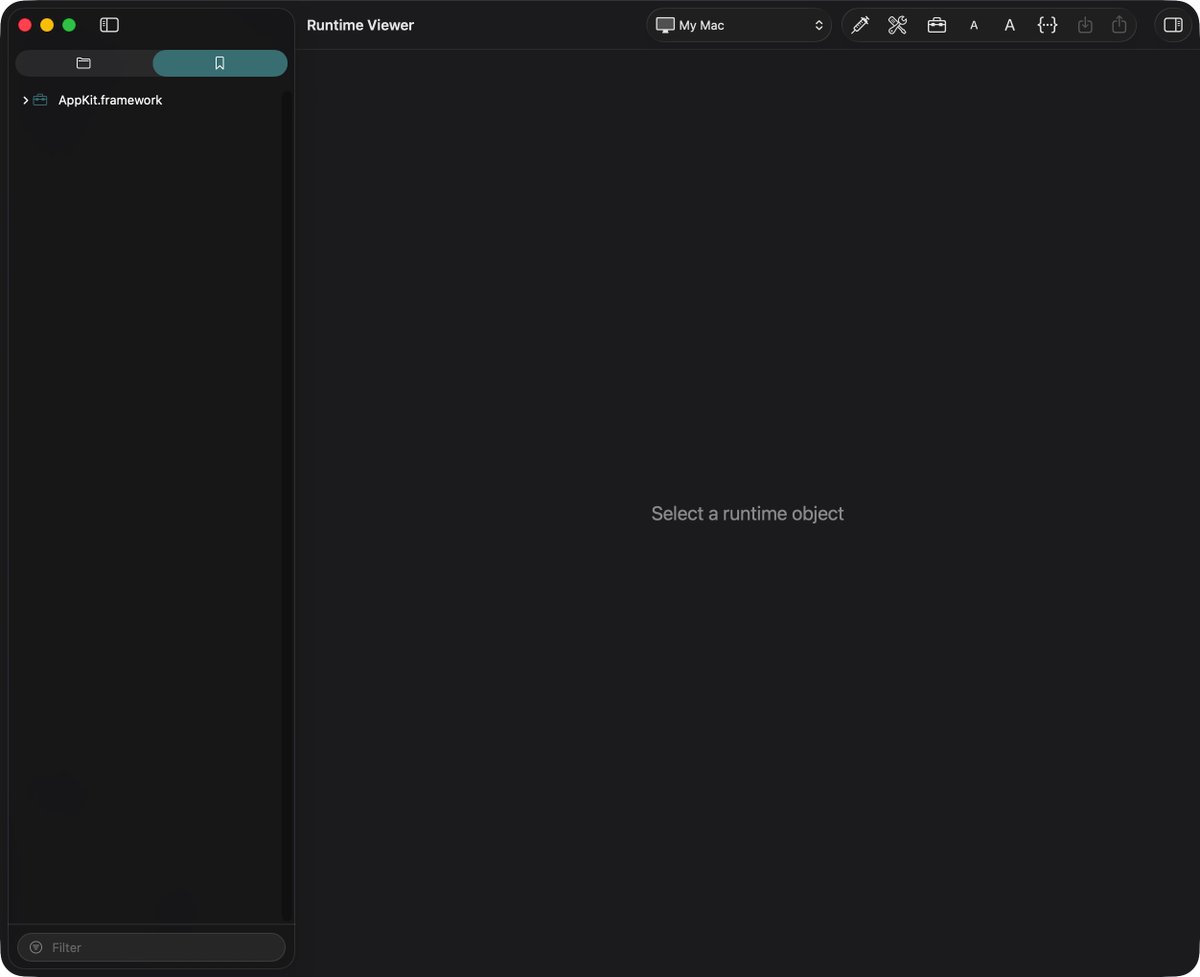
A new beta version of RuntimeViewer has been released, integrating the latest MachOSwiftSection. It can now view the layout of payload enums and includes OpenQuickly and bookmark features.
github.com/MxIris-Reverse-En…
3
9
1,017
Jan 11
MachOSwiftSection 0.8.0-beta have been released, fixing numerous issues and adding payload enum layout calculation (only supported for MachOImage). In-process versions have been added for all APIs, allowing free conversion between MachOImage and pointers.
github.com/MxIris-Reverse-En…
1
4
496
【新作ライブラリ(久々の)】
🐞バイナリファイルから DWARF(デバッグ情報)を直接パース・解析できる
Swiftライブラリを作りました
github.com/p-x9/swift-dwarf
- .debug_info / .debug_line / .debug_names / ...
- Mach-O 対応 (今後ELFまで拡張)
- MachOKitの拡張として開発
⭐️スターください⭐️
1
6
19
1,541
Mx-Iris retweeted

29 Nov 2025
The fact that @SwiftLang's swift-build is open source means we now have access to build-time data *during* builds. Information that never makes it to .xcresult, .xcactivitylog, or xcodebuild logs.
When you hit Build in Xcode, you're not directly invoking compilers. Your request goes to SWBBuildService, which communicates via MessagePack over stdin/stdout pipes. Every build event is a discrete, typed message with structured data: per-task timing, memory usage, dependency graphs, cache hit rates, rebuild causality. None of which reaches the terminal.
We got curious: what if an AI agent could tap into this stream instead of parsing logs?
So we forked swift-build and added capabilities to SWBBuildService to output structured data to an SQLite database that an agent can query during or after a build.
We tested it against two real codebases:
@Wikipedia iOS (19 targets, 3,303 tasks, 457s):
An agent identified that WMF (246s) was blocking 4 other targets, asset catalog compilation alone took 131 seconds as a single non-parallelizable task, and the build achieved 2.1x parallelization against a theoretical 955s serial path.
Tuist (35 targets, 4,952 tasks, 64s):
The agent found TuistSupport (15s) blocking 24 downstream targets, TuistCore (25s) blocking 18, and TuistServer (60s) blocking 5. It achieved 6.2x parallelization. It even surfaced 269 warnings with actionable recommendations: regenerate SwiftProtobuf files, fix deprecated OpenAPI fields, address a Swift 6 Sendable issue with NSCache, and suggested splitting TuistSupport into smaller modules.
This isn't guessing from log output. It's analysis based on actual dependency relationships, task timing, and resource metrics the build system tracks internally but never exposes.
We've open-sourced this fork. It's called Argus. Getting started is simple: install it via mise, set XCBBUILDSERVICE_PATH in your environment so all developers use it automatically, and configure your agent's memory with the instructions from the README. From there, agents can query build data and provide insights tailored to your project.
The vision goes beyond single builds. Imagine team-wide build intelligence across CI pipelines, proactive assistance before you modify a file that triggers a near-clean rebuild, or real-time intervention when a target takes longer than usual mid-build.
Much of this is achievable today with post-build artifacts (which is what we're building with Tuist's Build Insights). But protocol-level access unlocks real-time capabilities and richer causality data that post-hoc parsing can't provide.
Full blog post with implementation details, analysis, and setup instructions: tuist.dev/blog/2025/11/27/te…
5
42
257
38,655
Mx-Iris retweeted

28 Nov 2025
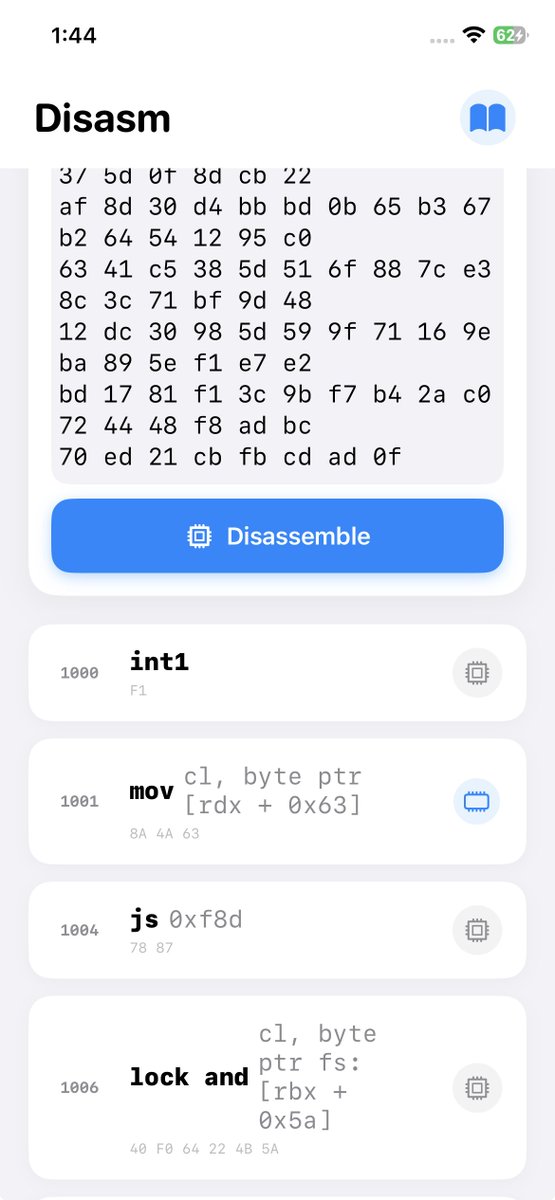
Simple Hex to Asm Instruction converter is here!
Wanted to make this since 2024 but due to unfixable capstone lib error, couldn't make it happen..
Thanks @JH_Pointer for the capstone-swift wrapper!
Without your wrapper fix, This couldn't be created🥹
3
3
17
2,817
26 Nov 2025
RuntimeViewer beta latest version has been released, with full integration of SwiftInterface module (thanks to Runtime, we can obtain field offsets for non-generic structs/classes).
Code injection can now inject arm64e applications (e.g. System App)
github.com/MxIris-Reverse-En…
6
12
106
33,485
26 Nov 2025
Note:
Because the arm64e architecture daemon has been rebuilt, the helper service needs to be reinstalled.
Code injection currently only supports non-sandbox applications.
Offset annotations need to be manually enabled in GenerationOptions on the toolbar.
2
1,003