Senior Fellow and Director of Cities @ManhattanInst. J.D. '21, @Harvard_Law. Former Intern @HolySeeUN. Proud Astorian. Views my own; RT ≠ endorsement.
Joined January 2022
- Tweets 454
- Following 370
- Followers 906
- Likes 466
15 Photos and videos
John Ketcham retweeted

Jun 12
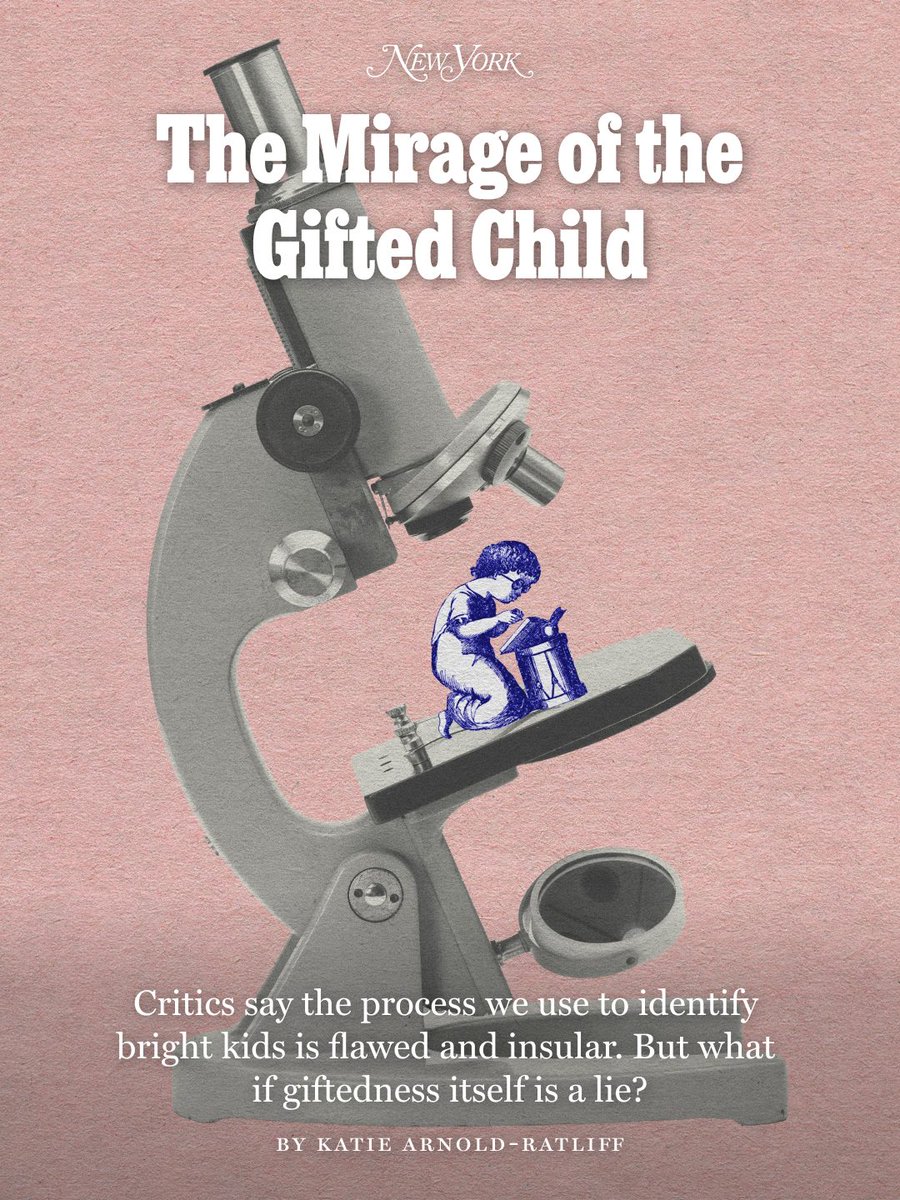
One big gap in the debate over gifted education is that we argue endlessly about identification, IQ tests, screeners, admissions criteria, who gets the label, but almost never about what happens after a kid actually gets in.
When I read this piece from @NYMag, I kept thinking about the part of the system nobody outside schools sees. I spent years as an education consultant across public schools, so I saw firsthand how these decisions actually got made.
Identification was never as objective as it appeared. Yes, administrators leaned on IQ scores and screening tools, but they also had classrooms to fill, and placement decisions bent to that reality more often than anyone will admit publicly.
What happened after placement was far less rigorous. In all my time in schools, I rarely saw anyone define what these programs were supposed to produce. There were rarely clear growth targets or expectations that students would advance at a faster rate. Often, there was little instruction that was meaningfully different from the general education classroom down the hall.
"Gifted and Talented Education" functioned as a label rather than a program with actual measurable outcomes.
So when the article cites research showing these programs barely move the needle academically, that is no surprise.
Thinking back, what strikes me most is how little time schools spent defining, measuring, and evaluating what students should gain.
Jun 11

Gifted and Talented, or G&T, programs have long been a perennial subject of debate, particularly in New York City, where it has bedeviled mayors for years. Some parents have already washed their hands of the whole G&T business, refusing to participate in what they view as a corrupt system of segregation. But countless others still place significant stock in the G&T designation and what it offers and are comfortable relying on cognitive testing, should it be required, to determine whether a child qualifies.
“When your intelligence is the foundation of your self-perception, failing to achieve feels like soul death,” writes Katie Arnold-Ratliff. But if the limited amount of information we have about gifted kids long-term is any indication, most lead, at best, ordinary lives of modest accomplishment. A 35-year study of 677 gifted children found that by age 50, only 12.3 percent had reached a level of “eminence,” defined as “full professors … Fortune 500 executives … judges and lawyers, leaders in biomedicine, award-winning journalists and writers.” This means 88 percent never did.
Arnold-Ratliff digs into the myth of the gifted child, and how our notions of intelligence may be inherently flawed: nymag.visitlink.me/9mc2Wh
Community note
Eminence is incredibly rare, so 12.3% among gifted students is decidedly over-representative. For example, around 0.023% of Americans are full professors at R1 institutions, yet 22 of 677 (3.25%) of gifted students studied eventually held this position (a ~140x fold increase).
pmc.ncbi.nlm.nih.gov/articles/PMC64…
7
14
52
9,214
John Ketcham retweeted

Jun 10
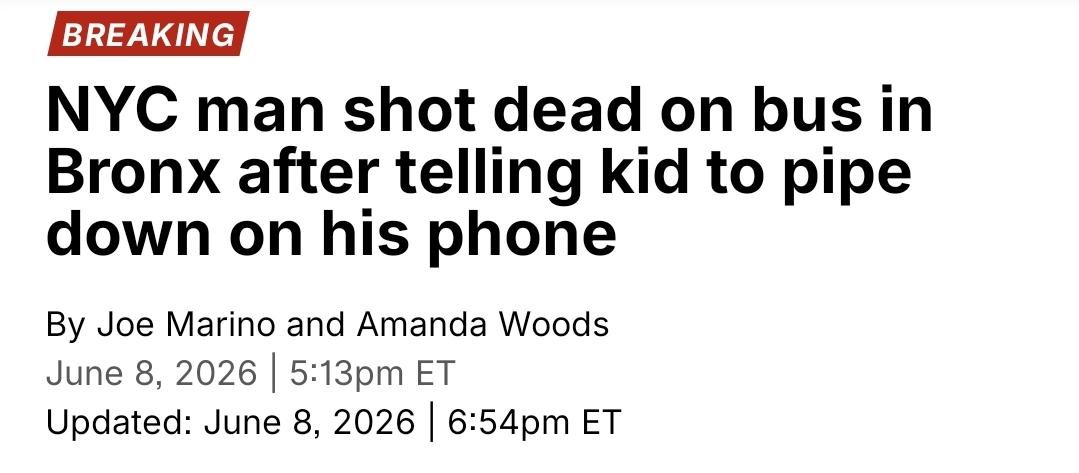
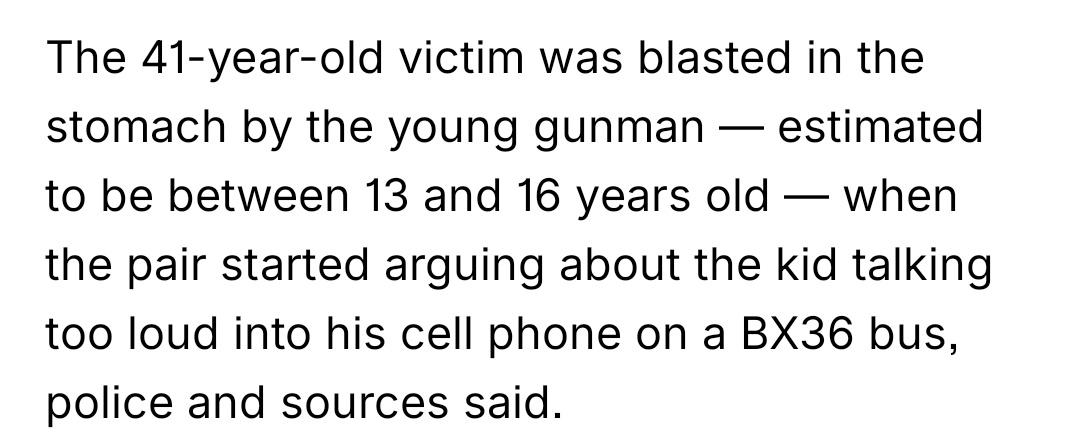
Yesterday, May 8, a man asked a ~16 year old to tone down his phone conversation on a Bronx bus, and the teenager shot him to death (see images in the quoted post below).
A few months ago I was at a Christmas party and a guy I was talking to got extremely angry about people who listen to music without headphones on the subway, and he was even more angry about people who watched TikToks/Reels full blast without headphones. I think he is correct that these are terrible, anti-social behaviors that degrade the commons.
I also agree with his comparison of music and short-form videos. Playing music into the air in public places like a train/bus is no-good, anti-social, and usually sounds bad in one way or another [^1]--either people don't like your music, or your tinny phone speaker sounds terrible. In either case, people deserve a less polluted aural commons when on public transportation. TikToks/Reels are often worse, because they are not a continuous thread of sound like a song; the abrupt transitions from video to video can easy destroy someone's peace.
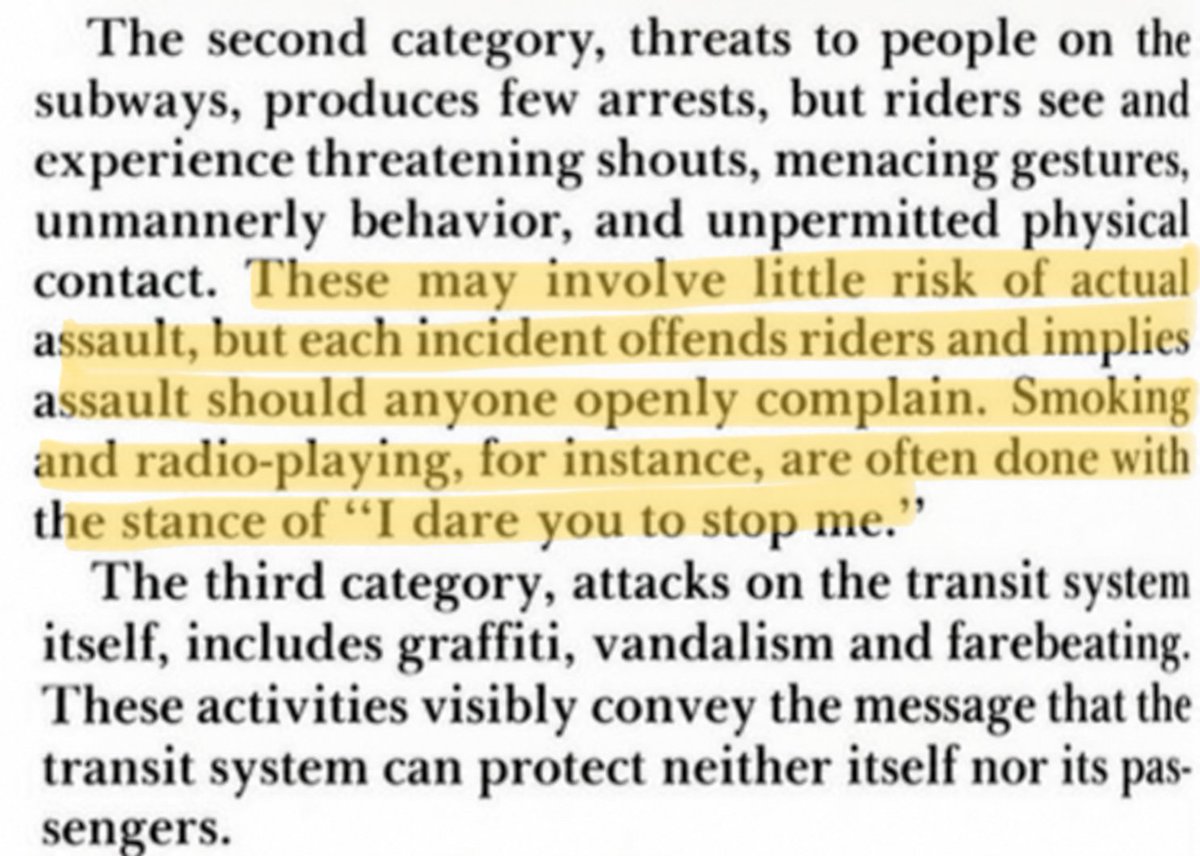
Now back to my angry Christmas interlocutor: part of the reason he was so angry was because he had the sense that "things were getting worse," and that New York City "didn't used to be like this." His idea that this behavior was new gave it more relative weight, and fed his anger more. I think it's true that since COVID the norms against anti-social headphonelessness have badly degraded to our widespread civic detriment. But also: we have been here before. The fact that Apple removed 3.5mm jacks from their phones and the advent of TikTok both might have something to do with why this is happening more now, but people did this as soon as they got mobile sound systems. See my highlighted excerpt below from page 10 of the first edition of Amicus, the journal from the Natural Resources Defense Council (NRDC). That we have been here and solved it before means we can solve it again, even if it won't be easy.
You might say "What's the big deal? Don't we have other fish to fry? So there's annoying sound on the subway, so what?" Perhaps, but I don't think this is a small thing, and I personally think it's worth addressing. It's not merely about a quality aural environment for the public, even though that's enough of a reason by itself. It's also because anti-social privatization of the public soundscape is often a threat. @Rafa_Mangual lays it out well here: x.com/Rafa_Mangual/status/20…
"Anti-social behavior—think about the guy blasting music from a speaker, talking loudly on speaker-phone, smoking inside the subway car, etc.—in public spaces is often engaged in ***_as a dare_***. The whole point is to provoke anger and annoyance in those around him, which serves two purposes, depending on the response he’s hoping for: (1) If everyone bites their tongues, the antisocial asshole gets to tell himself he’s such a badass no one would dare speak up; or (2) If someone confronts him, he finds his excuse to scratch a violent itch. Understand that saying something to these people will often come with a real risk of violent confrontation."
Both public transportation and public safety wonks have known this for decades; again, see my highlighted excerpt from the 1979 NRDC report: "...Smoking and radio-playing, for instance, are often done with the stance of 'I dare you to stop me.'"
And for this reason above all others--menacing the public--the problem is worth addressing. The public deserves an orderly, safe commute.
[1] There's a genuine tension here between keeping a clean aural commons, and allowing New York's culture to bloom with performers/people being themselves. Clearly, people are of different minds here, and sound policy and norms would converge on some sort of workable compromise. But I think "playing things from your phone without headphones on public transportation" or "being very loud on speakerphone" is generally a bad norm without redeeming positive externalities.
Jun 9

If you can't get in serious trouble for carrying a gun as a kid, why not? And what's the point of carrying a gun if you can't also be a loud asshole on the bus and then shoot the first person who yells at you? Why not.
nypost.com/2026/06/08/us-new…
4
18
255
30,217
John Ketcham retweeted

Jun 8
New York's economic challenges won't be solved with more mandates, higher taxes, or additional bureaucracy. The growth path is clear: lower barriers to investment, support entrepreneurs, and make the city a place where businesses want to expand and hire. nypost.com/2026/06/08/opinio…
3
10
26
1,247
John Ketcham retweeted

Two days after this, @NYCComptroller's report put it in context: the storefront vacancy rate of 11% is still above the pre-pandemic 2019 level. Worse, it's nearly TRIPLE the national rate of ~4%. "Post-pandemic low" is doing a lot of work here.
The mayor doesn't have an economic development strategy for the Big Apple. @ManhattanInst's @JKetcham91 lays one out in @nypost.
nypost.com/2026/06/08/opinio…

Good news, New York: Storefront vacancies are at a post-pandemic low, and we're continuing to unlock opportunities for more small businesses to open and existing small businesses to thrive.
2
11
63
7,573

Jun 8
New York’s strength has always been its economic dynamism—people taking risks, starting businesses, and achieving their ambitions. But a higher share of NYC storefronts are empty than before COVID, a wasted opportunity. My latest in @nypost:
nypost.com/2026/06/08/opinio…
6
6
35
5,274
John Ketcham retweeted

Jun 8
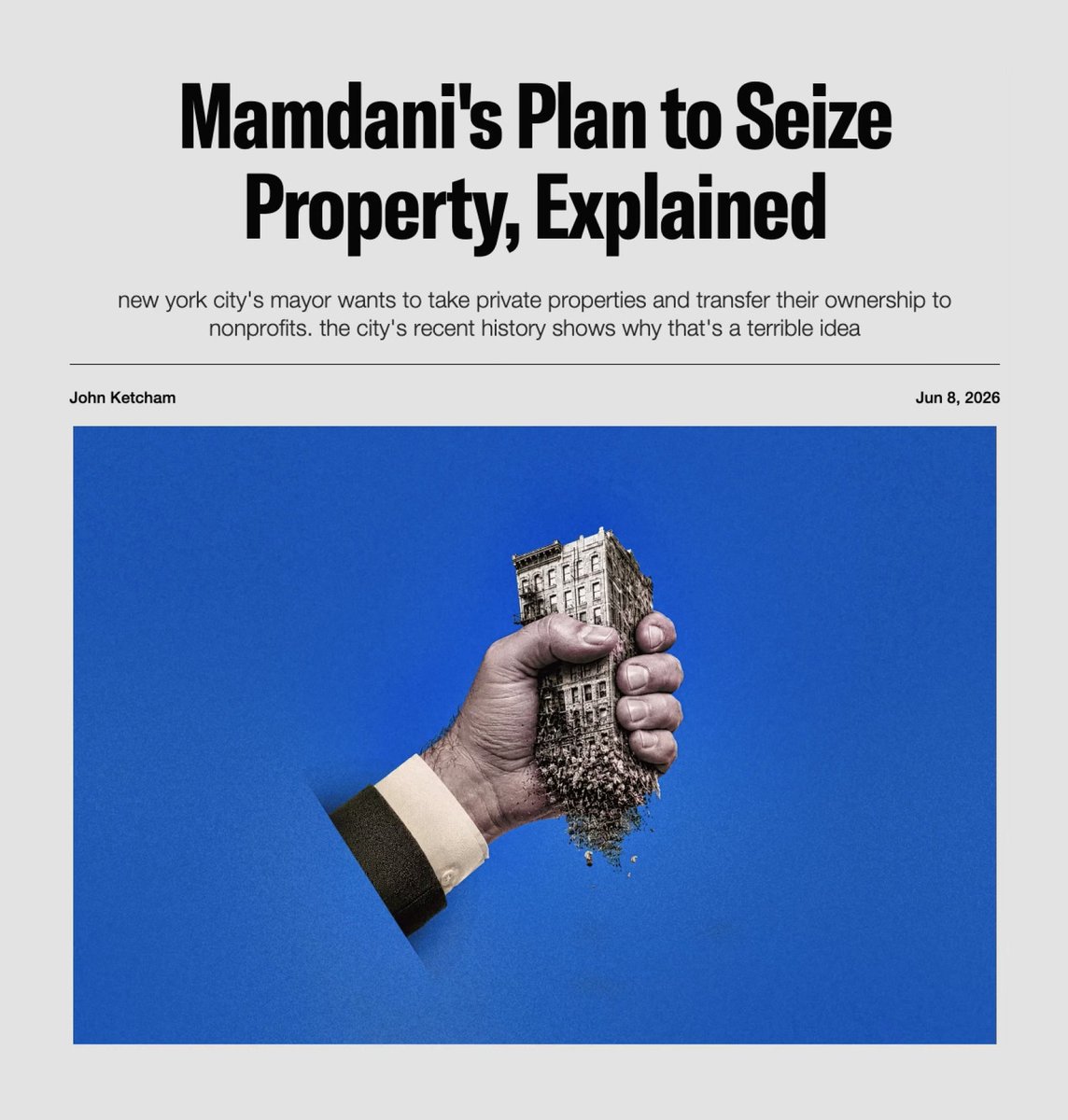
Zohran Mamdani says he’ll take “aggressive legal action” to seize buildings from negligent private landlords and transfer them to nonprofits and tenant associations.
New York tried this 50 years ago — it didn’t work.
In the 70s and 80s, NYC seized thousands of abandoned properties, spent ~$10.6b managing them, and gave many of them to nonprofits. Living conditions deteriorated (77% of city-managed units had rats), and city-appointed landlords fell behind on payments.
Old buildings deteriorate and need money to be fixed; changing a building’s owner doesn’t change its economics. The real issue here is rent regulation, which sharply limits legal rent increases; NYC’s progressive left either doesn’t know or hasn’t acknowledged history, and as @JKetcham91 argues, Mamdani is exploiting their ignorance to build his political base.
Full story 👇
41
165
486
64,083
John Ketcham retweeted

May 23
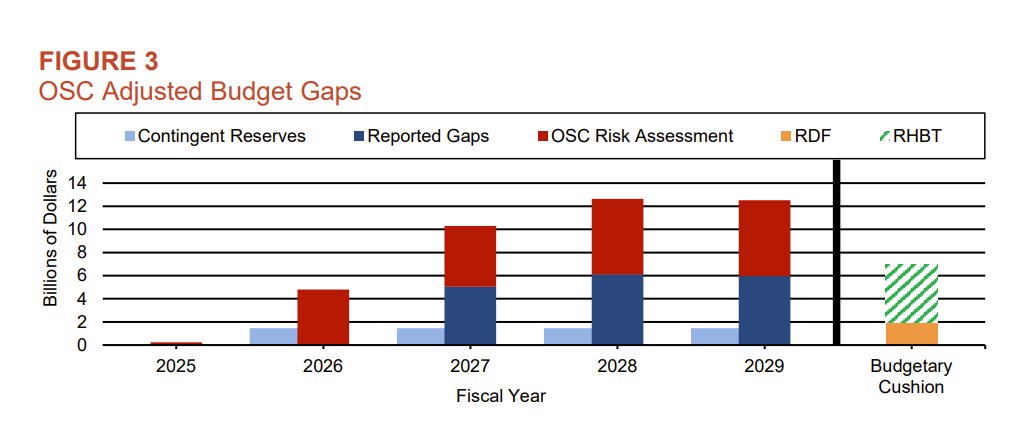
This is a remarkable claim, given the warnings that were circulating in mid-2025 about NYC's looming money problems (and a reminder of why NYC needs careful state oversight). From August 2025:
May 22

NEW: “I did not see this budget deficit coming,” frmr council speaker and Lt Governor candidate Adrienne Adams says about @NYCMayor budget
Mamdani has blamed the deficit on frmr mayor Eric Adams - but the council has an equal role in crafting/approving the city’s budget
4
11
55
3,205
John Ketcham retweeted

May 22
Often lost in the tit-for-tat nature of the redistricting wars is a simple fact: Republicans have an inherent advantage as Americans continue to vote with their feet, leaving blue states for red ones.
If Democrats were wise, one of their most effective anti-gerrymandering strategies would be improving public safety, quality of life, and the business climate in the big cities they govern.
3
7
40
2,672
John Ketcham retweeted

May 21
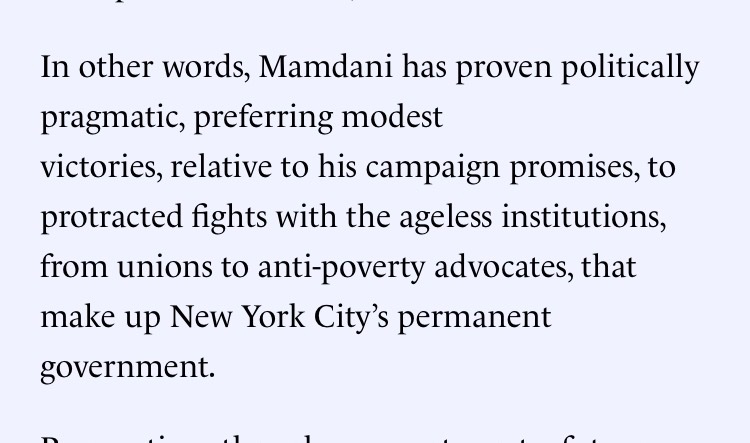
The mayor’s budget isn’t a socialist budget. It’s just a regular bad budget. Ironically, we spend so much, we can’t afford socialism!!! city-journal.org/article/zoh…
2
19
53
9,432
John Ketcham retweeted

Long Island Rail Road employees are the highest-paid railroad workers in the nation. In 2025, 168 LIRR employees made more in pay than Governor Kathy Hochul. 25 of those employees made over $300,000 per year.
The LIRR strike is over, but the work rules that contribute to these numbers remain.🧵
3
7
35
5,431
May 21
RT @reihan: Here’s where I’m coming from.
The federal deficit is 5.8 percent of GDP at a time when unemployment is 4.3 percent, a sign (to…
11
May 20
RT @reihan: First, the NYS housing emergency was made in NYS, and it’s worth asking whether our state lawmakers have made things better or…
4
May 19
RT @reihan: Because the TWU can’t strike without crippling penalties, the game here was to use the LIRR strike to establish a wage “pattern…
17
May 19
The LIRR strike is over, but old work rules and the bigger threat remain. In today's @nypost, @policyengineer and I explain how LIRR unions leveraged the strike to try to set a costly pattern for future MTA-TWU labor deals that could hurt riders and taxpayers across the region.
6
8
96
6,670
John Ketcham retweeted
May 17
Hochul’s MTA has offered a perfectly fair deal from which the unions walked away. Insane to run a GOP campaign based on giving in to a union strike, but that’s Long Island, a place whose insane union dysfunction depends entirely on access to NYC wealth. We save $ sticking with the socialists honestly.
May 17

Kathy Hochul has billions for illegal migrants and Zohran Mamdani, but nothing for Long Island commuters or the people who keep our trains running. The least Hochul could do is end congestion pricing during the strike and I will end it permanently as Governor.
20
38
507
51,292
John Ketcham retweeted
May 17
The LIRR unions nightmare is that tomorrow *isn't* a nightmare: most people work from home; those who can't will carpool, get dropped off by a relative at the subway, or take one of the MTA shuttles. And things are ... not fine but not that bad.
49
9
435
56,155
May 17
Giving credit where it's due. Last week, I praised @GovKathyHochul for her intent to opt NYS into the SGO tax credit. She again deserves recognition for protecting taxpayers and LIRR riders against insatiable public-union demands.
May 16

New York State politics is funny because the Manhattan Institute is Kathy Hochul’s strongest soldier on taking a firm line with the LIRR union meanwhile actual Long Island and New York Republicans…
3
297
John Ketcham retweeted
May 16
Governor Hochul can be the Margaret Thatcher of New York State, if she can hold firm (a big if). You will never fix crazy union costs and rules in New York unless you demonstrate you can stand up to the worst offenders -- the LIRR work-rule overtime featherbedders -- and politically survive.
15
19
249
35,290
John Ketcham retweeted

We’re happy to cheer for a Democrat who shows the backbone needed to stand up to public sector unions.
The people who keep accusing us of being blind partisans should maybe try following Hochul’s example.
May 16
New York State politics is funny because the Manhattan Institute is Kathy Hochul’s strongest soldier on taking a firm line with the LIRR union meanwhile actual Long Island and New York Republicans…
1
5
66
6,286