
All data is valuable, all evidence is statistical, all explanation is diachrony, all inquiry is permissible. Doing Uralic (pre)historical linguistics.
Joined January 2022
- Tweets 9,423
- Following 158
- Followers 1,219
- Likes 9,051
276 Photos and videos

Pinned Tweet

23 Aug 2025
Presentation from a little while back: finding a 2nd sibilant in Old Finnish and Old Karelian
academia.edu/143584127/Kanta…
1
15
5,269
One-day ideadump blogpost: Etymologizing Uralic berry names with an element *-tarə, perhaps 'berry bush' 🍇🌿
protouralic.wordpress.com/20…
5
94
I dream sometimes of an alternate version of my field's literature. As with most dreams, I remember not many details, as much as the shape around it. Shelves in libraries that I've not been to, publishers who do not exist or didn't exist that way, results found in wrong centuries
2
17
628
…and still held onto common assumptions of "irregular debased dialects". Perhaps for a long while, occasional individual "dialect X shows regular correspondences with Y" work would be received roughly as "we have now shown X is a true language after all and not only a dialect"?
1
2
100
Thus *not* implicitly prompting that hey, maybe we ought to be documenting a variety of dialects in the first place to have more material to work on (a problem that even today exists to some extent in some places of the world).
3
99
I am starting some development on a bɫʉːskaj presence. The plan is not for me to be there in a highly professional capacity so I'm not directly linking to account there; this is just to note to followers who might start seeing around a familiar avatar with a name in Proto-Uralic
7
286
J Pystynen ✽🫐 🗒☕⌘🚯🧦ᴤ retweeted

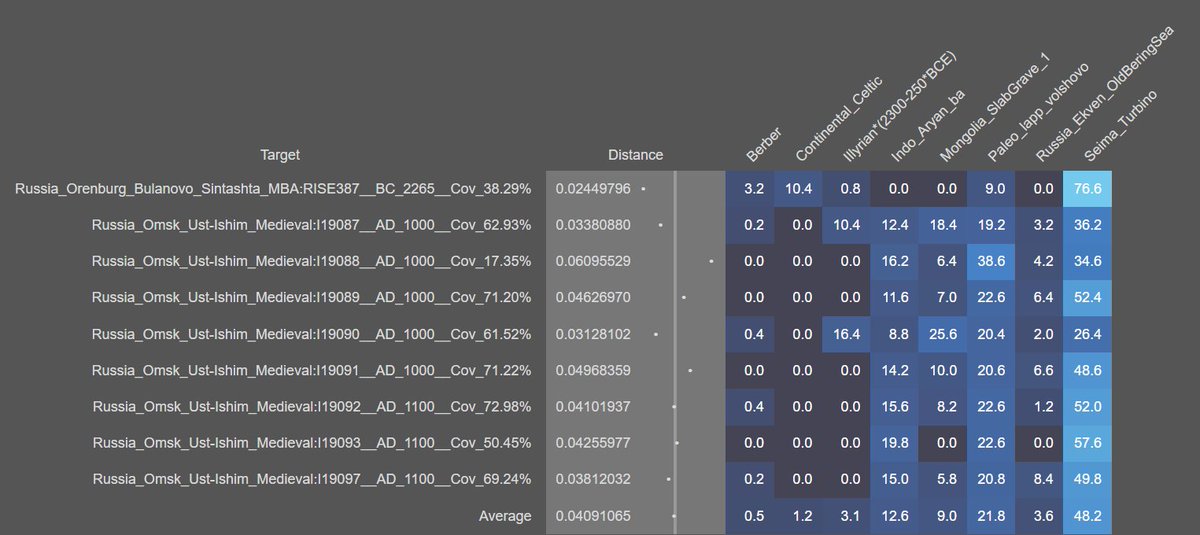
Genetic samples from Ust-Ishim dropped recently. They do have some Turkic admix, Turks began pushing north around this time (10-13th c AD). But they are still very dominantly Uralic/Ugric, clustering near modern day Khanties and Mansis.
2
1
7
342
There is something intoxicating in working on what has good odds to go on to be the locus classicus on a topic, remembered for centuries (even if it's something minor like a single etymology).
4
258
Kokko, kokoo kokoon koko kokko. Koko kokkoko? Koko kokko!
"Eagle [pn.], collect together the whole bonfire. The whole bonfire? Yes, the whole bonfire!"
– Finnish uh, folk meme saying with almost just one consonant and also just one vowel
Jun 9

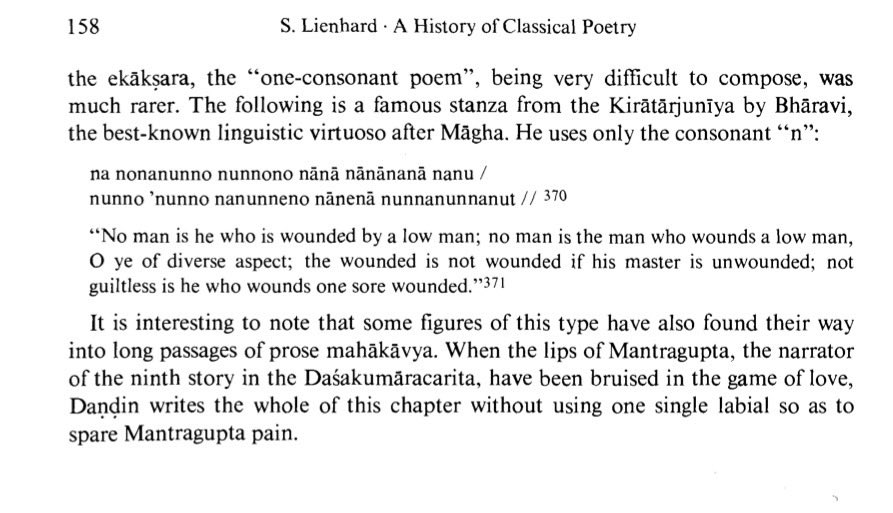
Sanskrit has an extreme form of citrakāvya (picture-poetry) called ekākṣarā (one-syllable/one-letter). The name speaks pretty much for itself. Here is a famous example from Bhāravi:
5
49
1,488
J Pystynen ✽🫐 🗒☕⌘🚯🧦ᴤ retweeted

It’s not a “powerful alternative theory”, it’s wishful thinking. Neither Čašule’s attempt at relating Burushaski with Indo-European, nor Holst’s attempt at relating it with Kartvelian has yielded any sort of regular correspondences that can be taken seriously. They have ...
Jun 10

Yes, it is true that Burushaski is thought to be a prominent "language isolate" not just of Pakistan, but of Asia and the world. Yet, there's also a powerful alternative theory which infers it to be an Indo-European language:
jac.qau.edu.pk/index.php/jac…
1
3
45
2,492
I will take this passing opportunity to re-post my notes on Yurats from some years back, including in digitized form the only known Yurats wordlist
protouralic.wordpress.com/20…
May 21

For now: Mator, Kamas, Yurats, Merya, Meshcera, Muromian
1
8
368
I have also heard Salminen was working on some publication on Yurats a few years ago, but so far I have not seen that appear.
5
128
Related reminder: Proto-Indo-Iranian and Proto-Uralic have the opposite notation for affricates from one another.
– PII has *ć [tʃ] and *č [tɕ]
– PU has *ć [tɕ] and *č [ʈʂ]
So the expected correspondences in II to Uralic loans are, funnily enough, (some) *ć → *č versus *č → *ć.

The simplest solution I think is the one noted by Holopainen: PII *a is central [ɐ], PU *a is back [ɑ] or even [ɒ]; so there's no real reason to think a front substitution *a → *ä [æ] is any less expected than a back substitution, *a → *a or *a → *e̮ [ʌ].
1
1
13
1,159
A delightful and evocative idea (speaking as a seasoned cellar-door appreciator myself); but that it generally does not happen actually tells you a few basic but important sociolinguistic facts.
Jun 9

Language should be more Babelian. People should speak semi-incomprehensible idiolects so that you can immediately identify them from one sentence. Mix words from different languages, different times, revolt against the homogenizing force of the Internet.
5
246
J Pystynen ✽🫐 🗒☕⌘🚯🧦ᴤ retweeted

Jun 8
This is one of the more pathetic strategies to get people to stop criticizing academia.
The complaint isn’t even that the critics are saying false things! It’s just smearing, innuendo, and power relations jockeying. Which is exactly what critics are saying academia has become.
13
20
175
9,189