
Canuck. Article 1, Section 8; 'A Plea for the Constitution' ; 'our basic bargain' reneged by 'conservative' Supreme Court - 1884! - 'Paper' becomes 'money'.
Joined February 2012
- Tweets 14,881
- Following 3,006
- Followers 1,604
- Likes 20,816
5,910 Photos and videos

Stuart MacLean retweeted

i came to the conclusion that this story is so awful that we have no way to punish it. to commit to an appropriate measure of justice is beyond our willingness to do it.

The revelations six years later are pouring out so quickly that it is impossible to keep up much less mentally process all this:
* The Director of National Intelligence has documented 120 US-funded/owned biolabs in 30 countries many of which are manufacturing and manipulating infectious diseases.
* Senator Rand Paul's committee has released the receipts concerning US funding/backing of the manufactured SARS-CoV-2 virus/vaccine as part of this program.
* Senator Johnson has produced definitive evidence that US public health agencies knew of the grave dangers of the shot to everyone but said nothing.
* Many officials are privately admitting/proving that the whole point of lockdowns was to preserve population immunity for the shot and block other avenues toward wellness.
* Hardly any of this makes the national news and one wonders if the public mind has any awareness at all.
933
3,723
17,332
1,076,781

The fixed pie fallacy is false. Wealth isn’t static, it’s CREATED through innovation and voluntary trade.
Musk’s companies generate NEW value people choose to buy (better cars, cheaper launches, global internet).
This expands total output, jobs, and options instead of taking from a fixed pool.
Wealth creation is positive-sum. The pie grows.
You can explain it to leftists but you can’t make them understand it, especially when their incentive is not to.

12
20
206
4,721
Stuart MacLean retweeted

“one-time redistributions are two orders of magnitude smaller in helping the poor than the 2,900 percent Enrichment from greater productivity since 1800.”
deirdremccloskey.org/docs/pd…

There are about 700 million people still living in extreme poverty, on less than $2.15 a day.
Let’s do an experiment. Give the bottom billion $1000. That won’t make them rich, but it would overcome the worst forms of deprivation.
The cost would be $1 trillion a year. That’s less than 1% of global GDP. But we choose not to do this.
2
1
8
1,864
Stuart MacLean retweeted

Jun 12
Congratulations @ElonMusk.
Thanks to SpaceX's IPO, he's the first Trillionaire.
He didn't TAKE money from anyone. He CREATED wealth.
He launched satellites that connect even the poorest, most remote parts of the world.
Our world needs more MAKERS like Musk; fewer TAKERS like:
1,427
9,448
60,798
1,094,101
Stuart MacLean retweeted

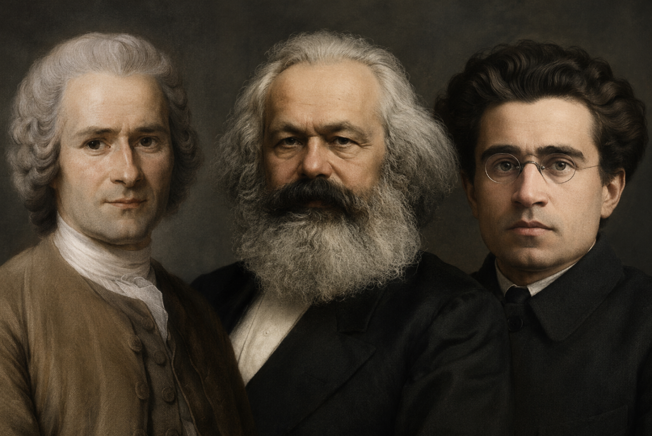
If you want to understand the modern left, you need to understand three men.
One redefined freedom. One redefined history. One redefined power. Together, they created the intellectual foundations of much of modern progressive politics.
Jean-Jacques Rousseau laid the foundation in the 18th century. He argued that man is born good and free but is corrupted by society – especially by private property. This idea that civilization itself is the source of inequality and oppression became the emotional core of leftist thought. Rousseau replaced the individual with the “general will” and portrayed traditional institutions as chains that must be broken.
Karl Marx took Rousseau’s romantic critique and turned it into a supposedly scientific system. He argued that private property and class relations were not just morally wrong but historically doomed. Marx shifted the focus from abstract human nature to the economic base, claiming that history moved through class struggle toward a final, inevitable revolution. His ideas justified the seizure of power and the total reconstruction of society in the name of progress.
By the 20th century, however, it was clear that the Western working class was not going to revolt. Antonio Gramsci provided the next crucial development. He argued that capitalism maintained power not primarily through economics, but through cultural hegemony – the dominance of “bourgeois ideas” in education, media, religion and civil society. Gramsci concluded that revolutionaries must first capture the institutions of culture before they could seize political and economic power. This strategic shift moved the left’s focus from factory workers to universities, schools, media and the family.
Together, these three thinkers created the intellectual architecture of modern leftism: Rousseau supplied the moral grievance against civilization, Marx supplied the revolutionary method and historical justification, and Gramsci supplied the long-term cultural strategy. The result is a movement that no longer primarily fights over wages and factories, but over language, education, identity, and the moral legitimacy of Western society itself.
62
308
803
24,492
Stuart MacLean retweeted

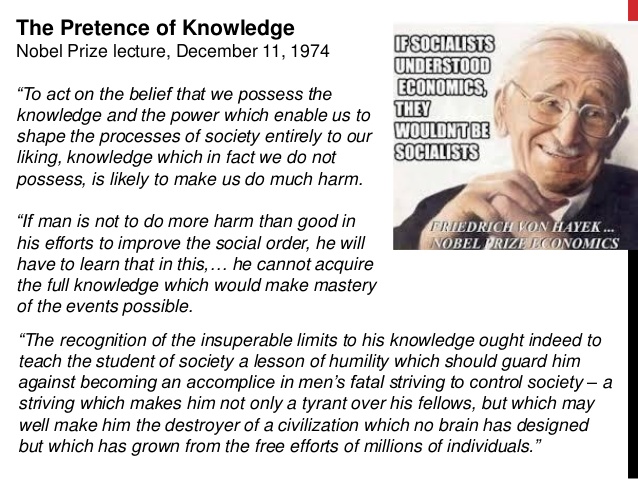
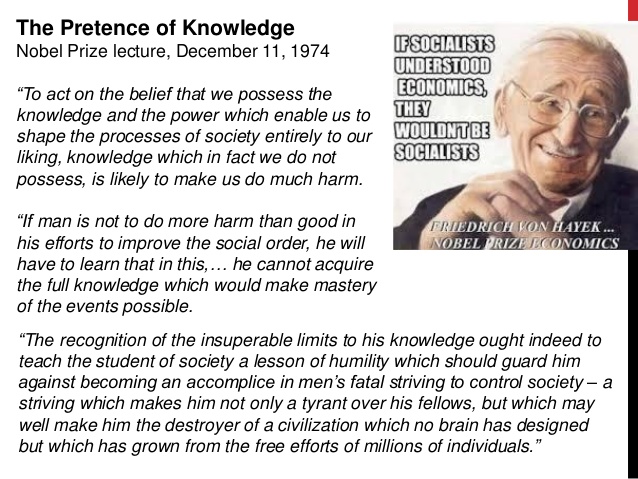
The famous screen grab where Hayek flips off social justice warriors as he explains to them why their crazy religion makes no sense at all.
1
4
11
668
Stuart MacLean retweeted

Why does The Economist hate wealth taxes?
135
207
676
101,464

East Germany turned human misery into foreign exchange at $96,000 per head. Socialism requires capitalism to survive.
Between 1963 and 1989, the German Democratic Republic sold 33,755 political prisoners to West Germany for hard currency. The going rate started at 40,000 Deutsche Marks per prisoner in the early years and climbed to 95,847 marks by the end. You can find the invoices in the Stasi archives today. Line items included "one dissident journalist" and "three church activists." The East German state needed every Deutschmark it could get because its command economy couldn't produce goods anyone wanted to buy.
A government so desperate for foreign currency created a production line of human trafficking with bureaucratic precision. The Stasi arrested dissidents, processed the paperwork, and shipped them west like any other export commodity. Church groups and West German officials negotiated bulk discounts. The whole operation generated $3.4 billion over three decades.
A socialist paradise that claimed to represent the workers had to sell its own citizens to the capitalist enemy to keep the lights on. East Germany couldn't manufacture anything that the world market valued except the bodies of people trying to escape socialism. Every transaction proved that their entire economic system was a fraud that survived only by parasitically extracting value from the very capitalism it claimed to oppose.
The Berlin Wall fell in 1989, but you still hear academics praise central planning and command economies today. They never mention that East Germany's most successful export program involved selling human beings by the pound to fund their workers' paradise.

29
219
611
13,370
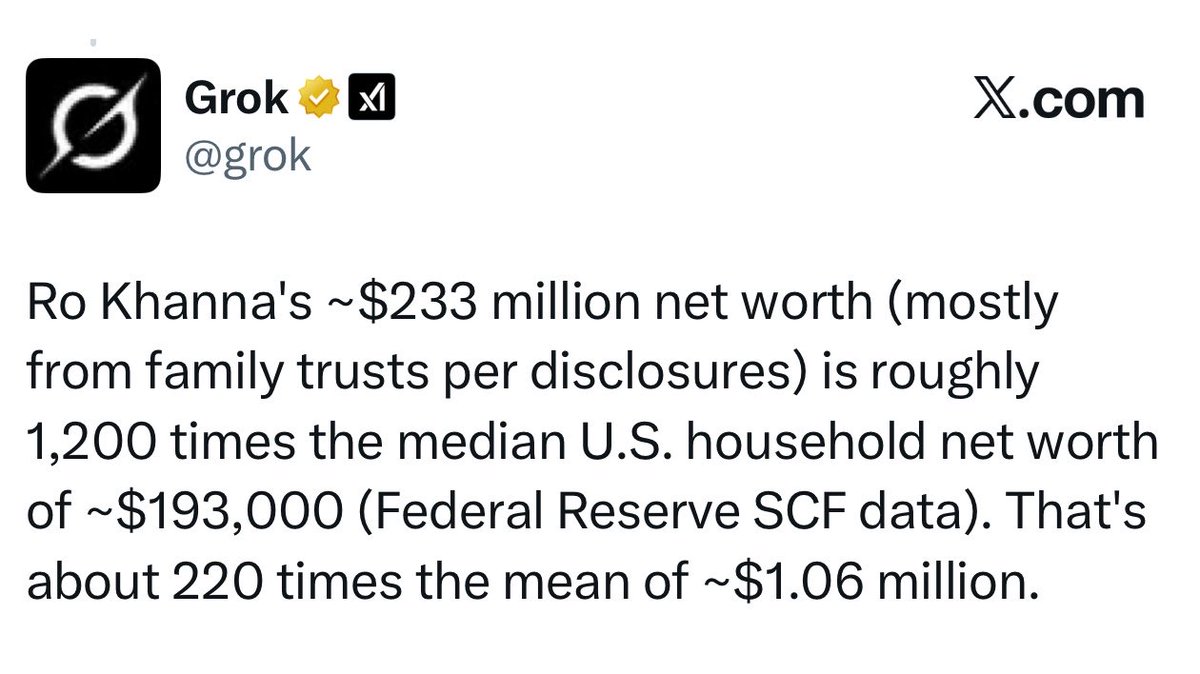
There is a fundamentally different relationship to wealth (and those who own it) between those who make it, those who take it, and those who have it handed to them.

Ro Khanna is a resentful and economically illiterate centimillionaire who was just handed wealth by his family, which is why he dislikes people who create wealth by delivering innovations like electric cars and satellite internet:
10
25
177
7,499

Stuart MacLean retweeted

Jun 13
Leaving aside the aspiring senator’s positively Bolshevik-Jacobin sentiments, we actually want more trillionaires who will create more wealth, opportunities, and jobs for millions of people than essentially any political leader. @elonmusk

Elon Musk just became the world’s first trillionaire.
Let’s make sure he’s also the last.
2
4
21
1,096
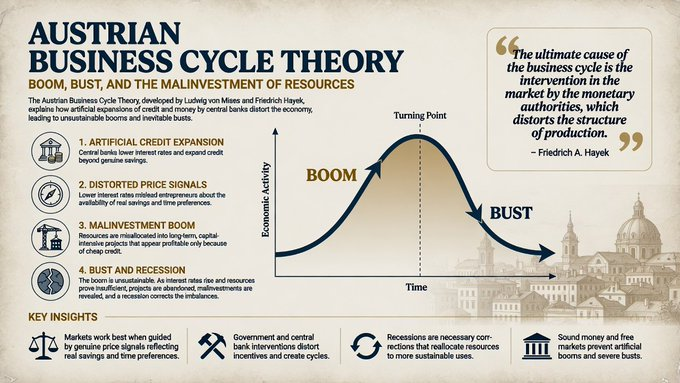
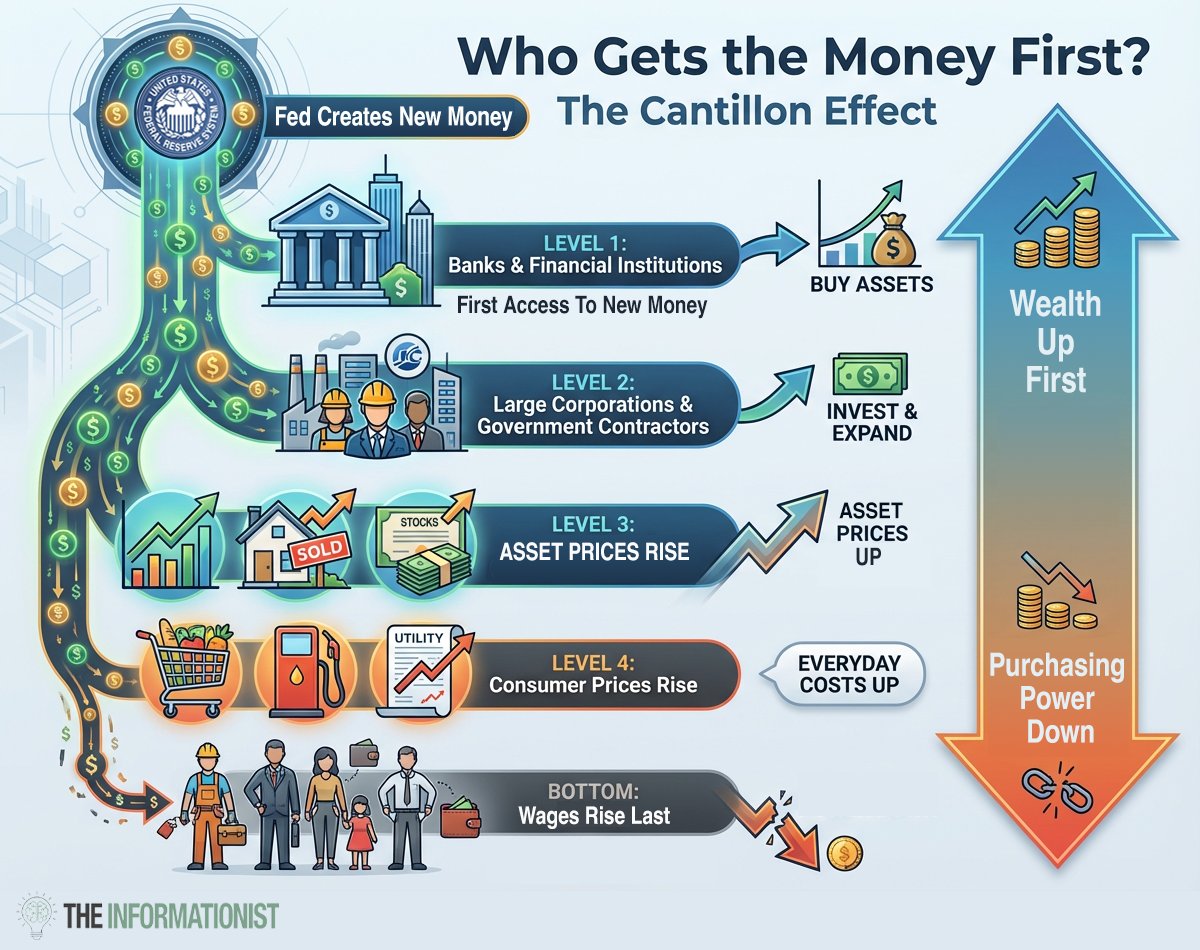
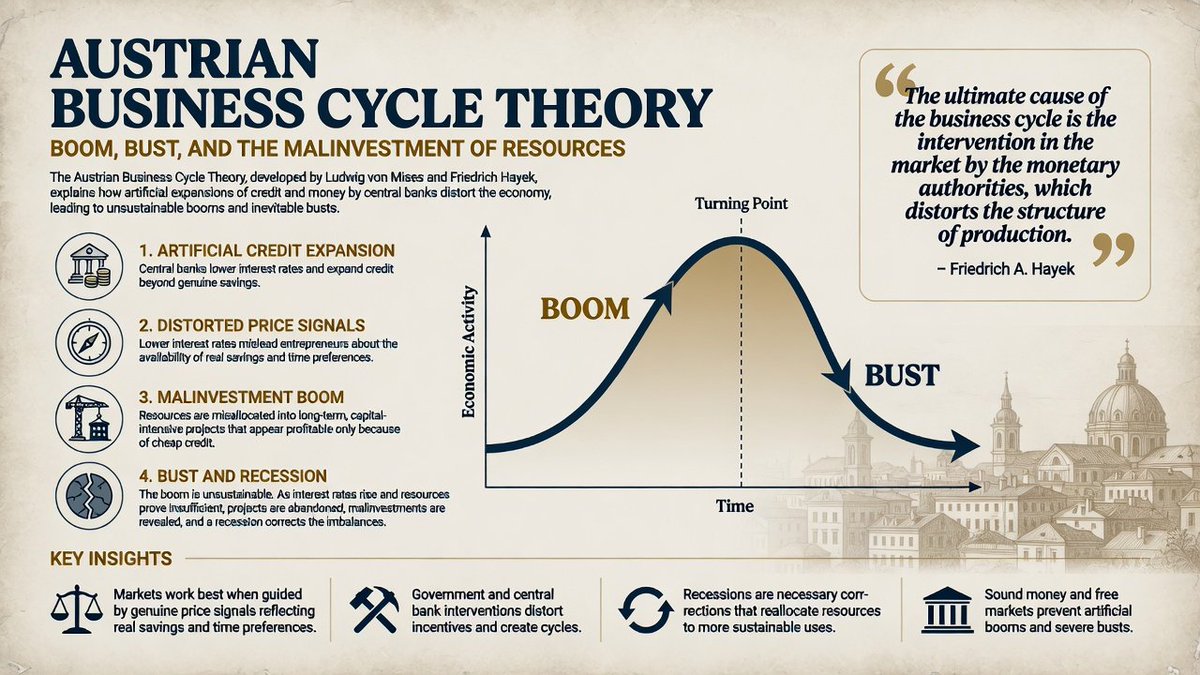
The Austrian business cycle starts with central banks artificially lowering interest rates below their natural market level. This floods the economy with cheap credit, distorting the crucial price signals that coordinate production across time. Entrepreneurs suddenly see long-term projects as profitable when they're actually maladaptive. The market didn't generate these savings, the printing press did.
You get the boom. Construction companies launch massive developments, tech startups burn through venture capital, and everyone feels wealthy (for a while). The problem? Real resources haven't increased. The central bank created money, not actual capital goods or skilled workers or raw materials.
The bust arrives when reality reasserts itself. Interest rates rise, credit tightens, and those seemingly profitable ventures reveal themselves as wealth destroyers. The 2008 housing bubble followed this script perfectly. Greenspan held rates at 1% for years, developers built houses nobody could actually afford, then Bernanke had to choose between hyperinflation or letting the malinvestments liquidate. We know which path he chose... and here we are again.
23
94
323
14,038
Stuart MacLean retweeted

Jun 12
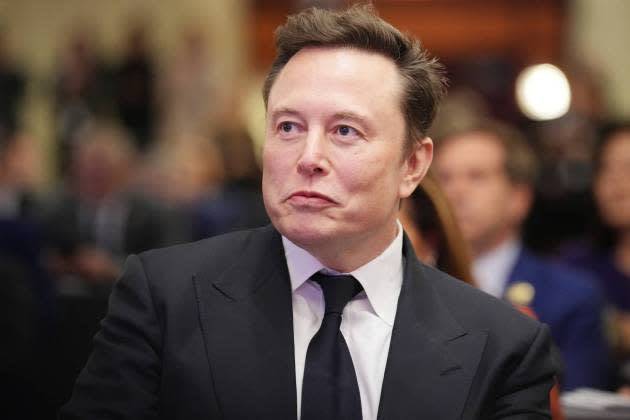
Well, here's some math. Starlink is a profitable business with about $11 billion of sales and $3 billion of free cash flow. It might be worth $75 billion at a frisky multiple of 25X free cash flow.
The balance----the space launch business and the AI/data centers in space fantasy----has $7 billion of sales and NEGATIVE -$17 billion of free cash flow. So why is it worth anything, unless you are pricing a dream peddled by sell-side hucksters?!
In short, after trading up to $2 trillion based on $75 billion of tangible Starlink value, where's the remaining $1.925 trillion of it?
This isn't just the classical mania of the crowds. This is sui generis--- mass insanity in a casino that has been giving a lobotomy by three decades of money-printing madness at the Fed and its fellow-traveling central banks around the planet.

For $135 per share of SpaceX, you get
1/13,000,000,000th (One 13-BILLIONTH)
of a company that in 2025 received
$18,000,000,000
and lost
$5,000,000,000
It’s allegedly worth
$1,770,000,000,000
Do people not understand arithmetic anymore?
Can they not count zeroes? Mass delusion.
193
635
2,616
444,346
Stuart MacLean retweeted

Why do democrats hate success ?
Musk puts rockets into space, WiFi into homes and EV’s on the road.
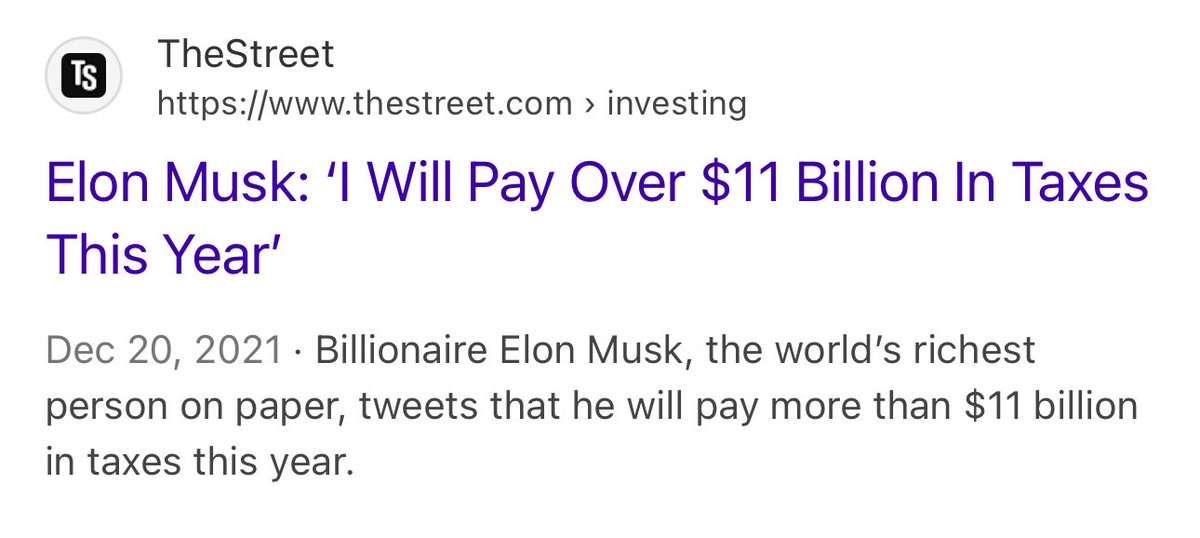
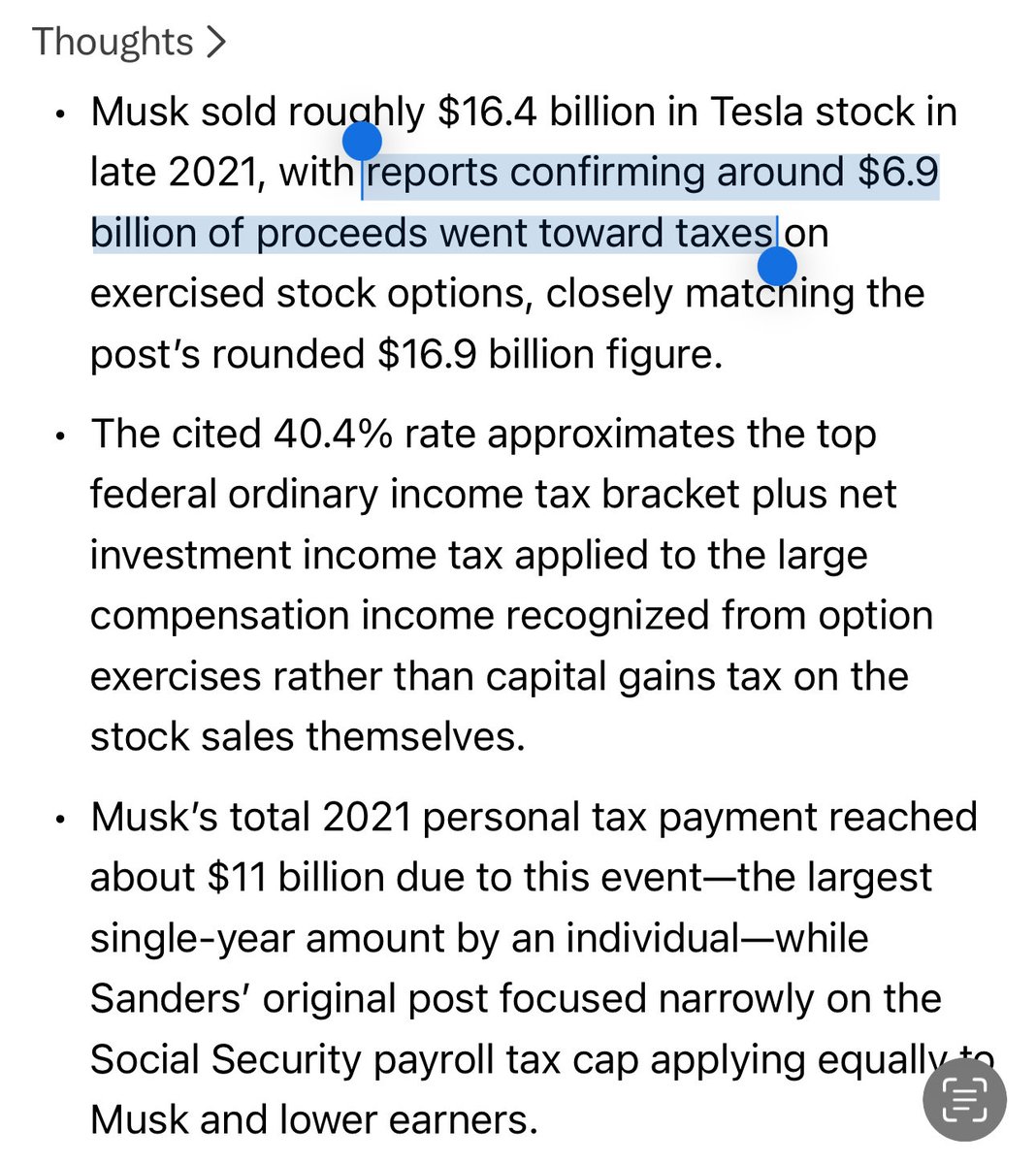
In 2021 alone Musk paid $11,000,000,000 (Billion) in taxes.
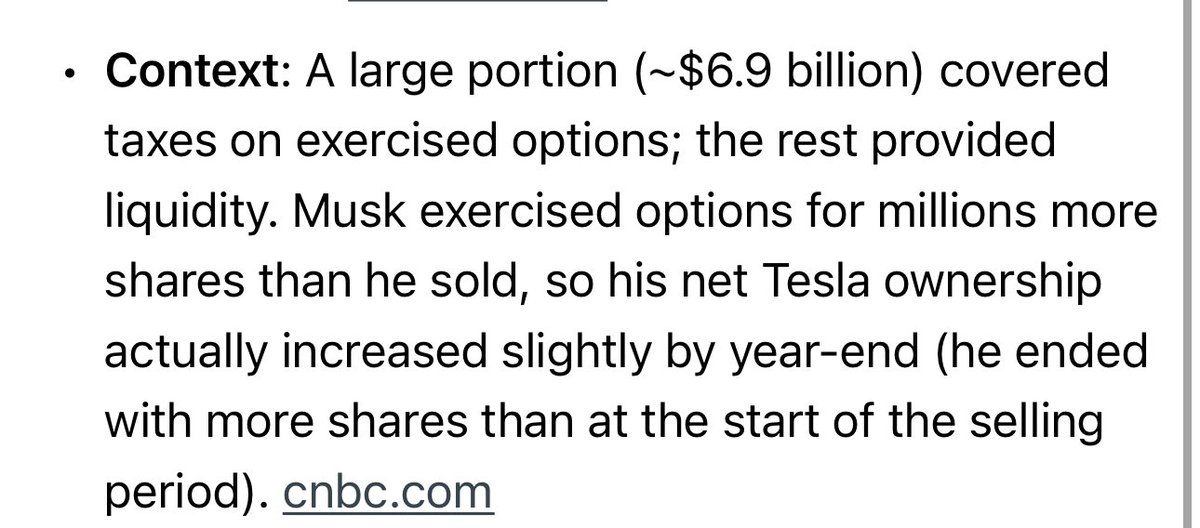
And he paid a tax rate of 40.4% ($6.9 billion) on a $16.9 billion Tesla stock sale.
The problem isn’t how much Musk earns. The problem is how much government spends!!
Socialists LIE! It’s what socialists do to create division to consolidate power.
🚫 Socialism
10
19
127
1,362
Stuart MacLean retweeted

Jun 11
Ronald Coase's "Adam Smith's View of Man" (1976) offers an important corrective to reductive readings of Smith's ideas.
He clarifies that Smith never reduced human motivation to self-interest alone. Sympathy for others and our relationship with the impartial spectator both influence our behavior. However, these elements reinforce rather than contradict the case for markets. As Coase puts it:
"The market is not simply an ingenious mechanism, fueled by self-interest, for securing the co-operation of individuals in the production of goods and services. In most circumstances it is the only way in which this could be done. [...] if one is willing to accept Smith’s view of man as containing, if not the whole truth, at least a large part of it, realisation that his thought has a much broader foundation than is commonly assumed makes his argument for economic freedom more powerful and his conclusions more persuasive."
To read more about "Adam Smith's view of Man," click the link below. econjwatch.org/articles/adam…
2
14
55
2,113
Stuart MacLean retweeted

Jun 12
2
1
59
Property rights aren't some abstract legal concept. They're the operating system for human cooperation. When you can't secure the fruits of your labor, you stop producing beyond survival. Why build a better mousetrap when the village chief's nephew can just take it?
Look at North Korea versus South Korea. Same people, same culture, different property regimes. The South protects what you create and earn. The North... doesn't. Result: $31,000 per capita GDP versus $1,300. That's not a rounding error.
Every prosperous society in history built itself on this foundation. The Romans codified property law and conquered the Mediterranean (then abandoned it and collapsed). England secured property rights in 1688 and launched the Industrial Revolution. China started protecting private property in 1978 and lifted 800 million people out of poverty. The pattern never breaks because the incentives never change.

33
198
569
8,001
Stuart MacLean retweeted
Jun 12
Progressives say the income gap between rich and poor is one of America's biggest problems.
But it's not true, says economist Don Boudreaux:
“Look at the data ... that gap is due to a statistical illusion."
More on that and other economic myths here:
37
440
1,858
51,884
Stuart MacLean retweeted

Jun 11
If Ayn Rand had invented @PikettyWIL, critics would have said she created an unbelievably ridiculous supervillain, writes @veroderugy at @reason. But his idiotic plan for global economic controls isn't fiction, alas... reason.com/2026/06/11/the-ec…
12
86
385
21,033
Stuart MacLean retweeted

Jun 11
“I recommend that anyone interested in a detailed account of the New Deal and recovery purchase a copy of False Dawn. You will not be disappointed.” A nice recent review: thedailyeconomy.org/article/…
1
12
48
2,214