
Chief Legal Officer & Chief Policy Officer, Input Output Global - IOHK, and Special Counsel, Sullivan & Worcester
Joined April 2010
- Tweets 284
- Following 491
- Followers 1,849
- Likes 68
2 Photos and videos

3 Sep 2025
Dear Cardano Community,
As you know, in May 2025, IOG engaged McDermott Will & Schulte and BDO to conduct an Investigative Report and Forensic Audit concerning the ada Voucher Program, redemptions of Vouchers, Cardano blockchain upgrades, and the use of ada associated with unredeemed Vouchers. It is now complete! The 128 page Investigative Report and Forensic Audit, dated September 2, 2025, documents certain milestone events and decisions in Cardano’s 10 year history and investigates a series of public accusations made on social media alleging wrongdoing concerning the Topics of the Investigative Report and Forensic Audit.
The public accusations included five principle allegations: (1) Cardano insiders stole or otherwise misused ada that should have been allocated to Voucher Holders; (2) improper sales tactics were used in connection with the Voucher Program; (3) Cardano blockchain upgrades were designed to make it difficult to redeem Vouchers; (4) Cardano blockchain upgrades deleted Voucher Holders’ “private keys” or assets; and (5) that Cardano insiders had no legal right to send unredeemed ada to CDH and decide how to spend it.
I am pleased to report that the Investigative Report and Forensic Audit reaches the following conclusion:
“After review of tens of thousands of documents, a forensic on-chain and traditional forensic analysis, and eighteen formal interviews of current employees, former employees, Voucher Holders, service providers, community members, and other third parties, the Investigation determined that each of the allegations related to the Topics of Investigation do not have any basis.”
I encourage anyone interested to read the Investigative Report and Forensic Audit. It may be found in its entirety here: adaredemptiontransparency.co…
It has been a long ride, and I want to personally thank the Cardano Community for your patience and support.
86
271
984
183,025
26 Aug 2025
Please see the link below. adaredemptiontransparency.co…
As started, Input Output Global, Inc. (“IOG”) has commissioned a comprehensive investigative report and forensic audit of the ada Voucher Program including the pre-launch of vouchers, Cardano blockchain upgrades, and the use of ada associated with unredeemed vouchers. The resultant investigative report and forensic audit will provide a comprehensive and transparent account of the facts, with findings and methodology documented in detail.
The investigative report and forensic audit will be released soon and published here in its entirety.
26
54
248
37,202
20 Jul 2025
Hello Cardano Community. We are making good progress on the investigative and audit report that we promised to deliver. The law firm and audit firm are close to completing their work and we are hoping the report will be ready to release by the middle of August. I’ll continue to keep you updated.
24
19
219
14,910
Joel Telpner retweeted

18 Jul 2025
🏛️@IOHK_Charles was honored to accept an invitation from @SenatorTimScott to help lead a roundtable discussion yesterday on Capitol Hill with Members of the Senate Banking Committee and industry experts on digital asset market structure and responsible innovation. @JTelpner, @BTL_Edinburgh's @_LadyChristina_, @MichaelPiwowar, @lesborsai and @teresagoody also participated in the roundtable.
We appreciate Chairman Scott's leadership in encouraging productive dialogue between industry leaders and legislators, and advancing key bills, such as the GENIUS Act, that promote innovation and help preserve the United States's leadership in the industry. We also thank @SenLummis, @berniemoreno, @SenatorRicketts for their leadership and engagement in the roundtable.
52
246
1,439
91,995
Joel Telpner retweeted

17 Jul 2025
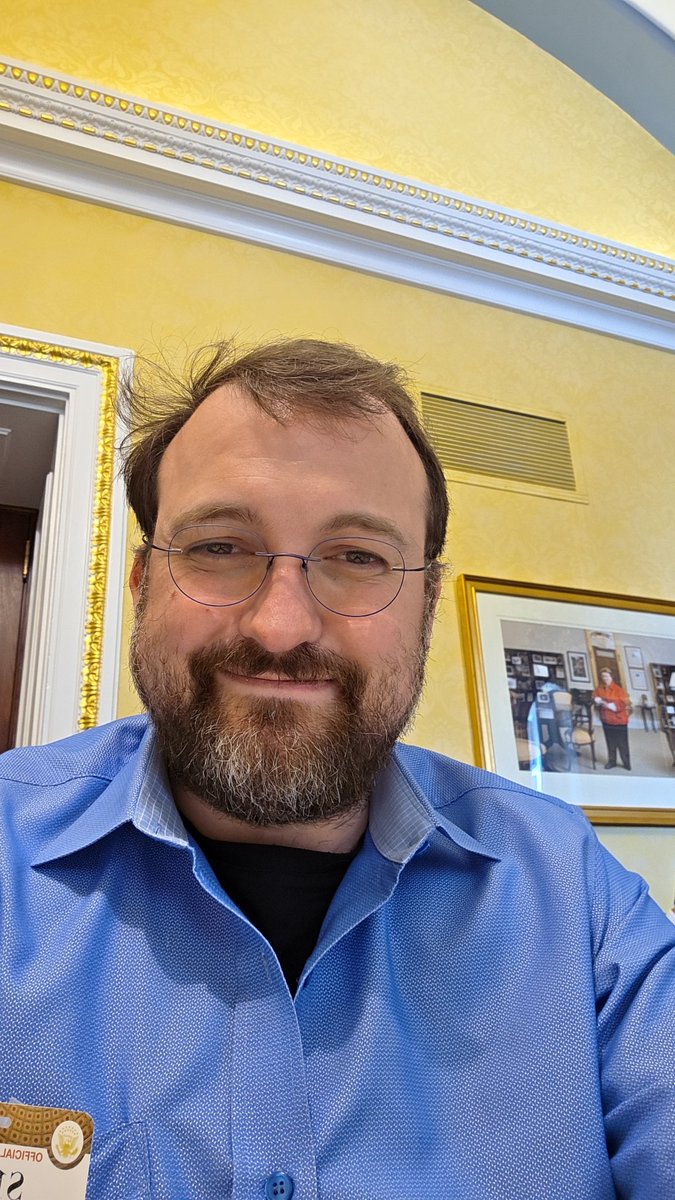
Good to be in Washington
216
308
4,185
177,324
Joel Telpner retweeted

17 Jul 2025
GM! ☕️🌞
Crypto Week resumes with big votes expected in the House, including on the GENIUS Act, which could pass and head to President Trump’s desk. A signing ceremony is already scheduled for tomorrow at the White House.
Over in the Senate, @SenatorTimScott is hosting a @BankingGOP member roundtable at 9AM ET focused on the future of digital asset regulation and compliance.
Industry participants include:
📌@IOHK_Charles
📌@MichaelPiwowar
📌 @silviomicali
📌 @teresagoody
📌@JTelpner
📌 @lesborsai
📌 @_LadyChristina_
170
519
2,722
402,396
Joel Telpner retweeted
15 Jul 2025
We in DC. Let's get it done

252
343
4,232
140,062
Joel Telpner retweeted

20 May 2025
6
28
228
23,857
Joel Telpner retweeted

20 May 2025
Early ADA voucher buyers in Japan, managed by Attain, claimed nearly all ICO vouchers with a small portion left unclaimed. After Attain shut down due to Japanese digital assets law changes and Shelley hard fork adjusted the original redemption setup in 2020, a new KYC process was done again.
Through proactiveness from the IOG side, a trusted local firm spent years and significant resources discreetly searching for unclaimed holders to avoid fraud risks, going door to door and speaking to relatives. @emurgo_io aided in connecting some people, with partial successes. It's not something you can broadcast out to the world, it takes discretion to identify potentially HNWI.
We trusted the thorough process, and vouch for the third party’s integrity even today. It’s disheartening to see FUD against the @InputOutputHK team's exhaustive search efforts and leaders coordinating like @JTelpner and the audit commitment.
It's been 7 years , no other blockchain entity matches this commitment and integrity. Many don't last more than two cycles —personally I'm grateful.
19 May 2025

7/ TLDR:
▪️The vast majority of vouchers have been successfully claimed.
▪️To locate the unclaimed voucher holders, IOG led a thorough seven-year process.
▪️EMURGO is supportive and confident of the measures taken and planned over the years.
▪️The Shelley hard fork would have rendered the voucher redemption ADA unspendable, necessitating its movement to continue the redemption process.
▪️IOG has committed to having an independent audit, which will be made public, and is further testament to the integrity of the process.
▪️Attempts to impugn the process using selected data points, without full context, are unproductive.
9
40
340
25,395
20 May 2025
As promised in my prior tweets regarding the ada redemption process, the law firm McDermott Will and Emery and the accounting and adit firm BDO have been engaged to audit and prepare a public report of the ada redemption. MW&E (mwe.com)
is a global law firm with more than 1,400 lawyers and 24 locations around the world. MW&E has an extensive and recognized digital asset practice. BDO (bdo.global) is a global accounting and audit firm with worldwide locations. BDO has extensive forensic investigation and data analytics capabilities including digital asset tracing. MW&E and BDO also intend to engage a crypto analytics firm in preparing the report. An additional announcement will be made when that firm has been engaged. I know everyone wants to know when the report will be completed and made available. The answer is that as of today I honestly don’t know. Both firms are beginning their work immediately and have been instructed to complete the audit and prepare and make the report available as soon as humanly possible.
25
52
317
76,926
Joel Telpner retweeted

19 May 2025
Great post from @cardano_whale providing important historical context about the early days x.com/cardano_whale/status/1….
Let’s cut to the chase: The past 48 hours have been deeply frustrating and anger-inducing for those of us who've dedicated years of our life to Cardano’s growth. I've personally spent six years in Cardano since being hired by @InputOutputHK, balancing roles—representing the community to the business, and the business to the community. During this time, I've witnessed first-hand the relentless, challenging work Charles and the IO team have done to innovate and build this ecosystem.
1) First, yes—it’s good to ask tough questions, push for accountability, and demand transparency. IO has clearly committed to a full audit to address legitimate concerns explicitly. Constructive disagreement and respectful critique are essential to any healthy community.
2) However, let's clearly distinguish this from what's also occurring—coordinated harassment involving physical threats, deeply personal attacks, explicit accusations of theft, and relentless toxic behavior designed purely to intimidate and harm Charles and IO’s staff. These attacks are not about ethics, transparency, or Cardano’s long-term health. The consistent pattern clearly demonstrates they never have been.
3) For example, earlier this year, certain attackers aggressively made explicit accusations of theft, demanding immediate answers and openly mocking genuine attempts by Charles and IO staff to engage constructively. When community members familiar with the early years provided factual responses that challenged these narratives, attackers pivoted to philosophical arguments about governance or "code is law," employing a classic motte-and-bailey tactic—publicly defending reasonable positions (the motte) while privately promoting indefensible allegations (the bailey), including serious accusations of criminality and fraud. Coordinated from a group casually dropping racist and anti semitic sniggers alongside threats, attacks on personal appearance and more into a toxic pit of Discord.
4) These people are cowards. Any exposure over any length of time gives you a pattern of the same psychological manipulation tactics, including whataboutism, goalpost-shifting, and sealioning, typical of Cluster B personality behaviors (dramatic emotional exaggeration, impulsivity, attention-seeking). Their methods intentionally exhaust productive dialogue, making genuine resolution impossible. The measurable consequences are damaging. Financially, these actions diminish the appeal of the ecosystem to builders and newcomers, causing real brand damage. Emotionally, they've weakened community enthusiasm, spirit, and safety.
5) I'm deeply saddened to see @IOHK_Charles, the visionary behind the ecosystem from the whiteboard onwards, feel so disheartened after creating enormous opportunities for all of us. We came because of him and stayed because of each other.
I don’t want to drag this out any further. As @timbharrison wisely noted earlier today, it's Monday, and we all have important work ahead. But I needed to write this. We owe it to ourselves, Charles, and the community to draw a clear line between legitimate critique and destructive harassment. Let's recommit to respectful, constructive dialogue and continue building together—rather than tolerating attempts to tear down what we've collectively achieved. Do it for the culture.
4
33
177
27,106
18 May 2025
The debate surrounding the ada redemption process continues without abatement. Aristotle’s quote, “nature abhors a vacuum,” is over 2,000 years old but may even ring truer today in our world cluttered by online media platforms such as X. In this digital world of instant gratification, it is human nature to fill the perceived vacuum created by a lack of facts with speculation. That’s not necessarily a bad thing. In the United States, even opinion in the form of speculation is protected by the free speech rights embedded in the First Amendment of the American Constitution.
Divergent opinions result in healthy debate, but at times, speculation can also devolve into poisonous, destructive and damaging discourse. Accordingly, even the First Amendment has limits. On such limit is defamation. Defamation occurs when false statements are presented as fact, and those statements result in harm or damage to an individual or business. A good example of this is a tweet that was posted that made an accusation of laundering.
Regardless of our personal views as to all of the ongoing speculation or its potential adverse impact on us or Cardano, we have no intent of shutting down the ongoing debate. It is not our right to do so. Instead, as I will again repeat, there will be an audit conducted by independent third parties, whose findings will be made public. As a result, we know that this ongoing speculation on the ada redemption process will, by necessity, give way to independently verified facts. And that’s a good thing, because any current speculation and opinion supported by those verified facts must stand. However, the speculation out there that is nothing more than defamation, and that has and is hurting reputations and creating economic harm does give rise to legal claims. In fact, some written statements, if untrue and that are made negligently or with actual malice can be considered so damaging to an individual’s or business’s reputation that they are libel per se and can be successfully prosecuted without the need to even prove damages.
When you are the target of repugnant accusations, it hurts. While this type of behavior represents some of the worst attributes of human behavior, it is what is. But when statements cross the line and become defamation, they should not and will not be ignored.
18
22
127
22,856
Joel Telpner retweeted

17 May 2025
What infuriates me about this so-called “redemption scandal” is how arrogantly people speak without the faintest grasp of the actual history. I was there. I lived it. I personally ran the Sales App project, the backbone of the KYC and voucher system. I deployed the first AVVM instance and watched the grueling, thankless years of work that went into making sure people could redeem by @IOHK_Charles and IOG.
Redemption wasn’t some half-assed operation. It was a full-blown campaign, built from scratch. A dedicated team worked tirelessly for years tracking down unredeemed participants. YEARS. Not months. Not a single cycle. Years. And one of the primary reasons much of this wasn't made public? To protect those very users from social engineering attacks.
To redeem, people needed access to their original registration email and supporting documents. They had to complete limited KYC. Many of them weren't tech-savvy. Some were borderline vulnerable, and would’ve been easy prey if this information had been openly broadcast.
Still not enough? IOG hired an entire team in Japan to physically track down unredeemed holders via postal mail, cold calls, in-person visits, and media outreach. They even launched a second redemption campaign. I challenge anyone throwing stones today to point to any crypto project that went to these lengths for legacy users. You won’t find one.
And after nearly seven years of relentless, careful, behind-the-scenes work, people who contributed nothing. Attention seekers and shit actors are trying to burn it down in the name of "truth seeking".
Let me be crystal clear: fuck off. You have absolutely no idea what you're talking about, and frankly, you're not qualified to speak on the matter. What you're doing isn't whistleblowing or truth seeking. It’s performative ignorance, dressed up as outrage for internet points.
101
300
1,236
82,255
Joel Telpner retweeted

17 May 2025
It's extremely heartening to see @DanielTetsuyama weigh in on this topic because there are few people in Cardano or the Crypto industry that I consider to have to have higher integrity than him.
I've been following Cardano since late 2017. I really became "active" in Cardano in 2021, because I recognized that the ITN and the launch of independent Stake Pools would allow for me to actually have a say in how the network would operate. I got to know @ADAFrog_Pool, @amw7, @HEROsPool and other Stake Pool Operators, and I delegated my wallets to the ones who I believed would best represent my interests as they produced blocks.
I am of no illusion that before the network was decentralized by SPOs being the block validators, it was a Federated Network run by @InputOutputHK, @emurgo_io, and @Cardano_CF. These three organizations not only directed core software development but they also produced all Cardano Blocks, which meant they had the ability to reogranize the Blockchain at any time.
Ada Holders like me were shown a vision of a Blockchain Network that would not only be able to execute Smart Contracts like Ethereum, but it would be built on an extended UTxO framework with localized state and better opportunities for parallelized processing like Bitcoin.
But like I said, what was presented to me at the time I became interested Cardano was a vision. I knew that there were several steps to go in the Roadmap before the Ada tokens I held would allow me to fully participate in the decentralized control of the network. And that was okay with me because no vision of a better system comes about immediately, it always takes time to unfold.
There have been voices attacking Cardano for the way IOHK handled the redemption process due to regulatory changes in the Japanese market, saying that using their power over the (at the time) Federated Network to move the Ada was tantamount to stealing it. They say it was "worse" than the fork that the Ethereum community chose to do in response to the DAO hack because the value of the coins swept were higher in market valuation.
But how can the amount of value involved make one action "worse" than another ? Wouldn't logic dictate that if the purity of the blockchain is compromised if these genesis accounts are touched (even if the intention is to help initial investors recover their property), it would not matter how much value in US Dollars is at stake? The argument over the value seems to be emphasized to attract attention to the claim, not actually add to the discussion.
The voices attacking Cardano say that it is not acting in accordance with the Cypherpunk principles of a true cryptocurrency like Bitcoin. Bitcoin was created with no founding entity, no federated control, and was free from the start. I wonder how people attacking Cardano over this Ada sweep or for that matter, attacking Ethereum for their reorganization after the DAO hack, reconcile the August 2010 Reorganization of the Bitcoin Blockchain after the "Value Overflow" incident.
In case you aren't aware of this historical note, in a now rejected version of Block 74,638 a miner exploited a bug to produce 184 Billion (yes, with a B) extra Bitcoin that should not have been possible to add to the Ledger. Satoshi and the core developers released a patch approximately 5 hours later that implemented a soft fork where 53 Blocks were reorganized, the excess BTC ceased to exist, and the exploit was eliminated.
Wow! What a violation of immutability! If Satoshi did not live up to the measure of producing a perfectly moral Blockchain Network, who among us can stand blameless?
No, the cold, hard fact of the matter is that this is not about the sweep of Ada from the unclaimed "vouchers," or depreciated genesis addresses, or however you want to refer to them. This is about the fact that people love drama and are drawn to fights where they can pontificate about core values (as I am doing right now).
I've done my share of calling out people when I think that there are things happening that are unfair or immoral. I do it more in private than in public because I find that to be more effective in actually getting results. But overall, while I do at times fall short, I try very hard to be consistent in actually looking for constructive ways forward instead of dwelling on the past.
The Cardano Founding Entities are not perfect. They have each of them, in their own ways, fallen short in serving the community of Ada holders over the years at different times. And even now, they should be putting past grudges behind them and working together instead of continuously making snide comments about each other or refusing to work together to give the community all of the information it needs.
TL;Dr
I trust Dan the most to give me information about what happened with the "redemption scandal" and I'll wait for the full audit if I want more information. I'm not going to just trust the words of another guy who has been advancing narrative after narrative of how bad Cardano is for the past few years, ever since he cashed out of the network but decided he wanted to keep living in our heads rent-free.
The most consistent narrative against Cardano that is always advanced is the idea that @IOHK_Charles can be an asshole. Well, maybe I'd be more of an asshole too if I took as much heat as he does, but it doesn't mean that what he did in this case wasn't justified.
Perhaps it's like the Dude said, "You're not wrong... you're just an asshole!" An asshole who had to decide whether he would uphold the tenet that he not change the ledger, or uphold the tenet that he ensure early investors received their property.
But whether you think the founder is a visionary leader or an asshole, whether you think that IOG, Emurgo, Cardano Foundation, or even newer entities like Intersect are doing a good job for Cardano or suck - that doesn't matter as much as the fact that the network continues to grow and evolve according to a system of decentralized governance.
You have the power to direct Cardano. Even if you don't have much Ada yourself, it's been proven that you can lobby the people who do have great stake in the system and sway their opinion if you make good points. Stop whining about the past and start talking about what you want to see in the future.
17 May 2025

What infuriates me about this so-called “redemption scandal” is how arrogantly people speak without the faintest grasp of the actual history. I was there. I lived it. I personally ran the Sales App project, the backbone of the KYC and voucher system. I deployed the first AVVM instance and watched the grueling, thankless years of work that went into making sure people could redeem by @IOHK_Charles and IOG.
Redemption wasn’t some half-assed operation. It was a full-blown campaign, built from scratch. A dedicated team worked tirelessly for years tracking down unredeemed participants. YEARS. Not months. Not a single cycle. Years. And one of the primary reasons much of this wasn't made public? To protect those very users from social engineering attacks.
To redeem, people needed access to their original registration email and supporting documents. They had to complete limited KYC. Many of them weren't tech-savvy. Some were borderline vulnerable, and would’ve been easy prey if this information had been openly broadcast.
Still not enough? IOG hired an entire team in Japan to physically track down unredeemed holders via postal mail, cold calls, in-person visits, and media outreach. They even launched a second redemption campaign. I challenge anyone throwing stones today to point to any crypto project that went to these lengths for legacy users. You won’t find one.
And after nearly seven years of relentless, careful, behind-the-scenes work, people who contributed nothing. Attention seekers and shit actors are trying to burn it down in the name of "truth seeking".
Let me be crystal clear: fuck off. You have absolutely no idea what you're talking about, and frankly, you're not qualified to speak on the matter. What you're doing isn't whistleblowing or truth seeking. It’s performative ignorance, dressed up as outrage for internet points.
8
22
159
7,050
Joel Telpner retweeted
17 May 2025
Update from Argentina x.com/i/broadcasts/1rmxPyqal…
76
202
1,113
67,534
Joel Telpner retweeted

15 May 2025
Thanks @IOHK_Charles. Apex Fusion has deep roots in the @Cardano ecosystem and shares its commitment to principled decentralization — a value that directly shaped our architecture and UTXO foundation.
Our door is open for collaboration. We’d be honored to work alongside the Cardano community and builders to move the ecosystem forward, together.
15 May 2025

I really enjoyed working with Jerry and I look forward to seeing his next act at Apex Fusion
9
14
141
10,288
Joel Telpner retweeted
13 May 2025
The context that keeps being missed here is the assumption that the Genesis UTXOs were accounts belonging to the Ada voucher buyers like a normal Byron address.
They were the last stage of redemption where the buyer would use information from the AVVM process and a recept in their email to reconstruct the private key and vend the Ada to a normal address they own and solely control. Every Genesis redemption uxto maps to a KYCed buyer. This allowed attain and the TGE to track who redeemed and got custody and who didn't.
After years and during the Byron to Shelley transition, it became clear that it made no sense to permanently preserve an onchain redemption mechanism for every wallet to support forever given its a legacy subset of users and also there was a high probability that the remaining unredeemed buyers either didn't know how or lost the ability to redeem.
So the redemption mechanism changed from onchain to offchain via the sweep. You're representing this as stealing funds. The buyer hadn't redeemed their funds. That's the entire point of the sweep.
This action was also taken for security reasons. Due to the closure of Attain, it was an open question if the original redemption mechanism was still secure. As the original buyers seemed unable to redeem, there was a growing probability that someone could have used social engineering or some attack vector to steal the funds.
The sweep reset the process and ensured all the remaining unredeemed buyers had an opportunity to go through compliance again to match them against the original sales data. This took years, local lawfirms, exchange partners, and great expense, but significantly reduced the risk of fraud.
The point of a closing audit report is to explain all of this and verify the claims systematically. Instead of waiting, you continue to slander and defame without any meaningful context or evidence. This is malicious behavior and has to stop. Wait until the audit report comes out and then comment.
13
29
222
20,181
Joel Telpner retweeted
9 May 2025
We are at a very exciting inflection point with respect to Cardano's engineering and the diversity of ideas and teams. In the beginning there was one philosophy that was rigorous, safe, and effective, but it also deeply alienated many who wanted to contribute, prevented new ideas from entering our ecosystem, and resulted in a very slow delivery of features.
The team didn't want deadlines, focused on purity of practice, and thought in terms of years and decades. This benefited us tremendously in an age of unsafe practices, but also made it difficult for Cardano to grow and thrive.
Now in 2025, we are opening up the ecosystem augmented with small agile teams like Aiken and Midgard, while preserving the knowledge, experience, and rigor with IOR and our formal methods group using Agda. We also see different clients that will and should challenge the assumptions, designs, and features of prior teams to accommodate new protocols, economic realities, and our progress as a community.
Some are always unhappy with change and will look for easy scapegoats and want a return to days that never actually existed. But many will welcome a real opportunity to contribute, the faster pace of development, and the competition of ideas.
There are times I miss the old days. But the new days will be filled with even greater opportunities and exciting new capabilities. That's the nature of all great products and projects
128
370
2,721
109,799
Joel Telpner retweeted

12 Apr 2025
Couldn’t think of a more perfect time than Passover to drop this DC Blockchain Summit clip
“I feel like the Israelites spending four years wandering through the desert and now we’ve finally found our destination” @JTelpner
“Let my people go” @SenatorTimScott
2
10
661
3 May 2025
DReps have the absolute right to reject Intersect's budget proposal. That's amazing democracy in action! What would happen next is that one or more alternative administrators would have to emerge and get funding. All previously approved budgets that had designated Intersect as their administrator would have to be resubmitted and new votes would have to take place. The new administrator or administrators identified in resubmitted budget proposals would have to also separately submit their own budget proposals for funding. Going this direction is the right of the Cardano Community. Of course it would likely result in a delay of any treasury withdrawals by at least 3 to 6 months, potentially creating a risk for the ongoing operation of Cardano. Again, however, this is for the Cardano community to decide. Challenging problems indeed but so wonderful to see our DReps engaging in such important debates and considerations.
3
8
40
1,906