
PhD student and researcher @UBCmedicine. Health innovation, emergency medicine, and science methodology.
Joined May 2019
- Tweets 77
- Following 204
- Followers 47
- Likes 104
8 Photos and videos


Jacob retweeted

12 Dec 2025
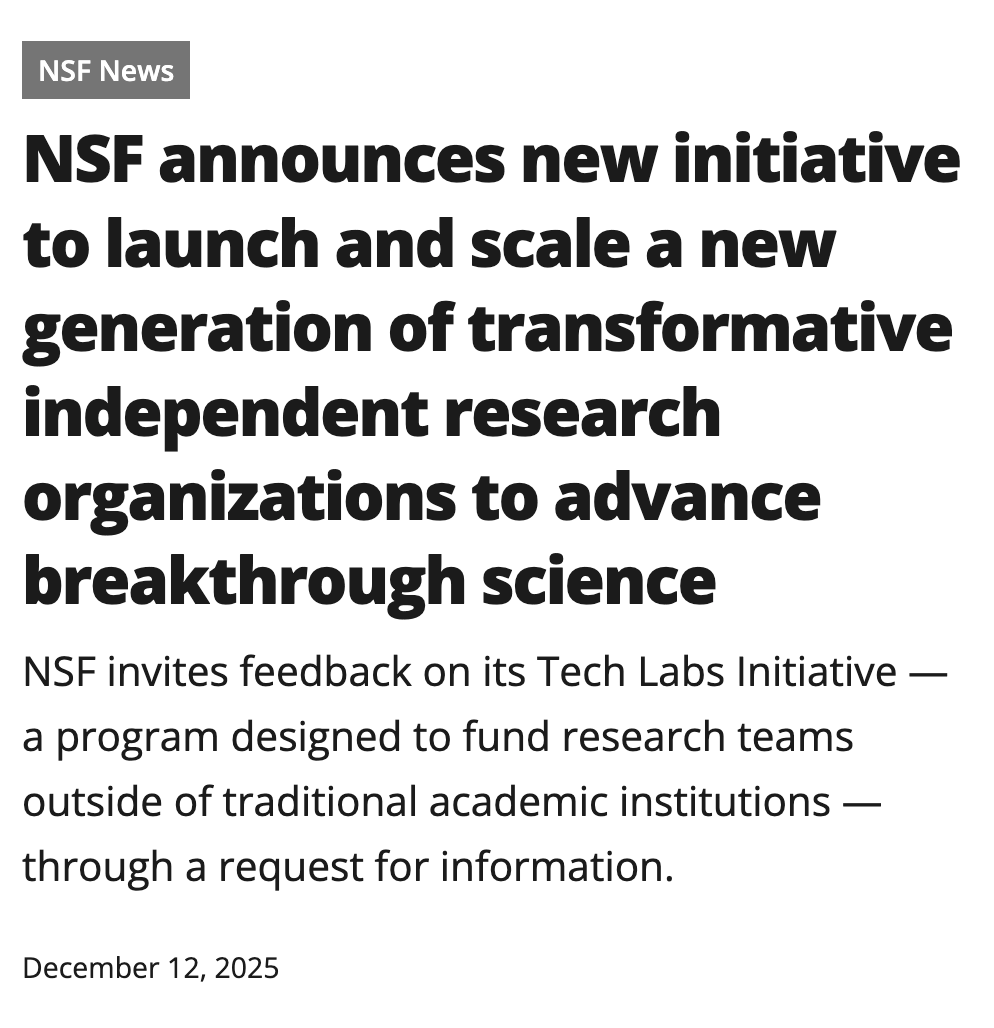
NSF is launching one of the most ambitious experiments in federal science funding in 75 years.
The program is called Tech Labs, and the goal is to invest ~$1 billion to seed new institutions of science and technology for the 21st century.
Instead of funding projects, the NSF will fund teams. I’m in the @WSJ today with a piece on why this matters (gift link): wsj.com/opinion/science-fund…
Here’s the basic case:
1) Most federal science funding takes the form of small, incremental, project-based grants to individual scientists at universities.
2) The typical NSF grant is ~$250k/year to a professor with a couple of grad students and modest equipment over a few years. This is a perfectly reasonable way to fund some science, but it's not the only way.
3) A healthy portfolio needs more than one instrument. Project-based grants are like bonds: low-risk, steady, safe. But no one trying to maximize long-run returns would put 70% of their portfolio in bonds.
4) Yet that's basically what our civilian science funding portfolio looks like. Around 3/4ths of NSF and NIH grant funding is project-based.
5) Tech Labs is NSF's attempt to diversify that portfolio. The Tech Labs program is aiming for:
- $10-50 million/year awards per team
- 5 year commitments
- Measuring impact through advancement up the Tech Readiness Level scale rather than papers published
- Up to ~$1 billion for the program
- Supporting research orgs outside traditional university structures
6) Scientific production looks very different than it did when the NSF launched 75 years ago. The lone genius at the chalkboard can only do so much. Frontier science tech today is increasingly team-based, interdisciplinary, and infrastructure-intensive.
7) The team behind AlphaFold just won the Nobel Prize in Chemistry. It came from DeepMind, an AI lab with sustained institutional funding and full-time research teams. It would be near-impossible to fund this kind of work on a 3-year academic grant.
8) Same pattern at the @arcinstitute (8-year appointments, cross-cutting technical support teams) and @HHMIJanelia (massive infrastructure investments to map the complete fly brain). Ambitious science increasingly needs core institutional support, not a series of project grants stapled together.
9) Similarly, Focused Research Organizations (@Convergent_FROs) have showcased a new model supporting teams with concrete missions and predefined milestones to unlock new funding.
10) There’s a whole ecosystem of philanthropically-supported centers doing amazing research, like the Institute for Protein Design, the Allen Institute, the Flatiron Institute, the Whitehead Institute, the Wyss Institute, the Broad — the list goes on.
11) But philanthropy can’t reshape American science alone. The federal government spends close to $200 billion each year on research and development, an order of magnitude more than even the largest foundations.
12) If we want to change how science gets done at scale, federal funding has to evolve. And the NSF and NIH don’t have dedicated funding mechanisms to support or seed these sorts of organizations.
13) Earlier this year, I started working on a related framework called “X-Labs” that built on all this exciting institutional experimentation that’s been happening within the private and philanthropic sectors. It’s time for the federal government to step into the arena: rebuilding.tech/posts/launch…
14) Traditional university grants are still important for training the next generation of scientists and for certain kinds of curiosity-driven work. But after 75 years of putting nearly everything into one model, we should try something different.
15) And key program details are still being developed! You can reply to the Request for Information with suggestions or feedback on how to design this program here: nsf.gov/news/nsf-announces-n…
16) Science is supposed to be about experimentation. Science funding should be too.
75
364
1,424
702,290
Jacob retweeted

26 Sep 2025
Hats off to @soboleffspaces, for bringing causal-ai to medicine. Calling for reforming @NIH's thinking. @NIHDirector_Jay @eliasbareinboim @murat_kocaoglu_ @pierreguyubc @hippysurgeon @JacobJHutton
26 Sep 2025

🚀 Big milestone for our team!
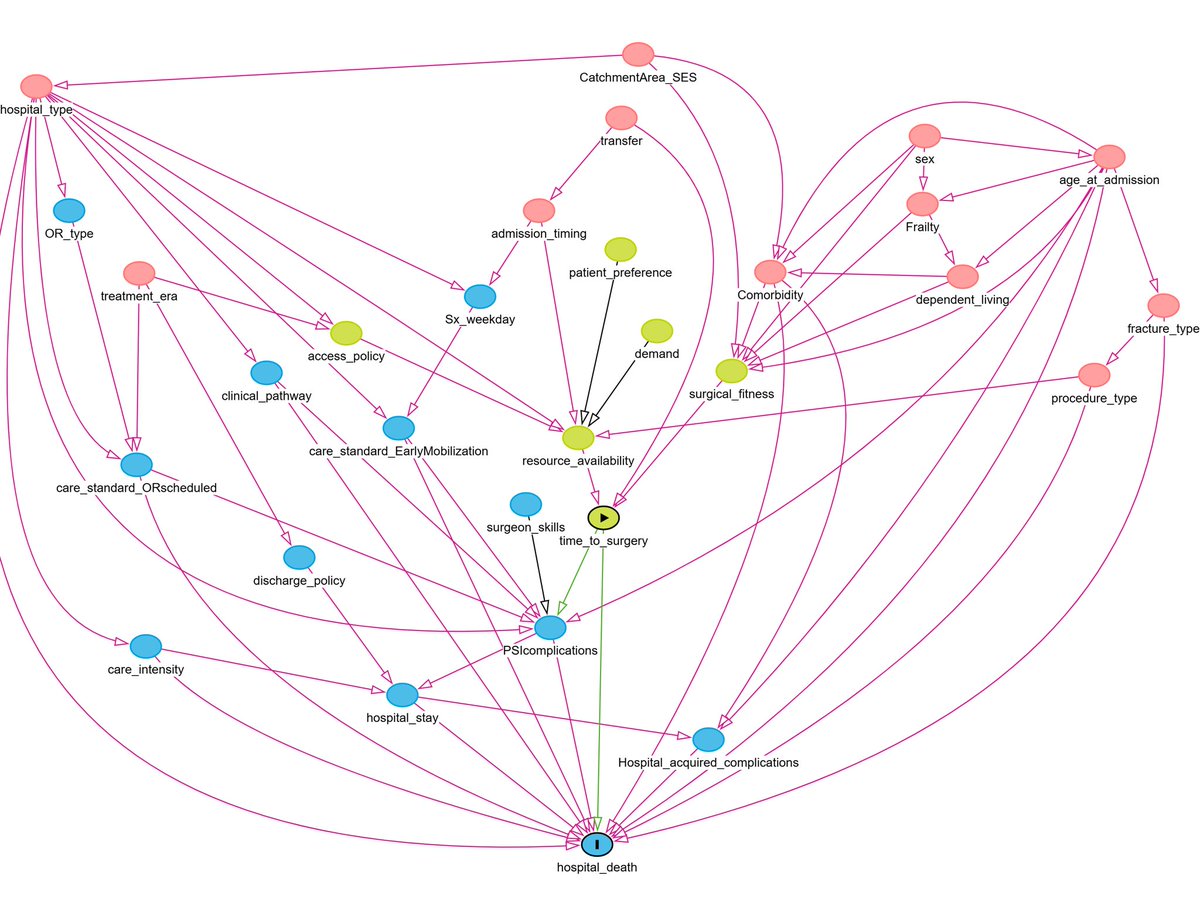
We’ve made our first real progress in implementing Causal AI, in the spirit of Pearl & Bareinboim’s SCM and DAG-informed training, to understand the causal effects of care standards in treating patients with hip fracture and to bring individualized decision-making to surgical care in a modern hospital.
Here’s what we did:
•Integrated Pearl’s results on identifiability to ground our estimands.
•Trained separate neural networks for 32 structural equations.
•Used Murat & Elias approach to incorporate cliques with confounded components.
•Inspired by Murat’s staged learning, we trained networks in the topological order of our DAG to respect causal structure.
This is the first time we’ve seen Pearl/Bareinboim Causal AI actually work end-to-end on real clinical data.
🙏 Huge thanks to ComputeCanada for providing the computational resources that made this possible, to talents of @AraBayati , PhD student at UBC, and to our collaborators and inspirations across the Causal AI and clinical communities.
We’re only at the beginning, but it’s thrilling to see causal ideas move from computer science papers into real-world healthcare practice. 🙌
As always — Concepts before Data!
@yudapearl @eliasbareinboim @murat_kocaoglu_ @pierreguyubc @hippysurgeon @JacobJHutton
#CausalAI #HealthcareAI #SCM #SurgicalCare #HipFracture #ComputeCanada
2
8
26
5,303
Jacob retweeted

26 Sep 2025
🚀 Big milestone for our team!
We’ve made our first real progress in implementing Causal AI, in the spirit of Pearl & Bareinboim’s SCM and DAG-informed training, to understand the causal effects of care standards in treating patients with hip fracture and to bring individualized decision-making to surgical care in a modern hospital.
Here’s what we did:
•Integrated Pearl’s results on identifiability to ground our estimands.
•Trained separate neural networks for 32 structural equations.
•Used Murat & Elias approach to incorporate cliques with confounded components.
•Inspired by Murat’s staged learning, we trained networks in the topological order of our DAG to respect causal structure.
This is the first time we’ve seen Pearl/Bareinboim Causal AI actually work end-to-end on real clinical data.
🙏 Huge thanks to ComputeCanada for providing the computational resources that made this possible, to talents of @AraBayati , PhD student at UBC, and to our collaborators and inspirations across the Causal AI and clinical communities.
We’re only at the beginning, but it’s thrilling to see causal ideas move from computer science papers into real-world healthcare practice. 🙌
As always — Concepts before Data!
@yudapearl @eliasbareinboim @murat_kocaoglu_ @pierreguyubc @hippysurgeon @JacobJHutton
#CausalAI #HealthcareAI #SCM #SurgicalCare #HipFracture #ComputeCanada
9
13
63
10,688

23 Jul 2025
25
18 Jul 2025
Thanks very much @yudapearl ! On the shoulders of giants such as yourself!
18 Jul 2025

Congratulations! @JacobHutton, and don't forget to post your dissertation when ready.
2
36
18 Jul 2025
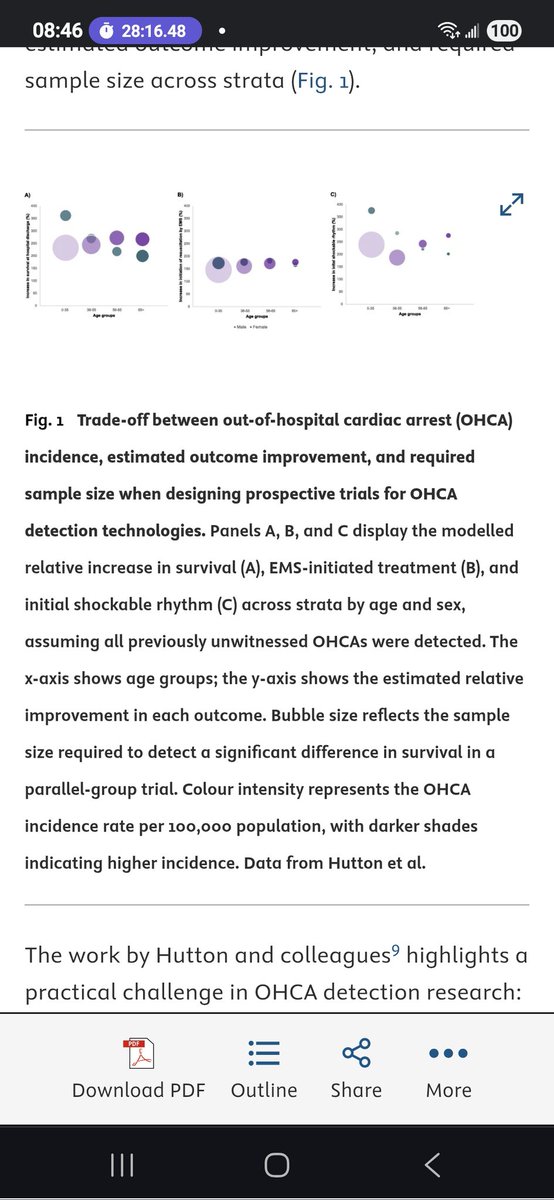
Great editorial by @tscquizzato and colleagues discussing our recently published work about real work cardiac arrest detection trials! resuscitationjournal.com/art…
1
1
1
201
18 Jul 2025
Many thanks to you @soboleffspaces for your instruction, mentorship, and sly sense of humor all the way through!
18 Jul 2025
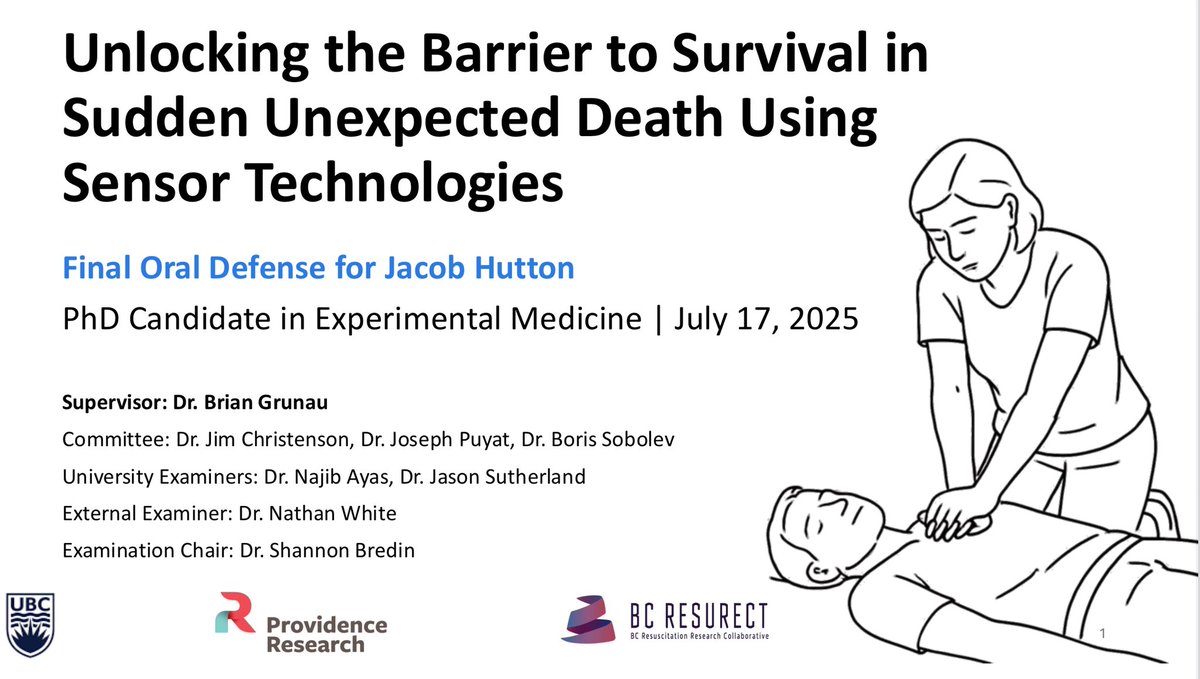
Congratulations to @JacobJHutton on a successful defense!
What a feast for causal inference: causal diagrams, minimal adjustment sets, mediation analysis, direct and indirect effects, probability of benefit — all in the context of cutting-edge clinical practice!
@yudapearl
@smueller
@Ang_UCLA
72
11 Jul 2025
29
30 Jun 2025
Was honored to be invited to this year's Wolf Creek Conference as a finalist for the resuscitation innovator award and to celebrate 50 years of meetings among international leaders in resuscitation science!
medresearch.umich.edu/resear…
1
1
36
14 Apr 2025
Was reminded today about this great resource by @nickchk
nickchk.com/causalgraphs.htm….
1
32

11 Apr 2025
Implications of an individualized resuscitation strategy using continuous rhythm and physiologic status assessment during ongoing CPR - Resuscitation resuscitationjournal.com/art…
2
43
29 Mar 2025
25
Jacob retweeted

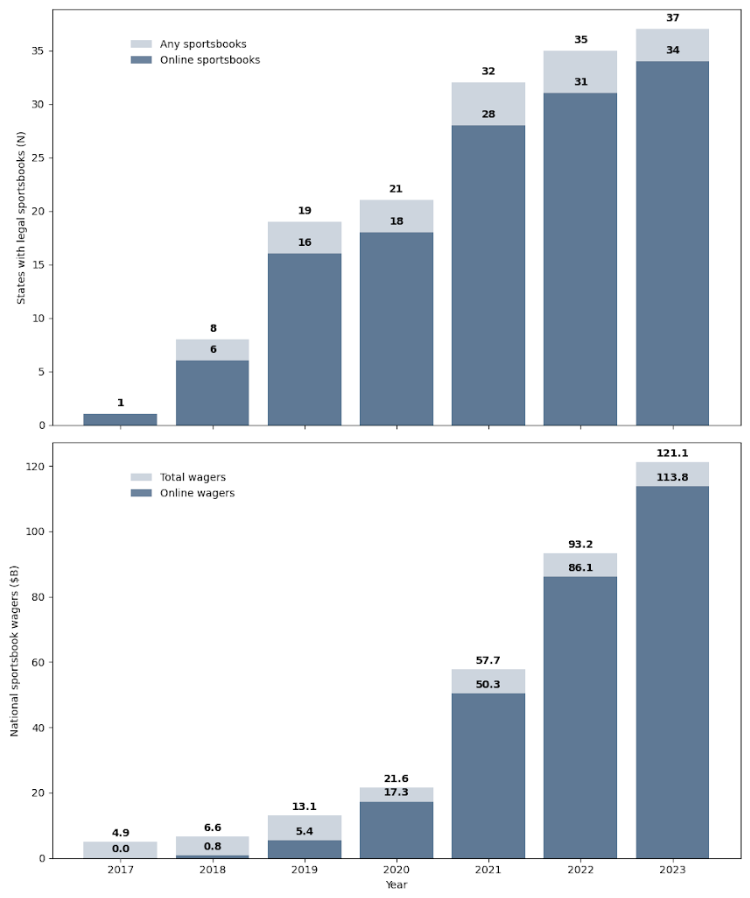
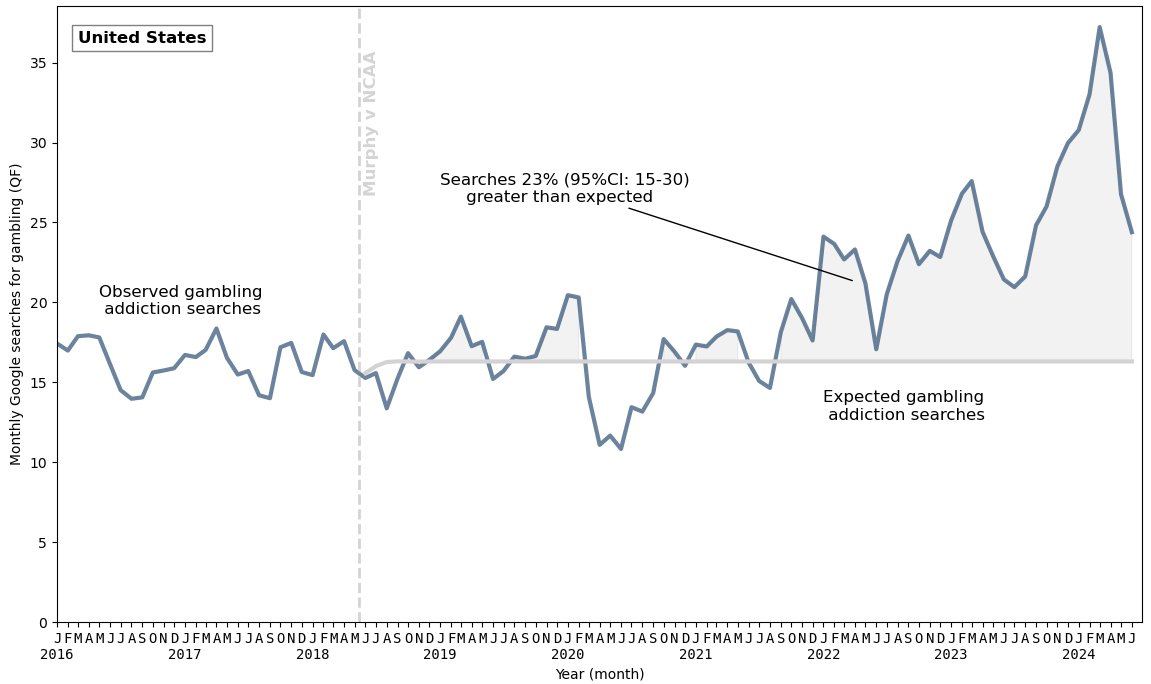
Today in @Sensible__Med @atharva0012 and I discuss our recent work in @JAMAInternalMed on the growth in sportsbooks (like @DraftKings @ESPNBET), sports betting, and online help-seeking for gambling addiction. Is it a public health crisis in the making?
We say *yes* as hundreds of billions are wagered on sports and record breaking millions of people seek help with gambling addiction. Now is the time to do something about it and do something quickly. Will public health listen and respond?
Read our Sensible Medicine editorial here: sensible-med.com/p/the-hidde…
Read our original study here: jamanetwork.com/journals/jam…
1
4
15
31,291
Jacob retweeted

24 Feb 2025
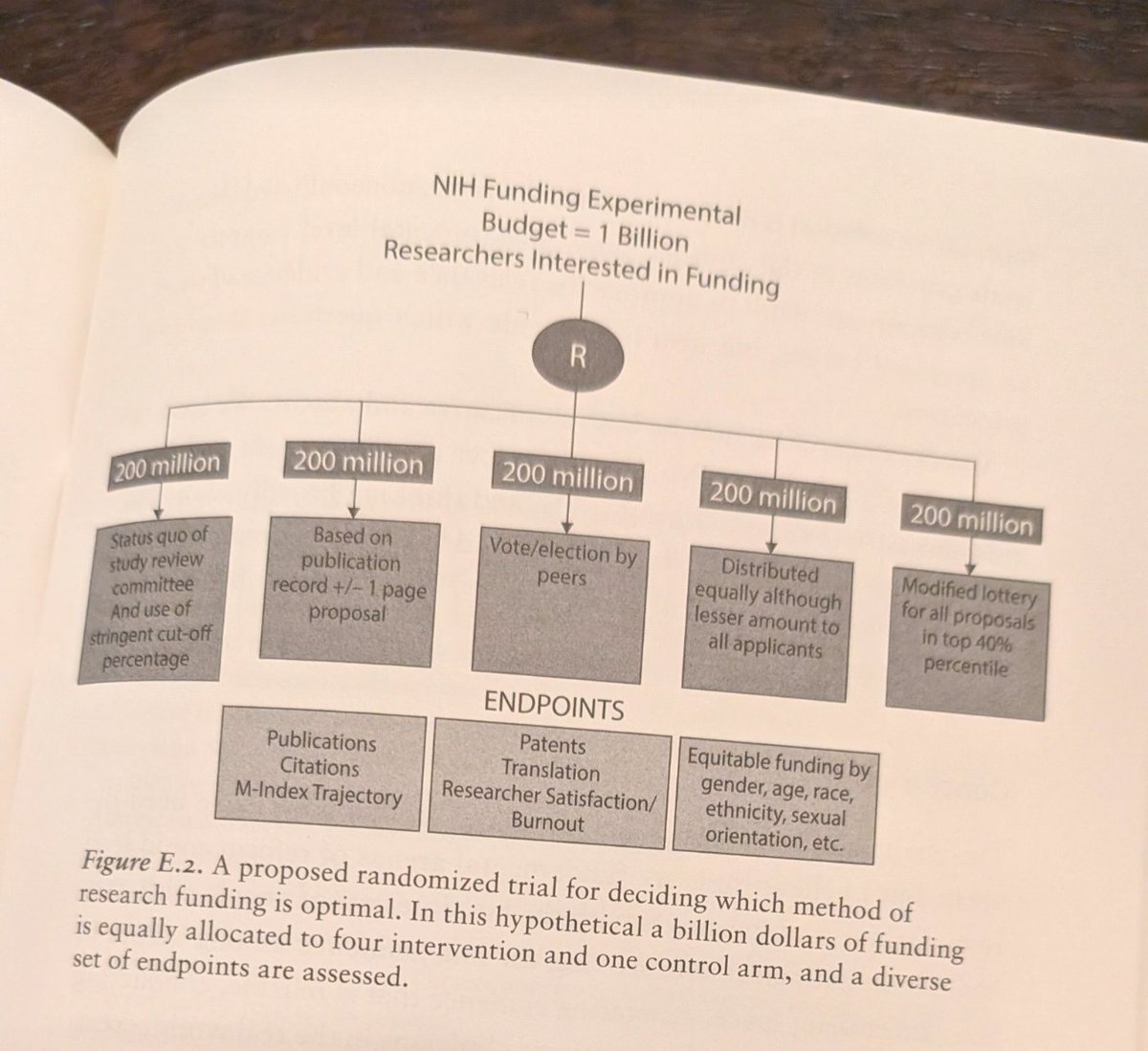
In the epilogue of my book Malignant, which I wrote in 2018, I explained how broken the NIH is, and called for a randomized control trial of NIH Grant giving. This was my schematic. My views on this topic have been the same for the last decade.
27
95
606
133,921
11 Feb 2025
Investigation of cannabis policy association with psychiatric diagnoses using Ontario health data shows concerning link to rise in incident schizophrenia, particularly in young males. jamanetwork.com/journals/jam…
36
7 Oct 2024
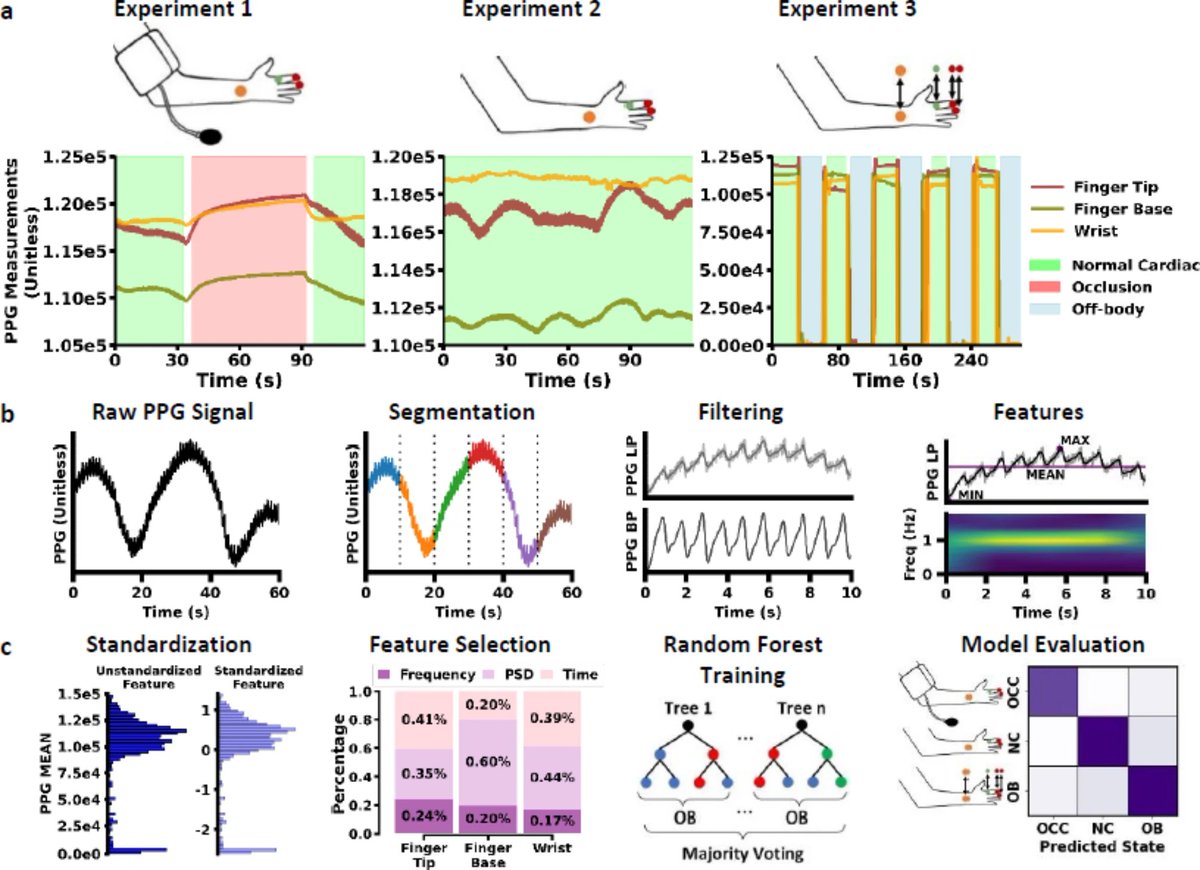
New article out today from our team in Nature Scientific Reports, led by Dr. Mahsa Khalili details the use of wearable PPG sensors for cardiac arrest detection and implications for their use in the population.
nature.com/articles/s41598-0…
1
1
1
85
Jacob retweeted

2 Oct 2024
Curious to learn what Advancing Health has been up to?
Check out our Annual Report!
advancinghealth.ubc.ca/annua…
Our research community works to identify important problems, leverage new technologies & empower others to create positive change in the health care system. A 🧵
1
1
1
169