
Christian saved by grace in order to do good works, Ephesians 2:8-10
Joined April 2022
- Tweets 4,574
- Following 103
- Followers 71
- Likes 4,279
974 Photos and videos





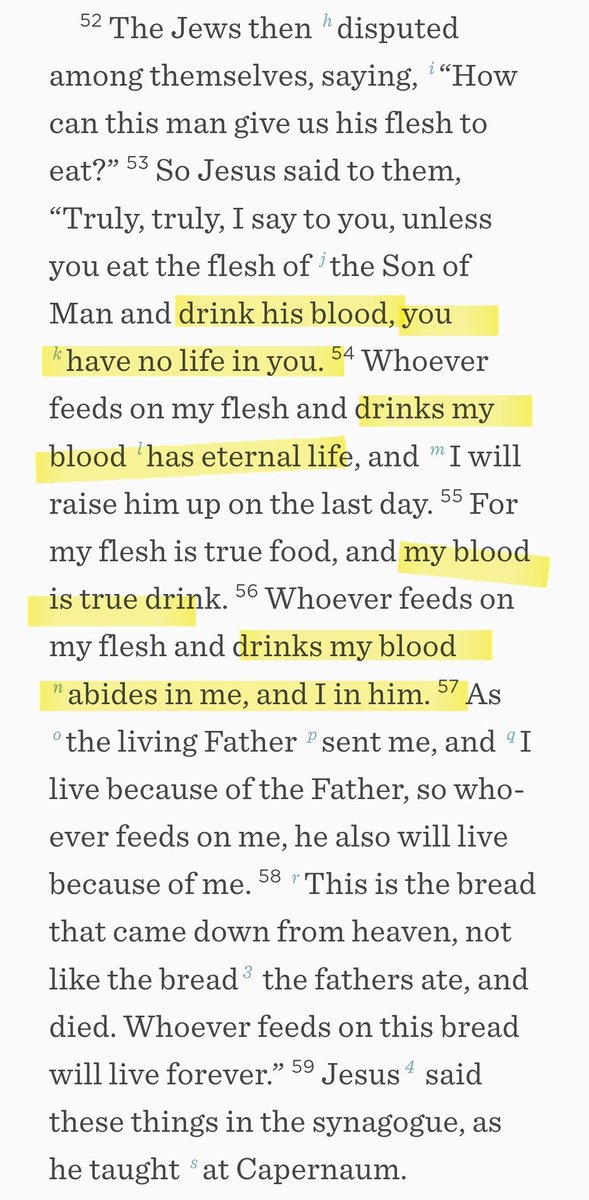
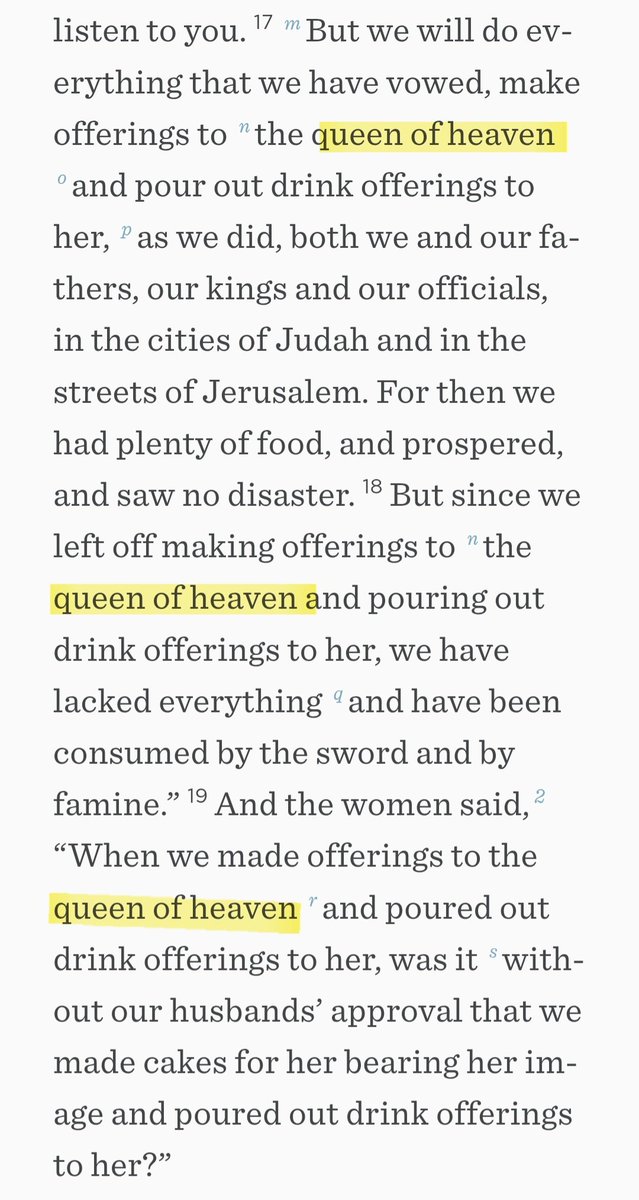
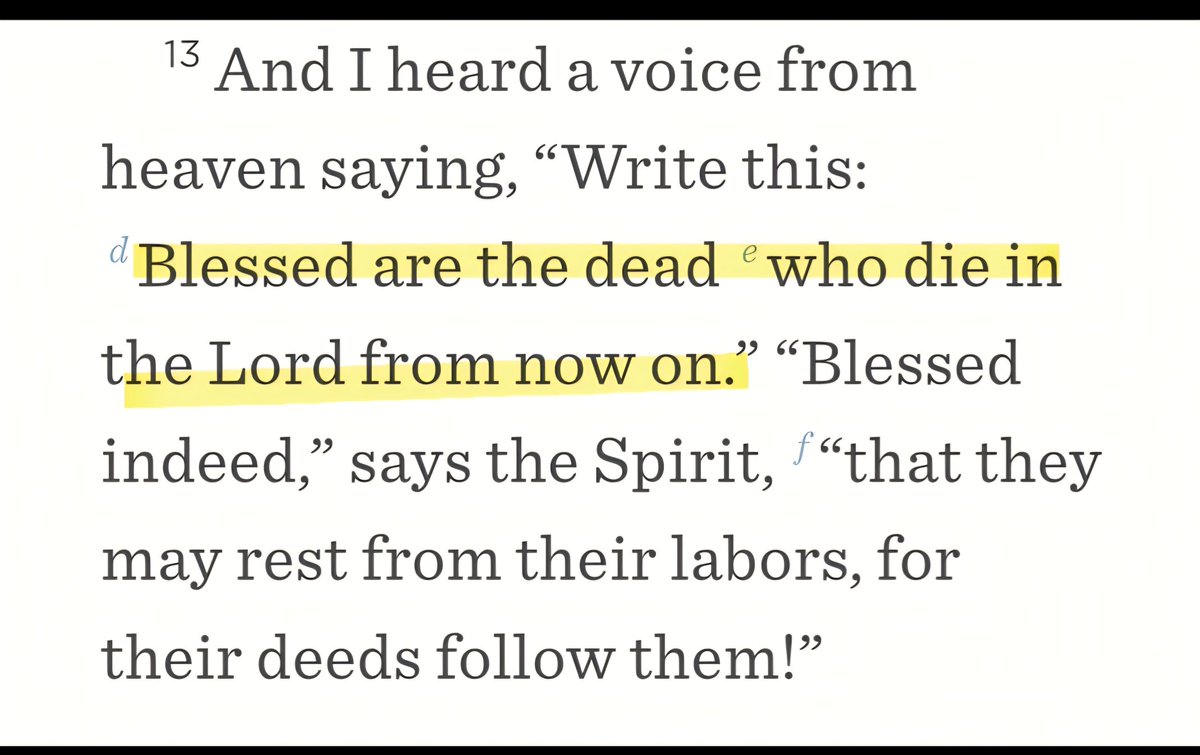
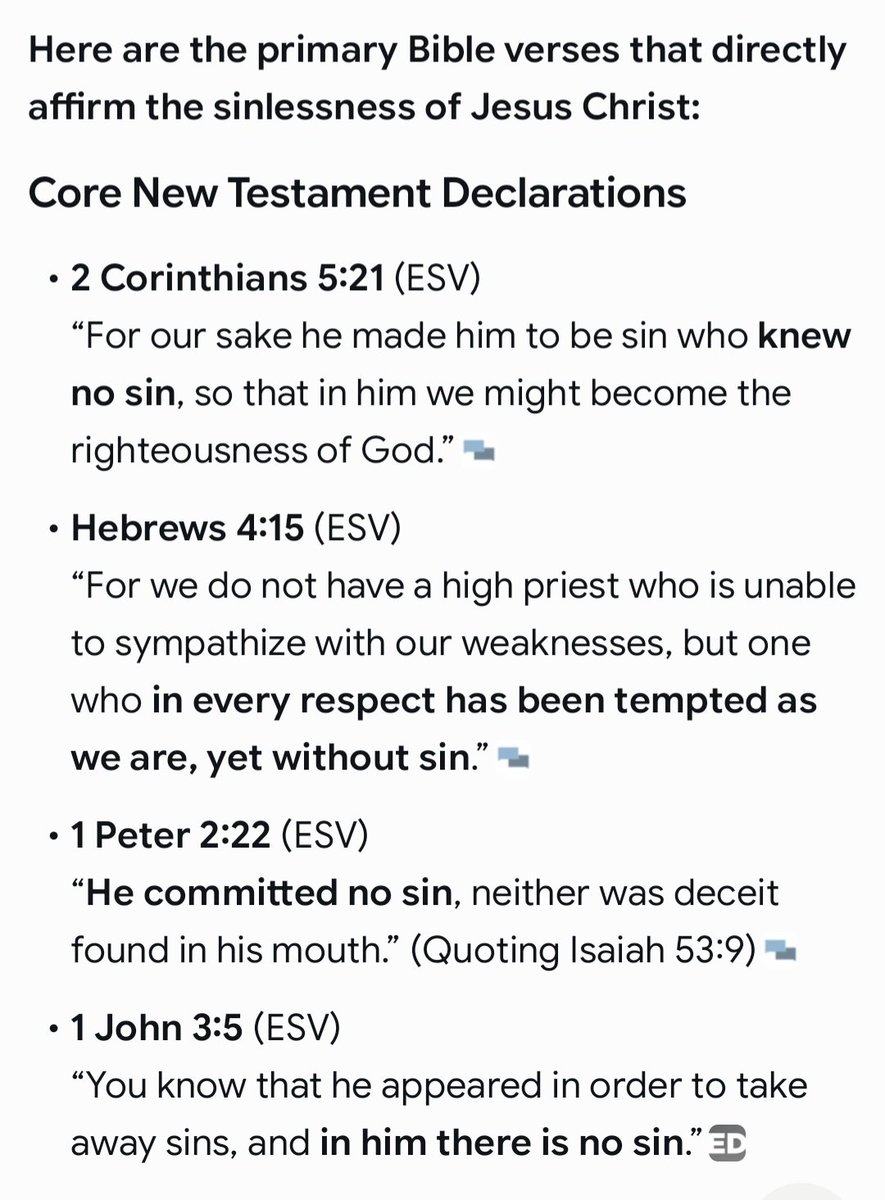


Jerad Macmanus retweeted

Jun 12
Congratulations @ElonMusk.
Thanks to SpaceX's IPO, he's the first Trillionaire.
He didn't TAKE money from anyone. He CREATED wealth.
He launched satellites that connect even the poorest, most remote parts of the world.
Our world needs more MAKERS like Musk; fewer TAKERS like:
1,338
8,753
57,609
1,013,776
Jerad Macmanus retweeted

Jun 4
Which “ancient church” should you trust?
Recently @RuslanKD had a discussion with an Oriental Orthodox apologist (sorry Mihret, I can’t find you to tag you!) and he raised a number of strong objections that deserve slowing down and engaging.
So I’ll be doing that in about an hour. Join me!
🔗 Link in the comments

4
7
35
2,145
Jerad Macmanus retweeted

Jun 2
Long ago I was asked if I would stop my criticisms of The Passion Translation if they changed the name to reflect that it isn’t really a translation.
I said no. But I might be willing to reconsider that.
If they named it after the author we could have a deal. Allow me to suggest that they name it after Brian Simmons to correctly distinguish that it’s his product and not the result of translating. This could communicate the value of the work well and avoid the confusion Brian has so far created.
I hereby suggest “The BS Version” as a working and accurate title.
194
149
2,823
65,834
Jerad Macmanus retweeted

Jun 1
I had never seen this clip anywhere before. This guy is an actual, biblically defined heretic.
If you wonder why I have a bit more of an edge when I'm talking about James Talarico, this is why 👇
159
1,281
6,052
194,654
Jerad Macmanus retweeted
May 29
I've never asked people to share a Live Free episode before.
I would ask you to share this episode we did on @jamestalarico (that's pushing ~700k views across all platforms).
What he's doing requires a level of theological awareness to understand, which is why he's deceptive to a lot of Christians.
Mar 4

🚨 James Talarico just won the Dem primary in Texas. Still, many people still have no idea who he is or how his campaign was built on the intentional distortion of scripture.
Watch this *full* episode of the Live Free Podcast to learn how to spot a wolf in sheep's clothing 👇
92
1,609
3,531
162,677
Jerad Macmanus retweeted

May 27
I don't think that the people of Texas believe there are six sexes. What I would like to ask @jamestalarico is since you said that, why don't you explain to the people of Texas who exactly are these other four genders?
412
2,166
10,206
79,011
Jerad Macmanus retweeted
May 13
This guy’s moment seems over now (thankfully), but just in case…
What’s a dream life to him?
A porn dream or a lightsaber dream.
What’s a nightmare to him?
Being a married father raising three glorious daughters.
This is what Romans 1 calls “a debased mind” and if you’re a young man who wants to live a life of fulfillment and consequence…
1) Run as far as you can from guys like this
2) Bend your knee to Jesus
3) Read 1 chapter of the Bible and pray everyday
4) Go to church
5) Find a cute girl who loves Jesus and marry young
6) Have at least 1 more child than you think you can afford
7) Channel your energy into building / accomplishing something instead of using it to complain all the time
May 11

Nick Fuentes mocks one of his followers for getting married and having daughters.
Notice the constant nose touching.
The face mannerisms.
The odd jaw movements.
What habit does that suggest?
102
272
2,438
130,582
Jerad Macmanus retweeted

May 9
“Are you a Christian?”
“I am original-Quran only Christian”
“What?”
“It’s a Christian that believes in the original Quran before it got tempered with”
71
201
2,006
60,778
Jerad Macmanus retweeted

I'm convinced more each day that James Talarico's campaign is an elaborate parody.
859
2,197
15,562
230,783
Jerad Macmanus retweeted

30 Oct 2025
The VP of the USA @JDVance just compared abortion to human sacrifice
5,199
1,723
15,193
2,192,714
Jerad Macmanus retweeted

27 Oct 2025
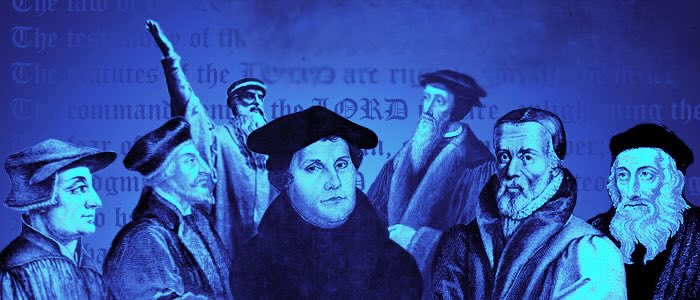
Reformation is not an attempt at new Christianity.
Reformation is retrieval of true Christianity.
1,348
1,058
8,507
775,476
Jerad Macmanus retweeted

4 Oct 2025
53
42
256
14,960
Jerad Macmanus retweeted

1 Oct 2025
Massive Pope Leo L. By this standard MANY Popes were not pro-life. By this standard the Catechism of the Council of Trent is not pro-life. Also Genesis 9:6
30 Sep 2025

BREAKING: Pope Leo today: "Someone who says I’m against abortion but is in favor of the death penalty is not really pro-life."
150
102
2,000
87,816
Jerad Macmanus retweeted

26 Sep 2025
Guys hear me out - this video by @redeemed_zoomer is really awesome. This is him at his best. Really good stuff in this one. Great historical research and logical presentation. Totally agree and straight fire 🔥 by RZ.
Video: youtu.be/VeeIGSSEb3U?si=ga2B…
27
23
273
93,207
Jerad Macmanus retweeted

23 Sep 2025
Erika Kirk explains why she left Catholicism:
“I never understood like why can’t I go directly to Jesus? Why do I have to tell my priest my sins instead of saying it straight to our Lord?”
1,593
4,407
44,830
3,884,664
Jerad Macmanus retweeted

20 Sep 2025
68
215
1,432
65,931
Jerad Macmanus retweeted
10 Sep 2025
Fellow Pastors,
Now is your moment to disavow any hint of moral equivocation between the modern Left and the modern Right. Presidential assassination attempts, Catholic school shootings, Ukrainian girl race-hate-murders... and now open assassinations (on top of the other ocean of openly stated rebellion).
If the "seers" refuse to see, the nation perishes.
"Where there is no (prophetic) vision, the people perish."
–– Proverbs 29:18
Further and higher, our only hope against the rising darkness is national repentance into the love of the Father.
This is a problem so deep, we cannot (simply) vote our way out of it. We will have to repent our way out of it.
There are two choices before us: Christ or chaos.
131
1,097
5,741
230,586

This.
10 Sep 2025

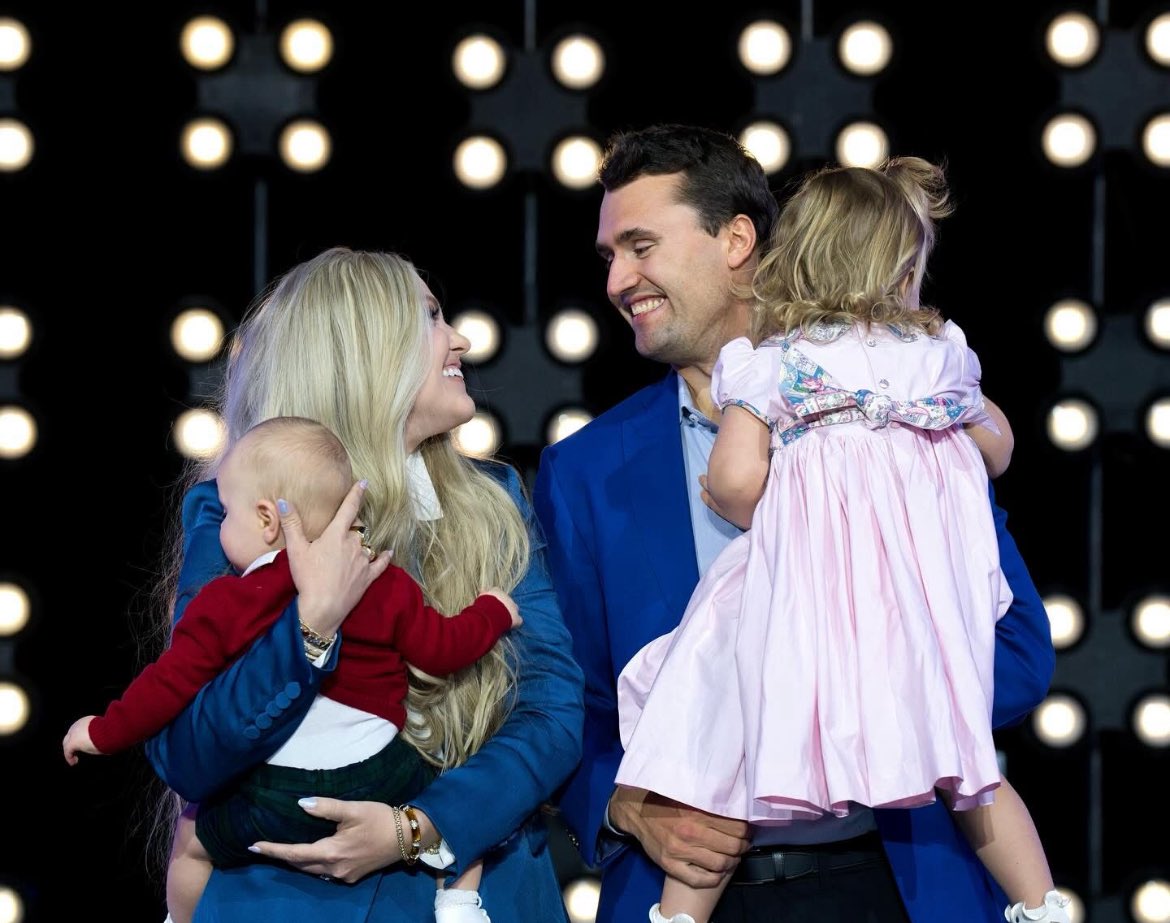
Instead of sharing the horrific, vile, & heart-stopping video of Charlie Kirk being shot, I urge you to share images of his beautiful family whose worst nightmare has come true.
Every kid deserves a dad.
Every wife deserves a husband.
Every American needs Charlie Kirk.
21
200
2,437
78,990
Jerad Macmanus retweeted

7 Aug 2025
Thanks @Trentofthenorth for forwarding. I don't know if that's the real Scott Hahn, but....
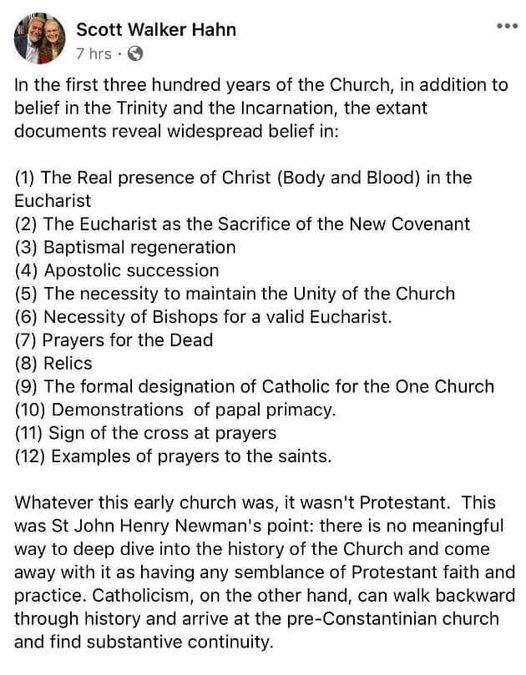
In Newmanesque fashion, whichever Scott Hahn this is grossly misrepresents the ancient church, attempting to load early statements with later developments. A response to each of Scott's bullet points could be expanded into a veritable encyclopedia, but for starters:
1) The ancient church regarded the Lord's Supper with reverence because of Who instituted it, not because they thought it was really Him. The "real" presence claim is typically based on Irenæus' Against Heresies 4.18.5 where he allegedly says after the "invocation" (consecration) that the bread "consists of two realities, earthly and heavenly" and is no longer common but the Eucharist. This is based on the Latin misrendering of the Greek "ecclesin (summoned)" into Latin as "invocationem," giving the impression that the bread takes on a new reality when the words of consecration are spoken. But Irenæus had simply said that the bread takes on a new reality when it is "summoned" as a tithe. It is of earth, because it is the product of our earthly toil, and also heavenly, because it is set aside for the Lord's purposes. The context of Irenæus' claim is his interpretation of Malachi 1:11 which foresaw the Church's new covenant sacrifice—Irenæus thought it was the tithe offering for the poor. And in Malachi 3:10, the Lord summons the tithe: "bring ye all the tithes into the storehouse...". In the early days of the church, the tithe offering was the Eucharistic offering, and the bread offered as part of the tithe took on heavenly qualities by being offered for the poor.
2) As indicated by item 1, the Eucharist is the sacrifice of the new covenant—not because the Eucharist is the "real presence of Christ" but because the Eucharist is the offertory for the poor. This is why Irenæus appeals to Philippians 4:18 and Deuteronomy 16:16 to support it, both of which refer to providing for those in need as an acceptable sacrifice to the Lord. The Didascalia (AD 230) insists that the Eucharist is to be brought to the bishop for distribution to strangers. Because they called the tithe offering the Eucharist too.
3) Water baptism was considered a publicly administered rite to attest to an inward change, which is the real baptism, and it occurs by the ministry of the preached Word. As evidence of this, Irenæus (Against Heresies 1.9.4) speaks of the Scriptural teachings received in baptism: "In like manner he who retains unchangeable in his heart the rule of faith which he received by means of baptism, will doubtless recognize the names, the expressions, and the parables taken from Scriptures....”. Here he identifies the teachings of Scripture as what one receives in baptism, and elsewhere identifies those teachings as what regenerates the man: New believers, "learning of Christ and believing on Him, have at once believed and been changed, ... so great is the transformation which faith in Christ the Son of God effects for those who believe on Him.” (Demonstration of the Apostolic Preaching, 61). Even Justin, who speaks of regeneration in the context of baptism (First Apology 13), also says the real "circumcision of the heart" is by the preached word (Dialogue with Trypho, 114).
Cyprian of Carthage could easily be the poster boy of baptismal regeneration, except that he thought the laying on of hands was a sacrament unto itself, and that the believer must be "be born of both sacraments because it is written, Unless a man be born of water and of the Spirit, he cannot enter into the kingdom of God.” (Epistle 72.21; see also Epistle 71.1 and 7th Council of Carthage). Need it be said that if the "sacrament" of laying on of hands is necessary to bring about rebirth, then the sacrament of baptism alone does not regenerate? It is for good reason that the Catholic Encyclopedia demurs on Cyprian and his similar claims at the Councils of Carghage: "he had no actual jurisdiction ... They seem to have met in some numbers at Carthage every spring, but their conciliar decisions had no real binding force” (Roman Catholic Encyclopedia, Cyprian of Carthage). Of course they didn't. Because the conciliar decisions at Carthage were at odds with the current Catholic view on baptismal regeneration. When pressed on the manner of baptism—immersion or sprinkling—Cyprian didn't care, because the soul of the Christian is not even washed by the water at all: "Otherwise is the breast of the believer washed; otherwise is the mind of man purified by the merit of faith" (Epistle 75.12). Not exactly a slam dunk on water baptismal regeneration.
4) If by Apostolic Succession Hahn means there were successors to the apostles, well good for him. There were. But if he means those successors were de facto authoritative as successors, the ancient church did not agree. Apostolic successors disagreed with each other and contradicted each other all the time. Firmilian of Cæsarea said the clergy in Rome "vainly pretend the authority of the apostles" and when Polycarp of Smyrna visited Anicetus in Rome, Anicetus couldn't persuade Polycarp to celebrate the Eucharist the way he had received it from Peter, and Polycarp couldn't persuade Anicetus to celebrate it the way he had received it from John and the rest of the apostles. All these men were successors to the apostles, and even THEY didn't believe in Hahn's view of apostolic succession. x.com/whpub/status/174839099…
5) Well, of course it was necessary to maintain the unity of the Church. Protestants think it still is. But as Firmilian also observed, "unity" does not mean Roman monolithic uniformity. On the Eucharist and "many other sacraments of divine matters" there were diversities among the churches, and "all things are not observed among them alike" (Cyprian Ep 74 from Firmilian). But guess who Cyprian thought was the most likely to divide the church? The Bishop of Rome: "[Stephen] does not hold the unity and truth that arise from the divine law, but maintains heresies against the Church" (Epistle 73). Irenæus and many other bishops also rebuked Victor of Rome for similar reasons. Besides, when Cyprian wrote on the "Unity of the Church," he thought the sacrifice of our unity was ... wait for it ... the tithe offering.
6) If Hahn means clergy should administer the Lord's Supper, I don't disagree. (Of course, he really means bishops must offer Jesus' body and blood liturgically, but see items 1 & 2).
7) The Eucharist offering of the ancient church was an offering of gratitude and thanks. It was common to offer sacrifices "for the dead," but not in the way Hahn suggests. They offered sacrifices of praise to the Lord, mentioning the names of the dearly departed in their sacrifices because they were grateful to the Lord for the testimony of the departed saints. Much like Protestants donate poinsettias on Easter Sunday in memory of Aunt Bessie and Uncle Alfred for their testimony of faithfulness unto death. Cyprian gives an illustration of this practice by offering sacrifices for the martyrs and mentioning their names in the sacrifices. Cyprian believed the martyrs were already in glory in the Lord's presence, but offered sacrifices to the Lord out of gratitude for the martyrs' testimony, "often as we celebrate the passions and days of the martyrs in the annual commemoration” (Epistle 33.3). This, I think, Hahn has misunderstood as prayers for the benefit of the dead, when it's just thanking God for their lives and testimony.
8) Well, "relics" have existed since Adam and Eve got kicked out of the garden and returned to the earth from which they came, but I think Hahn means *veneration* of relics. Of which I have written elsewhere, namely that digging up the dead and kissing them and rubbing their decomposed bodies on your face is a distinctly late 4th century novelty, and the ancient church did not embrace the practice until the emperors introduced it ... wait for it ... in the late 4th century. x.com/whpub/status/176661068…
9) Yeah, the church has always been called "Catholic" which means "everywhere." But late in the 4th century "Catholic" came to mean "large and in charge," which is not how the ancient term originally came into use. x.com/whpub/status/175357518…
10) Demonstrations of papal primacy were greatly lacking in the ancient church. In fact, the Bishop of Rome was considered a problem to be contained more than a solution. Hippolytus complained that popes Zephyrinus and Callistus were constantly advancing heretical views, “but we have frequently … refuted them, and have forced them reluctantly to acknowledge the truth,” only to find them repeatedly wallowing in “the same mire” again (Refutation of All Heresies, 9.2). And when Stephen attempted to intervene in Spanish episcopal elections, Cyprian of Carthage informed the Spanish clergy that they could ignore Stephen because Stephen had no idea what he was talking about (Epistle 67). Even on Irenæus' Against Heresies 3.3.2, which is ostensibly the "slam dunk" on papal/Roman/Petrine primacy in the late 2nd century, the scholars admit they are even sure what Irenæus wrote, or even what he might have meant by the "barbarous" Latin mistranslation of his original Greek. x.com/whpub/status/177298877…
11) Tertullian mentions the sign of the cross in passing in De Corona, as something that appears on the surface to be superstitious: "in all our coming in and going out, in putting of our shoes, at the bath, at the table, in lighting our candles, in lying down, in sitting down, whatever employment occupieth us, we mark our foreheads with the sign of the cross." I'm not sure doing the sign of the cross when putting on shoes and taking a bath is the big W Hahn thinks it is. Tertullian is the only witness to this before the late 4th century, and when he also attests to Mary's sinfulness, Catholics are quick to point out that Tertullian was a Montanist heretic when he wrote those things about Mary. Well, he was a Montantist heretic when he said we should do the sign of the cross at every waking moment. Ok, sure. But that's not exactly "widespread." Sounds a little silly.
12) I'm sure by widespread "examples of prayers to the saints" Hahn probably means the Sub Tuum Præsidium, a 2nd or 3rd century prayer allegedly addressed to Mary. Of course, that claim is controverted, other scholars placing it in the late 4th century. Not exactly a compelling case of "widespread examples of prayers to the saints."
Like I said, any one of those individual claims is worthy of an encyclopedic rebuttal, because the extant evidence does not by any stretch rise to the ostensibly "widespread" magnitude of the claim. But hey, whatever helps you sleep at night, Scott.
@HahaWalker
5 Aug 2025

@whpub thoughts?
16
10
56
5,928