@NorthwesternU, @MedillSchool & @KnightFdn’s Knight Chair for Digital Media Strategy. Formerly @WashingtonPost, @NatGeo, @segaldesign and @poynter.
Joined May 2008
- Tweets 431
- Following 649
- Followers 3,670
- Likes 976
6 Photos and videos

Jeremy Gilbert retweeted

8 Aug 2024
Perplexity is excited to announce our first philanthropic venture: a gift to Northwestern's @MedillSchool @knightlab. This research will continue exploring how journalists can responsibly use AI and other ways tech and news companies can collaborate. Learn more pplx.ai/northwestern
13
10
163
39,075
Jeremy Gilbert retweeted

7 Aug 2024
Tough news for Axios yesterday with its first-ever layoffs, citing “shifting reader behavior" and "AI". This is a brutal wake-up call for the media industry. While it is unfortunate because it impacts so many talented journalists, the reality is that language models excel at versioning, transforming a format into something specific—be it Axios’s smart brevity or BuzzFeed’s listicles.
The era of differentiating solely on content formats and editorial voice is over. Original reporting, proprietary data, and a strong technology backbone will be crucial as AI becomes ubiquitous in newsrooms.
This development at Axios is particularly noteworthy and, in a way, ironic given Axios’ previous stance on AI in their manifesto: “Every item will be written or produced by a real person with a real identity. There will be NO AI-written stories. NO bots. NO fake accounts.”
It also highlights the need for media companies to embrace AI as a tool for scaling content and reaching wider audiences. This doesn’t negate the invaluable role of journalists in original reporting and newsgathering—skills AI cannot replicate. Instead, it suggests a symbiotic relationship where AI enhances the reach and impact of journalistic work.Newsrooms will have to reimagine their workforce in the age of AI, and that doesn’t have to mean layoffs. Instead, they can allocate more resources to newsgathering roles, lighten roles related to editing and copy, and transition into roles like “editorial prompt engineers,” leveraging their expertise to guide AI in content creation. The future of media lies in a blend of human ingenuity and AI capabilities: adapt to technological advancements or risk being left behind.
niemanlab.org/2024/08/axios-…
24 Jan 2023

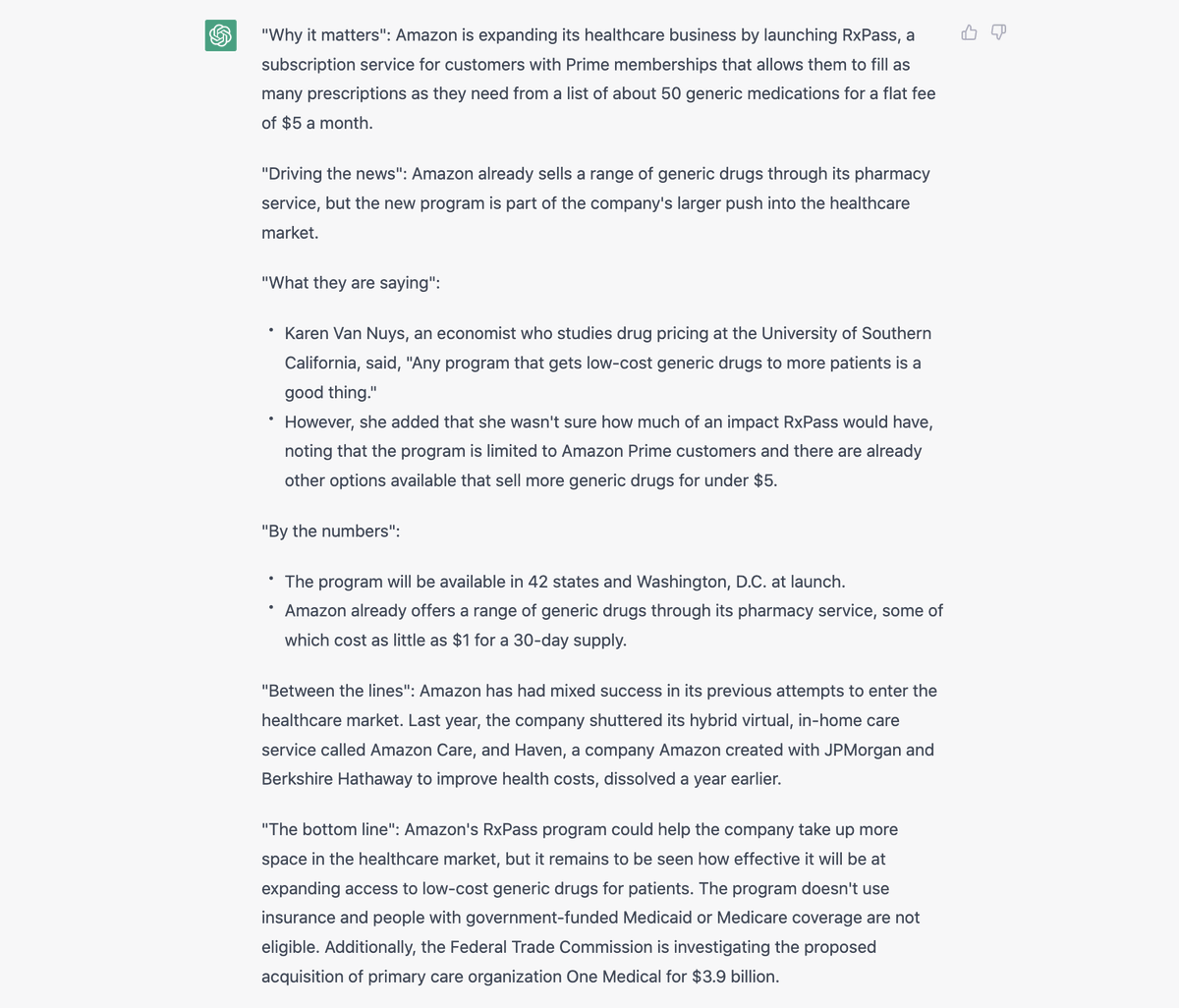
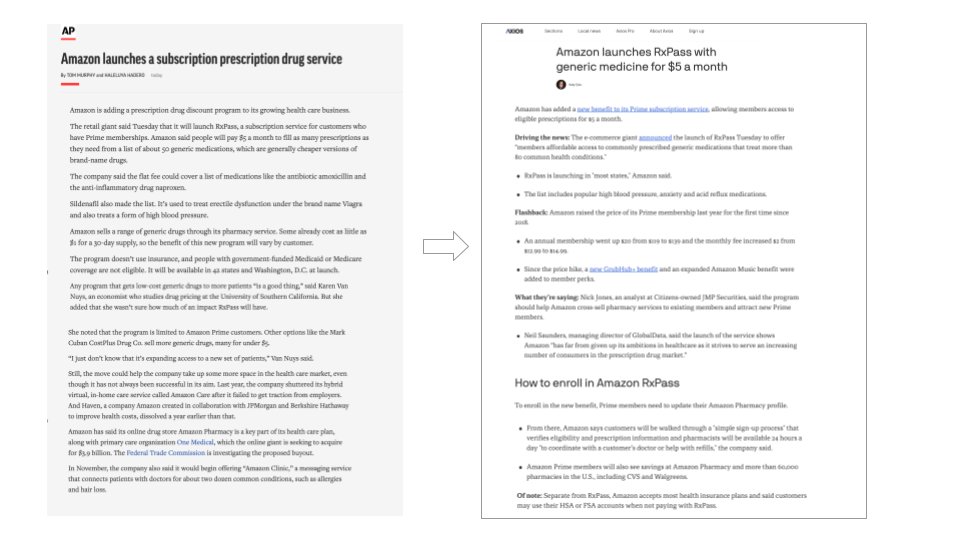
A powerful application of GPT in journalism is to turn @AP wire stories into the @axios "smart brevity" format. Here’s an example of a story about Amazon’s recent launch of RxPass, a new drug prescription service.
1
19
31
18,970
Jeremy Gilbert retweeted

23 Jul 2024
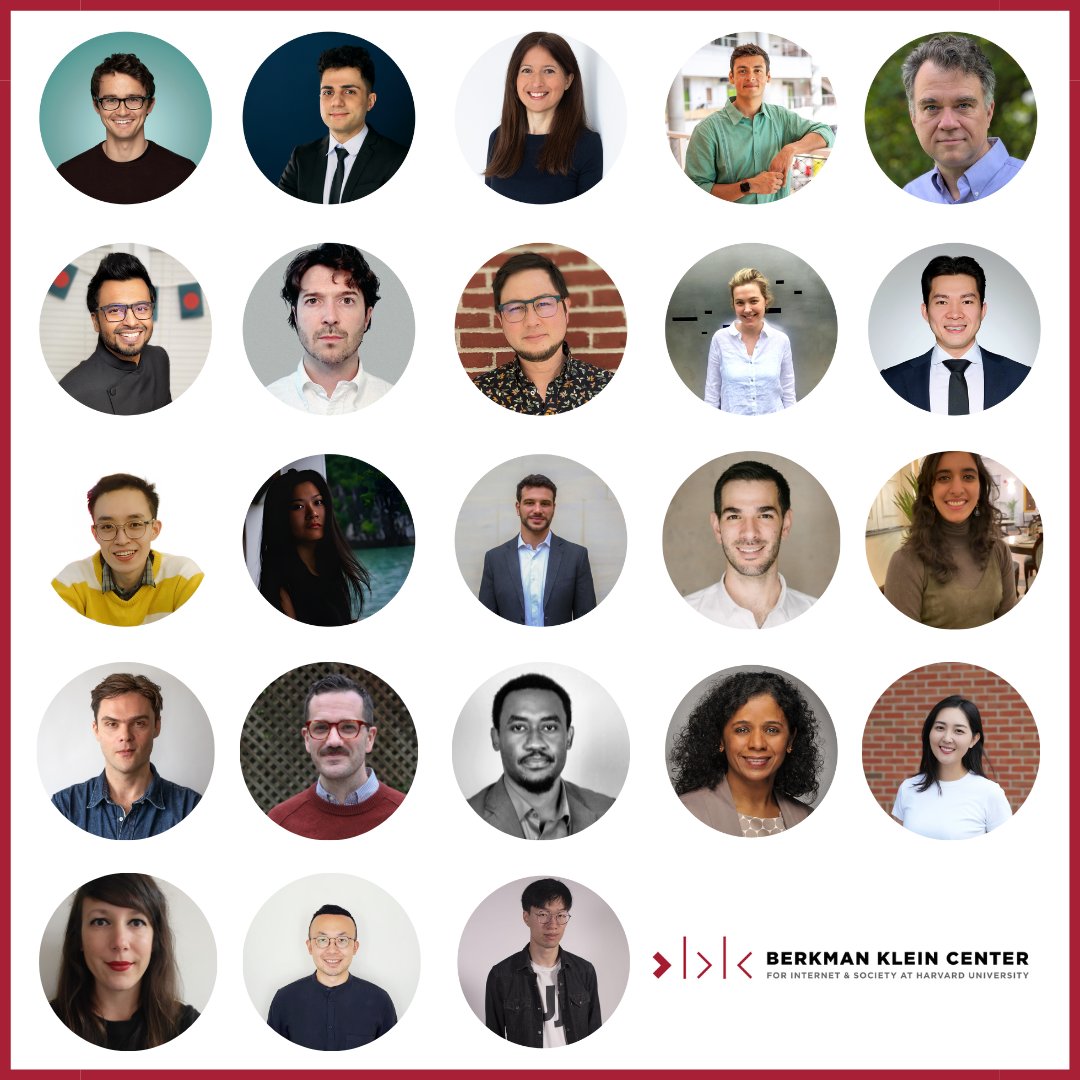
Concurrently with being a Nieman fellow, I'll also be joining the Berkman Klein Center at Havard for 2024-25. Looking forward to jamming with these cool cats...

@BKCHarvard is delighted to announce our 2024-25 fellows! This year’s cohort brings expertise in AI policy, journalism, psychology, math, music, and more. Read more about their research and experiences here: brk.mn/2425fellows.
Congratulations to those selected! 👏👏
3
2
46
4,815
Jeremy Gilbert retweeted

27 Jun 2024
Congratulations @MelissaBell Chicago Public Media names Melissa Bell as new CEO wbez.org/pressroom/chicago-p…
2
4
1,337
Jeremy Gilbert retweeted

27 Jun 2024
.@voxdotcom co-founder and @MedillSchool graduate @MelissaBell named CEO of Chicago Public Media, parent company of @WBEZ and @Suntimes. chicago.suntimes.com/busines…
2
3
13
1,029
Jeremy Gilbert retweeted

28 Jun 2024
“As a sector, we need to agree how we expect students to use and acknowledge the role of AI in their work. The same is true of the wider use of AI in other areas of life to prevent a crisis of trust across society.” theguardian.com/education/ar…
1
1
1
482
Jeremy Gilbert retweeted

22 May 2024
Postdoc Alert! We're recruiting a postdoc to work on generative AI & news production. Get your applications in this week for best consideration. Details here: postdocs.northwestern.edu/an…
1
21
25
6,073

Both Steve and Mazin have shaped how I think about journalism's purpose in the world. Honored to be in such amazing company: @mazsidahmed @josie_huang @Maria_Hinojosa @SteveEngelberg @CovingtonLLP
Thank you @rcfp!

🎉 We're excited to announce the recipients of the 2024 Freedom of the Press Awards!
For their commitment and contributions to #pressfreedom, @rcfp will recognize @SteveEngelberg, @Maria_Hinojosa, @josie_huang, @mazsidahmed, @sisiwei, and @CovingtonLLP! rcfp.org/2024-freedom-of-the…
5
4
66
3,976
Jeremy Gilbert retweeted
10 May 2024
hey whats up hello
10 May 2024

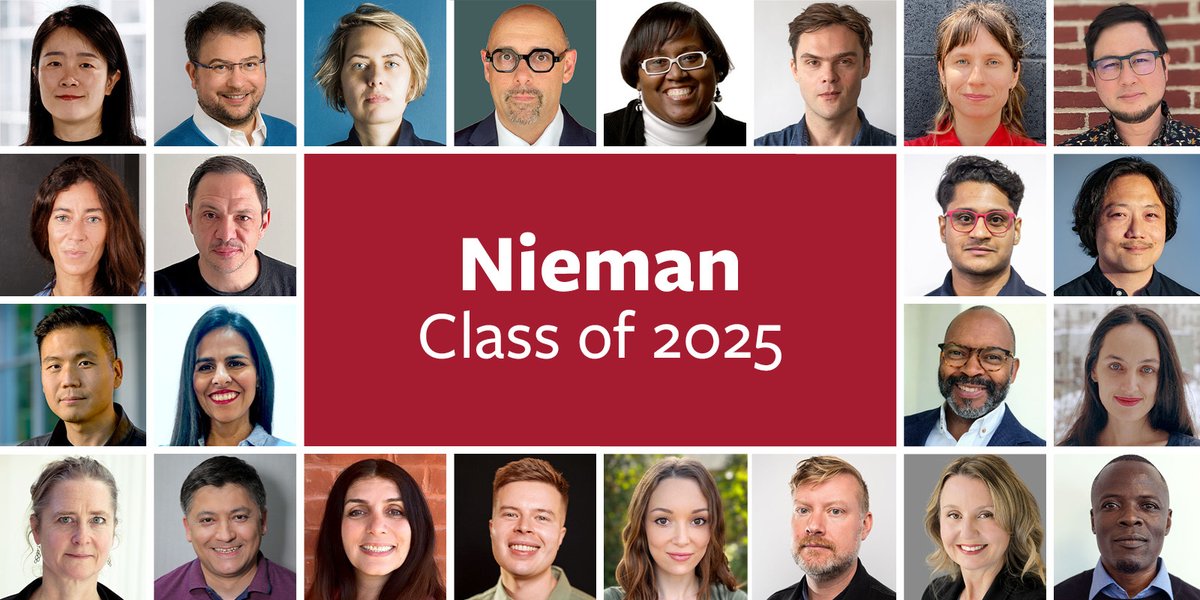
Meet the new class! We’re pleased to introduce the 2025 Nieman Fellows, 24 talented and innovative journalists who cover stories around the world. They’ll join us at @Harvard this fall to learn, collaborate and share their expertise. Welcome to all. nieman.harvard.edu/news/2024…
15
2
105
8,200
Jeremy Gilbert retweeted

9 Apr 2024
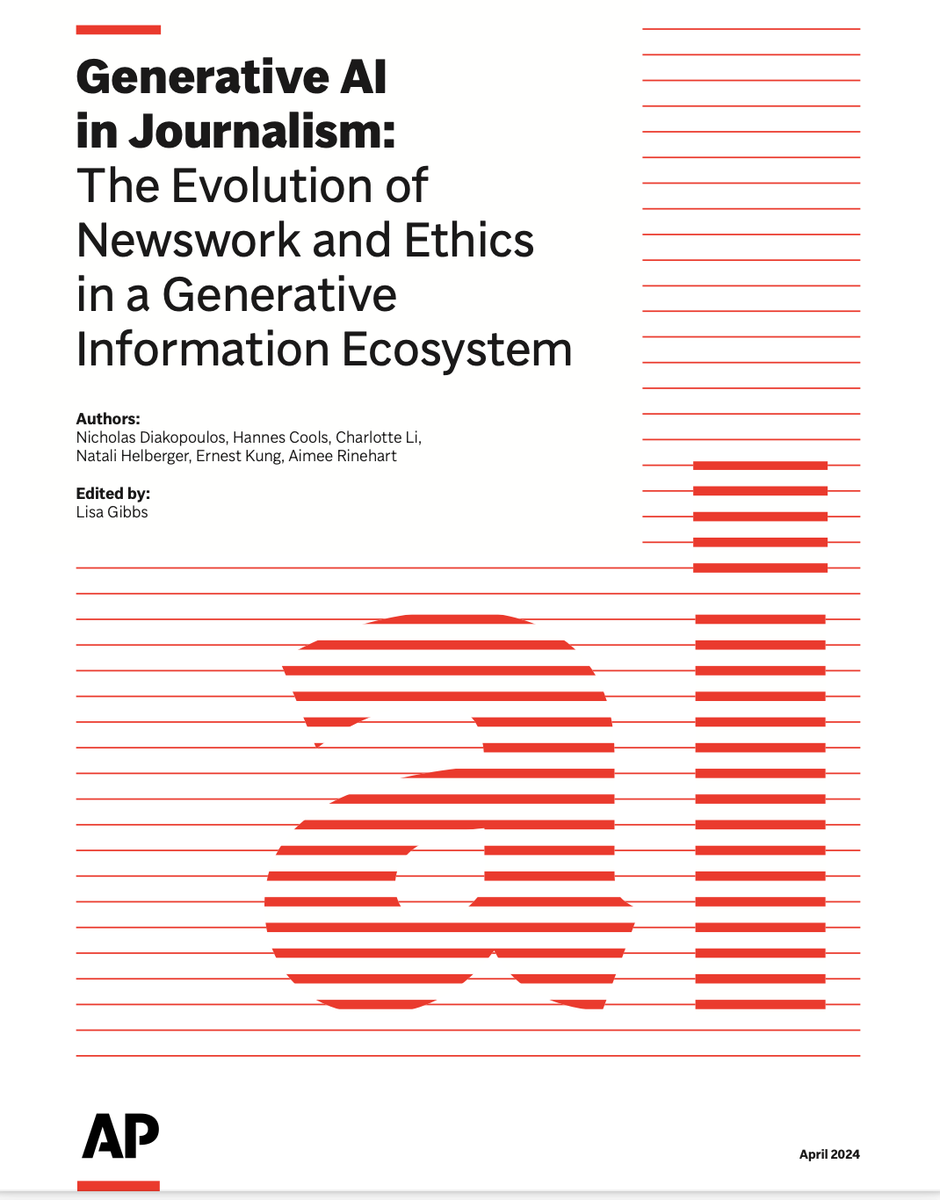
A rewarding pleasure to work with this crew to get a sense of how newsrooms are contending with #AI read the full report: ai.ap.org

🚨 Publication alert 🚨
𝐆𝐞𝐧𝐀𝐈 𝐢𝐧 𝐉𝐨𝐮𝐫𝐧𝐚𝐥𝐢𝐬𝐦: 𝐓𝐡𝐞 𝐄𝐯𝐨𝐥𝐮𝐭𝐢𝐨𝐧 𝐨𝐟 𝐍𝐞𝐰𝐬𝐰𝐨𝐫𝐤
With @AP, we received responses from 290 news professionals to better understand GenAI and its use in journalism.
🧵with findings 👇
🔗ai.ap.org/
4
11
50
7,431
Jeremy Gilbert retweeted
8 Apr 2024
Super excited to have a chance to enhance generative-ai-newsroom.com/ with help from the Knight Foundation and in collaboration with @jeremygilbert news.northwestern.edu/storie…
5
10
48
4,854
Jeremy Gilbert retweeted

28 Mar 2024
"I’m not afraid of AI as a journalist," @phoebedoris told @decka227 in their conversation about prompt training, AI anxieties, and her first-of-its-kind role as senior editor for AI strategy and innovation at The Washington Post.
niemanlab.org/2024/03/the-wa…
5
13
7,060
Jeremy Gilbert retweeted

29 Mar 2024
Hearst Newspapers is looking for a Newsroom AI & Automation Engineer. $100k.
"develop editorial tools & reader-facing projects that harness generative AI" including a newsletter assistant, an automated-alert system & a user-facing generative AI chatbot.
eevd.fa.us6.oraclecloud.com/…
2
3
478
Jeremy Gilbert retweeted

14 Mar 2024
What do the next gen of news consumers want? And how can producers respond to those needs?
ICYMI @FTStrategies (where I work) published a report w/ @MedillSchool that tries to answer this question.
It builds on some excellent research that I want to give a shout out to.
🧵
1
7
17
4,565
Jeremy Gilbert retweeted

8 Mar 2024
Journalism needs leaders who know how to run a business.
These are the five crucial skills for the next generation of media leaders in the era of community-centric journalism. niemanreports.org/articles/j…
1
2
5
531
Jeremy Gilbert retweeted

8 Mar 2024
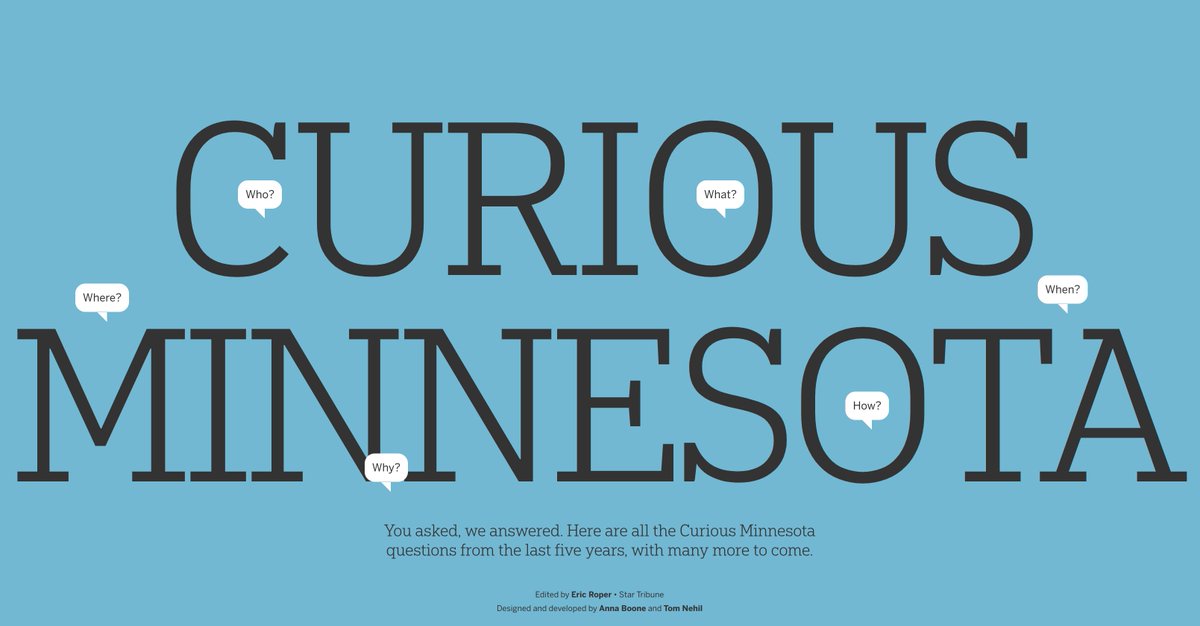
Launched today: our new @StarTribune "Curious Minnesota" collection that tracks every question we've answered in 5 years in this nifty database:
startribune.com/curious-minn…
Great work by @StribRoper & team.
2
10
24
8,820
Jeremy Gilbert retweeted

5 Mar 2024
Loving this report from @FtStrategies @knightlab and @GoogleNewsInit that identifies emergent behaviors, modes of consumption, and insights from the next generation of news consumers.
👀News Product thinkers bookmark this!
5 Mar 2024

@knightlab @FtStrategies (with support from @GoogleNewsInit) launched Next-Gen-News.com, ethnographic interviews with young consumers across the US, Nigeria and India. We identified emergent behaviors, modes of consumption and what these users see as an ideal experience.
6
26
2,473
Jeremy Gilbert retweeted
5 Mar 2024
Congats to @jeremygilbert and team!
5 Mar 2024
@knightlab @FtStrategies (with support from @GoogleNewsInit) launched Next-Gen-News.com, ethnographic interviews with young consumers across the US, Nigeria and India. We identified emergent behaviors, modes of consumption and what these users see as an ideal experience.
2
2
524
Jeremy Gilbert retweeted

5 Mar 2024
“Local journalism & American Democracy.” Please click through and read the 2023 Lenfest Impact Report. Proud of this work & grateful to the hundreds of partners, grantees, & community groups, and thousands of donors with whom we work to help invent the next era of local news.

We're pleased to share "Local Journalism & American Democracy," our 2023 Impact Report. Learn how The Lenfest Institute is building solutions for the next era of local news in Philly, in Pennsylvania, and nationwide. lenfestinstitute.org/impact/…
9
11
1,298
Jeremy Gilbert retweeted
6 Mar 2024
Congratulations to the @BBC_News_Labs team on getting this out! It's an ideal public service response to the growing risk from mis-represented and AI-generated media.
You can learn more about their work on this here bbcnewslabs.co.uk/news/2024/…
4 Mar 2024

💻 New technology to show why images and video are genuine launches on BBC News
‘Content credentials’ feature means visitors to the BBC News site will now see a ‘how we verified this’ button underneath images and videos on BBC Verify content.
More ➡️ bbc.co.uk/mediacentre/2024/c…
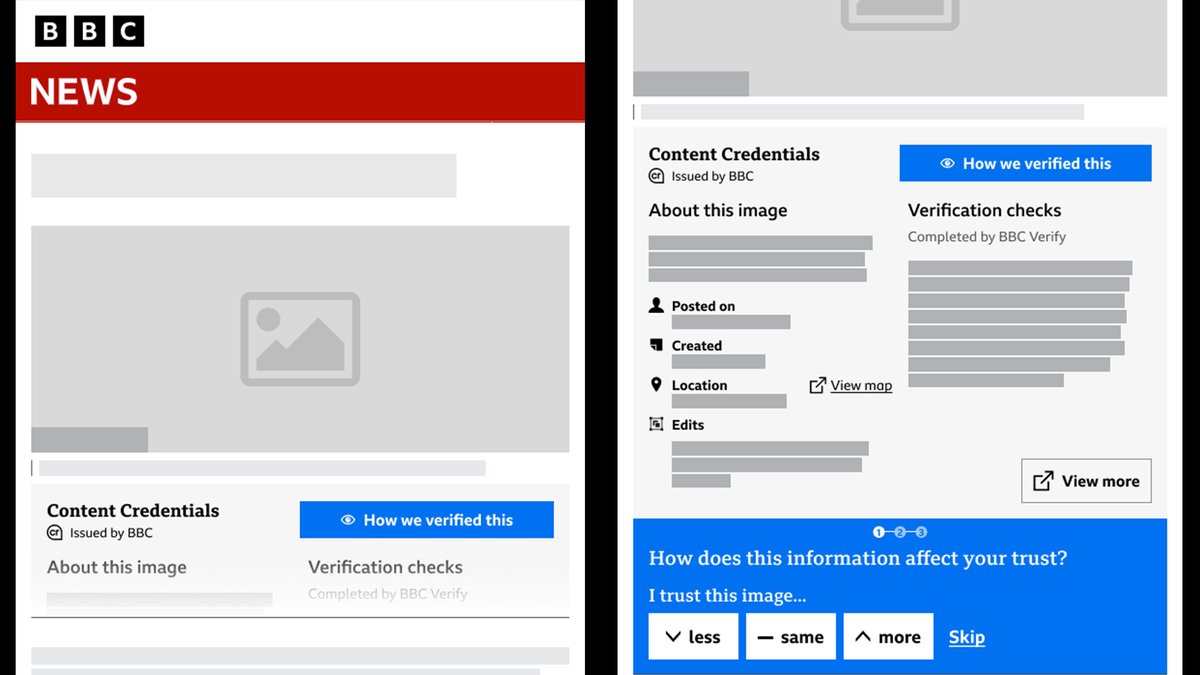
ALT Composite image featuring two screenshot examples of the content credentials feature
7
12
1,423