
Joined October 2015
- Tweets 5,718
- Following 1,436
- Followers 1,414
- Likes 5,883
122 Photos and videos








Pinned Tweet

7 Jun 2020
Be clear about what you want. Maximum clarity. Write it down. Now.
🤨🤨
1
7
29

Jess retweeted

What do you mean you're a pre-intern or a medical student, yet your timeline has nothing about the internship policy?
If it affects your future, your profession, and your colleagues, then your voice matters. Silence today could cost us all tomorrow.
#PayAllMedicalInterns
11
28
650
Jess retweeted

Jun 13
Clinics prefer Clinical Officers simply because they'll prescribe more medicine and make the facility money. MOs will all their knowledge prefer to give the patient just what they benefit from
One approach makes the facility more money. The other makes patient's outcome much better.
60
48
320
24,259
Jess retweeted

Jun 12
Surviving med school is more of strategy than intelligence
5
56
389
7,717

Jess retweeted

Jun 11
Even as a joke,some thoughts should never get out of your mouth.
2
2
12
554
Jess retweeted

Jun 8
Just to analyze investigate and manage based on knowledge from over 200 books and experience over 7 years , you want 75k just for that. Mulimba nyo namwe
1
4
705
Jess retweeted

Sexual dysfunction among men is becoming an increasingly prevalent problem among all ages.
But what do you know about this condition, its causes, prevention and management?
On Monday, 8th June 2026, we shall have a deep dive into this condition. Join in at 7pm.
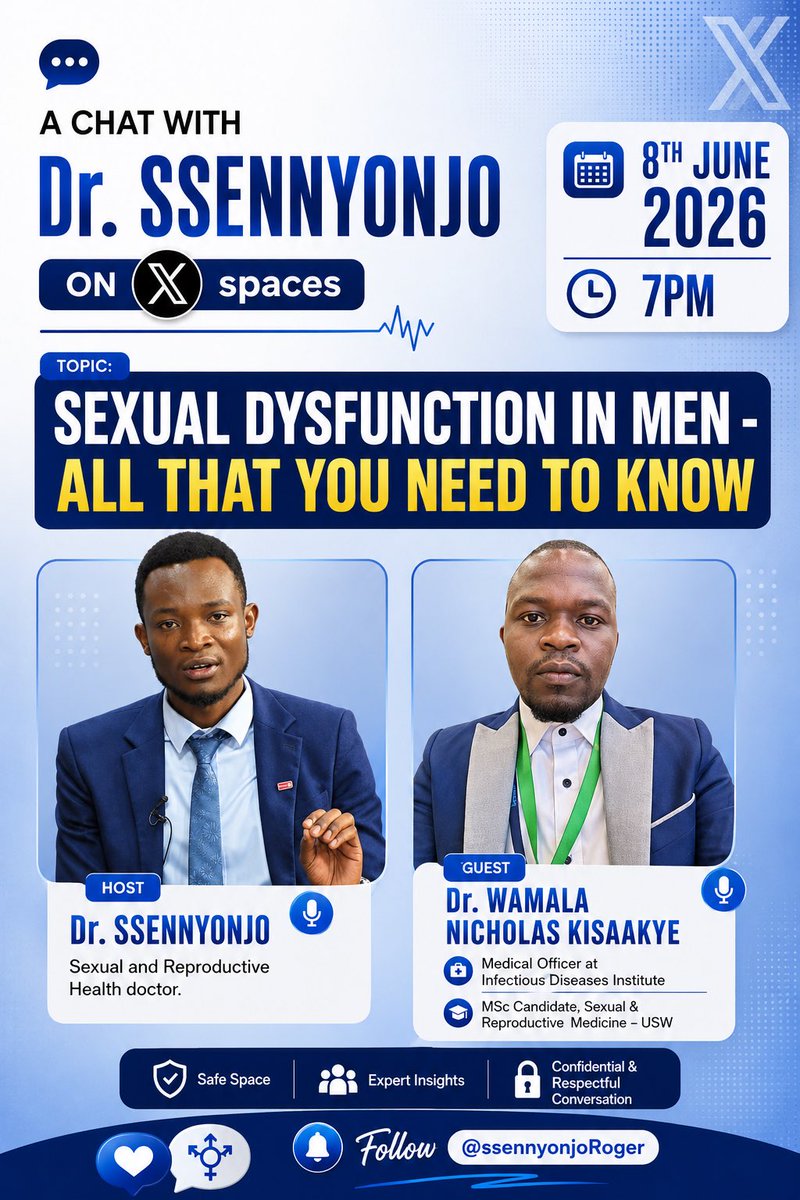

The rate at which young men are struggling and presenting with Erectile dysfunction and Premature ejaculation is worrying…
4
5
358
Jess retweeted
Guys Joke…
I remember during Internship worked a duty in Laboursuite/theatre/ Post Natal from Saturday to Monday. On sunday, I operated 7 mothers during day and 8 at night. By that time I was quite good at C/s that I would take 15-25mins unless its..
Jun 2

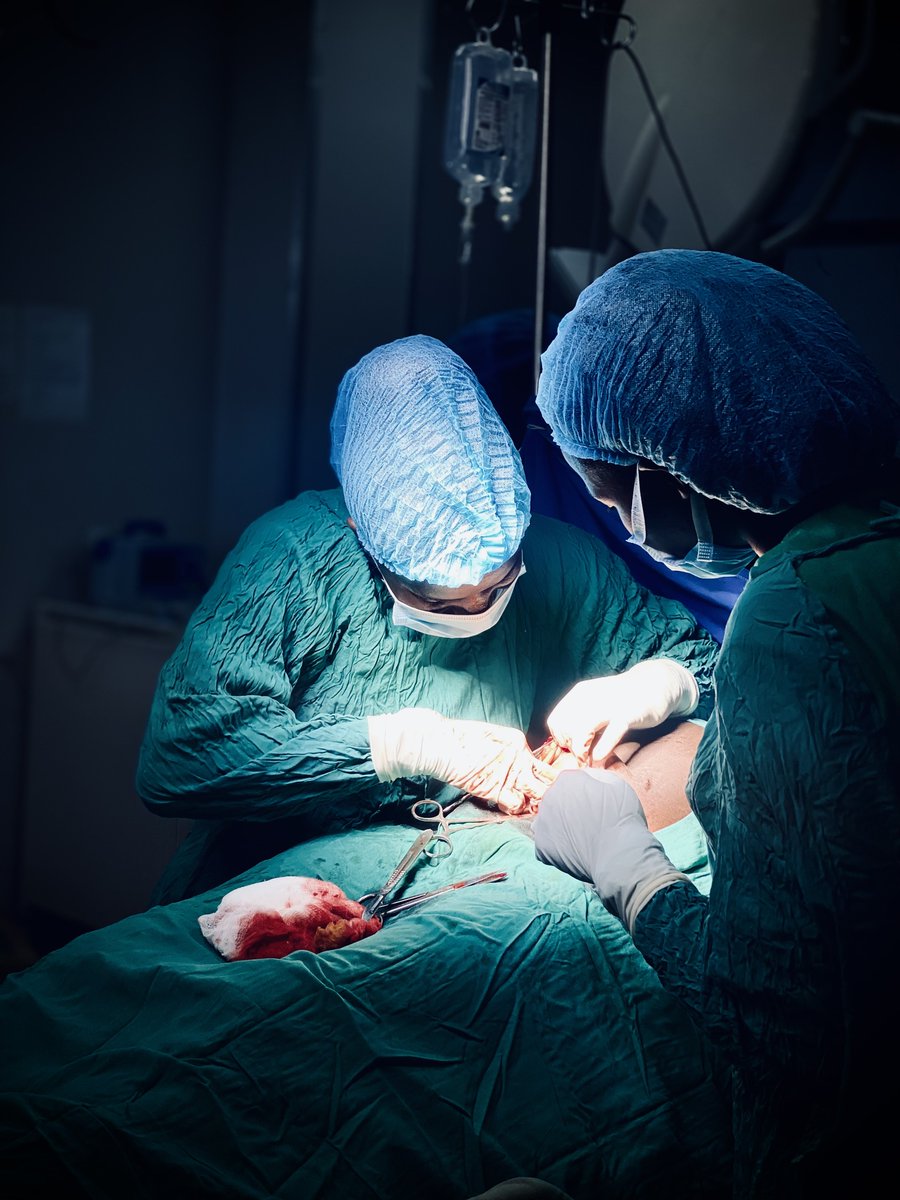
I took this photo at Kayunga Regional Referral Hospital around May last year.
For those who don't know what medical interns actually do, let me share a small story.
One night as a medical student, I decided to spend time in theatre to learn. I was working with an intern doctor who was on call. That night, she had 6 emergency Caesarean sections to perform. I assisted in the first 3 surgeries and by around 3 am I was exhausted. I told her I was going to sleep because I had lectures at 8 am. the next morning. She smiled and told me to go.
The next day, after my lectures, I passed through the postnatal ward and found the same doctor reviewing patients. She had worked through the night, spent hours in theatre, and was still on the wards attending to mothers.
That was the day I truly understood that internship is not just another year of training. It is frontline hospital work.
When people hear "intern," they often imagine someone observing and learning. In reality, many interns are reviewing patients, responding to emergencies, assisting and performing procedures, covering night shifts, and helping keep hospitals running.
As the debate on intern allowances continues, I keep thinking about that night in Kayunga.
If we expect young doctors to carry that level of responsibility and workload, can we honestly say their welfare doesn't matter?
10
38
133
23,965
Jess retweeted

Jun 2
The Power of Words, one of the best speeches ever
[📹 Mohammed Qahtani]
14
209
709
57,313
Jun 2
😁

Are we going to have unlicensed students work on patients or they’ll give provisional licenses to students who haven’t graduated ?
51
Jess retweeted

Jun 1
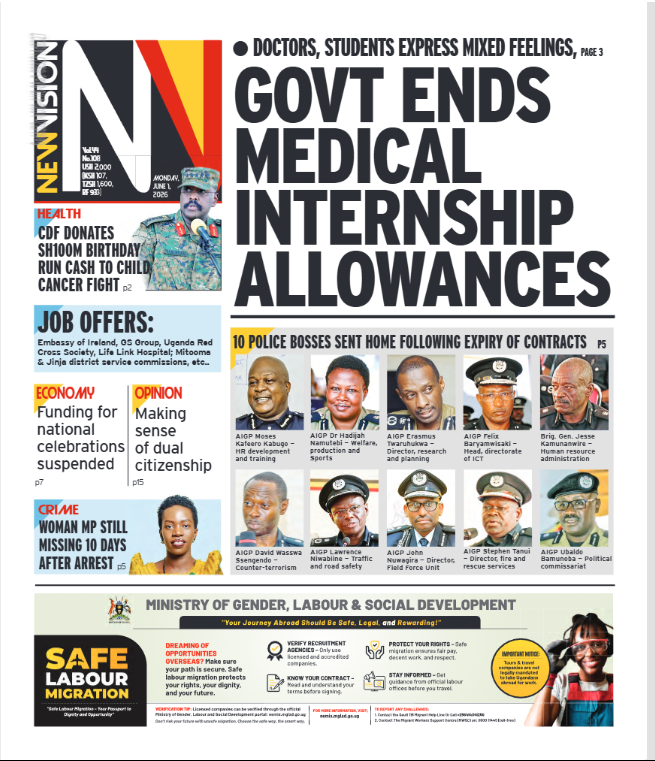
I HOPE ONE OF THE PEOPLE AT THE CENTRE OF THIS IRRESPONSIBLE POLICY GOES TO A HOSPITAL AND FINDS A VERY HUNGRY INTERN DOCTOR BECAUSE HE COULD NOT AFFORD A MEAL THAT DAY.
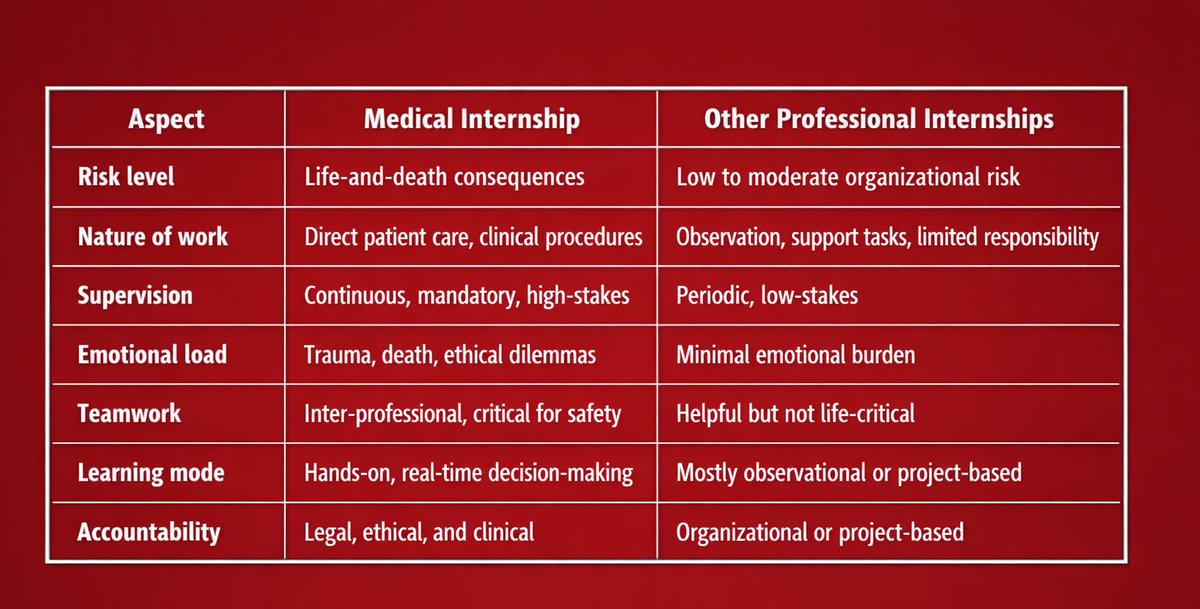
Medical internship is fundamentally different from other professional internships because it places the intern inside a high‑stakes, life‑and‑death environment where errors have immediate consequences for human beings, not products, not paperwork, not profits. That single fact shapes everything else.
Why Medical Internship Is Different (the Core Reasons)
1. Direct responsibility for human life
Unlike other professions where interns observe or handle low‑risk tasks, medical interns participate in real patient care like administering injections, managing records, and making clinical decisions under supervision. These tasks mirror full professional responsibilities and require rapid, accurate judgment.
In most fields, an intern’s mistake causes inconvenience.
In medicine, a mistake can cause harm, disability, or death.
2. Mandatory hands‑on practice, not optional exposure
Medical interns are not “learning by watching.” They are required to perform procedures, manage emergencies, and apply clinical reasoning in real time. This is because medicine cannot be mastered theoretically, it demands experiential learning.
3. Inter‑professional coordination is essential
Interns must work with nurses, pharmacists, lab technicians, radiologists, and senior clinicians. This inter‑professional environment is not optional; it is the backbone of safe patient care.
Communication failures can kill patients.
Collaboration is a clinical skill, not a soft skill.
4. High cognitive load and emotional pressure
Medical interns face:
Night calls
Emergency cases
Critically ill patients
Families in distress
Ethical dilemmas
Death and dying
No other internship routinely exposes trainees to this combination of technical, emotional, and ethical intensity.
5. Long training pipeline and steep learning curve
Medical interns have already completed years of study, yet internship is the first time they face the full complexity of real patients, whose conditions rarely match textbook patterns. They must adapt quickly.
They must think critically. They must make decisions with incomplete information.
6. Continuous supervision and evaluation
Interns receive constant feedback from senior clinicians, who expect initiative, accuracy, and professional judgment. This mentorship is not casual, it is structured, rigorous, and essential for patient safety.
The deeper truth
Medical internship is different because medicine is the only profession where society entrusts trainees with human life under supervision.
That responsibility demands:
More training
More discipline
More emotional resilience
More teamwork
More accountability
than almost any other field.
6
33
96
3,954
Jess retweeted

Jun 2
I took this photo at Kayunga Regional Referral Hospital around May last year.
For those who don't know what medical interns actually do, let me share a small story.
One night as a medical student, I decided to spend time in theatre to learn. I was working with an intern doctor who was on call. That night, she had 6 emergency Caesarean sections to perform. I assisted in the first 3 surgeries and by around 3 am I was exhausted. I told her I was going to sleep because I had lectures at 8 am. the next morning. She smiled and told me to go.
The next day, after my lectures, I passed through the postnatal ward and found the same doctor reviewing patients. She had worked through the night, spent hours in theatre, and was still on the wards attending to mothers.
That was the day I truly understood that internship is not just another year of training. It is frontline hospital work.
When people hear "intern," they often imagine someone observing and learning. In reality, many interns are reviewing patients, responding to emergencies, assisting and performing procedures, covering night shifts, and helping keep hospitals running.
As the debate on intern allowances continues, I keep thinking about that night in Kayunga.
If we expect young doctors to carry that level of responsibility and workload, can we honestly say their welfare doesn't matter?
67
260
626
52,156
Jess retweeted

An intern who cannot afford transport to the hospital is a danger to patients.
An intern surviving on borrowed money cannot focus on clinical decisions.
An intern working 36-hour shifts without nutrition makes errors.
This policy doesn't just harm interns.
It harms every patient who depends on an intern who is hungry, exhausted, and financially desperate.
Patient safety is a casualty of this policy.
1
15
35
956
Jess retweeted

Jun 1
Another bold reform that would make the health sector more accountable, respected, and adequately funded is requiring all government workers; MPs, ministers, military personnels, and other public officials to use government health insurance exclusively in public hospitals.
Anyone opting for private healthcare should do so entirely at their own expense.
The moment decision makers depend on the same public health facilities as ordinary citizens, healthcare will receive the attention, investment, and urgency it truly deserves. 📌
19
58
210
5,602

When medical residents are required to work continuously for 36–42 hours without sleep, their cognitive performance can deteriorate to a level similar to that of individuals with a blood alcohol concentration (BAC) of 0.10%. Driving a vehicle at this BAC level is illegal in almost all countries, as it exceeds standard legal limits.
May 24

One unpopular truth about residency programs nobody wants to admit?
Let’s hear it.
2
10
46
3,379
May 29
🤣🤣
1 Timothy 5:23

Under the book of Timothy.
10
Jess retweeted

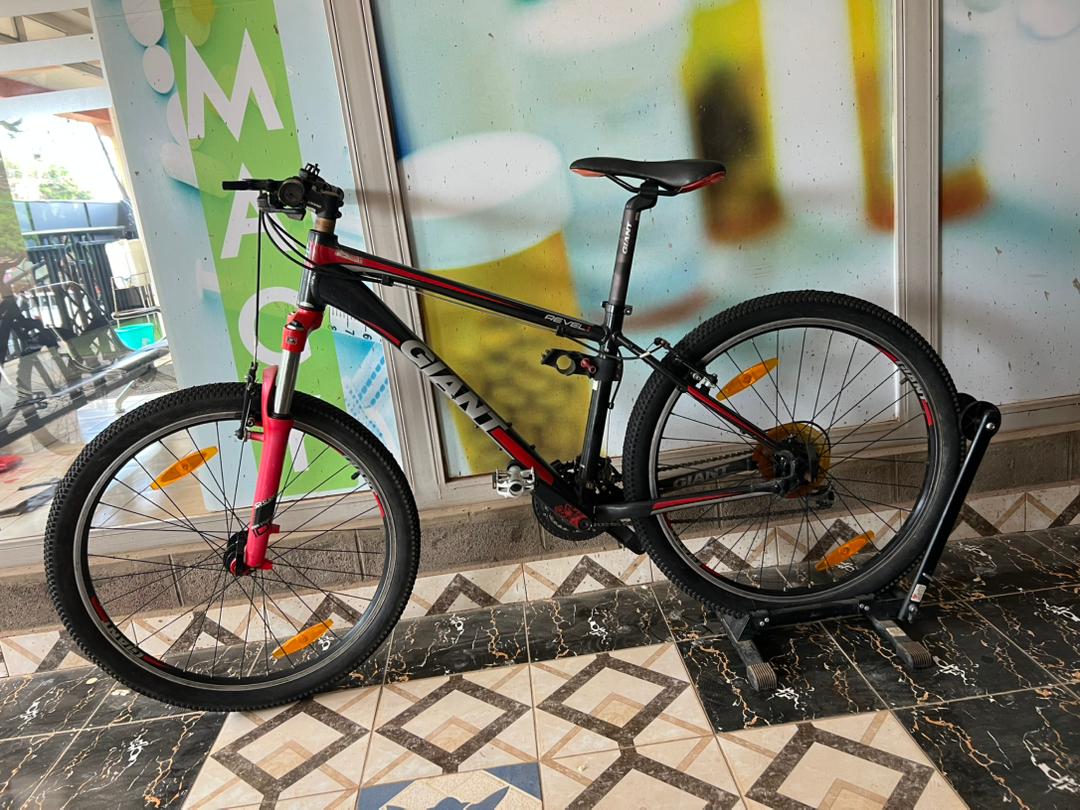
Bikes Bikes Bikes!
Visit our shop get your self a bike
We have a wide range of options for you to choose from.
We are located at Kulambiro after Malcom Healthcare
Call us on 0706917819 for more info



3
6
101
Jess retweeted

May 25
A tree heavy with fruit bends low, only the empty one stands stiff against the wind.
A grown man bows not because he is weak, but because wisdom teaches humility.
2
1
3
189
May 23
Point 27 has left me thinking.
May 23

Here we go again!
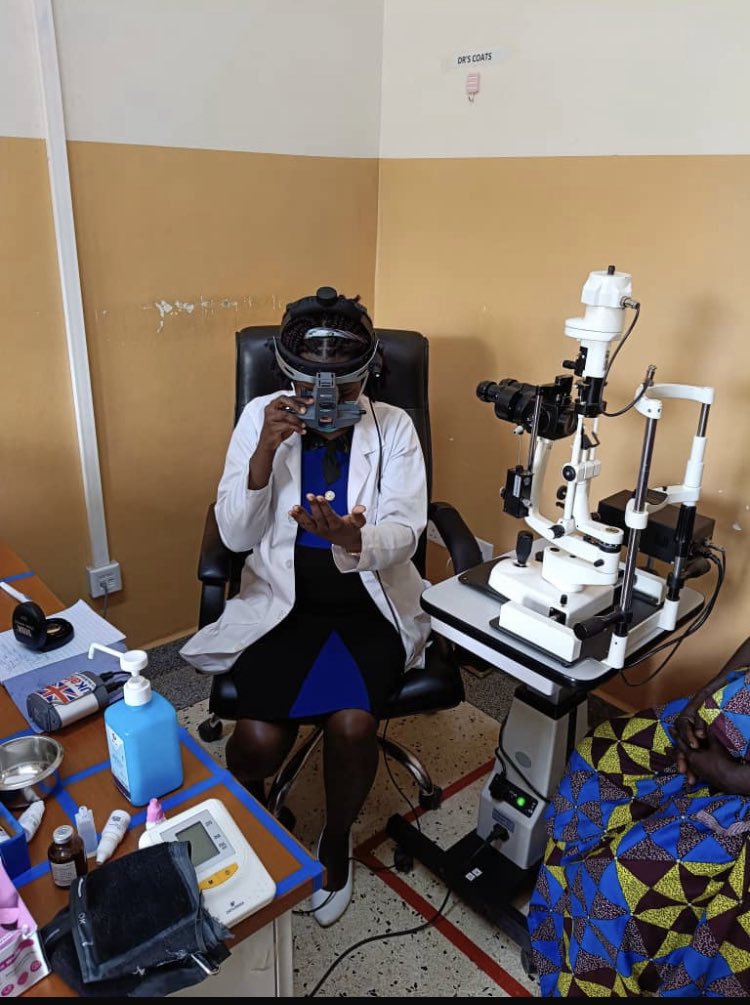
Facts about your eyes
1. The normal eye cleanses itself. No need for any ‘cleansing’.
2. You do not need any specific herbal supplement to see better. The vitamin A in regular diet is mostly enough.
3. Glasses do not spoil eyes.
4. Glasses do not increase refractive error.
5. Children of any age can wear glasses if they need it.
6. Herbs in the eye will kill it faster than putting nothing.
7. Eye whitening is a myth.
8. Glaucoma will kill your vision slowly without any pain until you’re totally blind.
9. There’s no other treatment for cataract except surgery. Don’t be deceived.
10. The most common cause of cataract is old age. If you can prevent that you can prevent cataract.
11. A squinted eye must be checked as soon as yesterday.
12. Double vision is not normal.
13. You can have dry eyes while tearing.
14. It is possible for the eye to pop out, but it clearly spells a warning.
15. Surgery for treating Glaucoma does not improve vision. The aim is to maintain the vision left.
16. Every eye surgery carries a risk of complications. That’s why you sign a consent form.
17. Borrowing your neighbor’s eye drop is a recipe for disaster.
18. The eye doctor looks into machines with light more than you do with your phones and computers yet their eyes are still okay. That should tell you something.
19. As an adult, using a phone or computer for longer periods will not spoil your eyes. Your eyes just get tired and need rest.
20. Giving phones to children will definitely affect their vision because their eyes are still growing.
21. If anything has entered your eyes and it persists for more than one day, it’s most likely not getting out on its own. Go to the hospital.
22. Yes, eye tattooing can be done for specific reasons.
23. Sheep eyes to replace your lost eyes is a myth.
24. During surgery, the eye is not removed, washed and then put back.
25. Not every vision loss can be restored. Some are permanent.
26. Gonorrhea can cause vision loss faster than any other disease.
27. Almost everyone will require reading glasses at 40 years. However, you can choose to suffer without them. It’s a choice.
28. Eye cancers in children may show up as shiny eyes at night like that of a pussy cat.
29. Any blunt trauma to the eye should be checked. If you don’t understand the word ‘blunt’, google it.
30. Sunglasses are perfectly okay for everyday use in a sunny environment.
31. Do not ride a bike without eye protection.
32. Do not swim without eye protection.
33. If anything splashes into your eyes, wash it thoroughly with clean water before going to the hospital.
34. Buying eye drops over the counter without prescription is a recipe for disaster.
35. Use urine in your eyes at your own risk.
36. Do not leave your doctor before knowing the name of your eye problem.
37. Because it worked for your neighbor, is not a scientific evidence!
1
1
175