
Exploring human connection through science, conversation, and art. Director of the Virginia Affective Neuroscience Lab. linktr.ee/jimcoan
Joined November 2008
- Tweets 13,488
- Following 671
- Followers 2,987
- Likes 18,924
530 Photos and videos
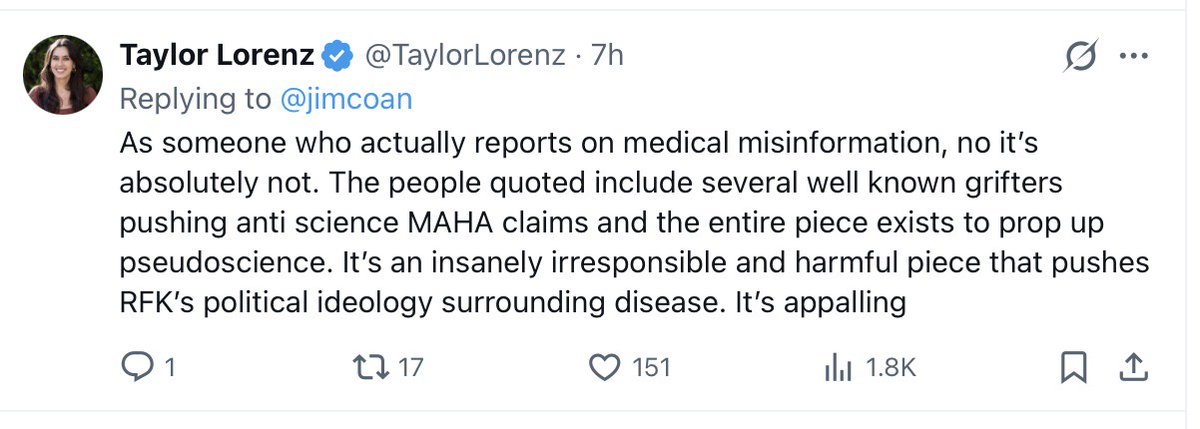
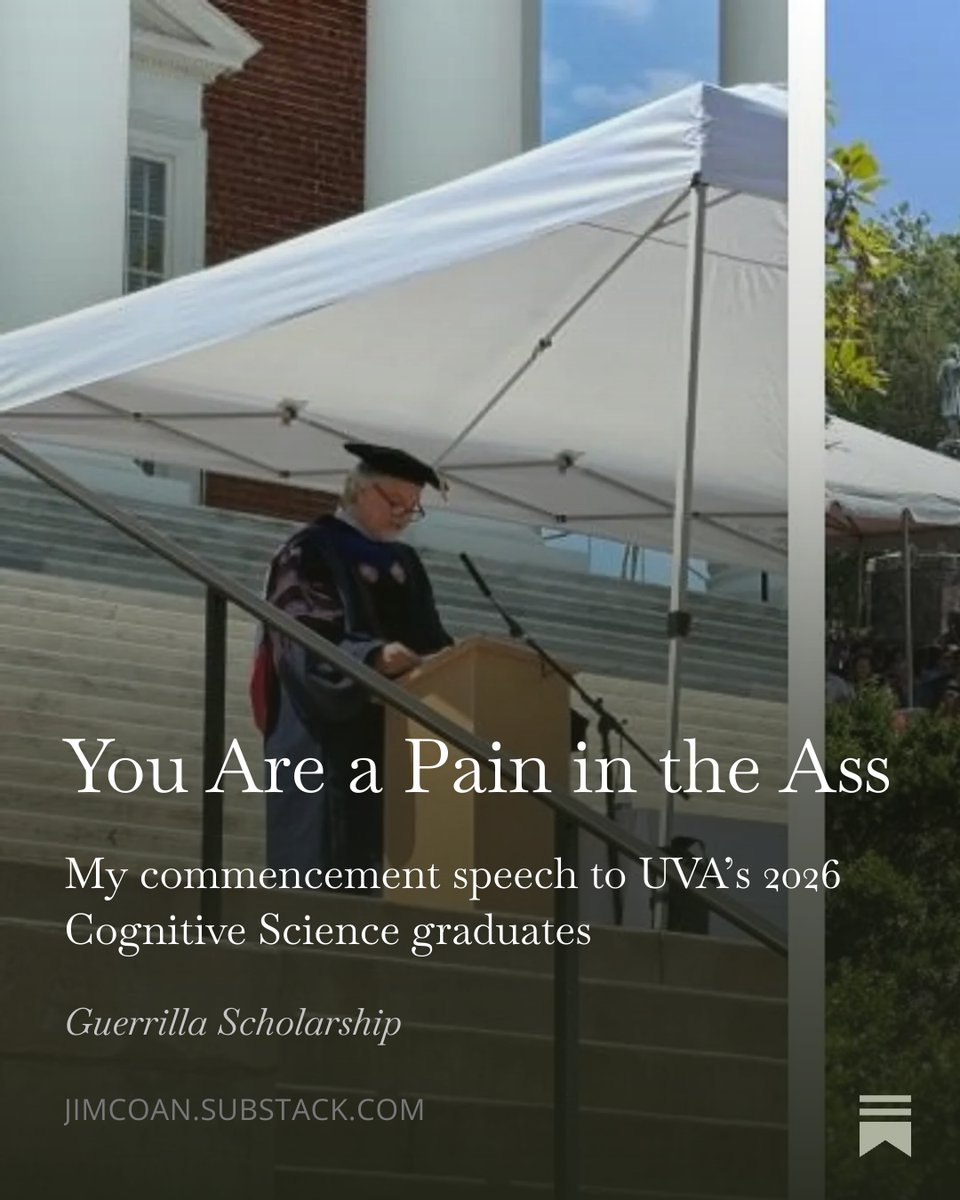


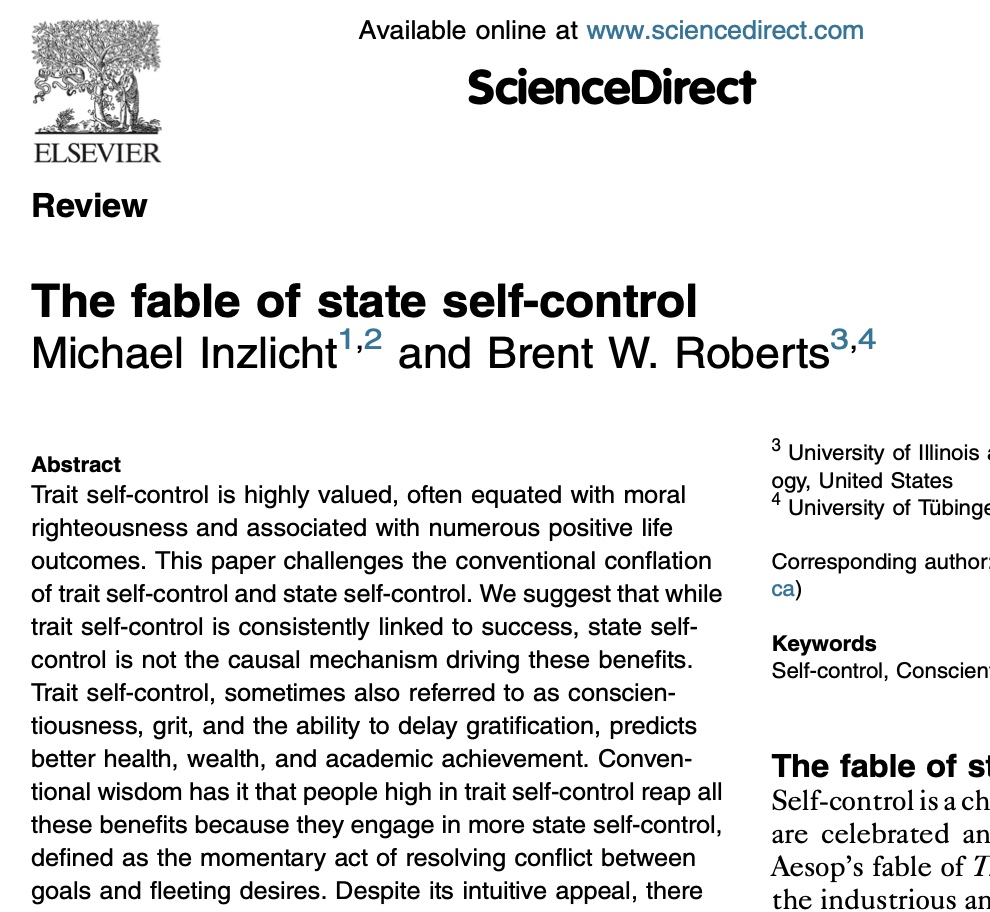

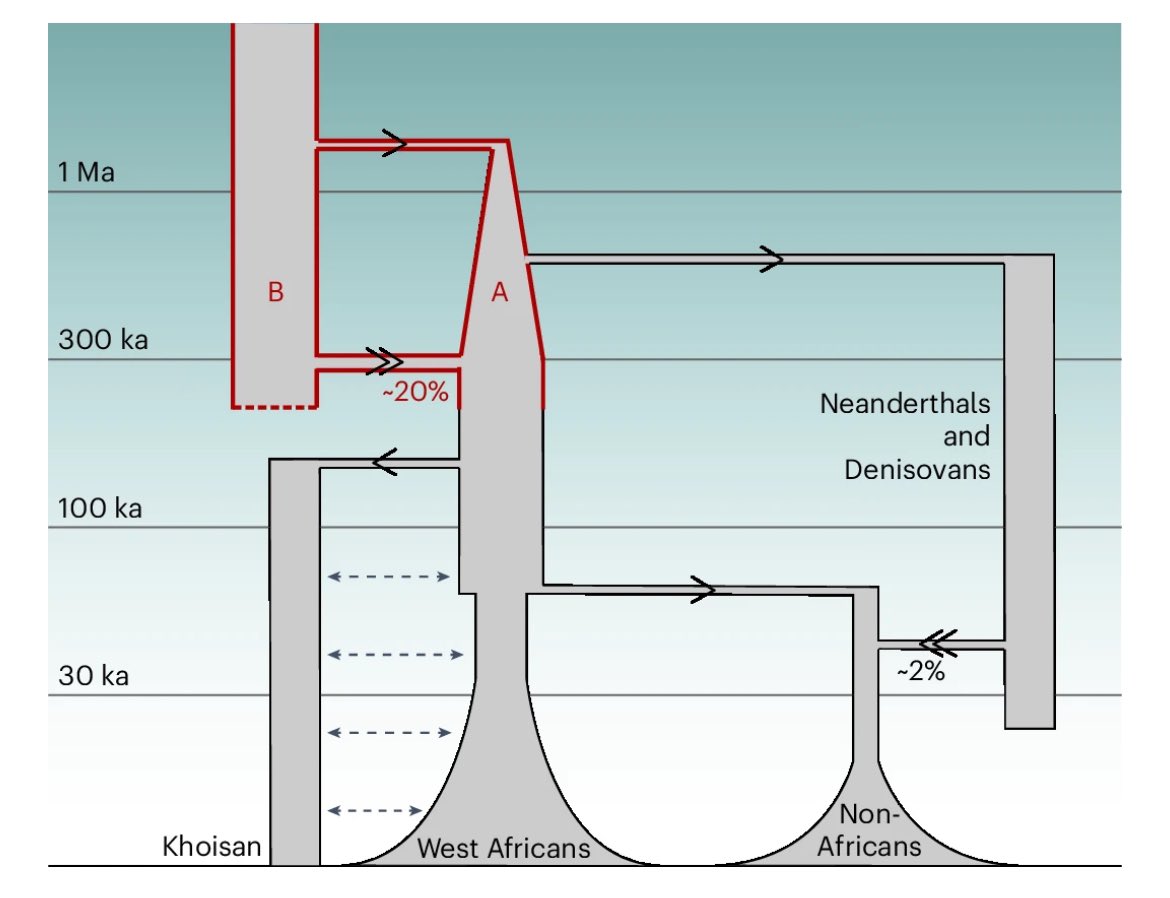

Just signed with @wwnorton to write *Why We Hold Hands*! With narrative prose, and illustrations by moi, it will change your view of human relationships. Thanks to my editor Melanie Tortoroli, and my amazing agent, Anna Sproul-Latimer, for shepherding this! #WhyWeHoldHands
6
1
16
1,426
Jim Coan retweeted

Ever wondered why we sometimes 'catch' another person's anxiety even after a brief interaction? We developed a paradigm to induce contagious anxiety and find that empathy and mental imagery mediate anxiety contagion. See thread & preprint for details!
osf.io/preprints/psyarxiv/ah…
2
3
9
361
Jim Coan retweeted

I teach a seminar on culture and psychopathology, my students do projects on how mental health-relevant concepts are described on social media. It is my sense that things are moving a breakneck speed in that domain (and crawling as far as scholarly papers I assign)
2
2
2
646
Jim Coan retweeted

Jun 12
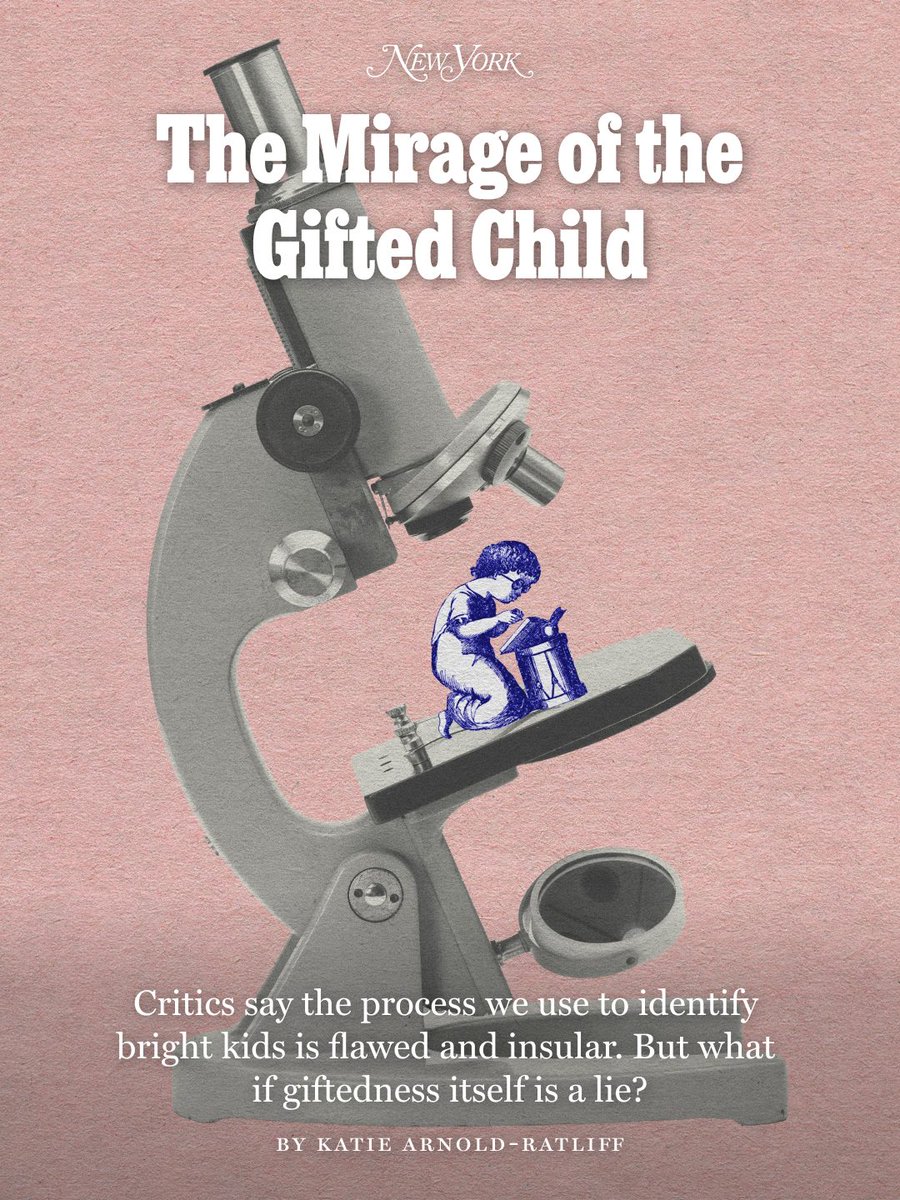
This is embarassing for @NYMag -- these "gifted" children were about 30X more likely to acheive eminence than their peers. By any standard that is not a "mirage", but the embodiment of whatever metric identified them as gifted.
It's one thing if their writers don't understand baserates and probabilities, but this should have never gotten through editorial review.
Jun 11

Gifted and Talented, or G&T, programs have long been a perennial subject of debate, particularly in New York City, where it has bedeviled mayors for years. Some parents have already washed their hands of the whole G&T business, refusing to participate in what they view as a corrupt system of segregation. But countless others still place significant stock in the G&T designation and what it offers and are comfortable relying on cognitive testing, should it be required, to determine whether a child qualifies.
“When your intelligence is the foundation of your self-perception, failing to achieve feels like soul death,” writes Katie Arnold-Ratliff. But if the limited amount of information we have about gifted kids long-term is any indication, most lead, at best, ordinary lives of modest accomplishment. A 35-year study of 677 gifted children found that by age 50, only 12.3 percent had reached a level of “eminence,” defined as “full professors … Fortune 500 executives … judges and lawyers, leaders in biomedicine, award-winning journalists and writers.” This means 88 percent never did.
Arnold-Ratliff digs into the myth of the gifted child, and how our notions of intelligence may be inherently flawed: nymag.visitlink.me/9mc2Wh
63
183
1,538
192,637
🤦♂️
Jun 11
Gifted and Talented, or G&T, programs have long been a perennial subject of debate, particularly in New York City, where it has bedeviled mayors for years. Some parents have already washed their hands of the whole G&T business, refusing to participate in what they view as a corrupt system of segregation. But countless others still place significant stock in the G&T designation and what it offers and are comfortable relying on cognitive testing, should it be required, to determine whether a child qualifies.
“When your intelligence is the foundation of your self-perception, failing to achieve feels like soul death,” writes Katie Arnold-Ratliff. But if the limited amount of information we have about gifted kids long-term is any indication, most lead, at best, ordinary lives of modest accomplishment. A 35-year study of 677 gifted children found that by age 50, only 12.3 percent had reached a level of “eminence,” defined as “full professors … Fortune 500 executives … judges and lawyers, leaders in biomedicine, award-winning journalists and writers.” This means 88 percent never did.
Arnold-Ratliff digs into the myth of the gifted child, and how our notions of intelligence may be inherently flawed: nymag.visitlink.me/9mc2Wh
98
Jim Coan retweeted

Jun 10
New Substack post!
This time a guest post by my PhD student, Victoria Oldemburgo de Mello. She's first author of a new paper on the moralization of artificial intelligence, and the findings are striking. Based on a representative sample of Americans, most people don't oppose AI. Yes, you read that correct: Americans are mostly pro-AI. But among those who do oppose, opposition looks less like a preference and more like a moral conviction: it feels objectively true, it's tied to identity, and it refuses tradeoffs. In one experiment, the strongest moralizers gave up real money rather than use an AI tool that would have helped them. In news headlines, AI now ranks as the third most moralized topic (among the topics we sampled), behind only abortion and climate change.
Why does this matter? Because moralized disagreements are the kind we struggle to resolve. Once a position becomes moral, compromise reads as betrayal, and the people best positioned to push for guardrails are the least willing to stay in the room.
open.substack.com/pub/michae…
2
12
649
“Why should I have to read a paragraph five or six times?”

Academics write for each other, not for people.
Steven Pinker has spent over four decades doing the opposite, and thinks current academic writing is "enormous wasted effort."
"There's an awful lot of brilliant work, really smart people in academia. Why are they doing it? Just to entertain each other? Taxpayers pay for it. It should be accessible. Why should I have to read a paragraph five or six times?
It gets under my skin when academics devote so much brainpower into the scholarship and then just blow off the essential task of letting the world know what you've done."
1
1
212
Jim Coan retweeted

Academics write for each other, not for people.
Steven Pinker has spent over four decades doing the opposite, and thinks current academic writing is "enormous wasted effort."
"There's an awful lot of brilliant work, really smart people in academia. Why are they doing it? Just to entertain each other? Taxpayers pay for it. It should be accessible. Why should I have to read a paragraph five or six times?
It gets under my skin when academics devote so much brainpower into the scholarship and then just blow off the essential task of letting the world know what you've done."
224
592
3,171
839,640
This piece [link below] by @ethanwatters1 is about 4 years old, but I think it's more urgent now. Remember, there was a time when *thousands* of therapists practiced these now discredited interventions, and millions of people took it all to be established scientific truth.
1
2
296
It affected popular culture and law, it destroyed families and fractured communities. Repressed memories were everywhere. I was there. So were many of you. Social contagion is a real force and once a popular belief takes root it can take years or decades for it to fade, if it ever does.
nytimes.com/2022/09/27/opini…
2
119

🎯"*all* serious academic disciplines, including those with extra-academic aims, function best when their substantive results and methods are assessed by evidential standards that make no reference to these further aims" vanderbilt.edu/principles/st…
1
2
11
741
Jim Coan retweeted
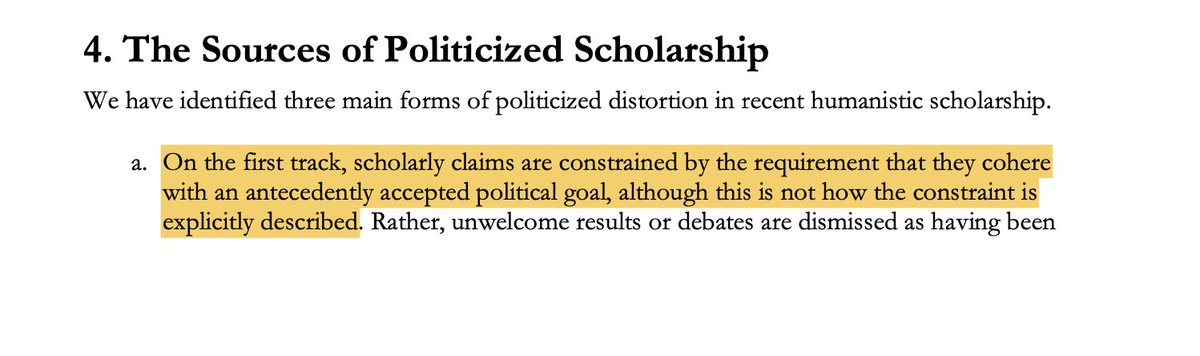
The denial of reality has been a terrible move in the humanities and social sciences.
This report is a serious critique of many of the problems I've seen in academia that have gotten out of control in the past few years.
And it is led by some of the leading experts across these fields (Joe Henrich, Anthony Appiah, and many others).
We seriously need to fix these issues if we have any hope of regaining credibility and public trust.
Jun 5

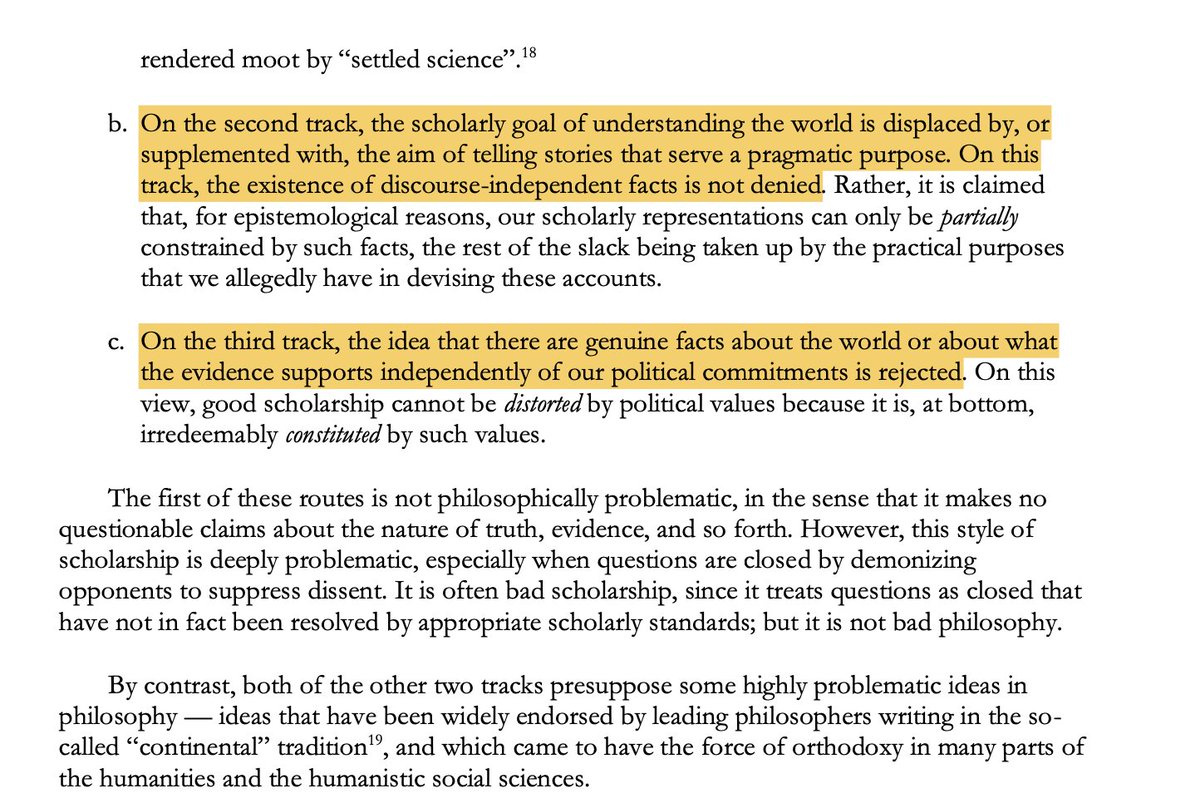
Next section sums up the sources of politicized scholarship:
1) rejecting unwelcome views, 2) rejecting "understanding" as the goal of scholarship, and 3) rejecting the very notion of politically independent facts.
It largely zeros in on the last source (i.e., relativism).
10
33
155
32,170
It happens, maybe because of the particular details of the setting (Eastern Washington State, various locations in and around Spokane), that the book I’ve related more than any other is The Absolutely True Diary of a Part-Time Indian by Sherman Alexie. And now here he is again, generously making me feel seen to a degree I haven’t felt in 35 years. Thanks, Sherman. This is like medicine.
podcasts.apple.com/us/podcas…
1
58
Our brains are designed for a social baseline. pmc.ncbi.nlm.nih.gov/article…

We are wired for connection. No surprise, remote work increases isolation and worsens mental health, but great to see that documented here. Home alone: Remote work, isolation, and mental health | Science science.org/doi/10.1126/scie…
1
3
334
Jim Coan retweeted

Jun 4
Humans have deep-rooted desires for status.
These are best accommodated in diversified small human communities, where everyone can be the expert at their thing.
Social media makes us unhappy, because our community becomes the world, and to a first approximation, we are all peasants.
We are uglier than the people on Instagram, our families are doing worse than the families on Facebook, on Twitter we are nobody.
So we use the weapons of the weak, we ridicule those with power and try to tear down their reputations, we participate in cathartic expressions of moral superiority. But it is a weak balm for the psychological pain of being low status in a human community.
20
59
369
26,980
Jim Coan retweeted

Jun 4
A huge loss - her work was a window into the Iranian revolution for my students who were just starting to learn about Iran. bbc.com/news/articles/c4g0nn…
2
5
150
Jim Coan retweeted

Jun 4
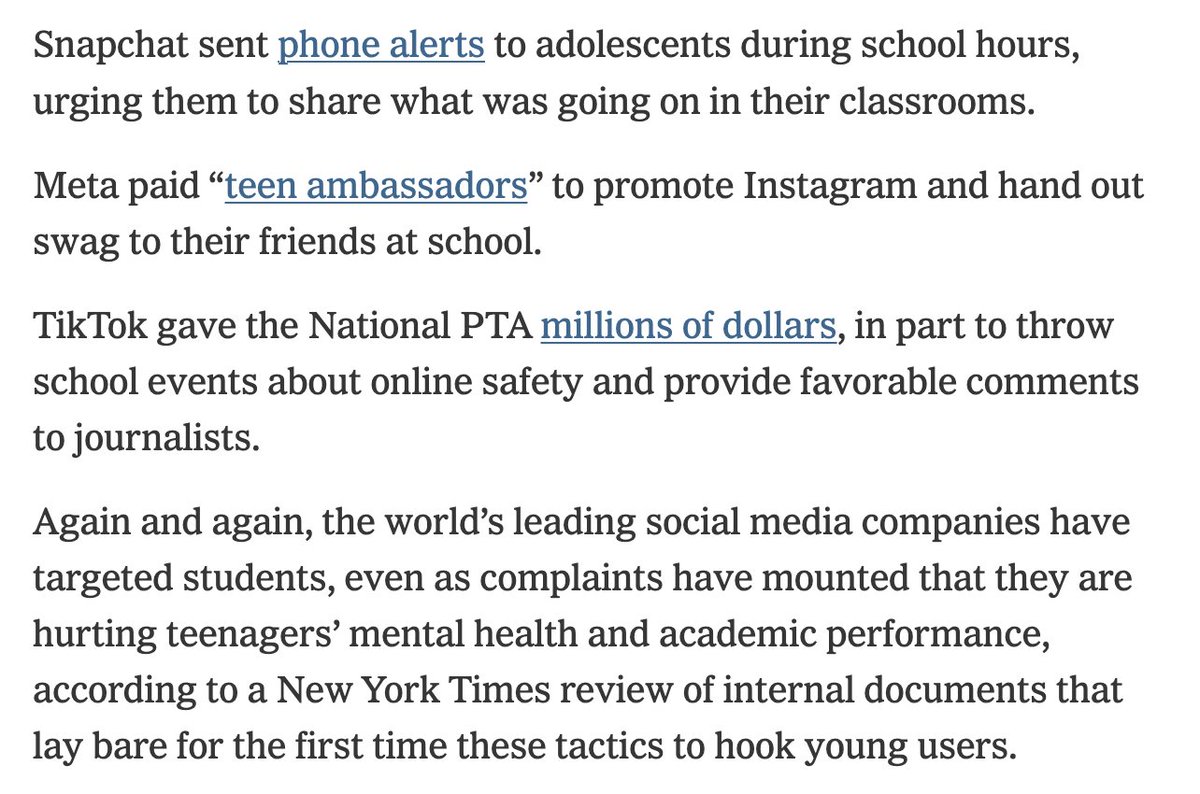
We don't know whether it was smartphones/social-media or edtech that was the bigger contributor to the decline in education outcomes that began in the 2010s. But new revelations show the tricks Meta, Snap, and Tiktok used to lure students during the school day.
Still more reasons to be technoskeptical
nytimes.com/2026/06/04/us/so…
29
131
415
31,994
Jim Coan retweeted

Jun 4
Alan Levinovitz is getting a lot of shit for this piece about long covid, but it is careful, thoughtful, and compassionate. The definition thing, in particular, drives me insane because it absolutely forestalls the possibility of genuine research.
wired.com/story/the-painful-…
65
12
93
22,139
Jim Coan retweeted

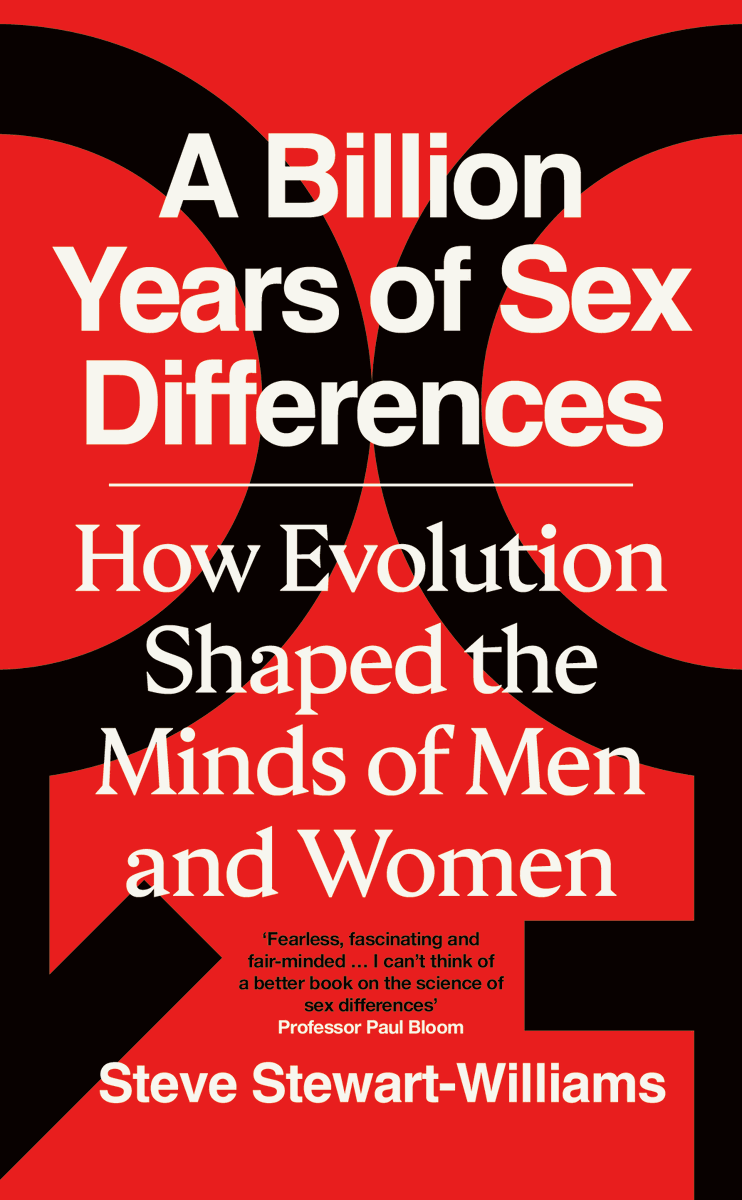
My new book A BILLION YEARS OF SEX DIFFERENCES is out today!
It's about the evolution of human sex differences and why they matter.
Available in hardback: swiftpress.com/book/a-billio…
...and audiobook: audible.co.uk/pd/A-Billion-Y…
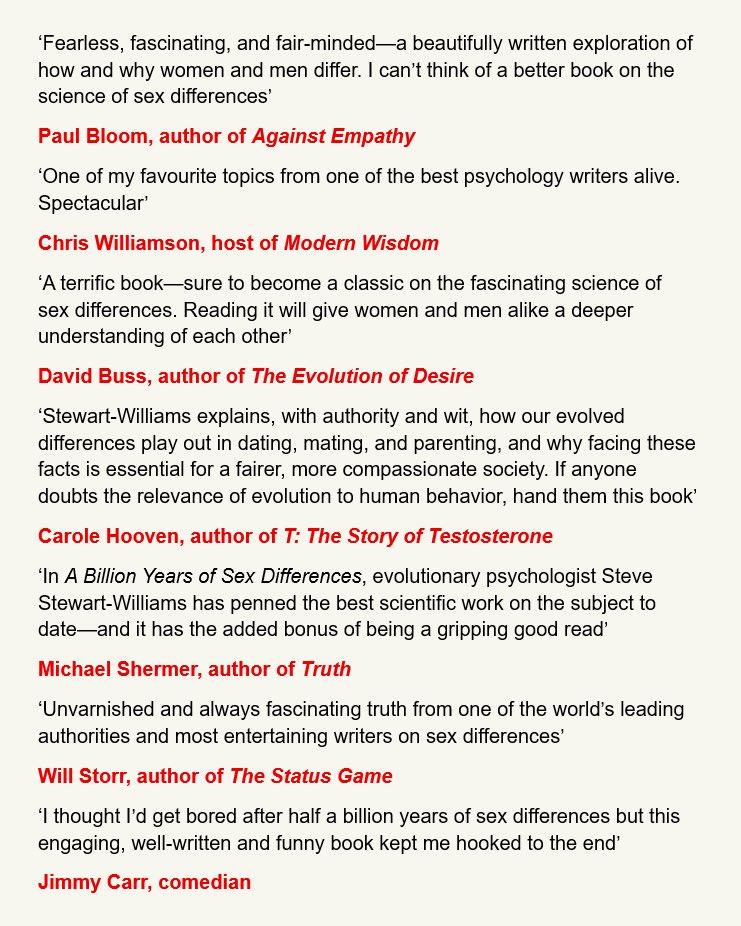
Here's a sample of reactions to the book... 👇
19
64
263
41,402
I huge loss

مرجان ساتراپی درگذشت. او دیروز در خانه خودش جان سپرد. برای دوستان و عزیزانش، مادر مهربانش آرزوی شکیبایی دارم.
با دوستی که در ماههای اخیر با مرجان زندگی میکرد صحبت کردم، گفت دیروز عصر، وقتی از کار به خانه برگشت، دید مرجان نفس نمیکشد.
#مرجان_ساتراپی

1
76