
Senior Fellow @ManhattanInst. Investigating higher ed. FOIA fan. Tall. Opinions mine.
Joined May 2020
- Tweets 7,007
- Following 779
- Followers 20,384
- Likes 12,610
1,651 Photos and videos






John Sailer retweeted

Jun 12
AAUP members just can’t help themselves.
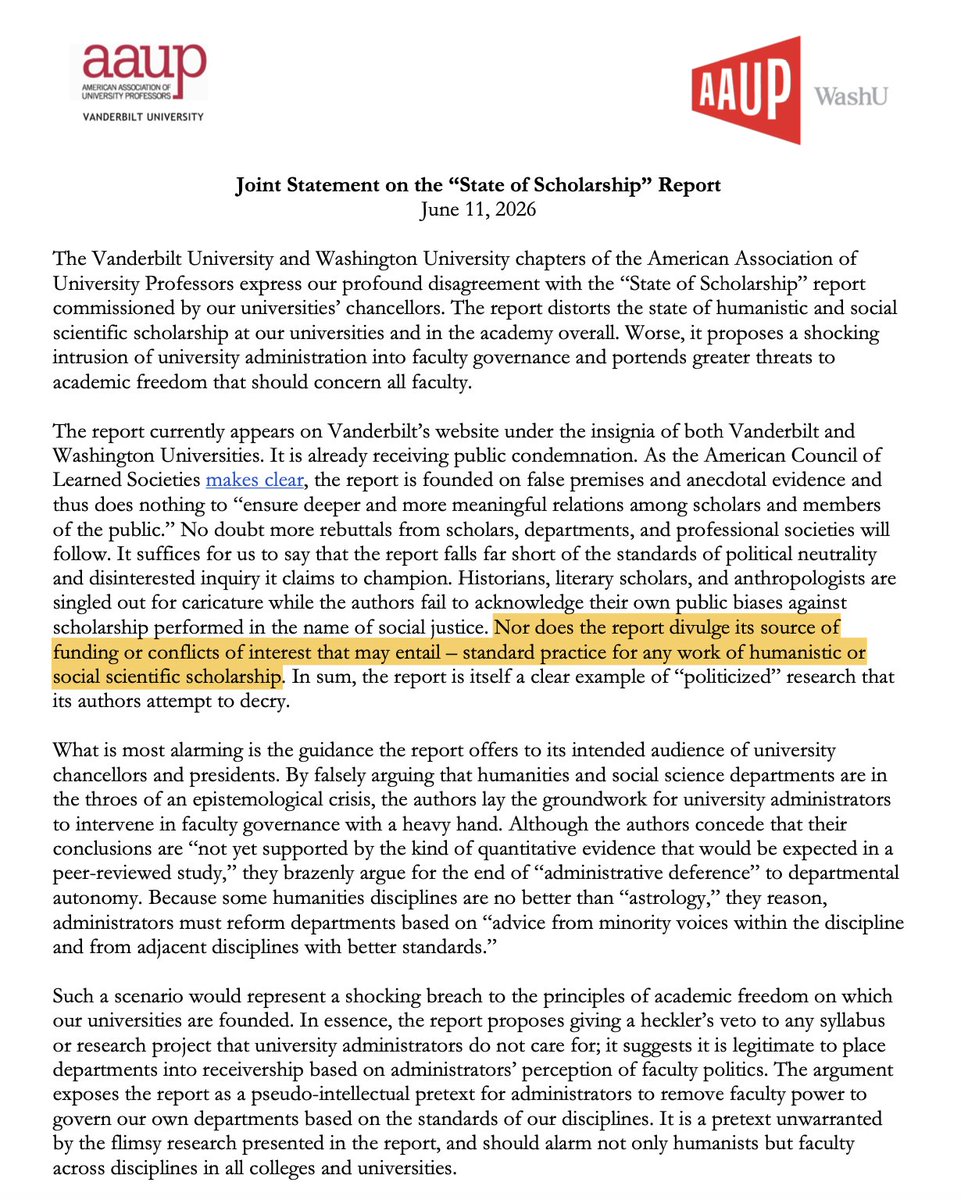
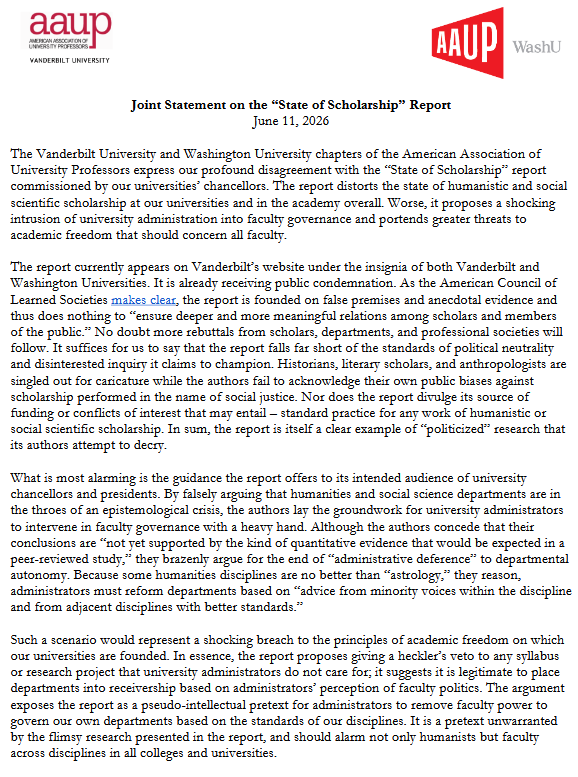
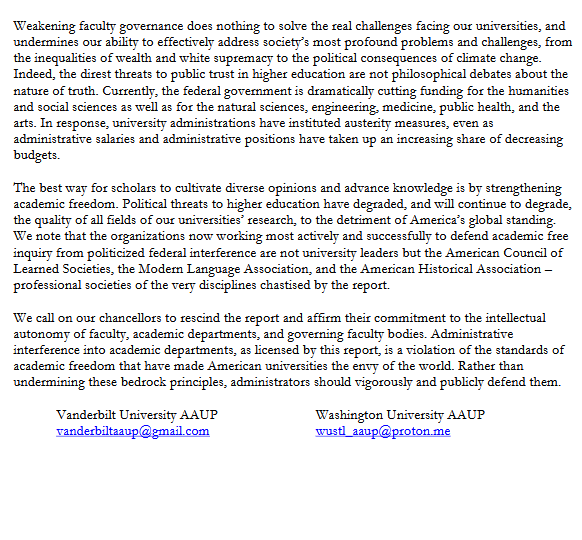
“Weakening faculty governance…undermines our ability to effectively address society’s most profound problems and challenges, from the inequalities of wealth and white supremacy to the political consequences of climate change.”

If your chancellors are organizing to discredit whole disciplines on your campus, your faculty should get organized too! Joint statement from WashU and Vanderbilt AAUP chapters on the report just dropped:
6
20
96
6,339
John Sailer retweeted

Jun 12
This is 100% true in my experience (as a phil prof). Relativism is a vehicle to dismantle opposing views, and not something anyone consistently holds. Relativism in the abstract (about "morality") is immediately abandoned when particular policy proposals are raised.
1
1
4
960

Jun 12
My (slightly) longer take on the Vanderbilt/WashU report.
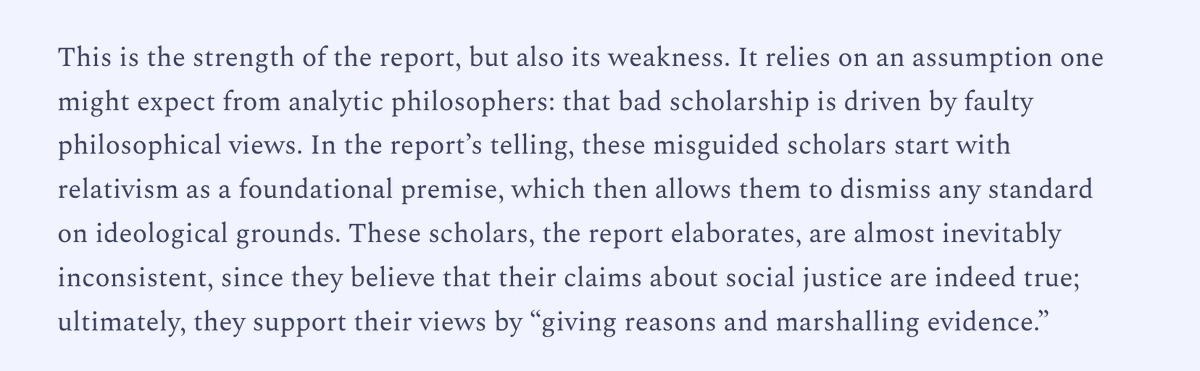
1/ The report asserts that the "bald" critique of politicized research is wrong, but that the "sharpest version" zeros in on relativism. Thus, even though it identifies other sources, relativism is the real problem.
2
5
50
6,459
Jun 12
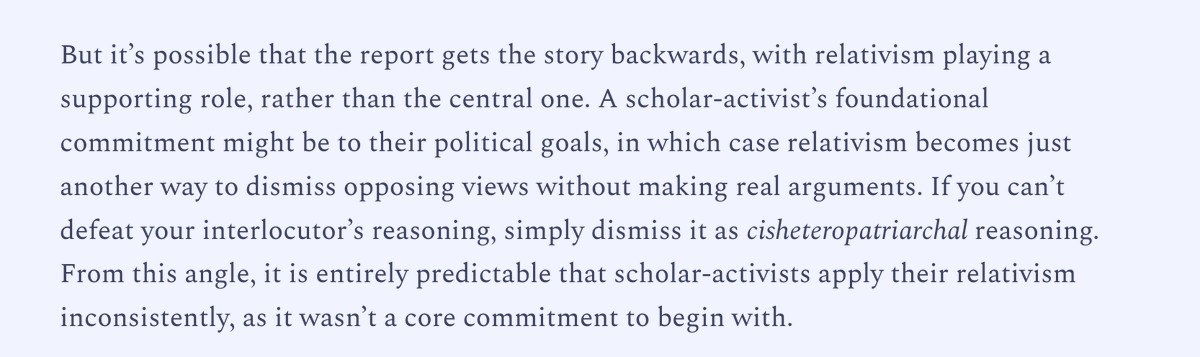
3/ But that might get the actual process exactly backward.
If a scholar-activist's commitment is to their political goals, relativism becomes a useful tool to dismiss arguments they don't like. The activism leads to relativism, not the other way around.
4
5
50
1,347
Jun 12
Read the whole thing here: x.com/JohnDSailer/status/206…

5
18
1,016
Jun 12
The AAUP's "academic freedom" center is lavishly funded by the Mellon Foundation—which is covertly funding a larger "rapid response" org.
Ironically, the AAUP has now criticized the Vandy/WashU report for not disclosing its source of funding.
x.com/JohnDSailer/status/206…
Jun 11
In fact, the center appears to be part of a larger Mellon project to fight reform efforts.
"This is not public, so don’t share this anywhere, please... They’ve gotten a budget that looks like it may be $10 million to create a new organization that would do rapid response."
7
19
112
8,937
Jun 12
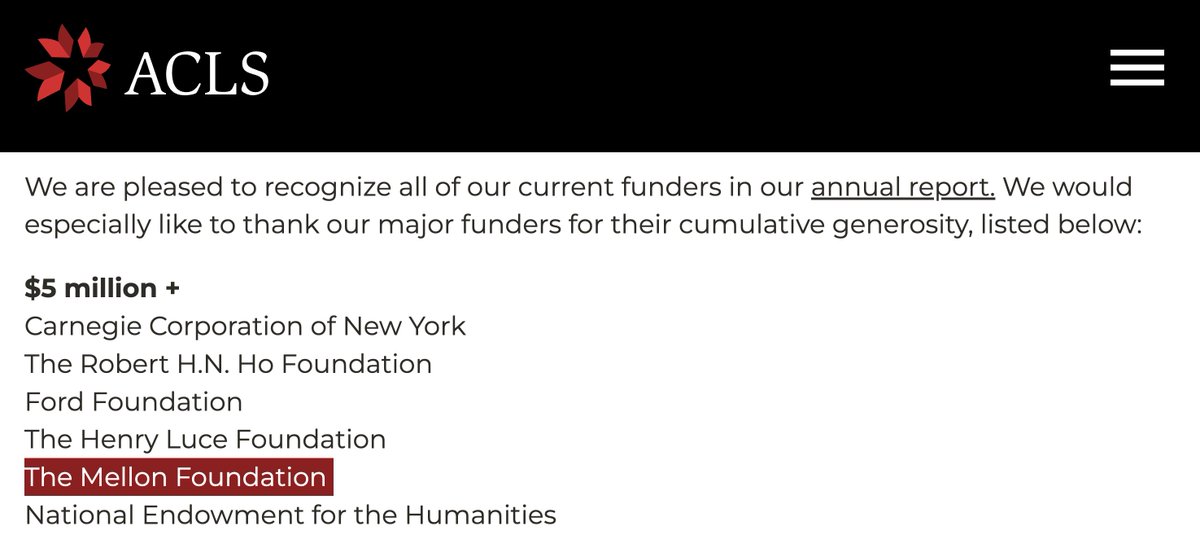
More interestingly still, the AAUP's chapters cite American Council of Learned Societies (ACLS) to bash the report.
Which has long been a Mellon funding recipient and currently lists Mellon as a top ($5 million ) donor.
2
7
579
John Sailer retweeted

Jun 12
Kind of weird how Appiah is so dismissive of the idea that conservatives might face discrimination in the humanities and social sciences, given that the replacement of scholarly standards with progressive political criteria is the main conclusion of the report!
Still, worthwhile interview, and it does highlight the absurdity of dismissing the report as a right-wing attack.
chronicle.com/article/inside…

5
10
82
10,464
Jun 12
Turns out, the AAUP's higher ed summit started yesterday. I had no idea. Curious what those conversations look like right about now.
3
2
17
1,258
John Sailer retweeted

Jun 12
There is an alarming media report about an effort by the American Association of University Professors (AAUP) to target civics programs with the alleged help of the Andrew W. Mellon Foundation... jonathanturley.org/2026/06/1…
45
292
1,030
41,603
John Sailer retweeted

Jun 11
Academic freedom exists to protect academics with dissenting or unpopular views from being steamrolled, not to paper over steamrolling. You can't just say the process was followed and shrug.
Jun 11
Housed within the American Association of University Professors (AAUP), the group's conception of academic freedom seems to have little to do with free speech.
Here's a meeting where one fellow says that UPenn punishing Amy Wax for her speech was academic freedom in practice.
2
14
52
5,776
John Sailer retweeted

Jun 12
Some believe academic freedom is primarily a collective right.
Others, including me, believe academic freedom is primarily an individual right — a protection often needed by lonely dissenters standing against the collective.
Process matters for protecting both conceptions of academic freedom. But only one conception leaves open the possibility that the outcome of that process was wrong.
When professors were punished for being communists or for refusing to sign loyalty oaths in the 1940s and ’50s, that was wrong, regardless of the rigor of the process that produced those outcomes.
When people seek to vindicate their rights in court — and courts fail to uphold them — that doesn’t negate those rights. Sometimes the process fails us, and we should feel empowered to say so.
The process failed to protect Amy Wax’s academic freedom rights, no matter how robust that process was.
Jun 11
Housed within the American Association of University Professors (AAUP), the group's conception of academic freedom seems to have little to do with free speech.
Here's a meeting where one fellow says that UPenn punishing Amy Wax for her speech was academic freedom in practice.
4
12
69
4,770
John Sailer retweeted

Jun 11
'Academic freedom' to many does not, as you might expect, mean academics can speak and think without fear of retaliation (as is necessary for them to perform their function), it means university (administrator) self-government. The two tend to conflict, as with Wax.
Jun 11
Housed within the American Association of University Professors (AAUP), the group's conception of academic freedom seems to have little to do with free speech.
Here's a meeting where one fellow says that UPenn punishing Amy Wax for her speech was academic freedom in practice.
3
14
127
6,305
John Sailer retweeted

Jun 11
Wow. The Mellon Foundation has some explaining to do. Thread:
Jun 11
NEW: The Mellon Foundation gave $1.5 million to establish a "center for the defense of academic freedom."
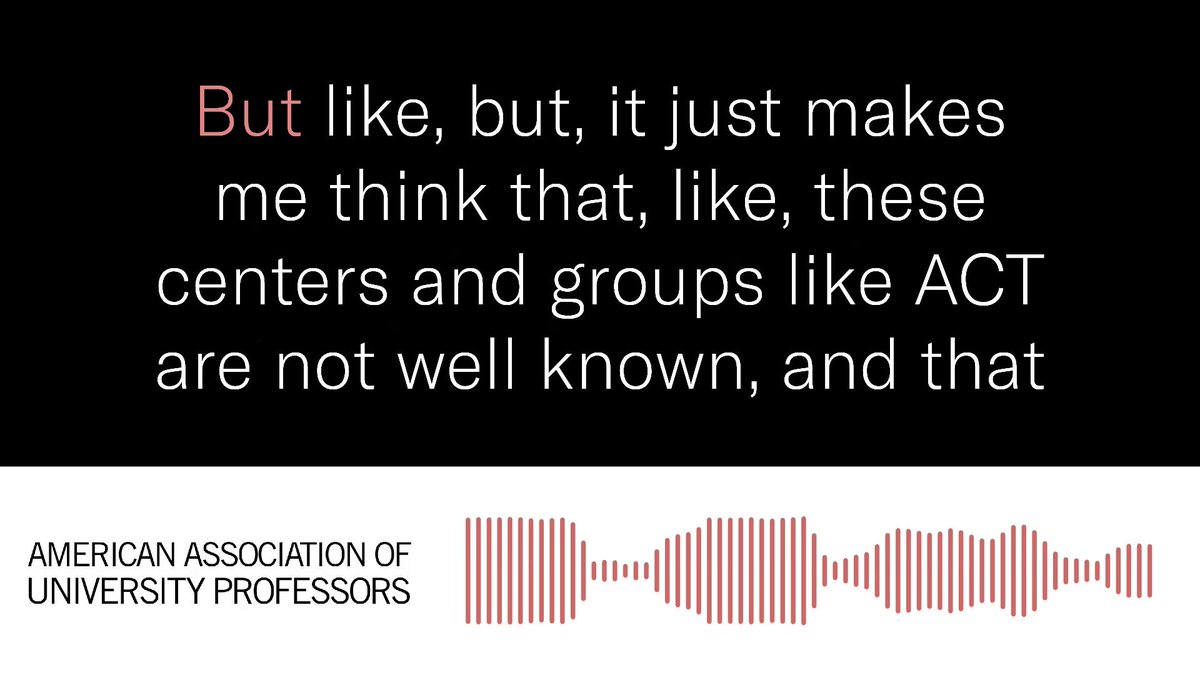
In audio I've obtained, the group's leader says his goal is to undermine the newly launched classical civics centers: "map who these f---ers are... and knock them out." 🧵
5
19
119
5,750
John Sailer retweeted

Jun 11
“The university departments won’t hire anyone but leftists.”
“Freedom of association. Make your own institutions.”
“Okay”
“And now we will spend millions to destroy your institutions.”
Jun 11
NEW: The Mellon Foundation gave $1.5 million to establish a "center for the defense of academic freedom."
In audio I've obtained, the group's leader says his goal is to undermine the newly launched classical civics centers: "map who these f---ers are... and knock them out." 🧵
5
134
583
43,468
John Sailer retweeted

Jun 11
Well now, look what we have here. Something advertising itself as a "center for the defense of academic freedom" is gearing up a campaign of vilification against programs that are revitalizing civic education at colleges and universities around the nation and helping to ensure that students are exposed to a diverse range of viewpoints. I suppose it's not surprising that people who have enjoyed a virtual ideological monopoly would fight tooth and nail to keep it. That's how monopolists work.
Jun 11
NEW: The Mellon Foundation gave $1.5 million to establish a "center for the defense of academic freedom."
In audio I've obtained, the group's leader says his goal is to undermine the newly launched classical civics centers: "map who these f---ers are... and knock them out." 🧵
19
174
601
41,122
Jun 11
NEW: The Mellon Foundation gave $1.5 million to establish a "center for the defense of academic freedom."
In audio I've obtained, the group's leader says his goal is to undermine the newly launched classical civics centers: "map who these f---ers are... and knock them out." 🧵
144
1,262
4,493
512,647
Jun 11
In fact, the center appears to be part of a larger Mellon project to fight reform efforts.
"This is not public, so don’t share this anywhere, please... They’ve gotten a budget that looks like it may be $10 million to create a new organization that would do rapid response."
2
69
442
23,603
Jun 11
This, of course, raises questions about what Mellon has been up to in the two years since its stopped updating its grants database. At the very least, the center itself seems to have more funding, so reformers should expect more pushback.
city-journal.org/article/mel…
6
50
458
11,009