
Ecologist; Biodiversity Synthesis Professor @idiv and @UniHalle; Senior Editor @Ecology_Letters; Dad
Joined December 2018
- Tweets 2,963
- Following 905
- Followers 6,217
- Likes 5,493
161 Photos and videos




Pinned Tweet

20 Dec 2023
Our new study @Nature synthesizes time series on insects from sites across the world. Building on our previous work @idiv, we show that abundant species are declining faster than rarer species (richness is also declining). Expertly led by @PunksInScience
nature.com/articles/s41586-0…
3
130
369
40,835
Jonathan Chase retweeted

5 Jun 2025
🚀 BioTIME 2.0 - the largest biodiversity time-series database - now spans 12 million records from 553,000 locations, tracking ecosystem changes since 1874!
idiv.de/major-update-to-biot…
@univofstandrews @idiv @ERC_Research @Jon_Chase03
15
33
1,565
21 Mar 2025
See our paper exploring scaling relationships of diversity-stability (and its components), applied to real-world data and metacommunity theory with habitat destruction. Was a phenomenal team to work with, led by @maowei_liang, @shaopeng_wang and Qi Yang, and I learned so much!
21 Mar 2025

I’m thrilled to share our diversity-stability study on @ScienceMagazine Unifying spatial scaling laws of biodiversity and ecosystem stability | Science science.org/doi/10.1126/scie…
4
19
1,406
Jonathan Chase retweeted

19 Mar 2025
A new paper with amazing colleagues is out! @ESAEcosphere
🇺🇸🇩🇪🏴🇵🇹🏴🇯🇵
Disentangling nonrandom structure from random placement when estimating β‐diversity through space or time
dx.doi.org/10.1002/ecs2.7006…
2
7
547
Jonathan Chase retweeted

17 Mar 2025
Does fragmentation reduce biodiversity? New research provides insights into a 50-year old debate 🌎conservationcorridor.org/dig…
12
23
1,378
Jonathan Chase retweeted

13 Mar 2025
What a wonderful paper!!
Really clear results and extremely important research!!
Congrats Thiago Gonçalves-Souza @Nate_J_Sanders
@Jon_Chase03 @nickmhaddad
nature.com/articles/s41586-0…
17
85
3,257
Jonathan Chase retweeted

12 Mar 2025
Our paper led by Thiago Gonçalves-Souza is out. Habitat fragmentation and habitat loss reduce biodiversity. @Nate_J_Sanders @Jon_Chase03
Results from 37 studies distributed worldwide, on plants and animals, comparing continuous and fragmented landscapes.
nature.com/articles/s41586-0…
2
35
107
6,108
Jonathan Chase retweeted
28 Aug 2024
Important new paper led by Melissa Guzman showing that insecticides reduce bee abundances in the United States nature.com/articles/s41893-0…
28
70
6,186
6 Aug 2024
Hey #ESA2024 @ESA_org ! Anyone have any cool “synthesis” projects they’re looking for an awesome place to publish!?! Try @Ecology_Letters!
Let me know if you have something or see something. Would be delighted to consider it.
onlinelibrary.wiley.com/jour…
10
46
3,339
Jonathan Chase retweeted

10 Jul 2024
We studied how community assembly processes vary across ecosystems, latitude and taxon groups. We found that homogeneous selection dominates especially in marine systems while heterogeneous selection is rare @Oikos_Journal @GeoHelsinkiUni @GracoRoza
nsojournals.onlinelibrary.wi…
6
32
2,144
8 Jul 2024
Another update in the Amarasekare saga. An insider from UCLA EEB (Peter Kareiva) speaks out.
pamarasekare.org/an-insider-…
4
1,831
Jonathan Chase retweeted

2 Jul 2024
The International Biogeography Society (TIBS) has relaunched its flagship OA scientific journal, Frontiers of Biogeography (FoB), on the ARPHA platform, where it will be co-published with Pensoft Publishers. Check out the announcement at biogeography.org/news/news/r… #newbiogeo

22
50
8,731
Jonathan Chase retweeted

2 Jul 2024
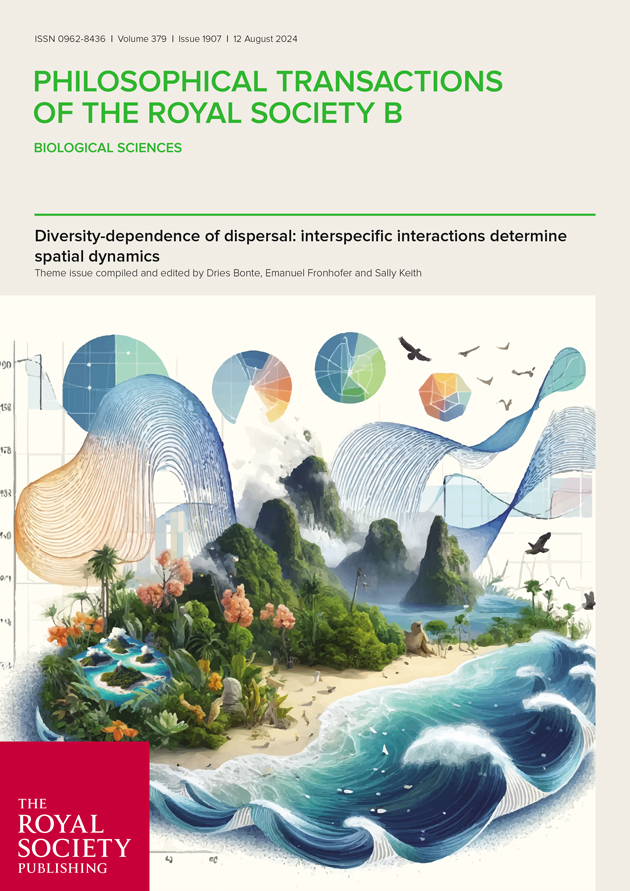
Thrilled that our research is out and on the cover! The macro-eco-evolutionary interplay between dispersal, competition, and landscape structure using an upscaled individual-based model over 5 million years. 📄doi.org/10.1098/rstb.2023.01… 🏝️ #gen3sis @RenskeOnstein @Jon_Chase03
25 Jun 2024

New theme issue 'Diversity-dependence of #dispersal: interspecific interactions determine spatial #dynamics', edited by @BonteDries, @efronhofer and @Sal_Keith. Read: ow.ly/V53x50SoUm6
1
13
75
6,641
Jonathan Chase retweeted
28 Jun 2024
A recent study published in @NatureEcoEvo highlights the delicate relationship between habitat loss, fragmentation and biodiversity. @Jon_Chase03 and colleagues show that the total amount of habitat lost is a key factor influencing how fragmentation affects #biodiversity. #idiv
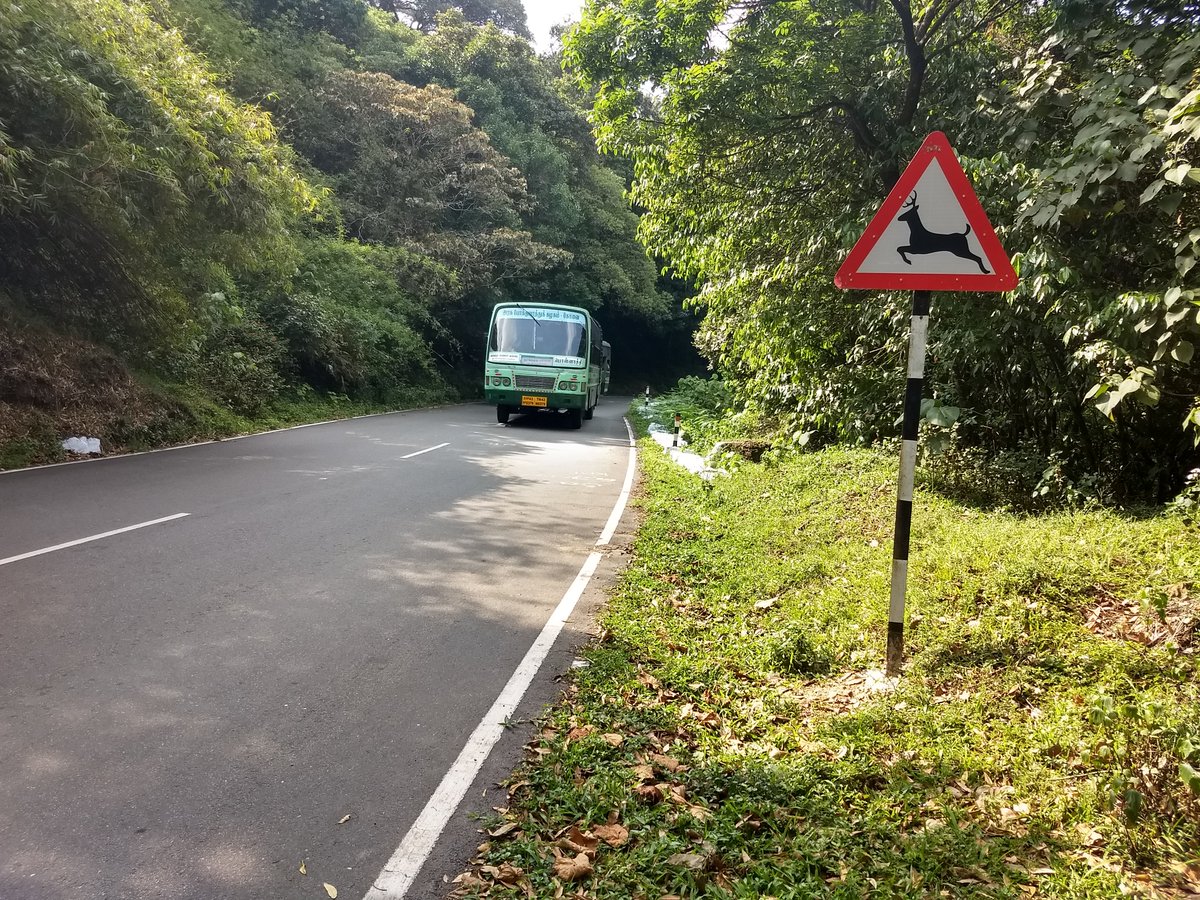
ALT PJeganathan, CC BY-SA 3.0 via Wikimedia Commons
2
6
25
1,906
Jonathan Chase retweeted

26 Jun 2024
This post is on behalf of our colleague and friend Priyanga Amarasekare, who is not on X and continues to endure disappointing and a draconian treatment by UCLA. She has asked us to share an update via this thread.
6
11
24
7,572
26 Jun 2024
Was great having you visit @idiv! Looking forward to enlightening collaborations!
26 Jun 2024

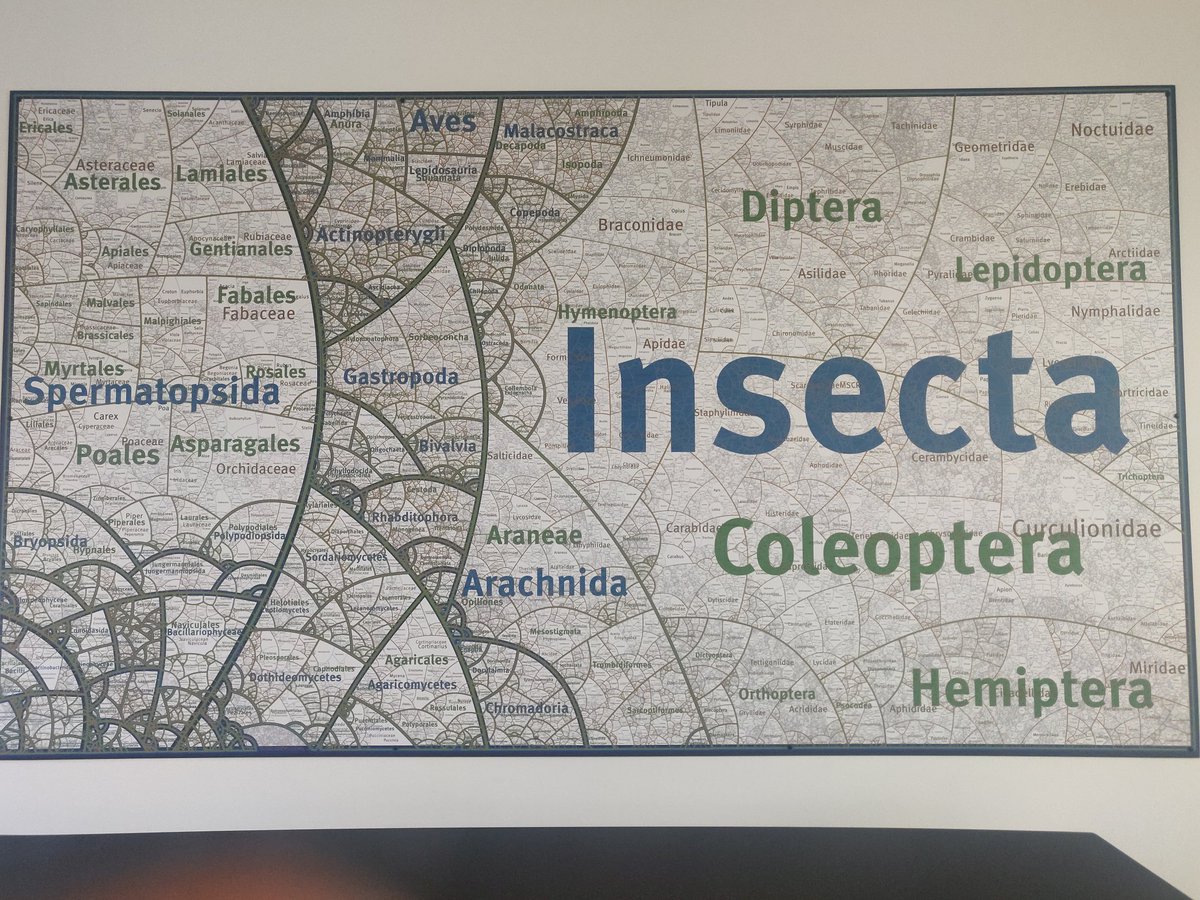
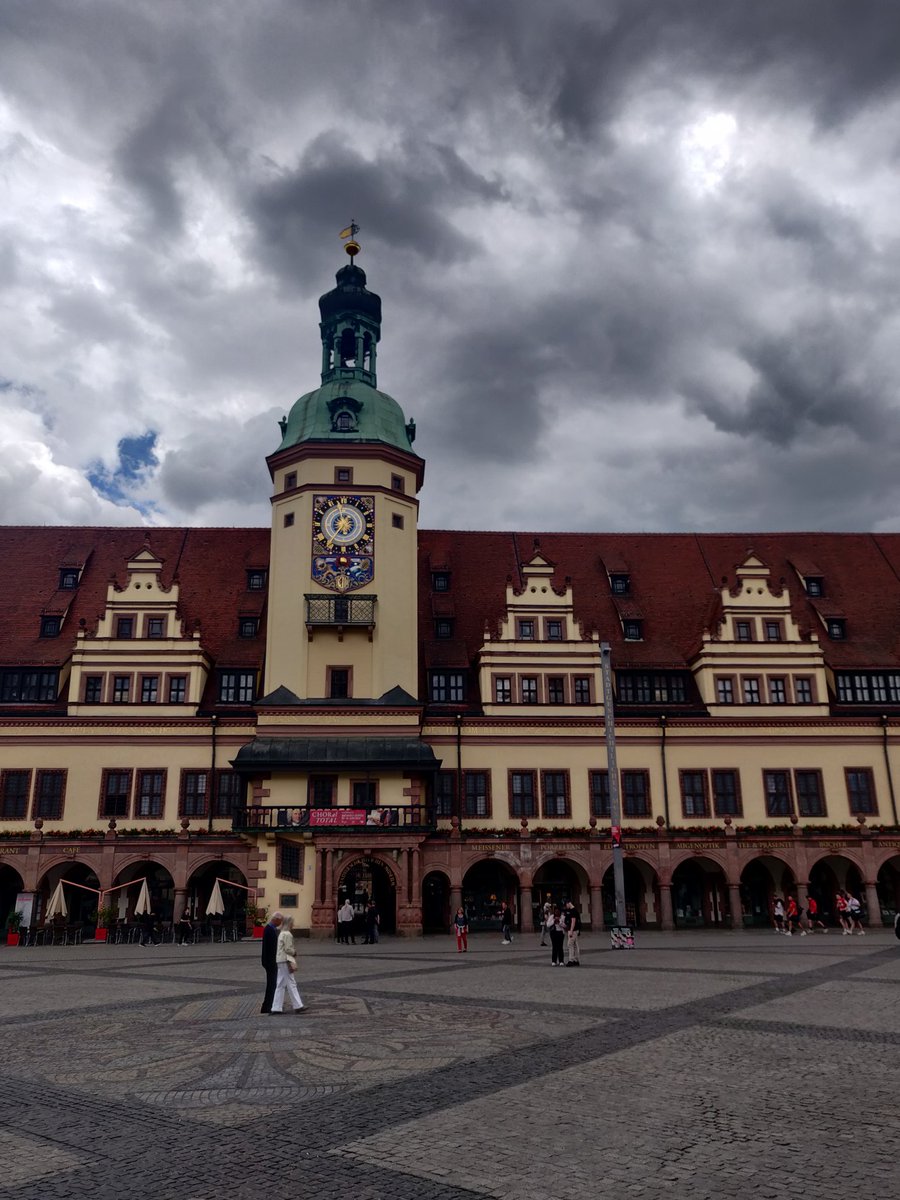
Leaving #Leipzig after my #FastAndFurious visit to @idiv visiting @Jon_Chase03 lab's to start the next #MetaHeroes adventure!
Inspiring and insightful exchanges to begin drafting & exploring long-term landscape degradation effects on diversity! @Zsofia_Horvath1 @MSCActions

1
11
1,315
Jonathan Chase retweeted
25 Jun 2024
🔍🌱 New research: Scientists reveal that the total habitat lost plays a crucial role in how fragmentation impacts biodiversity. This nuanced understanding challenges the binary view of fragmentation as purely good or bad. nature.com/articles/s41559-0… #biodiversity #idiv #research
24 Jun 2024

Is fragmentation bad or good for biodiversity? Yes!
We use a classical competition-colonization metacommunity model to show that fragmentation can increase or decrease diversity depending on the total amount of habitat in the landscape. @idiv @UniHalle
nature.com/articles/s41559-0…
4
12
1,788
24 Jun 2024
Is fragmentation bad or good for biodiversity? Yes!
We use a classical competition-colonization metacommunity model to show that fragmentation can increase or decrease diversity depending on the total amount of habitat in the landscape. @idiv @UniHalle
nature.com/articles/s41559-0…
2
68
292
19,442
Jonathan Chase retweeted
20 Jun 2024
Our new paper led by Braeden Van Deynze shows insecticides are a leading driver of butterfly decline in the US Midwest, above climate and land use change. doi.org/10.1371/journal.pone…
2
22
51
4,688
Jonathan Chase retweeted

21 Jun 2024
Living Planet Index "suffers from several mathematical and statistical issues, leading to a bias towards an apparent decrease even for balanced populations. The claim that vertebrate populations declined by 70% since 1970 is thus unsubstantiated". Source: communities.springernature.c…
10
23
2,572
Jonathan Chase retweeted
19 Jun 2024
Job offer! We are looking for a *postdoc* in biodiversity science, macroecology, ecol. modelling, stats. In Prague, Czech Republic, @fzpczu, 2 years (with possible extension), ERC-funded, 66,000 CZK/m gross. More info and application instructions: petrkeil.github.io/news/2024…
2
122
154
24,654